£5 Coin Values UK: Commemorative Crowns From 1990 to 2026
The £5 commemorative crown replaced the older 25p crown in 1990 and has been the Royal Mint's flagship big-format commemorative ever since. Issued for royal weddings, jubilees, coronations, music legends, the Olympics, James Bond, Harry Potter and more. This guide covers every format (cupronickel, silver proof, silver Piedfort, gold proof), the strongest secondary-market performers, and how to authenticate.
What is a UK £5 coin?
The modern UK £5 coin is a cupronickel commemorative crown first issued in 1990. It replaced the older 25-pence crown (which had itself replaced the pre-decimal five-shilling crown) and serves as the Royal Mint's flagship large-format commemorative denomination. At 38.61 mm and 28.28 g, it is the largest base-metal coin in regular production and is essentially never seen in circulation, almost all examples go straight from Royal Mint packaging into collections.
The denomination has had two distinct histories. Pre-1990, the £5 face value belonged to the quintuple sovereign, a 39.94 g, 22-carat gold coin (36.61 g pure gold) struck sporadically since 1820 and almost exclusively in proof or presentation finish. The 1839 "Una and the Lion" quintuple sovereign is one of the most famous British coins ever struck. From 1990 onwards, £5 took on a parallel meaning as the modern crown denomination, with the quintuple sovereign continuing to be produced separately at the same face value but in 22-carat gold.
The two pieces share a face value but nothing else. A 2023 cupronickel £5 Coronation crown is worth its £5-25 collectable premium; a 2023 22-carat £5 quintuple sovereign Coronation issue realises £3,800-4,800 because of its gold content. We cover the gold quintuple sovereign in our sovereign values UK guide and the modern crown history in our crown coin values UK guide.
Royal Mint £5 coins by year
The Royal Mint has issued at least one cupronickel £5 commemorative crown almost every year since 1990. The headline issues that drive secondary-market demand:
| Year | Theme | BU realised | Silver proof | Gold proof |
|---|---|---|---|---|
| 1990 | Queen Mother 90th Birthday (first £5 crown) | £15-30 | £110-160 | £3,200-4,500 |
| 1993 | Coronation 40th Anniversary | £12-22 | £100-150 | £3,000-4,200 |
| 1995 | End of WWII 50th Anniversary | £12-22 | £100-160 | £3,500-5,500 |
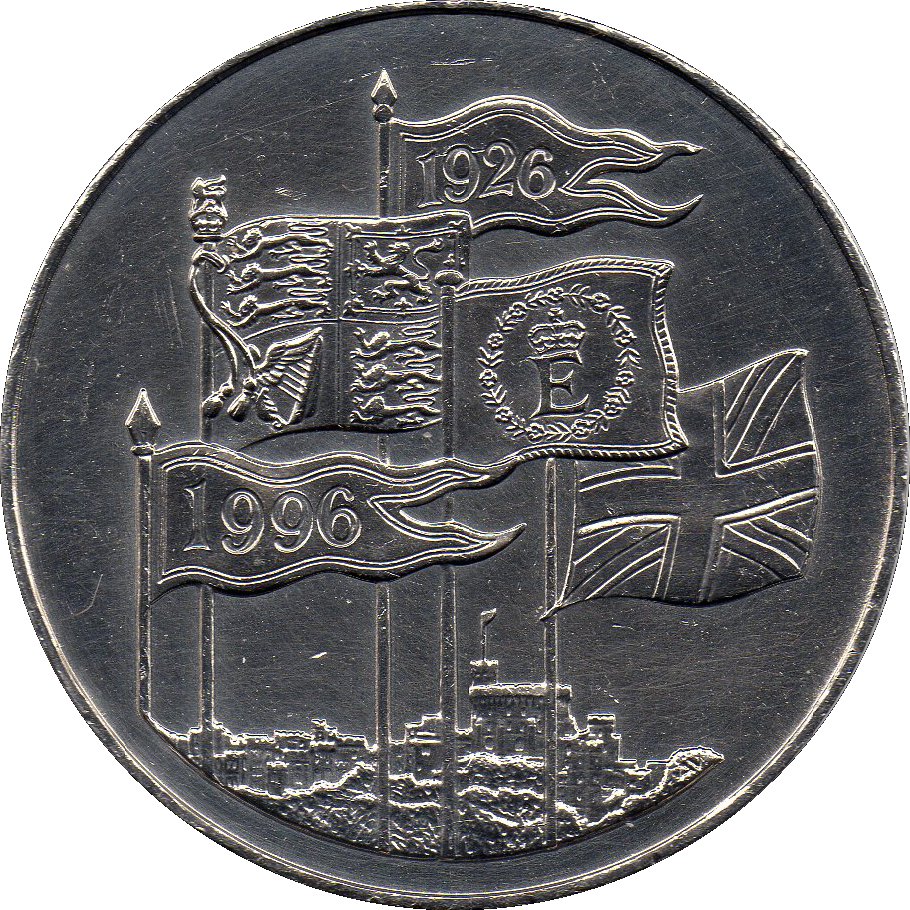
| 1996 | Queen Elizabeth II 70th Birthday | £12-22 | £100-150 | £3,000-4,200 |
| 1997 | Queen & Prince Philip Golden Wedding (50th) | £12-22 | £110-160 | £3,200-4,500 |
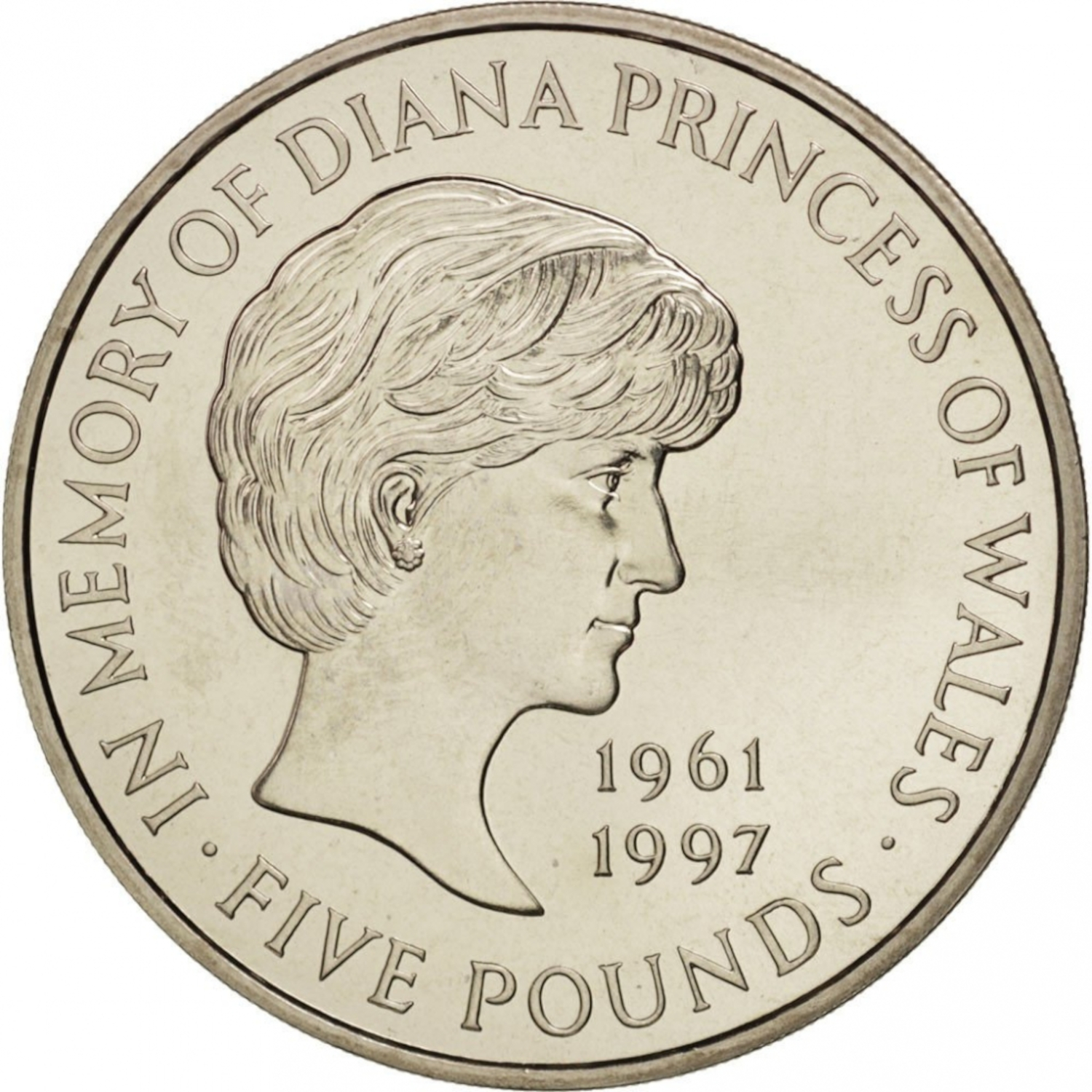
| 1999 | Diana Princess of Wales Memorial | £15-30 | £120-180 | £3,500-4,800 |
| 1999 | Queen Mother Centenary anticipated | £12-22 | £100-150 | £3,000-4,200 |
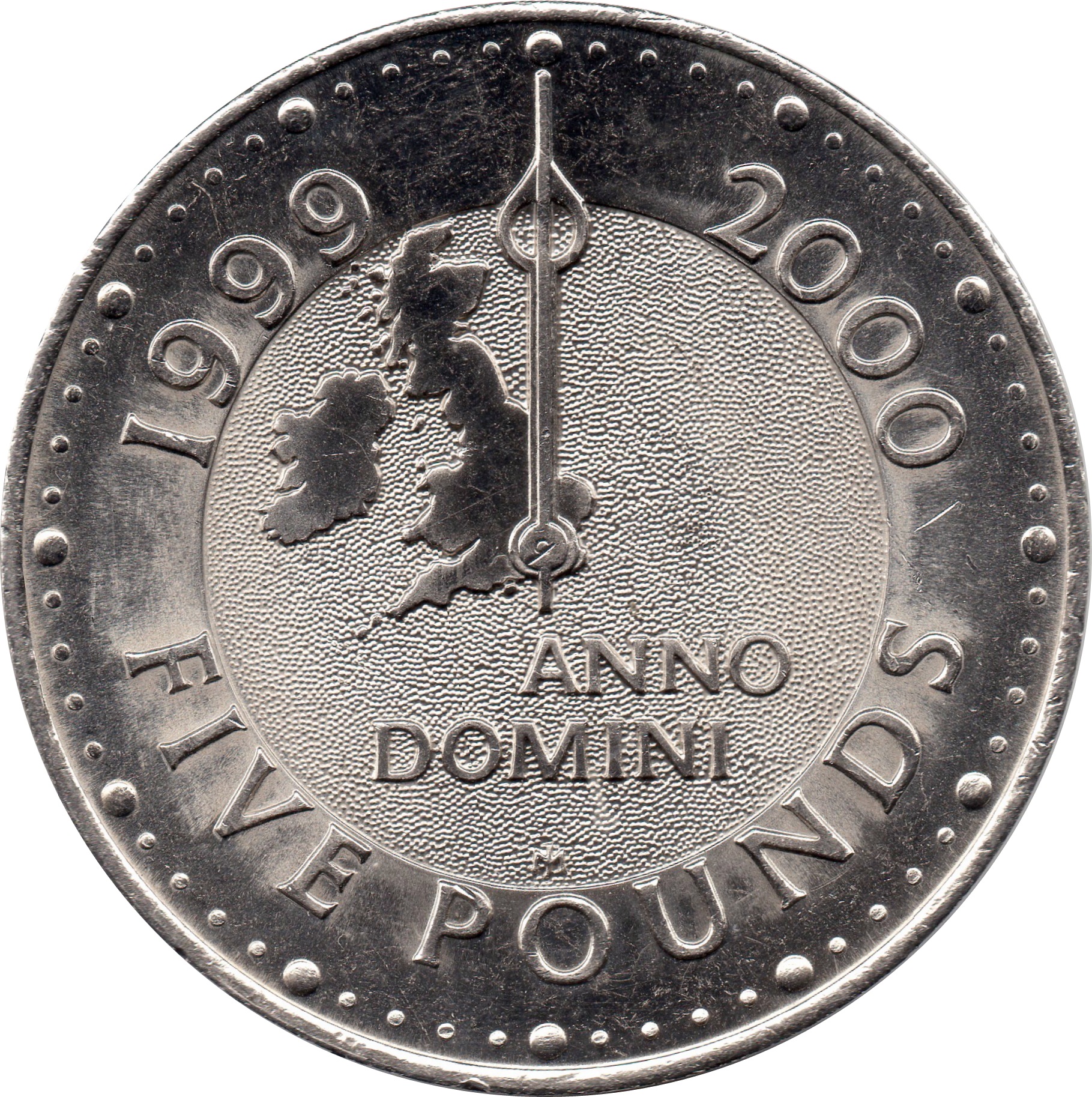
| 2000 | Millennium / Queen Mother 100th | £12-25 | £110-170 | £3,200-4,800 |
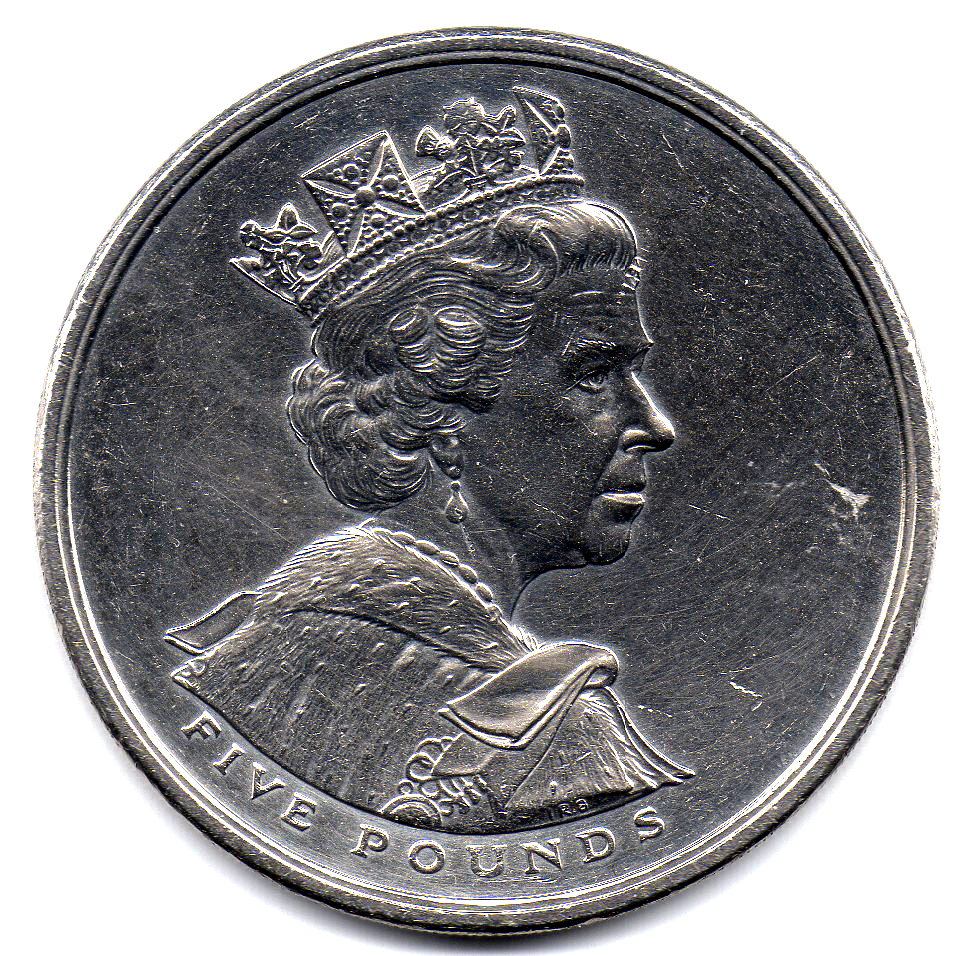
| 2002 | Golden Jubilee (Elizabeth II 50 years) | £15-30 | £130-200 | £3,800-5,500 |
| 2003 | Coronation 50th Anniversary | £12-22 | £100-150 | £3,000-4,200 |
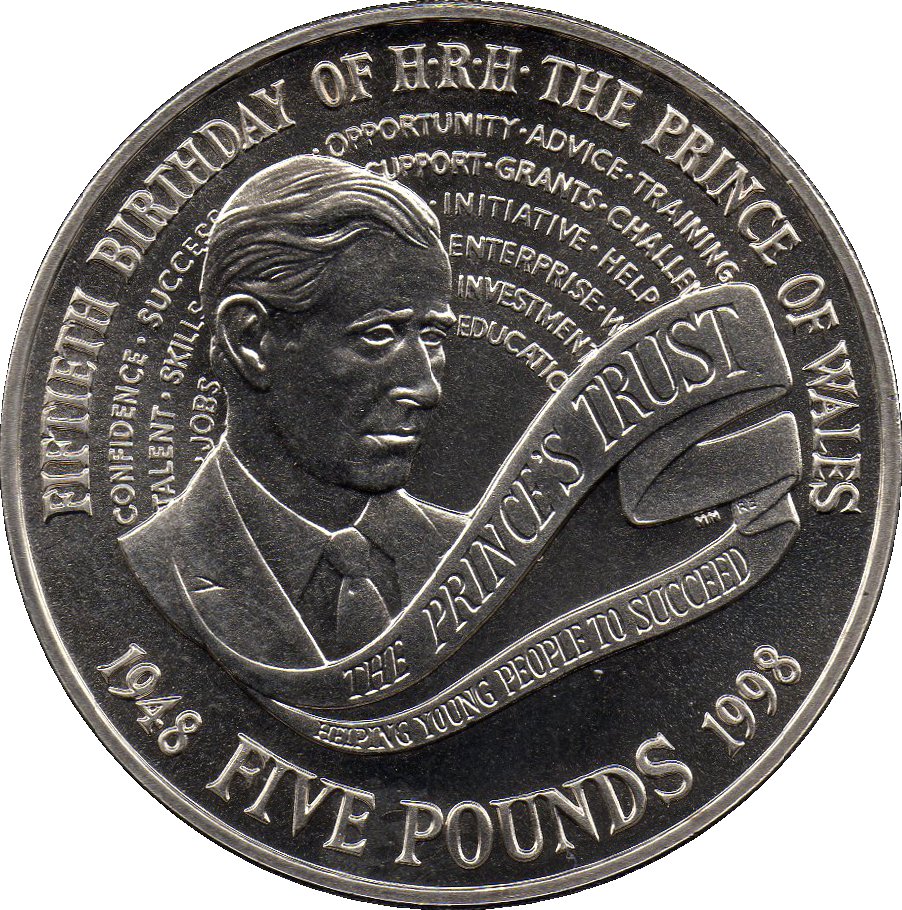
| 2008 | Prince Charles 60th Birthday | £12-22 | £100-150 | £3,000-4,200 |
| 2011 | Royal Wedding William & Catherine | £15-30 | £120-180 | £3,500-4,800 |
| 2012 | Diamond Jubilee (Elizabeth II 60 years) | £15-30 | £130-200 | £3,800-5,500 |
| 2013 | Coronation 60th Anniversary | £12-22 | £100-150 | £3,000-4,200 |
| 2015 | Princess Charlotte birth | £12-25 | £110-160 | £3,200-4,500 |
| 2017 | Sapphire Jubilee (Elizabeth II 65 years) | £15-25 | £110-170 | £3,200-4,500 |
| 2018 | Royal Wedding Harry & Meghan | £15-30 | £120-180 | £3,500-4,800 |
| 2020 | Music Legends: Queen / Bowie / Elton | £25-65 | £120-220 | £3,800-5,500 |
| 2022 | Platinum Jubilee (Elizabeth II 70 years) | £20-45 | £140-220 | £4,000-6,000 |
| 2022 | Harry Potter 25th Anniversary series | £15-30 | £110-180 | £3,500-5,000 |
| 2023 | Coronation Charles III | £15-30 | £130-200 | £3,800-5,500 |
| 2024 | D-Day 80th Anniversary £5 crown | £15-30 | £130-200 | £3,800-5,500 |
| 2026 | Charles III continuing programme | £15-30 | £120-180 | £3,500-5,000 |
Realised price ranges from auction houses and BNTA-dealer sold listings over the past three years. Mintages and condition affect the upper end of every range significantly.
£5 coin formats
| Format | Weight | Mintage | BU/secondary range |
|---|---|---|---|
| Cupronickel BU | 28.28 g | typically 50,000-200,000 | £5-25 |
| Sterling silver proof | 28.28 g (.925) | 5,000-15,000 | £100-180 |
| Silver Piedfort | 56.56 g (.925, double weight) | 1,500-3,500 | £200-380 |
| Gold proof | 39.94 g (.9999 modern, .9167 historic) | 200-1,500 | £3,500-6,500 |
| Gold proof Piedfort | ~80 g (.9999, double weight) | 100-300 | £7,500-12,500 |
| Platinum proof (rare) | 39.94 g (.9995) | 50-500 | £2,500-5,000 |
The cupronickel BU (Brilliant Uncirculated) pack is the entry-level Royal Mint product and accounts for the vast majority of mintage. Coins are sealed in a themed presentation card and intended for display rather than circulation. Removing the coin from the card destroys the BU premium; leave them sealed.
The sterling silver proof sits at the heart of the collector market. Mintages of 5,000-15,000 across most issues, struck to proof finish (mirrored field, frosted relief) on .925 sterling silver planchets. Silver content is approximately 26 g, which provides a meaningful melt floor if the numismatic premium ever collapses.
The silver Piedfort doubles the weight at the same diameter, an unusually thick coin that sits cleanly on its edge. Piedfort (literally "heavy foot" in old French) is a Royal Mint speciality. Mintages typically 1,500-3,500. The thicker planchet allows deeper relief and sharper detail; collectors generally rate Piedforts as the visually best variant of any £5 issue.
The gold proof is the bullion-grade investment piece. Modern gold proofs (post-2013) use .9999 fineness; historic issues (1990-2012) used .9167 22-carat alloy matching the quintuple sovereign standard. Mintages of 200-1,500 mean these are scarce in absolute terms and trade primarily on gold content plus 5-15% numismatic premium. See our sovereign weight specifications guide for the gold-content maths.
Are £5 coins legal tender?
Yes. Every Royal Mint £5 commemorative crown issued since 1990 is legal tender at £5 face value across the United Kingdom. In practice almost no-one spends them, the collectable premium for even the cheapest cupronickel BU is at least 2× face, and silver proofs trade at 20-40× face value. Spending a £5 commemorative is the worst possible exit price.
The legal-tender status matters for two reasons. First, it triggers the UK's capital gains tax exemption for legal-tender coins under HMRC manual CG78308. Any gain on resale is tax-free, regardless of size, for as long as the coin remains UK legal tender. This makes the silver Piedfort and gold proof variants of the £5 crown one of the more tax-efficient UK commemorative formats. See our CGT-exempt UK coins guide for the full list.
Second, you can redeem any £5 commemorative at face value at any UK Post Office (and at most UK retail banks for account holders). This functions as a hard floor on value. A worn cupronickel £5 with a damaged card, where the secondary market refuses to bid, is still worth its £5 face. In practice this floor is rarely tested because even cull-grade examples sell for £5-8 on eBay UK.
Realised auction prices for collectable £5 coins
The table below summarises three-year realised auction price ranges by the strongest issue + format combinations. Prices are from BNTA-member dealer sold listings, eBay UK sold filter, and specialist auction-house catalogues. Outliers excluded.
| Issue | Format | Realised range | Notes |
|---|---|---|---|
| 1990 Queen Mother 90th | Gold proof | £3,200-4,500 | First-year £5 crown |
| 1995 End of WWII 50th | Gold proof | £3,500-5,500 | Lowest-mintage 1990s gold |
| 2002 Golden Jubilee | Gold proof matt finish | £3,800-5,500 | Distinctive matt-gold finish |
| 2011 Royal Wedding William | Silver Piedfort | £220-380 | Strong long-term performer |
| 2012 Diamond Jubilee | Gold proof | £3,800-5,500 | One-year design |
| 2020 Queen Music Legends | Silver Piedfort | £280-450 | Inaugural Music Legends |
| 2020 David Bowie Music Legends | Silver Piedfort | £280-450 | 1,000 mintage |
| 2022 Platinum Jubilee | Silver Piedfort | £240-380 | Highest-issue Elizabeth II Piedfort |
| 2022 Platinum Jubilee | Gold proof | £4,000-6,000 | Final Elizabeth II gold £5 |
| 2023 Coronation Charles III | Cupronickel BU | £15-30 | First Charles III £5 |
| 2023 Coronation Charles III | Silver Piedfort | £260-420 | Strong launch-year demand |
| 2023 Coronation Charles III | Gold proof | £3,800-5,500 | Inaugural Charles III gold |
| 2024 D-Day 80th | Silver Piedfort | £220-380 | WWII anniversary collector demand |
Spotting fake or damaged £5 coins
Counterfeit cupronickel £5 commemorative crowns are uncommon, the resale value is too low to justify the cost of cast or struck counterfeits, and the format is too distinctive to be confused with anything else in circulation. The two real risks are damaged-but-genuine examples sold as BU and counterfeit gold proof £5s.
For cupronickel, three checks: (1) weight should be exactly 28.28 g on a jewellery scale; (2) diameter 38.61 mm flat across; (3) the coin must still be sealed in its original Royal Mint card to qualify for BU pricing, loose or out-of-card examples drop 40-60% in value regardless of condition.
For silver proofs, look for milky white toning (a sign of moisture damage), fingerprints (a sign of handling), and any cloudiness in the mirror field. The original Royal Mint clamshell case with numbered Certificate of Authenticity is essential, a silver proof without its CoA loses 20-30% of its premium.
For gold proofs at £3,500+, the risk profile changes significantly. Counterfeit gold proof £5s do exist on eBay UK, typically tungsten-core gold-plated copies that pass weight and diameter tests but fail on edge inspection and sound. For any gold proof £5, professional grading by PCGS or NGC is essential, the £30-50 fee is trivial against the coin's value, and slabbed examples consistently realise 15-25% above raw equivalents at auction. See our authentication guide for the test procedures (which apply to gold proof £5s identically).
Where to buy authenticated £5 coins
For new releases at issue price, buy direct from The Royal Mint. Prices are higher than secondary-market once a sell-out clears, but you avoid every authentication risk and the coin arrives in original packaging with full Royal Mint provenance.
For sold-out historic issues, three reliable channels:
- BNTA-member dealers, the British Numismatic Trade Association maintains an authentication standard for members. Most BNTA dealers list on their own websites and on eBay UK with BNTA branding visible. Prices typically 5-15% above wholesale but with full return guarantee.
- Specialist auction houses, Spink, Baldwin's and Noonans all run regular British coin sales that include £5 commemoratives. Hammer commissions 15-20% but realisations on scarcer issues consistently outperform private sale.
- eBay UK with sold-filter cross-check, the lowest cost of acquisition for common cupronickel and silver proof £5s. Use the "sold listings" filter to confirm fair market price, and require sealed Royal Mint packaging plus original receipt photos before bidding on any high-value lot.
Avoid Westminster-style direct-mail buyers and pawn shops, both consistently undervalue £5 commemorative crowns by 30-60% versus auction realisations. The where to sell rare coins UK guide covers the venue-by-venue economics.
Related guides
- Crown coin values UK, pre-decimal crowns and 25p crowns 1971-1990 that the £5 replaced.
- Gold sovereign values UK, including the quintuple sovereign £5 face value gold coin.
- Music Legends £5 series, the strongest-performing modern £5 programme.
- CGT-exempt UK coins, the tax framework that applies to all £5 commemoratives.
- Coin collection insurance UK, for collections of silver Piedfort and gold proof £5s.
Featured £5 coins on MyCoinage