20p Coin Values UK: The 2008 Undated Mule and Every Other 20p Worth More Than 20p
Almost every British 20p in circulation is worth exactly 20p. One famous Royal Mint error from 2008, the "undated 20p" mule, trades at 250–1,000 times face value and is still genuinely findable in change. This guide covers identification, current realised prices, fake-spotting, and every other 20p variant worth a second look.
Found a 20p you think might be rare?
Free MyCoinage valuation tool · realised auction prices · no card needed
Add it to a free MyCoinage collection and see realised auction prices for every UK 20p, including the undated 2008 mule.
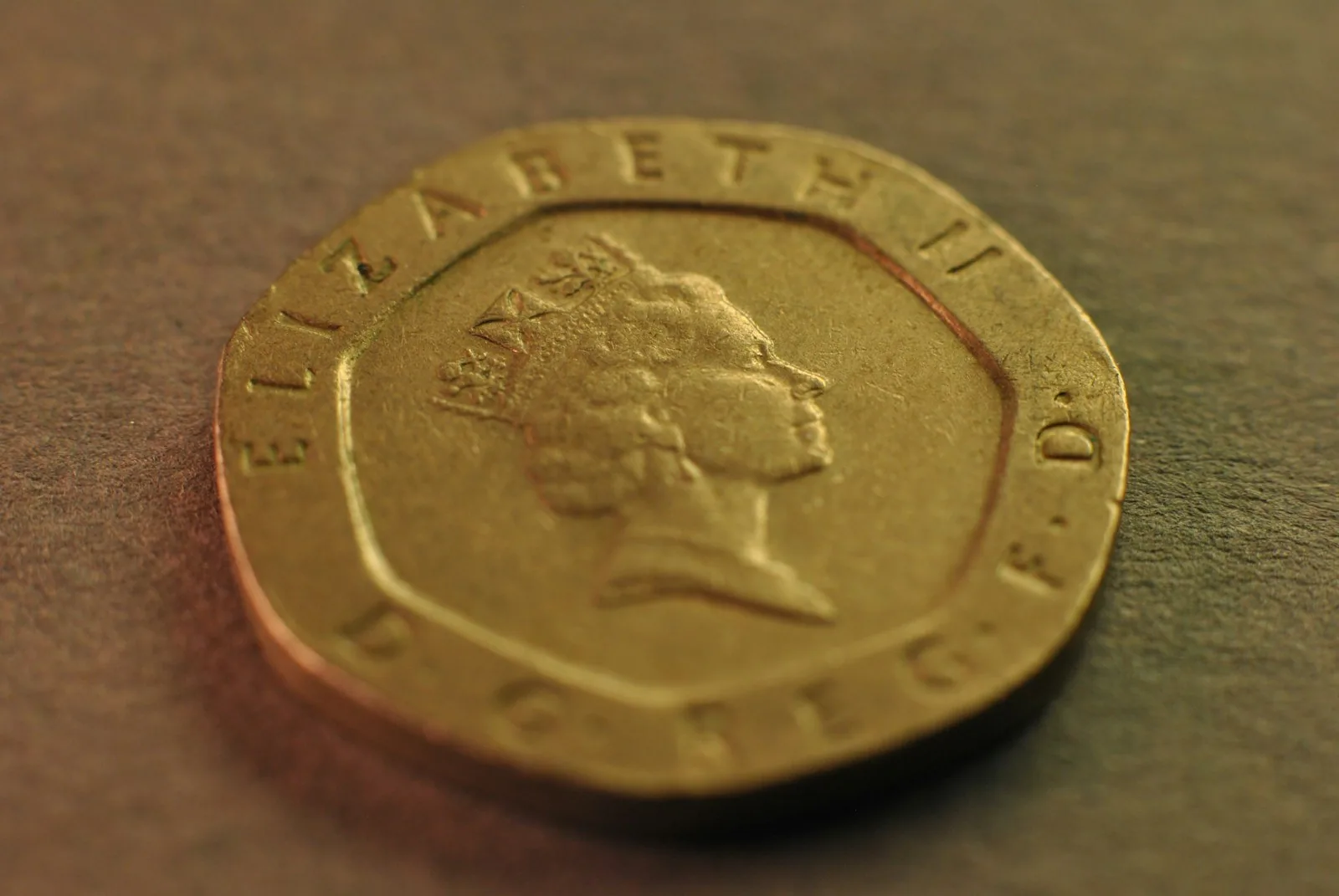
20p coin specifications
| Property | Value |
|---|---|
| Weight | 5.00 g |
| Diameter | 21.4 mm |
| Composition | Cupronickel (84% copper, 16% nickel) |
| Shape | Heptagonal (Reuleaux polygon, constant diameter) |
| Edge | Plain |
| First issued | 9 June 1982 |
| Designer (1982–2008 reverse) | William Gardner (Tudor rose) |
| Designer (2008– reverse) | Matthew Dent (Royal Shield section) |
The 2008 undated 20p in detail
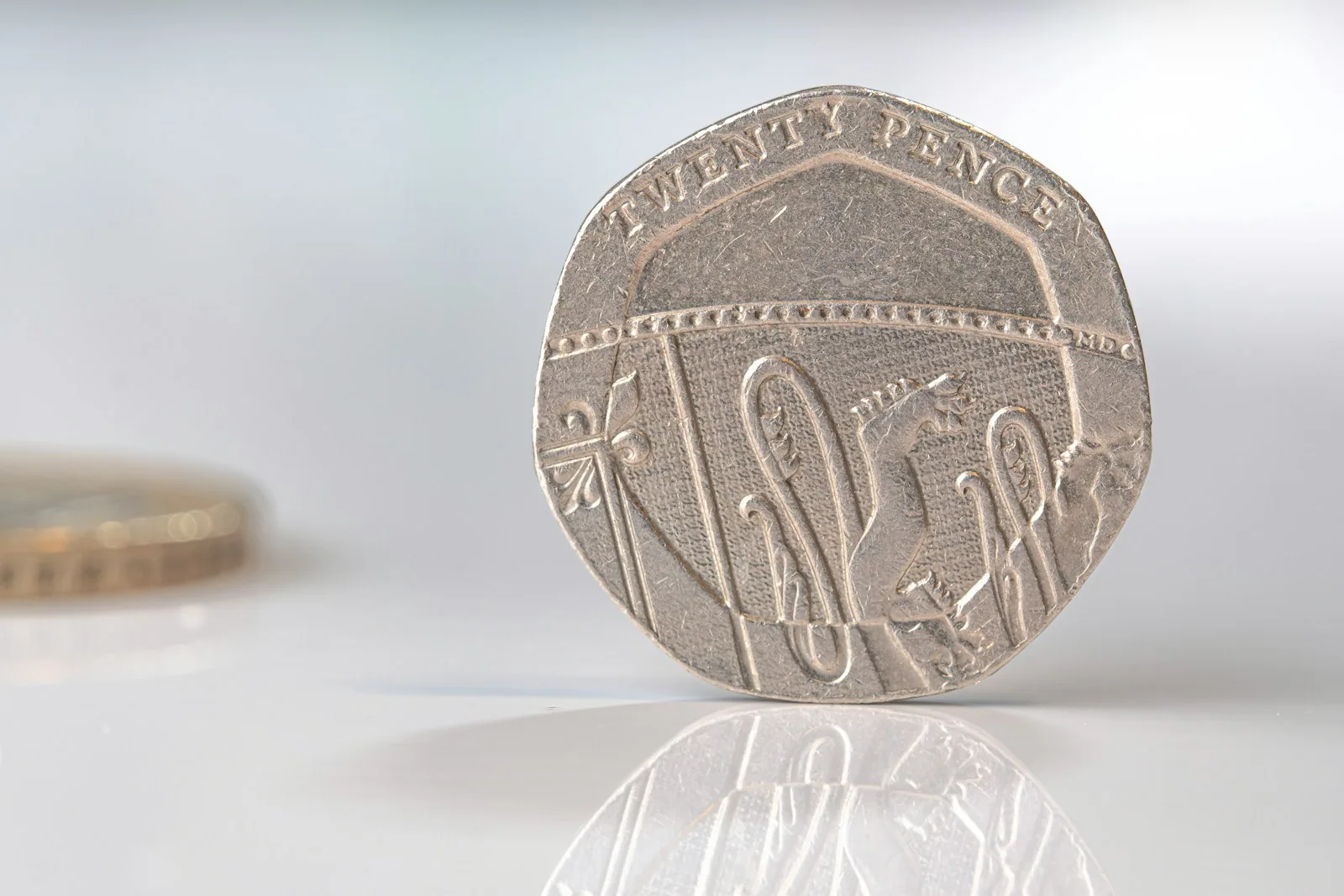
The 20p was redesigned in 2008 as part of the Royal Mint's coinage reset. Both the obverse and reverse were updated. Crucially, the date moved from the reverse (next to the portcullis on the old design) to the obverse (below the queen's portrait on the new design). During the brief transition period when both old and new dies were in circulation at the Royal Mint's Llantrisant facility, a small number of strike pairs combined the new dateless reverse with an old dateless obverse.
The result: a perfectly-struck, perfectly-circulating, perfectly-dateless 20p coin. The first British coin without a year visible since the milled coinage of the late 17th century. The Royal Mint publicly acknowledged the error in June 2009 after a numismatic dealer identified specimens in circulation. An investigation by the BBC (using Royal Mint internal estimates) suggested between 50,000 and 200,000 mules entered circulation, but the exact figure has never been confirmed.
How to identify a genuine undated 20p
- Hold the coin with the Royal Shield design uppermost. The shield is split into quarters, this is the post-2008 reverse.
- Check the field below the shield. On a normal post-2008 coin you should see a four-digit year (2009, 2010, 2011...). On a mule, this field is empty.
- Flip the coin. The portrait side is now uppermost. On a normal pre-2008 coin, the year sits below the bust. On a mule, this field is also empty.
- If neither side shows any year, you have a mule.
Real specimens look completely normal otherwise. Crisp strike, full design detail, normal edge. The absence of the year is the only abnormality.
Counterfeit-spotting: removed-date fakes
The most common counterfeit is a normal post-2008 20p with the date physically removed using a fine pin tool, an engraving burr, or chemical etching. Tells:
- Surface texture below the shield. A genuine mule has a smooth, undisturbed coin field. A counterfeit shows microscratches, slight depressions, file marks or chemical pitting.
- Magnification. Under 10x loupe a removed-date area will show the residue of the lettering, faint outlines, partial digit fragments, tooling lines running parallel to where the digits were.
- Edge condition. If the edge near the date area shows abrasion or discoloration, the coin has been worked on.
- Surface gloss. Genuine cupronickel has a slight uniform luster. Tampered areas often show slight matte or polished patches.
For coins you intend to keep or sell at £100+, get a third-party slab. Authentication fees of £25–£50 are small relative to a fake's cost.
Other 20p variants worth more than face value
| Type | Year(s) | Notes | Typical value |
|---|---|---|---|
| Undated mule | 2008 | No date on either side | £50–£400 |
| BU Brilliant Uncirculated proof | 1982–present | From sealed Royal Mint annual sets | £3–£10 |
| Silver Proof | Selected years | 0.925 sterling silver, from collector sets | £25–£55 |
| Silver Proof Piedfort | Selected years | Double-weight (10g) sterling silver | £55–£110 |
| Gold Proof | Selected years | 0.917 fineness, very low mintage | £1,200–£2,000 |
| Charles III 2025 Britannia & Liberty Silver Proof | 2025 | Inaugural Charles III 20p collector issue | £55–£90 |
| Off-centre strikes | any year | Die misalignment 5–15% | £15–£40 |
| Die-rotation errors | any year | Obverse/reverse misaligned ~180° | £15–£30 |
| 1982 first-year-of-issue BU | 1982 | First year of the denomination | £4–£8 |
Where to sell an undated 20p
The right venue depends on grade and authentication status:
- £50–£100 raw circulated: eBay UK is the standard route. Photograph both sides clearly under raking light so the missing-date area is unambiguous. Sell with completed-listings comparable evidence to set buyer expectation.
- £100–£200 raw uncirculated: get a third-party slab first. The slab fee adds 30–50% to your realised price by removing buyer counterfeit risk.
- £200+ slabbed: consign to a UK numismatic auction house. Hammer commission ~15–20% but realised prices on rare-error coins are reliably above private offers. Recommended: Baldwin's, Spink or Noonans.
Featured 20p coins on MyCoinage
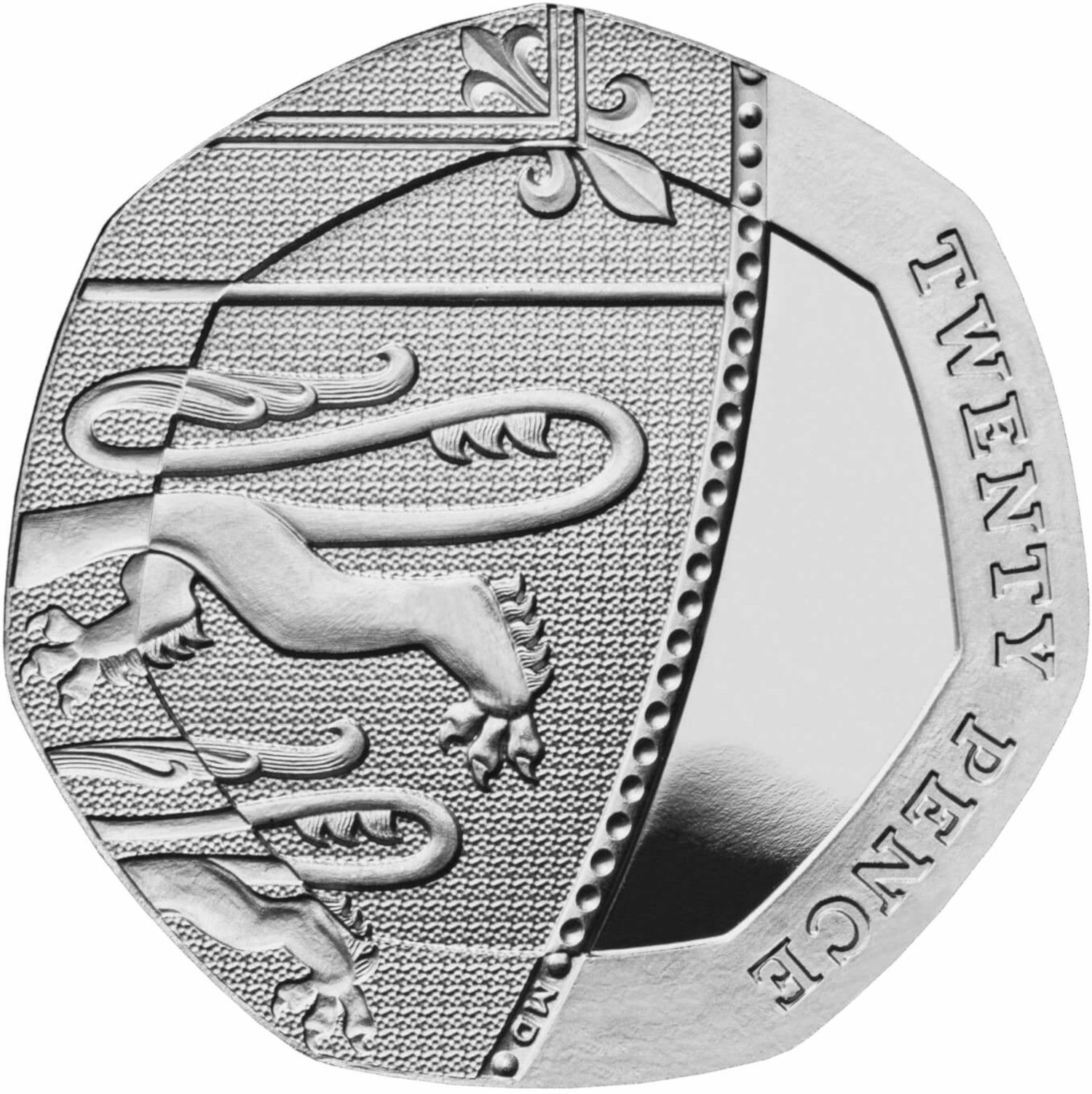
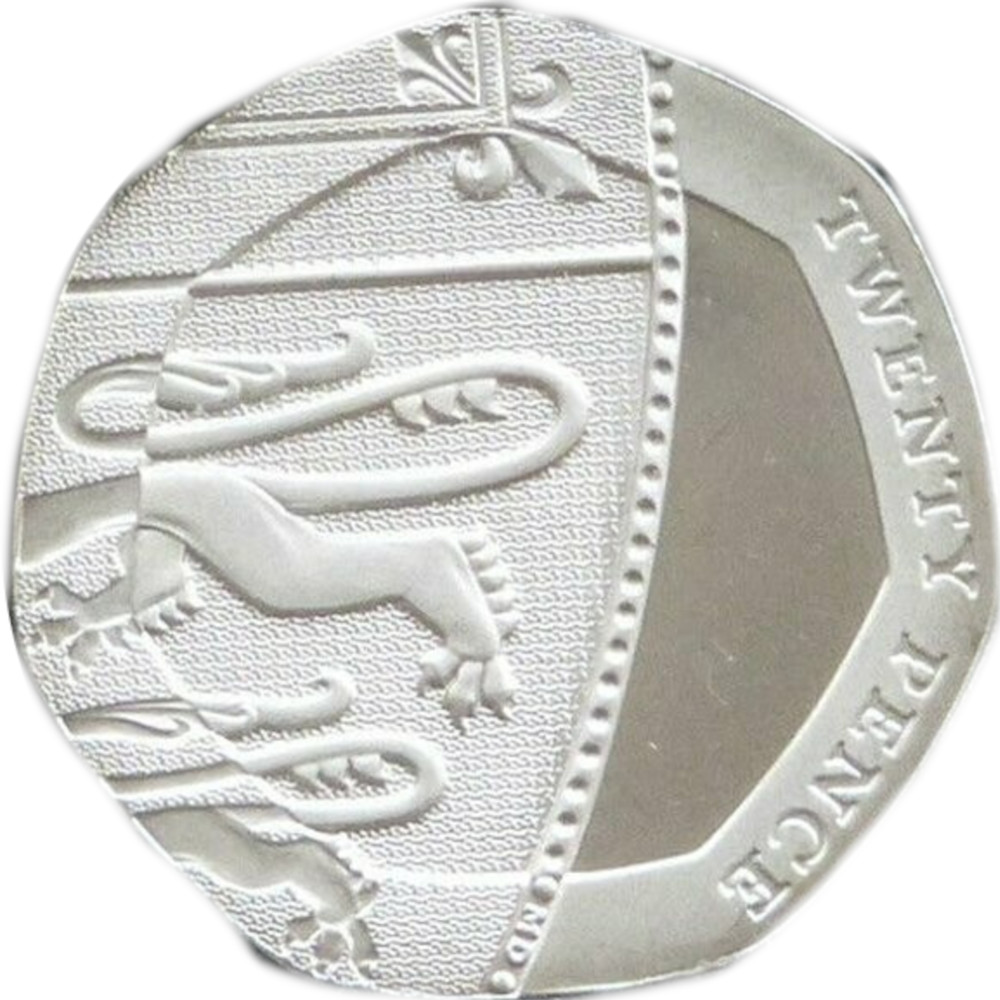
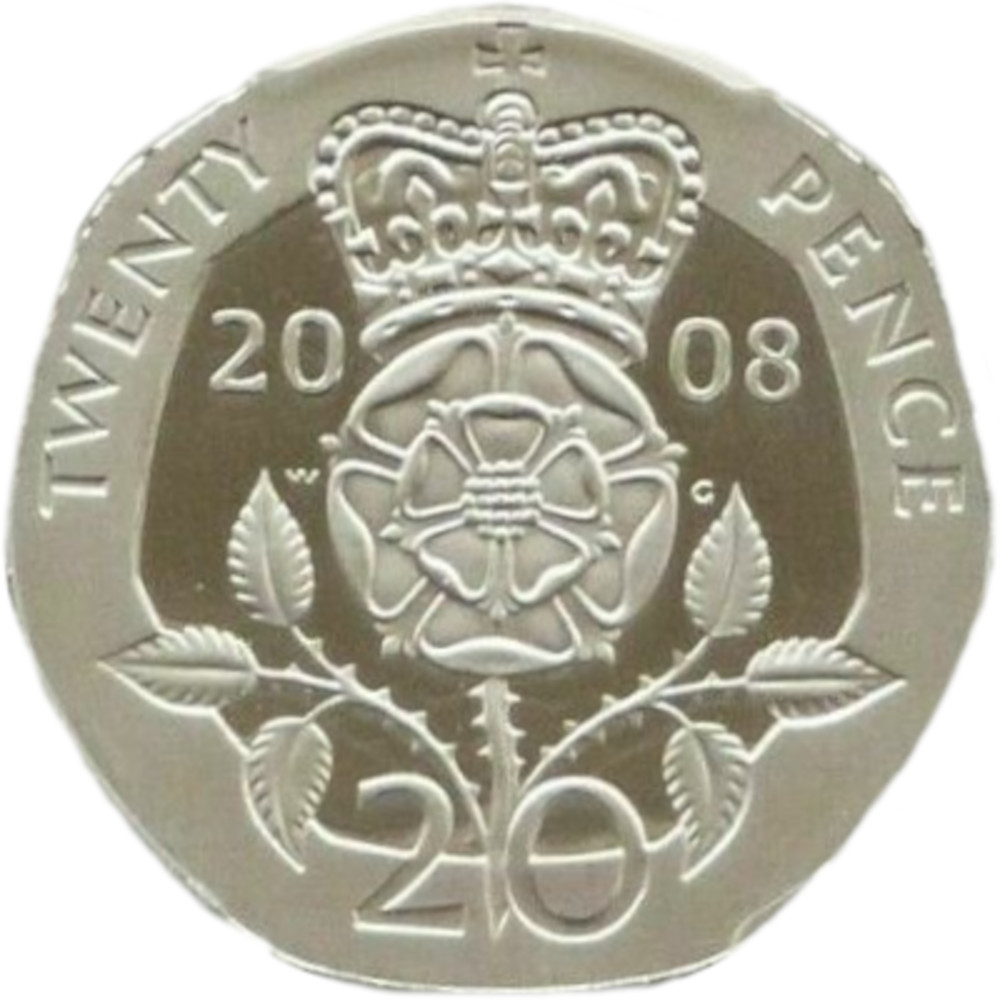
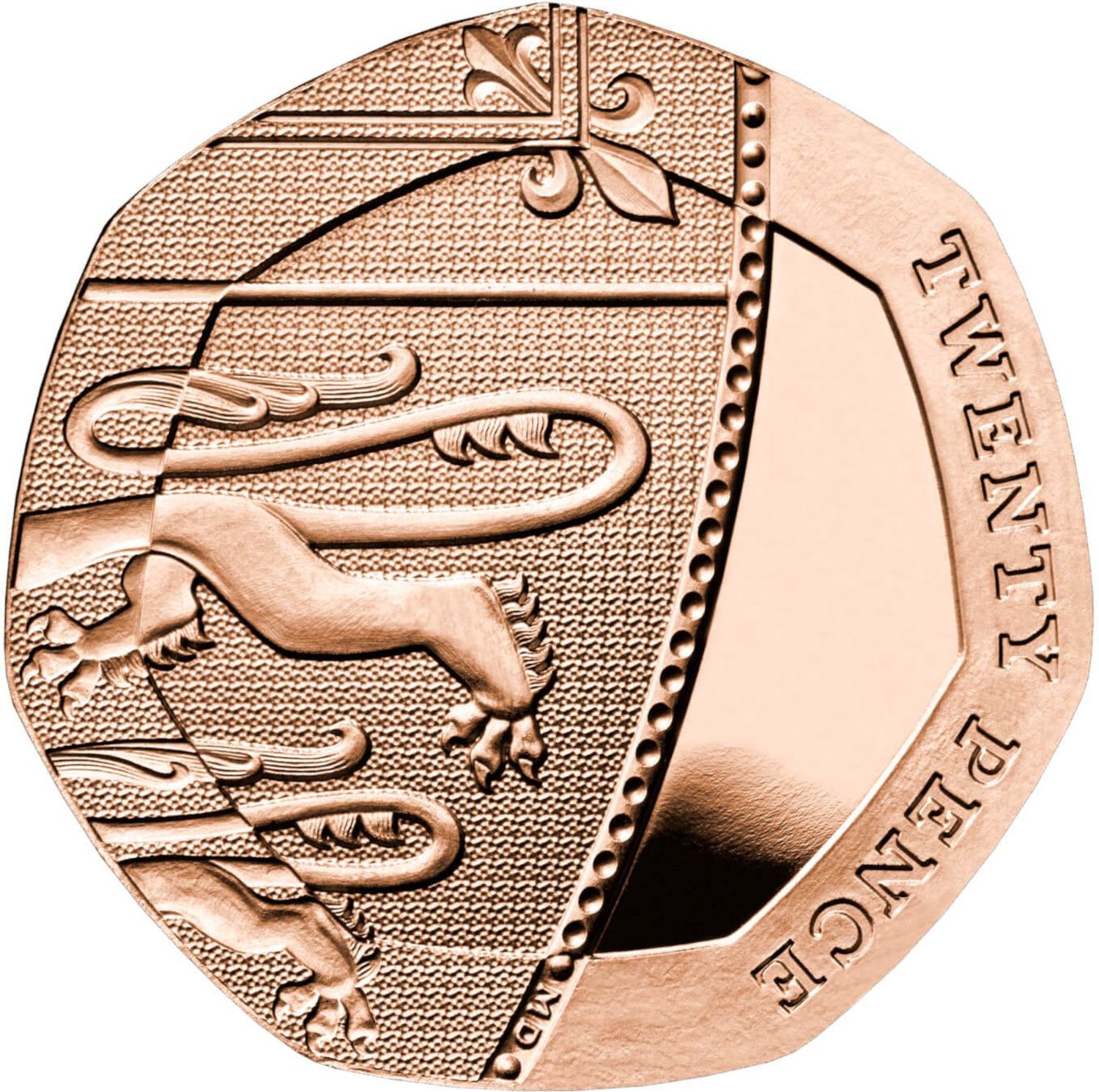
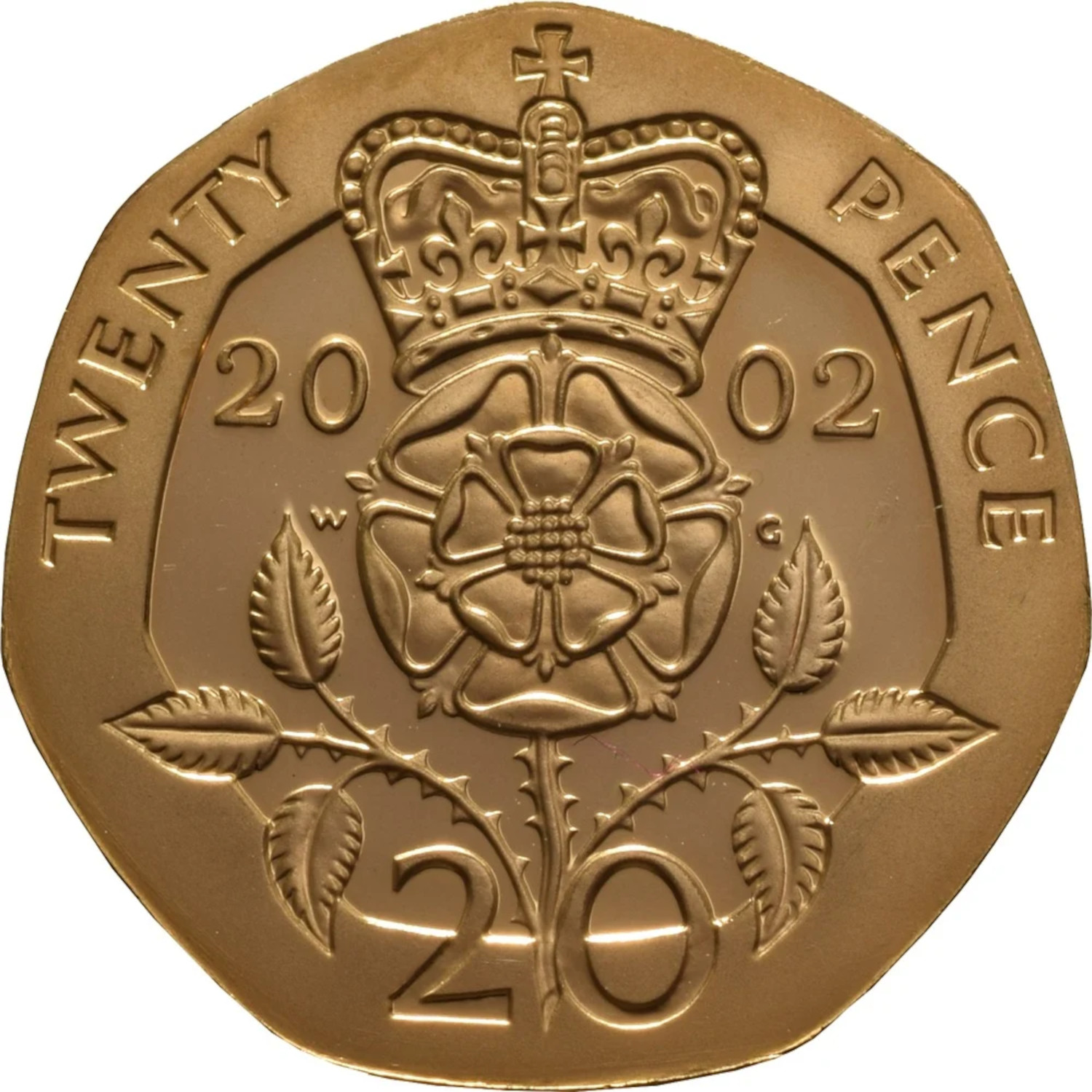
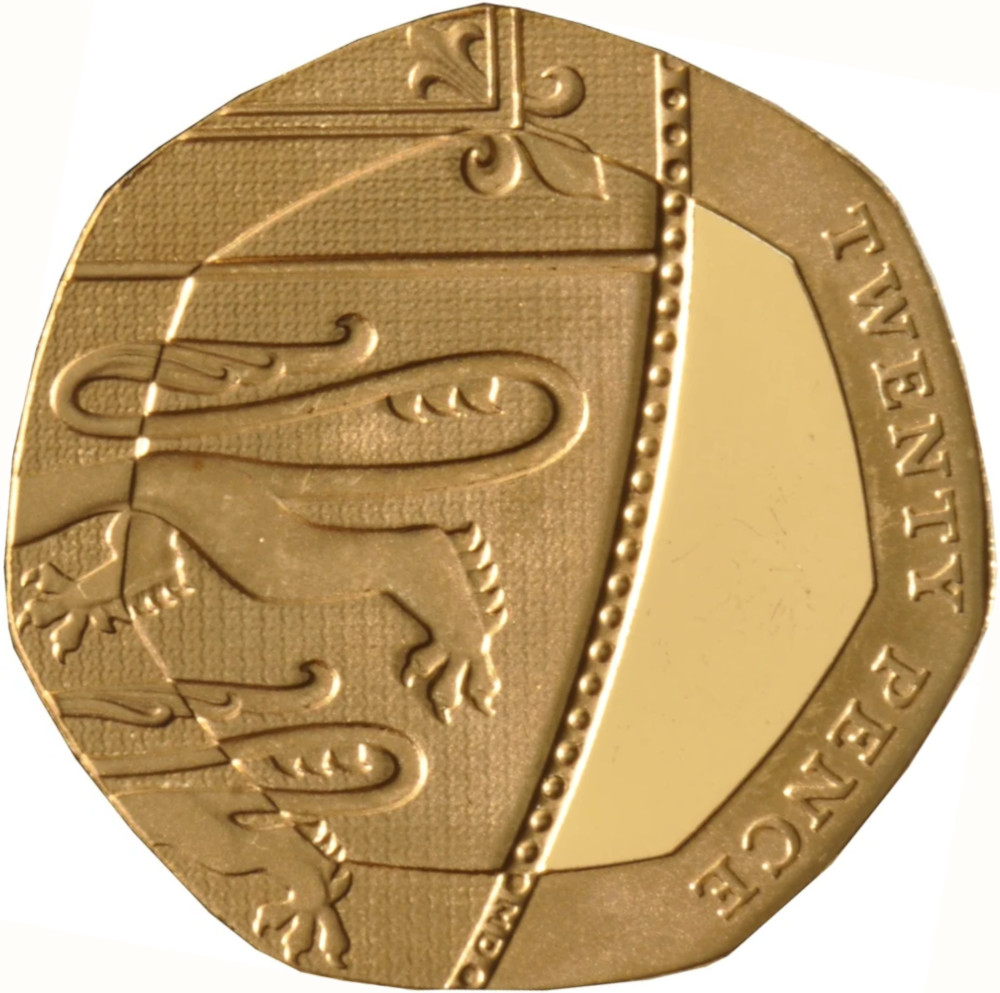
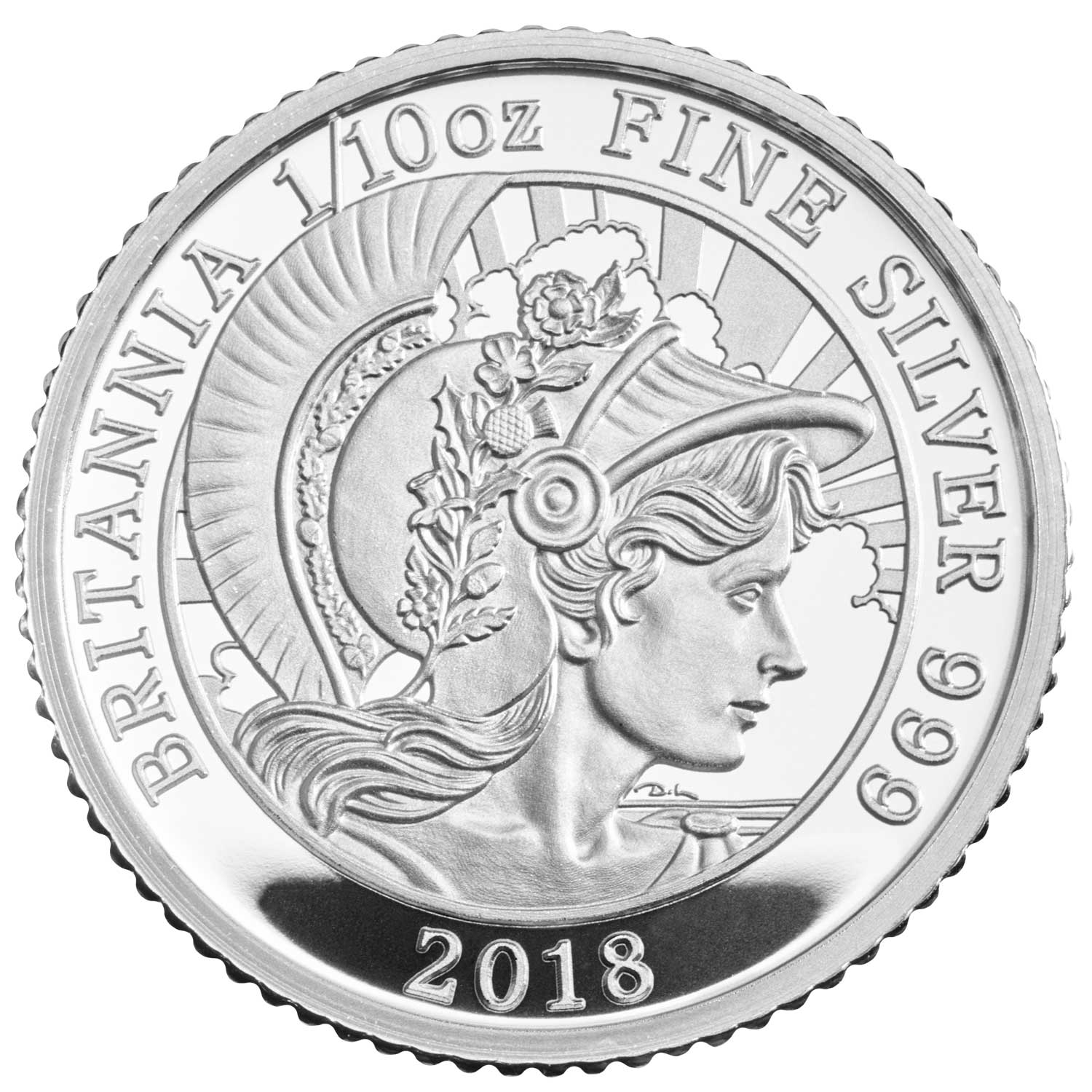
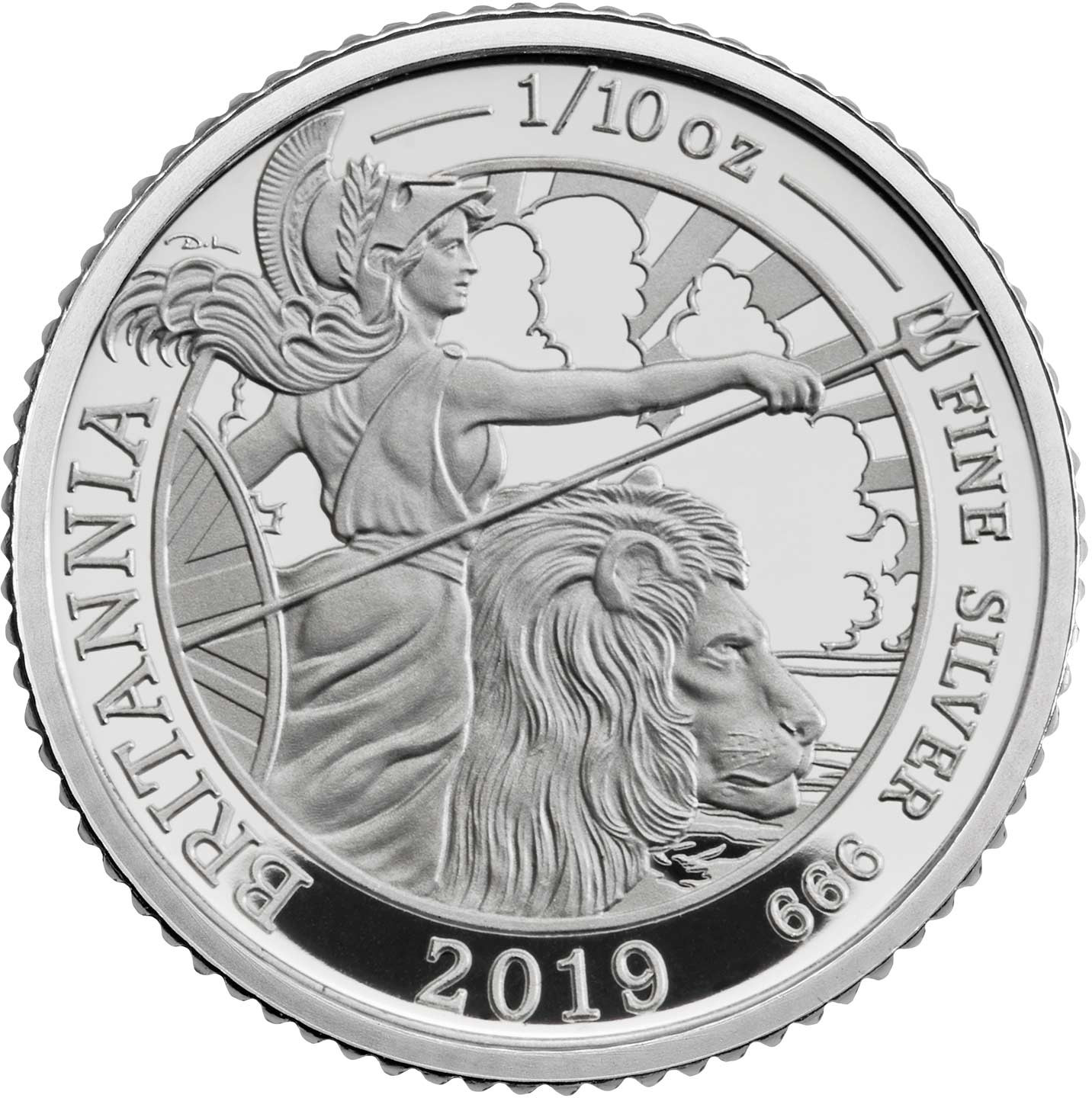
Browse every UK 20p in the catalogue →
Buying 20p coins on eBay
The links below open eBay UK searches; if you buy through them, MyCoinage earns a small commission at no cost to you.
The 2008 undated mule 20p, struck without a year after dies were swapped mid-redesign, is the headline 20p rarity, regularly trading at £50-150 in everyday grade. Royal Shield 20ps (2008+) and the silver proof / Piedfort variants from collector sets are the next tier. Charles III 20ps released from 2023 are the modern collecting target.
2008 undated 20p mule (sold) ↗ 2008 undated 20p mule (BIN) ↗ 20p silver proof ↗ 20p silver Piedfort ↗ Charles III 20p ↗ 20p date-run lots ↗ Slabbed 20p (sold) ↗ Royal Shield 20p ↗
Frequently asked questions
What is the 2008 undated 20p?
How much is a 2008 undated 20p worth?
How do I tell if my 20p is the undated mule?
How do I tell a genuine undated 20p from a fake one?
Are other 20p coins worth more than face value?
When was the 20p first issued?
How heavy is a 20p coin?
Should I clean my 20p before selling?
Where can I sell an undated 20p?
Are there any other 20p errors worth checking for?
Has the 20p design changed since 2008?
Resources and further reading
- UK coins of the 1980s, the decade the 20p was introduced (1982).
- The Royal Mint, the issuer's own historical reference on the 2008 redesign.
- Royal Mint Museum, production-method context.
- BBC News: undated 20p coverage, mainstream confirmation of the 2009 announcement and circulation estimate.
- Coin Hunter, UK community with detailed mintage data and change-finder tools.
- Predecimal.com, the British Coin Forum. The place to post photographs of suspected mules for free expert assessment.
- NGC UK, PCGS, CGS UK, third-party grading services. Authenticate any specimen worth £100+.
- UK Coin Errors List, full coverage of British mint errors with realised prices.
- Rare UK Coins List, the headline rarities by realised auction price.
- Coin Grading Guide, UK and Sheldon scales explained.