2p Coin Values UK: The 1983 "New Pence" Error & Rarer 2p Coins
The humble copper 2p has one famous Royal Mint error worth several hundred pounds, several pre-decimal relatives ranging from the giant 1797 "cartwheel" twopence to Royal Maundy silver, and a quietly interesting modern series that switched from solid bronze to copper-plated steel in 1992. This guide is the full 2p story: identification, values, authentication and where to sell.
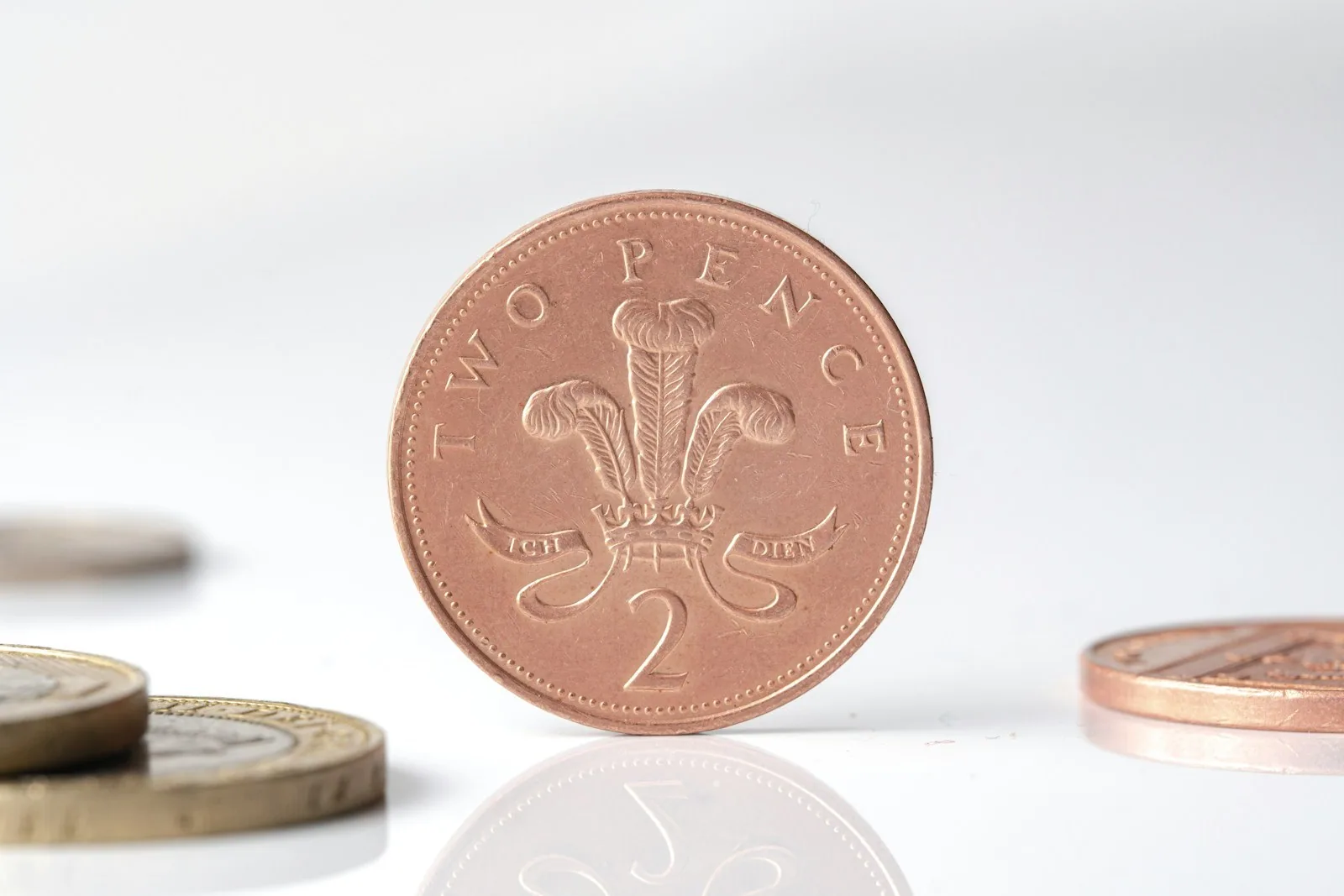
The 1983 "New Pence" 2p mule
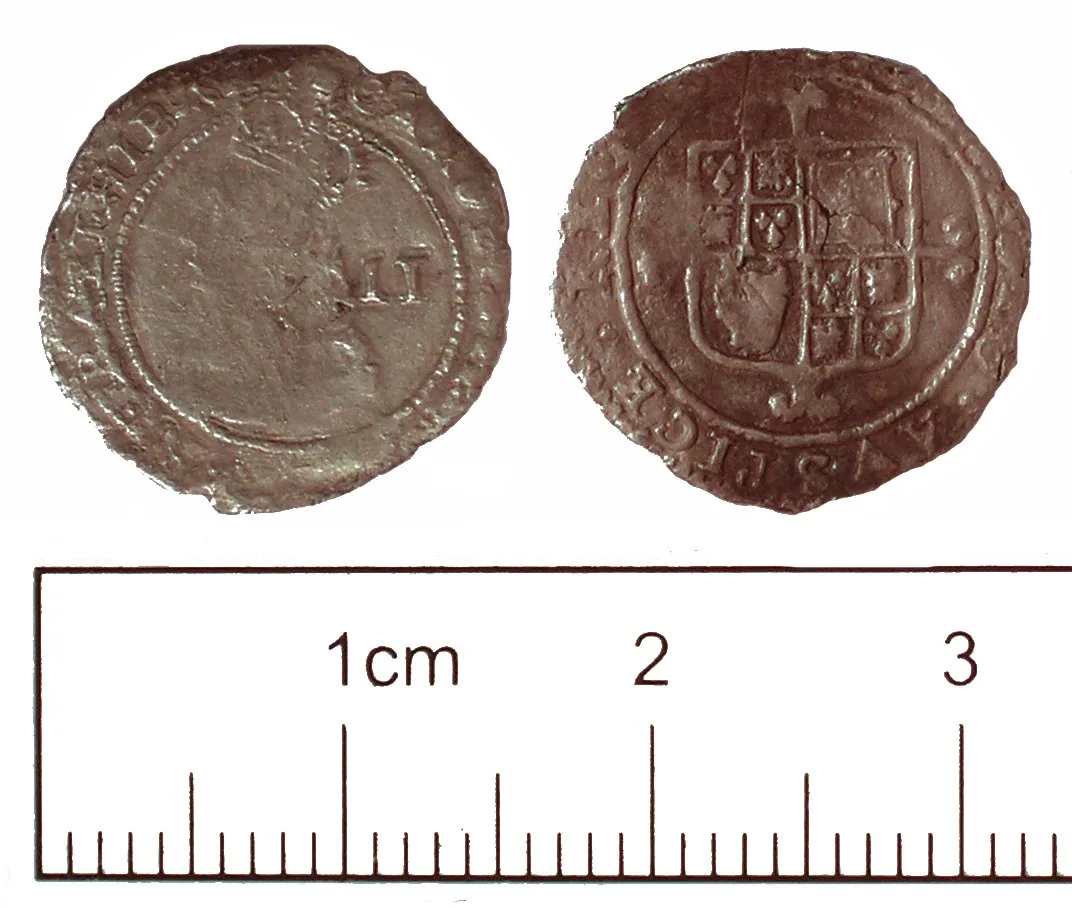
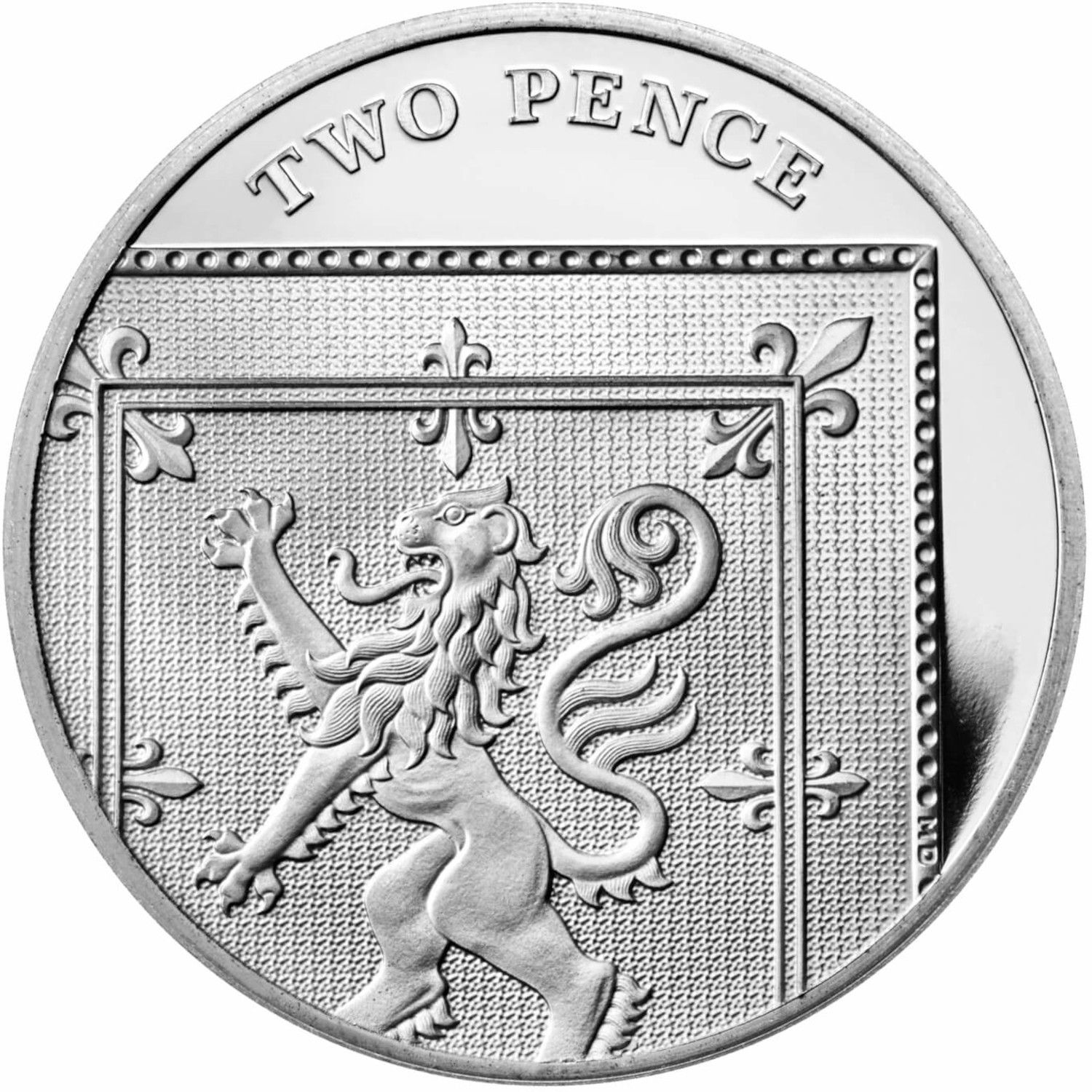
All UK decimal coins carried the inscription "NEW PENCE" from decimalisation in 1971 until 1981. From 1982 onwards the Royal Mint replaced the legend with the denomination name, "TWO PENCE", to reflect that the "new" decimal system was now the only system. By design every 1983 2p should read "TWO PENCE".
A small batch of 1983 2ps housed in Royal Mint Uncirculated Year Set folders escaped the Mint with the obsolete "NEW PENCE" reverse die. The cause was a die-pairing error in the proof-finishing line: a 1982 reverse working die was held over and married to a 1983 obverse during set production. The error was not noticed publicly until the late 1980s, by which time most of the affected sets had been broken open and the coins spent or stored.
Auction realisations vary sharply by condition and provenance. Loose circulated examples sit at the lower end of the range; cased examples in original Royal Mint Year Set folders, untouched, can reach the upper bound. The coin remains the headline modern UK 2p rarity.
| Condition / provenance | Description | Realised range |
|---|---|---|
| Loose, circulated | Found in change, mid-grade VF/EF, environmental toning | £300 – £500 |
| Loose, BU | Likely removed from Mint set; full lustre, light handling | £500 – £800 |
| Original Royal Mint set | Cased 1983 Uncirculated Year Set, sealed | £700 – £1,200 |
| Slabbed (CGS / NGC / PCGS) | Authenticated and graded MS65 or higher | £800 – £1,500 |
Authentication: spotting altered "New Pence" 2ps
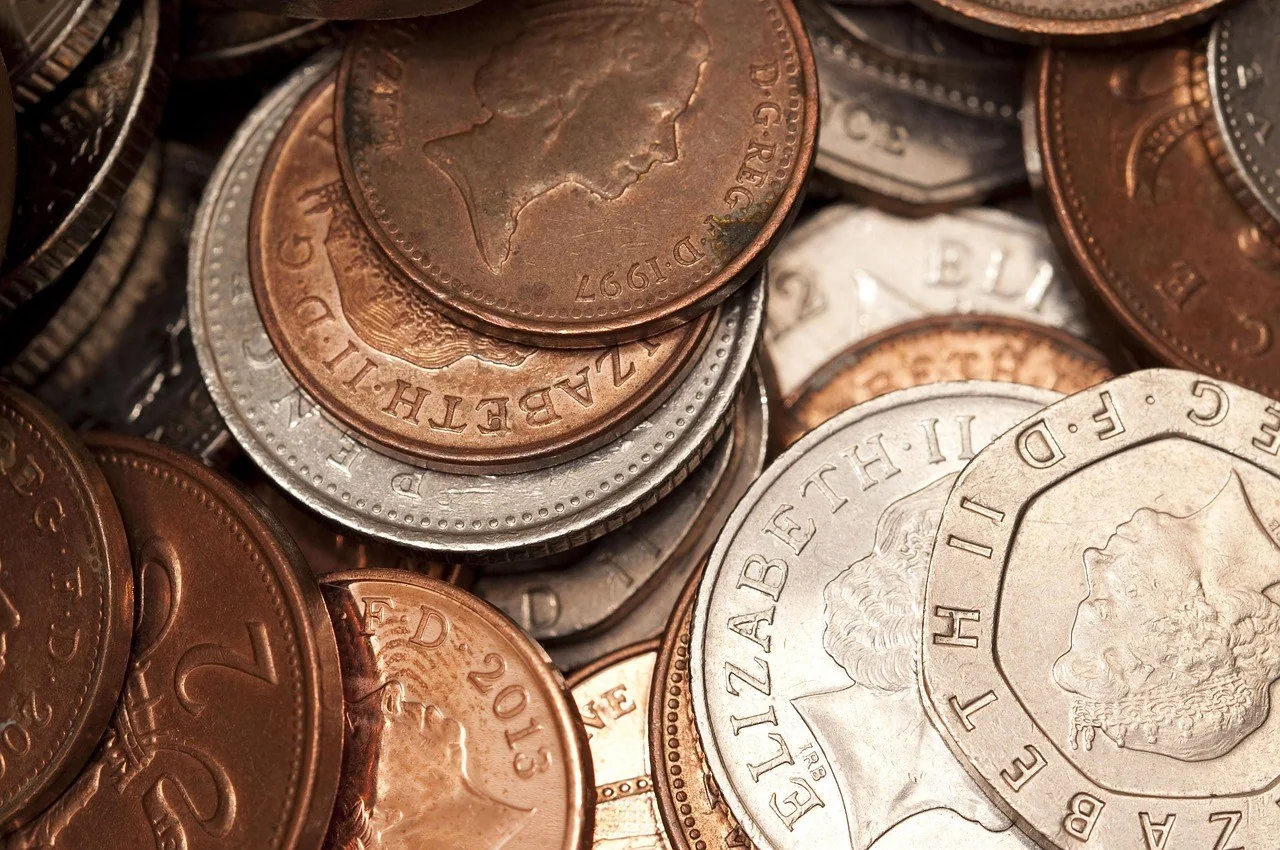
The price differential between an ordinary 1983 2p and a genuine New Pence mule has produced a cottage industry of altered fakes on online marketplaces. The two common alteration methods are chemical and mechanical, and both leave detectable traces.
- Chemical removal of "TWO". The forger applies an acidic gel (often diluted ferric chloride) to the area below the shield, etching away the relief letters. Tells: the background field around "PENCE" has a slightly matt, micro-pitted texture under 10x magnification; the surrounding lustre is uneven; remaining letters in "PENCE" sometimes show edge softening because the etchant was not perfectly localised.
- Mechanical engraving. Crude attempts re-engrave "NEW" over a polished area where "TWO" used to be. Tells: letter shapes do not match the 1971–1981 New Pence master die; serif and stroke widths are inconsistent; tool marks are visible at any magnification above 5x.
- Wrong-die typeface. Genuine New Pence 2ps from 1971–1981 use a specific font with characteristic letter spacing. Compare a candidate 1983 against a confirmed 1981 2p side by side. Letter heights, the gap between "NEW" and "PENCE", and the position of the legend relative to the date are all reference points.
- Weight and edge. Genuine 1983 bronze 2ps weigh 7.12 g ± 0.05 g and have a plain (non-reeded) edge. Coins outside this weight band are either fakes, post-1992 steel cores or filed/reduced examples.
- Provenance. Loose 1983 New Pence 2ps without provenance are an instant yellow flag. Original 1983 Royal Mint Year Set folders, even if opened, provide some provenance and are worth keeping intact.
The 1797 "cartwheel" twopence
Before the modern 2p there was the giant Boulton cartwheel. Struck at Matthew Boulton's Soho Mint in Birmingham under contract from the Royal Mint, the 1797 twopence was the largest copper coin ever issued for British circulation: 41 mm in diameter, 56.7 g in weight (about the same as four modern £1 coins) and made from solid copper of refined fineness.
The size was deliberate. By 1797 forgery of small copper coinage was so widespread that the Government accepted Boulton's argument that a twopence containing two pennyworth of copper by weight could not be profitably faked. The press technology required to strike a coin that large only existed at Soho, where Boulton had pioneered steam-powered minting. The deep, sharp rims and incuse legend ("GEORGIVS III · D : G · REX") around the edge gave rise to the nickname "cartwheel".
| Grade | Description | Typical value |
|---|---|---|
| Fair / Poor | Heavily worn, design barely visible | £5 – £15 |
| Fine (F) | Major detail clear, rim worn | £15 – £40 |
| Very Fine (VF) | Clear hair detail, sharp legend | £40 – £120 |
| Extremely Fine (EF) | Light wear on highest points only | £150 – £300 |
| About Uncirculated / BU | Full lustre, no wear, problem-free | £300 – £800+ |
Sources: realised hammer prices from Baldwin's, Spink, and recent UK auction archives.
Victorian twopences and Maundy silver
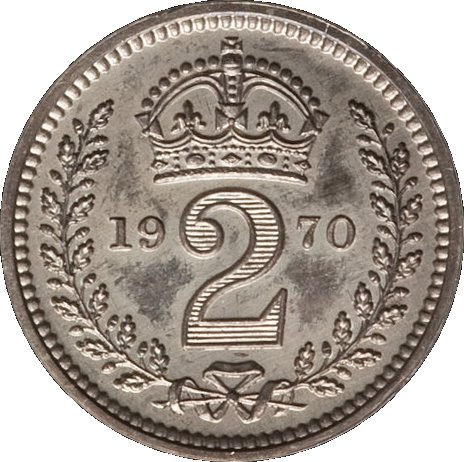
Victoria never issued a circulating bronze twopence for the United Kingdom. The "Victorian twopence" you may hear referenced is one of two things: a colonial twopence (struck for British Honduras, the British West Indies and similar dependencies, generally worth £5–£30 in mid grade) or a Maundy silver twopence.
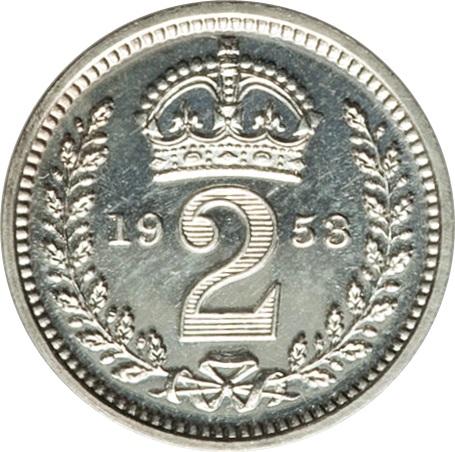
Royal Maundy money is a special silver issue presented annually by the monarch at the Royal Maundy Service. Maundy twopences are tiny (13.5 mm, 0.94 g) and have been struck almost continuously since 1660. Pre-1947 Maundy 2ps are .925 sterling silver; 1947–1970 coins are .500 silver; from 1971 onwards Maundy returned to .925 sterling. The annual mintage is very low (typically around 1,500–2,000 coins) but most are retained by recipients and their families, which keeps prices accessible.
| Series | Years | Composition | Typical 2d value |
|---|---|---|---|
| Charles II Maundy | 1660–1685 | .925 silver, hammered & milled | £30 – £200 |
| George III Maundy | 1760–1820 | .925 silver | £15 – £60 |
| Victoria Maundy | 1838–1901 | .925 silver, four head types | £15 – £50 |
| George V / VI Maundy | 1911–1952 | .925 then .500 silver | £10 – £35 |
| Elizabeth II Maundy | 1953–2022 | .925 silver | £15 – £60 |
| Charles III Maundy | 2023– | .925 silver | £30 – £120 |
The modern decimal 2p (1971–present)
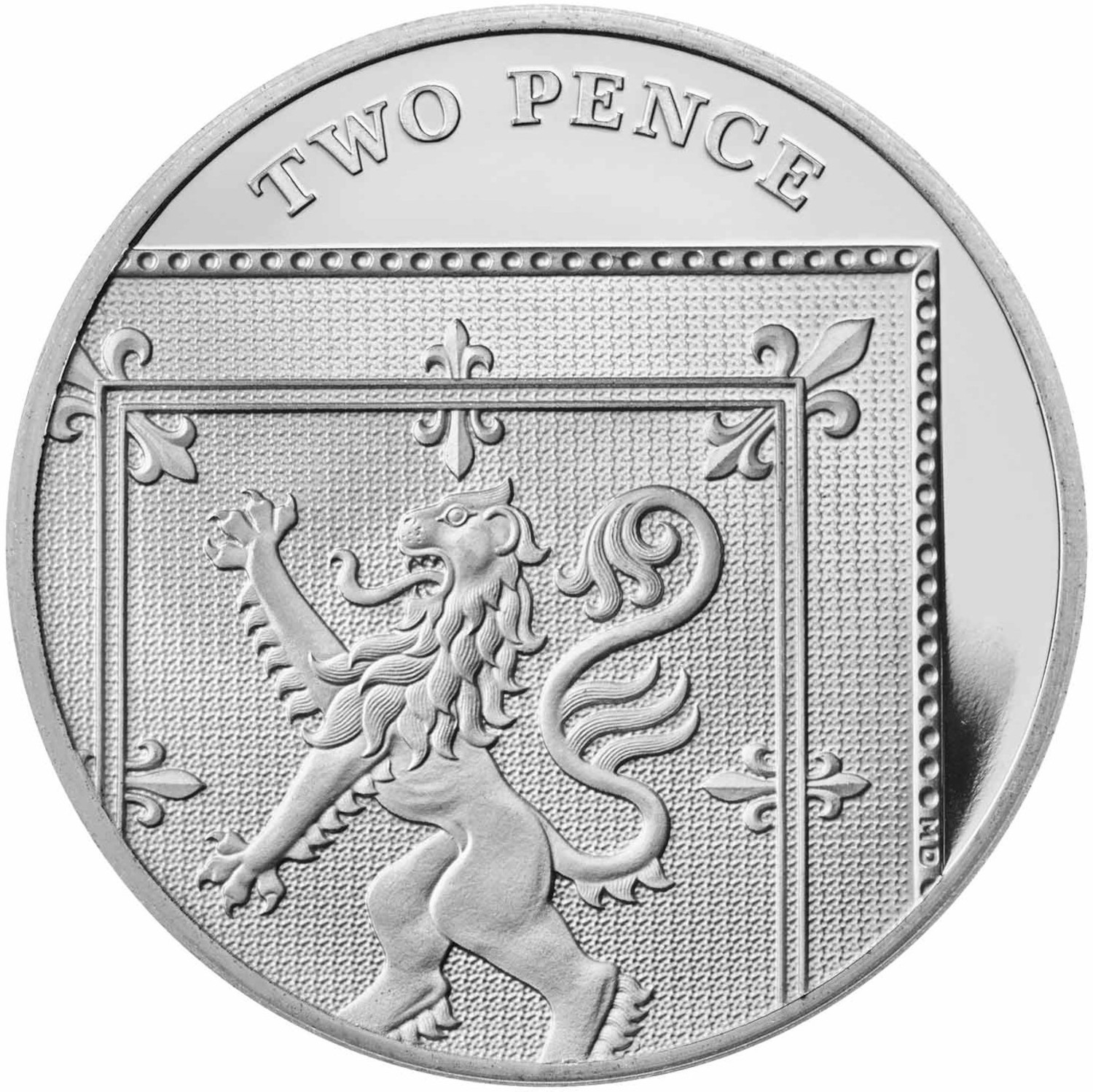
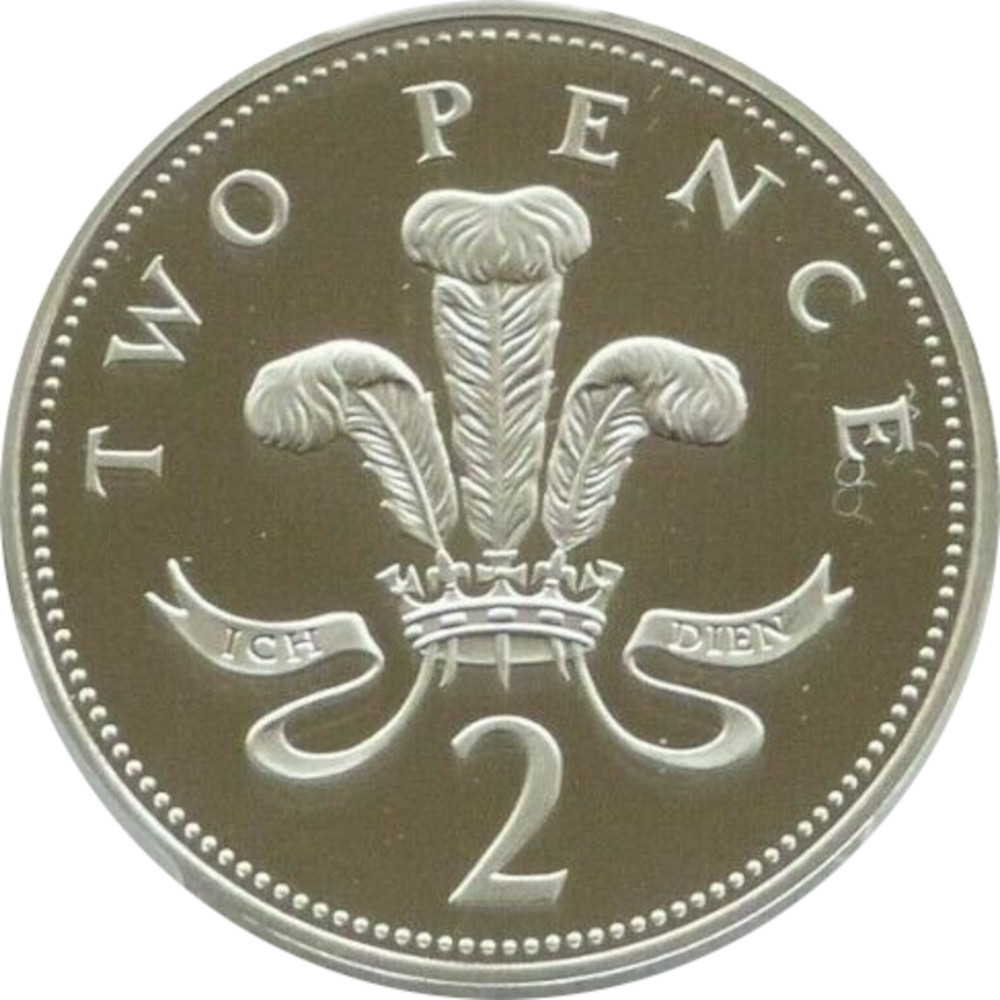
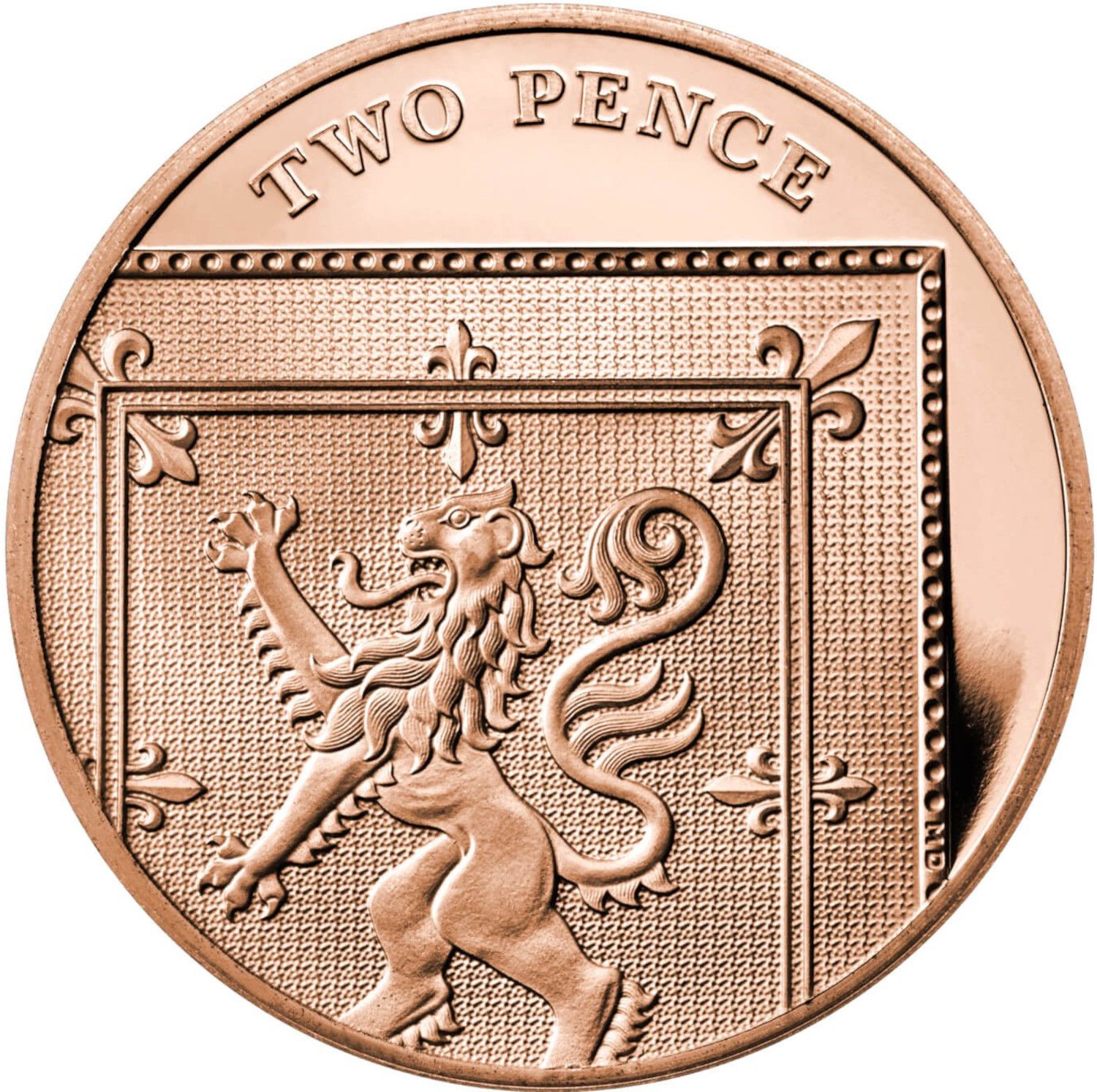
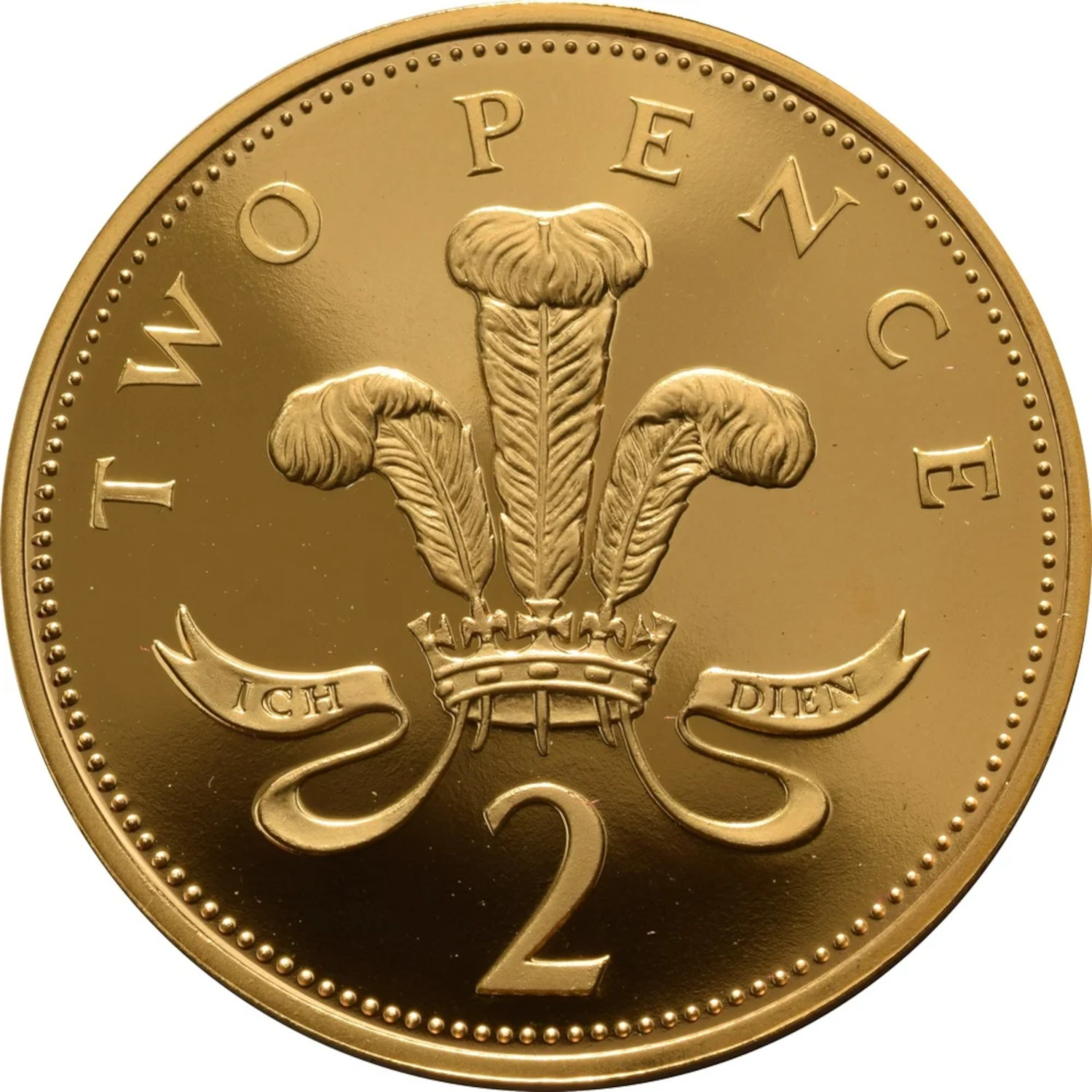
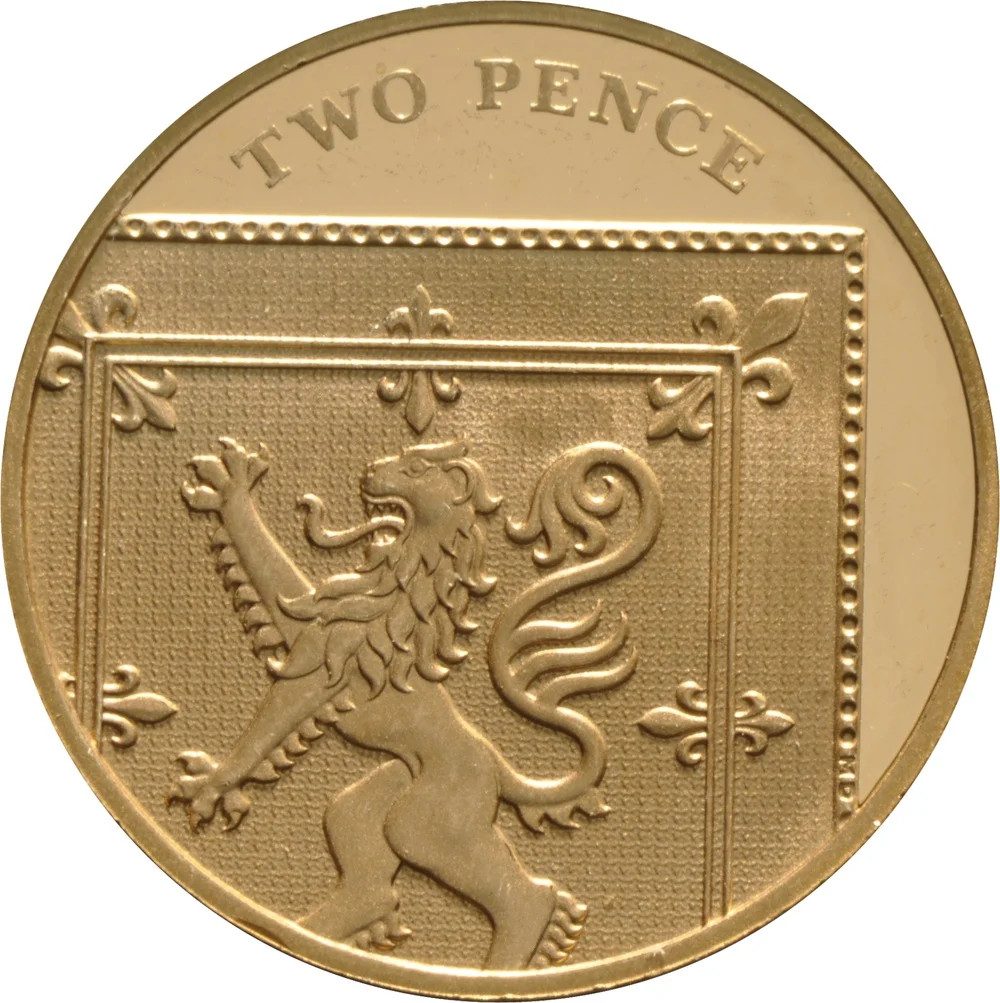
The decimal twopence entered circulation on Decimal Day, 15 February 1971, replacing the old penny and twopence in the new sterling system. The original reverse, designed by Christopher Ironside, depicted the Plume of the Prince of Wales encircled by a coronet, and ran from 1971 until 2008. The 2008 Matthew Dent Royal Shield reverse, where the 2p forms the bottom-right segment of a quartered Royal Coat of Arms across the 1p–50p set, took over until the introduction of new Charles III designs from 2024.
The coin was originally struck in solid bronze (97% Cu / 2.5% Zn / 0.5% Sn) at 7.12 g and 25.9 mm. In September 1992 the alloy switched to copper-plated steel, lowering production cost by approximately a third. The diameter and weight were held constant so vending machines did not require recalibration, but the new steel-cored coin is magnetic. A neodymium magnet is the cleanest test of date: pre-1992 sticks to a fingertip but not a magnet; post-1992 jumps to the magnet.
Both 7.12 g bronze and 7.12 g steel 2ps were struck in 1992, and a small number of "wrong metal" transitional pieces are believed to exist. None has yet been authenticated by a major grading service to the level required to support a recognised auction premium, so any "rare 1992 bronze 2p" listing should be treated with scepticism until properly attributed.
Modern 2p errors and how they trade
| Error type | Description | Typical realised range |
|---|---|---|
| 1983 New Pence mule | "NEW PENCE" legend on 1983-dated 2p | £300 – £1,200 |
| Off-centre strike | Design shifted 5–30% off centre, blank crescent visible | £15 – £80 |
| Double strike | Coin struck twice with rotation between strikes | £30 – £150 |
| Wrong-planchet (1p blank) | 2p design on a smaller 1p bronze blank | £100 – £400 |
| Wrong-planchet (10p blank) | 2p design on cupro-nickel 10p blank, "silver" appearance | £500 – £1,500 |
| Brockage / capped die | One side mirror-image of the other; rare | £80 – £300 |
| Lamination / clipped planchet | Metal flaw or partial blank | £5 – £30 |
For more on identifying genuine mint errors versus post-mint damage, see our UK coin errors list guide.
Grading thresholds for 2p coins
Bronze and copper-plated steel coins lose lustre quickly because copper is reactive. The practical grading thresholds for 2ps:
- Brilliant Uncirculated (BU / MS63–65). Full original mint lustre across both faces, no contact marks visible to the naked eye, no environmental toning. Almost all BU 2ps come from sealed Royal Mint Year Sets or unopened Mint bags.
- About Uncirculated (AU / MS58–62). Trace lustre breaks on the highest points (Queen's cheek, shield rim) but full design detail. Common in unopened Mint bags after a few years of storage.
- Extremely Fine (EF / AU50–55). All hair detail clear, light wear on high points, lustre mostly gone, may show even chocolate-brown toning. Often traded coin for the cartwheel and Victorian Maundy.
- Very Fine and below. Worth face value for modern 2ps. Pre-decimal twopences retain meaningful collector value down to Fine grade.
See our how to grade a coin guide for the full Sheldon scale and UK CGS scale comparison.
Where to sell a rare 2p
The right venue depends on the coin:
- 1983 New Pence mule, slabbed errors and high-grade pre-decimal: consign to a specialist British numismatic auction. Baldwin's, Spink and Noonans all run regular sales. Hammer commission is typically 15–20% but realisations on attributed errors consistently beat private offers.
- Loose 1983 mules and unverified errors: eBay UK is the largest market. Use the "auction" format with a sensible reserve, photograph both sides under daylight, and disclose any provenance. Selling fees are 13% plus listing fees; buyer disputes are common, so a slab adds a layer of protection.
- Cartwheel twopences and Maundy silver: sell to a numismatic dealer or via a specialist British auction. The CGS marketplace and forum classifieds also work well for graded coins.
- Common BU date-runs: bundle by year and sell as a set. Royal Mint Year Set folders sell well intact and command a small premium over loose 2ps from the same year.
Our full venue-by-venue commission breakdown is in where to sell rare coins UK.
Featured 2p coins on MyCoinage
Browse every UK 2p in our database →
Frequently asked questions
What is the 1983 "New Pence" 2p worth?
How do I identify a genuine 1983 New Pence 2p?
How many 1983 New Pence 2p coins exist?
Are pre-decimal twopences worth anything?
What is a Maundy twopence?
When did the 2p become magnetic?
What modern 2p errors are valuable?
Should I clean an old 2p?
Where should I sell a rare 2p?
What grade do I need for a 2p to be worth more than face value?
Are gold or silver-plated 2ps real?
What is a "Charles II tin farthing" and is it related to the 2p?
Further reading
- Royal Mint: 2p coin design and specifications, official metallurgy and dimensions, including the 1992 alloy change.
- British Numismatic Society, the leading UK academic society; journals cover modern errors and Boulton-era coinage in depth.
- Spink Standard Catalogue of British Coins, trade-standard reference for cartwheel, Maundy and modern decimal 2ps.
- MyCoinage: UK coin errors list, full taxonomy of mint errors and how to identify them.
- MyCoinage: how to grade a coin, Sheldon and UK CGS scales, with grade-by-grade photographs.
- MyCoinage: coin collecting glossary, mule, planchet, brockage and other terms used above.
- MyCoinage: where to sell rare coins UK, venue commissions and selling tips.
- MyCoinage: coin collection insurance UK, once your 2p collection passes £1,000 in value, you need cover.