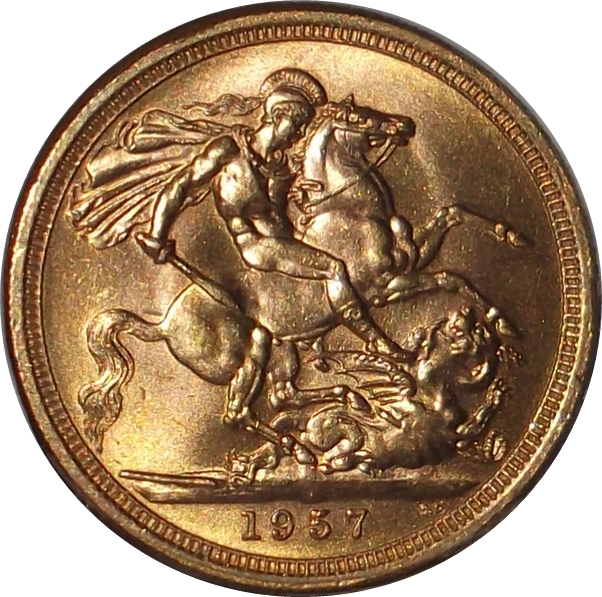
How to Spot a Fake Gold Sovereign: Six Authentication Tests
The gold sovereign is the most-counterfeited British gold coin because of its high recognition and reasonable price point. Fakes range from cheap plated brass that fails a magnet test to sophisticated tungsten-core counterfeits that pass weight and diameter checks. This guide covers the six authentication tests every sovereign buyer should know, the five categories of fake to recognise, and where to get professional authentication when the stakes warrant it.
Sovereign specifications, what genuine looks like
| Property | Genuine sovereign |
|---|---|
| Weight | 7.988 g ± 0.020 g |
| Diameter | 22.05 mm ± 0.05 mm |
| Thickness | 1.52 mm |
| Composition | 22-carat gold (.9167) + copper alloy |
| Pure gold content | 7.32 g (0.2354 troy oz) |
| Specific gravity (density) | 17.65-17.78 g/cm³ |
| Magnetic? | No (gold and copper are non-magnetic) |
| Edge | Milled (reeded), seam-free, uniform pitch |
Why fake sovereigns are common
The sovereign sits in a uniquely attractive zone for counterfeiters. Each coin holds approximately £425 of gold at current spot prices, high enough that a successful fake is profitable, low enough that buyers rarely send coins for professional authentication before purchase. Combined with the sovereign's 200-year history (so any date appears plausible), strong global recognition (so international buyers will accept them), and the relatively modest premium over melt for common dates (so even bullion buyers cycle through volume), the economic incentive for forgers is permanent.
Counterfeit sovereigns range across a wide quality spectrum:
- Cast lead or brass with thin gold plate, the cheap-end fake. Cost to produce: a few pounds. Sold at £100-200 to unsuspecting buyers. Fails every authentication test, but catches enough novice eBay buyers to remain profitable for the operators.
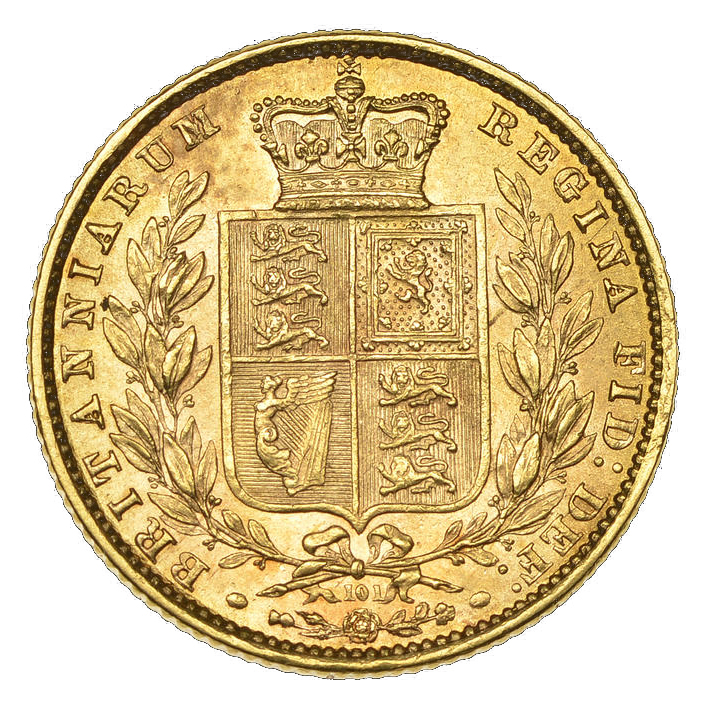
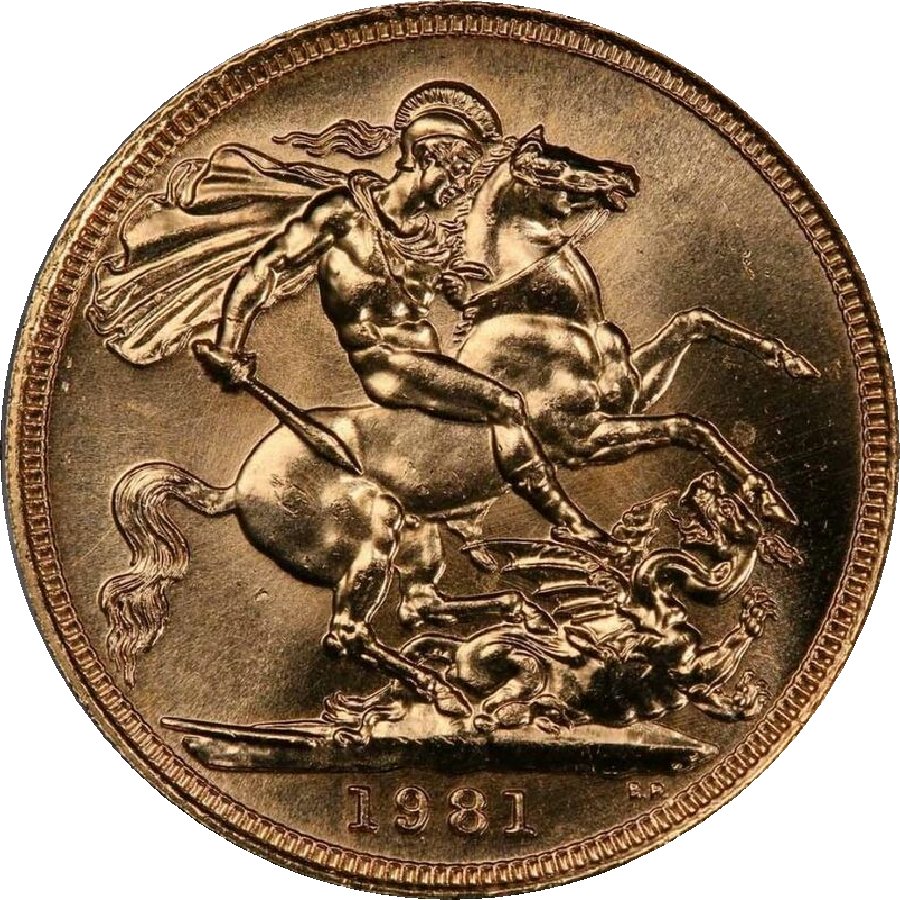
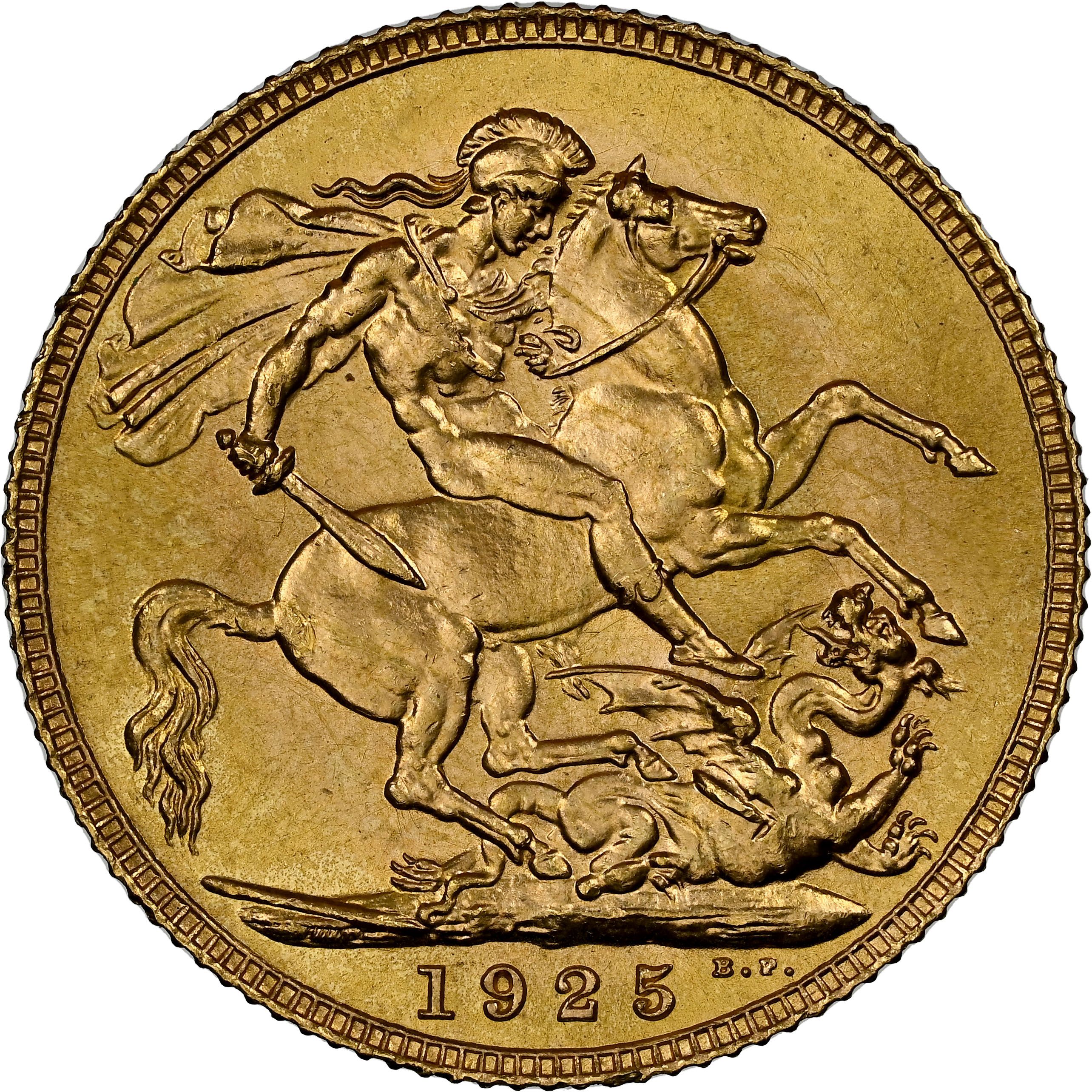
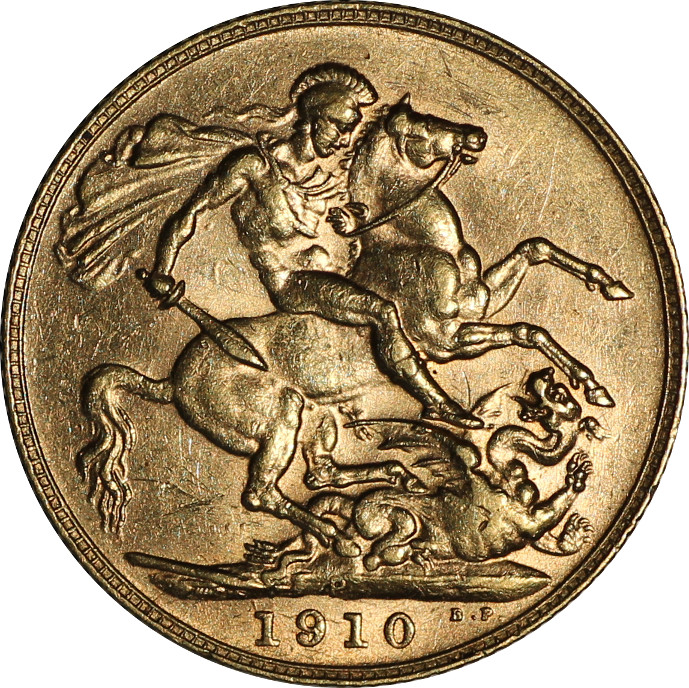
- Cast 22-carat gold, technically genuine gold content but cast from a high-quality pirated mould rather than struck from Royal Mint dies. Often impossible to detect by weight alone; visible mould seam on the edge is the main giveaway.
- Modern struck counterfeits with full 22-carat content, the sophisticated end. Made by criminal operations with access to medium-quality coining presses and 22-carat gold stock. Pass weight and density tests entirely. Detection requires die-state analysis under magnification.
- Tungsten-core gold-plated, the modern technical threat. Tungsten's density (19.25 g/cm³) is almost identical to pure gold (19.32 g/cm³), allowing counterfeiters to engineer a coin that passes specific-gravity tests. Detection requires ultrasonic thickness probing or X-ray fluorescence (XRF).
Every sovereign collector should assume that any raw (un-graded) sovereign offered below market price is suspect, and that any high-value rare-date or branch-mint sovereign requires professional authentication before purchase. See our sovereign mint marks UK guide for the branch-mint pieces most often counterfeited.
The six tests to run
The six tests below run in order of speed. Tests 1-4 take under a minute combined and catch the overwhelming majority of cheap fakes. Tests 5-6 require slightly more setup and catch the harder counterfeits.
1. Weight test
Use a precision digital scale with 0.01 g resolution. Calibrate first against a known reference (a UK 1p coin weighs exactly 3.564 g). Place the sovereign on the platen and record the weight.
Pass: 7.97-8.01 g. Marginal: 7.93-7.97 g (worn genuine or possible fake). Fail: below 7.85 g or above 8.05 g. Plated lead reads around 5 g; plated brass around 4 g; a magnetic steel sovereign around 4-5 g. The weight test catches every cheap fake instantly. See our sovereign weight specifications guide for the full tolerance regime.
2. Diameter test
Use a digital calliper. Genuine full sovereign: 22.05 mm ± 0.05 mm. Genuine half sovereign: 19.30 mm. Take three measurements at different points around the coin and average them , some cast counterfeits are slightly oval rather than perfectly round.
Cast counterfeits typically run 0.1-0.3 mm undersize because the cast metal cools and shrinks slightly after casting. Modern struck counterfeits hit diameter accurately because they use planchet blanks of the correct size. The diameter test is most useful for catching cast fakes, not struck ones.
3. Magnet test
Hold a strong neodymium (rare-earth) magnet half a millimetre above the coin. Genuine sovereign, no movement, no pull. Steel-cored gilt fake, immediate snap to the magnet. The magnet test is binary, takes a second, and catches the steel-core category of counterfeit completely.
A weak fridge magnet is insufficient, you need a neodymium magnet rated N42 or stronger (widely available and inexpensive). Note that gold and copper are both non-magnetic, so a fully 22-carat counterfeit will pass this test. The magnet only catches ferrous-core fakes.
4. Ring tone test
Balance the sovereign on a fingertip and tap the edge gently with another coin or a small metal object. A genuine 22-carat sovereign rings with a clear, high-pitched, sustained tone, rather like a small bell. The ring lasts 1-2 seconds.
Fakes sound dull. Cast lead or brass thuds. Tungsten-core fakes ring but at a noticeably different pitch, tungsten's sound speed is much higher than gold's, producing a sharper, higher-pitched ring. The test takes practice; train your ear by tapping known-good sovereigns first.
5. Specific gravity (SG) test
The SG test measures actual density via water displacement. You need: a precision scale, a small container of water, and a thin string or wire to suspend the coin.
- Weigh the coin dry. Record as W_dry.
- Suspend the coin from the wire so it sits fully submerged in water but doesn't touch the container walls or bottom. The wire should pass through the scale's tare. Record the new reading as W_wet.
- Calculate: density = W_dry / (W_dry − W_wet).
Genuine 22-carat sovereign: 17.65-17.78 g/cm³. Pure gold: 19.32. Tungsten: 19.25. Lead: 11.34. Brass: 8.4-8.7. Steel: 7.85. The SG test catches everything except tungsten-core fakes, which match the 17.7 figure precisely if alloyed correctly. See our specific gravity test for gold coins for the full step-by-step.
6. Visual edge inspection
Use a 10x loupe or jeweller's magnifier. Examine the milled (reeded) edge of the coin in good light. Look for:
- Horizontal seam line, a faint line running around the circumference where the two halves of a casting mould joined. Genuine struck sovereigns have no seam.
- Uniform reeding pitch, the milling grooves should be evenly spaced and identical depth all the way round. Cast counterfeits often show inconsistent or shallow reeding.
- Sharp edge profile, the edge should be crisp where it meets both faces of the coin. Cast fakes often show rounded edges from imperfect mould fill.
- No filing or tooling marks, date-altered counterfeits sometimes show evidence of metal being moved or added at specific points (e.g. mintmark added below the dragon).
Edge inspection is the test that catches the highest-quality cast counterfeits and the date-altered fakes that pass everything else.
Common counterfeit profiles
| Counterfeit type | Weight | Magnet | SG | Visual tells |
|---|---|---|---|---|
| Plated steel | ~4-5 g | Strong pull | ~7.85 | Light feel; magnetic |
| Plated brass | ~3-4 g | None | ~8.4 | Light feel; copper-yellow under wear |
| Plated lead | ~5 g | None | ~11.34 | Soft to fingernail; dull ring |
| Cast 22-carat | 7.95-8.0 g | None | ~17.7 | Mould seam on edge; soft details |
| Tungsten-core gold-plated | 7.98-8.0 g | None | ~17.7 | Off-pitch ring tone; ultrasonic anomaly |
| Modern struck counterfeit | 7.97-8.0 g | None | ~17.7 | Off die-state under 10x; subtle design errors |
| Date-altered genuine | 7.97-8.0 g | None | ~17.7 | Tooling marks at date or mintmark under loupe |
The first three rows fail home tests easily. Rows four through seven are the genuine threat, they pass weight, magnet and SG tests, requiring visual edge inspection or professional grading to identify.
What slabbing catches that home tests don't
Professional grading services, PCGS, NGC, and CGS UK, combine multiple authentication tools that home testing cannot match:
- X-ray fluorescence (XRF) analysis measures the elemental composition of the coin non-destructively. The technique fires X-rays at the coin and measures the secondary X-rays emitted by individual elements. A genuine sovereign shows 91.67% gold + 8.33% copper. A tungsten-core fake shows tungsten signatures. XRF is definitive for composition.
- Die-state libraries, PCGS and NGC maintain extensive databases of verified Royal Mint die states (the microscopic identifying features of individual dies used to strike each year's sovereigns). Modern struck counterfeits use approximate dies that don't match any genuine die state. Graders detect this under high magnification.
- Cast-from-real-die fakes, the rarest and most dangerous category. Some counterfeiters obtain genuine Royal Mint dies (or accurate replicas) and use them on sub-standard planchets, producing coins that pass die-state checks but fail composition or weight. Only XRF and precision weight testing combined catches these.
- Edge analysis under microscopy, graders examine the edge under 30-50x magnification, which catches subtle tooling marks invisible at 10x.
- Provenance and chain-of-custody, slabbed coins carry serial numbers registered with the grading service. A buyer can verify the coin's authentication record through the service's online database.
For any sovereign over £500 in claimed value, professional grading is the only reliable authentication. Fees are typically £25-50 per coin via the UK submission centre. The resulting slab adds 10-15% to resale value, partly offsetting the grading cost.
Where you're most likely to encounter fakes
The risk of buying a fake sovereign correlates strongly with the channel you're buying through. From highest-risk to lowest:
- eBay UK private-seller listings, the highest-volume source of counterfeit sovereigns. Fakes range from obvious low-end plated brass sold at unrealistic prices to sophisticated cast-22-carat coins indistinguishable from genuine without testing. Always check sold-listings comparable prices and require multiple high-resolution photos including edge close-ups before bidding. eBay UK Buyer Protection covers most cases for up to 30 days.
- Weekend markets, antiques fairs, car boot sales, cash transactions, no return policy, no provenance. Sellers may not even know the coin is fake. Fine if you have your scale and calliper with you and can test on the spot; risky otherwise.
- Online auctions outside specialist coin houses, general-purpose online auctions sometimes list sovereigns alongside other estate items. Authentication standards vary wildly. Treat as eBay-equivalent risk.
- Pawn shops and gold-for-cash retailers, mixed. Larger reputable chains test gold content before buying so the inventory is generally genuine, but they often misidentify counterfeit branch-mint sovereigns as genuine because they don't check mintmarks closely.
- BNTA-member dealers, very low risk. The British Numismatic Trade Association requires members to authenticate stock and accept returns on misrepresented items. Most BNTA dealers also offer in-house authentication services.
- Specialist auction houses, effectively zero risk for raw lots; certified slabbed lots are entirely safe. Spink, Baldwin's, Noonans and Heritage all authenticate every lot before cataloguing.
- Direct from the Royal Mint or authorised dealers, zero authentication risk but premium pricing. The right channel for new bullion sovereigns and modern proofs.
What to do if you've bought a fake
Three steps. Move quickly, most return rights have time limits.
- Document the evidence. Photograph the coin from multiple angles including the edge. Record your weight, diameter, magnet and SG test results. If you've had professional authentication confirming the fake, save the certificate.
- Contact the seller for a refund. UK consumer law (the Consumer Rights Act 2015) gives you the right to a full refund for goods that are not as described. Counterfeit gold sold as genuine sovereign is the textbook misrepresentation case. Most reputable sellers refund without argument once shown the test results. eBay UK Buyer Protection covers eligible purchases for 30 days; if the seller refuses, file a Buyer Protection claim immediately.
- If the seller refuses and the purchase is recent and material, consider Trading Standards (via Citizens Advice consumer service on 0808 223 1133) or Action Fraud (online at actionfraud.police.uk). Repeat-counterfeiter sellers can be prosecuted under the Forgery and Counterfeiting Act 1981. Provide your evidence to investigators.
For credit-card purchases over £100 you also have Section 75 protection under the Consumer Credit Act 1974: the card issuer is jointly liable with the seller for misrepresented goods. Contact your card provider in writing, attach the evidence, and request a Section 75 claim. This works even if the seller has disappeared or refuses to engage.
For PayPal-funded purchases, the PayPal Buyer Protection programme covers similar misrepresentation cases for 180 days. File the dispute through the PayPal Resolution Centre with photographic and test-result evidence.
Do not destroy the coin or hand it back to the seller before the dispute is resolved, you may need it as evidence. Keep all communications in writing. See our where to sell rare coins UK guide for the trustworthy selling channels and the sovereign values UK guide for date-by-date fair pricing comparisons.
Related guides
- Sovereign weight specifications, the underlying numbers every authentication test relies on.
- Specific gravity test for gold coins, full SG test procedure for tungsten-core detection.
- Sovereign mint marks UK, the branch-mint identifications counterfeiters most often add to genuine no-mintmark sovereigns.
- Gold sovereign values UK, the realised price ranges that determine whether a coin is worth professional grading.
- Sovereign vs Krugerrand, counterfeit risk profile compared across the world's two most-traded gold coins.