Farthing Values UK: Complete 1672–1956 Price Guide
The farthing, worth one quarter of a penny, was Britain\'s smallest pre-decimal coin. The modern milled farthing ran from 1672 to 1956, demonetised 31 December 1960. From 1672 to 1936 the reverse showed a seated Britannia; from 1937 to 1956 it showed Sir Peter Scott\'s wren, the smallest British bird on the smallest British coin. Most farthings are common; the 1714 Queen Anne, the 1937 Edward VIII pattern, and certain Victorian proofs are the famous rarities.
Background
The farthing was Britain\'s smallest denomination for over 700 years. Hand-cut quarters of silver pennies served as farthings from the 13th century until the milled coinage of Charles II in 1672, when the farthing became its own struck coin. From 1672 to 1860 it was pure copper; from 1860 to 1956 it was bronze (95% copper, 4% tin, 1% zinc). The denomination ran continuously through every reign from Charles II to George VI and into the early years of Elizabeth II.
By the early 20th century the farthing was already barely useful: a single farthing bought almost nothing even in 1900, and by 1956 inflation had reduced its purchasing power below practical retail use. Production ceased in 1956 and the denomination was demonetised four years later on 31 December 1960. The decimal halfpenny introduced in 1971 was the closest equivalent in the new system, and it too was withdrawn in 1984 when its purchasing value became too low to justify production.
Copper farthings 1672–1860
Pre-1860 farthings were struck in pure copper at 4.65 g and 23.5 mm. The series spans Charles II (1672-1675), James II (1685-1687), William and Mary (1689-1694), William III (1695-1700), Anne (1714 only), George I (1717-1724), George II (1729-1754), George III (1771-1775, 1799 Boulton "cartwheel", 1806-1807), George IV (1821-1830), William IV (1831-1837), and Victoria Young Head copper (1838-1860).
| Reign | Years | Notes | VF realised range |
|---|---|---|---|
| Charles II | 1672-1675 | First milled farthing | £30, £200 |
| William and Mary | 1689-1694 | Joint monarchs reverse | £30, £180 |
| Queen Anne | 1714 only | Famous rarity (multiple types) | £500, £15,000 |
| George I | 1717-1724 | "Dump" small and regular issues | £20, £120 |
| George II | 1729-1754 | Young and old head | £15, £100 |
| George III "cartwheel" | 1799 | Boulton-Watt steam-pressed | £15, £100 |
| George IV | 1821-1830 | Laureate head | £10, £60 |
| William IV | 1831-1837 | Short reign | £15, £80 |
| Victoria Young Head copper | 1838-1860 | Final copper farthing era | £5, £30 |
The 1714 Queen Anne farthing
The 1714 Queen Anne farthing is the most-mythologised British coin. Several pattern types exist:
- 1714 "Britannia" farthing. The most-encountered 1714 type. Trades at £500-3,000 in collectable grades.
- 1714 "Peace" farthing pattern. Britannia in a peaceful stance with palm branch. Much rarer.
- 1714 "Drapery" pattern. Drapery on Anne\'s portrait. Rare.
A persistent 19th-century myth held that only three 1714 farthings were ever struck, and that owning one would secure a fortune. In reality several thousand 1714 farthings of the various types exist, but they remain genuine rarities and the highest grade examples trade strongly. Modern reproductions of the 1714 farthing are extremely common and are often confused with originals; weight, diameter and edge characteristics are the surest authentication checks.
Bronze Victorian farthings 1860–1901
The 1860 transition from copper to bronze produced the same beaded-border / toothed-border varieties as the halfpenny, including a scarce mule. Bronze Victorian farthings are widely available and most trade at £3-25 in collectable grades. Mint-state red examples of any year are scarcer than they look; the challenge with bronze is preserving the original colour through more than a century of storage.
| Date | Mintage | Notes | VF realised |
|---|---|---|---|
| 1860 | 2,867,200 | First bronze farthing; beaded/toothed varieties | £5, £30 |
| 1869 | 3,225,600 | Lower-mintage Young Head bronze | £15, £60 |
| 1881-H | included with 1881 total | Heaton Mint variety | £10, £40 |
| 1887 | 2,780,800 | Jubilee Head first year | £5, £25 |
| 1895 | 2,816,000 | Old Head first year; matt finish | £5, £25 |
| 1901 | 8,016,000 | Final Victorian farthing | £3, £15 |
The "darkened" farthing 1897–1918
From 1897 to 1918 farthings were chemically darkened by the Royal Mint before issue, to prevent confusion with the half-sovereign (which is the same diameter as a farthing). This artificial darkening is part of the original mint state of these issues; collectors prize the original dark surface and cleaning destroys it. A "darkened" farthing in original condition is more desirable than the same date that has been brightened.
Edward VII and George V farthings 1902–1936
Edwardian and George V farthings are common dates, mostly trading at £2-12 in collectable grades. The 1925 modified-effigy variety is a key minor variant. The 1932 has a low mintage. Mint-state red examples of any year are scarcer than the issues suggest because most farthings circulated heavily and toned to chocolate brown within a few years of issue.
The wren farthings 1937–1956
From 1937 the farthing carried a wren reverse designed by Harold Wilson Parker, replacing the long-running Britannia. The wren was the smallest British bird and a deliberate choice for the smallest British coin. Common George VI dates trade at £1-5; common Elizabeth II dates (1953-1956) trade at £1-5 in worn condition and £5-20 in mint state.
| Date | Notes | VF realised |
|---|---|---|
| 1937 | First year wren reverse George VI | £1, £5 |
| 1942-1945 | Wartime issues; lower-grade strike quality | £1, £5 |
| 1952 | Final George VI farthing | £3, £12 |
| 1953 | First and only Coronation farthing of Elizabeth II | £3, £15 |
| 1956 | Final farthing ever struck for circulation | £2, £10 |
The 1937 Edward VIII farthing pattern
Like every other Edward VIII coin, the 1937 farthing was prepared but never issued. Pattern strikes exist showing the Edward VIII bust on the obverse and the new wren reverse (which carried over to George VI). Fewer than ten Edward VIII pattern farthings are believed to exist, mostly held by the Royal Mint Museum and a handful of major private collectors. The Edward VIII farthing pattern, when one has surfaced at auction, has realised £30,000+.
Featured farthings on MyCoinage
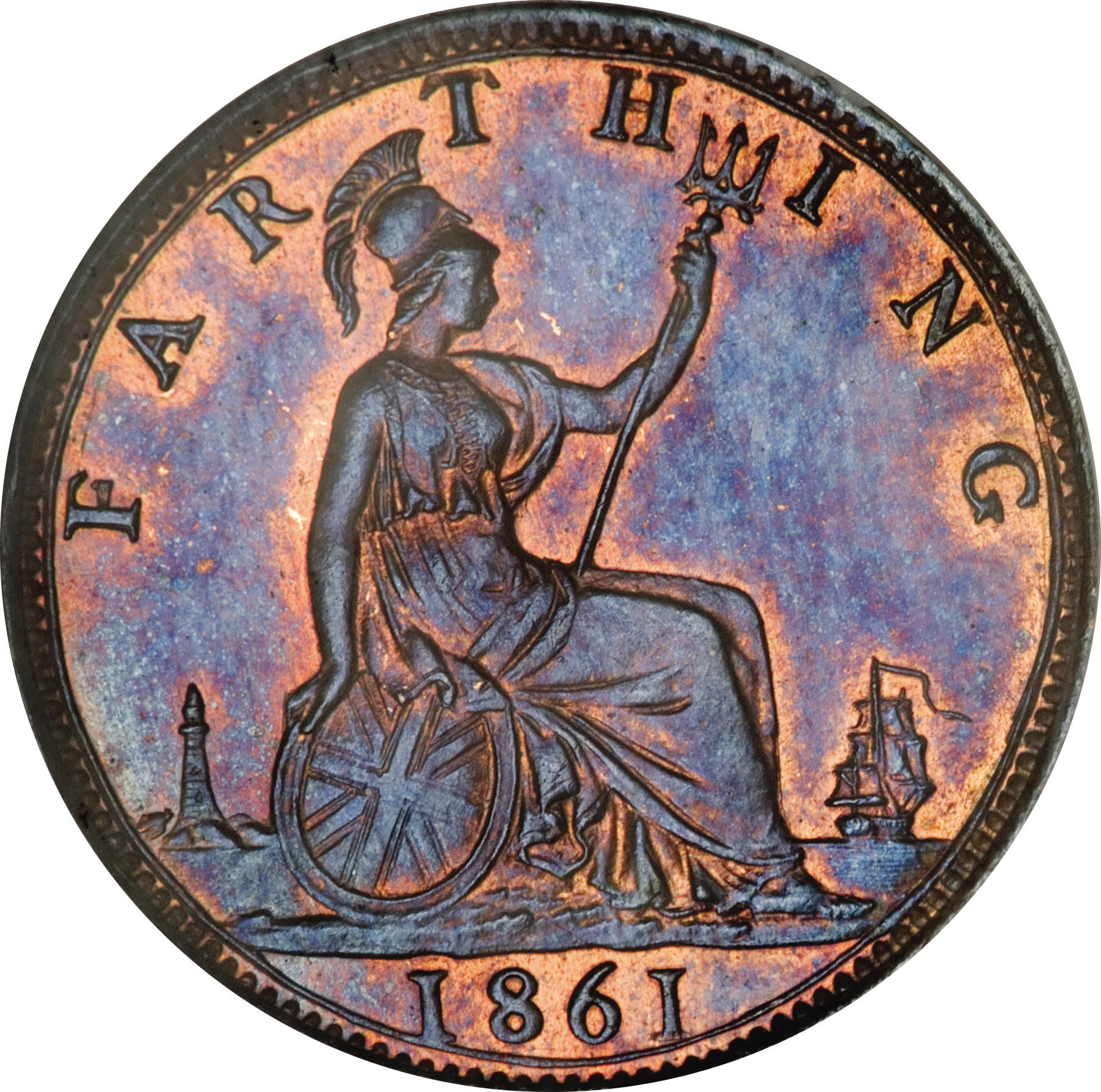
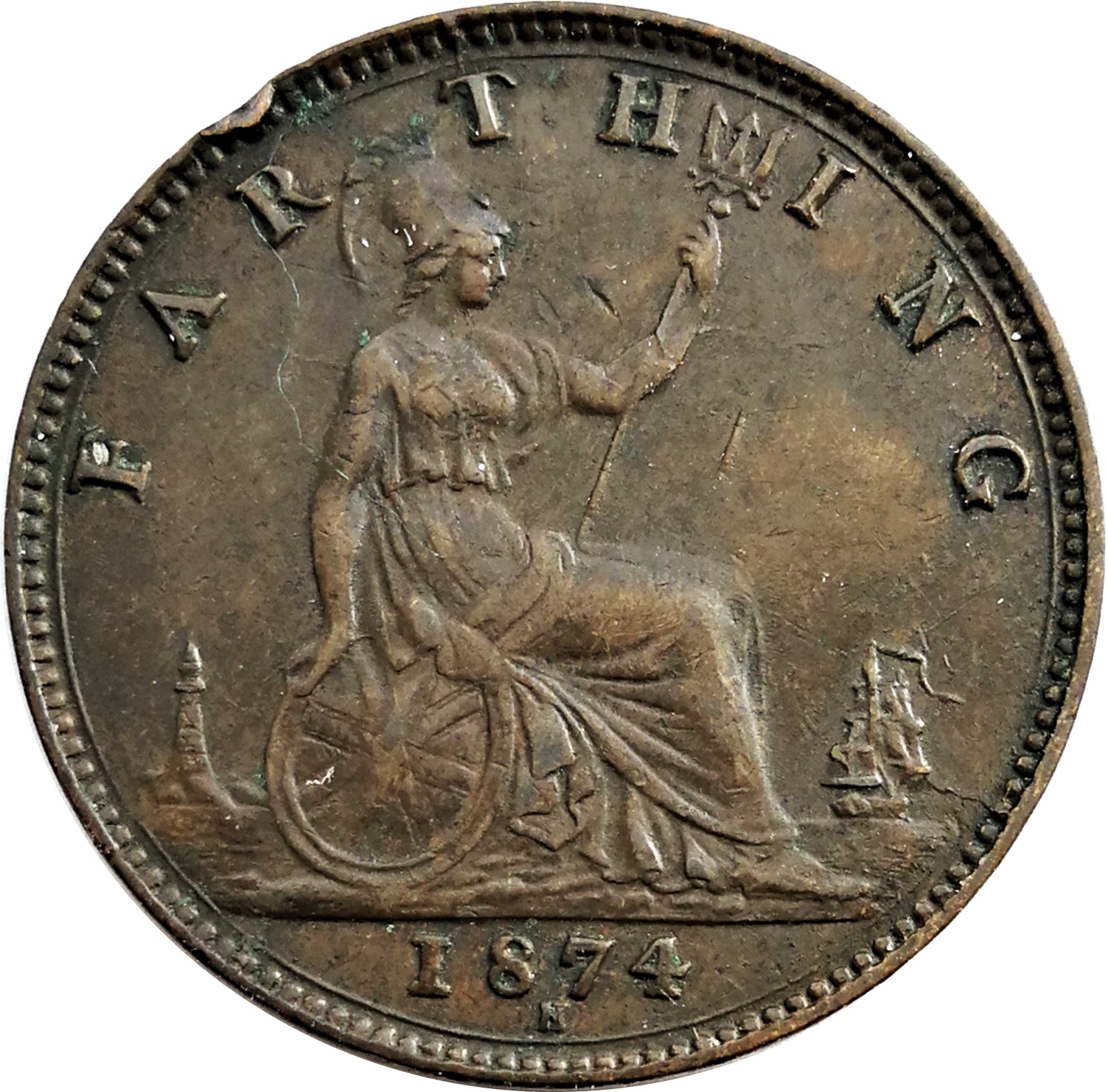
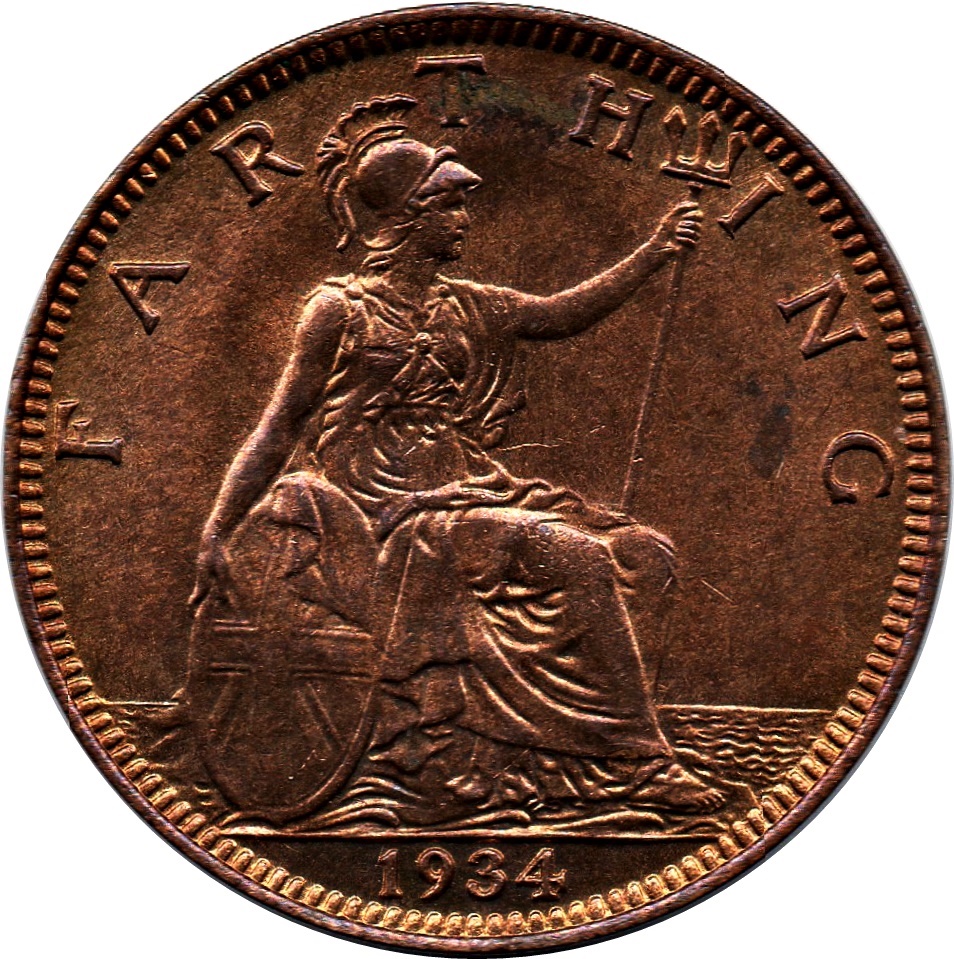
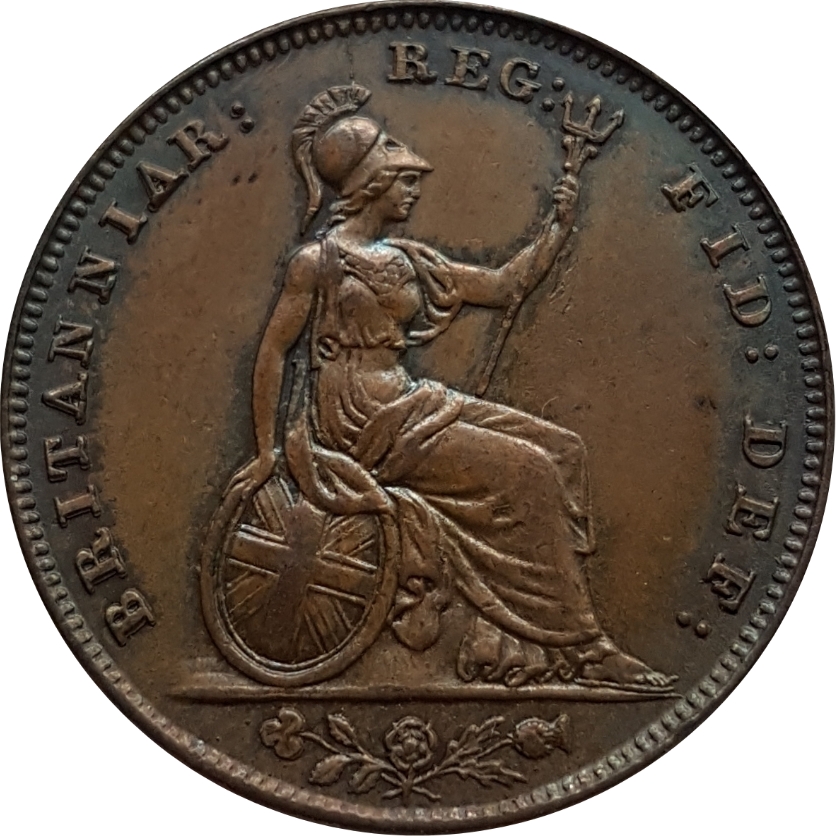
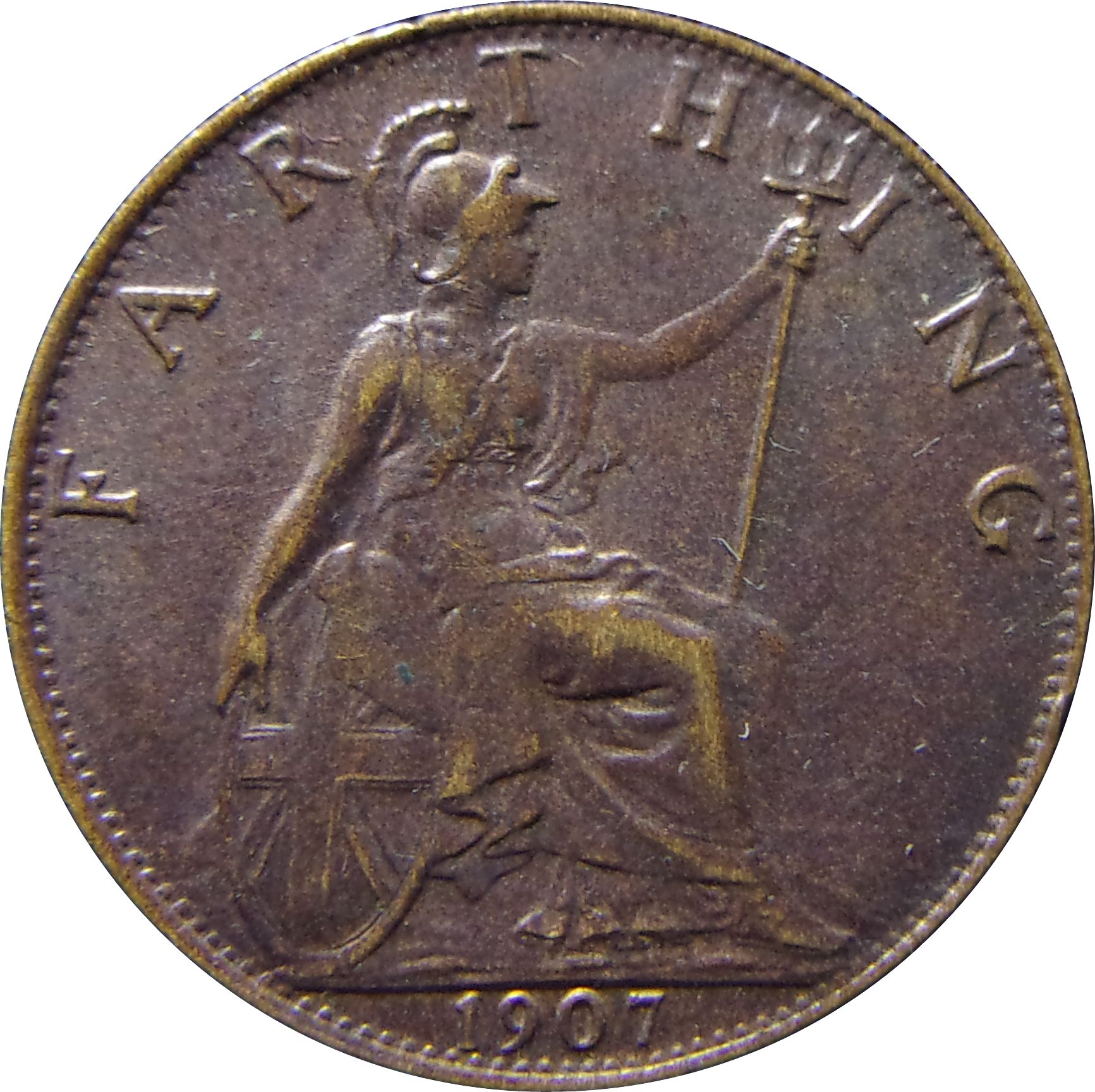
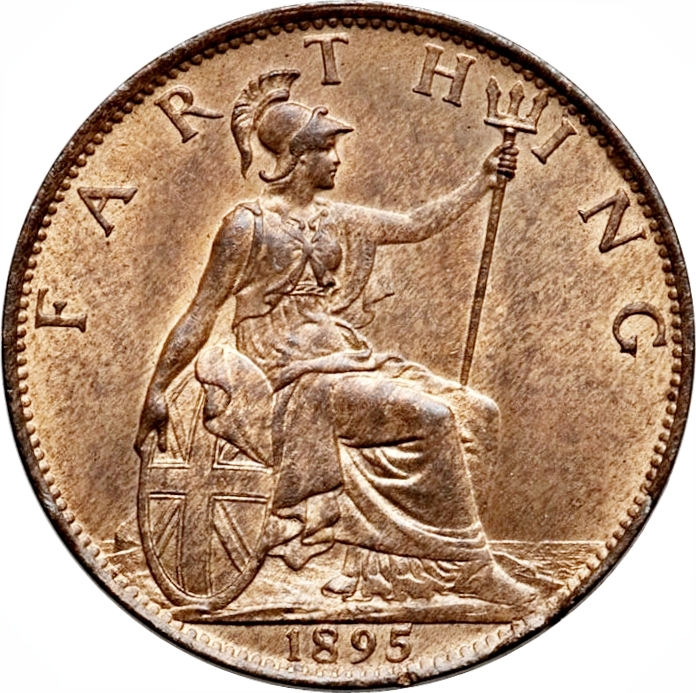
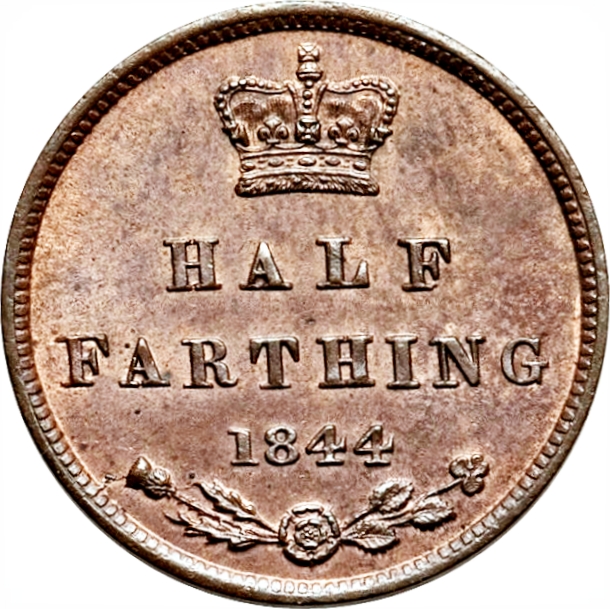
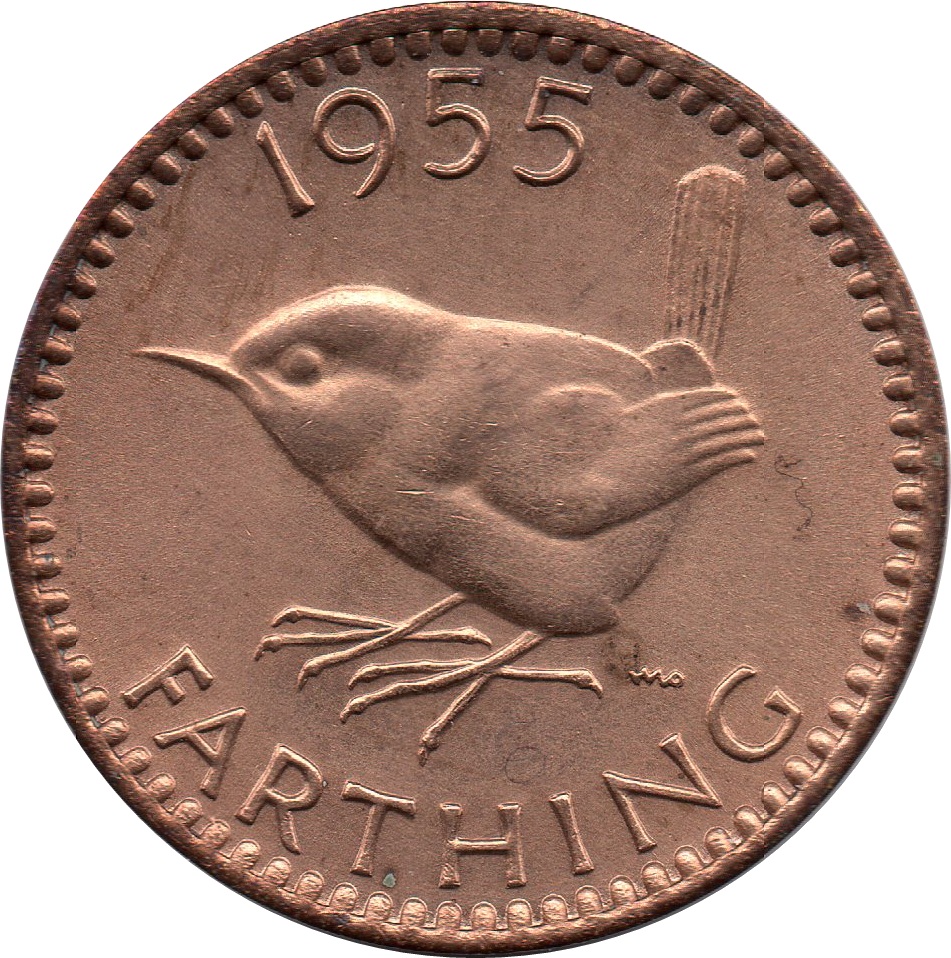
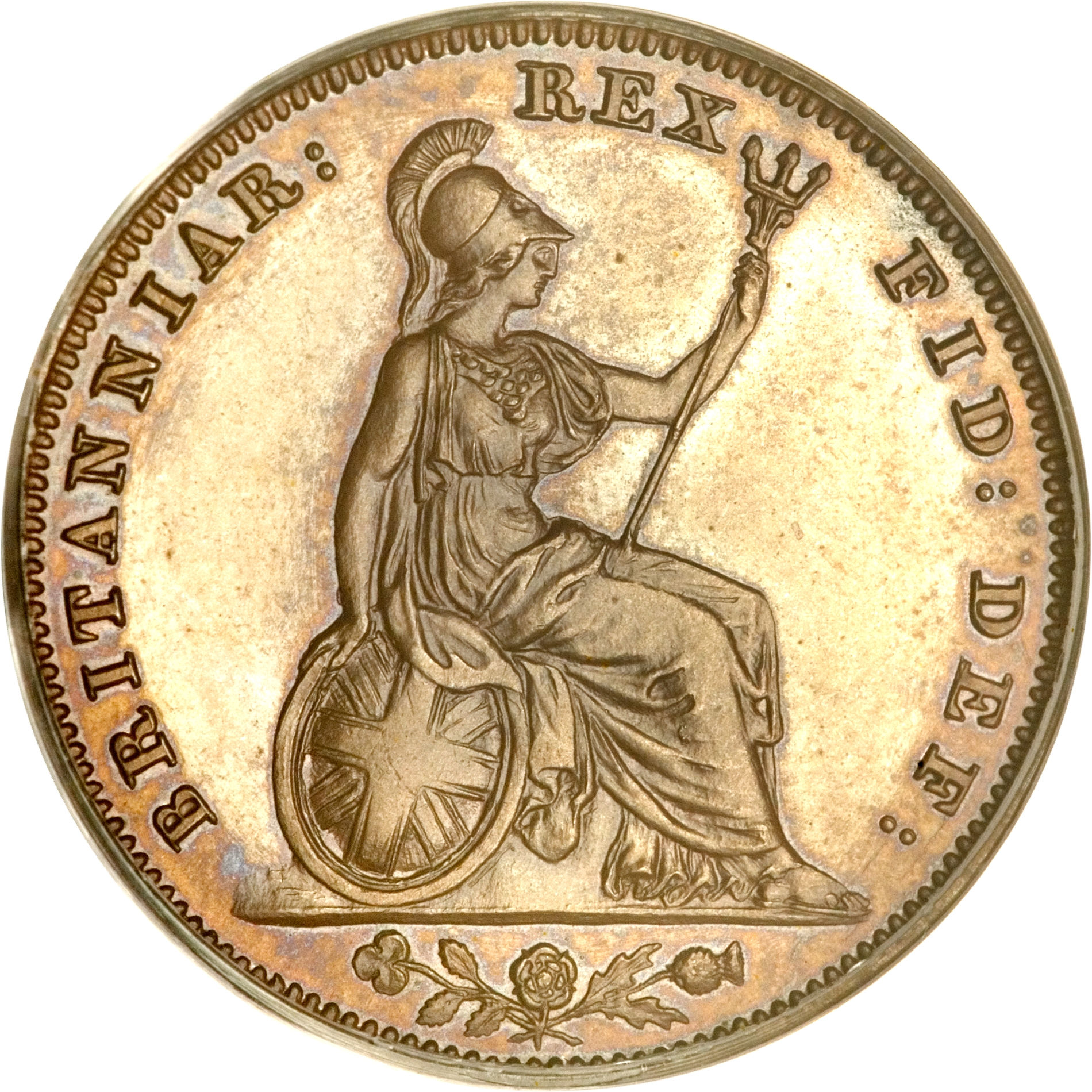
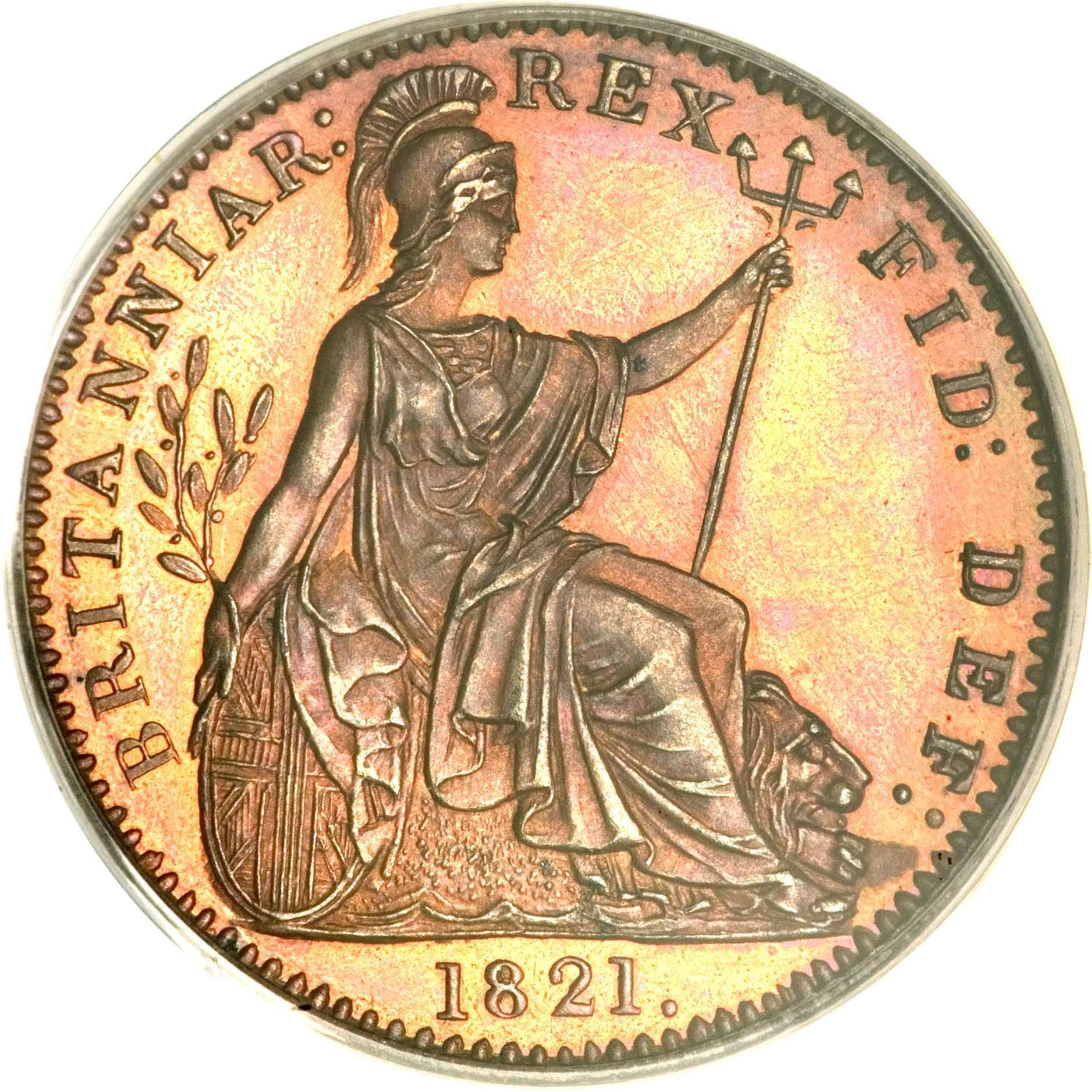
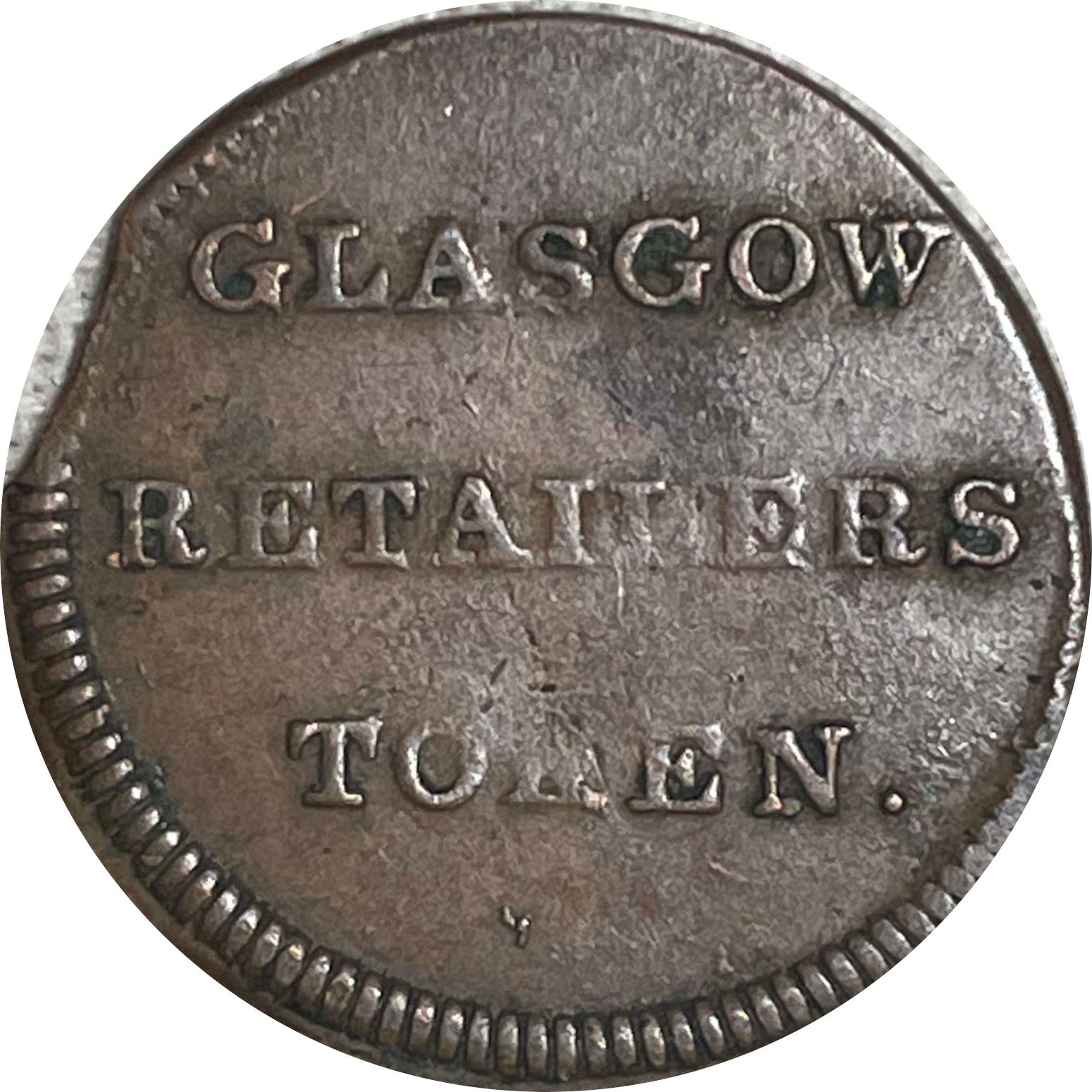
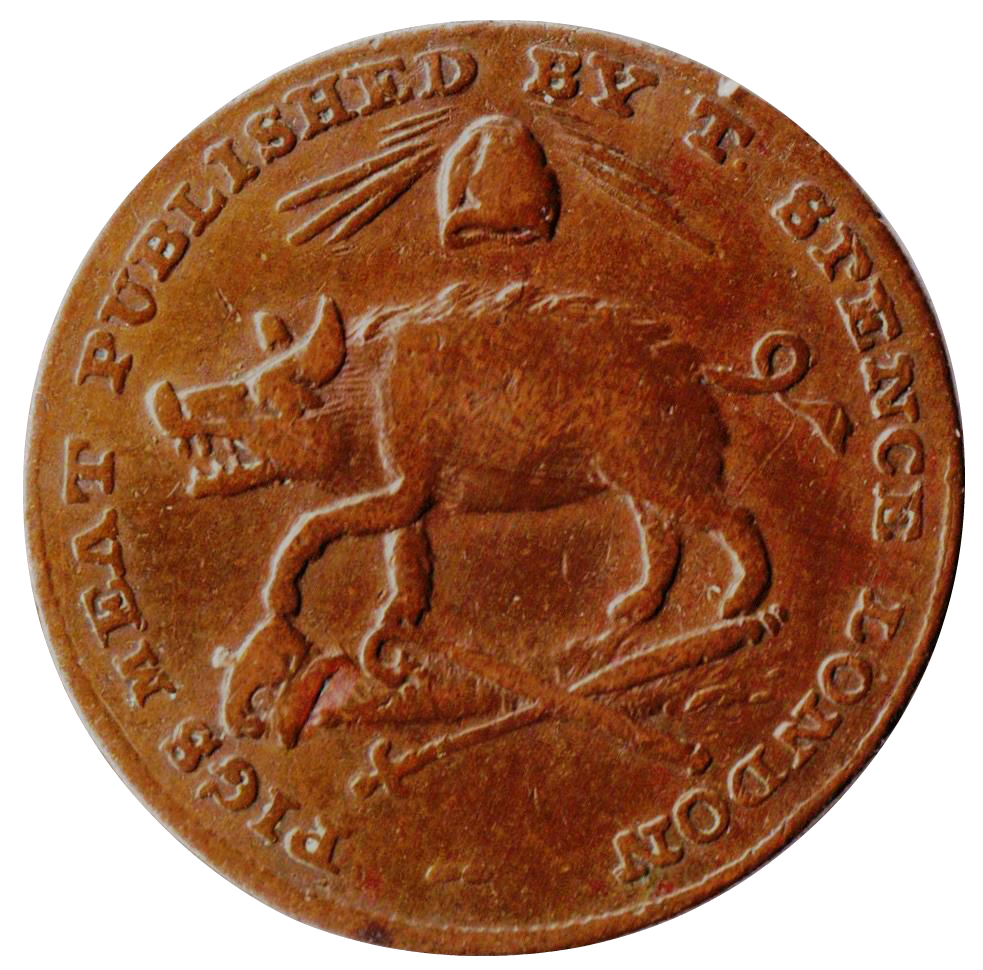
Browse every farthing in our database →
Grading farthings
Bronze farthings grade like the other bronze denominations: original mint red (RD), red-brown (RB) and brown (BN), with red commanding strong premium over brown. The very small surface area means hairlines and cleaning are immediately visible at low magnification. Read our how to grade a coin guide for the Sheldon scale and UK Fine/VF/EF/UNC/FDC equivalents. Pre-1860 copper farthings carry a different colour vocabulary because pure copper tones to a chocolate brown rather than the red-brown of bronze.
Related guides
- Pre-decimal coins UK: complete guide
- Halfpenny values UK, the farthing\'s larger bronze sister
- Threepence values UK
- 1933 Penny value
- Where to sell rare coins UK
- How to grade a coin
- Coin collecting glossary
External references
- The Royal Mint
- British Numismatic Society, pre-decimal authority site.
- Spink Standard Catalogue of British Coins
- Baldwin\'s of St James\'s
- Noonans Mayfair
- eBay UK farthing category
Buying farthings on eBay
The links below open eBay UK searches; if you buy through them, MyCoinage earns a small commission at no cost to you.
Common farthings (George VI, Elizabeth II) trade at 50p-£2 each, cheap entry into a complete date run. The headline rarities are the 1933 Wren farthing, certain 1860 Bun head obverse varieties, and the fractional sub-denominations (half-farthing, third-farthing, quarter-farthing) that few collectors realise existed. Maundy specimen sets are the way to chase a high-grade pre-decimal farthing without paying auction-house premiums.
George VI Wren farthing ↗ Elizabeth II farthing ↗ Victoria Bun head farthing ↗ 1933 Wren farthing (sold) ↗ Third farthing ↗ Half-farthing ↗ Quarter-farthing ↗ Farthing date-run lots ↗ Slabbed farthing (sold) ↗