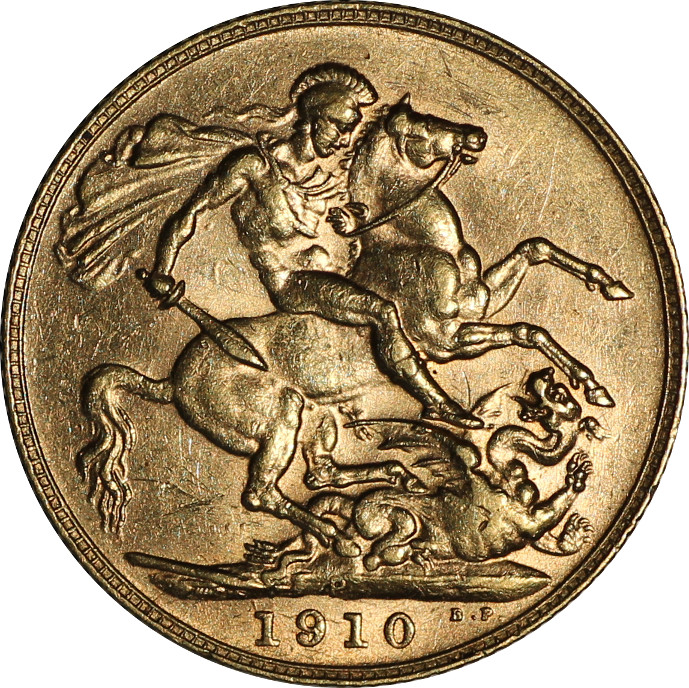
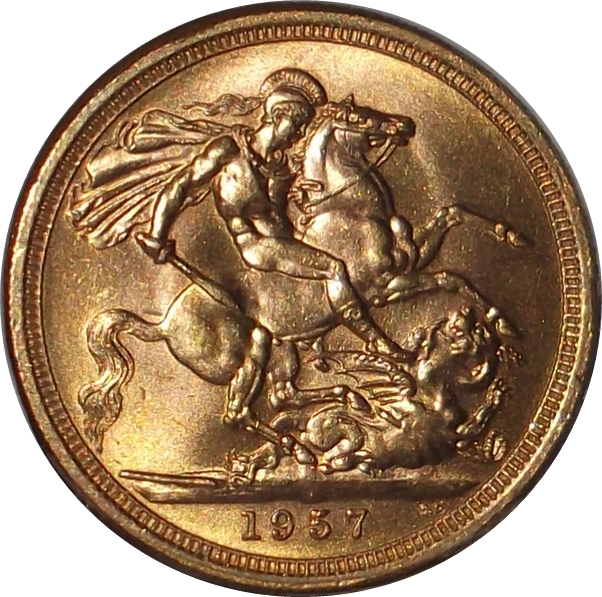
Gold Sovereign Weight & Specifications: The Reference
Every UK gold sovereign struck since 1817 weighs 7.988 g, measures 22.05 mm in diameter, and contains 7.32 g of pure 22-carat gold (0.2354 troy ounces). These specifications have been unchanged for over 200 years, one of the most consistent monetary standards in modern history. This guide covers every sovereign-family specification (quarter / half / sovereign / double / quintuple), the historical context, and how to use the specs as the foundation for sovereign authentication.
Sovereign-family specifications table
| Coin | Total weight | Pure gold | Diameter | Face value |
|---|---|---|---|---|
| Quarter sovereign (since 2009) | 1.997 g | 1.83 g (0.0588 oz) | 13.50 mm | 25p |
| Half sovereign | 3.99 g | 3.66 g (0.118 oz) | 19.30 mm | 50p |
| Sovereign | 7.988 g | 7.32 g (0.2354 oz) | 22.05 mm | £1 |
| Double sovereign (£2) | 15.976 g | 14.64 g (0.4708 oz) | 28.40 mm | £2 |
| Quintuple sovereign (£5) | 39.94 g | 36.61 g (1.177 oz) | 36.02 mm | £5 |
All sovereigns are 22-carat gold (.9167 fineness, 91.67% pure gold + 8.33% copper alloy).
Sovereign weight specifications by format
The sovereign denomination is a family of five weights, all struck to the same .9167 fineness with the same 8.33% copper alloy. Each is an exact multiple or fraction of the standard sovereign, the half is exactly half, the double is exactly double, the quintuple is exactly five times. This is intentional: it allows the entire family to share a single bullion calculation and a single weight tolerance regime.
| Format | Weight | Pure gold | Fineness | Diameter | Edge |
|---|---|---|---|---|---|
| Quarter sovereign | 1.997 g | 1.83 g | 22-carat (.9167) | 13.50 mm | Milled (reeded) |
| Half sovereign | 3.99 g | 3.66 g | 22-carat (.9167) | 19.30 mm | Milled (reeded) |
| Full sovereign | 7.988 g | 7.32 g | 22-carat (.9167) | 22.05 mm | Milled (reeded), seam-free |
| Double sovereign (£2) | 15.976 g | 14.64 g | 22-carat (.9167) | 28.40 mm | Milled (reeded) |
| Quintuple sovereign (£5) | 39.94 g | 36.61 g | 22-carat (.9167) | 36.02 mm | Milled (reeded), broader pitch |
Note that the quintuple sovereign at 36.02 mm is fractionally smaller than a 1 oz gold Britannia (38.61 mm) despite holding more pure gold. This is a function of the 22-carat alloy density versus 24-carat: 22-carat gold is denser than 24-carat per unit volume because the copper alloy is actually slightly denser than gold once you account for the closer atomic packing. The thickness of a quintuple sovereign is approximately 2.78 mm, the thickest of the family.
The full sovereign sits at 1.52 mm thick, the half at 1.18 mm, the quarter at 1.10 mm. All five formats share a milled (reeded) edge with no inscription, one of the differentiating tactile features versus modern Britannias, which from 2018 onwards use a security-edge with mini-inscriptions.
Why the 7.988 g weight has been unchanged since 1817
The 7.988 g weight comes directly from the Great Recoinage of 1816, in which the British government replaced the guinea (21 shillings, 8.359 g of gold) with a 20-shilling sovereign of 7.32 g pure gold content. Twenty shillings was the natural decimal of the new monetary system: one pound. The weight was chosen so that the gold content matched the existing gold standard ratio of £3 17s 10½d per troy ounce of standard gold.
Doing the maths: the 1816 Mint Indenture set the price of standard (22-carat) gold at £3 17s 10½d per troy ounce, equivalent to 934.5 pence per 31.1035 g, or 30.04 pence per gram. A 20-shilling face value (240 pence) at this rate gives 7.988 g of standard gold, of which 7.322 g is pure. The figures aren't round numbers because the weight was derived from the price; the price wasn't derived from the weight.
Once set in 1817, the weight became locked-in by international gold-standard arbitrage. The pound sterling's value vs other currencies depended on its exact gold content; changing the sovereign weight would have devalued or revalued the pound. Britain operated on the gold standard from 1821 to 1914 with brief suspensions, and again from 1925 to 1931. Throughout, the sovereign weight remained at 7.988 g exactly.
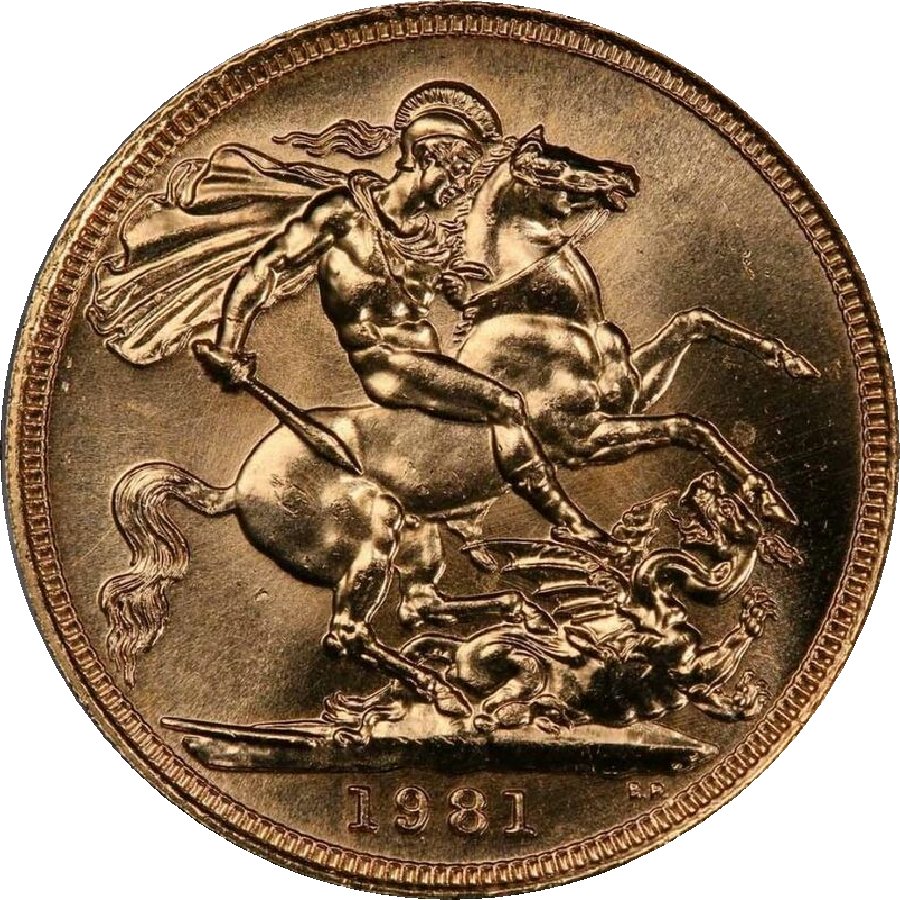
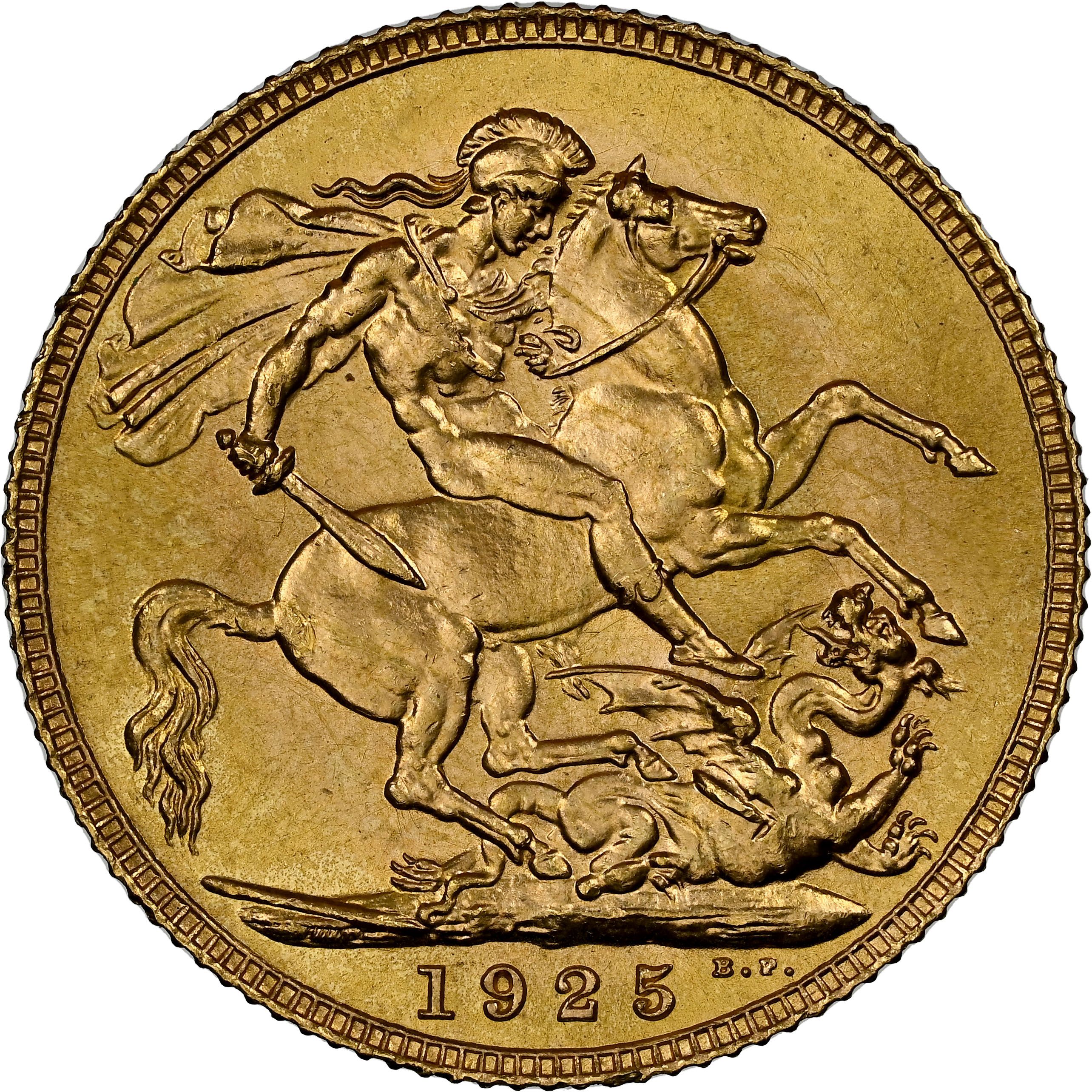
When Britain finally abandoned the gold standard in 1931, the sovereign continued as a bullion and commemorative coin. The Royal Mint kept the 1817 specifications because numismatic continuity matters: a 1817 sovereign and a 2024 sovereign are interchangeable for bullion purposes, which sustains the entire 200-year resale market. Any specification change would have bifurcated the market.
Tolerance, what counts as "within spec"
The Royal Mint allows a manufacturing tolerance of ±0.020 g on the standard sovereign, meaning a freshly-struck genuine coin will weigh between 7.968 g and 8.008 g on a calibrated scale. Diameter tolerance is ±0.05 mm. Modern (post-1990) sovereigns are usually well inside these tolerances; Royal Mint precision has improved over two centuries.
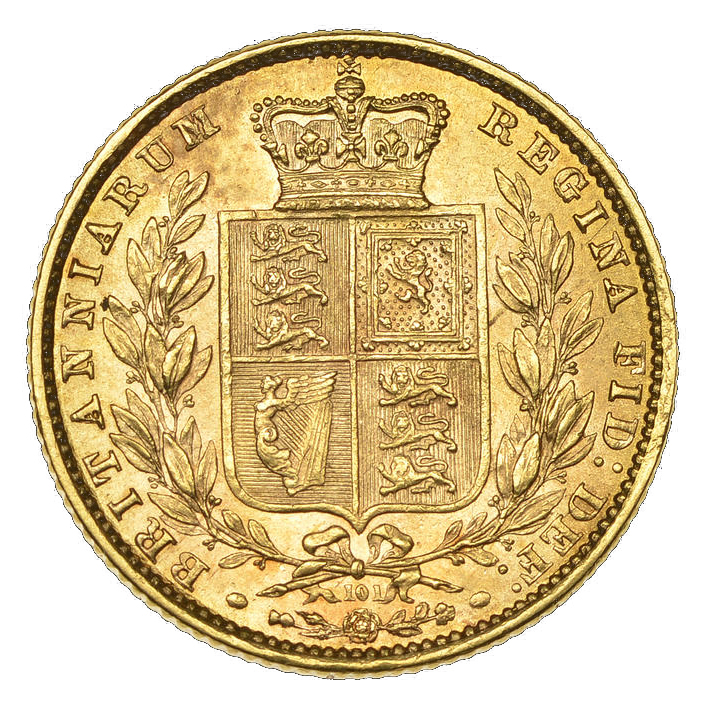
For circulated sovereigns, weight loss through wear is a real factor. A heavily-worn Victorian shield-back can read 7.85-7.92 g and still be entirely genuine, the missing 0.05-0.10 g is gold abraded from the surfaces over a century of pocket use. This is why weight is the first authentication test but never the only one.
| Reading on scale | Likely interpretation |
|---|---|
| 7.97 - 8.01 g | Within manufacturing tolerance, almost certainly genuine |
| 7.93 - 7.97 g | Worn genuine, or possible underweight cast counterfeit |
| 7.85 - 7.93 g | Heavily worn genuine (Victorian / Edwardian) or fake |
| Below 7.85 g | Almost certainly fake or holed/repaired |
| Above 8.05 g | Almost certainly fake (over-weight cast) |
The magnetic test is the immediate backup. 22-carat gold and copper alloy are both non-magnetic. A strong neodymium magnet should not even slightly attract the coin. Any pull at all indicates ferrous content, almost always a steel-cored gilt fake. The magnet test catches the largest single category of counterfeit sovereign in under one second.
Weight vs date, historical exceptions
The 1817 Great Recoinage drew a hard line. Sovereigns dated 1817 onwards conform to the modern 7.988 g standard. Sovereigns or sovereign-named coins dated before 1817 do not.
- Henry VII fine sovereign (1489-1509), the original gold sovereign, struck at 15.55 g of approximately 23-carat gold (.958 fineness). Almost twice the modern weight, completely different design. These are five- to six-figure coins in any grade.
- Tudor sovereigns (1509-1603), weights varied from 15.55 g down to 11.31 g across multiple debasements under Henry VIII, Edward VI, Mary I and Elizabeth I.
- Stuart sovereigns / unite (1603-1660), James I and Charles I struck unites at 10.0 g, sometimes called sovereigns by collectors. These are not part of the modern series.
- Hammered angels and ryals, gold coins of varying weights (5.0-7.7 g) circulating alongside sovereigns in the medieval and Tudor periods. Not sovereigns by modern catalogue definition.
- Pre-1816 milled gold, the guinea (1663-1813) at 8.359 g, the half-guinea at 4.18 g, and the third-guinea at 2.79 g all preceded the modern sovereign and operated on a different standard.
For practical purposes, anyone authenticating a piece labelled "sovereign" should ask first whether it is dated 1817 or later. If yes, it should weigh 7.988 g. If no, it's a different coin series entirely and the modern specifications do not apply. See our sovereign values UK guide for the full date list of the modern series.
How weight catches counterfeits
Weight alone catches most low-end counterfeits because matching gold density is hard. Pure gold has a density of 19.32 g/cm³; 22-carat gold (with copper) is 17.7 g/cm³. Common counterfeit metals have very different densities:
| Material | Density (g/cm³) | Counterfeit characteristic |
|---|---|---|
| 22-carat gold (sovereign) | 17.7 | Genuine |
| Pure gold (24-carat) | 19.32 | Wrong alloy, over-spec by 9% |
| Lead | 11.34 | Heavy-feel fake reads light by 36% |
| Brass | 8.4-8.7 | Reads light by 50% |
| Steel | 7.85 | Reads light by 56%; magnetic |
| Tungsten | 19.25 | Reads heavy by 9% if pure; matches gold if alloyed |
A gold-plated lead sovereign would read approximately 5.05 g for the same 22.05 mm diameter and 1.52 mm thickness, off by 2.94 g. Trivially detected.
Tungsten-core fakes are the sophisticated threat. Tungsten's density is almost identical to pure gold (19.25 vs 19.32 g/cm³) and counterfeiters can engineer a tungsten core with a thin gold shell that matches the 22-carat 17.7 g/cm³ figure precisely. Weight alone does not catch these.
For tungsten-core detection, the specific gravity (SG) test via water displacement is the home authentication tool. The test measures actual density rather than weight alone, and detects any deviation from 17.7 g/cm³. See our specific gravity test for gold coins for the full procedure. For high-value sovereigns, professional XRF (X-ray fluorescence) testing at a Royal Mint-authorised dealer or grading service is the definitive answer.
Buying a digital scale for sovereign authentication
A precision digital jewellery scale is the single most useful authentication tool any sovereign collector can own. Specifications to look for:
- Resolution: 0.01 g (sometimes labelled "0.01g/100g"). Anything coarser than 0.01 g cannot reliably distinguish a worn genuine from an underweight fake.
- Capacity: 100 g or higher. Sufficient for any sovereign-family coin including the quintuple sovereign at 39.94 g.
- Calibration weight included. Some scales ship with a 50 g or 100 g calibration weight; if not, buy a calibrated reference weight separately. The scale must be calibrated before first use and re-calibrated periodically.
- Tare function. Allows you to subtract the weight of any tray or capsule, so the coin can be weighed in its protective holder without removal.
- Flat platen. Avoid scales with a recessed weighing pan; the coin should sit flat on a level surface.
A suitable jewellery scale is an inexpensive purchase. American Weigh, ProScale and KitchenAble are reliable brand names. Avoid sub-£10 generic scales, the resolution claims often don't hold up under repeated use.
Calibration sanity check. A UK 1p coin (post-1992 copper-plated steel) weighs exactly 3.564 g. Place a 1p on your scale; if it reads 3.55-3.58 g, the scale is correctly calibrated. If it reads materially different, re-calibrate using the included weight. Other useful references: a UK 5p weighs 3.25 g, a 10p weighs 6.50 g, a 20p weighs 5.00 g, a 50p weighs 8.00 g, and a £1 (12-sided post-2017) weighs 8.75 g.
A second authentication tool worth owning is a digital calliper capable of 0.05 mm measurements. This handles the diameter test (sovereign 22.05 mm, half 19.30 mm) and edge thickness measurements. Digital callipers are inexpensive. Together with the scale, the kit represents under £50 for a tool set that catches over 90% of sovereign counterfeits at home. See our full sovereign authentication guide for the complete six-test procedure.
Related guides
- Gold sovereign values UK, full date-by-date pricing for the 1817-2026 sovereign series.
- How to spot a fake sovereign, the six-test authentication procedure.
- Specific gravity test for gold coins, the home density test that catches tungsten-core fakes.
- Sovereign vs Krugerrand, how the sovereign specifications compare to the world's most-traded gold bullion coin.
- Sovereign mint marks UK, how the branch-mint identifications affect price within identical specifications.