5p Coin Values UK: Large, Small, Silver and Steel
The 5p has been in circulation since 1968, three years before Decimal Day, and is one of the least-valuable modern British coins to find in change. But silver-proof variants from Royal Mint annual sets, the original 1968 large issue, and the silver Piedforts (mintage under 2,000 in some years) are genuinely collectable. This guide covers every variant, the 1990 size change, the 2012 nickel-plated-steel transition, and what a 5p is actually worth in 2026.
Two sizes, three metals
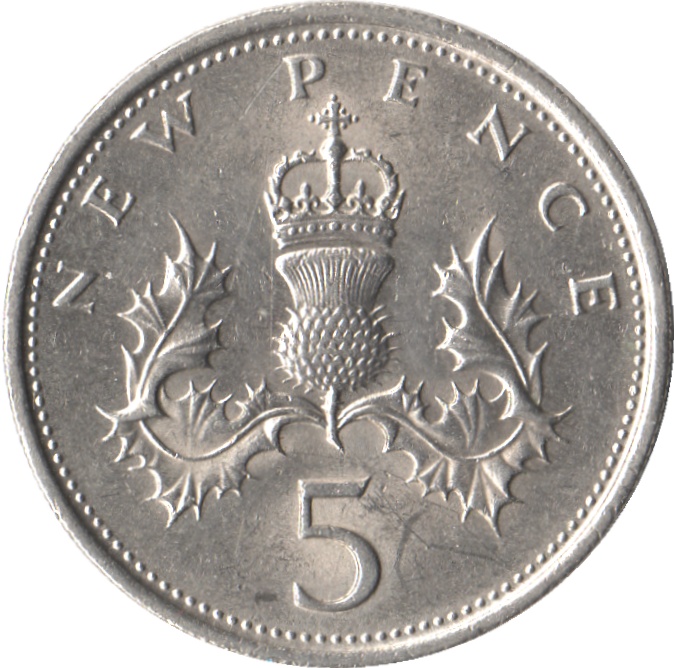
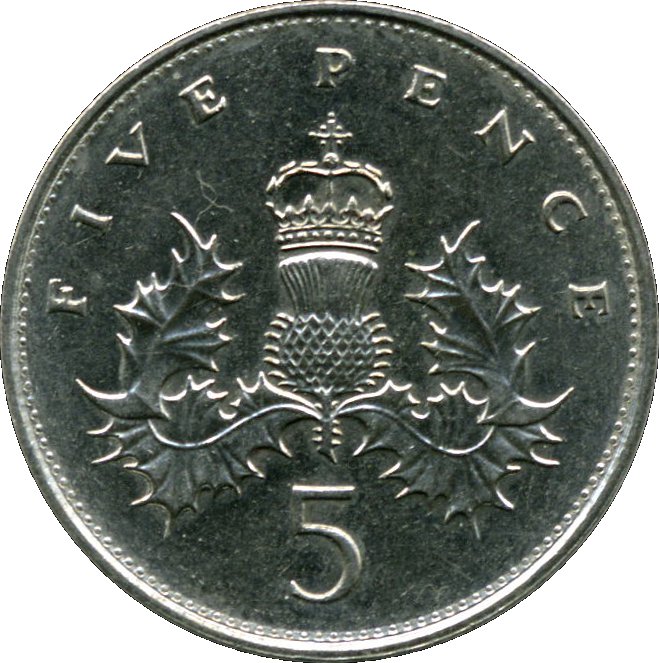
There are three distinct 5p physical specifications. The large 5p (1968–1990) was 23.59 mm, 5.65 g, cupronickel, designed as a direct decimal replacement for the pre-decimal shilling and matched its size exactly. The small cupronickel 5p (1990–2011) shrank to 18.0 mm, 3.25 g, retaining cupronickel. The small nickel-plated steel 5p (2012–present) keeps the same dimensions but switches to a cheaper steel core with nickel plating, making the post-2012 5p strongly magnetic.
Reverse designs
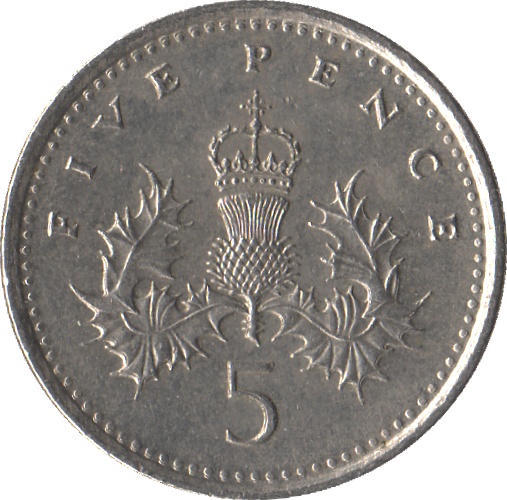
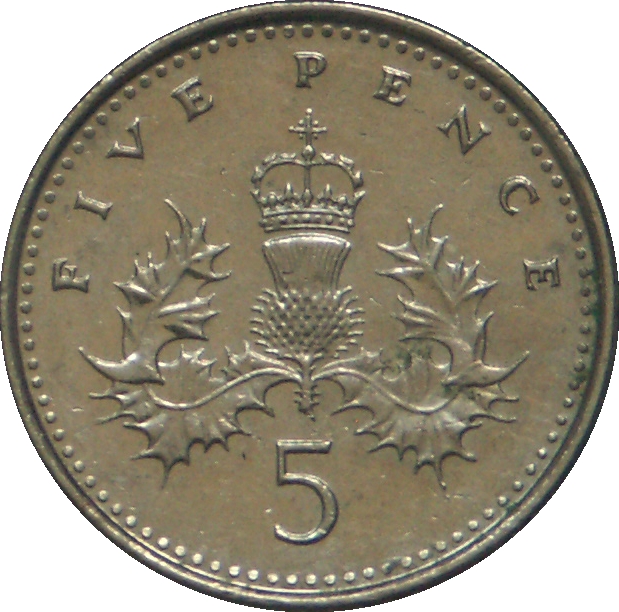
- 1968–2008: Crowned Thistle by Christopher Ironside, a Scottish thistle topped with the St Edward's Crown. Used continuously across two size changes.
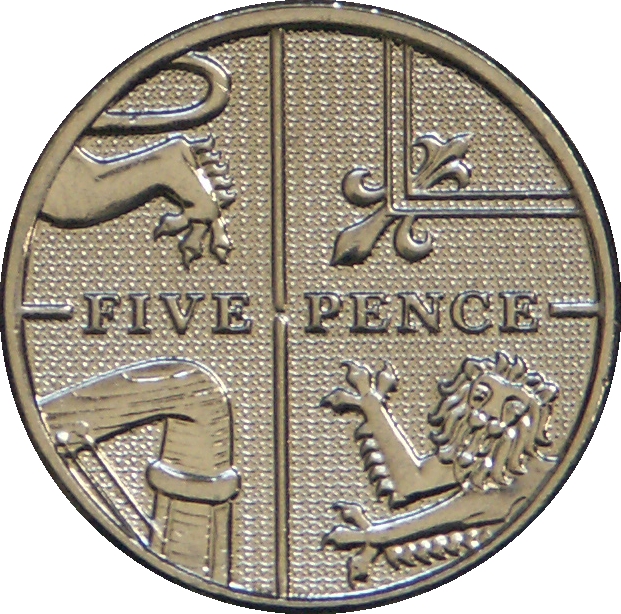
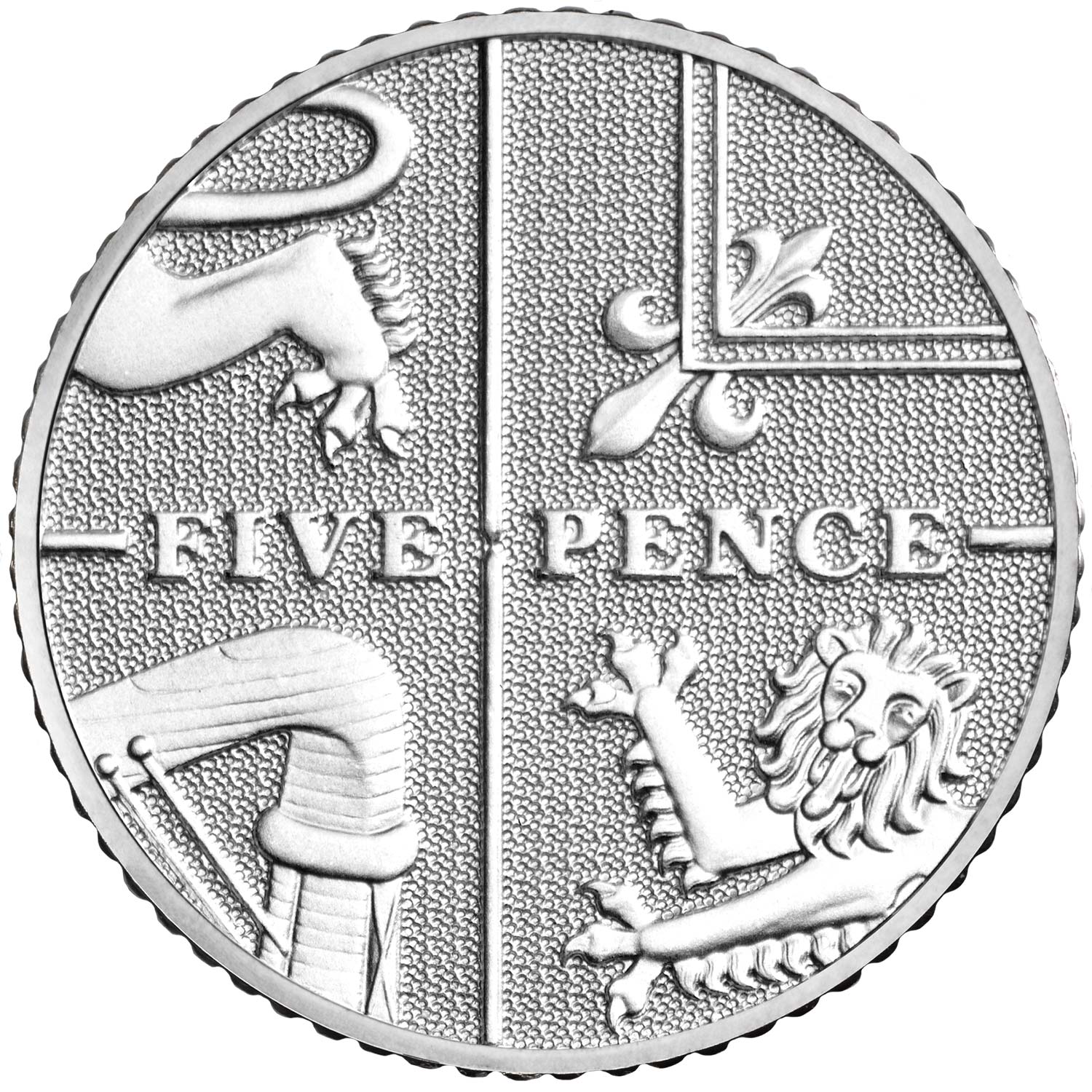
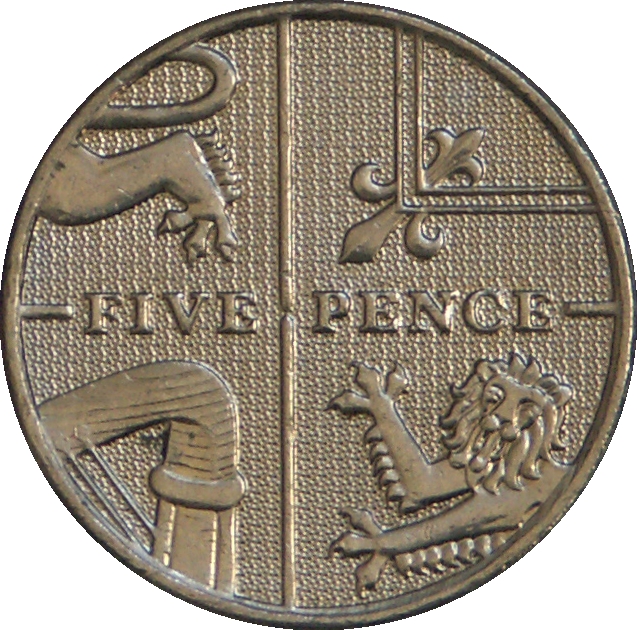
- 2008–2022: Royal Shield fragment by Matthew Dent, the lower-left section of the Royal Arms (Cross of St Patrick). Part of the six-coin shield jigsaw.
- 2023–: Cyperus papyrus by Iain Macarthur, a stylised papyrus stem from the Charles III flora-and-fauna definitive series.
Notable issues
| Year | Issue | Mintage | Realised |
|---|---|---|---|
| 1968 | First decimal 5p (large), BU pack | 9.7 million | £3 – £8 |
| 1990 | First small 5p, BU pack | 1.6 million | £3 – £6 |
| 2008 | Royal Shield first issue, BU | 165 million | £2 – £5 |
| 2009 | Lowest circulating mintage (still 133 million) | 132,960,000 | Face value |
| 2012 | First nickel-plated steel | 250 million | Face value |
| 2023 | Charles III Cyperus papyrus | ~95 million est. | Face value (BU £2-4) |
| various | Silver proof (Royal Mint annual sets) | 2,500–5,000 | £15 – £30 |
| various | Silver Piedfort (double weight) | ~1,500–2,000 | £90 – £180 |
The magnet test
The fastest way to date-bracket a 5p is the magnet test. Hold a fridge magnet to the coin: strong pull = post-2012 nickel-plated steel; no pull = pre-2012 cupronickel. The same test works for 10p and 20p coins. A silver-proof 5p is also non-magnetic, so weight is needed to distinguish silver from cupronickel: silver weighs roughly 3.4 g vs 3.25 g for cupronickel.
Featured 5p coins on MyCoinage