Rare 50p Coins UK: The Top 25 List, Mintages & Values (2026)
The 50p is the most-collected coin in British change. More than 90 commemorative designs have entered UK circulation since the heptagonal “fifty-pee” first appeared in 1969, and a small number of them are worth hundreds of times face value. This is the definitive ranking: every rare 50p, the verified Royal Mint mintage, what it is worth today, and how to spot a counterfeit.
Found a 50p you think might be rare?
Free MyCoinage valuation tool · realised auction prices · no card needed
Add it to a free MyCoinage collection and see realised auction prices alongside this top-25 list. Works for every UK 50p from 1971 onwards, including Kew Gardens, Atlantic Salmon and the Olympic 29.
The top 5 rare 50p coins at a glance
- 2023 Atlantic Salmon — mintage 200,000; £30–£80 circulated. The rarest 50p in circulation.
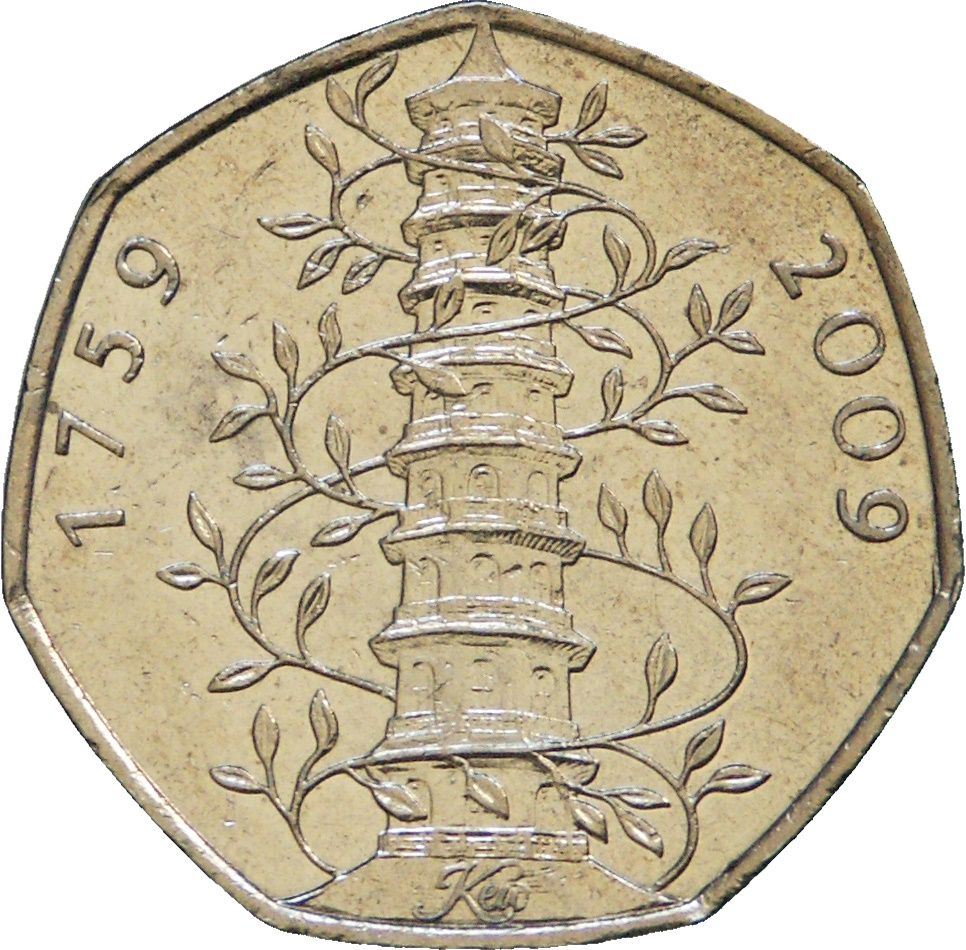
- 2009 Kew Gardens — 210,000; £140–£180 circulated. The famous one.
- 2011 Olympic Football — 1,125,500; £15–£30. The offside-rule diagram.
- 2011 Olympic Wrestling — 1,129,000; £10–£25.
- 2011 Olympic Judo — 1,161,500; £10–£25.
Those are the headline five — the full ranking below runs to 25 coins with realised prices, mintages and the variants that trip people up.
The top 25 rarest UK 50p coins
The list below ranks every modern UK 50p with a circulating mintage under five million, the cut-off where coins start to feel genuinely scarce in change. Mintages are Royal Mint published figures, cross-checked against Change Checker’s scarcity index. Prices are realised ranges from eBay UK sold listings over the past 12 months.
| # | Year | Design | Designer | Mintage | Circ price | BU price |
|---|---|---|---|---|---|---|
| 1 | 2023 | Atlantic Salmon | Iain Macarthur | 200,000 | £30–£80 | £120–£200 |
| 2 | 2009 | Kew Gardens | Christopher Le Brun | 210,000 | £150–£250 | £500–£800 |
| 3 | 1992–93 | EU Presidency (large 50p) | Mary Milner Dickens | 109,000 | £30–£60 | £80–£150 |
| 4 | 2011 | Olympic Football (offside diagram) | Neil Wolfson | 1,125,500 | £15–£30 | £40–£70 |
| 5 | 2011 | Olympic Wrestling | Roderick Enriquez | 1,129,000 | £15–£28 | £35–£65 |
| 6 | 2011 | Olympic Judo | David Cornell | 1,161,500 | £12–£22 | £28–£50 |
| 7 | 2011 | Olympic Triathlon | Jonathan Olliffe | 1,163,500 | £10–£18 | £25–£45 |
| 8 | 2018 | Peter Rabbit | Emma Noble (after Potter) | 1,400,000 | £8–£15 | £18–£30 |
| 9 | 2018 | Flopsy Bunny | Emma Noble (after Potter) | 1,400,000 | £8–£15 | £18–£30 |
| 10 | 2011 | Olympic Tennis | Tracy Baines | 1,454,000 | £8–£14 | £20–£35 |
| 11 | 2018 | Mrs Tittlemouse | Emma Noble (after Potter) | 1,700,000 | £6–£12 | £15–£25 |
| 12 | 2017 | Sir Isaac Newton | Aaron West | 1,801,500 | £5–£10 | £12–£20 |
| 13 | 2011 | Olympic Goalball | Pravin Dewdhory | 1,615,500 | £5–£10 | £15–£25 |
| 14 | 2011 | Olympic Shooting | Pravin Dewdhory | 1,656,500 | £5–£10 | £15–£25 |
| 15 | 2016 | Jemima Puddle-Duck | Emma Noble | 2,100,000 | £5–£10 | £15–£25 |
| 16 | 2011 | Olympic Athletics | Florence Jackson | 2,224,000 | £3–£7 | £10–£18 |
| 17 | 2018 | Tailor of Gloucester | Emma Noble | 3,900,000 | £3–£6 | £8–£15 |
| 18 | 2003 | Suffragettes (WSPU centenary) | Mary Milner Dickens | 3,124,000 | £3–£6 | £8–£15 |
| 19 | 2011 | Olympic Boxing | Shane Greeves | 2,148,500 | £3–£6 | £8–£15 |
| 20 | 2017 | Tom Kitten | Emma Noble | 9,500,000 | Face–£3 | £5–£10 |
| 21 | 2018 | Paddington at the Station | David Knapton | 5,001,000 | £2–£5 | £6–£12 |
| 22 | 2018 | Paddington at the Palace | David Knapton | 5,901,000 | £2–£5 | £6–£12 |
| 23 | 2019 | Paddington at St Paul’s | David Knapton | 9,001,000 | Face–£3 | £5–£10 |
| 24 | 2019 | Paddington at the Tower | David Knapton | 9,001,000 | Face–£3 | £5–£10 |
| 25 | 2016 | WWF 50th Anniversary | Matthew Bonaccorsi | 3,400,000 | £3–£6 | £8–£15 |
Mintages: The Royal Mint · Change Checker. Prices: realised UK auction sales, eBay UK sold listings, Baldwin’s, Spink and Noonans.
Is a 1997 50p worth anything?
Almost certainly not the one in your change — but 1997 is a genuinely interesting year, because it is the only year with two different-sized 50ps. The small 27.3 mm coin we still use launched in September 1997 with a first-year mintage of 456,364,100 — one of the biggest 50p runs ever, worth face value in any circulated grade. The large-format 1997 50p is the collectable one: struck only for Royal Mint sets in the old 30 mm size’s final year, with roughly 110,000 made, it never circulated and trades at £10–£25 in BU — more for the silver proof and piedfort versions. So: measure yours. 27.3 mm, face value; 30 mm, set coin worth keeping.
A short history of the 50p (1969–2026)
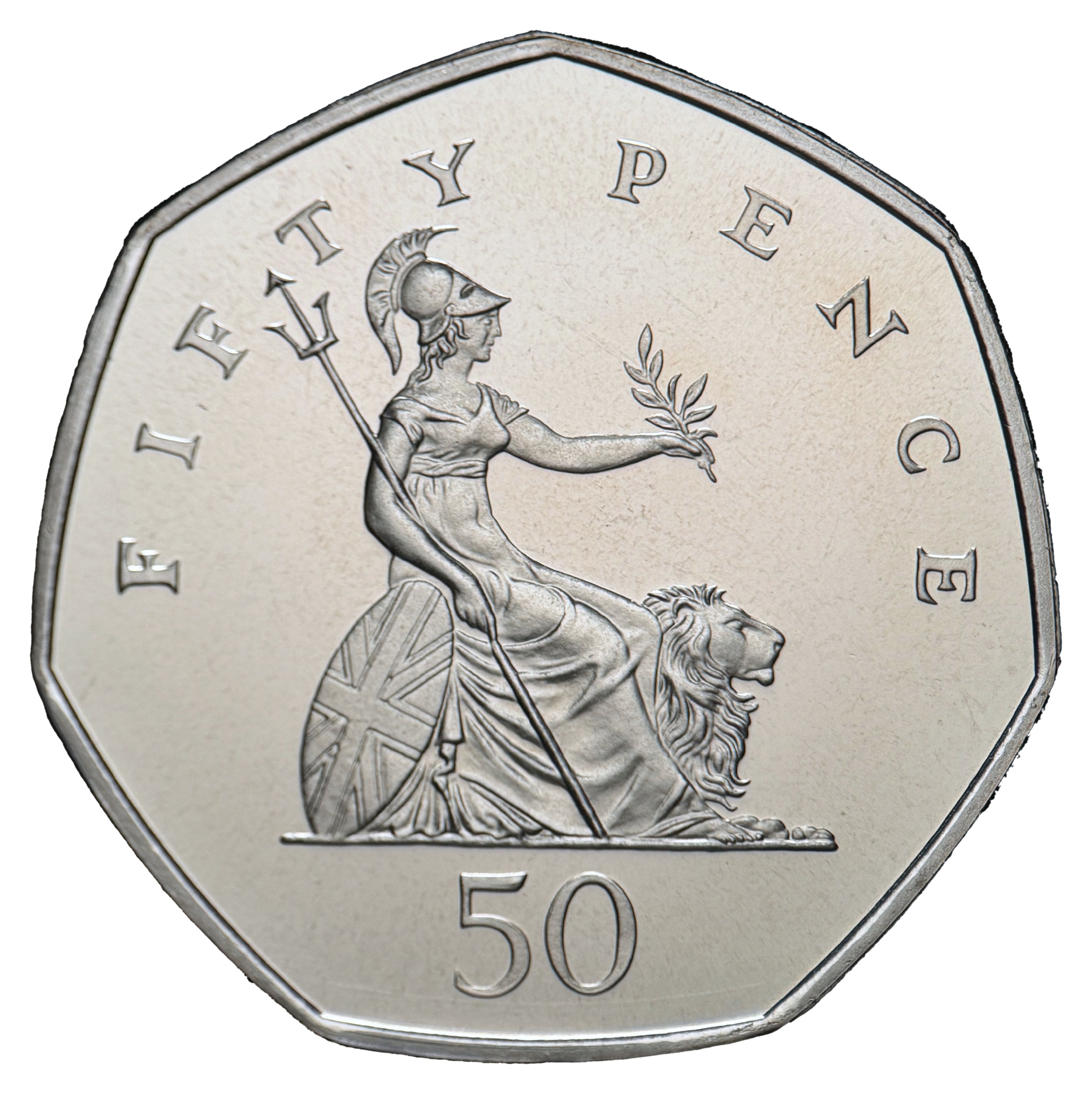
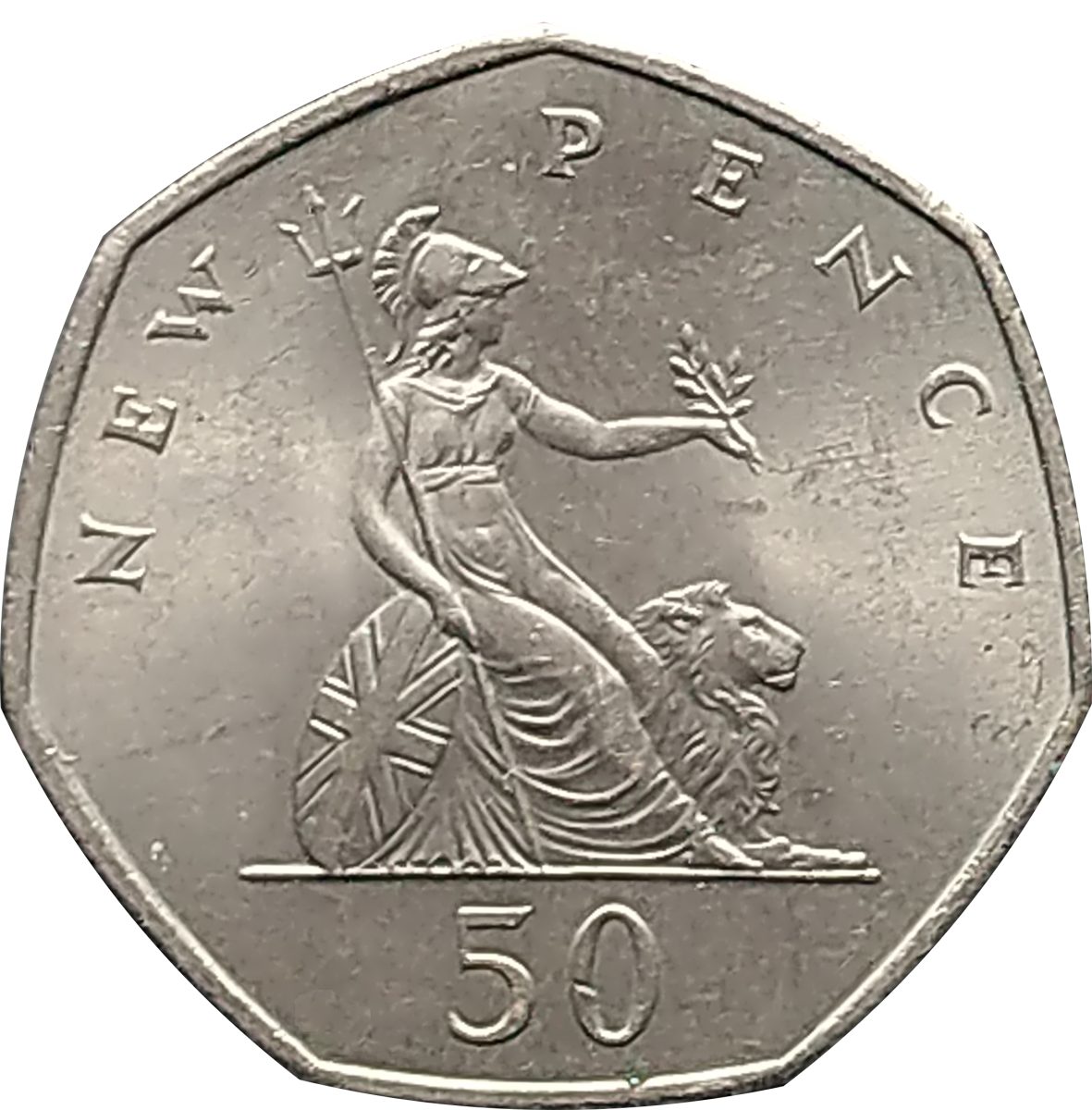
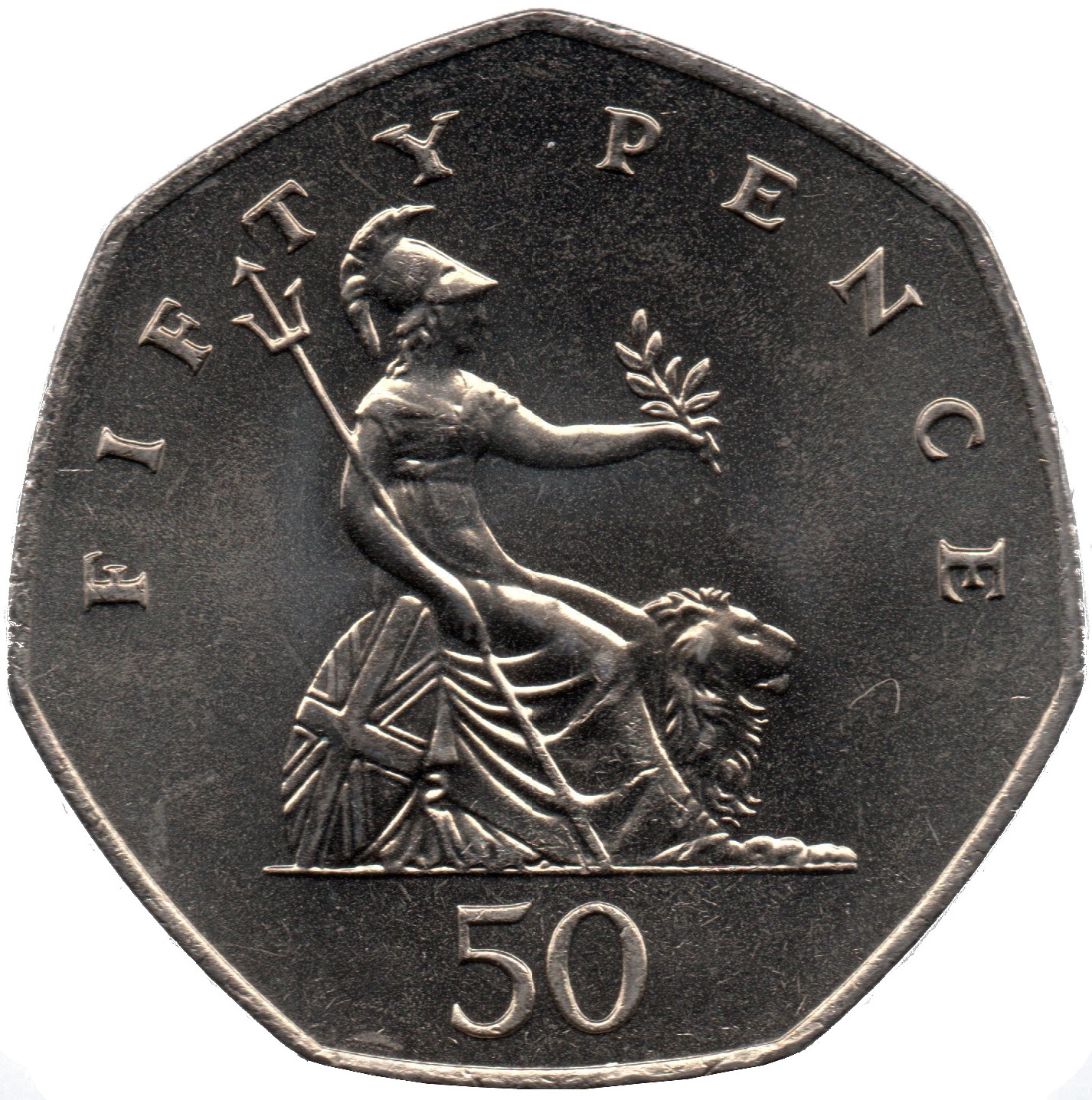
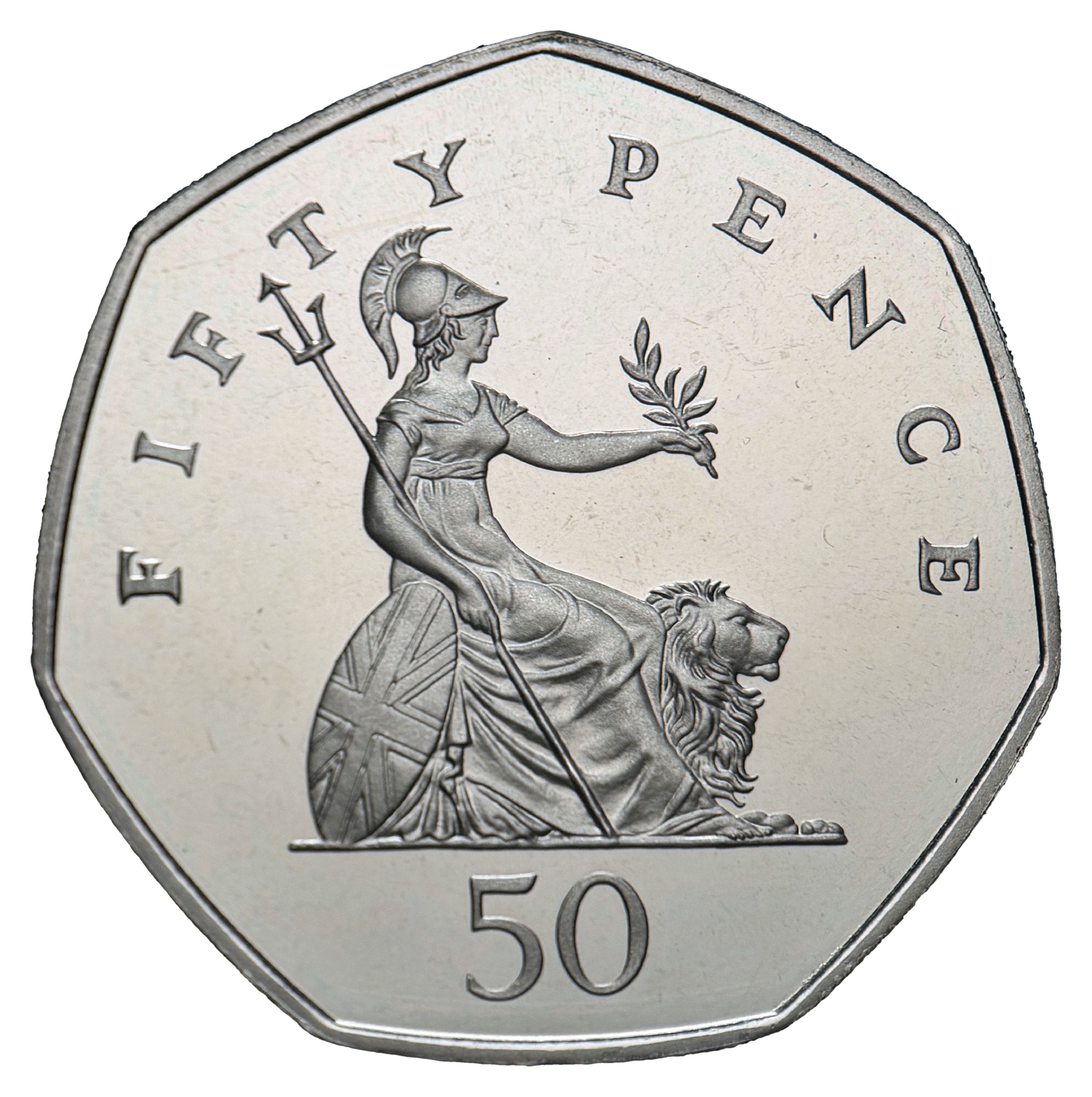
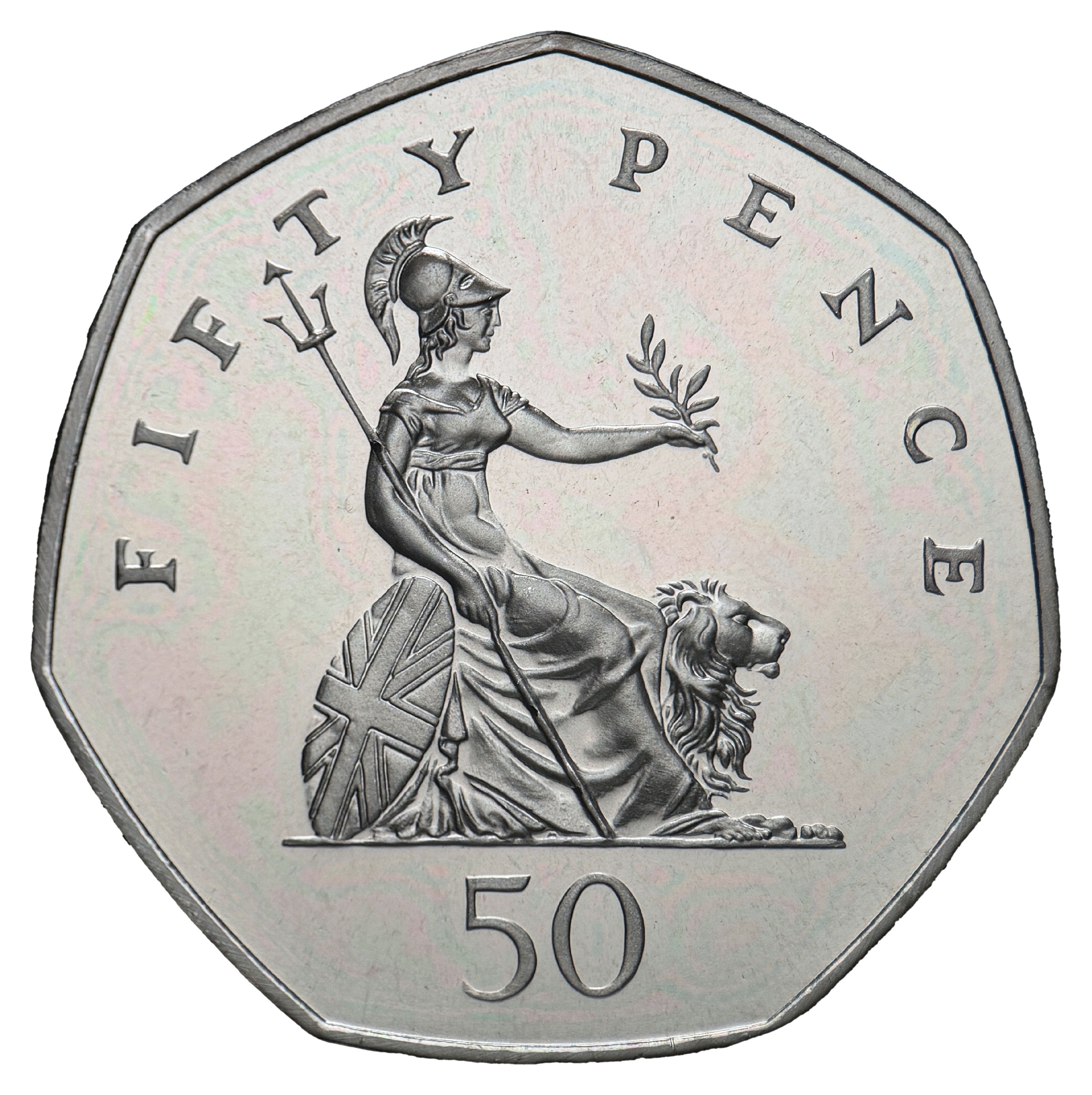
The 50p entered circulation on 14 October 1969, the world’s first heptagonal coin. The original design by Christopher Ironside featured a seated Britannia on the reverse, replacing the ten-shilling note that had become uneconomic to keep replacing as paper. The seven-sided shape is technically a Reuleaux polygon: it has constant width regardless of orientation, so vending machines can recognise it with a single sensor.
On 1 September 1997 the 50p was reduced from its original 30 mm, 13.5 g format to the current 27.3 mm, 8.0 g coin. The change was driven by complaints about the original’s weight in pockets and purses, and by the rising cost of cupronickel. The pre-1997 large 50p was demonetised on 28 February 1998. The Christopher Ironside Britannia reverse continued on the smaller coin until 2008.
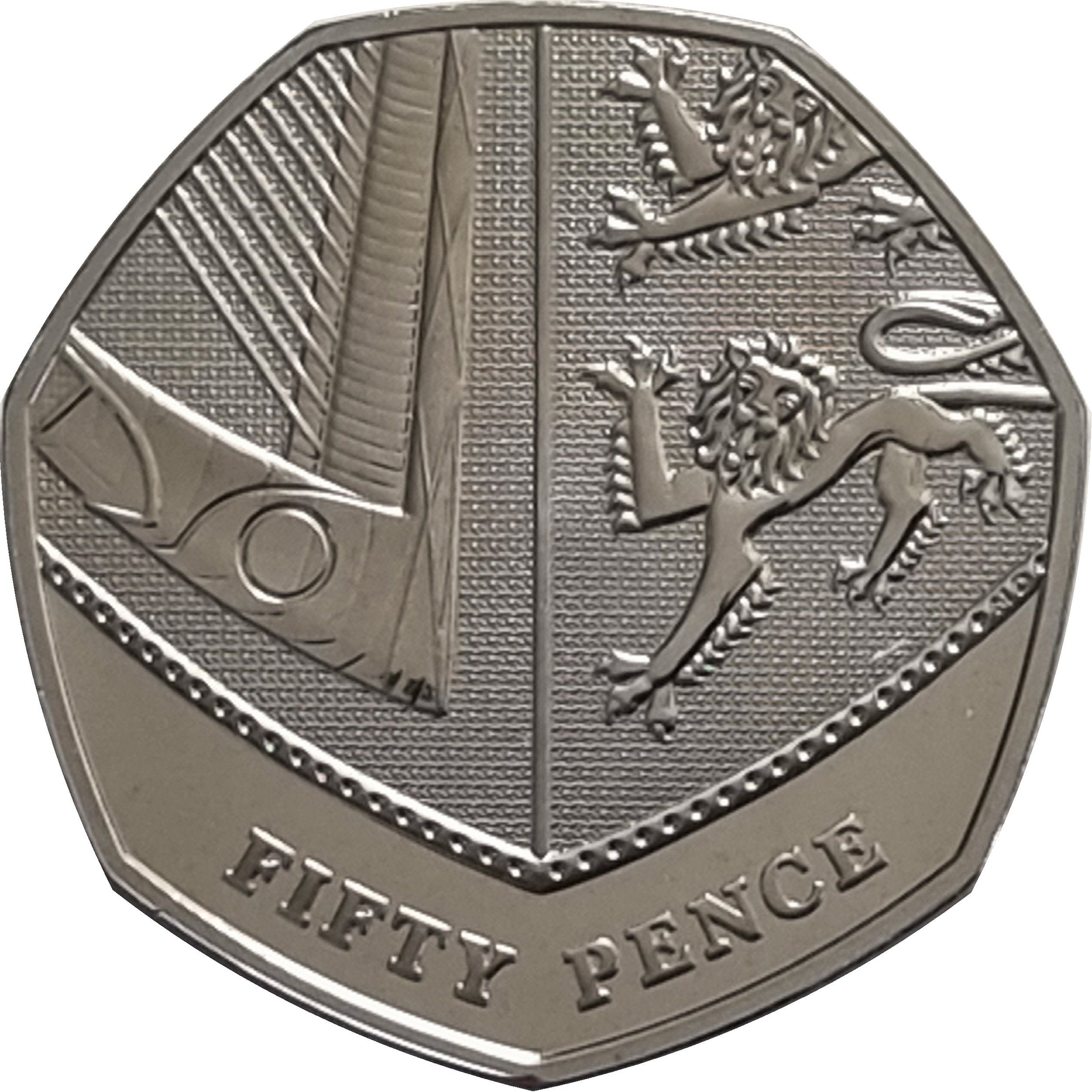
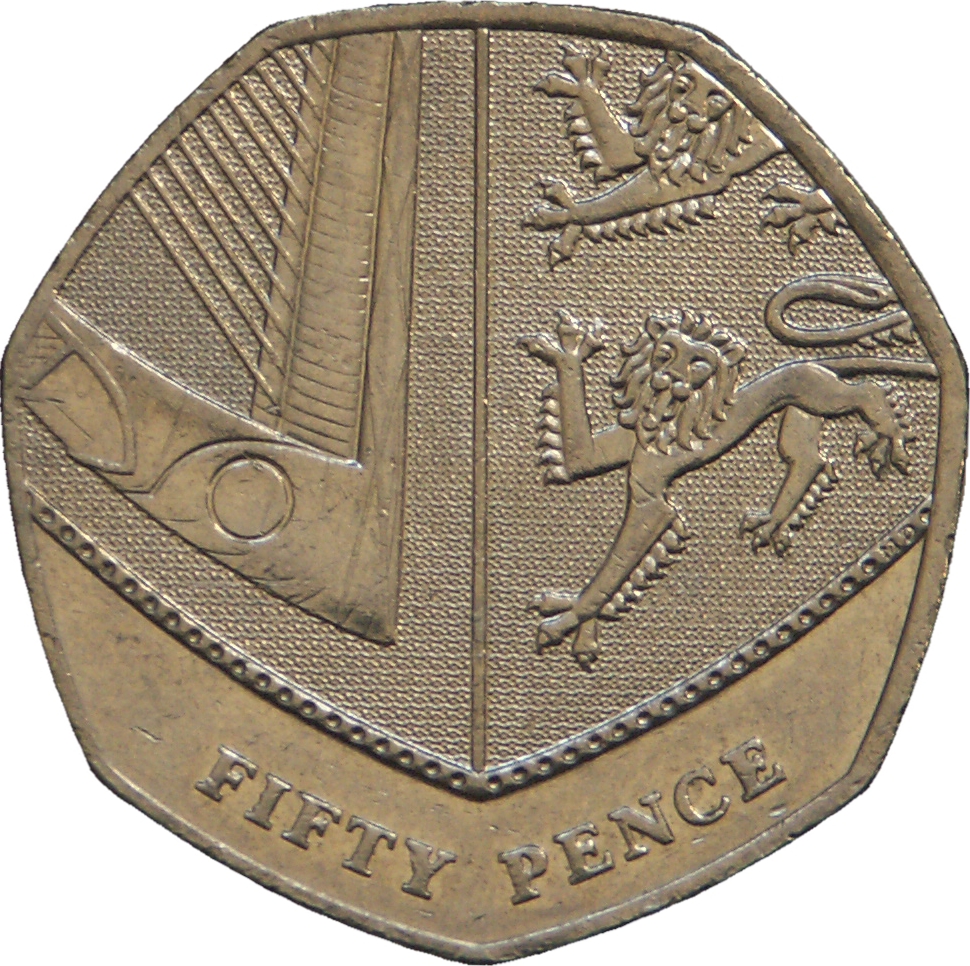
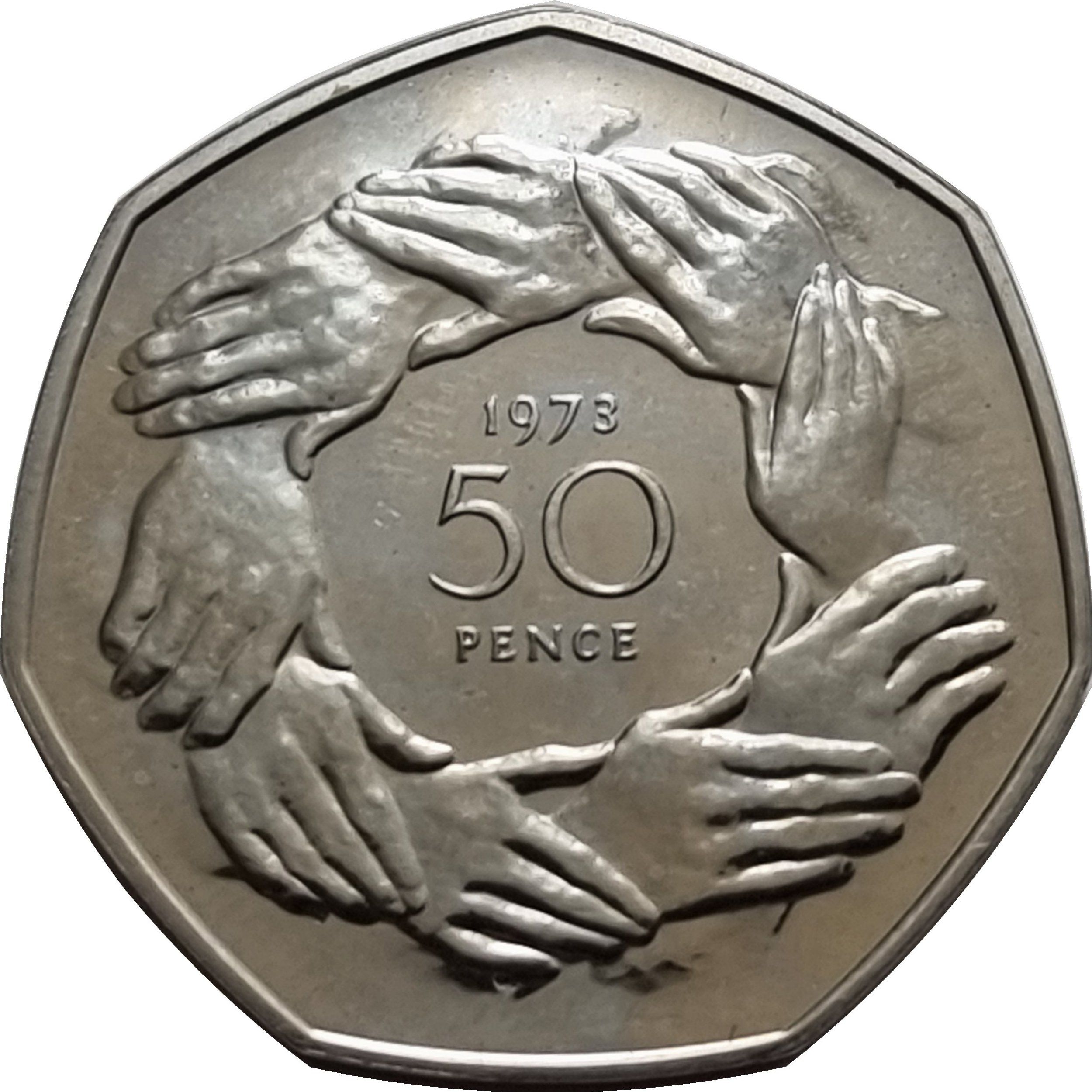
In 2008 the Royal Mint introduced Matthew Dent’s redesign of every circulating denomination from 1p to 50p, replacing the standalone designs with sections of the Royal Shield. The 50p carries the right-hand portion of the shield. The first commemorative 50p with a non-Britannia reverse was the 1973 EEC accession; commemoratives became regular from the 1990s onward and now define the series.
The accession of King Charles III in 2022 opened the second portrait era of the decimal 50p. The Charles III Coinage Portrait series, designed by Iain Rank-Broadley with the king facing left (per the centuries-old monarchical-rotation tradition), launched in 2023 with eight new definitives including the salmon, capercaillie, hazel dormouse and Atlantic puffin. The 200,000-mintage Atlantic Salmon now holds the title of rarest UK 50p in circulation.
| Year | Format | Notable |
|---|---|---|
| 14 October 1969 | Large (30 mm, 13.5 g) | Decimal launch; Christopher Ironside Britannia |
| 1973 | Large | First commemorative: David Wynne EEC accession (89.7 m mintage) |
| 1992–93 | Large | EU Presidency (109,000): rarest large 50p ever |
| 1 September 1997 | Small (27.3 mm, 8.0 g) | Size reduction; Britannia reverse retained |
| 1998 | Small | NHS 50th anniversary; EU Presidency (5 m mintage) |
| 28 February 1998 | , | Pre-1997 large 50p demonetised |
| 2008 | Small | Matthew Dent Royal Shield redesign |
| 2009 | Small | Kew Gardens (210,000): 14 years as rarest 50p |
| 2011–12 | Small | 29-coin London 2012 Olympic series |
| 2016–18 | Small | Beatrix Potter (13 designs) |
| 2018– | Small | Paddington 50p series (six coins to 2022) |
| 2022– | Small | Harry Potter 50p series (Charles III obverse) |
| November 2023 | Small | Atlantic Salmon (200,000): new rarest 50p |
Themed 50p series cross-links
The 50p has carried five major themed commemorative series, each large enough to warrant its own detailed guide. If you have a coin from any of these, follow the link for the full mintage table and realised values.
- Beatrix Potter (2016–2018) – 13 circulating designs from Peter Rabbit to Mrs Tittlemouse. The 2018 quartet are the rarities. Peter Rabbit 50p series guide →
- Paddington Bear (2018–2022) – Six designs spanning Paddington at the Station, Palace, St Paul’s, the Tower, and the 2022 Platinum Jubilee pair. Paddington 50p guide →
- Harry Potter (2022–) – Hogwarts Express, Hedwig, Dumbledore and more. First circulating UK series with the Charles III obverse. Harry Potter 50p guide →
- London 2012 Olympics (2011) – The deepest collectable 50p run: 29 sport designs, including the famous Football “offside rule” coin. A complete BU set in the original Royal Mint folder regularly tops £200. London 2012 Olympic 50p guide →
- The Snowman (2018–) – Annual Christmas issues from the Royal Mint; coloured collector versions only, never released into circulation.
Privy marks: the 2023 Charles III nuance
The 2023 Charles III Coinage Portrait 50ps (and the £5 Crown, the £2 and the £1) exist in two parallel versions, and confusing them is the single most common pricing mistake we see on the UK coin forums:
- No privy mark, the circulating coin. The version released into UK change in November 2023. For the Atlantic Salmon, this is the 200,000-mintage piece that overtook the Kew Gardens. No privy mark visible on the obverse.
- With privy mark, the collector coin. A separate strike with a small coronation privy mark (a stylised crown) on the obverse. Issued only as part of Royal Mint annual sets and Coronation collector packs. Higher mintage within the collector channel, never released into circulation.
The two are technically the same date and design, but they are different coins for catalogue and pricing purposes. When valuing a 2023 50p, the first question is always: is there a privy mark on the obverse? The 200,000-mintage figure that makes the Atlantic Salmon the rarest 50p in circulation refers strictly to the no-privy version. The Royal Mint published the breakdown in its November 2023 release notes.
Authentication: how to spot a fake 50p
Counterfeit 50ps exist for the high-value rarities, particularly the Kew Gardens and the Olympic Football. Most fakes are crude cast copies that fail the basic physical checks; a few deceptive examples exist but professional grading catches them. The standard checks below will catch over 95% of counterfeits in circulation.
- Weight. A genuine modern (post-1997) 50p is 8.00 g ± 0.05 g on a jewellery scale. Pre-1997 large 50ps weigh 13.5 g ± 0.1 g. Anything outside these ranges is suspect. Cheap cast counterfeits typically run light (7.5–7.8 g) due to porosity in the cast.
- Diameter and shape. Modern 50p is 27.3 mm flat-to-flat across the heptagonal Reuleaux. Edges should be perfectly straight with sharp, equal curves where they meet. Cast counterfeits often show slightly rounded, soft corners where the original would be crisp.
- Edge. All UK 50ps have a plain edge, no reeding. If the edge is milled or has any kind of grooving, the coin is a counterfeit or a novelty piece.
- Font alignment. Lettering on the obverse legend should be perfectly aligned with the heptagonal edge, evenly spaced and sharp. Cast counterfeits often have slightly fuzzy or unevenly spaced text. Compare with a known-genuine coin under a 10× loupe.
- Surface and lustre. A brilliant uncirculated coin should have full mint lustre with no flat or matte areas. The relief should be sharp with no flow lines. Counterfeits made by casting almost always lose the fine relief details first.
For high-value pieces (anything Kew Gardens, Atlantic Salmon, EU Presidency or Olympic Football), professional encapsulation by CGS UK, PCGS or NGC adds confidence and resale value. Fees are typically £15–£30 per coin and the slab is the only way to confirm authenticity without doubt.
Is my 50p rare? quick decision tree
Run through these five steps in order. Each one narrows the field by a meaningful margin, and most 50ps drop out of consideration within the first two checks. For the long-form version, see our is my 50p rare? walkthrough.
Where to sell a rare 50p
The right venue depends on the value bracket. Underselling at the wrong venue is the most common mistake we see; overselling effort at the wrong venue (auction-house consignment for a £30 coin) is the second.
- Under £50. eBay UK sold-listings, auction format with clear reverse and obverse photos. Three to seven day auction. Expect to net 80–85% of the listed price after fees. Buyer protection works in your favour at this price band.
- £50–£200. eBay still works, but a specialist dealer (Change Checker, Coincraft) will often offer competitive trade-in. For Kew Gardens and Atlantic Salmon, professional grading by CGS UK first can lift the realised price 20–40%.
- £200+. Consign to a UK auction house. Baldwin’s, Spink and Noonans all handle modern UK commemoratives. Hammer commission is typically 15–20%; net proceeds usually beat eBay for true rarities because the auction-house buyer base is larger and more serious.
For a venue-by-venue commission breakdown including ten alternatives, see our where to sell rare coins UK guide.
Featured 50ps in our database
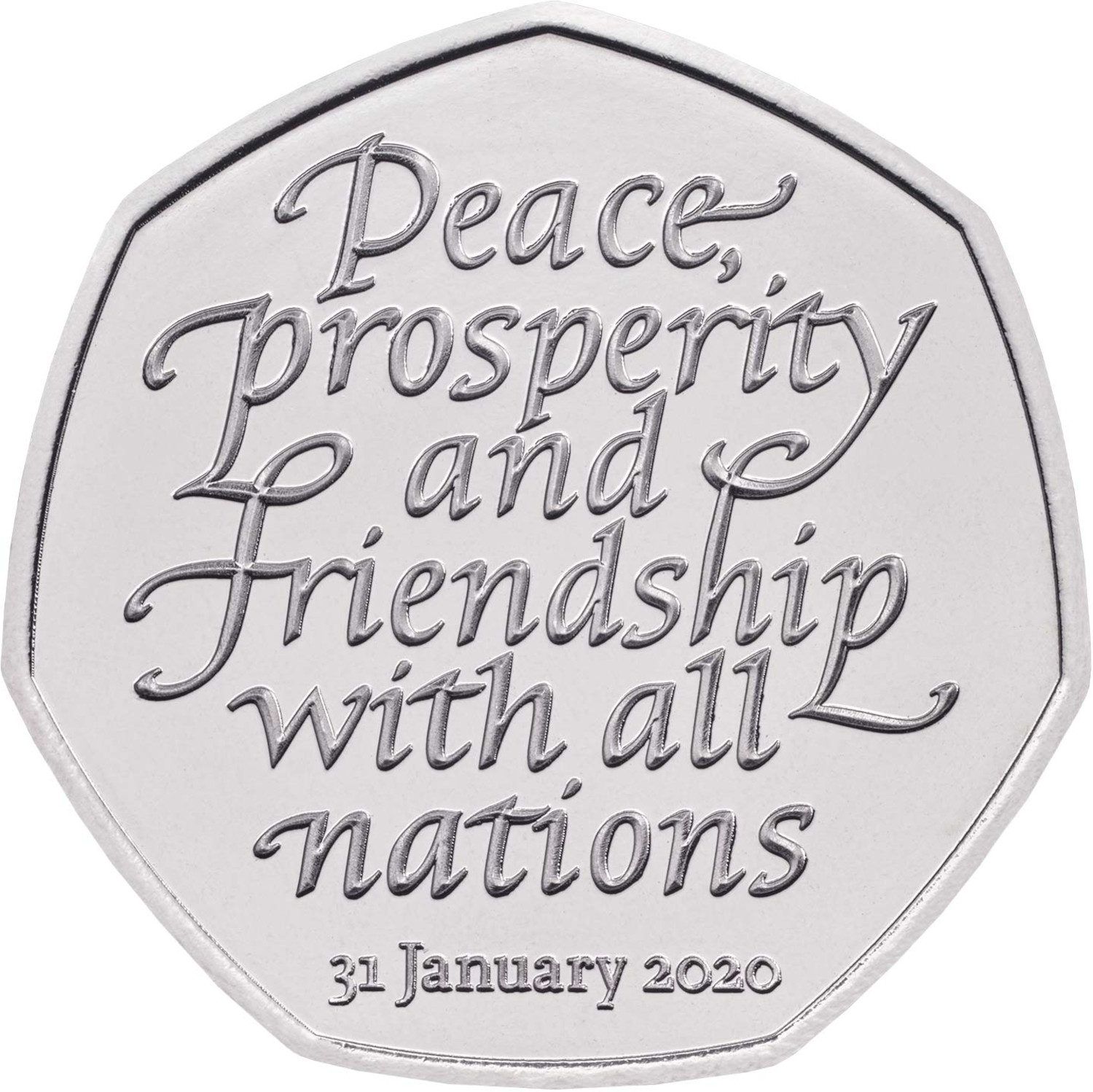
Browse every 50p in our database →
Frequently asked questions
What is the rarest 50p coin in UK circulation right now?
How much is a Kew Gardens 50p worth in 2026?
How can I tell if my 50p is rare?
What is the difference between a 50p with and without a privy mark?
Is the 2011 Olympic Football "offside rule" 50p actually rare?
Are old large 50p coins worth anything?
When was the 50p introduced?
Which Beatrix Potter 50ps are valuable?
How do I authenticate a Kew Gardens 50p?
Where should I sell a rare 50p?
Why do mintage figures differ between sources?
Are the 2009 Olympic countdown 50ps rare?
Is a 1973 EEC 50p worth anything?
Can I still spend a pre-1997 large 50p?
Should I clean my old 50p before selling it?
Further reading
- Coin values UK — free checker, value any UK coin from realised sales.
- Every 50p mintage figure, the full sortable table behind this ranking.
- The Royal Mint, the official source for mintage figures and Charles III Coinage Portrait series details.
- Change Checker scarcity index, the trade-standard scarcity tracker for circulating UK coins.
- Royal Mint Museum, historical reference for the 1969 introduction and 1997 size reduction.
- Is my 50p rare?, the five-step walkthrough version of the decision tree above.
- 50p coin values UK, companion overview with full mintage tables.
- UK coin errors list, off-centre strikes, double strikes and minting errors that multiply 50p value.
- How to grade a coin, the Sheldon and UK descriptive scales explained, the prerequisite for any pricing decision.
- What is your coin collection worth?, portfolio-level valuation walkthrough.
- Most wanted coins by collectors UK, the 50ps above ranked by how often they actually sell rather than by mintage.