Gold Sovereign Value UK 2026: Bullion Price + Rare Date Premiums
The British gold sovereign has been struck almost continuously since 1817, making it the longest-running gold coin series in modern history. Common-date bullion sovereigns trade at melt plus 5–15% premium; rare dates such as the 1819 George III, 1828 George IV and 1908 Ottawa proof have sold for six figures. This guide covers bullion mechanics, mintmark scarcity, the full rare-date list, authentication and tax treatment.
Melt value of the gold in each coin at £3,104/oz (20 October 2026). Common dates sell for a little more, rare dates for many times more: price a specific date with the sovereign value calculator or see the weights and sizes.
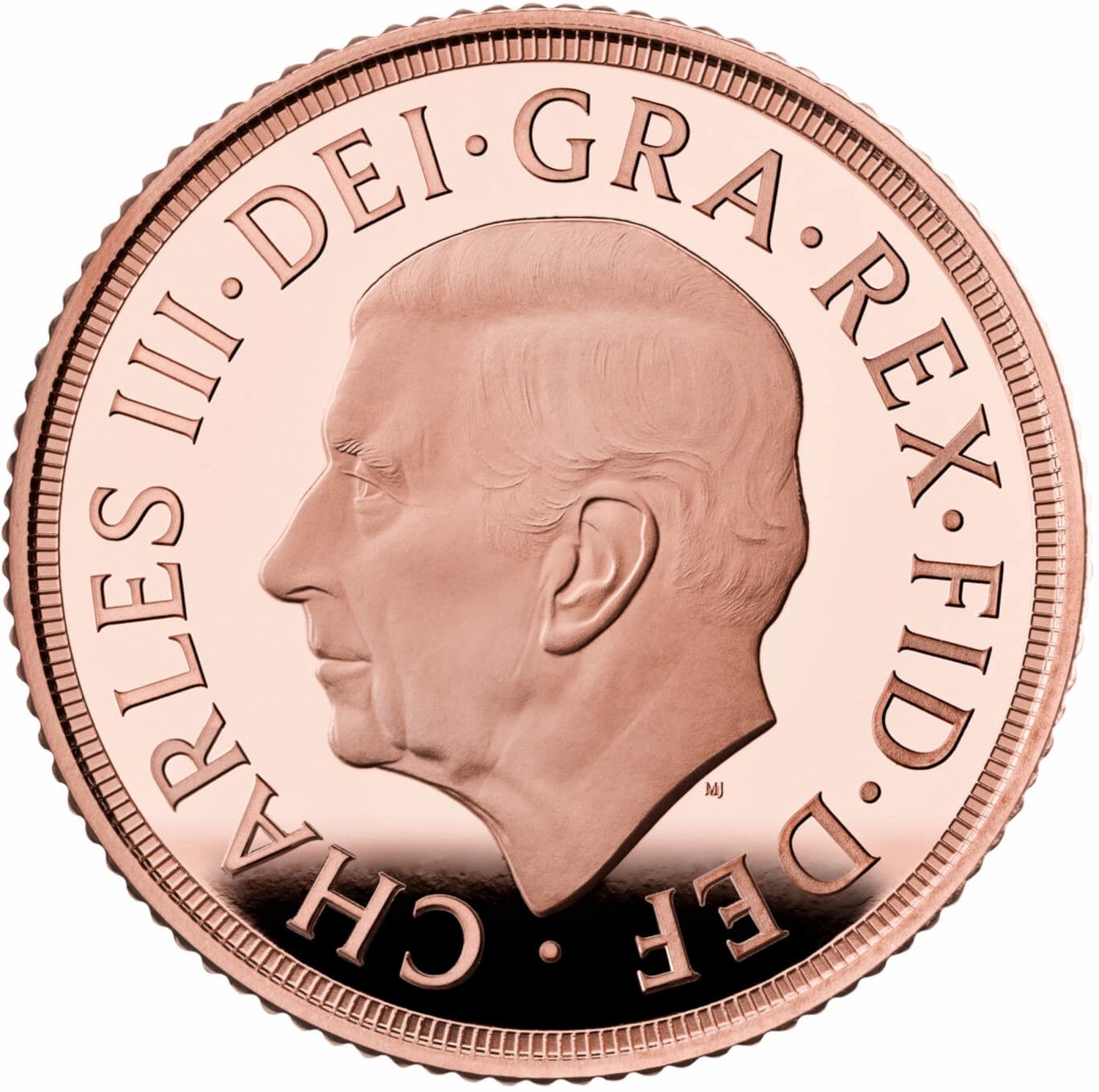
- A modern full sovereign weighs 7.988 g at 22-carat (.9167 fineness), containing 7.322 g of pure gold (0.2354 troy ounces).
- Bullion melt value at today's gold spot price (£3,104/oz, 20 October 2026) is approximately £731 per coin, get an exact figure for any date and condition with the sovereign value calculator.
- Common-date bullion sovereigns (most years 1957–present) sell for bullion + 5–15% premium.
- Rare-date sovereigns, 1819 George III, 1828 George IV, 1841 Victoria, 1879 London no-die-number, 1908 Ottawa proof, 1937 George VI proof, sell for multiples of bullion (often six figures).
- UK sovereigns dated 1837 onwards are CGT-exempt as UK legal tender (HMRC manual CG78308).
- Investment-grade gold (sovereigns and Britannias) is also VAT-free on purchase under VAT Notice 701/21A.
- The half sovereign weighs 3.99 g, the double sovereign 15.976 g, the quintuple sovereign 39.94 g, all the same .9167 fineness.
Or buy direct from UK bullion dealers
Reputable UK dealers, bullion premium typically 5–15% over melt for common dates.
We list reputable UK bullion dealers we'd happily buy from ourselves. Some links may earn us a small commission at no cost to you, it helps keep MyCoinage free.
Value your sovereigns
Free MyCoinage valuation tool · realised auction prices · no card needed
Add any full or half sovereign and see realised auction prices by date, mintmark and grade, with a running total for your gold.
How a sovereign is valued
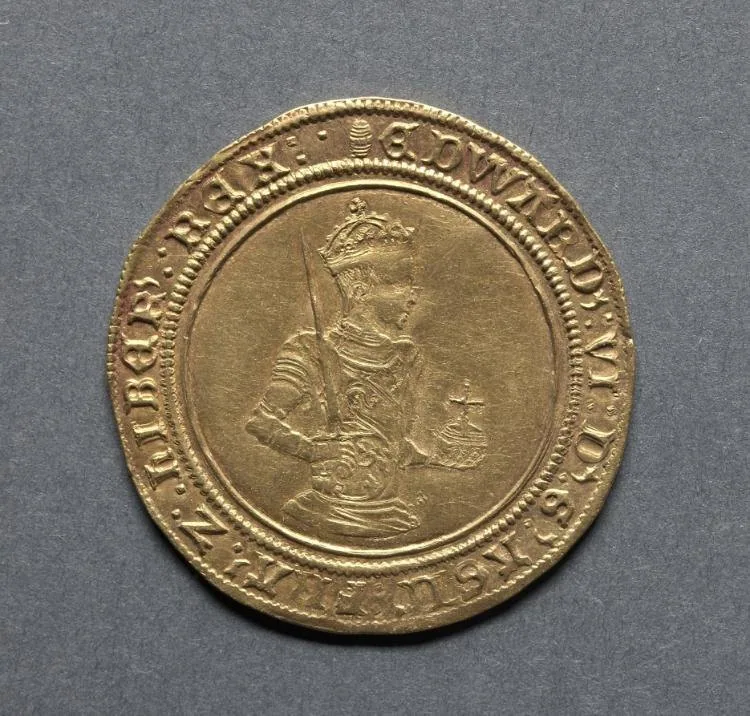
Every sovereign carries two values that sit on top of each other:
- Bullion value, the pure gold content multiplied by the live gold spot price. A full sovereign holds 7.322 g of fine gold (7.988 g total at .9167 fineness), which equals 0.2354 troy ounces. At the current LBMA price of about £3,104/oz (20 October 2026), bullion content is approximately £731 per coin. Use the LBMA gold fix for the daily reference price.
- Numismatic premium, everything paid above bullion. Driven by date scarcity, mintmark, condition (grade), eye appeal and collector demand. For common Elizabeth II bullion years this is 5–15%. For rare dates or high-grade examples, premium can be 5–100× bullion.
Sovereign weights, sizes and live bullion value
| Denomination | Total weight | Pure gold | Diameter | Bullion value (today) |
|---|---|---|---|---|
| ¼ Sovereign | 1.997 g | 1.83 g | 13.5 mm | £183 |
| ½ Sovereign | 3.994 g | 3.66 g | 19.30 mm | £365 |
| 1 Sovereign | 7.988 g | 7.322 g | 22.05 mm | £731 |
| 2 Sovereigns (£2) | 15.976 g | 14.64 g | 28.4 mm | £1,462 |
| 5 Sovereigns (£5) | 39.94 g | 36.61 g | 36.0 mm | £3,654 |
Bullion values calculated live from the latest LBMA-tracked spot price held in our database. Premium varies by year, mint and condition; see the rare-date section below.
A short history of the modern sovereign
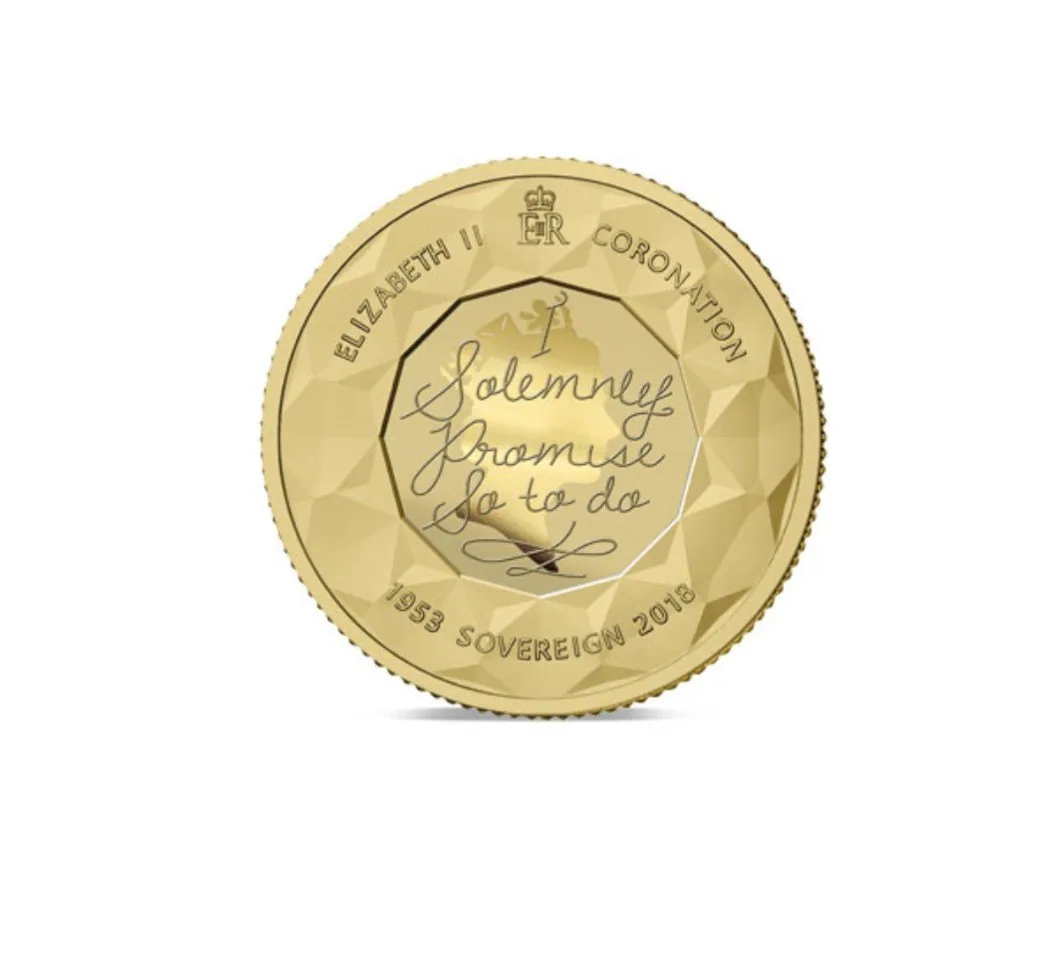
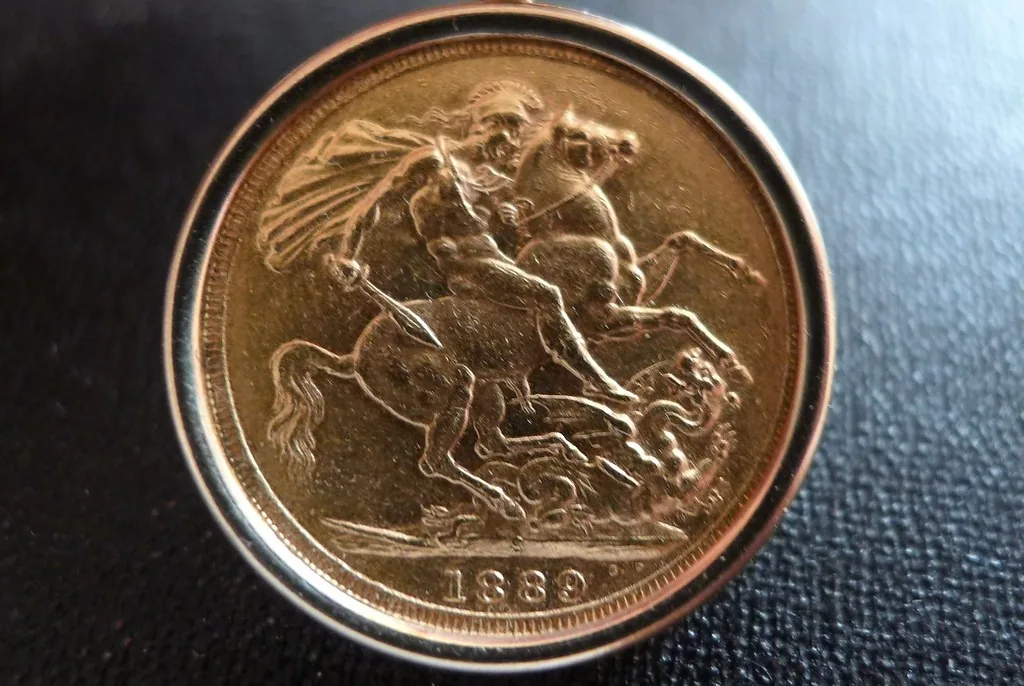
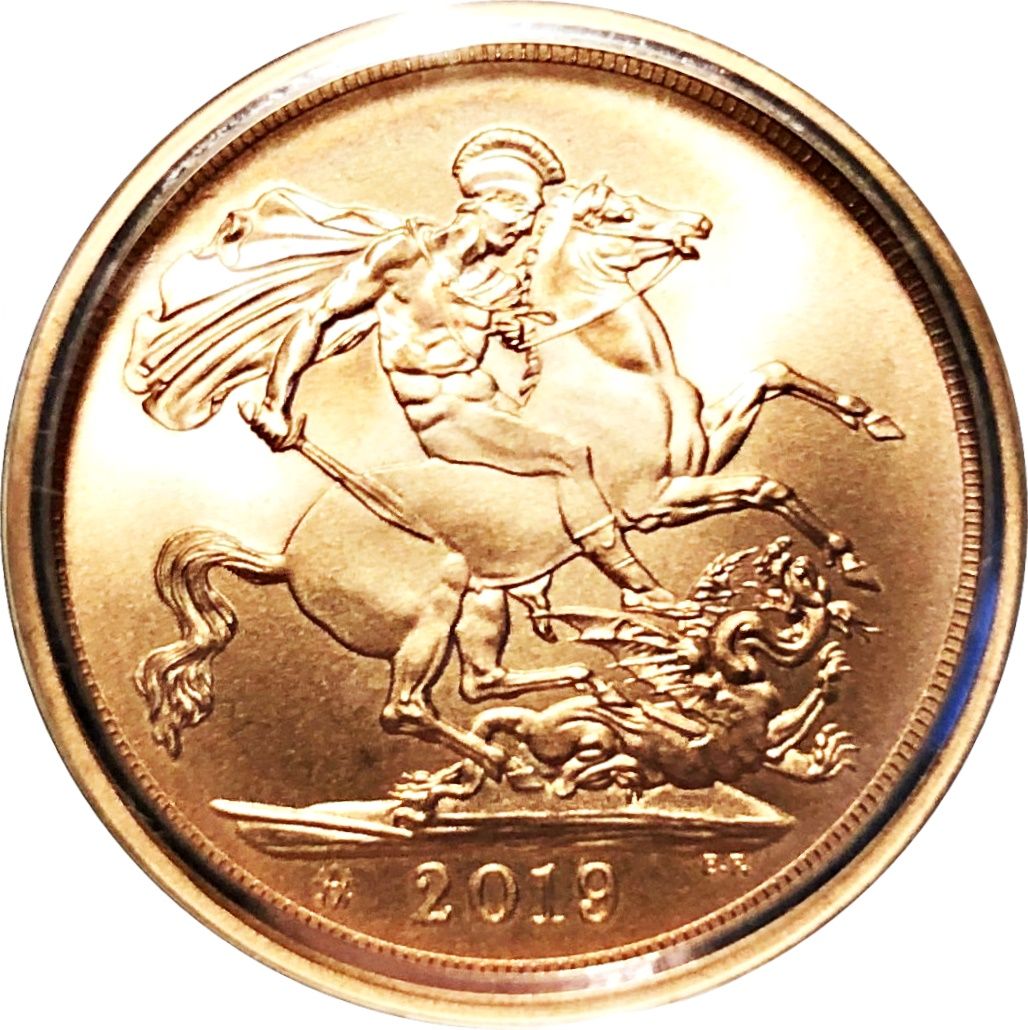
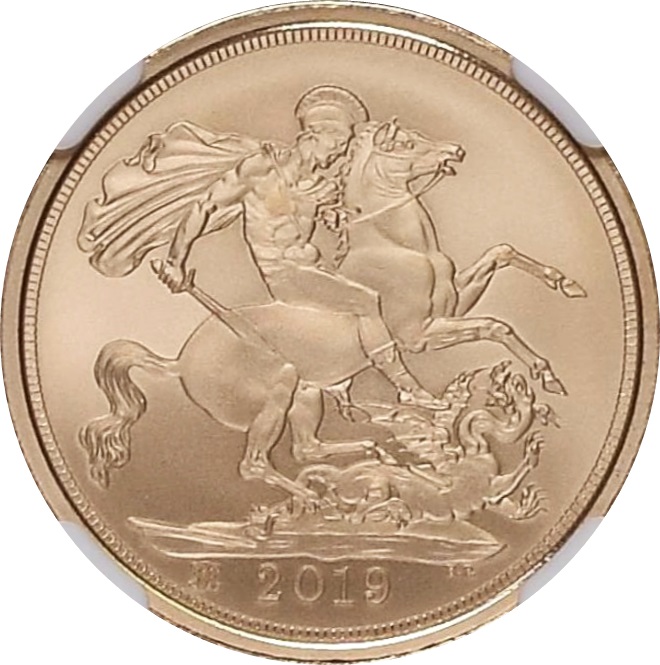
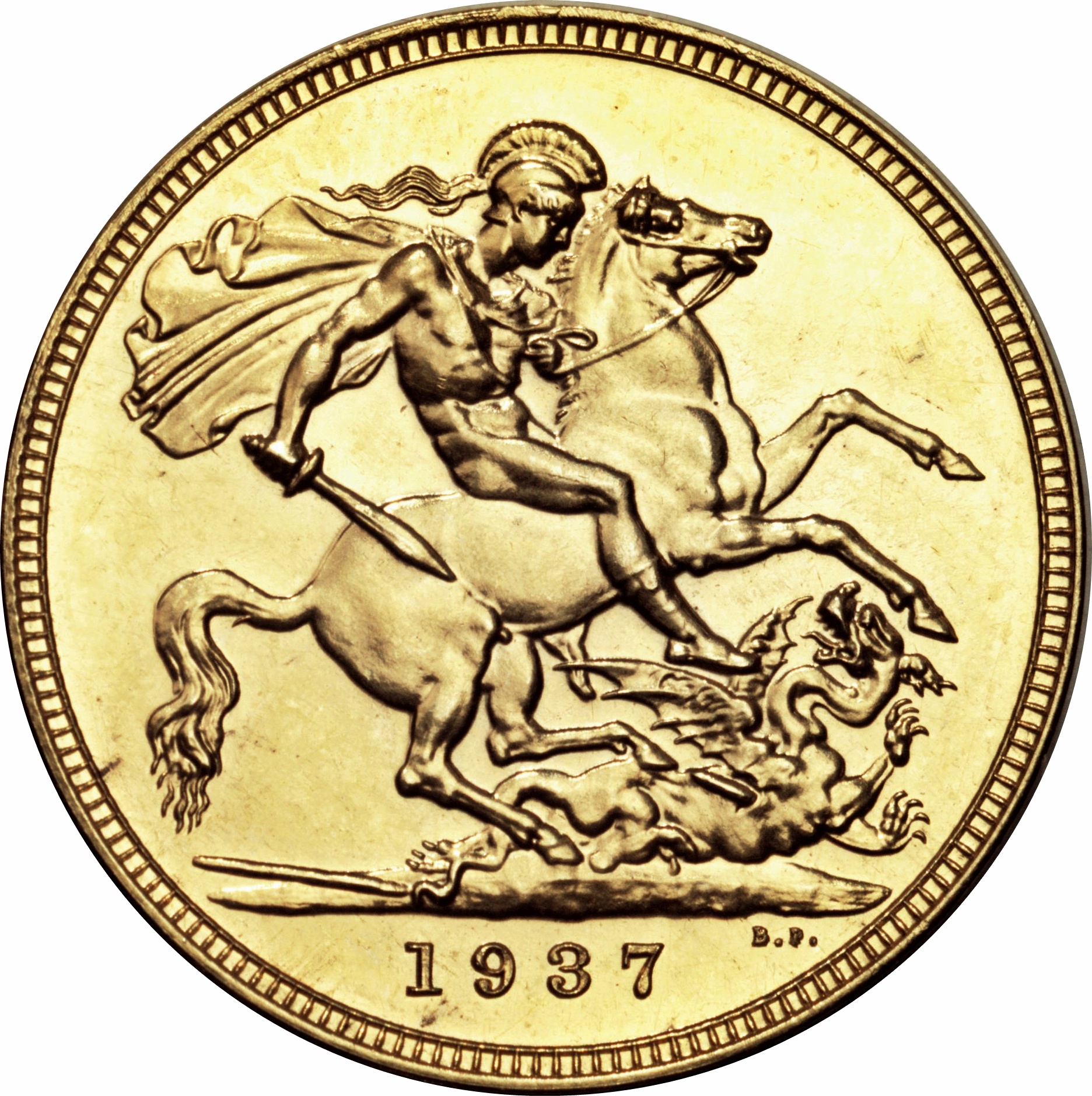
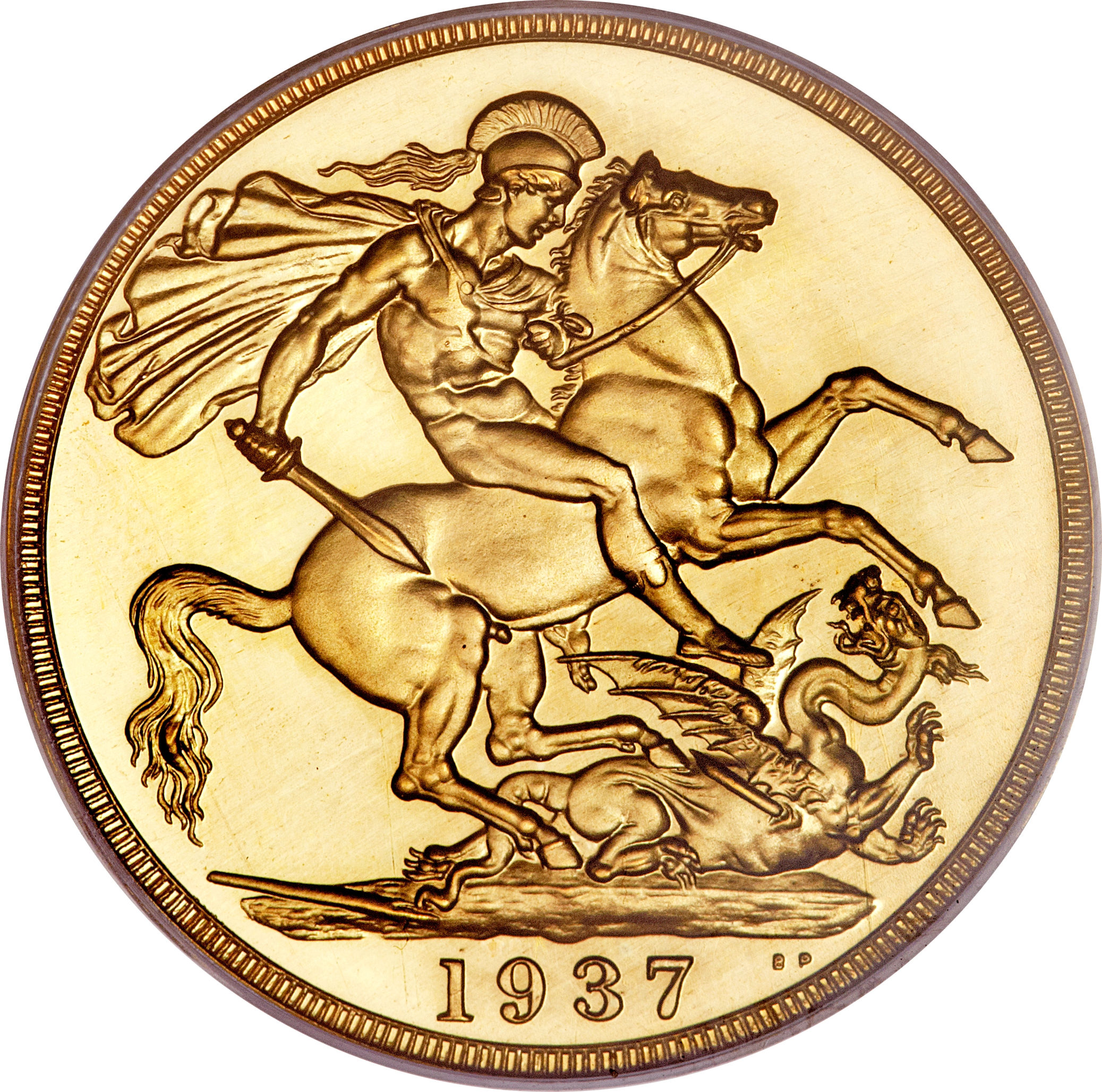
The modern sovereign was introduced under George III in 1817 as part of the Great Recoinage, replacing the guinea (21 shillings) with a coin of 20 shillings face value, a clean decimal of the new monetary system. The Italian engraver Benedetto Pistrucci designed the St George and Dragon reverse, which has appeared on most sovereigns issued since.
Production followed the British Empire. As gold rushes opened mines in Australia, South Africa and Canada, the Royal Mint authorised branch mints to strike sovereigns from locally-produced bullion, identified by a small mintmark below the dragon's tail or in the exergue. By 1932 the branch-mint era had ended; only the London Royal Mint has produced sovereigns since (with a brief revival of Llantrisant from 1968).
Sovereign production was suspended for circulation in 1917 (silver had also been removed from circulation in 1947), and the coin became primarily a bullion and commemorative issue. Modern Royal Mint sovereigns from 1957 onward are minted as investment-grade bullion at high volume, with proof and commemorative variants alongside.
Sovereigns by monarch
The series breaks naturally by reign. The headline rarities and value ranges:
| Monarch | Years | Notable issues | Typical premium |
|---|---|---|---|
| George III | 1817–1820 | 1819 (c. 10 known); 1820 closed-2 | £1,500–£180,000+ |
| George IV | 1821–1830 | Bare-head reverse 1821–1825; later laureate; 1828 rarity | £800–£15,000 |
| William IV | 1831–1837 | Short reign, scarce in any grade | £1,000–£6,000 |
| Victoria Young Head (Shield) | 1838–1887 | Shield reverse, die-number variants; 1841 key date | £500–£8,000 |
| Victoria Jubilee Head | 1887–1893 | Crowned bust; reverted to St George reverse | £500–£3,000 |
| Victoria Old Head (Veiled) | 1893–1901 | Final Victorian portrait; widow effigy | £500–£2,500 |
| Edward VII | 1902–1910 | 1908 Ottawa (C) proof rarity | £500–£500,000+ |
| George V | 1911–1932 | 1918 Bombay (I) one-year branch issue; 1921 Sydney key | £500–£30,000 |
| George VI | 1937 only | 1937 proof in coronation set; no business strikes | £15,000–£25,000 |
| Elizabeth II (early) | 1957–1968 | Mary Gillick portrait; bullion strikes | £731, £831 |
| Elizabeth II (decimal) | 1974–2022 | Multiple portraits; 2002 Golden Jubilee shield reverse | £731, £3,000 |
| Charles III | 2023– | Martin Jennings portrait; first Charles III bullion 2024 | £731, £1,500 |
Low-mintage sovereign dates by year
Mintage is the first clue to a date's scarcity: the fewer struck, the fewer survive and the more a collector pays over gold value. Our sovereign value by year chart lists every full and half sovereign date from 1817 with its mintage and the median of verified sales over the last twelve months.
The London dates below had fewer than one million struck, per the MyCoinage catalogue:
| Year | Type | Mintage |
|---|---|---|
| 1819 | George III | 3,574 |
| 1820 | George III | 932,000 |
| 1823 | George IV | 617,000 |
| 1828 | George IV | 386,000 |
| 1831 | William IV | 599,000 |
| 1835 | William IV | 723,000 |
| 1839 | Victoria 1st portrait, Shield | 503,695 |
| 1841 | Victoria 1st portrait, Shield | 124,054 |
| 1858 | Victoria 1st portrait, Shield | 803,234 |
| 1874 | Victoria 1st portrait, Shield | 520,713 |
| 1879 | Victoria 1st portrait, St George | 20,000 |
| 1885 | Victoria 1st portrait, St George | 718,000 |
Victoria's Jubilee and Old Head years (1887–1901) are not yet in our catalogue by date, and branch-mint issues carry their own mintages; see mintmarks below.
The rarest British sovereign dates
The list below is the "short list" that any serious sovereign collector knows by heart. Prices quoted are realised auction figures for representative grade examples; condition rarities can sit well above the upper bounds.
| Year & mint | Monarch / type | Notable | Realised range |
|---|---|---|---|
| 1489, original | Henry VII fine sovereign | First sovereign ever; entirely separate series | £100,000+ |
| 1817 | George III, first modern | Inaugural year of the modern sovereign | £1,500–£6,000 |
| 1819 London | George III | ~10 known; the rarity of the modern series | £100,000–£180,000+ |
| 1828 London | George IV | Extremely low survival | £7,000–£15,000 |
| 1841 London | Victoria Young Head shield | Mintage c. 124,000; key Victorian date | £2,000–£8,000 |
| 1879 London | Victoria Young Head shield | No die number; very low mintage | £700–£3,000 |
| 1879 Sydney (S) | Victoria Young Head | Branch-mint scarce date | £1,000–£4,000 |
| 1908 Ottawa (C) | Edward VII proof | ~636 struck; Canadian one-year wonder | £30,000–£500,000+ |
| 1916 Ottawa (C) | George V | Mintage c. 6,000; legendary Canadian rarity | £30,000–£120,000 |
| 1918 Bombay (I) | George V | One-year-only Indian branch issue | £500–£1,800 |
| 1920 Sydney (S) | George V | Mintage c. 360; one of the lowest of the series | £30,000–£90,000 |
| 1937 London | George VI proof | Coronation set only; no business strikes | £12,000–£25,000 |
| 1957 | Elizabeth II first issue | Inaugural Elizabethan sovereign | £781, £931 |
| 2002 | Elizabeth II Golden Jubilee | Shield reverse, one-year design | £700–£1,200 |
| 2012 | Elizabeth II Diamond Jubilee | Special Pistrucci redesign by Paul Day | £831, £800 |
| 2022 | Elizabeth II Memorial | Final Elizabeth II issue post-mortem | £700–£1,500 |
Sources: realised hammer prices from Baldwin's, Spink, Noonans and Heritage Auctions over the past five years.
Mintmarks: where the sovereign was struck
Knowing the mintmark is the single most important pricing skill for sovereigns from 1855 onwards. A common-looking date can be worth ten times more from a small branch mint. The mintmark sits on the reverse, typically in the exergue (below the ground line) under St George.
| Mintmark | Mint | Years | Typical premium / notes |
|---|---|---|---|
| (none) | Royal Mint, London (later Llantrisant) | 1817–present | Baseline. Most common. |
| S | Sydney, Australia | 1855–1926 | Generally bullion + 10–25%; key dates 1920 S, 1879 S |
| M | Melbourne, Australia | 1872–1931 | Common in late issues; 1885 and 1893 M scarce |
| P | Perth, Australia | 1899–1931 | Distinct buttery colour; 1899 P first year scarce |
| I | Bombay (Mumbai), India | 1918 only | One-year issue, c. 1.3 million struck; popular with Indian buyers |
| SA | Pretoria, South Africa | 1923–1932 | Late-era branch mint; 1923 SA proof rare |
| C | Ottawa, Canada | 1908–1919 | Lowest-mintage branch mint overall; 1908 and 1916 C are six-figure rarities |
Always check the mintmark before pricing a coin as bullion. A 1925 sovereign without mintmark is common London bullion. A 1925 SA sovereign is also common. A 1925 P sovereign is scarce. The same surface, the same year, three different prices.
Half, quarter, double and quintuple sovereigns
The sovereign denomination is a family. Each member is struck to the same .9167 fineness; only weight and diameter differ. The half sovereign in particular has been issued almost as often as the full sovereign and represents an attractive entry point for collectors.
- Quarter sovereign, introduced 2009 by the Royal Mint. 1.997 g total, 1.83 g pure gold, 13.5 mm. Mostly proof; bullion premium typically 30%+ over melt because of the higher per-gram cost of small coins to mint.
- Half sovereign, 3.994 g total, 3.66 g pure gold, 19.30 mm. Issued nearly every sovereign year. Rare-date half sovereigns include the 1834 William IV reduced size and the 1937 George VI proof. Bullion value today: £365.
- Two sovereigns / £2, 15.976 g total, 14.63 g pure, 28.4 mm. Mostly proof and commemorative. The 1887 Jubilee £2 is the most-collected business strike. The 1893 and 1902 proofs are scarce. Bullion value today: £1,462.
- Five sovereigns / £5, 39.94 g total, 36.61 g pure, 36.0 mm. The "quintuple sovereign" is almost entirely a proof/presentation issue. The 1839 Una and the Lion (Victoria) is one of the most famous British coins ever struck and routinely sells over £500,000. Bullion value today: £3,654.
How to authenticate a sovereign
Counterfeit sovereigns exist at every price tier, from worn-bullion fakes to deceptive numismatic forgeries. Five tests catch most of them at home; for high-value coins, professional grading is the only fully reliable option.
- Weight. A genuine full sovereign is 7.988 g ± 0.05 g. Use a calibrated jewellery scale to 0.01 g resolution. A coin lighter than 7.93 g or heavier than 8.05 g is almost certainly fake or holed/repaired.
- Diameter. 22.05 mm for full, 19.30 mm for half. Calliper to 0.05 mm. Most cast counterfeits run 0.1–0.3 mm undersize because of cooling shrinkage in the cast.
- Edge. The reeded edge should be sharp, uniform and free of any seam line. Cast counterfeits often show a faint horizontal line where the two halves of the mould met.
- Magnet test. Gold is non-ferrous and entirely non-magnetic. A strong rare-earth (neodymium) magnet should not even slightly attract the coin. Steel-cored gilt fakes will pull instantly.
- Design integrity. Compare against a known-good image. Particular tells: on the St George reverse, the tip of his sword should clearly clear the dragon's wing; the horse's mane should show individual strands; Pistrucci's "BP" or "B.P." signature should sit cleanly on the ground line, not run into it. On the obverse, the legend spacing and ribbon detail are common counterfeit fail points.
Where to buy and sell sovereigns
Buying
For ordinary bullion sovereigns, the right venue is a UK bullion dealer with live spot pricing and clear buy/sell quotes:
- The Royal Mint Bullion , first-party, slightly higher premium but no authentication risk; CGT-exempt sovereigns confirmed at point of sale.
- BullionByPost , major UK bullion dealer; published live pricing; insured Royal Mail dispatch.
- Chards , Blackpool dealer with strong sovereign focus; bulk buyback rates published.
- Atkinsons , Birmingham bullion dealer; tight spreads on sovereign and Britannia.
- Goldsmiths and high-street jewellers, convenient but typically 5–10% above bullion-dealer pricing for sovereigns. Worth checking but rarely the cheapest.
For rare dates and proofs, buy at auction (Spink, Baldwin's, Noonans, Heritage) or from a specialist numismatic dealer rather than a bullion firm. Numismatic premium is invisible to bullion dealers, who price by weight, and you will overpay if you buy a rare date as bullion or sell one to a bullion buyer.
Selling
The split mirrors buying:
- Bullion sovereigns → bullion dealer. Royal Mint, BullionByPost, Chards and Atkinsons all run buyback programs. Expect spot minus 1–3% for clean common-date coins. Get quotes from at least two dealers; rates move with market direction.
- Numismatic sovereigns → specialist auction. Consign to Spink, Baldwin's, Noonans or Heritage. Hammer commissions are typically 15–20%; net proceeds usually well beat any private bullion offer for rare dates.
- eBay risks. Counterfeit sovereigns are common on eBay and the platform's buyer protection works against high-value sellers. If you must use eBay, sell with a third-party grade slab so authentication is documented. Otherwise expect a discount for risk.
Tax treatment of sovereigns in the UK
UK gold sovereigns enjoy two specific tax exemptions that make them the most tax-efficient gold investment available to UK private investors:
- Capital Gains Tax (CGT) exemption. Sovereigns minted from 1837 onwards are legal tender in the UK and therefore exempt from CGT under HMRC manual CG78308. Any gain on sale, regardless of size, is tax-free. The exemption does not extend to pre-1837 sovereigns or to non-UK gold coins (Krugerrand, American Eagle, Canadian Maple Leaf, bullion bars).
- VAT-free as investment gold. Sovereigns of .995 fineness or higher (which all modern sovereigns clear) are classified as investment gold under VAT Notice 701/21A and exempt from VAT on purchase. Wait, sovereigns are .9167 not .995, so do they really qualify? Yes: HMRC explicitly lists sovereigns as "investment gold coins" in VAT Notice 701/21A Annex 1, regardless of fineness, on the basis that they are recognised investment coins.
- Inheritance Tax. Sovereigns are not exempt from IHT. Their value at date of death forms part of the estate. CGT exemption survives the holder; IHT does not.
Featured sovereigns on MyCoinage
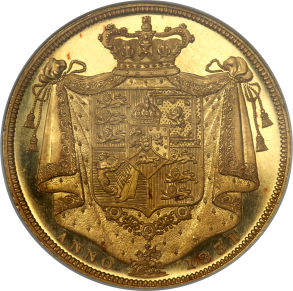
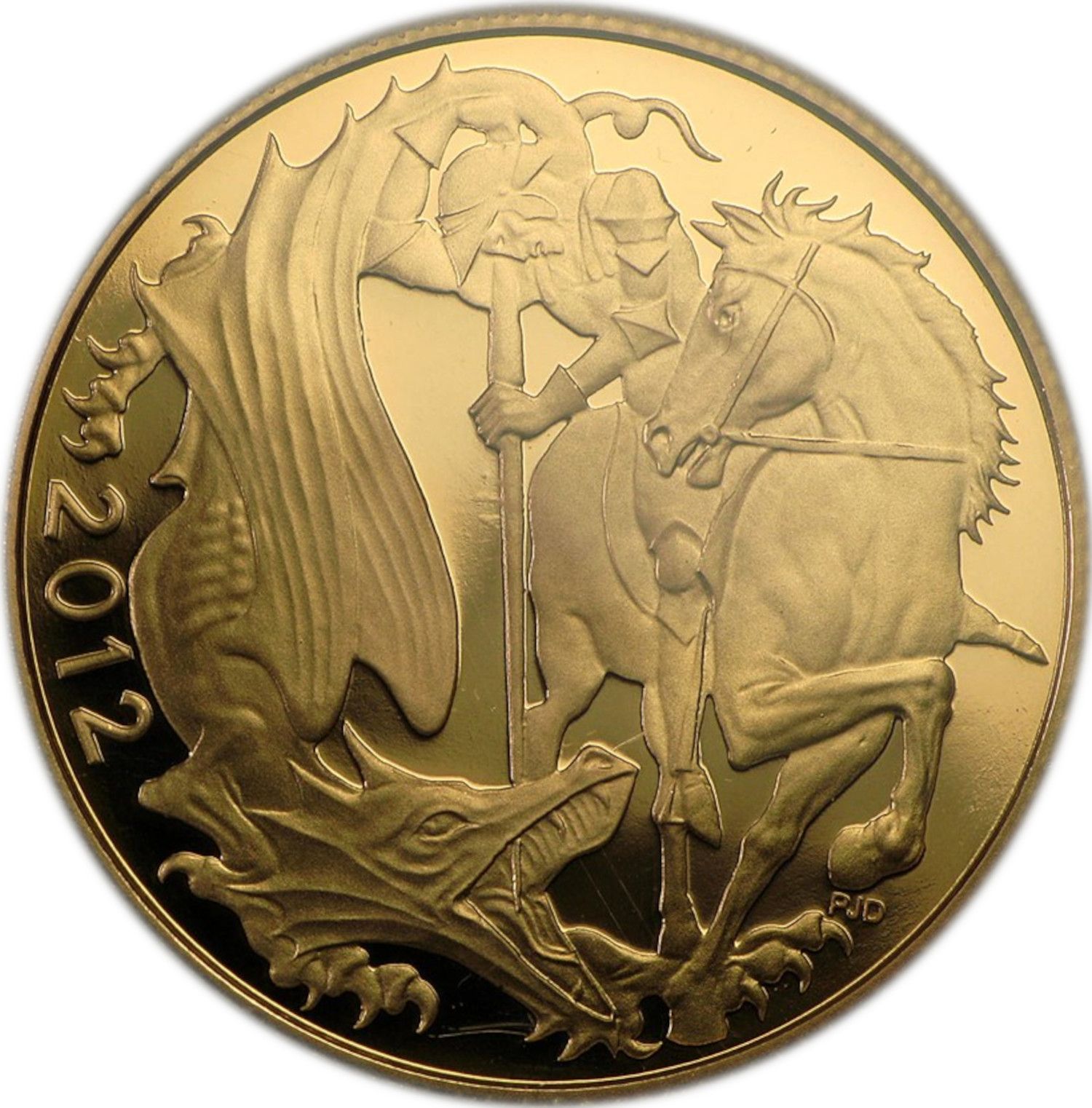
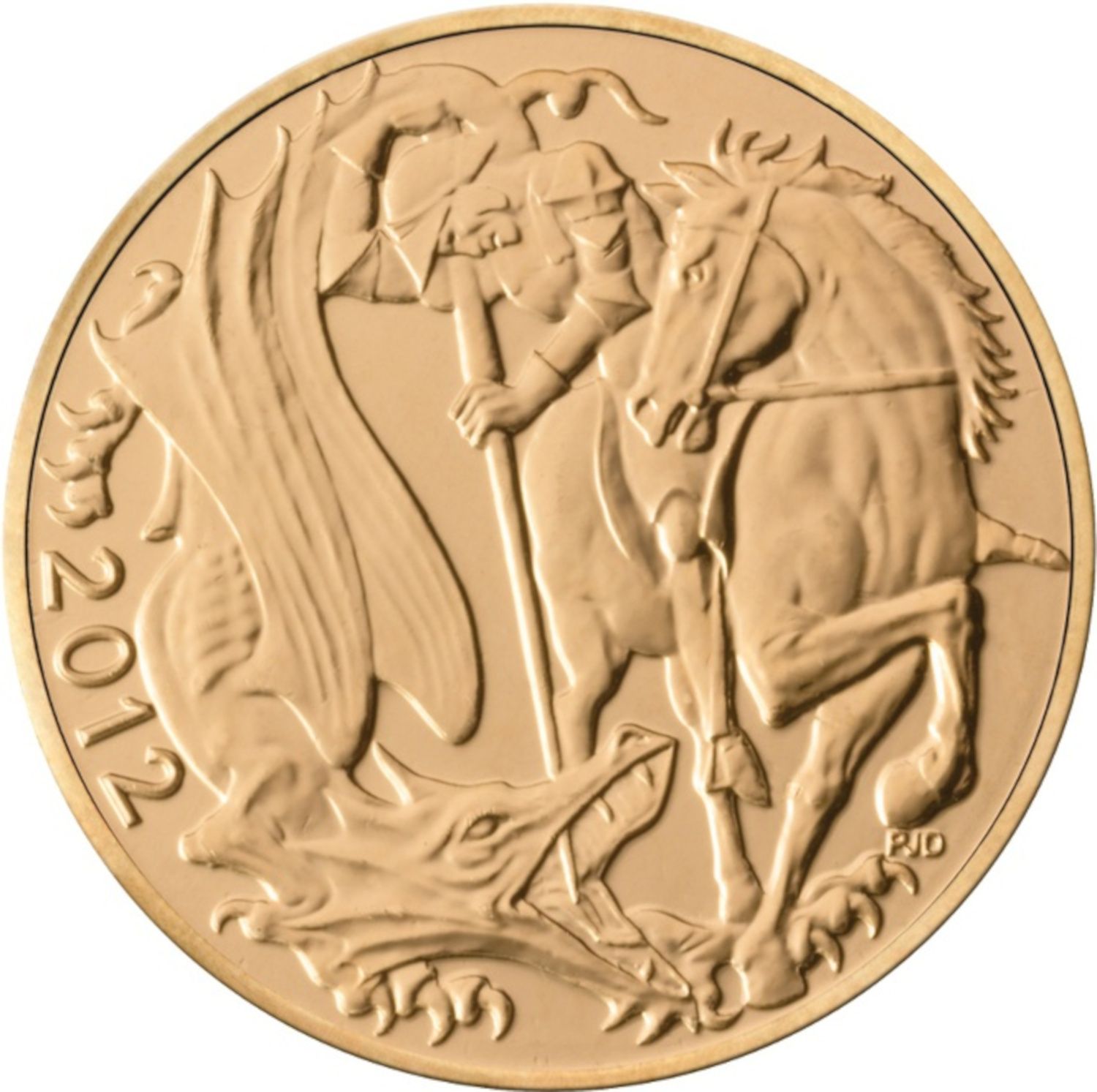
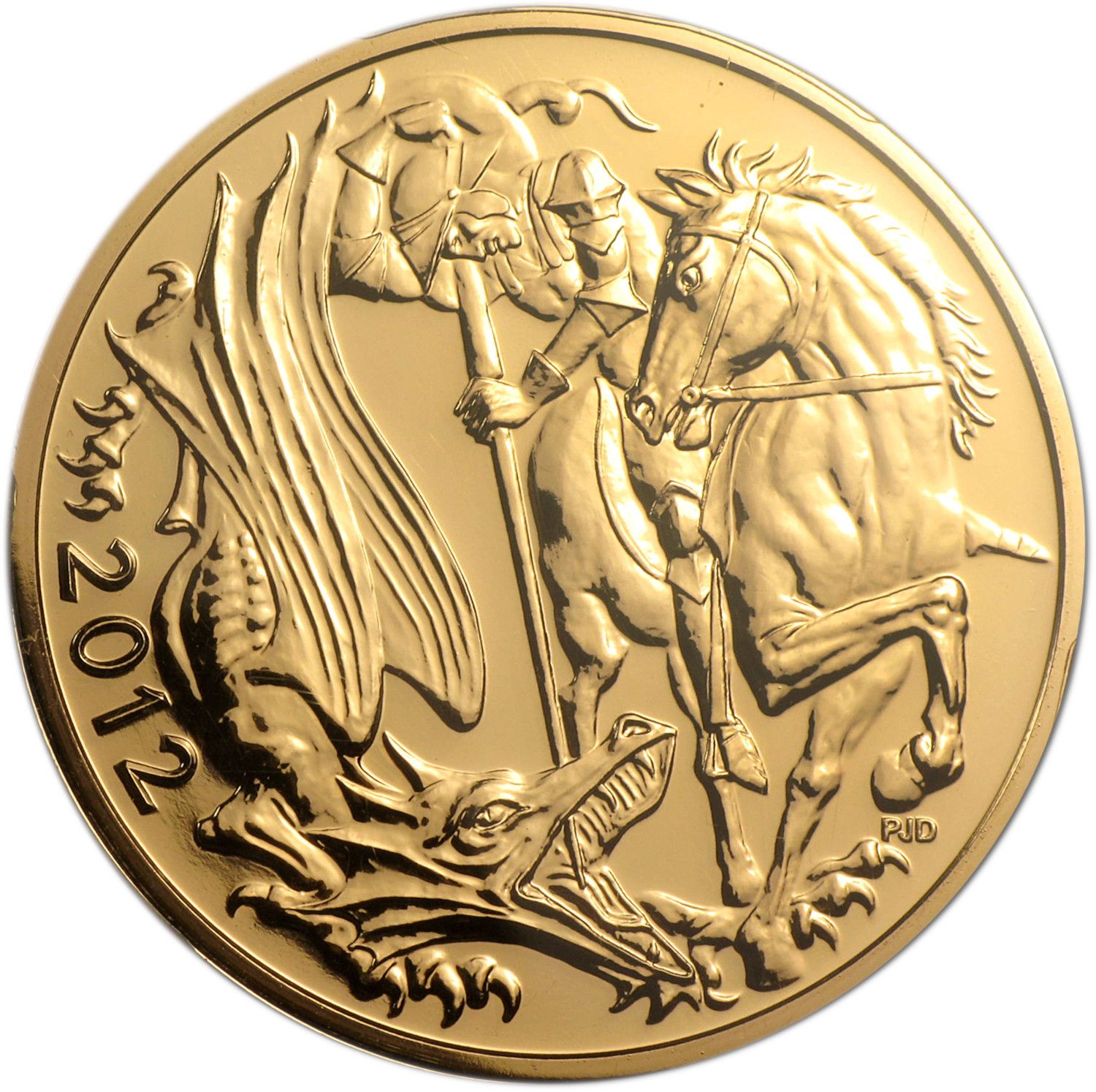
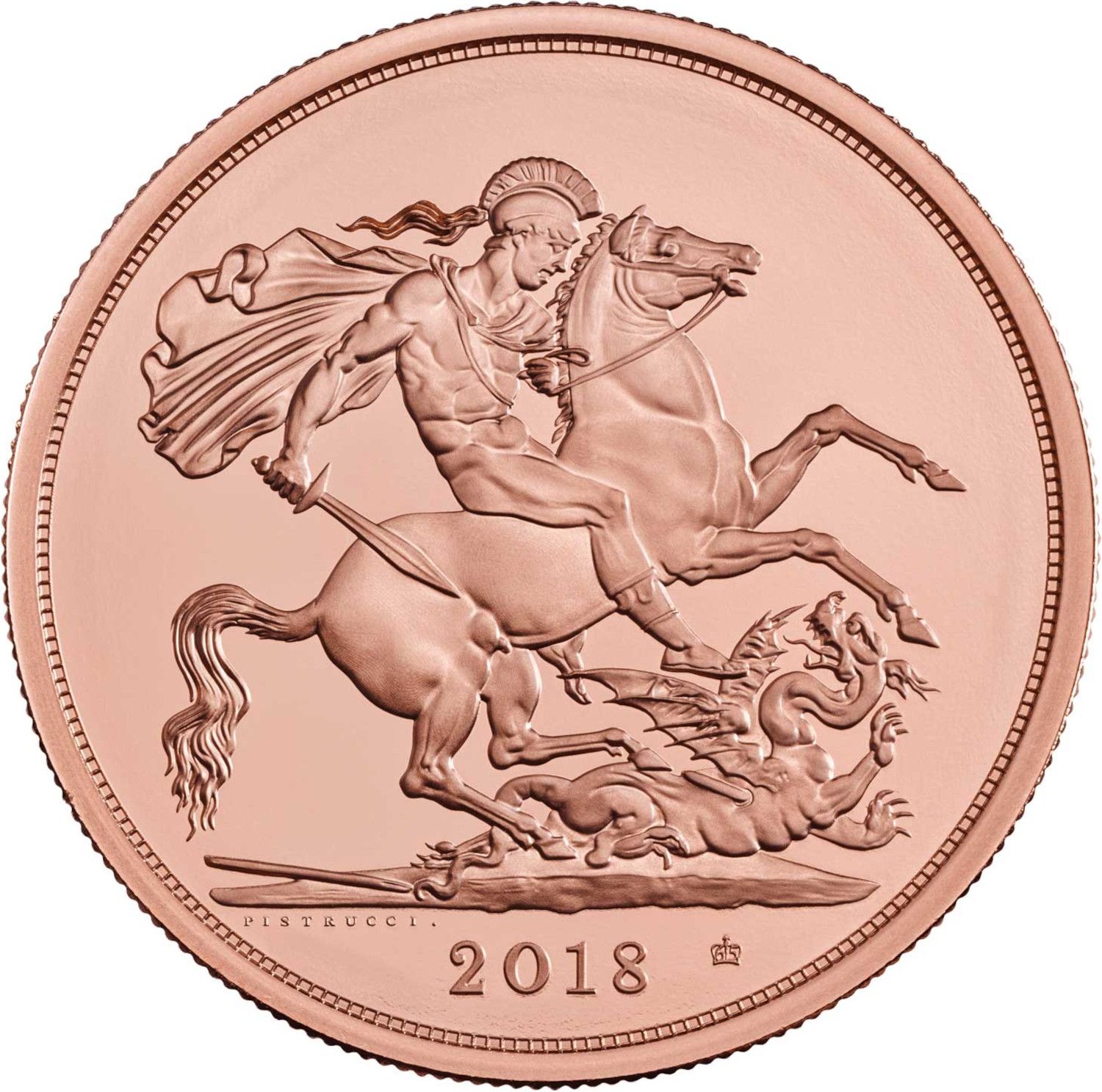
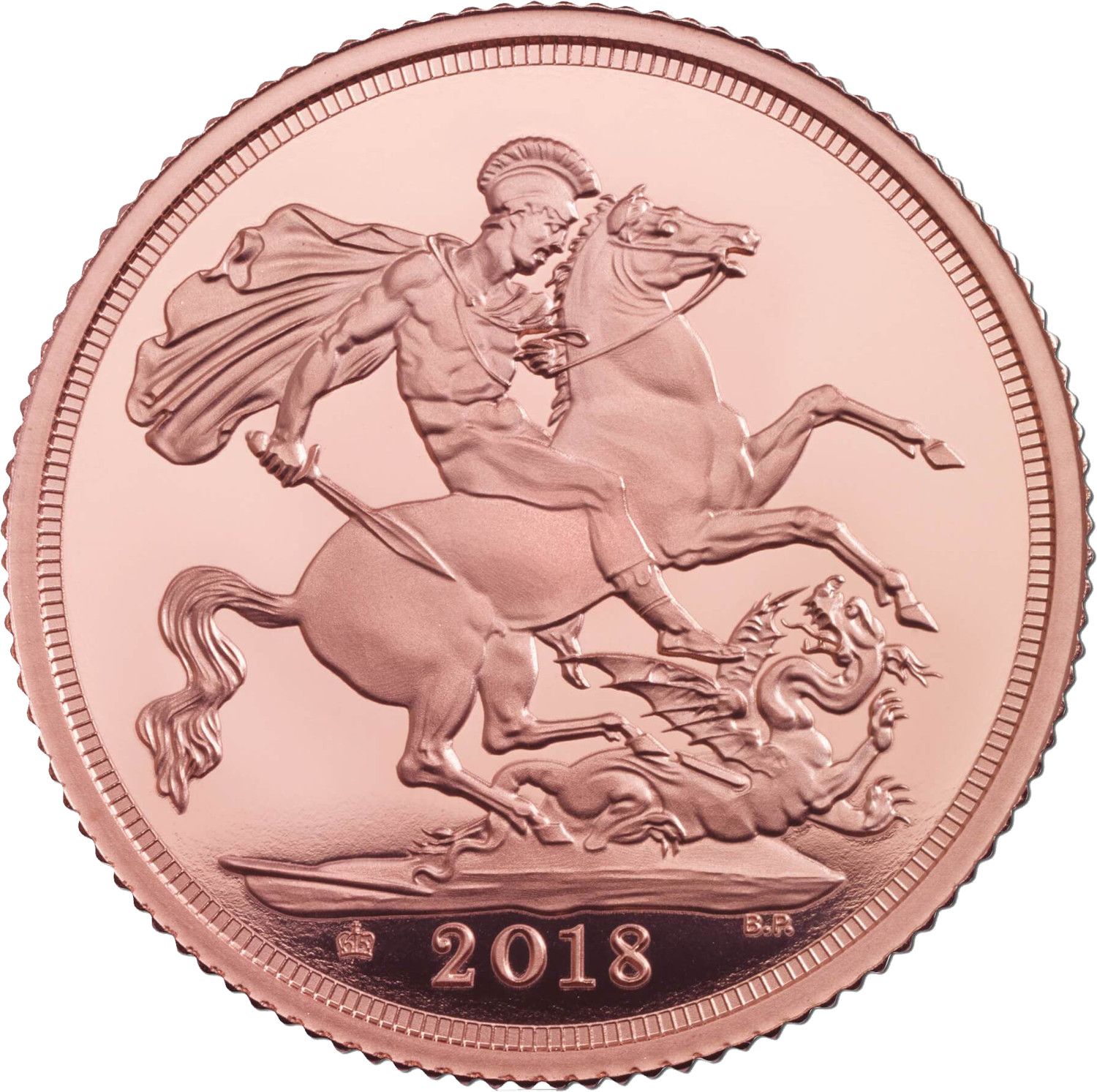
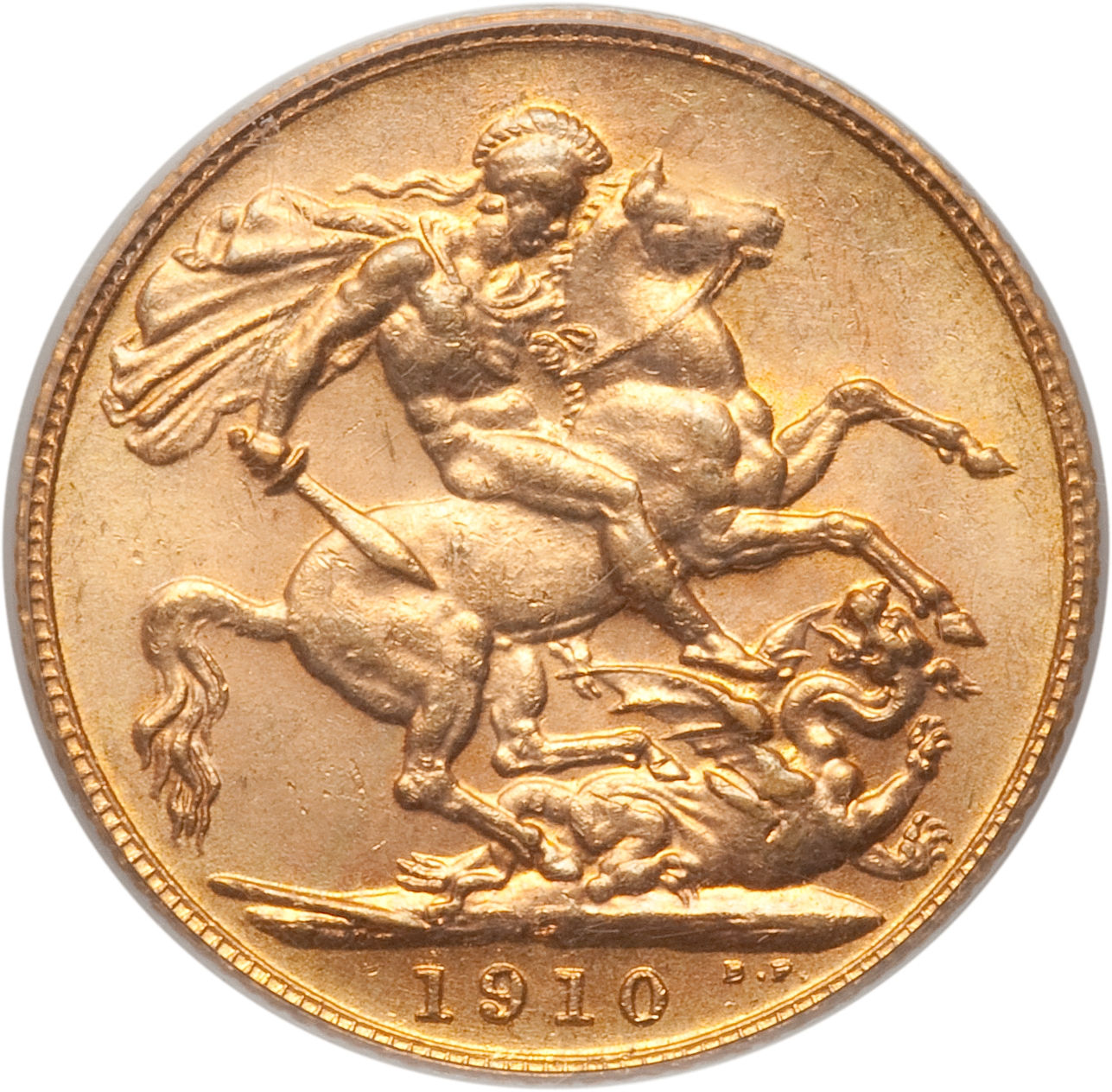
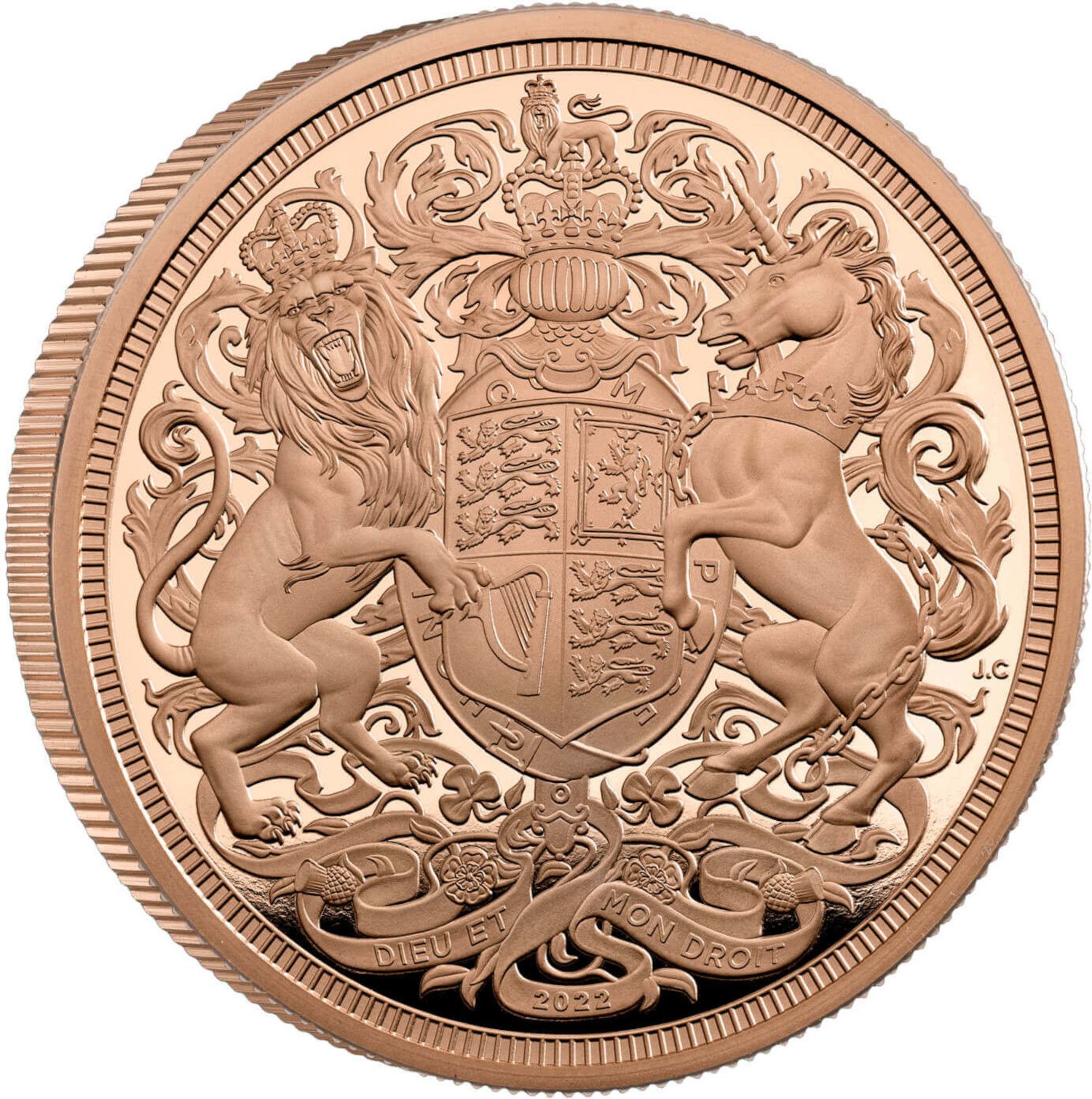
Browse every sovereign in our database →
Frequently asked questions
What is a gold sovereign?
How much is a gold sovereign worth today?
Which sovereigns are the most valuable?
Are Elizabeth II sovereigns collectable or bullion?
Where should I sell a sovereign?
How do I verify a sovereign is genuine?
Are sovereigns subject to Capital Gains Tax?
What is the difference between a half, full, two-pound and five-pound sovereign?
What does the mintmark on a sovereign mean?
Should I clean a sovereign before selling?
Are pre-1817 "sovereigns" the same coin?
What is "CGT-exempt gold" exactly?
What is a "branch mint" sovereign worth?
Further reading
- Sovereigns vs Britannias, which gold coin suits a buyer better.
- Sovereign value calculator, today’s melt value for any sovereign denomination.
- Krugerrand value UK, the other gold coin UK buyers compare, and why its gains are taxable.
- Gold price today UK, live per gram and per ounce.
- The 1817 sovereign, the first modern sovereign and what it sells for.
- Royal Mint Museum: The Sovereign, the Royal Mint's own historical reference.
- Spink Standard Catalogue of British Coins (annual), the trade standard for sovereign references and grade-specific values.
- MyCoinage Coin Grading Guide, the UK and Sheldon scales explained, the prerequisite for any pricing decision.
- Coin collection insurance UK, how to value and insure sovereigns at appropriate cover.
- Where to sell rare coins UK, full venue-by-venue commission breakdown for sovereigns.
- What is your coin collection worth?, portfolio-level valuation walkthrough.