Crown Coin Values UK: Every British Crown from 1551 to 2026
The crown is Britain's historic five-shilling silver coin, first issued in 1551 under Edward VI and issued in some form ever since. Pre-1920 silver crowns from major reigns are tradeable at £25–£500; 19th-century pattern crowns and one-year designs (Gothic, INCORRUPTA, Una and the Lion) command five and six figures. Modern cupronickel commemoratives from 1965 onwards are nearly all face-value common despite being widely kept as memorabilia.
Value your crowns in seconds
Free MyCoinage valuation tool · realised auction prices · no card needed
Add any British crown, from early milled silver to modern commemoratives, and see realised auction prices alongside your collection total.
Buying crowns on eBay UK
The links below open eBay UK searches; if you buy through them, MyCoinage earns a small commission at no cost to you.
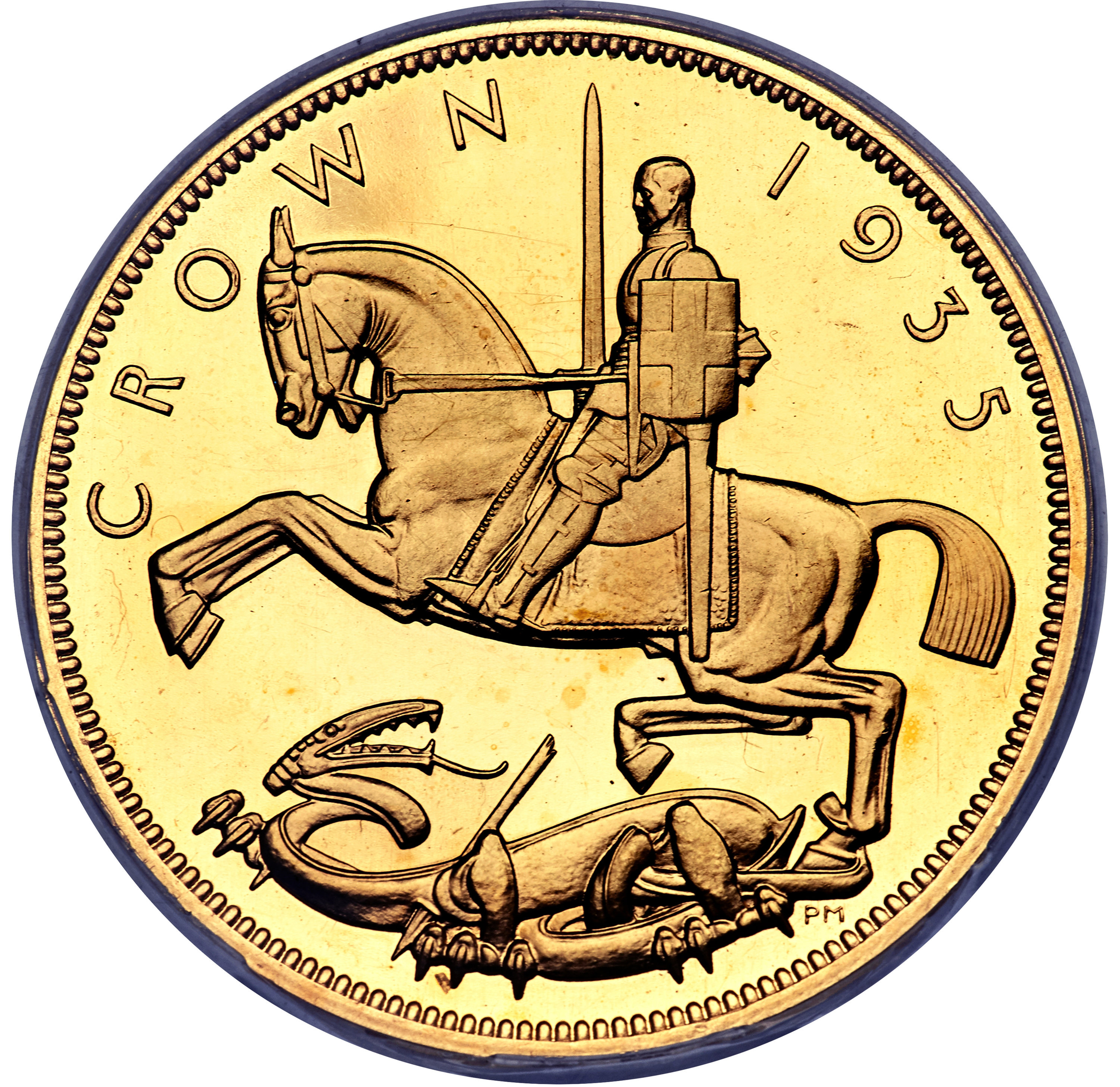
The crown is the prestige denomination of British numismatics. Headline rarities like the 1839 Una and the Lion (£100,000+) and 1935 Rocking Horse silver proof (£3,000+) sit at one end; modern Elizabeth II commemorative crowns (1953–1981) trade for £5–30 and are the most-collected entry point. The 1965 Churchill crown sold over 19 million pieces and is the easiest first crown to acquire (£2–10).
1953 Coronation crown ↗ 1965 Churchill crown ↗ 1981 Charles & Diana crown ↗ 1935 Rocking Horse crown (sold) ↗ Victoria Gothic crown (sold) ↗ George IV crown ↗ William IV crown ↗ Silver proof crowns ↗ Slabbed crowns (sold) ↗
Crown specifications
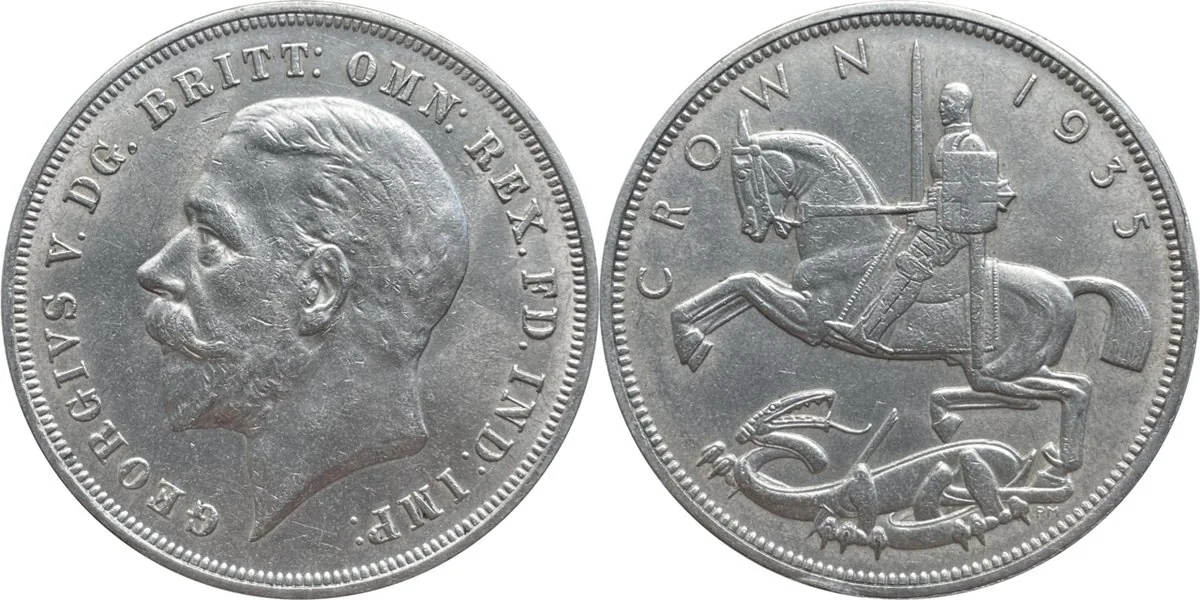
The crown is one of the most physically consistent British coins. From the Great Recoinage of 1816 onwards, specifications barely changed:
| Era | Total weight | Composition | Diameter | Edge |
|---|---|---|---|---|
| Pre-1816 | ~30.0 g | 0.925 sterling silver | ~38.5 mm | plain or lettered |
| 1816–1919 | 28.276 g | 0.925 sterling silver (26.16 g pure) | 38.61 mm | milled / lettered DECVS ET TVTAMEN |
| 1920–1946 | 28.276 g | 0.500 silver (14.14 g pure) | 38.61 mm | milled / lettered |
| 1947–1981 | 28.276 g | cupronickel | 38.61 mm | milled or plain |
| 1990–present (£5) | 28.276 g | cupronickel (silver/gold proof variants) | 38.61 mm | milled or design-specific |
The 1816 recoinage standardised the crown at exactly 28.276 g and 38.61 mm, and that hasn't changed since. Even modern £5 commemorative crowns share the form factor, you can stack a 2026 cupronickel commemorative on a 1816 silver crown and they line up exactly.
Silver content and bullion floor
For pre-1920 silver crowns the bullion content is real money. Calculation:
- Pre-1816 standard (sterling, ~30 g coin weight): ~27.7 g pure silver = 0.892 troy oz = ~£49 at £55/oz spot.
- 1816–1919 standard (sterling, 28.276 g coin): 26.16 g pure silver = 0.841 troy oz = ~£46 at £55/oz spot.
- 1920–1946 (debased to 0.500 silver): 14.14 g pure silver = 0.455 troy oz = ~£25 at spot.
- 1947 onwards cupronickel: no silver content. Bullion floor is essentially zero.
For most pre-1920 crowns the numismatic premium far exceeds bullion. But for very worn or damaged pre-1920 specimens, bullion is the floor and dealers price them as scrap silver. Use a calliper plus a known-spec reference to confirm fineness before assuming bullion-worthlessness.
Crowns by reign: a survey
Edward VI to Elizabeth I (1551–1601)
The original crown of Edward VI was issued briefly in 1551 (mintage tiny, fewer than 5,000 known to survive). Mary Tudor and Philip & Mary issued limited crowns, then production stabilised under Elizabeth I. All Tudor crowns are museum-grade rarities with realised auction prices typically £5,000–£50,000 depending on date, monarch and condition. Beware cast counterfeits, which are common.
The Stuart Crowns (Charles I, Cromwell, Charles II)
Charles I crowns include several iconic types from the Civil War period: the Tower mint issues, the Truro / Exeter provincial crowns, and the famous Oxford crown. Realised prices range from £500 (worn Tower issues) to £50,000+ (high-grade Oxford crowns or rare provincial mintmarks).
Oliver Cromwell's 1658 crown (the "Sons of Iniquity" pattern) is one of the most celebrated British crowns: a high-relief portrait piece struck during the Protectorate. Mintage was very small; high-grade specimens realise £30,000–£100,000+ at auction.
The Hanoverian Crowns (1714–1837)
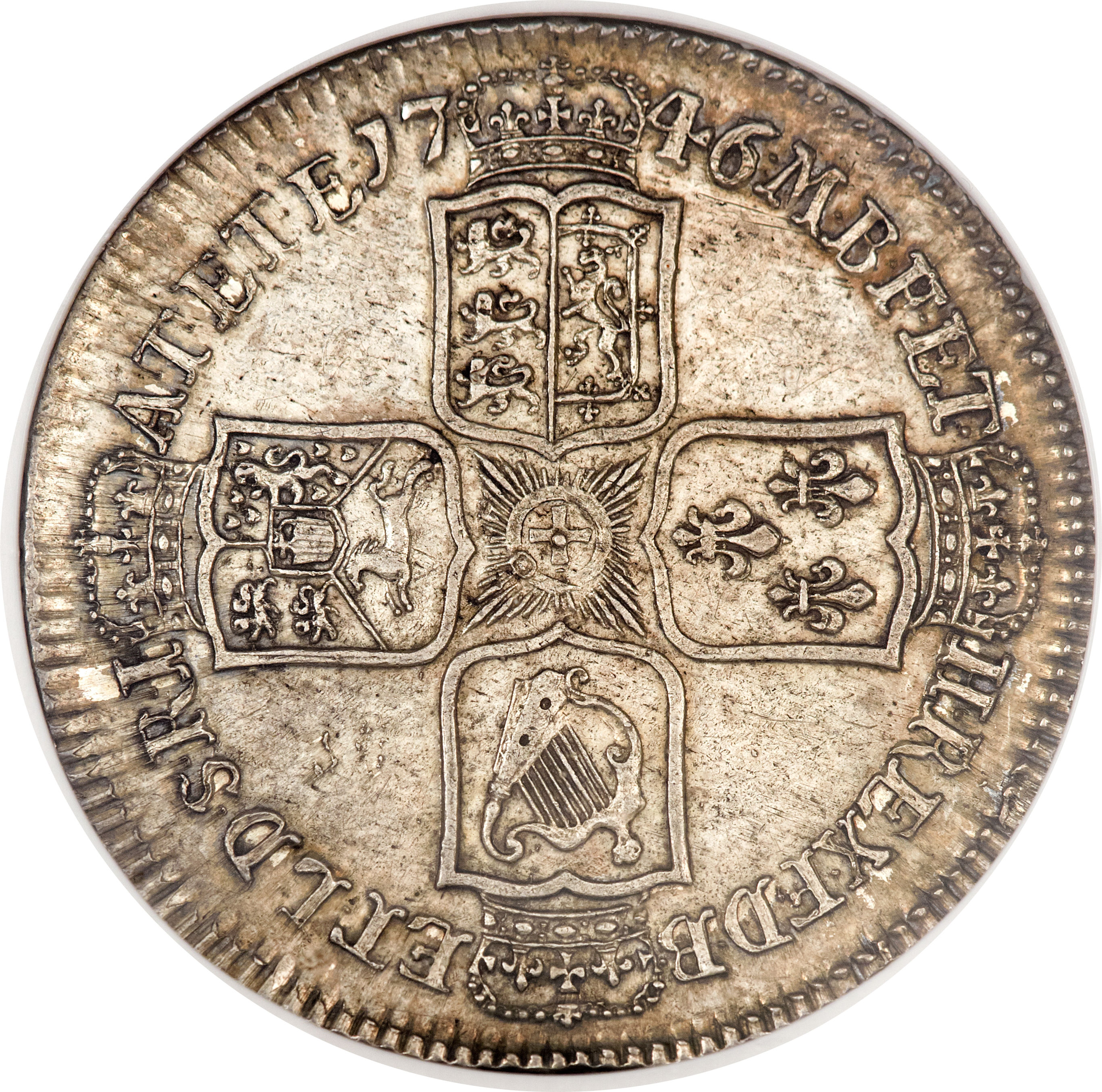
George I crowns are scarce; George II rarer still (no business-strike crowns 1751–1818). George III was the major Hanoverian for crowns:
- 1804 Bank of England Dollar: a Spanish-American 8-real coin overstruck with George III, used as a 5-shilling token coin. Fascinating piece. EF specimens realise £500–£1,500.
- 1817 INCORRUPTA Pattern Crown: the gold and silver trial pieces designed by William Wyon. Six-figure realisations.
- 1818, 1819, 1820 St George Crowns: Pistrucci's St George reverse first appeared on these crowns. EF realises £100–£300; UNC £500–£1,200; PR-65 £3,000+.
The Victorian Crowns (1837–1901)
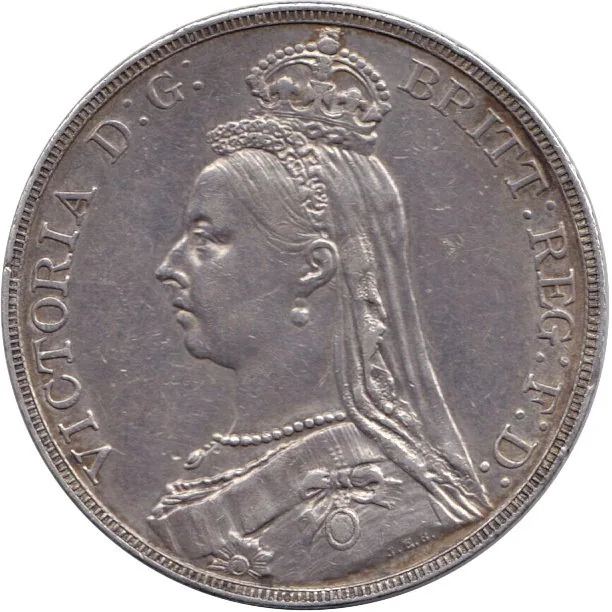
The most-collected era for crowns, divided by Victoria's three portrait types:
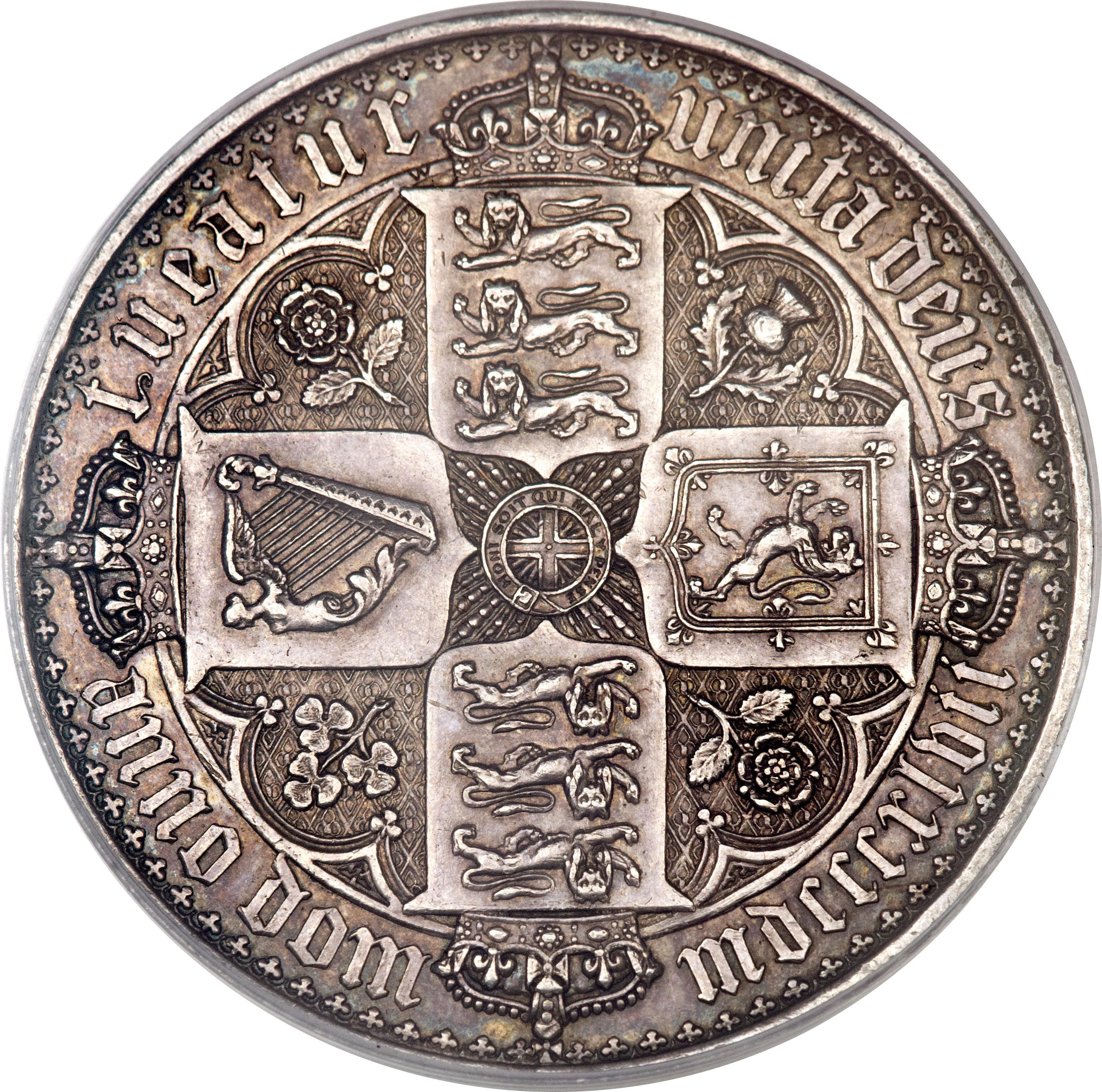
- Young Head Crowns (1839–1847): the headline issues. The 1839 proof crown (mintage ~400) realises £15,000–£40,000. The 1847 Gothic Crown (Wyon's masterpiece, mintage ~8,000) realises £15,000–£25,000 for plain-edge varieties.
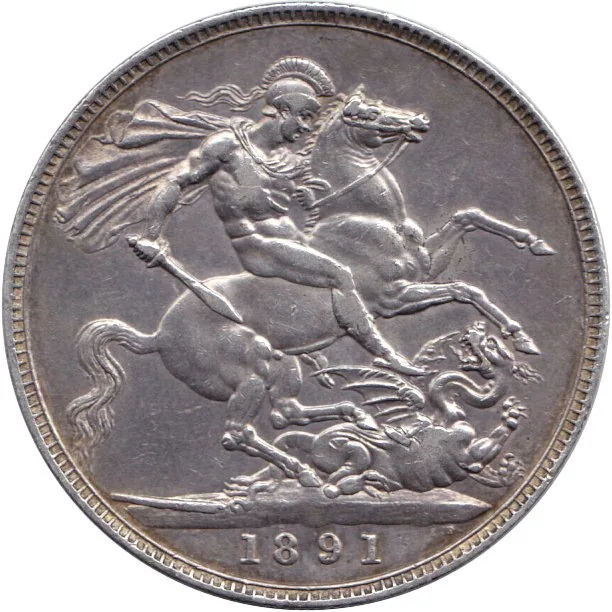
- Jubilee Head Crowns (1887–1892): Boehm's portrait, with the St George reverse. Common in EF at £75–£150; key dates 1888 and 1892 in PR are £500–£2,000.
- Old Head Crowns (1893–1900): Brock's veiled-bust portrait. Issued every year except 1899; common dates £75–£200 EF, £500–£1,500 in PR.
20th-Century Crowns (1902–1981)
- 1902 Edward VII: matte-proof Coronation issue, mintage 15,123. PR-65 realises £800–£2,500.
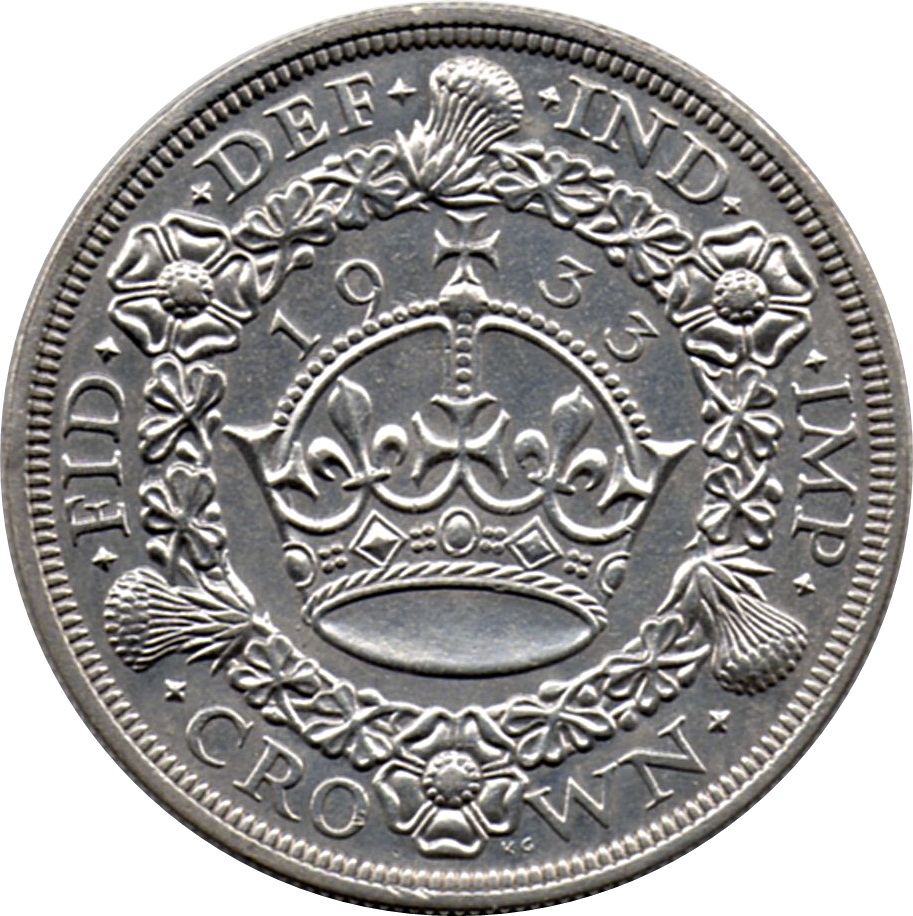
- 1927–1936 George V "Wreath" Crowns: the most-collected 20th-century crown. 1927 Wreath proof had a mintage of just 15,030; 1934 just 932 specimens (the rarest Wreath). Common dates £100–£300 EF; 1934 in any grade £1,200–£5,000.
- 1937 George VI Coronation Crown: mintage 418,699. Common at £15–£50; the 1937 proof variant (mintage ~26,000) realises £100–£300.
- 1951 Festival of Britain Crown: mintage 1,983,540. Common at £5–£15.
- 1953 Coronation Crown: Mary Gillick obverse. Mintage 5,962,621. £5–£12.
- 1965 Churchill Crown: the famous one. Mintage 19,640,000. Worth £1–£5.
- 1972 Silver Wedding, 1977 Silver Jubilee, 1980 Queen Mother, 1981 Charles & Diana: all issued in millions. £1–£5 each in cupronickel.
Modern £5 Crowns (1990–present)
From 1990 the crown was redenominated as £5 face value while keeping the same form factor. Issues are commemorative-only (Royal events, anniversaries, monarchical milestones). The cupronickel business strikes nearly all trade at £5–£15 (slightly above face value). Silver proof and gold proof variants in their original Royal Mint cases command real numismatic premiums:
- 1990 Queen Mother 90th £5 silver proof: £55–£90.
- 1996 Queen 70th Birthday £5 silver proof: £40–£75.
- 2002 Golden Jubilee £5 silver proof: £55–£90.
- 2012 Diamond Jubilee £5 silver proof: £65–£95.
- 2022 Platinum Jubilee £5 silver proof: £70–£110.
- Charles III coronation £5 silver proof: £75–£120.
Pattern crowns and one-year designs
A pattern is a trial striking from the Royal Mint, made to evaluate a proposed design before formal issue. Most patterns were rejected or modified before the production run, so survivors are rare-by-construction. The famous British pattern crowns:
- 1817 INCORRUPTA Pattern Crown (George III): William Wyon's trial design. Gold trial: £500,000+. Silver pattern: £100,000+.
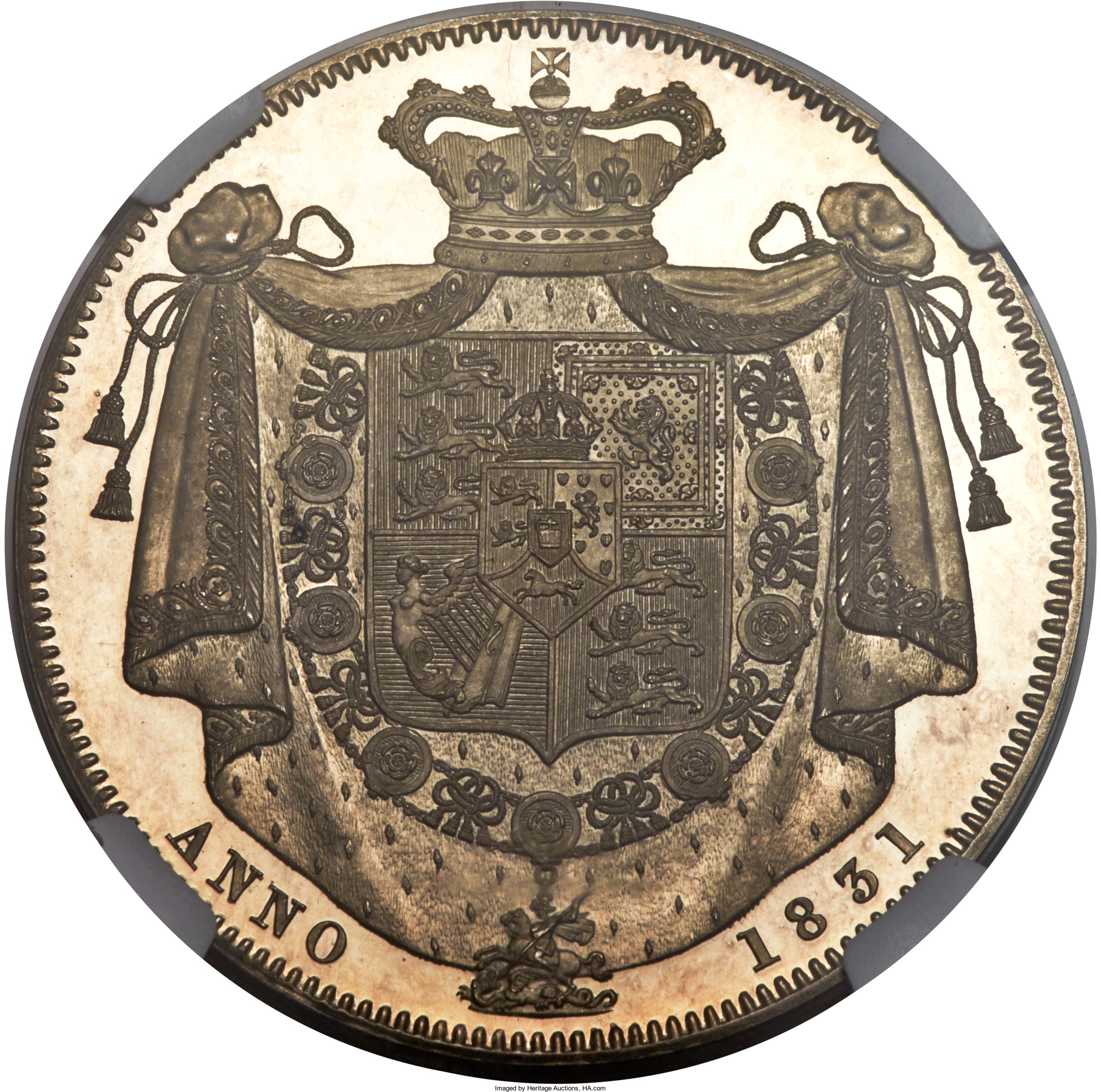
- 1831 William IV Pattern Crown: realised £320,000 at Onebid 2024 in burnished-blank gold-coinage trial form.
- 1837 Bonomi Pattern Crown: Joseph Bonomi's design with Britannia reverse, trial in white metal. £15,000+.
- 1847 "Gothic" Crown (Victoria): Wyon's production-issue design but with a mintage so small (~8,000 plain edge) it functions as a pattern. £15,000–£40,000+.
- 1953 "VIP" Coronation Pattern Crown: private-issue Royal Mint pattern given to dignitaries. £500–£1,500.
Authentication and grading
Counterfeit crowns are common, particularly cast copies of Tudor, Stuart and Cromwell pieces. For any crown worth more than £500, send to a third-party grading service:
- CGS UK, British, lower fees, faster domestic turnaround.
- NGC, American, second-largest globally, strong UK coverage.
- PCGS, American, the largest global grading service.
Five home-authentication tests for a crown:
- Weight: 28.276 g ± 0.05 g for any post-1816 crown. Cast counterfeits typically run 0.1–0.5 g light.
- Diameter: 38.61 mm. Counterfeits cast in moulds shrink ~0.2–0.4 mm.
- Edge: milled / lettered should be sharp and continuous; cast counterfeits show seam lines.
- Magnet: silver and cupronickel are non-magnetic. Steel-cored fakes pull instantly.
- Sound: a real silver crown rings when bounced on a fingertip; cast white-metal fakes thud.
Featured crowns on MyCoinage
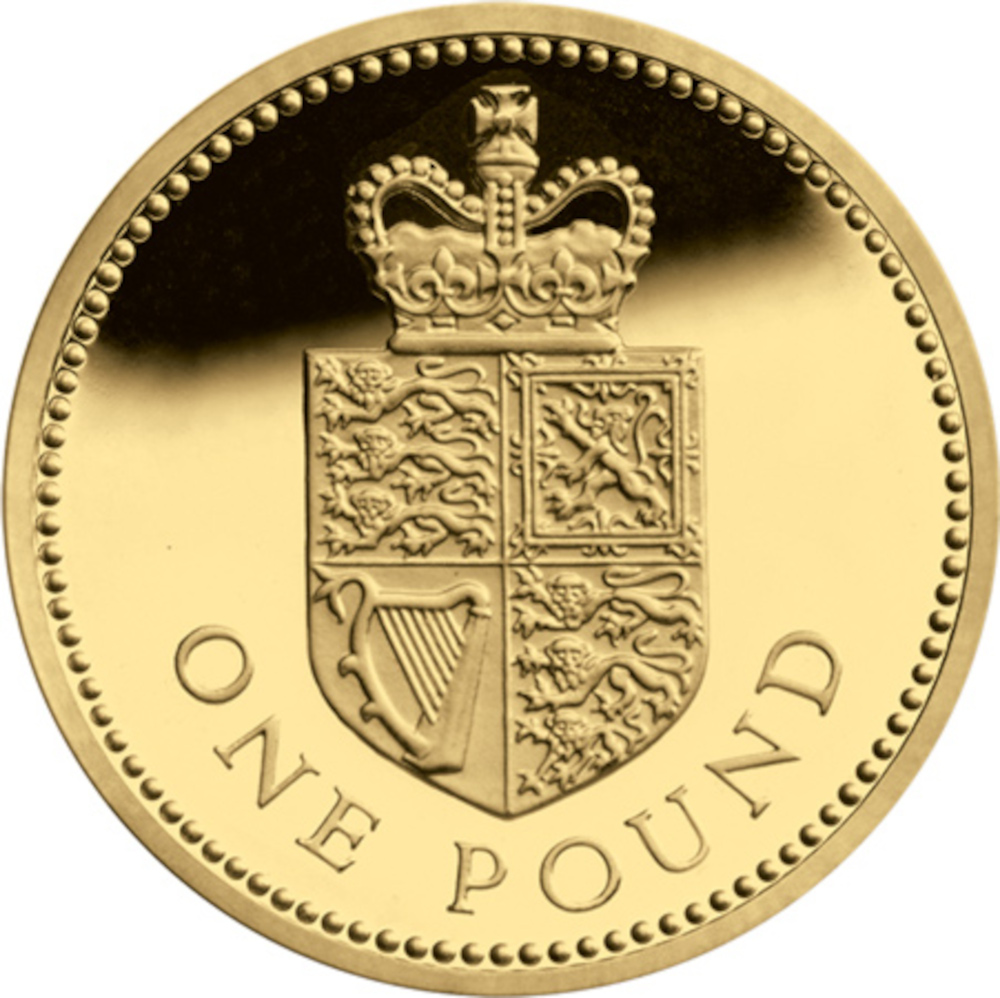
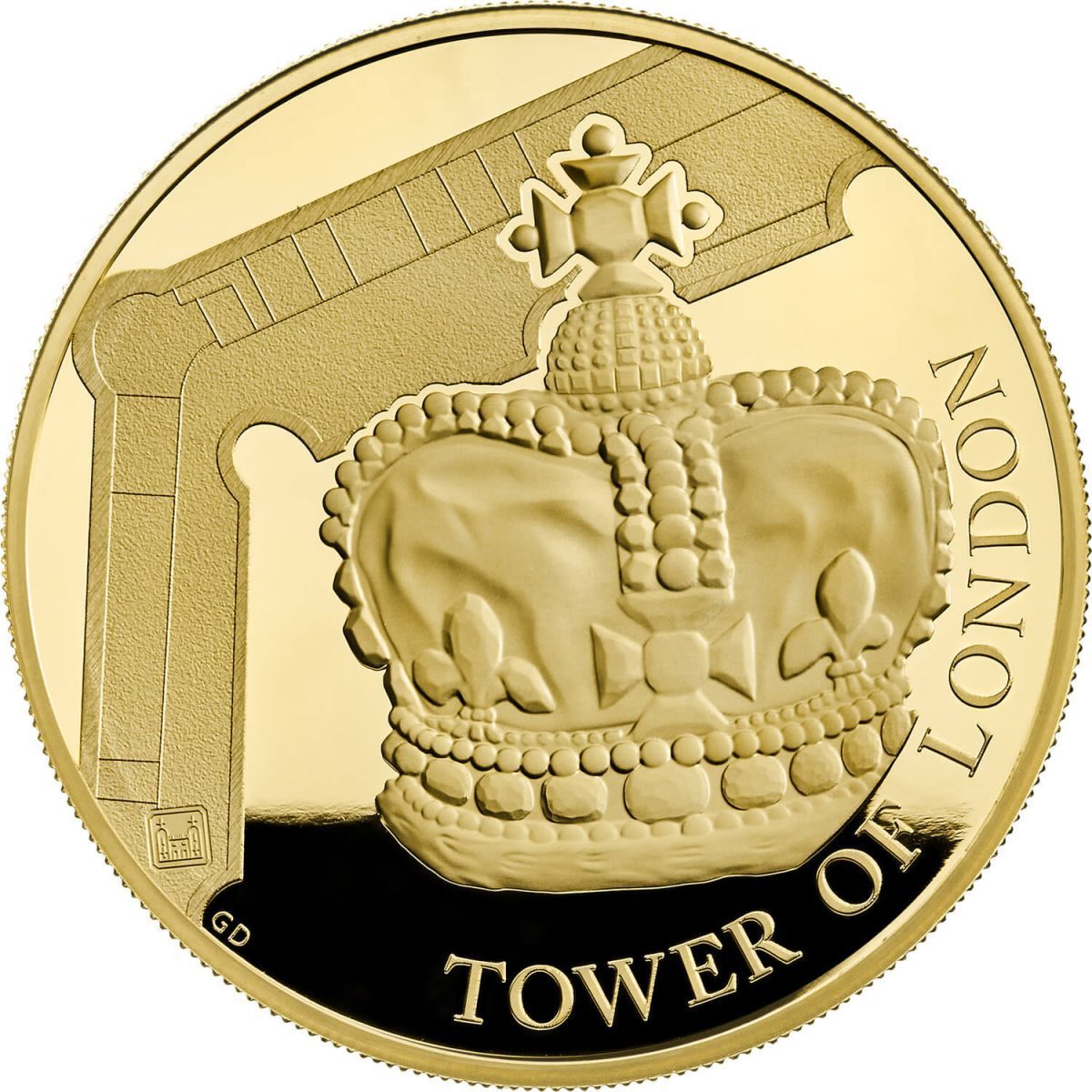
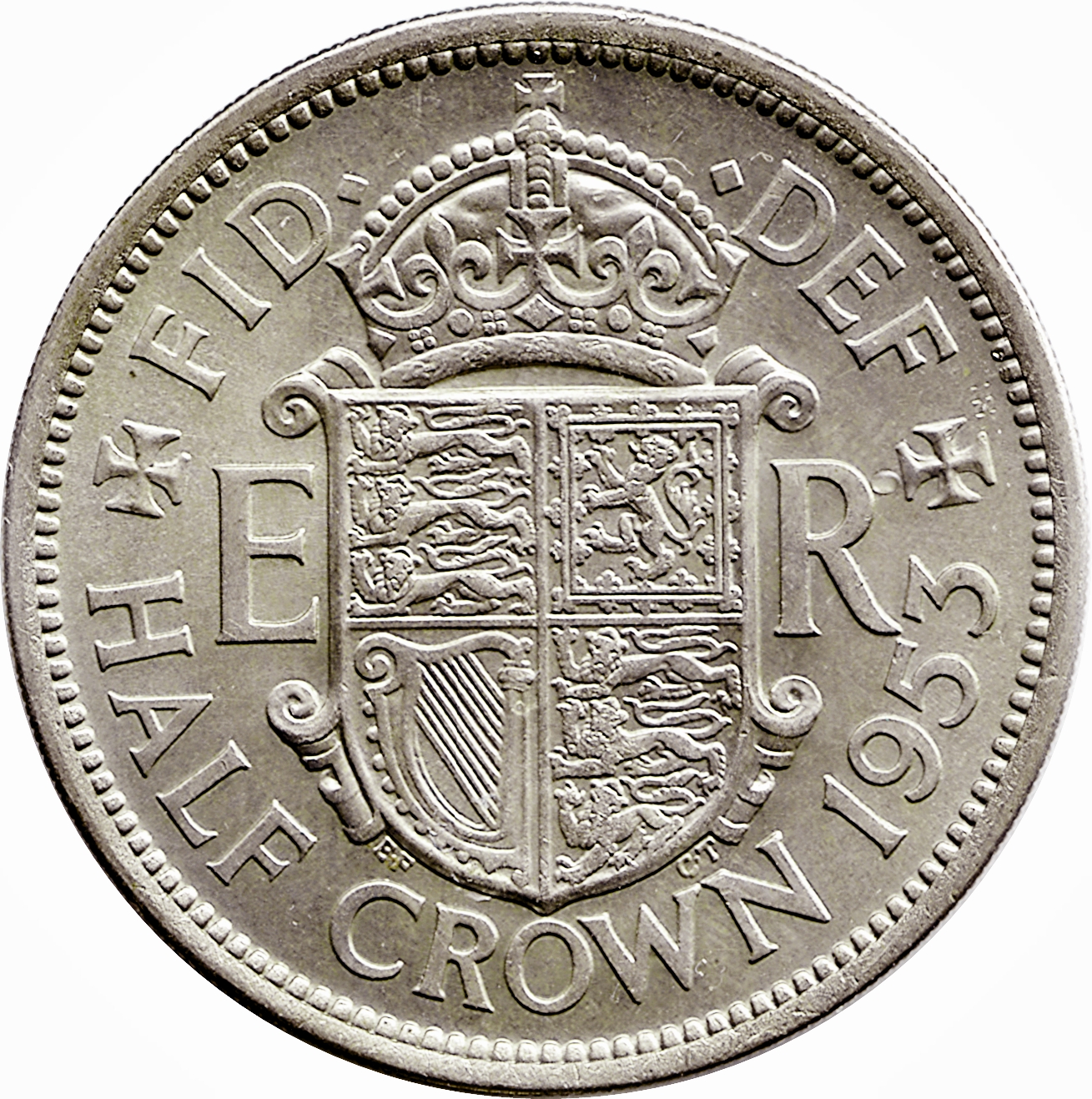
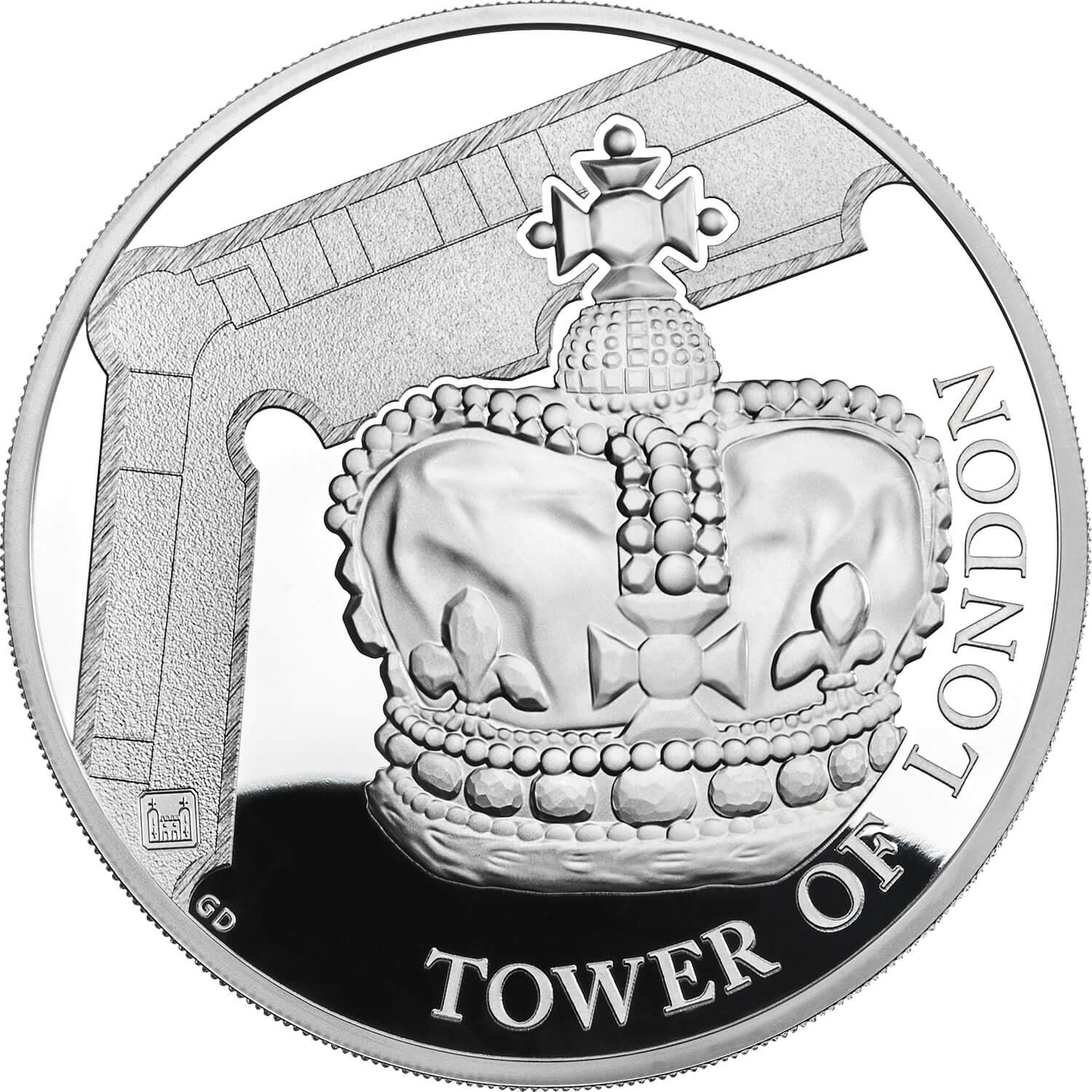
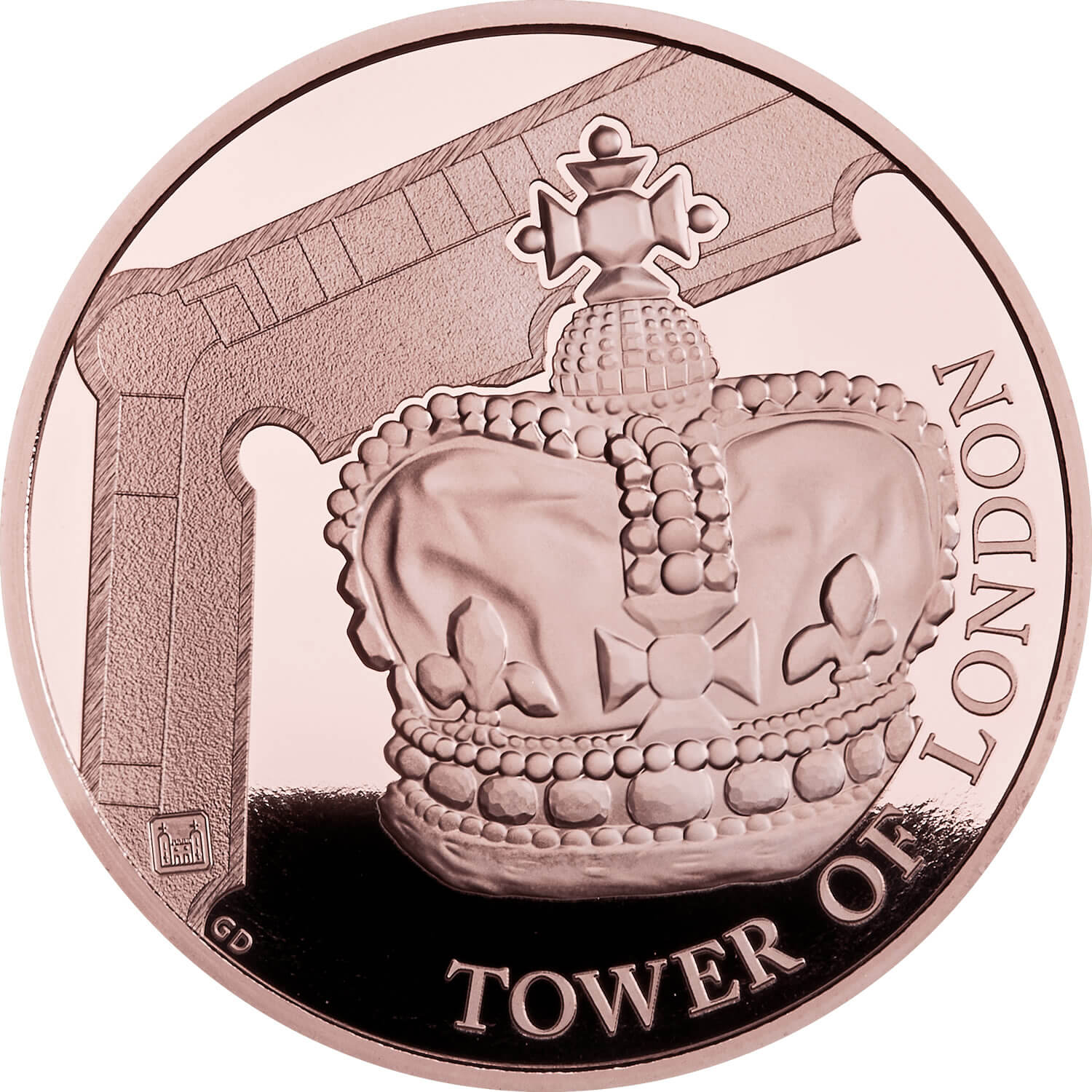
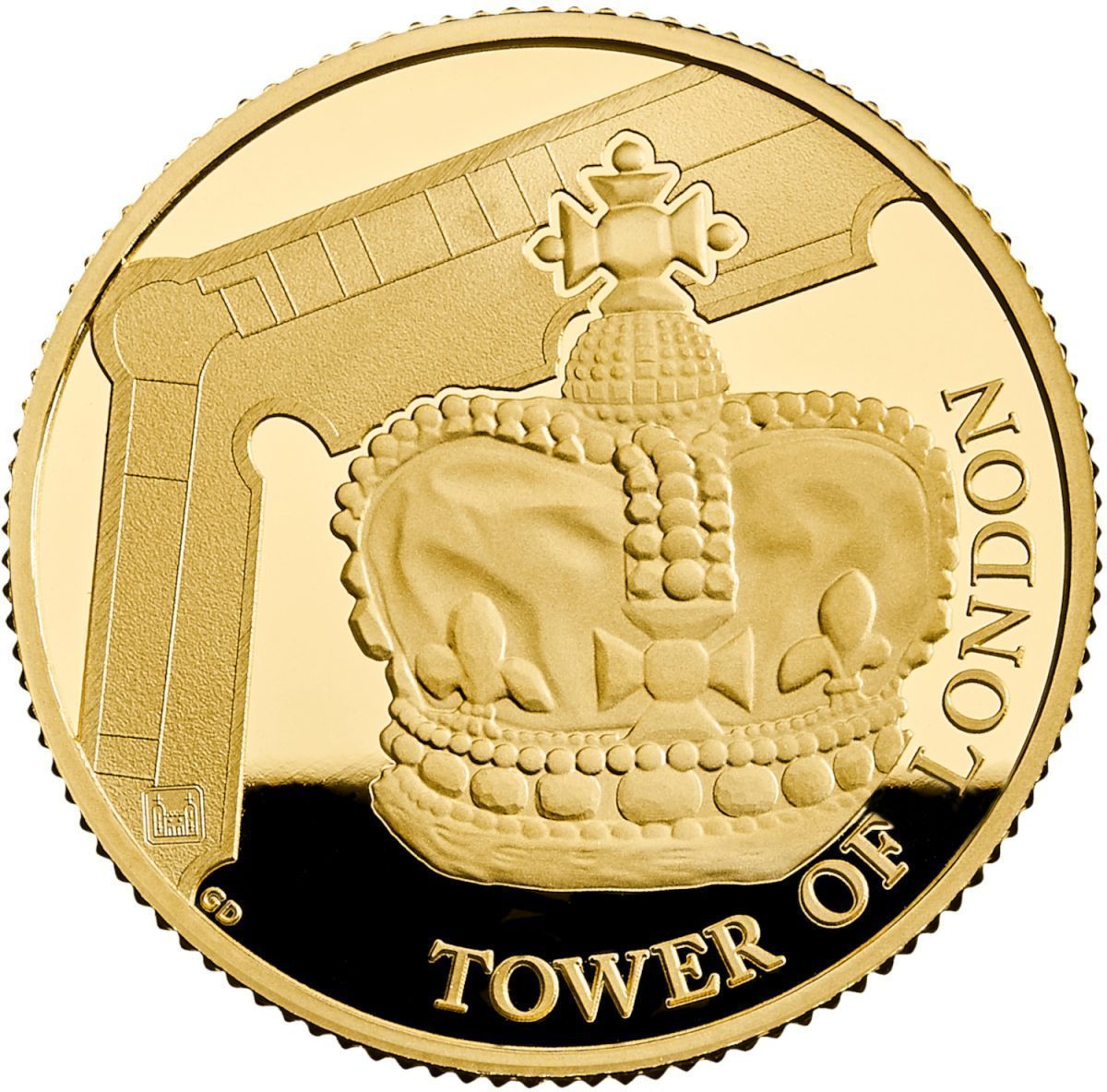
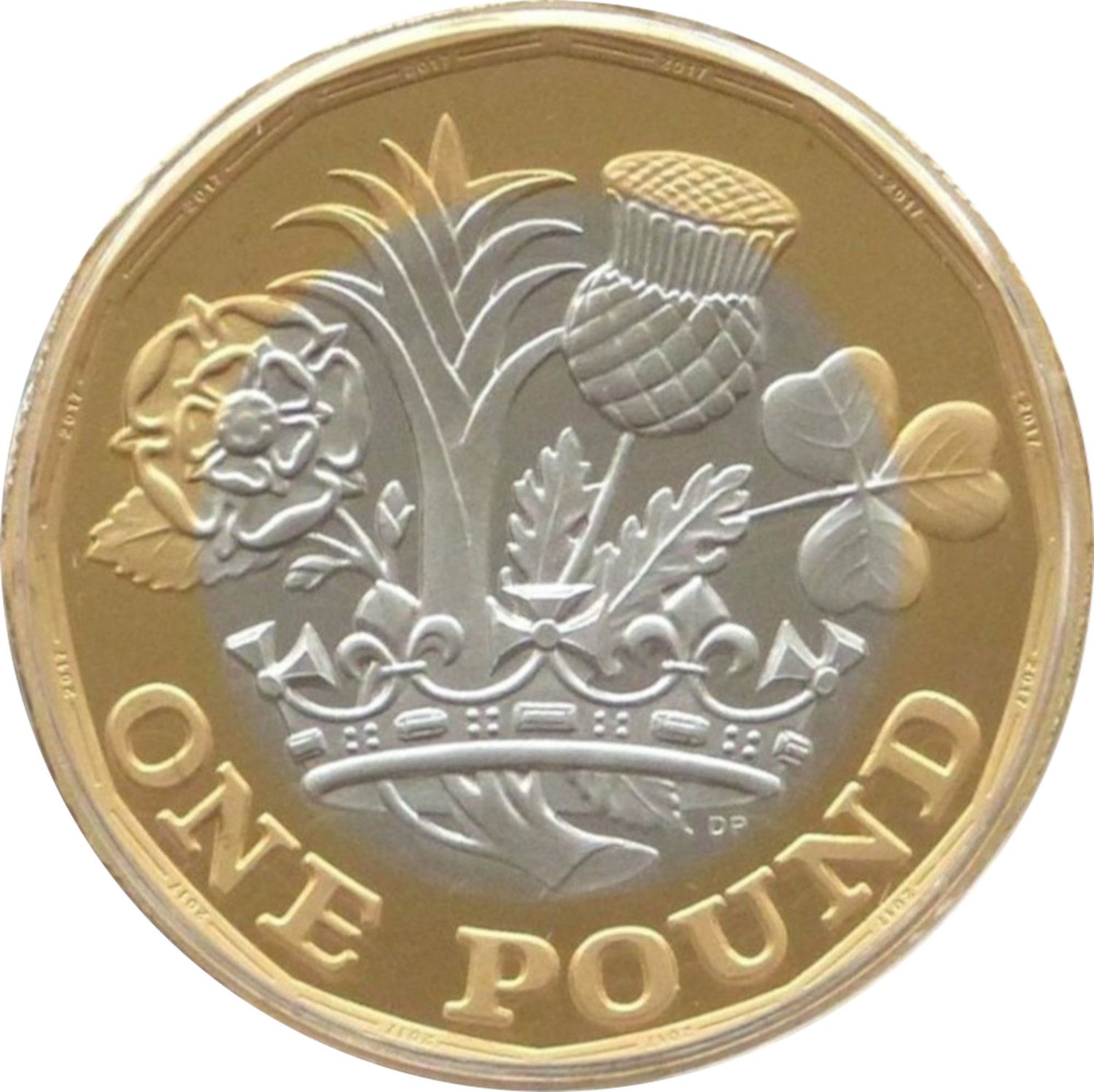
Browse every crown in the catalogue →
Frequently asked questions
What is a British crown coin?
How much is a crown coin worth?
Are 1965 Churchill crowns valuable?
Which is the most valuable British crown?
What does the lettered edge on a crown say?
Was the crown ever a five-pound coin?
Are silver crowns worth more for the silver content?
Should I clean a silver crown?
How do I authenticate a high-value crown?
What's the difference between a "Gothic Crown" and a regular Victoria Crown?
Are commemorative crowns from the 1970s and 1980s worth anything?
Further reading
- 1965 Churchill crown value, the most common pre-decimal crown and what it really sells for.
- Rare UK Coins List, the headline rarities by realised auction price (several are crowns).
- Gold Sovereign Values UK, the parallel reference for gold rarities.
- UK Coin Errors List, mint mistakes and their values.
- Coin Grading Guide, the prerequisite for any pricing decision.
- Where to Sell Rare Coins UK, commission and net-return comparisons.