MyCoinage is 100% free.
Track your collection, see every grade-by-grade price history, set watchlist alerts. All of it. No card, no Pro tier, no catch.
Sign up →
Guide
2009 Kew Gardens 50p Value: The UK's Famous Modern Rarity
The 2009 Kew Gardens 50p, mintage 210,000, the lowest of any modern UK 50p, is the
most-collected modern British coin and the touchstone every collector knows by name. Designed by
Christopher Le Brun RA to mark the 250th anniversary of the Royal Botanic Gardens at Kew, the
Great Pagoda reverse is now an icon. This guide covers every variant, current realised prices,
authentication, and where to sell.
Last updated: 3 August 2026
In brief. Mintage 210,000. Circulated grade £100-180;
BU from a sealed Royal Mint set £200-280; slabbed MS-65+
£280-450. Silver proof (mintage ~18,000): £120-200.
Silver piedfort: £180-280. Gold proof (mintage 629): £3,000-4,500.
Gold piedfort (mintage 40): rarely traded, £15,000+ when it does. Most-counterfeited
via gold-plating; most "gold Kew Gardens" eBay listings under £500 are decorative novelties.
In 2026, a 2009 Kew Gardens 50p in everyday circulated grade trades at £100-180 on eBay UK; a clean BU example pulled from a Royal Mint set at £200-280; slabbed PCGS / NGC / CGS UK MS-65+ at £280-450. The silver proof variant (mintage ~18,000) trades at £120-200; the gold proof (mintage 629) at £3,000-4,500. The 2009 Kew Gardens 50p is the most famous modern UK rarity and one of the most-collected coins in British numismatics.
Why is the Kew Gardens 50p so rare?
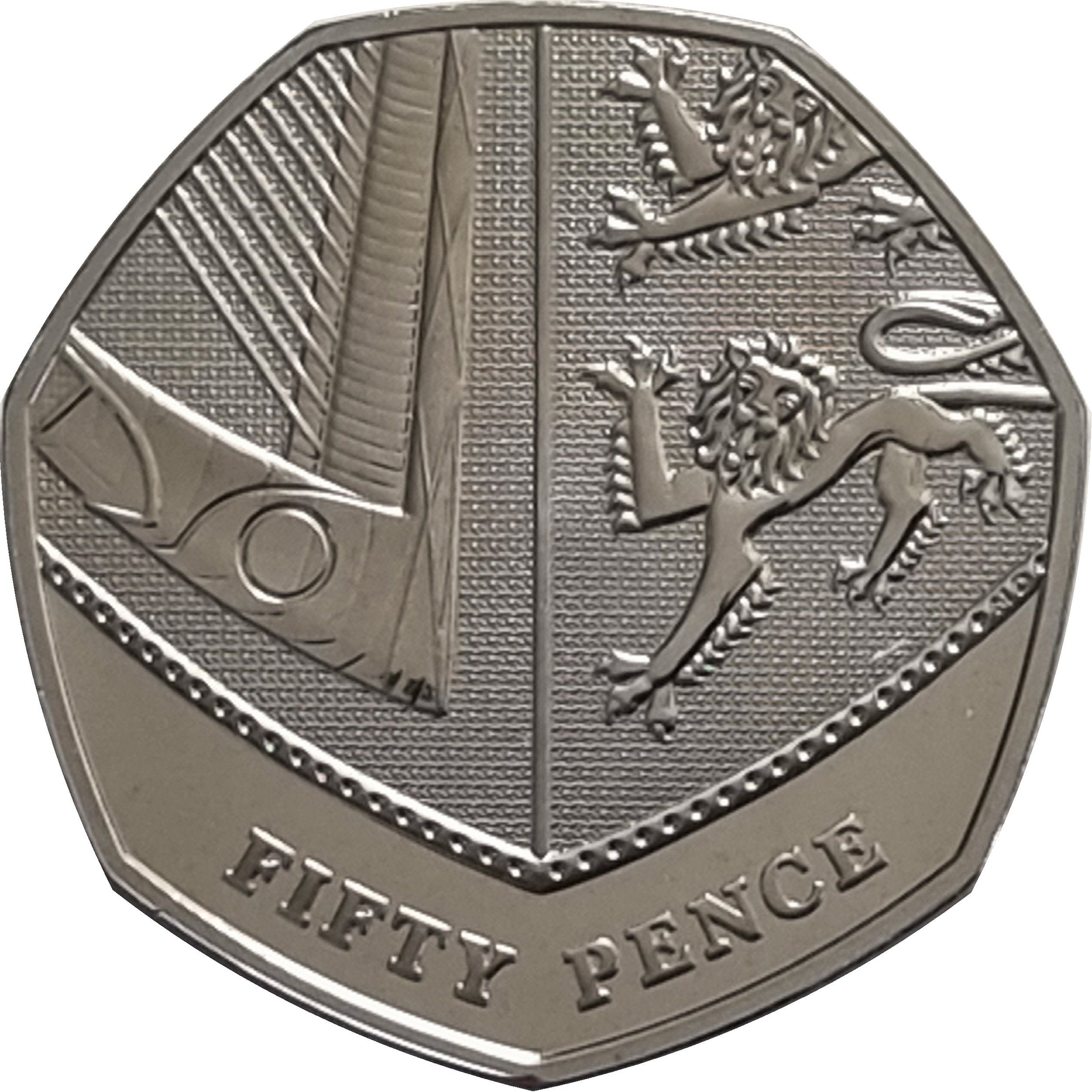
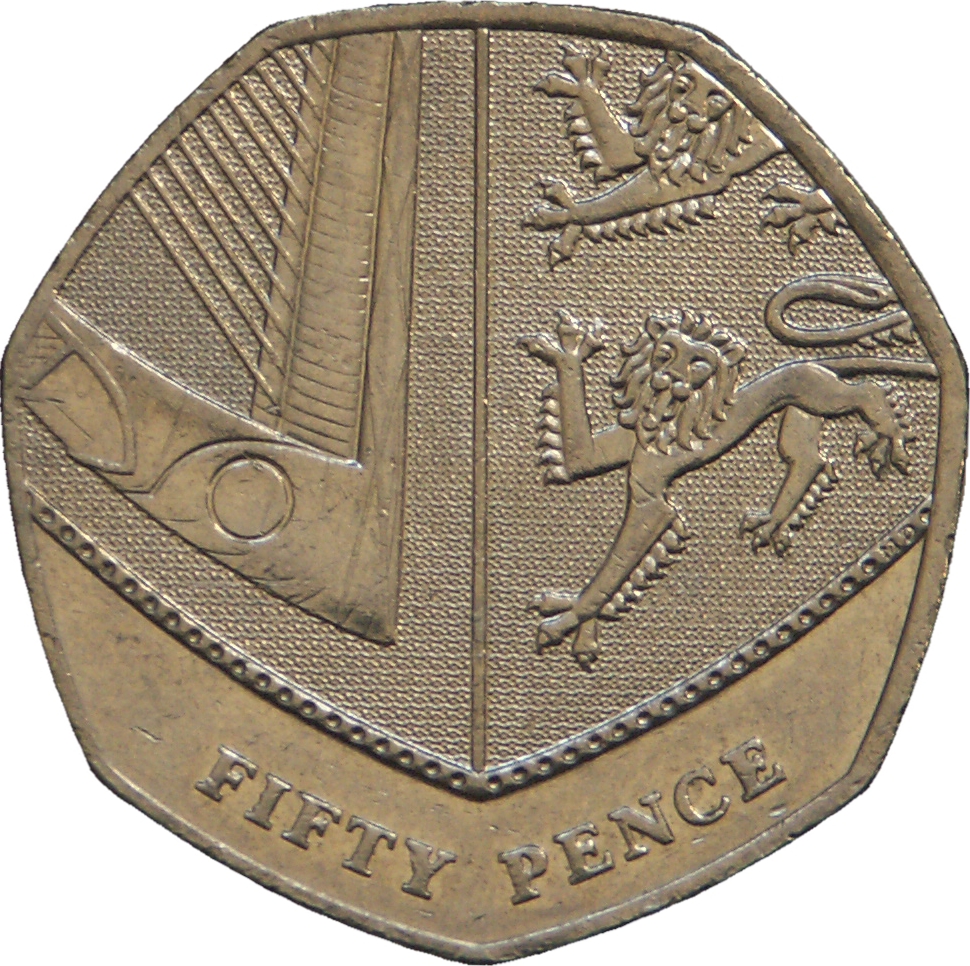
The mintage was only 210,000, by far the lowest of any modern UK 50p. Compare to the 2017 Sir Isaac Newton £2 (mintage 1,801,500), the Olympic Football 50p (1,125,500), or any standard circulating 50p (50-150 million). The 2009 Royal Mint had a soft year for 50p mintage: low demand for new issues plus a separate large run of Royal Shield 50ps already in stock meant Kew Gardens never got a higher production run. By 2014, when the rarity became widely known, most had already been pulled from circulation by collectors. Today finding one in change is genuinely uncommon, estimated 1 in 700 50ps in circulation.
How can I tell if my Kew Gardens 50p is genuine?
Three checks. Weight: 8.0 g ± 0.1 g (the post-1997 small 50p standard). Diameter: 27.3 mm across the flats (heptagonal). Design detail: the Royal Mint pagoda design by Christopher Le Brun shows a 9-tier pagoda with detailed roof curves and the "KEW" text below; under 10x magnification the leaves on the surrounding vine are crisp and well-defined. Counterfeits exist (typically silver-plated or gold-plated copies of the standard cupronickel) and are detectable by weight discrepancy or by edge inspection (cast counterfeits show a faint horizontal seam). For high-grade examples worth £200+, professional grading is recommended, see our PCGS vs NGC vs CGS UK guide.
What is the design about?
The reverse design commemorates the 250th anniversary of the Royal Botanic Gardens at Kew, founded in 1759. The image is the Great Pagoda, a 50-metre tall, 10-tier (9 tiers visible on the coin) Chinoiserie pagoda completed in 1762 by architect Sir William Chambers, the centrepiece of the Kew Gardens landscape and one of the earliest Chinese-style structures in Britain. The pagoda is encircled by a vine motif, with "KEW" inscribed on a banner. The designer was Christopher Le Brun, RA, later President of the Royal Academy.
Why was the mintage so low?
Three reasons. (1) The 2009 Royal Shield 50p was the standard-design definitive at the time, already minted in tens of millions, so circulation didn't need additional 50ps. (2) Commemorative 50p mintages are decided based on retail / collector pre-orders plus a small over-run for circulation; the 2009 commemorative budget was modest. (3) The Royal Mint didn't anticipate the wave of collector interest the coin would later trigger, in 2009, modern 50p commemoratives weren't the cult interest they became from 2012 onwards.
Is the Kew Gardens 50p a good investment?
Mixed. From 2009-2014, the coin traded at face value or just above. From 2014-2018, prices climbed from £30 to £150 as collector awareness grew and circulation supply thinned. From 2018-2026 prices have stabilised at £100-280 depending on grade, with limited further appreciation. The big gains are likely behind us; the coin is a stable holding rather than a growth asset. Better-than-cash savings, but not stock-market returns.
How can I find one in circulation?
Empty every change jar, ask family members for theirs, and check 50ps you pick up at retailers. Despite low mintage, a meaningful fraction (estimated 100,000+) remains in circulation; the coin will surface eventually if you look enough. Common time horizon: 1-3 months of careful checking for an active urban shopper to find one. The coin shows up disproportionately in tourist areas and around Kew Gardens itself.
What about the 2019 Kew Gardens 50p re-issue?
The 2019 dated coin is a collector-only re-issue of the same Christopher Le Brun Pagoda design, struck for the Royal Mint's "British Culture / 50 Years of the 50p" 2019 commemorative range, not the rare circulation issue. The 2019 reissue was sold in silver proof, gold proof and BU formats only and never entered general circulation. The obverse carries the fifth Elizabeth II portrait by Jody Clark (vs the fourth Ian Rank-Broadley portrait on the 2009 original), and the date below the portrait reads 2019. Mintage estimates: silver proof ~35,000; gold proof under 1,000; BU pack roughly 7,500. The 2019 reissue trades at £15-50 for the BU and £120-220 for the silver proof. Only the 2009-dated cupronickel circulation strike (mintage 210,000) is the famous rare coin worth £100-280 in change-found grade. Always check the date on the obverse, sellers occasionally list 2019 reissues as if they were 2009 originals.
How do I tell a 2009 Kew Gardens from a 2019 reissue at a glance?
Two checks. (1) The date on the obverse: 2009 vs 2019 (the only definitive identifier). (2) The Queen's portrait: the 2009 carries the fourth Elizabeth II portrait by Ian Rank-Broadley (smaller, more austere bust), the 2019 carries the fifth portrait by Jody Clark (more detailed crown work, full neckline visible). The reverse design is identical between the two. Most accidental misidentifications happen when a 2019 reissue appears in BU packaging and the buyer focuses on the Pagoda reverse without checking the obverse date.
Where should I sell a Kew Gardens 50p?
For circulated examples worth £100-200: eBay UK with sold-listings cross-check, or a BNTA-member dealer for outright purchase. For BU / mint state from a Royal Mint set: same venues; expect the high end of the price range. For gold proof (mintage 629): consign to a UK auction house (Spink, Baldwin's, London Coins) or list slabbed on eBay UK with PCGS / NGC certification. Avoid Westminster-style direct-mail buyers and pawn shops, both undervalue collector-grade coins. See our where to sell rare coins UK guide.
Are Kew Gardens 50ps faked?
Yes, but mostly the gold-plated variety, cupronickel coins with a thin gold electroplating advertised as "gold Kew Gardens 50p" on eBay or social media. These start as real cupronickel coins (so weight/dimension are correct) but the gold plating is decorative and adds no Royal Mint value. Treat any "gold Kew Gardens" listing under £500 as a plated novelty, not the genuine gold proof (which trades £3,000-4,500). See our how to spot fake British coins guide.
Why do some sites quote £500 or £1,000 for a Kew Gardens?
Asking prices vs realised prices. Some sellers list at aspirational prices that don't actually clear; the eBay sold-listings filter (sort by Most Recent) is the only reliable price reference. As of 2026, no recent eBay sale of a circulated cupronickel 2009 Kew Gardens 50p has cleared above £280. Mainstream press articles citing "£500-£1,000" prices are typically referencing the silver proof and gold proof variants, not the standard cupronickel.
What's the difference between BU and circulated?
A BU (Brilliant Uncirculated) Kew Gardens 50p was pulled from a Royal Mint sealed annual set or BU presentation pack and never entered circulation; it has full mint lustre, no wear and minimal handling marks. A circulated example was used in change, you'll see contact marks, slight wear on the high points of the pagoda design, and reduced lustre. The price gap reflects this: BU at £200-280, average circulated at £100-180. Original Royal Mint packaging (the sealed plastic capsule on a card) adds another £30-50 to BU value.
We use essential cookies to keep you signed in and remember your preferences.
No tracking or advertising cookies are used without your consent.
Privacy Policy