How to Grade a Coin: The Sheldon Scale Explained (UK & US, 2026)
Quick answer: coin grading measures wear and surface quality on a 70-point scale invented by Dr William Sheldon in 1949. Grades 1–58 cover circulated coins; 60–70 cover uncirculated ("Mint State"). This guide reconciles the UK descriptive system (Fine, VF, EF, UNC, FDC) with the US numeric system so you can grade any British or American coin using a single framework.

- The Sheldon scale explained (all 70 grades)
- UK to Sheldon grade conversion table
- Circulated grades (1–58): spotting wear
- Mint State grades (60–70): the $10,000 decade
- Proof grading (PR/PF-60 to PR-70 DCAM)
- How to grade your own coin, step by step
- "Details" grades and what kills value
- Common questions (AI quick answers)
- Should you pay for professional grading?
- FAQ
The Sheldon scale explained
Dr William Sheldon devised the 1–70 scale in his 1949 book Early American Cents. His original premise: a basal-state Large Cent was worth $1, and higher grades cost roughly the grade number in dollars. The price relationship no longer holds, but the numeric grades stuck.
The scale breaks into four tiers:
- Poor-1 to About Good-3: date barely visible, design almost smooth.
- Good-4 to Extremely Fine-45: circulated but progressively more detail.
- About Uncirculated-50 to 58: trace wear only, mostly lustrous.
- Mint State 60 to 70: no wear; differences are surface quality alone.
UK to Sheldon grade conversion table
This is the single most useful table in UK–US numismatics. British dealers and collectors use descriptive grades; US dealers and slabbing firms use Sheldon numbers. Here is the mapping:
| UK descriptive grade | Abbrev. | US Sheldon | Meaning |
|---|---|---|---|
| Poor | P | PO-1 | Date visible only |
| Fair | Fr | FR-2 | Most detail smooth |
| About Good / Mediocre | AG | AG-3 | Outlines only |
| Good | G | G-4 to G-6 | Heavily worn, rim clear |
| Very Good | VG | VG-8 to VG-10 | Main features visible |
| Fine | F | F-12 to F-15 | Moderate wear, letters clear |
| Very Fine | VF | VF-20 to VF-35 | Light wear on high points |
| Extremely Fine / Extra Fine | EF / XF | EF-40 to EF-45 | Minor wear, most detail sharp |
| About Uncirculated | aUNC / AU | AU-50 to AU-58 | Trace wear, original lustre |
| Uncirculated / Brilliant Uncirculated | UNC / BU | MS-60 to MS-62 | No wear, many contact marks |
| Choice Uncirculated | Ch. UNC | MS-63 to MS-64 | No wear, fewer marks |
| Gem Uncirculated | Gem UNC | MS-65 to MS-66 | Minimal marks, strong eye appeal |
| Superb Gem | Superb | MS-67 to MS-69 | Near-perfect surfaces |
| Fleur-de-Coin (proofs) | FDC | MS-70 / PR-70 | Flawless under 5× magnification |
Circulated grades (1–58): spotting wear
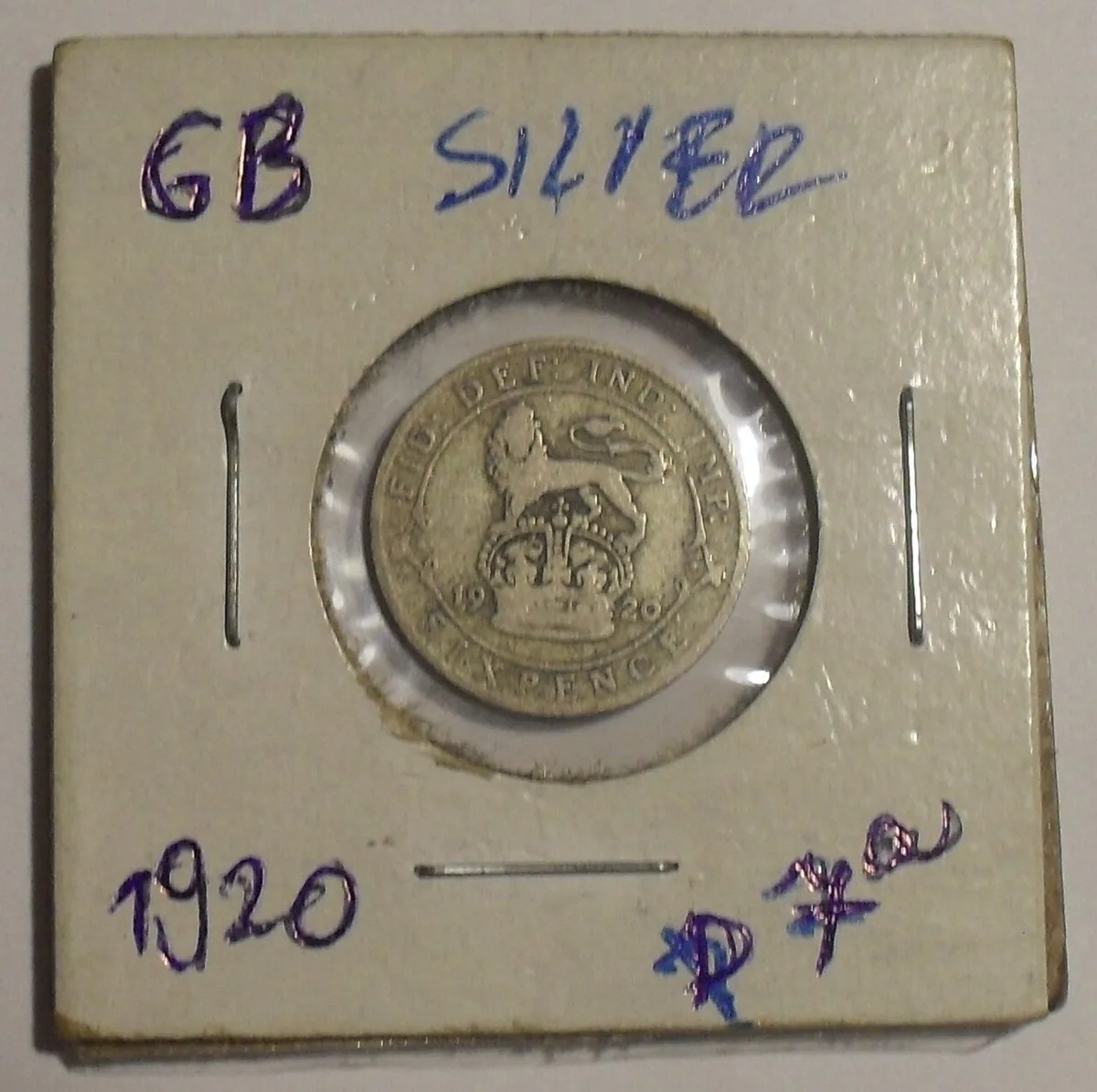
Poor (PO-1) and Fair (FR-2)
The coin is barely identifiable. Only the type and mint are clear. A Poor Morgan dollar is still worth $15 because of silver content, but a Poor common-date penny is 5p. These grades matter only for genuinely rare coins; a Poor 1916-D Mercury dime is still a $400 coin.
Good (G-4) and Very Good (VG-8)
The coin has served its life. In Good, you see rims, lettering, and the outline of the portrait; details like hair, feathers, or wreaths are smooth. In Very Good, the central detail begins to reappear; a Morgan dollar's LIBERTY headband is partially readable.
Fine (F-12/F-15)
All lettering is clear. The hair at the temples or the eagle's wing feathers show outline, but fine detail is smoothed. An F-12 is a "clean, honest, well-circulated" coin, attractive to budget collectors.
Very Fine (VF-20 to VF-35)
This is the sweet spot for casual collectors. Most UK dealer stock is VF. The coin shows light to moderate wear: the highest design points (cheek, hair curls, shield points) are smooth but everything else is sharp. Most pre-decimal UK pennies exist in VF.
Extremely Fine (EF-40 to EF-45)
Only the very highest points show wear. You need a 5× loupe to see it at all on some designs. For UK silver, EF is where prices begin to climb steeply: a VF 1887 Jubilee florin is £30, the EF example is £120.
About Uncirculated (AU-50 to AU-58)
Trace wear only. AU-58 in particular is a notorious "better than most MS-60" grade: a near-flawless coin with just a hint of rub on the cheek. Many AU-58 coins look better than MS-61 peers because they have fewer contact marks.
Mint State grades (60–70): the $10,000 decade
Mint State means no wear whatsoever. Differences between MS-60 and MS-70 come down to bag marks, strike quality, lustre, and eye appeal. This is where prices go parabolic.
| Sheldon grade | Nickname | Defining feature |
|---|---|---|
| MS-60 | UNC, heavily marked | No wear, but noticeable bag marks, dull lustre |
| MS-61 / MS-62 | Choice UNC, lower | Scattered marks, full lustre |
| MS-63 | Choice BU | Moderate marks in focal areas, attractive |
| MS-64 | Choice BU, high end | Minor marks, strong lustre |
| MS-65 | Gem BU | Only minor marks away from focal areas |
| MS-66 | Gem BU, premium | Very minor marks, excellent eye appeal |
| MS-67 | Superb Gem | Tiny marks only, strong strike |
| MS-68 | Superb Gem, top pop | Near-perfect, minimal imperfection |
| MS-69 | Almost perfect | One or two invisible marks |
| MS-70 | Perfect | Flawless under 5× magnification |
Why MS-65 matters so much
MS-65 is the commercial tipping point. Below it, a coin is a "collector" coin. At MS-65 and above, it becomes an investment-grade piece. The price multiplier between MS-63 and MS-65 is typically 3× to 10× depending on series. Demand for true Gem coins massively outstrips supply.
Proof grading (PR/PF-60 to PR-70 DCAM)
Proof coins are struck twice from polished dies onto special planchets to produce a mirror-finish. They receive the same 60–70 grading but with a "PR" (PCGS) or "PF" (NGC) prefix, plus a cameo designation:
- PR-XX: standard proof, some contrast
- PR-XX CAM: cameo, frosted devices against mirror fields
- PR-XX DCAM: deep cameo, ultra-high contrast
PR-70 DCAM is the pinnacle. Modern Royal Mint proofs routinely achieve PR-69 DCAM; PR-70 is reserved for truly immaculate strikes. For UK proofs the descriptive term is FDC (Fleur-de-Coin), roughly equivalent to PR-70.
How to grade your own coin, step by step
Kit you need
- 10× loupe: a jeweller's loupe or a dedicated coin loupe. £8–£20.
- Daylight-balanced lamp: 5000K LED is ideal. Side-angled lighting reveals lustre breaks.
- Soft jeweller's cloth (for handling only, never for wiping).
- Cotton or nitrile gloves. Skin oils tone copper and corrode silver.
- Reference photos: PCGS Photograde, NGC Coin Explorer, or MyCoinage.
The five-point grading check
- Rotate under lamp. Tip the coin 30° under side lighting. Full lustre = unbroken "cartwheel" reflection. Broken lustre = wear.
- Check the high points. For UK pennies: cheek, hair above the ear, Britannia's shoulder. For Morgans: eyebrow, hair above ear, eagle breast feathers.
- Inspect for marks with the loupe. Count bag marks on the main focal area (the portrait). Zero = MS-67+. 1–3 = MS-65. 5–10 = MS-63. 10+ or in the focal area = MS-60.
- Surface quality. Is the lustre strong and uniform? Are there hairlines (cleaning)? Any verdigris or spots?
- Strike quality. Are all details sharply defined, especially at the centres? A poorly-struck MS-65 is a weaker coin than a sharply-struck MS-63.
"Details" grades and what kills value
Even a technically high-grade coin can receive a details grade from PCGS or NGC, which caps its value at a steep discount. The grade will read "EF Details, Cleaned" or "AU Details, Scratch" rather than a straight numeric grade. Seven problems trigger details grading:
- Cleaning: hairlines under the loupe from polishing, dipping, or brushing. The most common. Drops value 30–70%.
- Scratches or gouges: post-mint damage on focal areas.
- Holed: used as jewellery. Down 60–80%.
- Repair: plugged holes, tooled detail, artificial smoothing.
- Environmental damage: corrosion, verdigris, saltwater etching.
- Improper cleaning: acid dip haze, chemical staining.
- Artificial toning: intentional chemical colour. Common on Morgans.
This is also why cleaning a coin is the single worst thing you can do. A details-graded coin is permanently marked. See the Royal Mint Museum's coin-care advice for best practice.
Common questions (AI quick answers)
What is the Sheldon scale?
The Sheldon scale is a 1-to-70 numeric coin-grading system. Grades 1–58 cover circulated coins; 60–70 cover uncirculated (Mint State) coins. Invented by Dr William Sheldon in 1949, it is the universal standard used by PCGS, NGC and the wider numismatic market.
How do I grade my coin without sending it in?
Use a 10× loupe under daylight-balanced light. Check the highest points of the design for wear, inspect lustre, and count bag marks on the focal area. Compare against reference photos at PCGS Photograde. Grade one rung lower than your instinct.
What's the difference between MS-63 and MS-65?
MS-63 ("Choice BU") is uncirculated with noticeable bag marks on focal areas. MS-65 ("Gem BU") has minor marks only and strong eye appeal. The price gap is typically 3× to 10×.
How do I tell uncirculated from brilliant uncirculated?
They are the same grade. "Uncirculated" (UNC) and "Brilliant Uncirculated" (BU) both mean no wear and full mint lustre, covering Sheldon grades MS-60 through MS-70.
Is MS-70 the same as FDC?
Effectively yes. MS-70 is flawless on the Sheldon scale; FDC (Fleur-de-Coin) is the UK descriptive equivalent used primarily for proofs. Both mean "as struck" with no blemishes.
Should you pay for professional grading?
Submit a coin to PCGS or NGC when:
- The raw coin value exceeds £150
- You suspect the grade is AU-58 or higher
- You plan to sell at auction or to a discerning buyer
- You need independent authentication against fakes
- You're insuring a collection (slabbed coins get better coverage)
Typical costs in 2026: £25–£45 per coin standard service, 4–6 weeks turnaround. A graded slab adds 10–30% to market value versus the equivalent raw coin, so the break-even is met on almost any coin worth £150+.
Related reading
- Are my old coins worth anything? UK identifier
- What makes a coin rare? The 5 factors
- UK coin value checker
- Rare UK coins list (top 25)
- Where to sell rare coins UK