Stephen Hawking 50p Value 2026: The 2019 Royal Mint Black Hole Coin
The 2019 Stephen Hawking 50p, the first release in the Royal Mint's Innovators in Science series, is one of the most-searched modern UK commemorative 50p issues. It is also frequently misunderstood: this coin was never released into circulation, so you cannot find one in change. The standard BU in card trades at £10–18 in 2026, the silver proof (mintage 7,000) at £55–110, and the gold proof (mintage just 400) at £1,100–1,800. This guide covers all four formats, the black hole design by Edwina Ellis, Hawking's famous black-hole entropy equation on the reverse, how it compares to the sister 2019 Sherlock Holmes 50p, and authentication.
A 50p for Britain's most-recognised physicist
Stephen Hawking died on 14 March 2018 aged 76, coincidentally the same date as Albert Einstein's birthday and 75 years to the day after the publication of A Brief History of Time's underlying mathematics in Hawking's 1974 black hole paper. The Royal Mint approached his family during 2018 and a commemorative 50p was approved as the first release in a new Innovators in Science series. Production began in late 2018 and the coin was officially launched in March 2019.
Hawking was the obvious first subject. His work on black holes (the 1970 singularity theorems with Roger Penrose, the 1974 discovery of Hawking radiation, the 1973 Bekenstein-Hawking entropy formula) made him one of the most-cited theoretical physicists of the 20th century. A Brief History of Time (1988) has sold over 25 million copies in 40 languages, the best-selling popular-science book of the modern era. His Lucasian Chair at Cambridge (1979–2009) put him in the same academic seat once held by Isaac Newton.
The black hole design and the famous equation
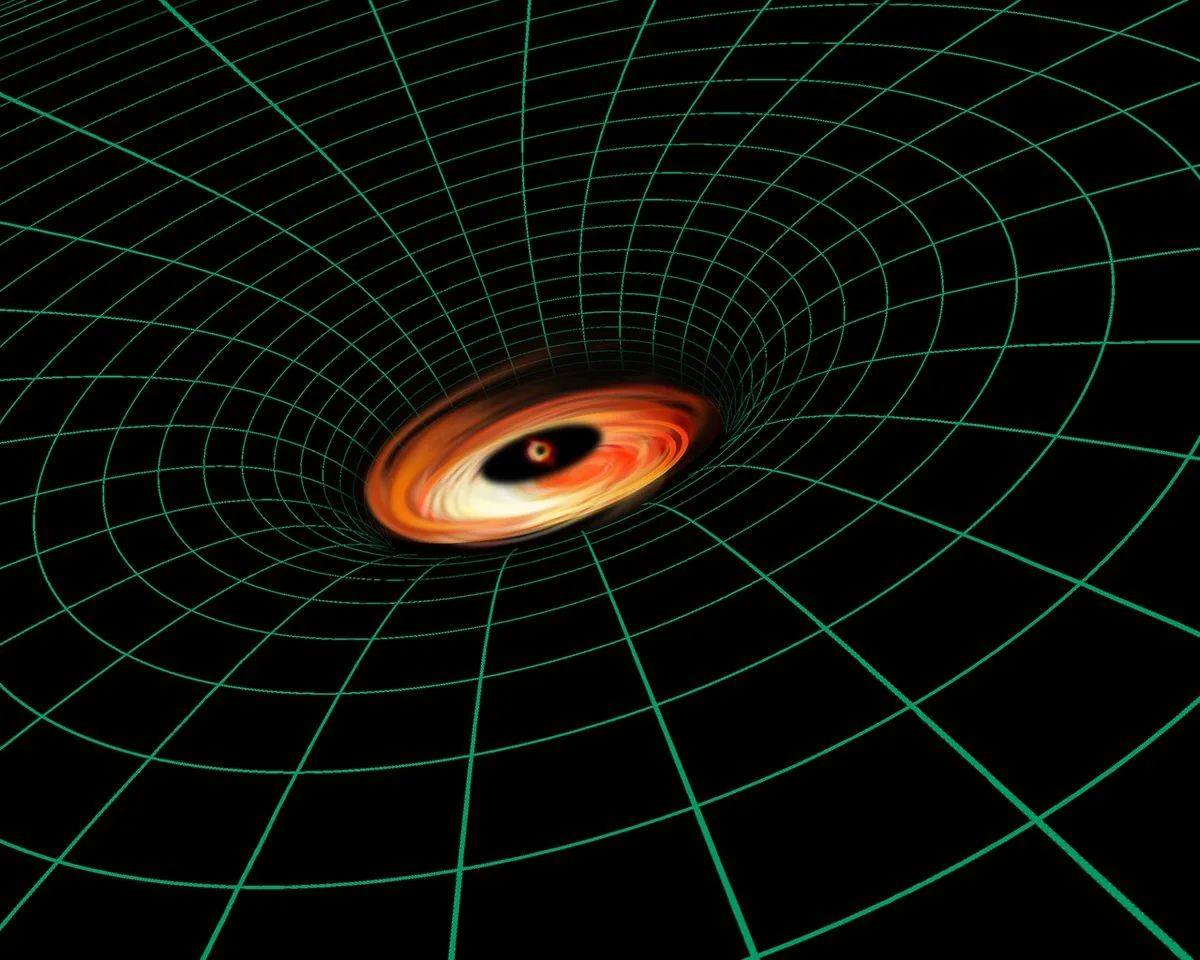
The reverse, designed by Edwina Ellis, shows concentric rings depicting a black hole event horizon, the boundary beyond which nothing, including light, can escape. The visual is a stylised representation of what an actively-feeding black hole looks like: an accretion disk surrounded by rings of distorted spacetime. The legend "STEPHEN HAWKING" arches above the design; the date "2019" sits to the right.
Below the rings, engraved in tiny lettering, is the equation that defined a significant portion of Hawking's scientific reputation:
This is the Bekenstein-Hawking entropy formula. It states that a black hole's entropy (S) is proportional to the area (A) of its event horizon, divided by 4 times the Planck length squared. The constants are: kB = Boltzmann's constant; c = speed of light; ħ = reduced Planck constant; G = Newton's gravitational constant. The result, derived in 1973, was the first hint that black holes have thermodynamic properties, that they have a temperature, emit thermal radiation (Hawking radiation, 1974), and eventually evaporate. It set up most of modern black-hole thermodynamics and remains a central open problem in attempts to unify gravity and quantum mechanics. It is one of the only mathematical equations ever to appear on UK coinage.
Edwina Ellis, an Australian-born British engraver, is also responsible for the celebrated Great British Coin Hunt A–Z 10p series (2018–2019). Her design style favours bold, illustrative work that reads well at coin scale, a good fit for the Hawking subject.
Specifications across all four formats
| Property | BU | Silver proof | Silver Piedfort | Gold proof |
|---|---|---|---|---|
| Year of issue | 2019 | 2019 | 2019 | 2019 |
| Designer (reverse) | Edwina Ellis | Edwina Ellis | Edwina Ellis | Edwina Ellis |
| Obverse portrait | Jody Clark (5th) | Jody Clark | Jody Clark | Jody Clark |
| Composition | Cupronickel (75% Cu, 25% Ni) | .925 sterling silver | .925 sterling silver | .917 fine gold (22-carat) |
| Weight | 8.00 g | 8.00 g | 16.00 g (double thickness) | 15.50 g |
| Diameter | 27.30 mm | 27.30 mm | 27.30 mm | 27.30 mm |
| Edge | Plain (no milling) | Plain | Plain | Plain |
| Mintage | ~250,000–400,000 (est) | 7,000 | ~2,500 | 400 |
| Original issue price | £10 | £65 | £120 | £945 |
Realistic 2026 values by format
All prices below are based on UK realised auction data and eBay UK Sold listings filtered to the trailing six months, the realised market, not the asking market. Active asking prices on the BU pack regularly hit £50–100 with no buyers; filter to Sold listings to see what the coin actually trades for.
| Format / condition | Typical realised range | Notes |
|---|---|---|
| Loose cupronickel (no pack) | £6 – £10 | Out of original packaging, light handling wear. |
| BU in Royal Mint presentation card | £10 – £18 | Card and outer sleeve intact, no fingerprints on coin. |
| BU in pristine card + outer sleeve | £14 – £22 | Original Royal Mint shipping sleeve included. |
| Silver proof (in original case) | £55 – £110 | Original Royal Mint case + COA. Mintage 7,000. |
| Silver proof Piedfort (case + COA) | £130 – £220 | Double-thickness silver. Mintage ~2,500. |
| Gold proof (wooden case + COA) | £1,100 – £1,800 | Mintage 400. Approx 0.46 oz fine gold content. |
| Slabbed PCGS PR-69 / PR-70 (gold) | £1,500 – £2,400 | Top-grade gold proof with third-party slab. |
Why you can't find one in change
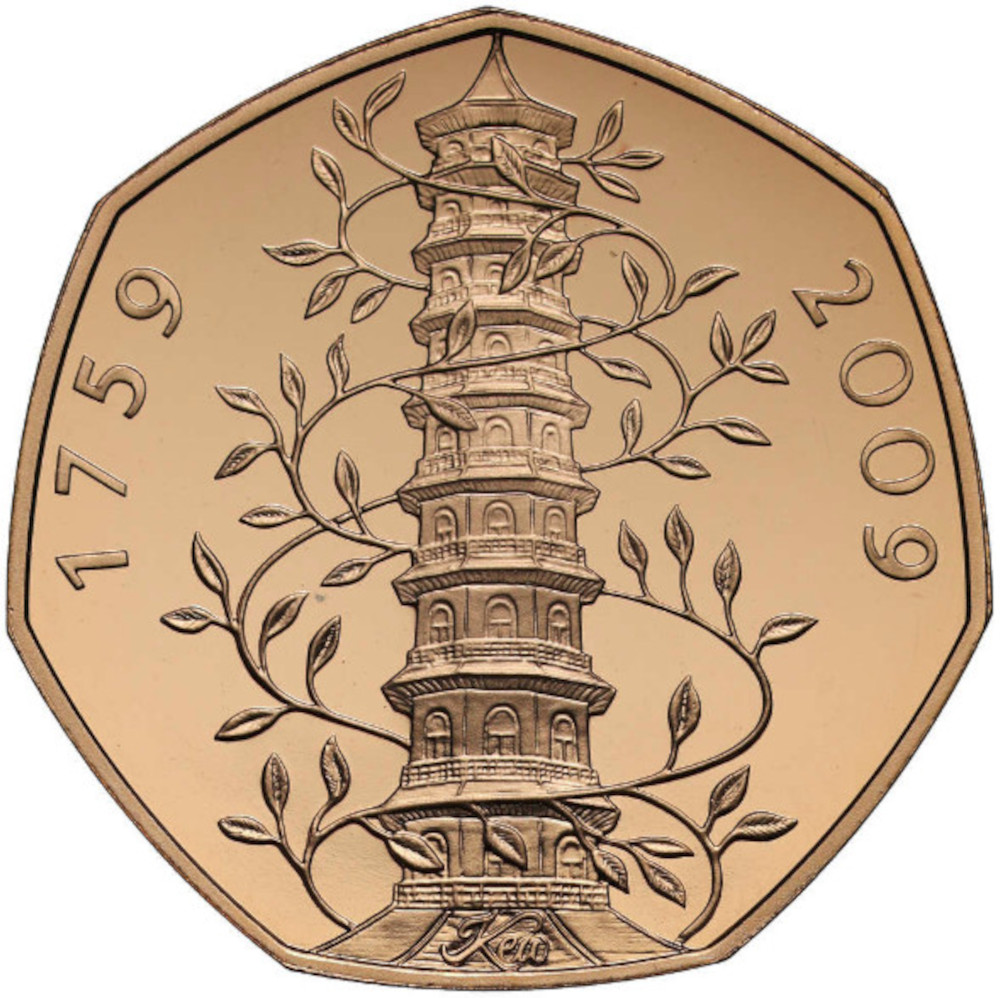
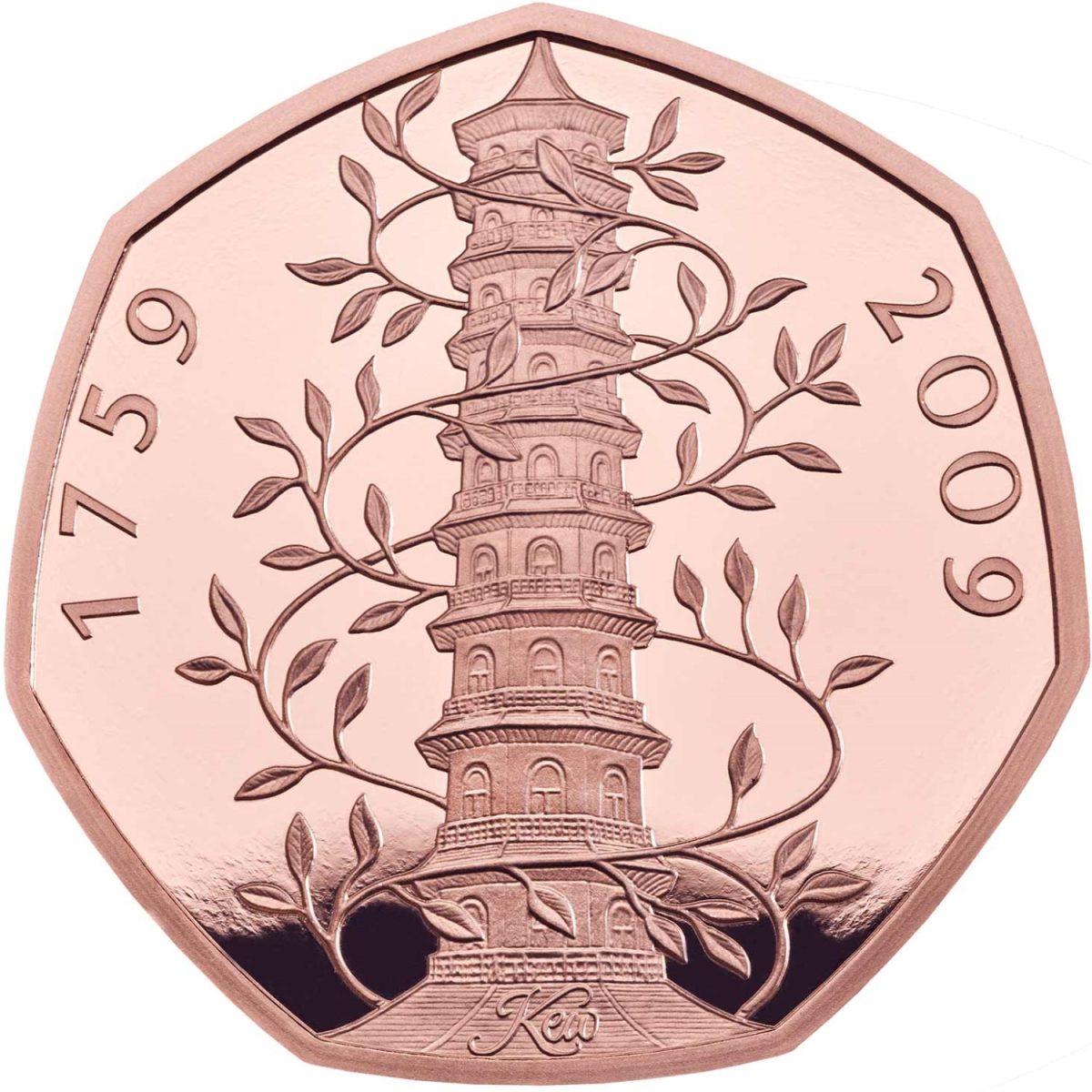
The Stephen Hawking 50p was not struck for general circulation. Unlike many Royal Mint commemorative 50p coins (Kew Gardens 2009, Atlantic Salmon 2023, the 2012 Olympic series), the Hawking 50p was sold direct to collectors in pre-packaged formats, BU in a presentation card, silver proof in a case, silver Piedfort, and gold proof. There was no circulating mintage shipped to the Royal Mint's clearance banks for distribution.
This is the same pattern used for the Innovators in Science series overall and most modern Royal Mint commemoratives that aren't the "Coin Hunt"-style circulating issues. The Hawking 50p is in the same category as the Sherlock Holmes gold proof, Paddington at the Palace silver proof, and the Harry Potter Hogwarts gold proof, collector-only, never in change.
If you have a Stephen Hawking 50p loose, it means someone bought the BU pack and spent the coin. This does happen occasionally (someone breaks up an inherited collection, doesn't know the value, or just doesn't care). The coin is fully legal tender at 50p, so it can be spent, but you'd be giving up £10–18 of collector value.
Stephen Hawking 50p vs Sherlock Holmes 50p (sister 2019 issue)
Both were 2019 Royal Mint 50p commemoratives, but they live in different parts of the market:
| Property | Stephen Hawking 50p | Sherlock Holmes 50p |
|---|---|---|
| Issued | March 2019 | 2019 |
| Designer | Edwina Ellis | Stephen Raw |
| Commemorates | Hawking (1942–2018) | 160 years since Conan Doyle's birth (1859) |
| Circulating mintage | None (collector only) | 8,602,000 |
| Silver proof mintage | 7,000 | ~6,500 |
| Gold proof mintage | 400 | ~600 |
| BU realised | £10–18 | £3–7 (circulating) |
| Silver proof realised | £55–110 | £45–90 |
| Gold proof realised | £1,100–1,800 | £1,050–1,650 |
| Find one in change? | No | Yes (8.6m struck) |
Despite being released months apart in the same year by the same Mint, these coins sit in opposite ends of the commemorative market. The Sherlock Holmes 50p is a "Coin Hunt" coin, you might find one in change, and even a circulated example commands £3–7. The Hawking 50p is collector-only, so even the BU is more expensive than the Sherlock BU. For full Sherlock detail see our Sherlock Holmes 50p guide.
Authenticating a Stephen Hawking 50p

The five-point checklist:
- Date. Only 2019. There is no other year of issue for this design.
- Weight. 8.00 g ± 0.05 g (cupronickel BU or silver proof), 16.00 g (silver Piedfort), or 15.50 g (gold proof). Anything outside is suspect.
- Diameter. 27.30 mm exactly, standard modern UK 50p.
- Edge. Plain (no milling), this is normal for all UK 50ps.
- Magnetism. All four genuine formats are non-magnetic. A magnetic Hawking 50p is fake.
- Reverse legibility. The concentric rings should be cleanly struck and the equation legible under 5× magnification. The legend "STEPHEN HAWKING" arches above; "2019" sits to the right. Counterfeit 50ps tend to muddy the rings or render the equation as blur, the equation is the strongest authentication anchor on this coin.
- Packaging (for collector formats). BU packs use the standard Royal Mint blue/dark presentation card with the Innovators in Science branding. Silver proofs ship in a dark slipcase with Certificate of Authenticity. Gold proofs ship in a wooden display case with COA. Original packaging adds 20–40% to realised price.
Where to sell a Stephen Hawking 50p
- BU singles: eBay UK auction format, low (£0.99) start. Most BU sells in 24–48h at the realised range. Selling fees ~13%. Provide clear photos of the coin AND the original Royal Mint card front+back.
- Silver proof and Piedfort: eBay UK or specialist coin Facebook groups produce the best realised prices. Buyers expect original Royal Mint case, COA and undamaged packaging. Slabbed examples sell faster.
- Gold proof: consign to Spink, Noonans or Baldwin's rather than eBay, auction-floor buyers pay closer to true value for verified gold and the authentication chain matters more above £1,000.
- Avoid: pawn shops (40–60% of eBay realised), high-street jewellers (price by gold weight only on the gold proof, ignoring collector premium), and Cash for Gold scrap operators (will offer melt value only on the gold and refuse the cupronickel entirely).
For a full venue comparison see our where to sell rare coins UK guide.
Featured 50ps on MyCoinage
Related guides
- Sherlock Holmes 50p guide, the other major 2019 Royal Mint 50p, this one circulating with mintage 8.6m.
- Rare 50p coins UK, the wider top-25 ranking and where the Hawking 50p sits within it.
- 10p coin values UK, the A–Z Coin Hunt series, also designed by Edwina Ellis.
- Kew Gardens 50p, the benchmark rare modern UK 50p that the Hawking is often (incorrectly) compared to.
- CGT-exempt UK coins, why the gold proof Hawking is tax-free.
- Coin collecting myths 2026, the broader pattern of social-media "rare coin" content and how to read it.
- Where to sell rare coins UK, venue commission breakdown.