Ads off, prices on.Pro is £1.99 a month or £19.99 a year: no adverts, unlimited coins, price alerts. Try it free for 7 days.Try Pro free for 7 days.
Try Pro free →
Guide
Sovereign Mint Marks Guide: S, M, P, I, SA and C
The British sovereign was struck at seven mints across the Empire: London (no mark) plus six
branch mints, Sydney (S), Melbourne (M), Perth (P), Bombay (I, 1918 only), Pretoria (SA), and Ottawa (C).
Each mint mark adds a 5–30% premium over a comparable London no-mint-mark sovereign in common dates, and
the key-date branch-mint pieces (1918 I, 1908 C, 1872 M) are among the most-collected modern UK gold coins.
This guide covers every branch mint, where to find the mark, the famous rarities, and how branch-mint premium
compounds with date scarcity.
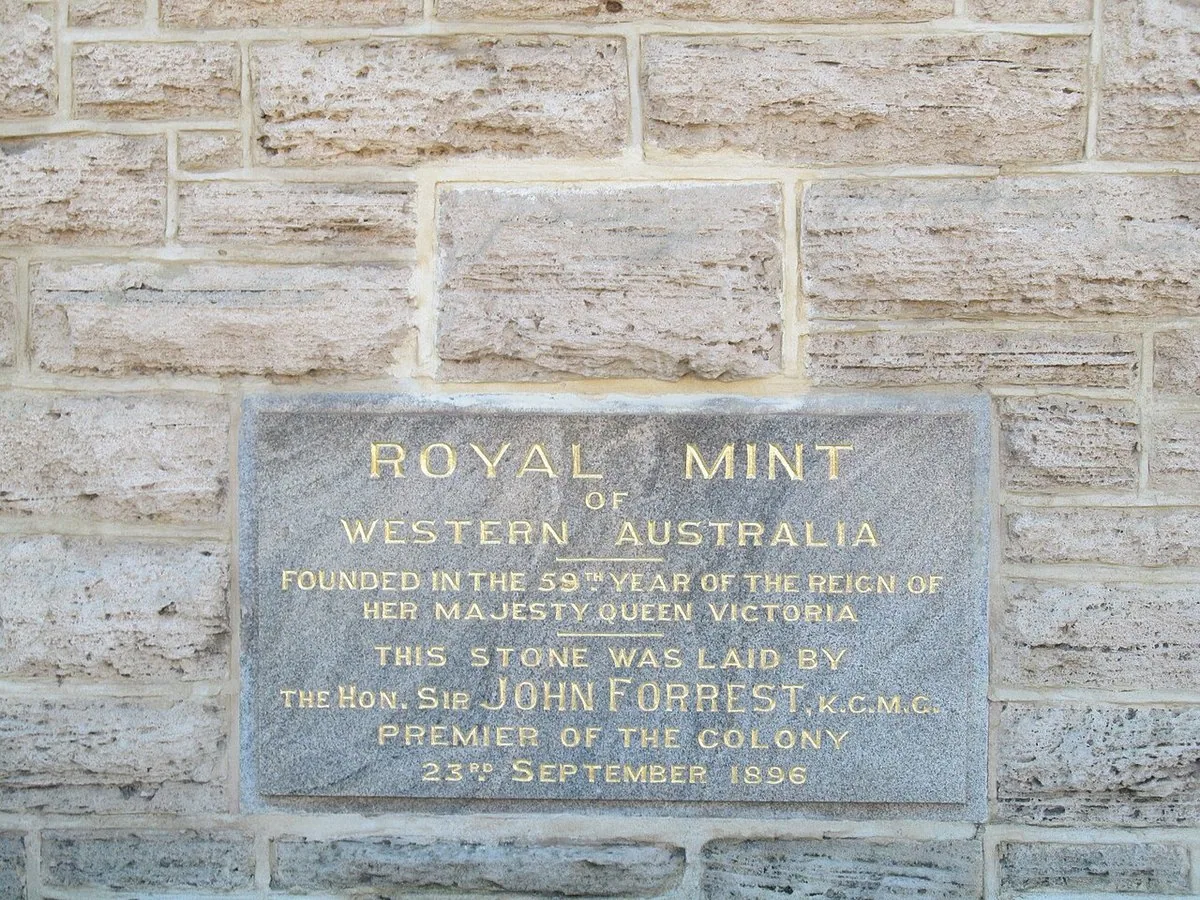
The Perth Mint struck sovereigns bearing a P mint mark.Image: OIC perth mint plaque 1 by User:Orderinchaos, Wikimedia Commons, licensed under CC BY-SA 3.0
In brief. Six branch mint marks: S Sydney (1871-1926), M
Melbourne (1872-1931), P Perth (1899-1931), I Bombay (1918 only), SA
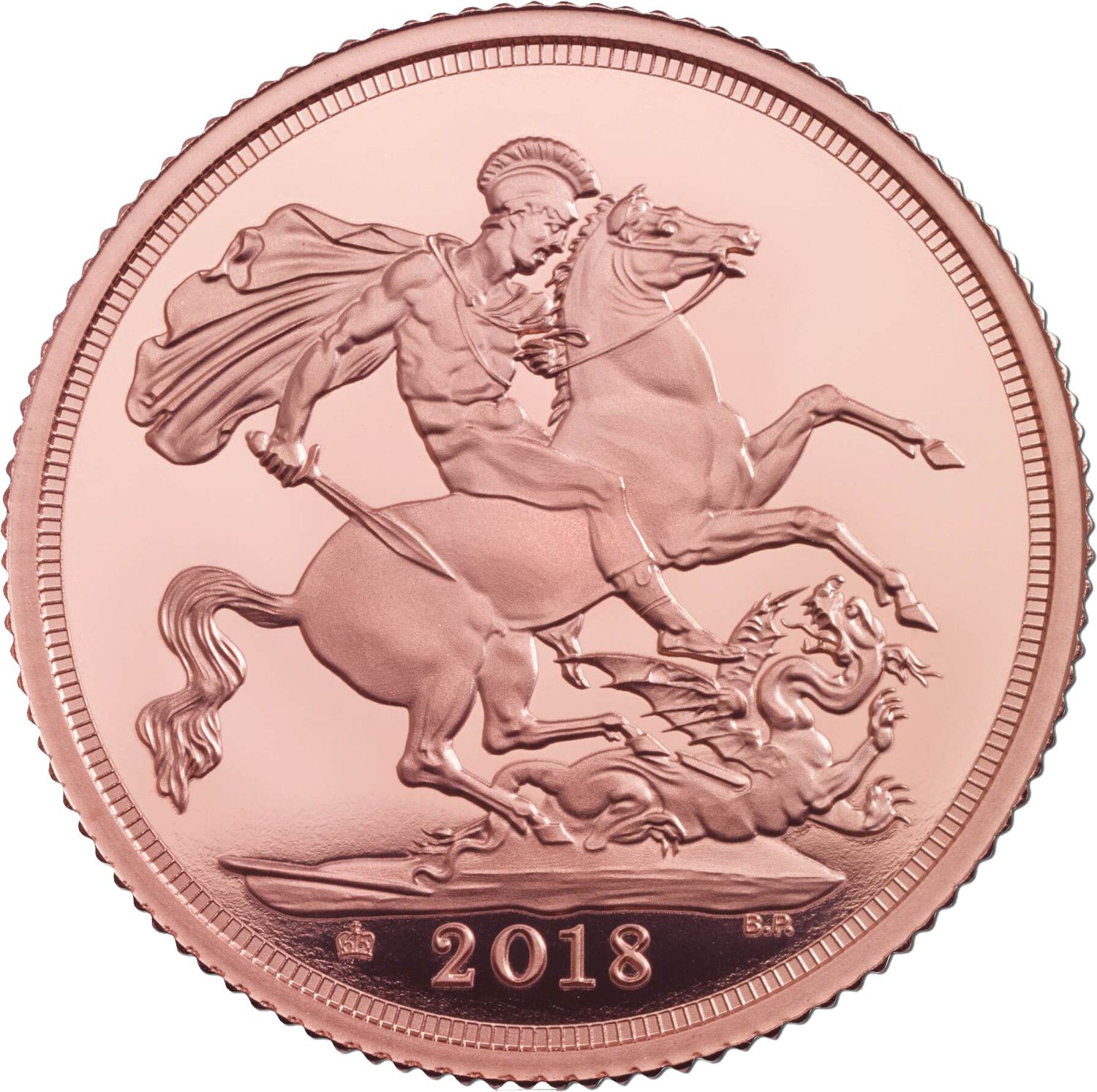
Pretoria (1923-1932), C Ottawa (1908-1919). London = no mark. Mint mark sits beneath rear hooves
of the horse on St George reverse, or below shield on shield-back. Premiums: S +5-15%,
M +10-25%, P +15-30%, SA +20-40%, I +200-400%,
C +variable, often huge.
WatchThe Hidden Mint Marks on British Sovereign GoldWhere to find hidden mint marks on sovereigns (TheCoinGeek) Video: TheCoinGeek on YouTube
Where to find the mint mark
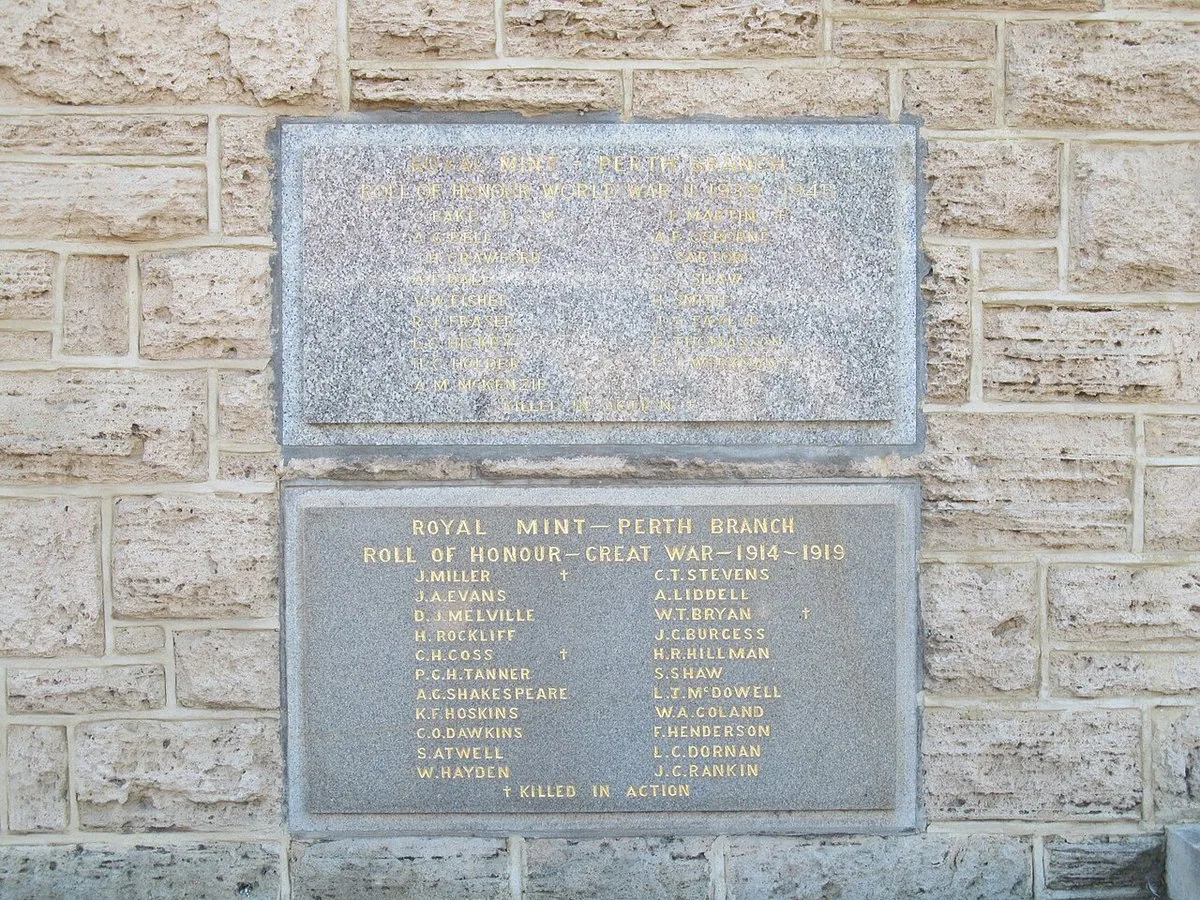
The Perth Mint, which struck sovereigns with a P mint mark.Image: OIC perth mint plaque 2 by User:Orderinchaos, Wikimedia Commons, licensed under CC BY-SA 3.0
Established to convert Australian gold-rush bullion directly to coin without shipping to London. Sydney sovereigns
are the most accessible branch-mint pieces; common-date Jubilee Head and Veiled Head Victoria sovereigns trade at
5-15% over London equivalents. Key dates: 1871 S type 1 reverse (first year, key date) at £850-1,500;
1879 S at £800-1,400. Sydney Mint closed 12 January 1926.
M, Melbourne Mint, Australia (1872-1931)
The largest of the Australian branch mints. Common Melbourne sovereigns trade at 10-25% over London equivalents.
Key date: 1872 M shield-back at £3,500-6,000+ in problem-free condition (the rarest year);
1885 M shield-back half sovereign at £2,500-4,500. Melbourne struck the highest total
sovereign mintage of any branch mint, over 100 million pieces.
P, Perth Mint, Australia (1899-1931)
The youngest Australian branch mint, established to serve Western Australian gold finds. Perth sovereigns trade
at 15-30% over London. Key date: 1899 P first-year at £500-1,200; 1920 P
(very low mintage) at £1,800-3,500. The Perth Mint still operates today as a numismatic and bullion mint
(it produces modern Britannia and Lunar series for the Royal Australian Mint and ANZ markets).
I, Bombay Mint, India (1918 only)
The rarest branch mint by years of operation: only 1918. Struck during WWI to provide gold
currency in India when shipping from London was disrupted by U-boat warfare. Mintage 1,294,372. The 1918 I
sovereign is the most-collected branch-mint piece globally and trades at £800-2,000+ in common
grade, £3,000-5,000+ in MS-63, £8,000+ in MS-65. The premium is driven by demand from both
British and Indian collectors. The mint mark "I" sits beneath the rear hooves of the horse, slightly larger and
more deeply struck than the Australian S/M/P marks. This is the only year the Bombay Mint struck sovereigns.
SA, Pretoria Mint, South Africa (1923-1932)
Established to convert South African mine gold directly to coin. SA sovereigns trade at 20-40% over London.
Key date: 1923 SA (first year, low mintage) at £800-1,800; 1932 SA
(final year, lowest mintage) at £3,000-6,000+. The Pretoria Mint closed for sovereign production in 1932
but continued striking other coins; today the South African Mint produces the Krugerrand bullion series.
C, Ottawa Mint, Canada (1908-1919)
The smallest branch mint by total sovereign output. Ottawa sovereigns are the rarest branch-mint pieces by date.
The famous 1908 C proof sovereign (mintage 636) is the rarest branch-mint sovereign and one of
the rarest modern British coins; recent Heritage Auctions realisation: £185,000+.
Common-date Ottawa sovereigns (1911 C, 1916 C, 1917 C) trade at £1,500-3,000. The 1916 C
is the standout rarity at £15,000-30,000 in MS-grade. Ottawa Mint closed for sovereign production in 1919.
Six branch mint marks have been used on full sovereigns: S (Sydney, Australia), M (Melbourne, Australia), P (Perth, Australia), I (Bombay/Mumbai, India), SA (Pretoria, South Africa), C (Ottawa, Canada). Sovereigns struck at the London Royal Mint carry no mint mark. The mark appears on the reverse of all post-1871 sovereigns immediately below the rear hooves of the horse on the St George and Dragon design (or below the date or shield on shield-back issues, depending on the design year). The mint mark is the most important rarity factor for any sovereign trading at premium over melt.
Where is the mint mark on a sovereign?
Three locations depending on the design year. St George and Dragon reverse (1871-onwards): the mint mark appears on the ground beneath the rear hooves of the horse, immediately above the date. Shield-back reverse (Victoria 1838-1887, Edward VII rare): the mint mark appears below the shield, on the wreath. 1893 transitional: some sovereigns of this date show the mark in unusual locations during the design transition. The mark is small (typically 1.5-2 mm tall) and is best identified under 5x magnification. Get the location wrong and you may miss the mark; check both standard locations on any sovereign you suspect carries one.
Are mint mark sovereigns worth more?
Yes, substantially more than London no-mint-mark equivalents. The branch mints produced lower volumes and the surviving population is smaller, particularly for early dates. Typical premium: S-mint Sydney sovereigns trade at 5-15% over London equivalents in common dates; M-mint Melbourne 10-25% over; P-mint Perth 15-30% over; SA-mint Pretoria 20-40% over; I-mint Bombay (1918 only) 200-400% over; C-mint Ottawa varies wildly by date. For specific key dates the premium can be vastly higher, the 1908 C-mint Ottawa proof sovereign realised £185,000+ at Heritage in 2024.
Which mint mark sovereigns are the rarest?
The 1918 I (Bombay) sovereign is the only sovereign struck at the Bombay Mint and is the most-collected branch-mint piece. Mintage 1,294,372, not low by mintage standards but the survival rate is poor and demand is huge (every Indian and British sovereign collector wants one). The 1908 C (Ottawa) proof sovereign is the rarest branch-mint sovereign, mintage of just 636 specimens, making it one of the rarest modern British coins; auction realisations £100,000-185,000+. Among Australian branch mints, the 1872 M Melbourne shield-back and 1899 M young head Victoria sovereign are key dates trading at £3,000-8,000.
Why did sovereigns get struck overseas?
The British Empire established branch mints in the gold-producing dominions to convert local mined gold directly into coin without shipping bullion to London. Sydney (1871-1926) and Melbourne (1872-1931) served the Australian gold rushes. Perth (1899-1931) served Western Australia. Ottawa (1908-1919) served the Yukon and Klondike gold finds. Bombay (1918 only) was a single emergency strike during WWI to provide gold currency in India when shipping from London was disrupted. Pretoria (1923-1932) served South African mines. All branch mints closed during the Great Depression as gold-coin circulation ended.
How can I tell a real mint mark from a fake one?
Three checks. (1) Strike depth: a genuine mint mark is struck simultaneously with the rest of the reverse and shows the same depth and crispness. A counterfeit mark added later (engraved into a London no-mint-mark coin) will sit in a different relief plane. (2) Position: genuine marks appear in the exact specified location for that date and design. Off-position marks indicate a counterfeit or a re-engraved coin. (3) Surrounding metal: tooling marks around the mint mark (under 10x magnification) indicate post-strike alteration. For any high-value branch-mint sovereign (£500+), professional grading by PCGS or NGC is essential, both graders specialise in authenticating sovereign mint marks.
Are mint mark sovereigns CGT-exempt?
Yes. All British sovereigns struck for the British Empire are UK legal tender at face value (£1) regardless of mint of origin. This means all branch-mint sovereigns are capital-gains-tax exempt for UK residents on any future profit. The exemption applies whether the sovereign was struck in London, Sydney, Melbourne, Perth, Bombay, Ottawa or Pretoria. The CGT exemption combined with the mint-mark scarcity premium makes branch-mint sovereigns one of the most tax-efficient gold investments available to UK collectors. See our CGT-exempt UK coins guide for the full list.
How do I build a complete mint-mark sovereign set?
A complete six-mint-mark Victoria Jubilee Head set (S, M, P [post-1899], no-letter London, plus the rare I and C as additions) is achievable but expensive. A typical entry-level approach is one common date from each mint: 1887 S (Sydney Jubilee), 1887 M (Melbourne), 1899 P (Perth first year), 1918 I (the only Bombay), 1925 SA (Pretoria), and 1908 C (Ottawa). The 1908 C and 1918 I are the cost drivers; expect to spend £15,000-30,000+ for a six-mint set in problem-free common dates. Most collectors content themselves with three or four mints rather than the full set.
What about half sovereign mint marks?
Half sovereigns also carry branch mint marks. S (Sydney 1871-1916), M (Melbourne 1873-1915), P (Perth 1899-1920) and SA (Pretoria 1923-1926) all struck half sovereigns. The Bombay Mint did not strike half sovereigns; the Ottawa Mint did not strike half sovereigns either. Half sovereign mint-mark premiums are similar to full sovereign: 10-30% over London equivalents in common dates, much higher for key dates. The 1923 SA half sovereign and 1885 M half sovereign are the standout rarities. See our half sovereign values UK guide for the full breakdown.
When did the London mint resume striking sovereigns?
The London Royal Mint stopped striking sovereigns for circulation in 1917 as part of WWI gold-recall measures (private gold ownership was restricted under the Defence of the Realm Act). London sovereign production resumed only briefly: 1925 (limited), 1937 (proof only for the Coronation), and then nothing until 1957 onwards when bullion sovereigns resumed for export. From 1957 to today, London sovereigns carry no mint mark. Branch mints continued striking until the early 1930s (Sydney closed 1926; Melbourne and Perth 1931; Pretoria 1932), then closed permanently. Any sovereign dated 1933-1956 is exceptionally rare and almost all are pattern strikes or test pieces.
We use cookies to keep you signed in, a first-party cookie to see how the site is used, and Google Analytics.
No thanks turns off our own record; you can change it any time in your account.
Cookie Policy