The 1817 Sovereign: Britain's First Modern Gold Coin
On 1 October 1817, the Royal Mint struck the first modern UK gold sovereign, designed by Italian-born Benedetto Pistrucci, weighing 7.988 g of 22-carat gold, bearing the King George III crowned bust on the obverse and St George spearing the Dragon on the reverse. Mintage: 3,235,239 pieces. The 1817 issue is the start of an unbroken 200+ year design tradition that runs through every Pistrucci St George sovereign to today's Charles III definitive. This guide covers the historical context, the spear vs sword variants, authentication, and the realised auction prices that make the 1817 sovereign one of the most-collected single-year UK coins.
Why 1817 matters, the first modern sovereign
The 1817 sovereign is the start of the modern series. Every sovereign struck since, over two centuries of branch-mint, monarch-portrait, anniversary, jubilee and Coronation issues , descends directly from this single inaugural year. Three things make 1817 the foundational date:
- It replaced the guinea. Before 1817 the guinea (face value 21 shillings, 8.39 g of 22-carat gold) was the dominant British gold coin. The Great Recoinage Act of 1816 retired it in favour of a clean 20-shilling sovereign, decimally aligned to the new monetary settlement and easier to use in commerce.
- It set the specifications still used in 2026. 7.988 g, 22-carat, 22.05 mm diameter. These figures have not moved in 200 years, one of the most consistent monetary standards in modern history. A modern Charles III sovereign is mechanically identical to an 1817 George III sovereign in everything but date and obverse portrait.
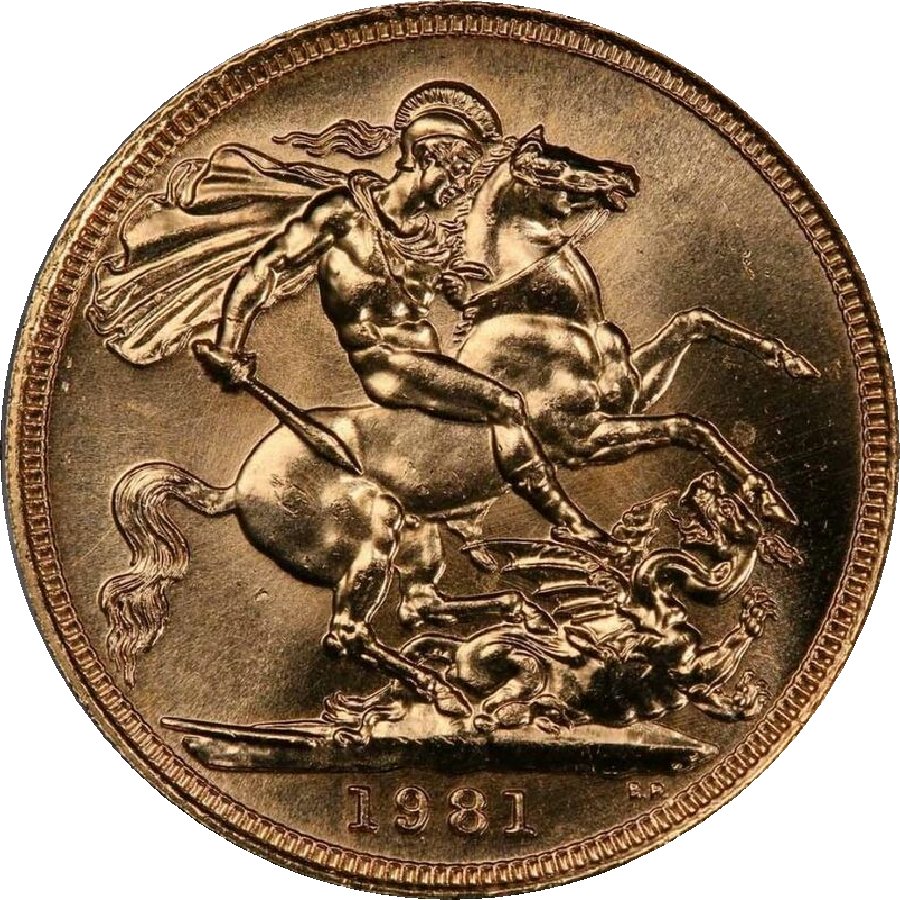
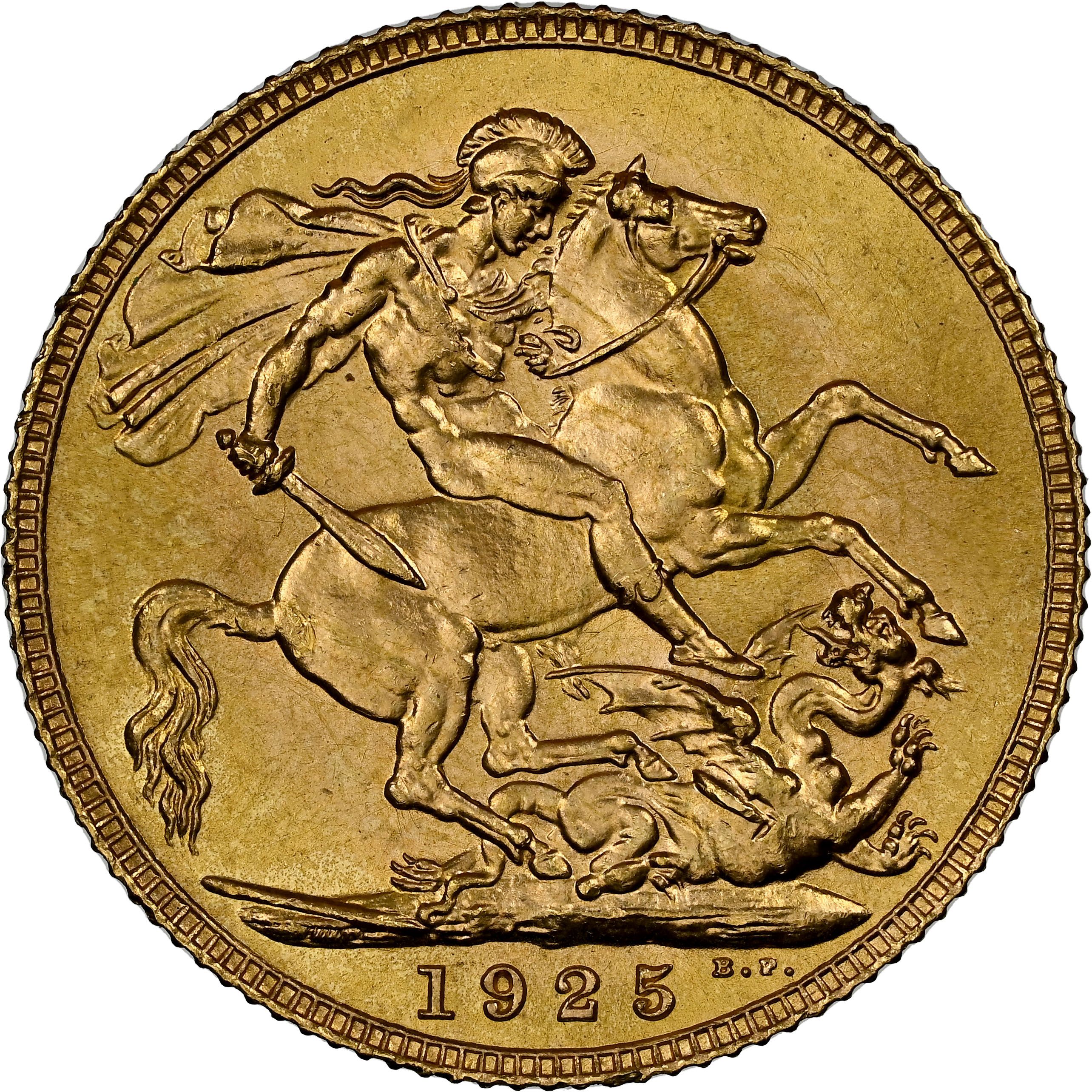
- It introduced Pistrucci's St George. The Italian-born Royal Mint engraver Benedetto Pistrucci's St George and Dragon reverse first appeared on the 1817 sovereign and has remained the canonical sovereign reverse ever since. No other coin design in any major world currency has run continuously for as long.
Mintage in 1817 was 3,235,239, a large figure that reflects the urgent post-Napoleonic need to recoin Britain's gold supply. Survival rates for 1817 sovereigns are relatively healthy compared to other early dates because of that mintage, but high-grade survivors are scarce: sovereigns circulated heavily in the 19th century and most surviving 1817s show meaningful wear.
Pistrucci's St George reverse, design DNA from 1817 to 2026
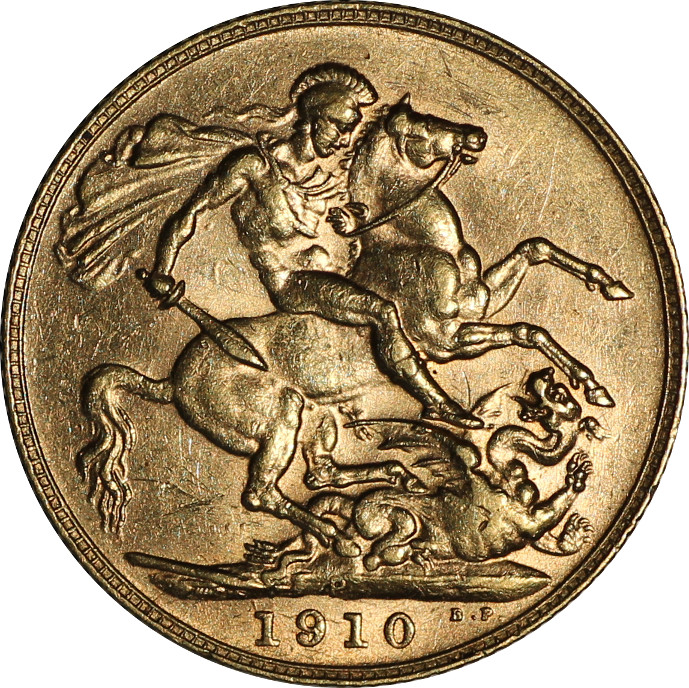
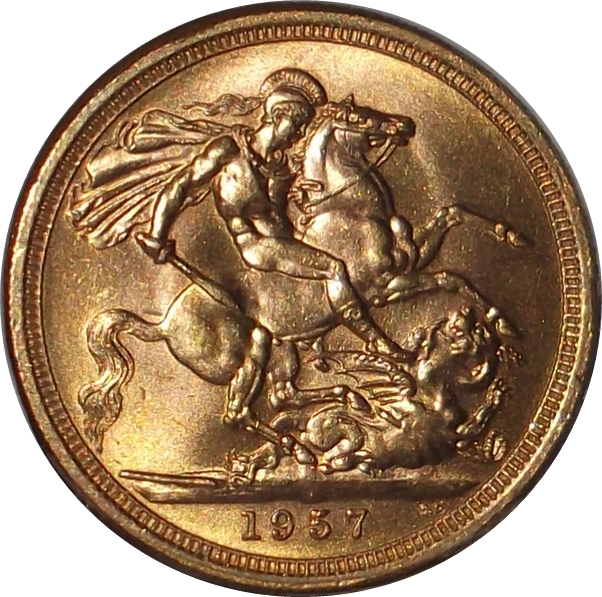
Pistrucci was hired by the Royal Mint specifically to design the new gold sovereign. His brief was to produce a confident, classical, post-Napoleonic image, British victory wrapped in Greco-Roman idiom. The result, struck in 1817, was a knight-and-dragon composition pulled from the iconography of Saint George, Britain's patron saint, executed in a deeply-cut classical relief that drew directly on Roman imperial coinage.
Two specific things distinguish the 1817 reverse from every later year:
- The spear version. The 1817 reverse shows St George holding a raised spear, with the lance shaft visible above the dragon. From 1820 onwards, Pistrucci redesigned the figure with a sword in place of the spear, and improved the dragon's pose. The 1817 spear version is a one-year-only design variant. (Some 1818 and 1819 transitional sovereigns also exist with the original spear treatment but at much smaller surviving populations.)
- Pistrucci's "WWP" cipher. The 1817 sovereign carries a tiny Pistrucci designer's mark on the ground line. Later years use "B.P." or "BP" exclusively. The 1817 cipher is part of the design fingerprint that helps authenticate first-year examples.
For the deeper Pistrucci design history including the spear-to-sword transition, the various laureate / bare-head obverse pairings, and how the design was preserved through reigns, see our Pistrucci St George sovereign guide.
The 1817 sovereign in numbers
| Specification | Value |
|---|---|
| Mintage | 3,235,239 |
| Total weight | 7.988 g |
| Pure gold content | 7.322 g (0.2354 troy oz) |
| Fineness | 22-carat / .9167 |
| Diameter | 22.05 mm |
| Thickness | ~1.52 mm |
| Edge type | Milled (reeded), unbroken |
| Obverse | George III crowned bust, designed by Thomas Wyon Junior |
| Reverse | Pistrucci St George spearing the dragon (spear version) |
| Mint | Royal Mint, London (Tower Hill) |
| Strike date | From 1 October 1817 |
These specifications became the template. Every standard-format full sovereign struck since 1817, whether George IV, Victoria, Edward VII, George V, George VI, Elizabeth II or Charles III, matches them. Diameter, weight and fineness have not been altered.
Surviving examples and grade rarity
Of the 3.2 million 1817 sovereigns struck, the surviving population today is a small fraction , estimated by specialist references in the 10,000-30,000 range across all grades, though precise figures are inherently unknowable. The grade distribution is sharply skewed:
- Fine to Very Fine (VF, c. .25-.35 on the Sheldon scale equivalent), the bulk of surviving examples. Even circulation wear shows sharp design points by modern standards. Realised range across the past 18 months at major UK auctions: £800-1,500.
- Extremely Fine to About Uncirculated (EF-AU, c. .45-.55), meaningfully scarcer; a clean unworn-portrait example with bright fields. Realised range: £2,500-6,000.
- Mint State (MS62-65), auction-house territory. NGC and PCGS census data show very few examples certified at MS63 and above. Realised range: £15,000-40,000 at MS62-63; £40,000-100,000+ at MS64-65 across the past several years.
- Proof / pattern variants, extreme rarity. Pattern 1817 sovereigns with engraving variants exist in single-digit known populations and trade well into six figures when offered. These pieces are in major institutional collections more often than in private hands.
The general rule: 1817 sovereigns in everyday collectable grade are accessible but not cheap; high-grade examples are auction-house material and require professional grading to realise market value. For grading principles and Sheldon-scale calibration see our how to grade a coin guide.
1817 vs 1820 vs 1825, the early-modern sovereign progression
The first decade of the modern sovereign is easier to read once the design changes are understood:
| Year | Monarch | Reverse design | Mintage | Realised range (collectable grade) |
|---|---|---|---|---|
| 1817 | George III | Pistrucci St George (spear version) | 3,235,239 | £800-1,500 |
| 1818 | George III | Spear (transitional) | 2,347,230 | £700-1,400 |
| 1819 | George III | Spear (transitional) | ~10 known | £100,000-180,000+ |
| 1820 | George III | Pistrucci sword version (redesign) | 931,994 | £600-1,200 |
| 1821 | George IV | Pistrucci sword | 9,405,114 | £500-900 |
| 1822 | George IV | Pistrucci sword | 5,356,787 | £500-900 |
| 1823 | George IV | Pistrucci sword | 616,770 | £700-1,500 |
| 1824 | George IV | Pistrucci sword | 3,767,904 | £500-900 |
| 1825 | George IV (laureate) | Shield reverse (new) | 4,200,343 | £600-1,100 |
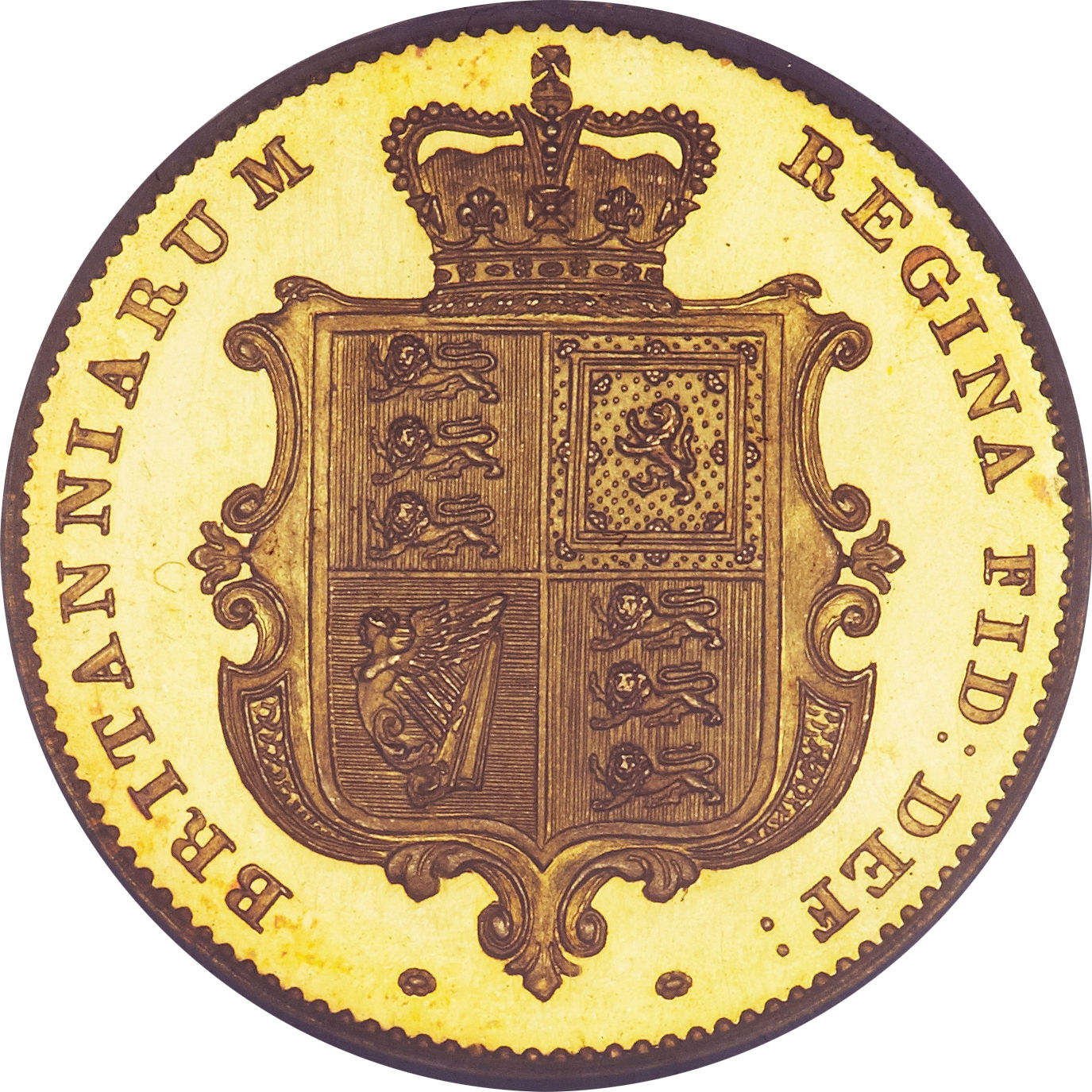
The progression: 1817 launches the modern sovereign with the spear reverse; 1820 marks Pistrucci's own redesign to a sword; 1821 marks George IV's accession; 1825 swaps Pistrucci's St George out entirely for a shield reverse, which dominates from George IV through William IV and Victoria's Young Head Shield era until Pistrucci's design returns at the 1871 reissue. The 1819 George III sovereign (around ten known) is the standout rarity of the entire window and the keystone of any pre-1838 sovereign collection.
Buying authenticated 1817 sovereigns today
Counterfeit 1817 sovereigns are a real and ongoing risk. The combination of high market value, relatively well-known design, and the existence of capable counterfeiting infrastructure (especially for the deceptive cast and electrotype work that emerged in the late 19th and 20th centuries) means that buying raw is not the right approach for most buyers. Three buying channels:
- UK numismatic auction houses, Spink, Baldwin's and Noonans are the primary venues. Expect 4-12 1817 sovereigns across grades at any quarterly British coin sale. Hammer plus buyer's premium (typically 22-26%) sets the all-in cost.
- Specialist dealers, BNTA-member dealers including Coincraft, the Coin Cabinet and selected regional specialists hold 1817 inventory and can match grade and eye appeal to budget. Pricing is typically 10-25% above auction realised but buyers get return rights and curated selection.
- Slabbed examples on eBay UK and Heritage (US), PCGS and NGC slabs appear regularly. The slab guarantees authenticity and grade; raw eBay listings should be treated with significant scepticism at this denomination.
Slabbed (PCGS / NGC / CGS) vs raw, what each sells for
Slab premium is meaningful at this tier:
- NGC / PCGS slabbed VF-EF, £1,200-2,500. Raw VF examples sit at £800-1,500, a 30-40% slab premium reflecting authentication confidence and resale liquidity.
- NGC / PCGS slabbed AU58-MS62, £3,500-15,000. Raw equivalents (very few exist; most clean examples have been graded) might trade at 20-35% discount to slab.
- CGS UK slabbed, CGS UK is the British grading service and uses a 100-point scale rather than 70. Pricing for CGS-graded 1817 sovereigns sits modestly below equivalent NGC / PCGS in the UK market because the international resale audience is smaller, but the grading is regarded as authoritative.
- Raw uncertified, only worth buying if the seller is a recognised specialist (Spink, Baldwin's, Coincraft) and you intend to send the coin for grading post-purchase. Otherwise the authentication risk is meaningful.
For high-value buyers, the slab is effectively required; for collectable-grade buyers, raw is fine provided the source is credible. See our how to spot a fake sovereign guide for the home-test protocol when authenticating raw examples.
Featured sovereigns on MyCoinage
Related guides
- Gold sovereign values UK, the full sovereign-family price reference, bullion to rare-date.
- Pistrucci St George sovereign, the deeper design history of the spear and sword reverses.
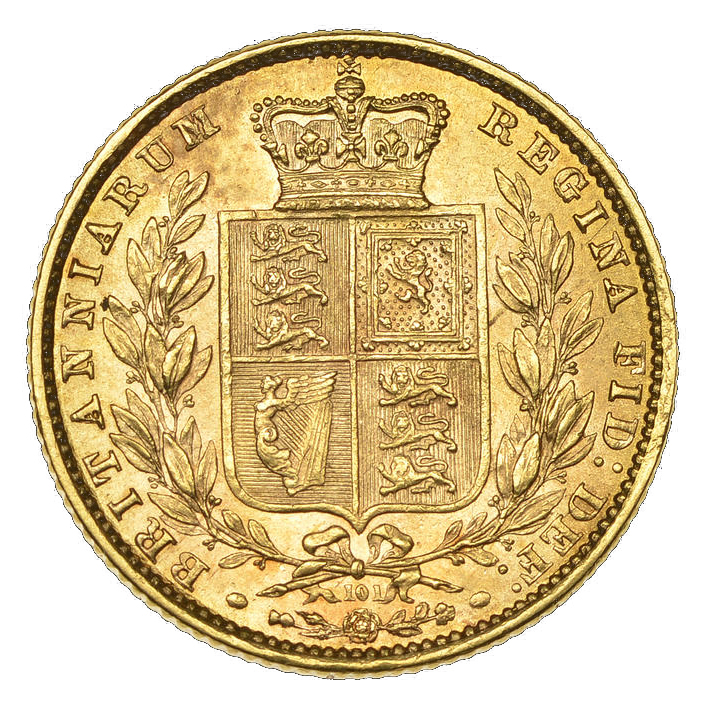
- Shield-back sovereign, the 1825-1874 reverse that interrupted the Pistrucci era.
- Victorian sovereign values, the next phase of the modern series.
- How to spot a fake sovereign, counterfeit detection protocol for early sovereigns.