Specific Gravity Test for Gold Coins: The 3-Minute Authentication
Specific gravity (SG) is the simplest non-destructive test for gold coin authenticity, requiring only a digital kitchen scale, a glass of water and a piece of thread. Pure 24-carat gold has a density of 19.32 g/cm³; 22-carat sovereign alloy is 17.71 g/cm³. Almost no other material lands close to these figures, lead is 11.34, brass is 8.5, copper is 8.96, steel is 7.85. The SG test catches 95%+ of counterfeit gold coin categories at home in three minutes, with no chemicals and no damage to the coin. The single weakness is tungsten (19.25 g/cm³, just 0.4% off pure gold) and high-quality struck-from-real-die forgeries. This guide covers the procedure, the formula, the tolerances, and the complementary tests that close the SG test’s blind spots.
What is specific gravity?
Specific gravity is the density of an object relative to water. By the formal definition pure water at 4°C has SG = 1.000 exactly, and every other material is measured as a ratio against this reference. SG is dimensionless: a metal with SG 19.32 is 19.32 times denser than water.
The principle dates back to Archimedes of Syracuse (c. 250 BC) and is the original application of his "eureka" buoyancy discovery: an object submerged in water displaces a volume of water equal to its own volume, and the apparent loss of weight equals the weight of water displaced. Knowing the object’s mass in air and its apparent mass when submerged is enough to calculate its density without any direct volume measurement, ideal for irregular shapes like coins.
For coin authentication, the SG test is the single most useful non-destructive technique because the density of pure gold (19.32 g/cm³) and 22-carat gold alloy (17.71 g/cm³) are extreme enough to be hard to fake with any common counterfeit material except tungsten.
Reference SG values for coins and counterfeit alloys
| Material | SG (g/cm³) | Comment |
|---|---|---|
| Tungsten | 19.25 | Defeats SG test (0.4% off pure gold). Mainly an issue with bars and large coins. |
| Pure gold (24-carat / .9999) | 19.30-19.32 | Britannia, modern Krugerrand 24-carat, Maple Leaf, IoM angel |
| Platinum | 21.45 | Higher than gold; uncommon counterfeit material |
| 22-carat gold alloy (.9167) | 17.65-17.78 | UK sovereign, half sovereign, double sovereign, quintuple sovereign |
| 21-carat gold alloy | 17.0-17.4 | Some Krugerrand-era pieces |
| 18-carat gold alloy (.750) | 15.2-15.9 | Jewelry; not coinage |
| 14-carat gold alloy (.585) | 13.0-14.0 | Jewelry; not coinage |
| Lead (gold-plated) | 11.34 | Gap of 6+ from sovereign; immediate fail |
| Copper (gold-plated) | 8.96 | Gap of 8.7+ from sovereign; immediate fail |
| Brass / bronze (gold-plated) | 8.4-8.7 | Most common cheap counterfeit material; immediate fail |
| Steel (gold-plated) | 7.85 | Caught earlier by magnet test; SG fail also obvious |
| Aluminium | 2.70 | Theatrical "stage gold"; obvious fail |
| Pure silver | 10.49 | For reference; SG test also works on silver coins |
| Sterling silver (.925) | 10.36 | UK pre-1920 silver coinage |
| 0.500 silver (1920–1946) | 9.6-9.8 | UK wartime debased silver |
Reference values from the London Bullion Market Association and the Royal Society of Chemistry materials database. Carat purity uses the international assay convention.
The math: SG = W_dry / (W_dry − W_wet)
The single equation behind the entire test:
SG = Wdry / (Wdry − Wwet)
Where:
- Wdry, mass of the coin in air, measured directly on the scale (in grams).
- Wwet, apparent mass of the coin when fully submerged in water, suspended from the scale by a thread (in grams).
- Wdry − Wwet, the buoyant force on the coin, equal to the mass of water displaced. Because water’s density is 1 g/cm³, this also equals the volume of the coin in cubic centimetres.
- SG, the dimensionless density ratio. Multiply by 1.000 g/cm³ to get density in g/cm³.
Worked example: a sovereign weighs 7.988 g dry. Submerged in water, the scale reads 7.537 g (a 0.451 g loss to buoyancy). SG = 7.988 / (7.988 − 7.537) = 7.988 / 0.451 = 17.71 , squarely in the genuine 22-carat sovereign range.
Counter-example: a "sovereign" weighs 7.988 g dry but submerged reads 7.069 g (a 0.919 g loss). SG = 7.988 / 0.919 = 8.69, the density of brass. The coin is gold-plated brass.
Tolerance and sources of error
For UK sovereigns the accepted tolerance is ±0.5% from the expected 17.71 figure, giving a working range of 17.62–17.80 g/cm³. Several factors influence practical precision:
- Surface tension on the suspension thread. The thread enters the water surface and creates a small downward pull from surface tension. This biases the apparent submerged weight downward and the calculated SG upward. Use a thinner thread (e.g. fishing line) to minimise.
- Air bubbles trapped on the coin surface. A typical sovereign with a milled edge can trap a few microlitres of air against the milling. These bubbles displace water and reduce the buoyant force, biasing SG upward. Tap the coin gently underwater to dislodge bubbles.
- Water temperature. Pure water at 4°C is exactly 1.000; at 20°C it’s 0.998; at 40°C it’s 0.992. The variation matters more for objects closer to water density; for gold (19+) the effect is <0.3% across the practical room-temperature range.
- Scale resolution. A 0.01 g scale on a 7.988 g coin gives 0.13% relative precision per reading. Compounded across both readings the SG calculation has approximately ±0.2% precision. A 0.1 g scale is too coarse for sovereign-sized coins; insist on 0.01 g resolution.
- Genuine wear and circulation loss. A heavily-circulated sovereign may have lost 0.05–0.1 g of metal to wear; the SG remains correct (alloy density is unchanged by wear), but the dry weight is reduced. Dry weight failure on an old circulated sovereign could mean wear, not a fake.
Kit needed
| Item | Specification | Approximate cost |
|---|---|---|
| Digital scale | 0.01 g resolution, 100 g+ capacity | £15, £30 |
| Calibration weight | 5 g and 10 g brass | £5, £10 |
| Glass of water | Tumbler, 200 ml+ | £0 (kitchen) |
| Thin thread / fishing line | Sub-0.5 mm; 6 lb test fishing line is ideal | £3, £8 |
| Microfibre drying cloth | Lint-free, lens-cleaning grade | £3, £6 |
| Calculator | Phone calculator app fine | £0 |
| Total | £25, £55 |
Suitable scales are sold as "milligram scale", "diamond scale" or "jewelry scale" by brands including Smart Weigh, Aweigh, Truweigh and ProAccurate. Always verify scale calibration with the included weight before testing, cheap scales drift over time, particularly after travel or temperature changes.
Step-by-step SG test procedure
The full procedure takes about 3 minutes per coin and is entirely non-destructive. Follow these steps in order; the order matters because dry weight needs to be measured first, before any contact with water.
- Weigh the coin in air. Place the coin directly on the digital scale at 0.01 g resolution. Record this reading as Wdry. For a genuine UK sovereign, expect 7.988 g ± 0.020 g. If the dry weight is out of spec, the coin has already failed the basic weight test and SG testing is unnecessary, reject the coin or escalate to professional grading.
- Set up the water suspension rig. Place a glass of clean (ideally distilled) water beside the scale, or on a platform above the scale’s pan if your scale has an under-pan hook. Tie a length of thin thread or fishing line through the coin (if the coin has a hole), or fashion a small thread loop around the coin’s edge. The thread should be long enough to suspend the coin while keeping the rest of the rig out of the water.
- Suspend the coin fully submerged. Lower the coin into the water until it’s completely submerged but not touching the walls or bottom of the glass. Tap the coin gently with the thread to dislodge any air bubbles clinging to the surface (particularly around the milled edge). Allow the water to settle for 5 seconds.
- Record the submerged weight. Read the digital scale display while the coin remains suspended in water. The reading will be approximately 0.45 g lower than the dry weight (for a genuine sovereign). Record this as Wwet. Repeat the measurement 2–3 times to confirm the reading is stable; if the reading drifts, you have an air-bubble or thread-tension issue.
- Calculate SG. Apply the formula SG = Wdry / (Wdry − Wwet). For a genuine 22-carat UK sovereign, expect a result of 17.65–17.78. Pure 24-carat gold reads 19.30–19.32. Anything below 17.5 or above 17.9 is outside the acceptable range and warrants further investigation.
- Dry the coin and verify. Remove the coin from water and dry thoroughly with the microfibre cloth, then air-dry for 2 minutes. Re-weigh the now-dry coin as a sanity check; the dry weight should match the original Wdry within 0.01–0.02 g. If the post-test weight differs more than that, you may have introduced contamination or moisture.
When the SG test fails
The SG test is necessary but not sufficient. Three scenarios where SG alone misleads:
- Tungsten-core gold-plated counterfeits. Tungsten (19.25) is just 0.4% off pure gold (19.32). A solid tungsten core gold-plated to .9999 fineness will test within the SG range of pure gold and pass an SG test alone. Practical note: tungsten-core fakes are mainly an issue with gold bars and large coins (1 oz+). Tungsten-core sovereigns specifically are rare because the small format makes the fabrication economics marginal, the cost of machining a tungsten core to within 0.05 g of the target weight, plus accurate gold plating, exceeds the typical £30–£50 numismatic premium of a bullion sovereign over melt. They do exist but are not the dominant counterfeit category.
- Cast-from-real-die forgeries struck in correct-fineness gold. A counterfeiter using legitimate 22-carat alloy and either casting from a captured Royal Mint die or striking from a high- quality fake die will produce a coin of correct weight, diameter and density. The SG test passes, but the coin is still counterfeit. Detection requires edge inspection (mould seam on cast pieces), die analysis under magnification, and ultimately professional grading.
- Genuine coins with adhered foreign material. A genuine sovereign with hardened wax, mounting epoxy, solder residue or polish on the surface will displace more water than the gold alone, biasing SG downward. The coin reads as a fake when it’s genuine but contaminated. Always inspect visually under magnification and gently clean any visible residue (warm soapy water only, never abrasive) before SG testing.
Combine SG with magnet, ring, edge and calliper tests
The SG test is one of five complementary authentication tests that together cover every counterfeit category except struck-from-real-die forgeries (which require professional grading). The full sequence:
- Magnet test (5 seconds). Hold a strong neodymium magnet near the coin. Gold and copper are non-ferrous; any pull means a steel or iron core. Catches plated-steel fakes immediately.
- Calliper diameter (10 seconds). 22.05 mm ± 0.05 mm for a sovereign. Cast counterfeits typically run 0.1–0.3 mm undersize because of cooling shrinkage in the cast.
- Edge inspection at 10x magnification (30 seconds). Cast counterfeits show a faint horizontal seam where the two halves of the mould met; struck genuine pieces never do. This is the single most reliable cast-fake detector.
- Ring / sound test (10 seconds). Balance the coin on a fingertip and tap with a second coin or pencil. A genuine sovereign rings clearly with a high-pitched silvery tone for ~2 seconds. Counterfeits typically thud or have a much shorter decay. Tungsten-core gold-plated coins ring noticeably differently from solid gold, sharper but die faster.
- Specific gravity test (3 minutes). The procedure above. Confirms metal density.
Combined, these five tests catch every counterfeit category except very high-quality struck-from-real-die forgeries. For coins worth £500+, escalate to PCGS, NGC or CGS UK professional grading, which adds expert die analysis, provenance research and encapsulation.
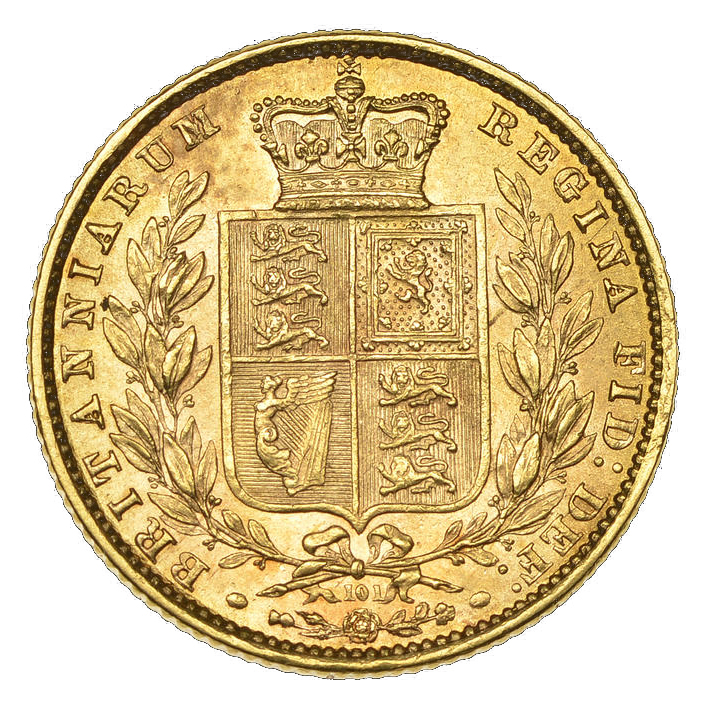
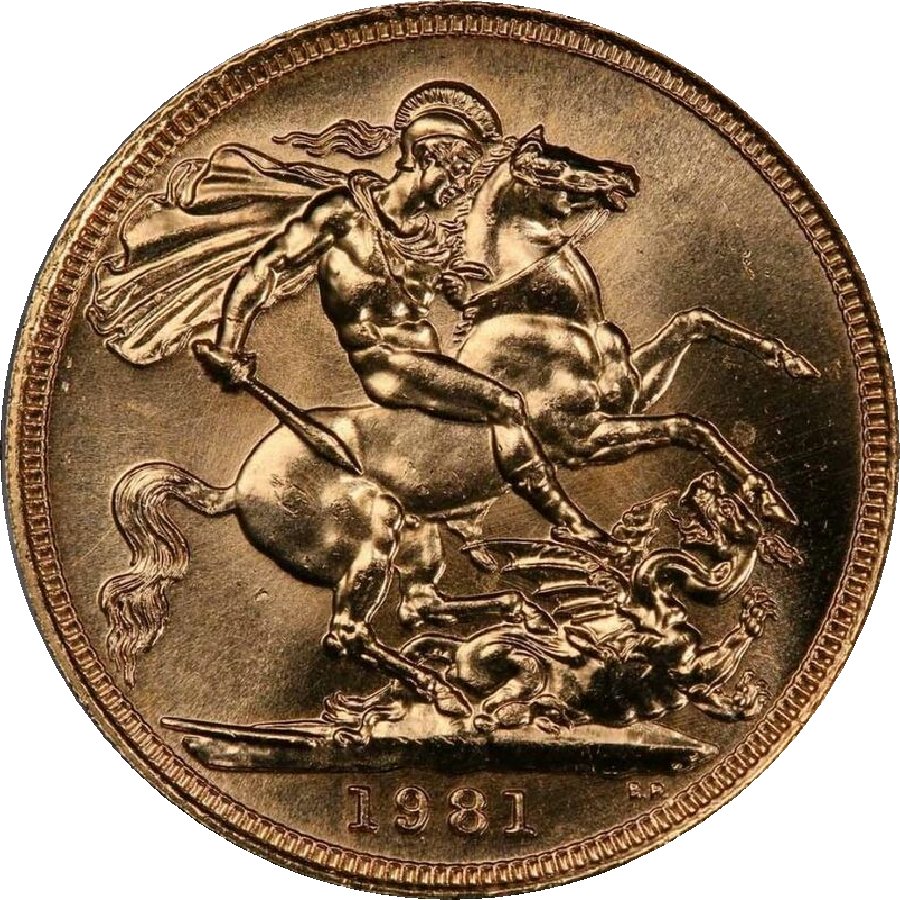
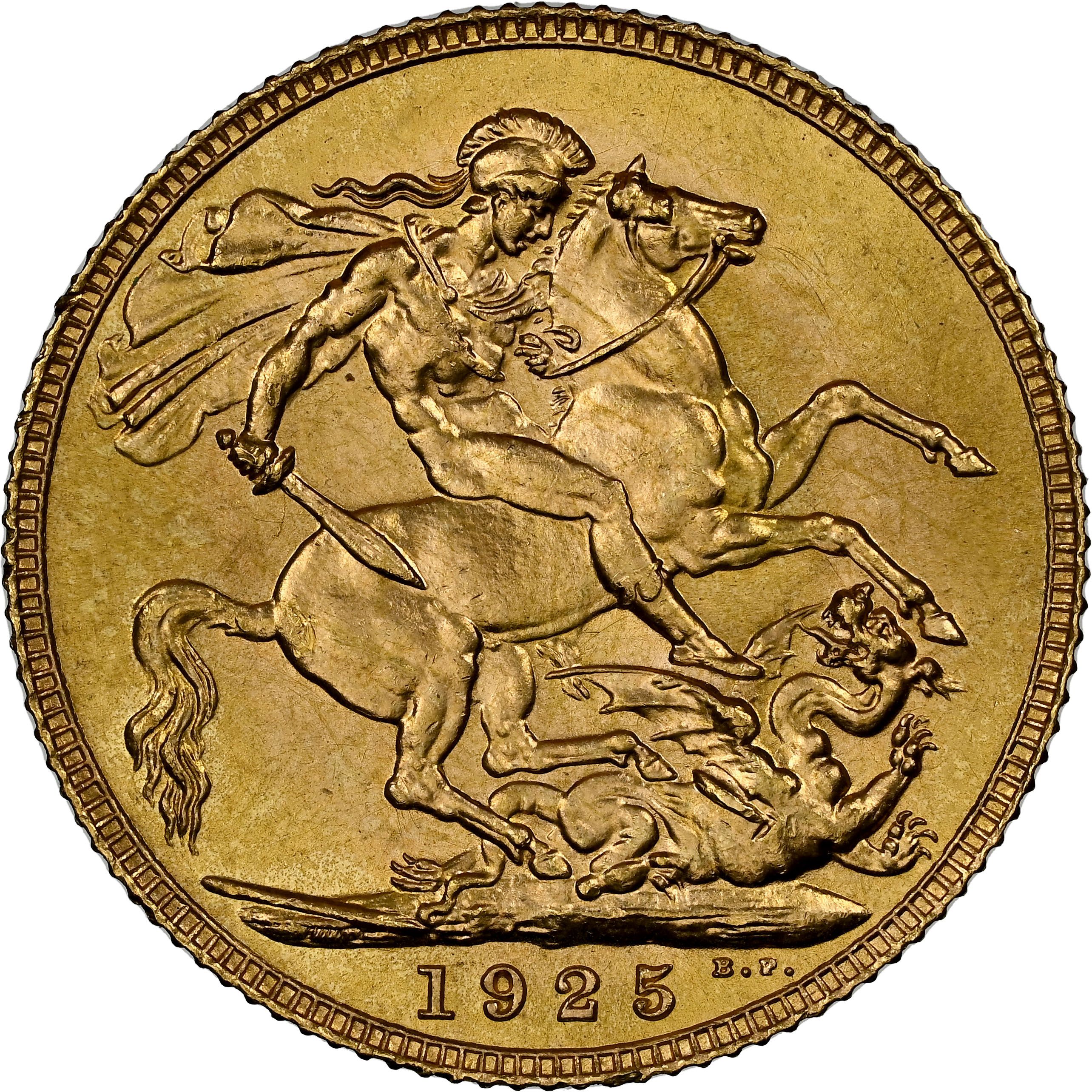
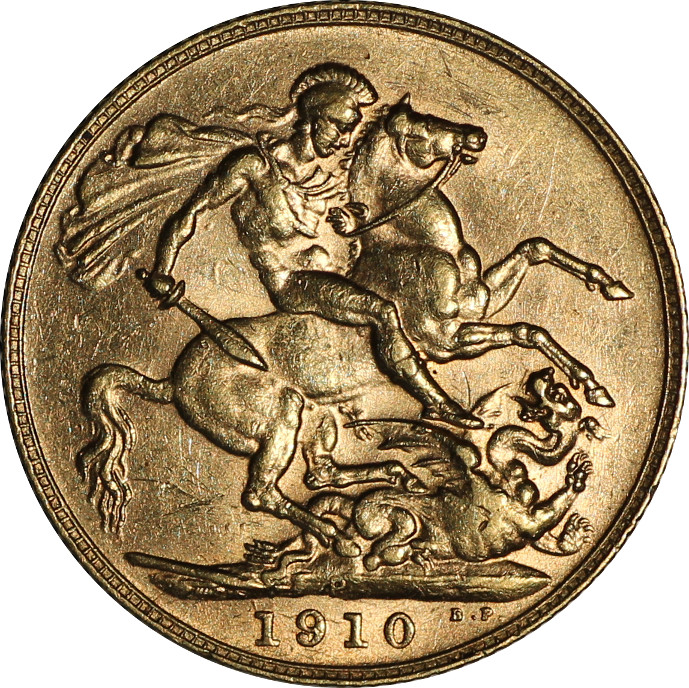
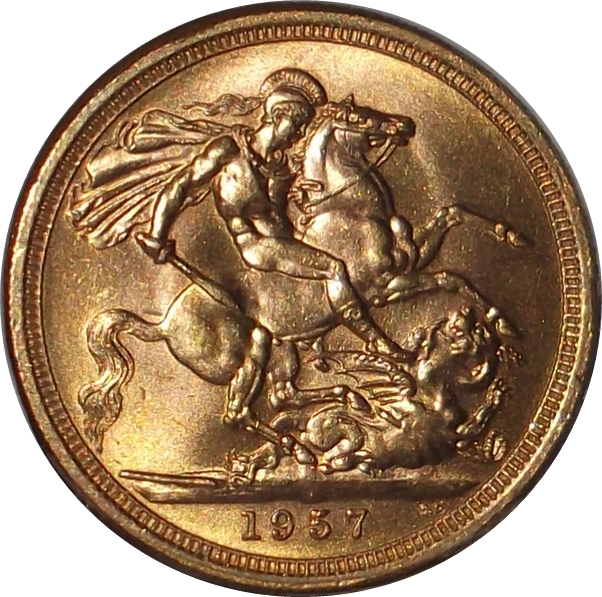
Featured sovereigns on MyCoinage

Related guides
- How to Spot a Fake Gold Sovereign, the six-test sovereign authentication framework that includes the SG test.
- How to Authenticate a Coin, the wider authentication workflow for any UK coin.
- How to Spot Fake British Coins, the five-test framework for non-gold UK coinage.
- Sovereign Weight & Specifications, the dry-weight reference table the SG test starts from.
- Gold Sovereign Values UK, what authenticated sovereigns are actually worth.
- Junk Silver UK Coins, the SG test also works for silver authentication (see the table above).
- 1920 Silver Transition UK, sister technique guide on identifying pre-1920 sterling vs post-1920 .500 silver via density and other signals.