Guide
Edward VII Sovereign Values: 1902–1910 Complete Guide
King Edward VII reigned for just 9 years, one of the briefest modern British reigns, but his sovereign coinage from 1902 to 1910 covers some of the most-collected single-monarch gold issues in numismatic history. The De Saulles uncrowned portrait paired with Pistrucci's 85-year-old St George reverse makes Edwardian sovereigns aesthetically distinct; the famous 1902 Coronation matt proof set and the legendary 1908 C Ottawa proof sovereign anchor the rarity rankings. This guide covers every issue, branch mint, key date, realised auction price and authentication.
Reviewed by Connor Jones, Editor
Last updated:
In brief. Common-date Edward VII sovereign at £1,750/oz spot:
£500-650. Premium 15-30% over melt. 1902 Coronation matt proof sovereign
(set mintage 15,123): £1,200-2,500. 1908 C Ottawa proof (mintage 636,
rarest modern UK sovereign): £100,000-185,000. 1910 C Ottawa final year:
£3,000-8,000. Five mints active: London, Sydney S, Melbourne M, Perth P, Ottawa C (from 1908). CGT-exempt
as UK legal tender.
Key dates and rarities
| Year | Mint | Mintage | Realised range |
|---|---|---|---|
| 1902 | Coronation proof set sovereign | 15,123 (set) | £1,200-2,500 |
| 1902 | London standard | 4,737,796 | £500-650 |
| 1902 | S Sydney first year | 4,209,000 | £520-700 |
| 1908 | C Ottawa first year (proof) | 636 | £100,000-185,000 |
| 1908 | C Ottawa circulation | ~636 + small additional run | £15,000-35,000 |
| 1910 | C Ottawa final Edwardian | ~28,012 | £3,000-8,000 |
| 1910 | London final year | ~22,800,000 | £500-700 |

Featured Edward VII sovereigns on MyCoinage
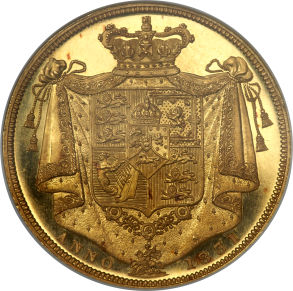
2 Pounds - William IV
up to £29,945
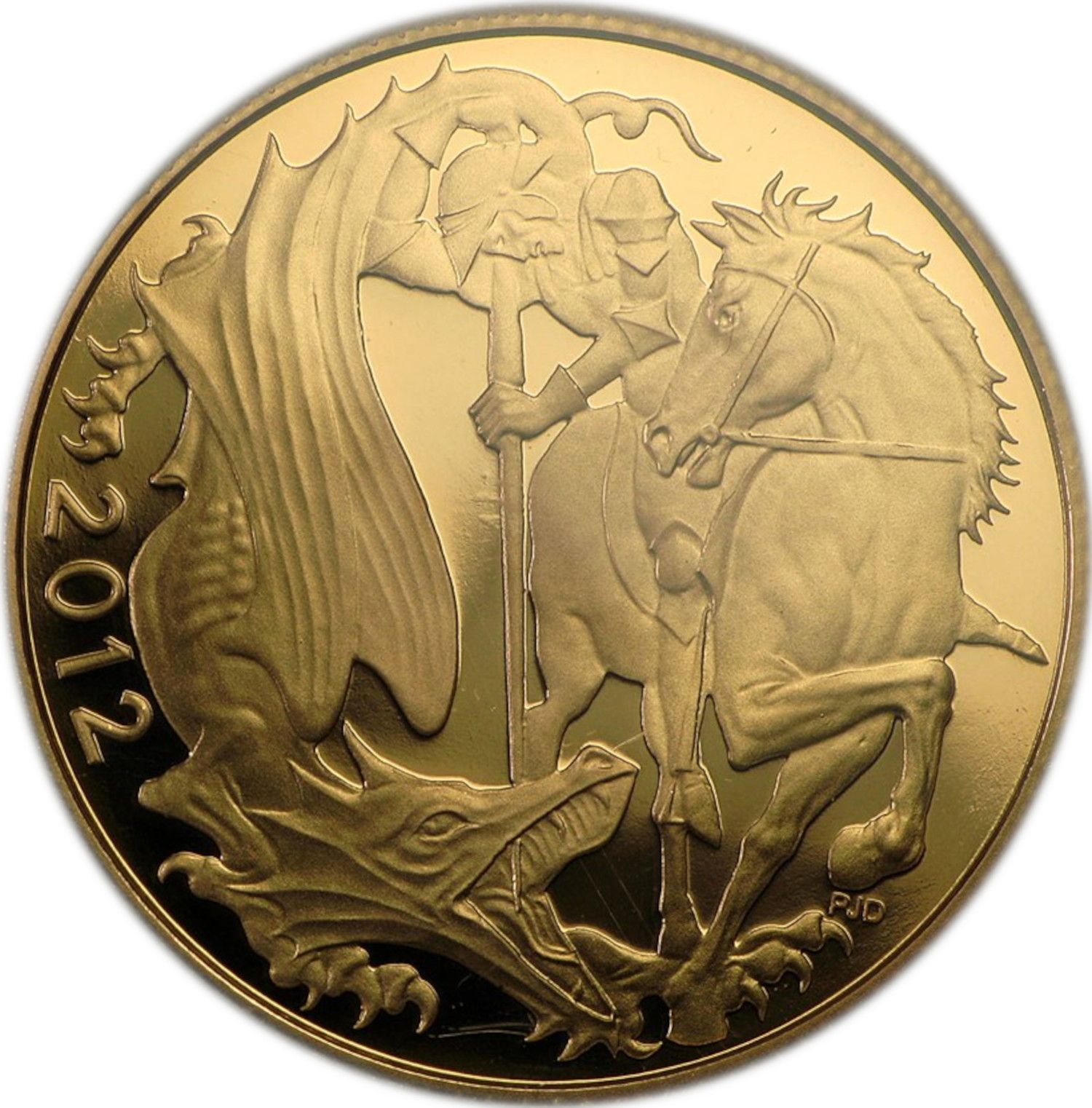
2 Sovereigns - Elizabeth II Diamond Jubilee
up to £1,800
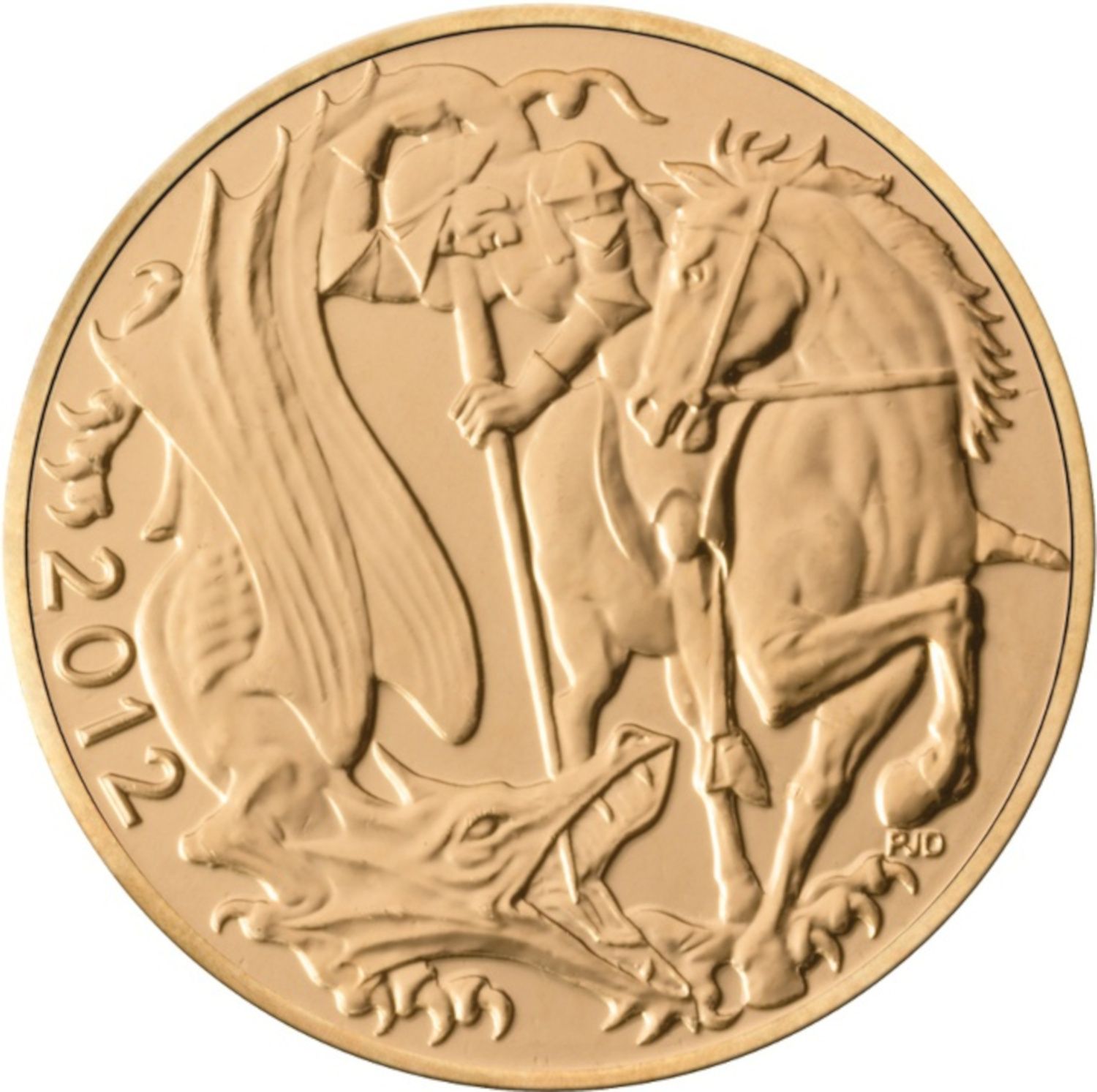
¼ Sovereign - Elizabeth II 4th portrait; Diamond Jubilee
up to £365
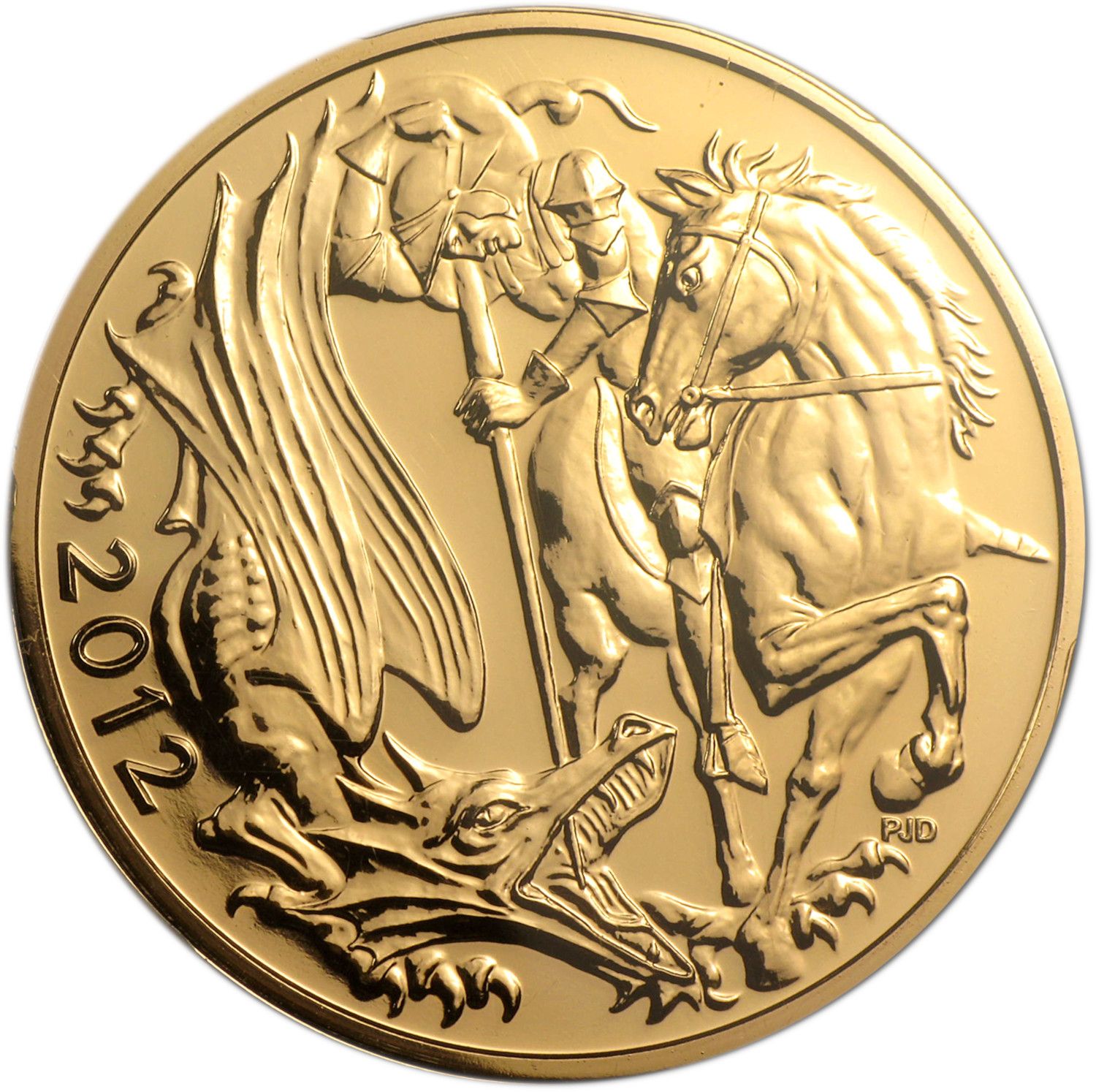
5 Sovereigns - Elizabeth II 4th portrait; Diamond Jubilee
up to £4,820
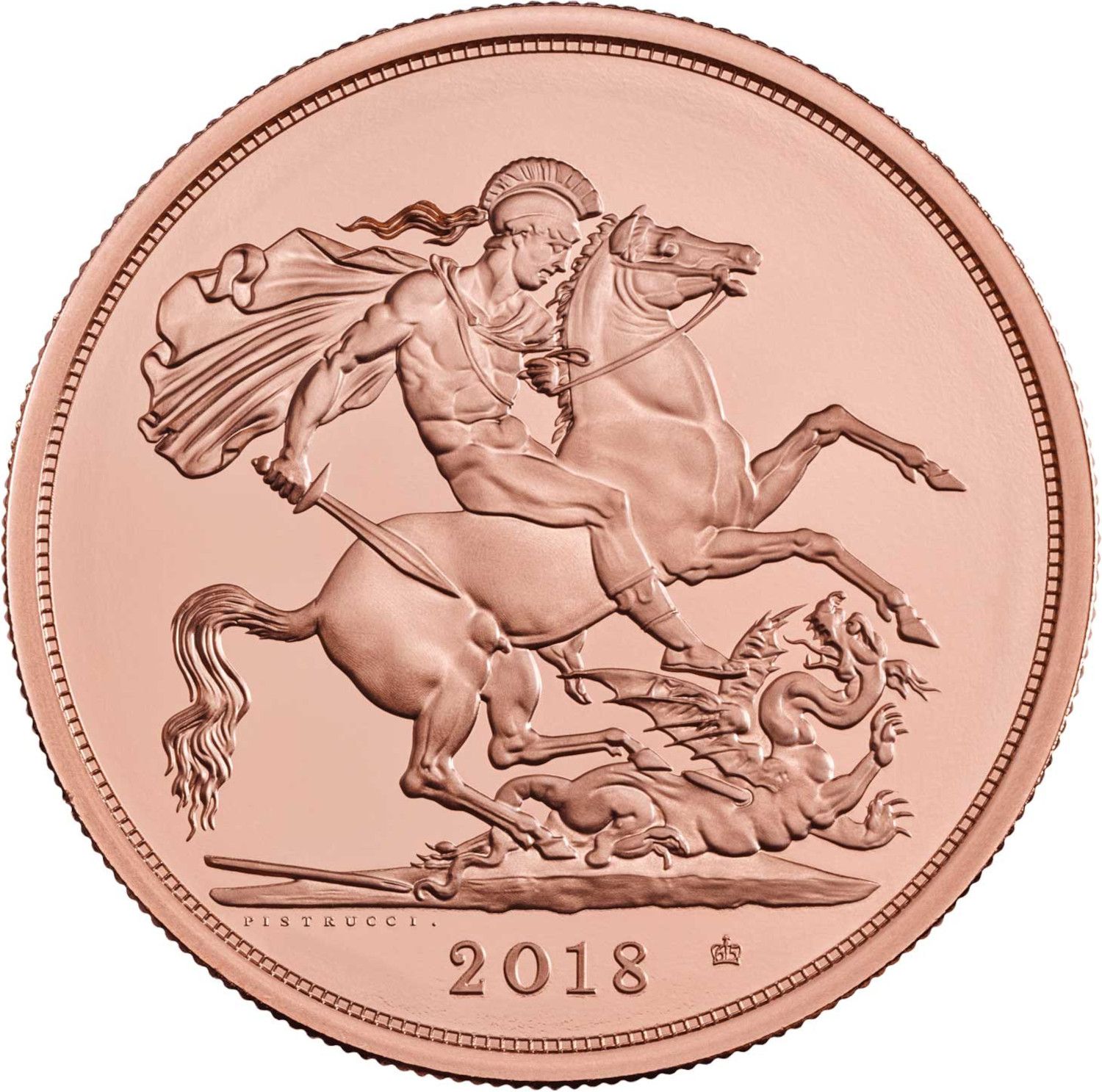
5 Sovereigns - Elizabeth II Sapphire Coronation
up to £3,548
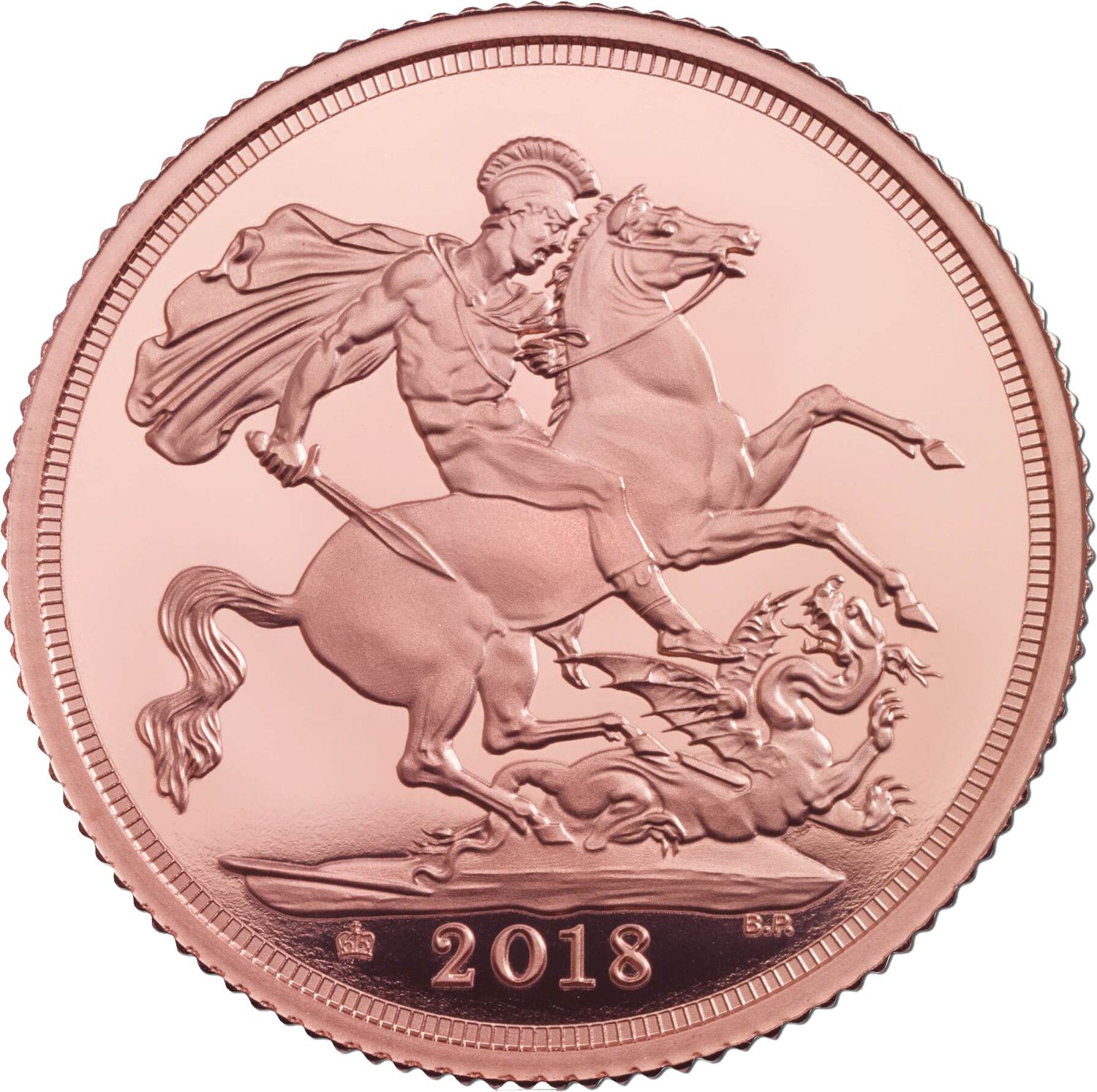
1 Sovereign - Elizabeth II 5th portrait; Sapphire Coronation
up to £625
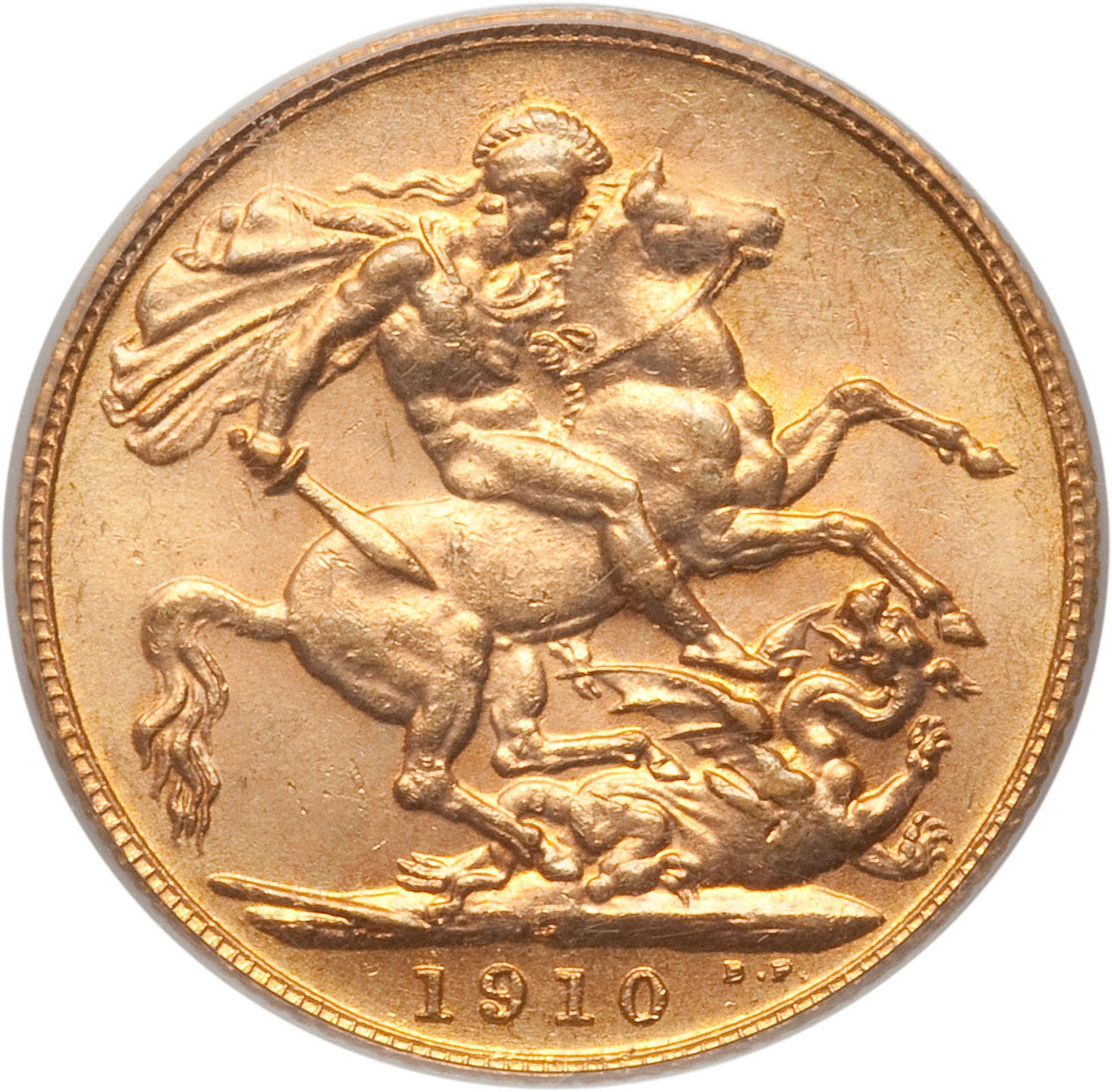
1 Sovereign - Edward VII Ottawa mint
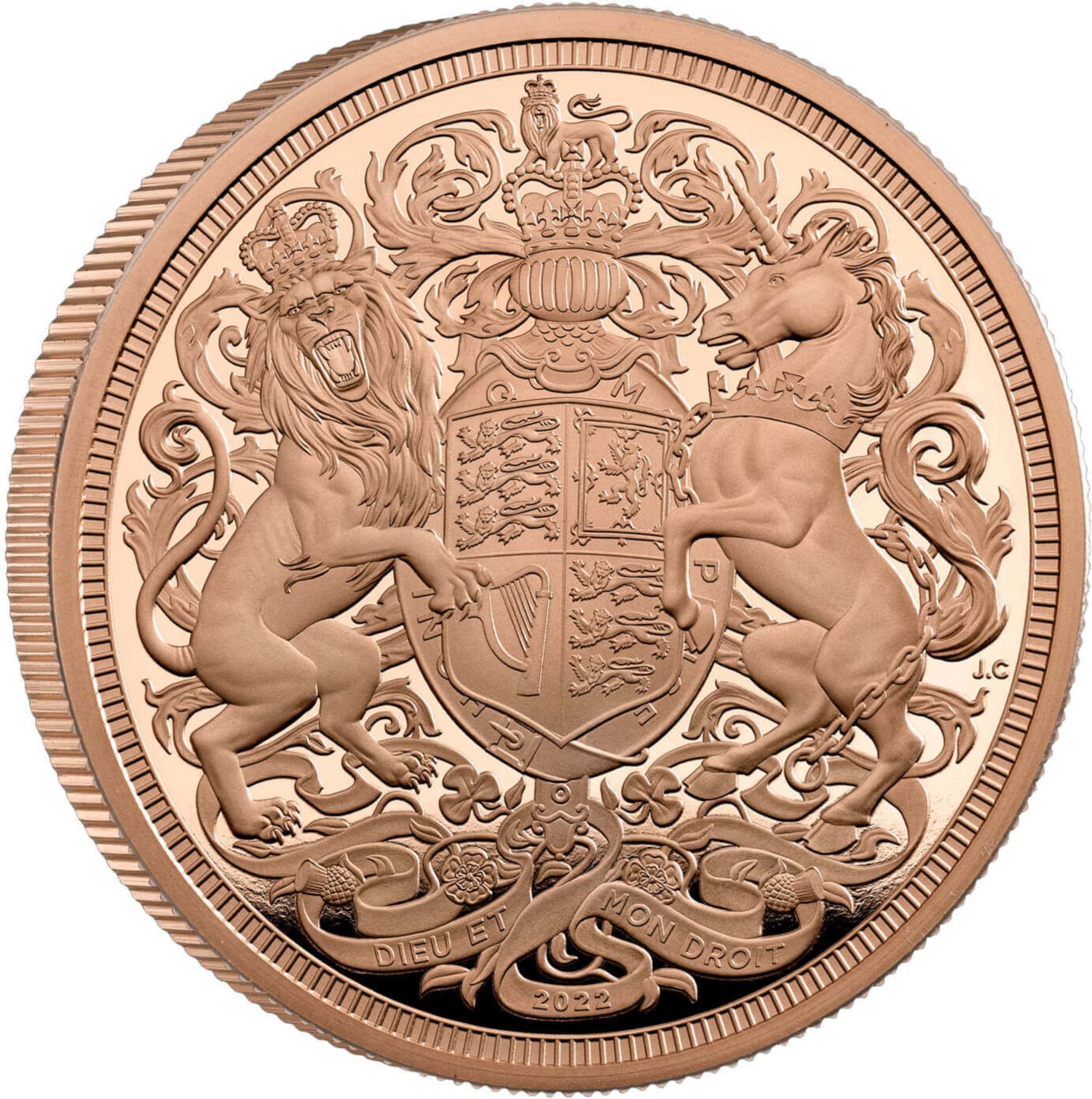
5 Sovereigns - Charles III Queen Elizabeth II Memorial
up to £3,925
Related guides
- Edward VII coins value guide, sterling silver, florins, half crowns and gold from 1902-1910
- Victoria sovereign values
- George V sovereign values
- Sovereign mint marks UK
- CGT-exempt coins UK
Frequently asked questions
How much is an Edward VII sovereign worth?
Common-date Edward VII sovereigns trade at £500-650 at current gold prices, bullion floor of £425 plus a 15-30% numismatic premium. Mint-state and key-date examples command much higher: 1902 Coronation proof sovereign (mintage 8,066) at £1,200-2,500; 1908 C Ottawa proof sovereign (mintage just 636) at £100,000-185,000; 1910 final-year sovereign in mint state at £800-1,500. The De Saulles portrait paired with Pistrucci's St George reverse makes Edwardian sovereigns one of the most aesthetically-collected sub-eras in modern UK gold coinage.
When did Edward VII reign?
Edward VII reigned from 22 January 1901 (the death of Queen Victoria) to 6 May 1910, just 9 years 104 days, the briefest modern British reign before Edward VIII's 1936 abdication. Coinage was struck at six mints: London (Royal Mint, no mint mark), Sydney (S, 1902-1910), Melbourne (M, 1902-1910), Perth (P, 1902-1910), Ottawa (C, 1908-1910), and Bombay never operated for Edwardian gold (the Bombay Mint opened only in 1918). The shortness of the reign means Edward VII sovereigns are concentrated in a narrow date range, making them collectable as a complete-set goal: nine years × up to five mints = up to 45 distinct date-mint combinations.
Who designed the Edward VII sovereign?
George William De Saulles (1862-1903), then Chief Engraver at the Royal Mint, designed the Edward VII obverse portrait introduced in 1902. The bust is bare-headed (uncrowned), right-facing, with the King in royal robes. De Saulles' portrait is widely considered one of the most successful 20th-century British coin obverses for its naturalism and classical proportions. He died in 1903 aged just 41, having designed virtually all the Edwardian coinage. The reverse continued Benedetto Pistrucci's St George and the Dragon (introduced 1817 and now in its 85th year of use). De Saulles also designed the standing Britannia for the Edwardian florin, a separate masterpiece widely echoed in modern Britannia bullion design.
What is the rarest Edward VII sovereign?
Without question: the 1908 C Ottawa proof sovereign. Mintage 636, the lowest of any modern British sovereign. The Ottawa Mint had just opened in 1908; the proof sovereign was struck for first-year ceremonial purposes and presentation pieces. Surviving examples in collectable grade trade at £100,000-185,000 at major auction (Heritage Auctions, Spink). The 1908 C is widely considered the rarest modern British sovereign. Other Edward VII rarities: 1908 C Ottawa circulation (mintage 636 + tiny additional run): £15,000-35,000. 1910 C Ottawa (final Edwardian Canadian year, mintage estimated 28,012): £3,000-8,000. 1902 Coronation matt proof set sovereign (within proof set, mintage 15,123): £1,500-3,500.
Are Edward VII sovereigns CGT-exempt?
Yes. All Edward VII sovereigns, struck at any mint, any year of the reign, are UK legal tender at £1 face value, making them capital-gains-tax exempt for UK residents on any future profit. The CGT exemption applies regardless of the mint of origin or numismatic premium. Combined with the gold-content floor (£425 at £1,750/oz spot for the 7.32 g pure gold) and the typical 15-30% Edwardian numismatic premium, Edward VII sovereigns are tax-efficient gold investments with stronger collector demand than common-date Elizabeth II / Charles III bullion. See our CGT-exempt UK coins guide.
How does an Edward VII sovereign compare to a Victorian sovereign?
Two distinct collecting eras. Victorian sovereigns (1838-1901) span 64 years across three portraits (Young Head, Jubilee, Veiled Head) and two reverses (shield-back and St George). Branch mints S (Sydney) and M (Melbourne) opened during the Victorian era. Premiums: 5-50% over melt for common dates, much higher for key dates. Edward VII sovereigns (1902-1910) span just 9 years on a single portrait (De Saulles) and a single reverse (Pistrucci St George). Premiums: 15-30% over melt for common dates, much higher for key dates (especially 1908 C Ottawa proof). The Edwardian era is more concentrated and easier to complete as a date-set; Victorian collecting requires longer time horizons but offers more portrait variation. Many UK collectors specialise in one era; some build complete sets across both. See our Victorian sovereign values.
How can I authenticate an Edward VII sovereign?
Standard sovereign authentication tests apply: weight 7.988 g, diameter 22.05 mm, 22-carat gold, non-magnetic, milled edge with no seam, specific gravity 17.7 g/cm³. The De Saulles portrait should show clear definition on Edward VII's beard, royal robes and crown. The reverse Pistrucci St George should show the dragon's coiled body beneath the rear hooves with crisp detail. Mint mark (if present) sits beneath the rear hooves. Counterfeit Edwardian sovereigns are common because they trade at higher premiums than modern pieces, for any specimen worth £500+, professional grading by PCGS, NGC or CGS UK is essential. See our how to spot a fake sovereign guide.
What is the 1902 Coronation matt proof set?
The most-collected Edwardian numismatic set. Struck for King Edward VII's Coronation on 9 August 1902, the matt proof set contains 13 coins: quintuple sovereign (£5), double sovereign (£2), sovereign (£1), half sovereign (50p), plus crown, half crown, florin, shilling, sixpence, threepence, and four Maundy coins. Mintage 15,123 sets. Distinctive matt (sandblast) finish rather than the standard mirror-proof finish, an aesthetic choice unique to this issue. Original red box with cream silk lining. Complete sets in original case trade at £1,500-2,800; pristine sealed sets £3,000-4,500. The matt proof sovereign component (when split from the set) trades at £1,200-2,500. Provenance is critical, sets with original case and certificate command 30-50% premium over loose-coin equivalents.
What is matt proof finish and why does it matter?
A specialised proof finish where the entire coin surface is sandblasted to produce a uniform matt, non-reflective finish, distinct from the standard mirror-finish proof (where the fields are polished to a mirror and the design has frosted-cameo relief). Edward VII matt proofs were struck only for the 1902 Coronation set, later proof sets returned to mirror-finish format. The matt finish was an aesthetic choice by the Royal Mint to produce a more "modern" look for the new reign. Visually distinct, matt proofs look almost frosted compared to the bright mirror of standard proofs. A 1902 matt proof crown commands a 30-50% premium over a standard proof crown of the same year because of the unique finish.
Why are Edward VII sovereigns popular with collectors?
Three reasons. (1) Aesthetic appeal: the De Saulles portrait is widely considered the most beautiful of the modern monarchs. Bare-headed (uncrowned) and naturalistic, it pairs visually well with Pistrucci's St George reverse. (2) Manageable scope: 9 years × up to 5 mints = a complete set is achievable for a serious collector at moderate cost (£3,000-6,000 for a London set; £25,000+ for a complete five-mint set including the 1908 C Ottawa proof). (3) Bullion-floor protection plus numismatic upside: all Edward VII sovereigns retain their gold-content value indefinitely, with numismatic premium adding 15-30% on top. The Edwardian era is one of the most-collected single-monarch sovereign categories, alongside Victorian and modern Elizabeth II.
What is on the reverse of an Edward VII sovereign?
Pistrucci's St George and the Dragon. The reverse continued unchanged from Victoria's Veiled Head era (and indeed from George III's 1817 original). Saint George is shown mounted on horseback, sword raised, in the act of slaying the dragon. The composition shows George wearing classical Roman-style armour with a flowing cloak; his horse rears over the dragon's body; the dragon coils beneath the hooves. The legend "PISTRUCCI" appears below the design in the exergue. The reverse design has been used continuously on UK sovereigns from 1817 to today, with brief design breaks (1989 Tudor anniversary, 2002 Diamond Jubilee, 2012 Diamond Jubilee, 2023 Charles III Coronation). For Edward VII issues specifically, the Pistrucci reverse is unchanged from late Victorian Veiled Head reverses. See our Pistrucci St George sovereign guide.
Where should I buy an Edward VII sovereign?
For common-date examples in collectable grade: UK bullion dealers (Atkinsons Bullion, BullionByPost, Baird & Co) at modest premiums. For specific dates, key dates, or branch-mint variants: UK numismatic auction houses (Spink, Baldwin's, Noonans) for the strongest selection. For 1908 C Ottawa proof sovereigns and 1902 Coronation matt proof sets: consign to a major specialist auction. For slabbed examples: PCGS / NGC slabbed pieces on eBay UK. Avoid Westminster-style direct-mail buyers, who consistently overcharge for Edwardian sovereigns by 30-60%.
Read next