Guide
George V Sovereign Values: 1911–1932 Complete Guide
King George V's 25-year reign covers the most-collected era of branch-mint UK sovereigns, from the 1911 Mackennal portrait debut through the only-year-ever Bombay Mint sovereign of 1918, the controversial 1925 London restrikes, the South African Pretoria Mint key dates of 1925-1932, and the final closure of the Australian and Canadian branch mints. This guide covers every issue, designer history, branch-mint identification, realised auction prices, and how to authenticate the rarities.
Reviewed by Connor Jones, Editor
Last updated:
In brief. Common-date George V sovereign at £1,750/oz spot: £460-580.
1918 I Bombay (only year): £800-2,000+. 1925 SA Pretoria: £3,000-7,500.
1916 C Ottawa proof (~60 known): £100,000-180,000. London 1925 restrikes (1949-52
re-issue): trade at bullion price + small premium. CGT-exempt as UK legal tender. Specifications unchanged from
1817: 7.988 g, 22.05 mm, 22-carat.
Branch mints active during the George V reign
| Mint | Mark | Years (George V) | Premium over London | Key dates |
|---|---|---|---|---|
| London (Royal Mint) | (none) | 1911-1925 (paused 1917-1924) | baseline | 1925 restrikes |
| Sydney | S | 1911-1926 | +5-15% | 1916 S, 1926 S (final) |
| Melbourne | M | 1911-1931 | +10-25% | 1920 M, 1931 M (final) |
| Perth | P | 1911-1931 | +15-30% | 1920 P, 1930 P, 1931 P |
| Bombay (Mumbai) | I | 1918 only | +200-400% | 1918 I (only year) |
| Ottawa | C | 1911-1919 | +50-200%+ | 1916 C (rarest, mintage 6,111) |
| Pretoria | SA | 1923-1932 | +30-60% | 1925 SA, 1929 SA, 1932 SA (final) |
Key dates in detail
| Year | Mint | Mintage | Realised range |
|---|---|---|---|
| 1911 | London proof | 2,812 | £3,500-7,500 |
| 1916 | C Ottawa | 6,111 | £15,000-30,000+ |
| 1916 | C Ottawa proof | ~60 | £100,000-180,000 |
| 1918 | I Bombay | 1,294,372 | £800-2,000+ collectable; £8,000+ MS65 |
| 1925 | London (restruck 1949-52) | 4,406,000+ | £500-700 |
| 1925 | SA Pretoria | 6,000 | £3,000-7,500 |
| 1929 | SA Pretoria | ~2,000 | £5,000-12,000 |
| 1932 | SA Pretoria (final year) | 6,000 | £2,000-5,000 |
Featured George V sovereigns on MyCoinage
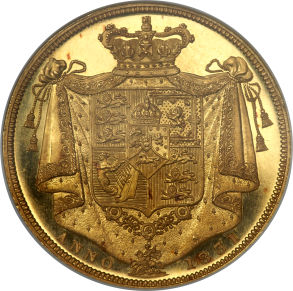
2 Pounds - William IV
up to £29,945
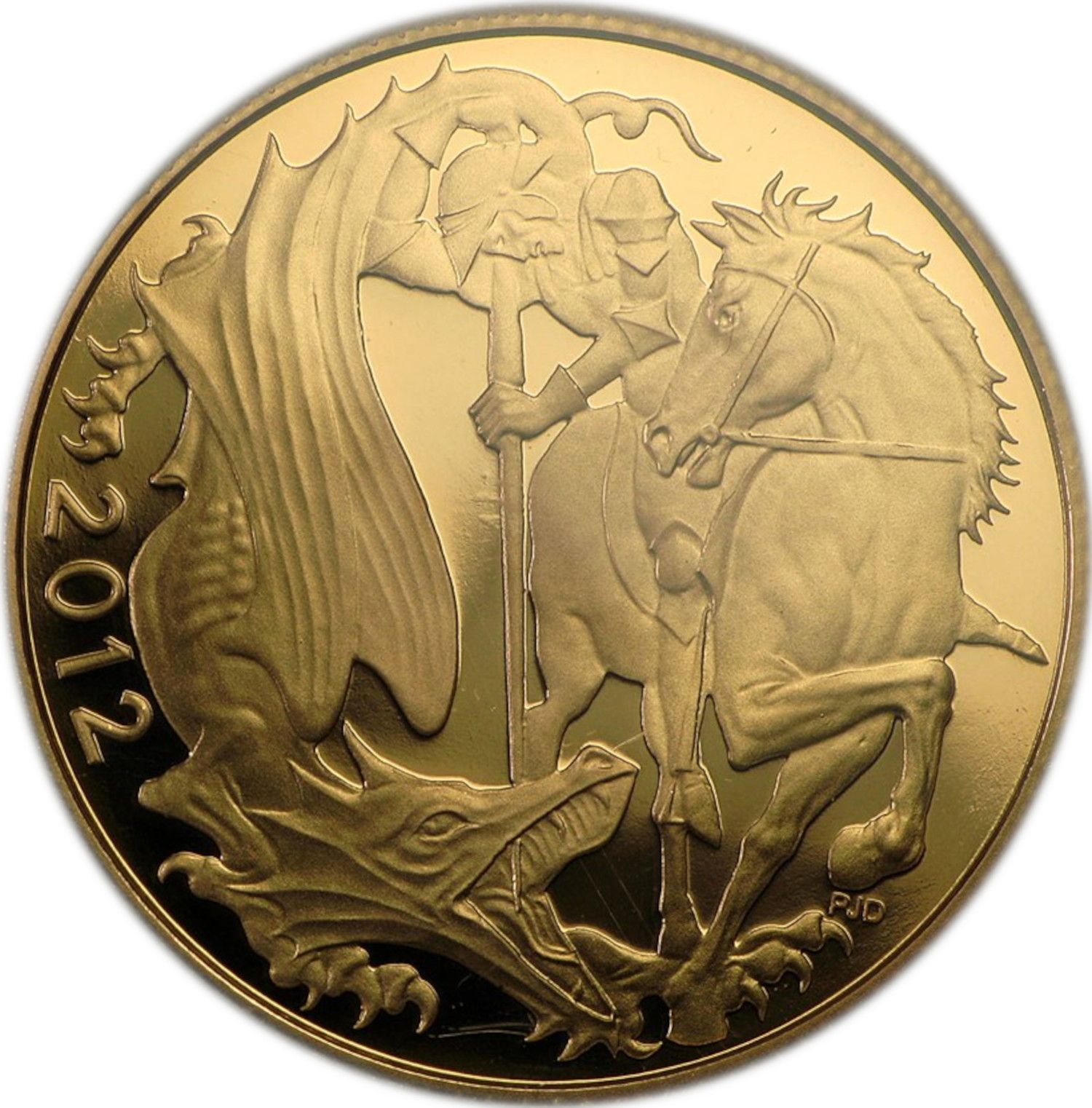
2 Sovereigns - Elizabeth II Diamond Jubilee
up to £1,800
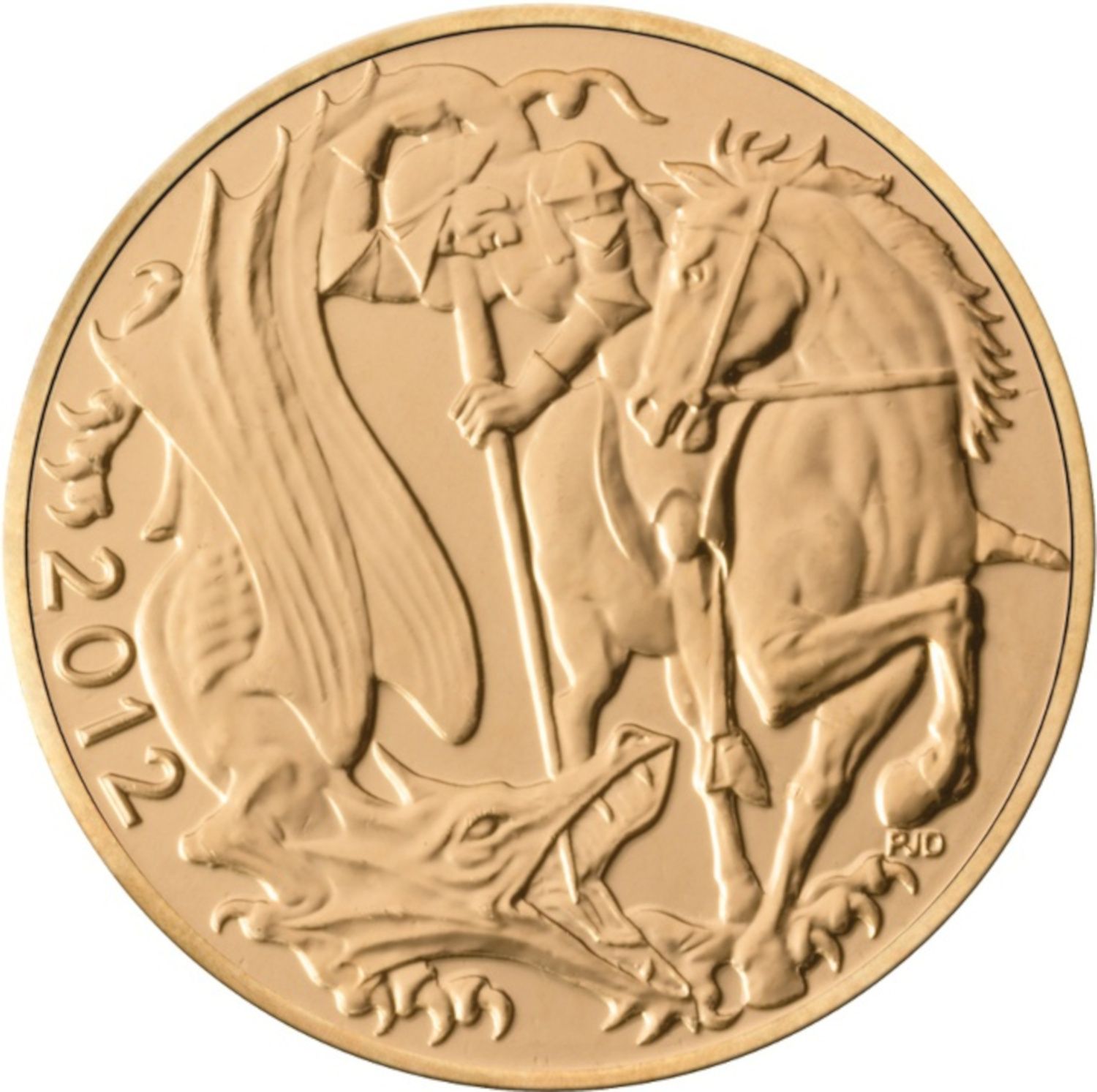
¼ Sovereign - Elizabeth II 4th portrait; Diamond Jubilee
up to £365
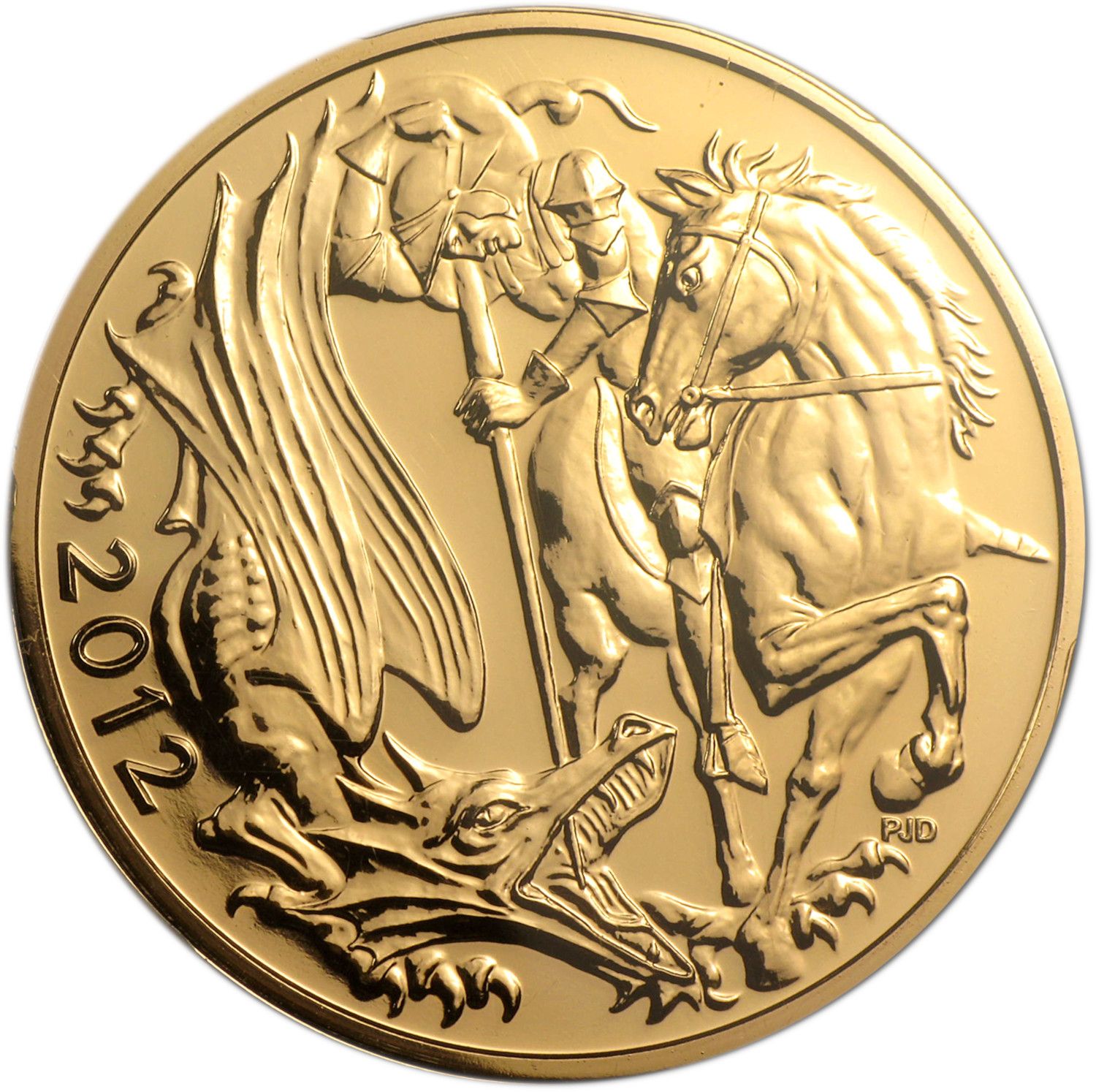
5 Sovereigns - Elizabeth II 4th portrait; Diamond Jubilee
up to £4,820
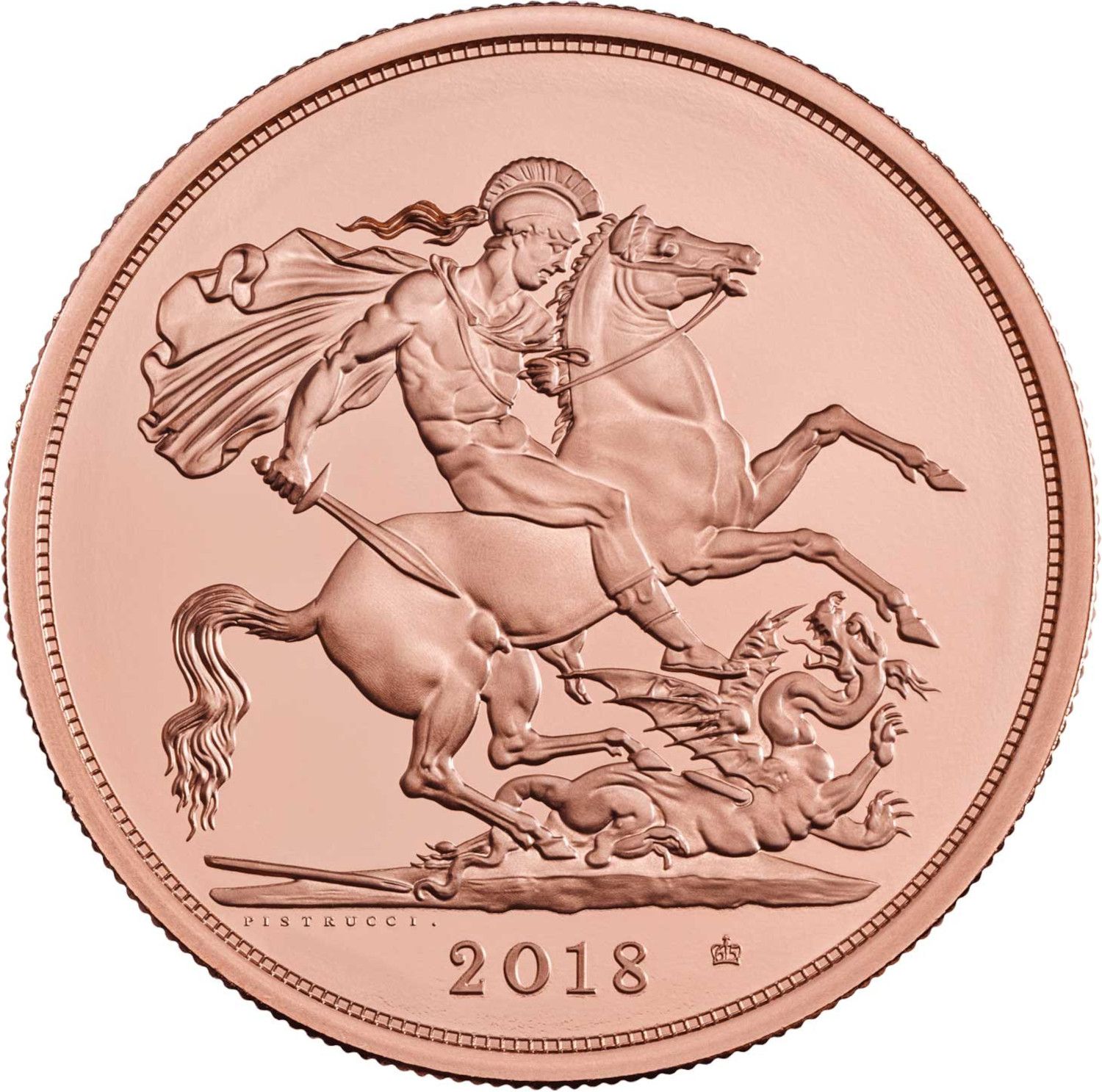
5 Sovereigns - Elizabeth II Sapphire Coronation
up to £3,548
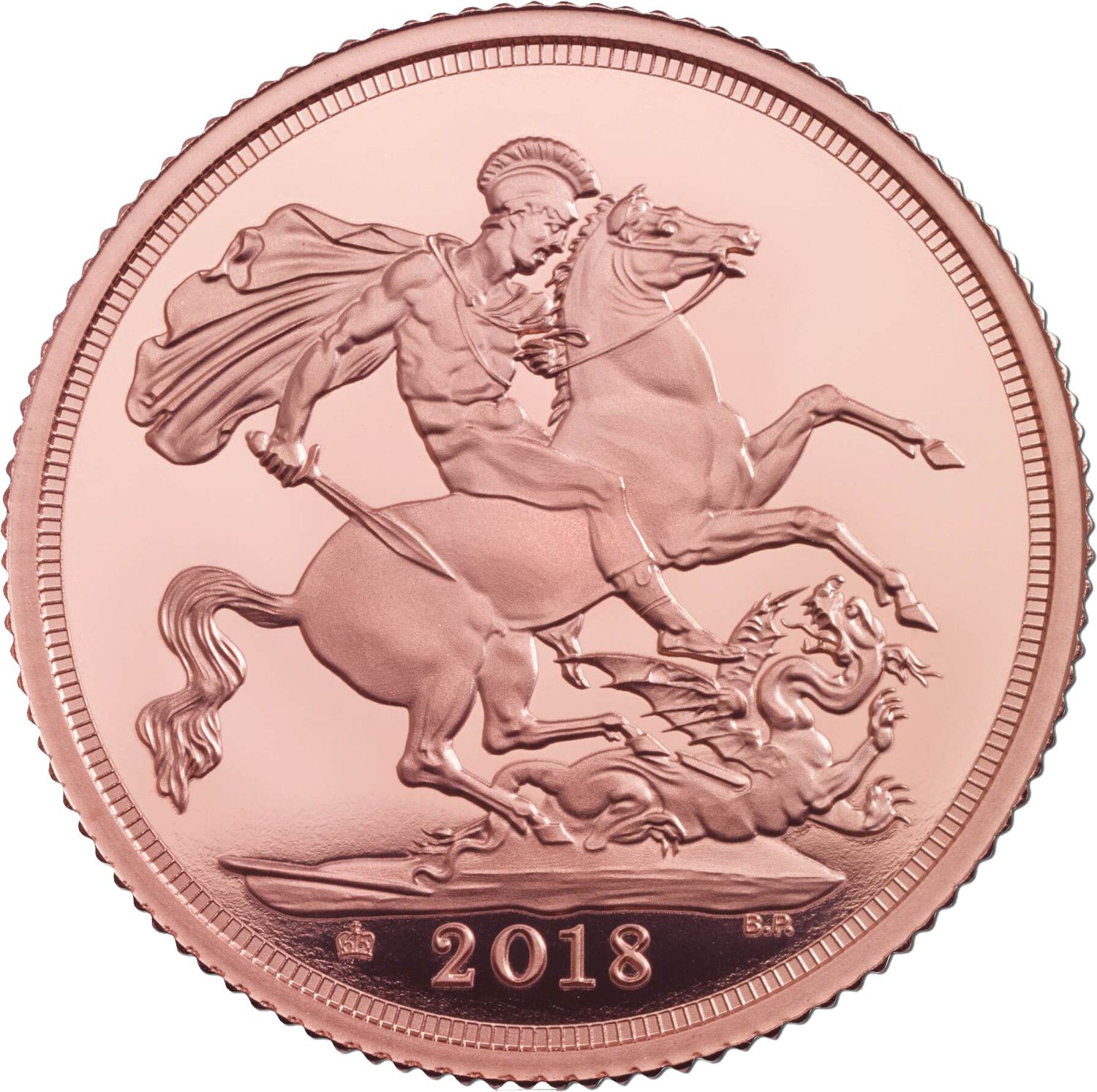
1 Sovereign - Elizabeth II 5th portrait; Sapphire Coronation
up to £625
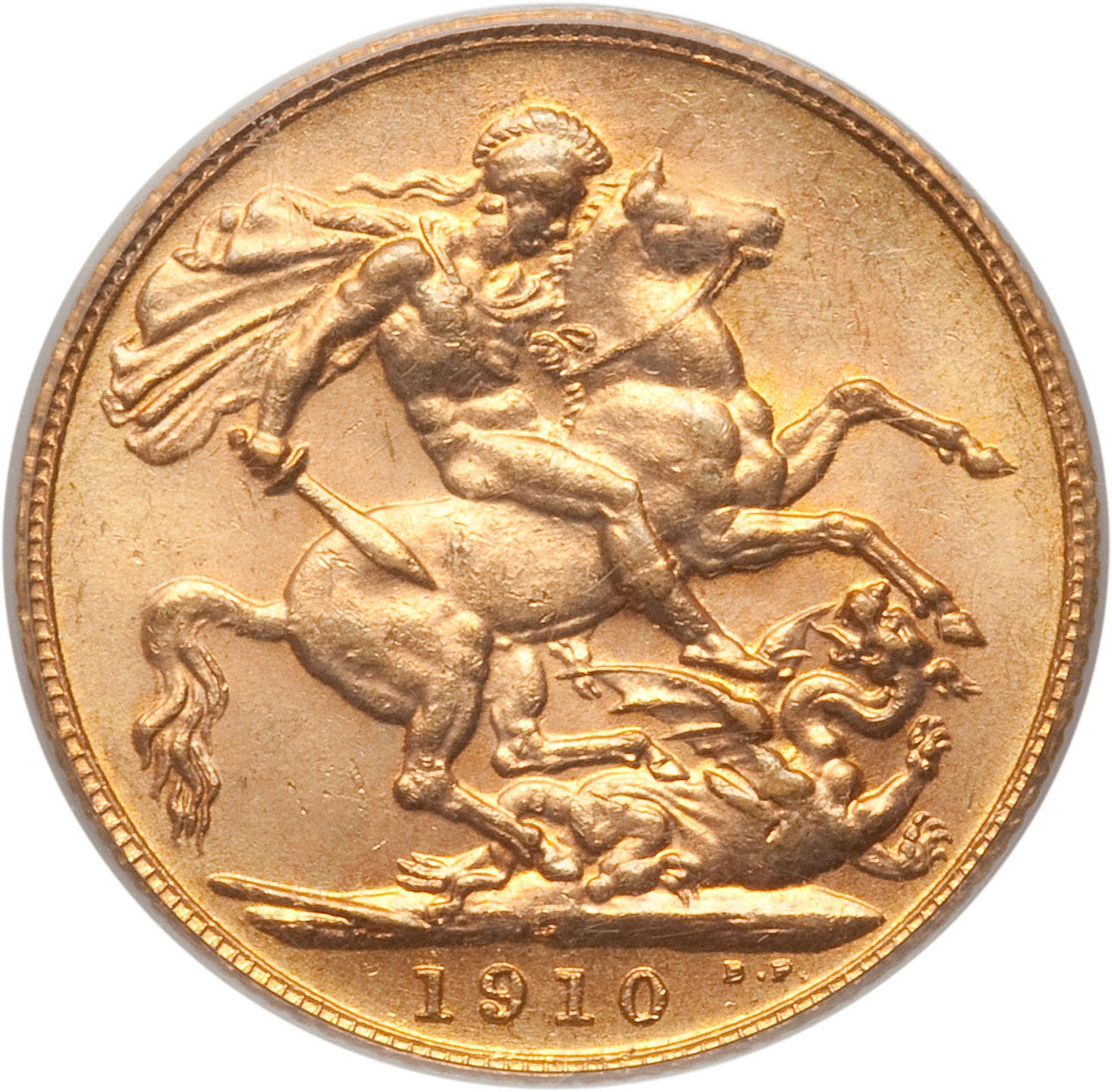
1 Sovereign - Edward VII Ottawa mint
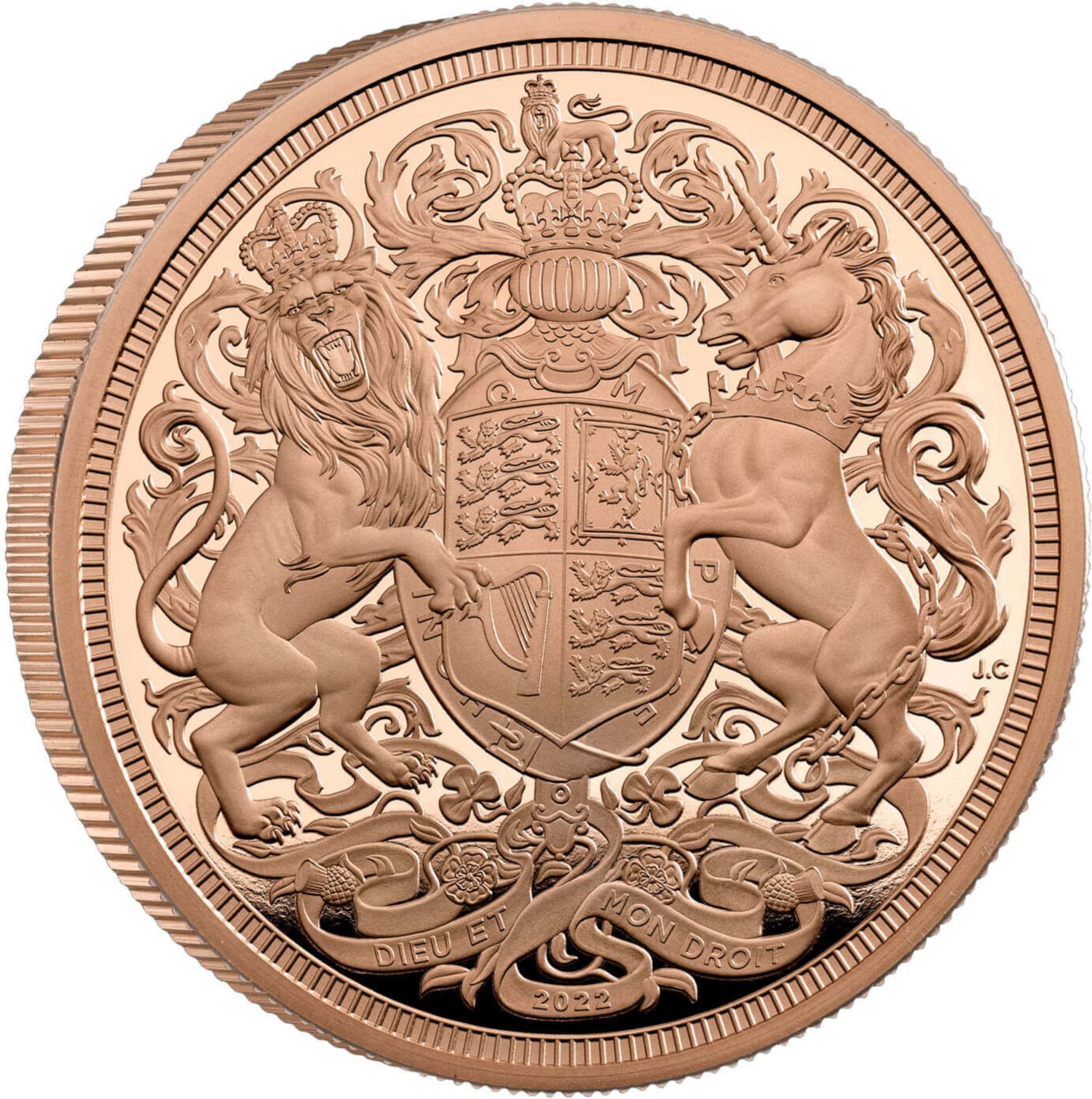
5 Sovereigns - Charles III Queen Elizabeth II Memorial
up to £3,925
Related guides
- George V coins value guide, pennies, florins, shillings and silver from 1911-1936
- Sovereign values UK, every monarch, the rare dates and the lowest-mintage years
- Edward VII sovereign values
- Victoria sovereign values
- Sovereign mint marks UK
- CGT-exempt coins UK
Frequently asked questions
How much is a George V sovereign worth?
George V sovereigns (struck 1911-1932) are the most accessible "vintage" sovereigns in the bullion market. Common-date examples in collectable grade trade at £460-580 at current gold prices, close to the bullion floor of £425 plus a modest 5-15% numismatic premium. Mint-state examples and key dates command higher premiums: 1911 first-year proof £3,500-7,500; 1925 London restrike £500-700 (a controversial backstrike); 1918 I Bombay £800-2,000+ (the only year struck at Bombay); 1928 SA Pretoria £1,200-3,000. The Mackennal portrait pairs with Pistrucci's St George reverse, making George V sovereigns a complete bullion-and-collectability package.
When did George V reign?
George V reigned from 6 May 1910 (the death of Edward VII) to 20 January 1936, 25 years 259 days. His coinage spans the silver-debasement of 1920 (when sterling .925 silver was replaced by .500 wartime alloy), the modified-effigy redesign of 1927, the closure of the Sydney Mint (1926) and Melbourne Mint (1931), the famous Wreath Crown series (1927-1936), and the legendary 1933 penny rarity. Sovereigns were struck in London (no mint mark), Sydney (S, 1911-1926), Melbourne (M, 1911-1931), Perth (P, 1911-1931), Bombay (I, 1918 only), and Pretoria (SA, 1923-1932).
Who designed the George V sovereign?
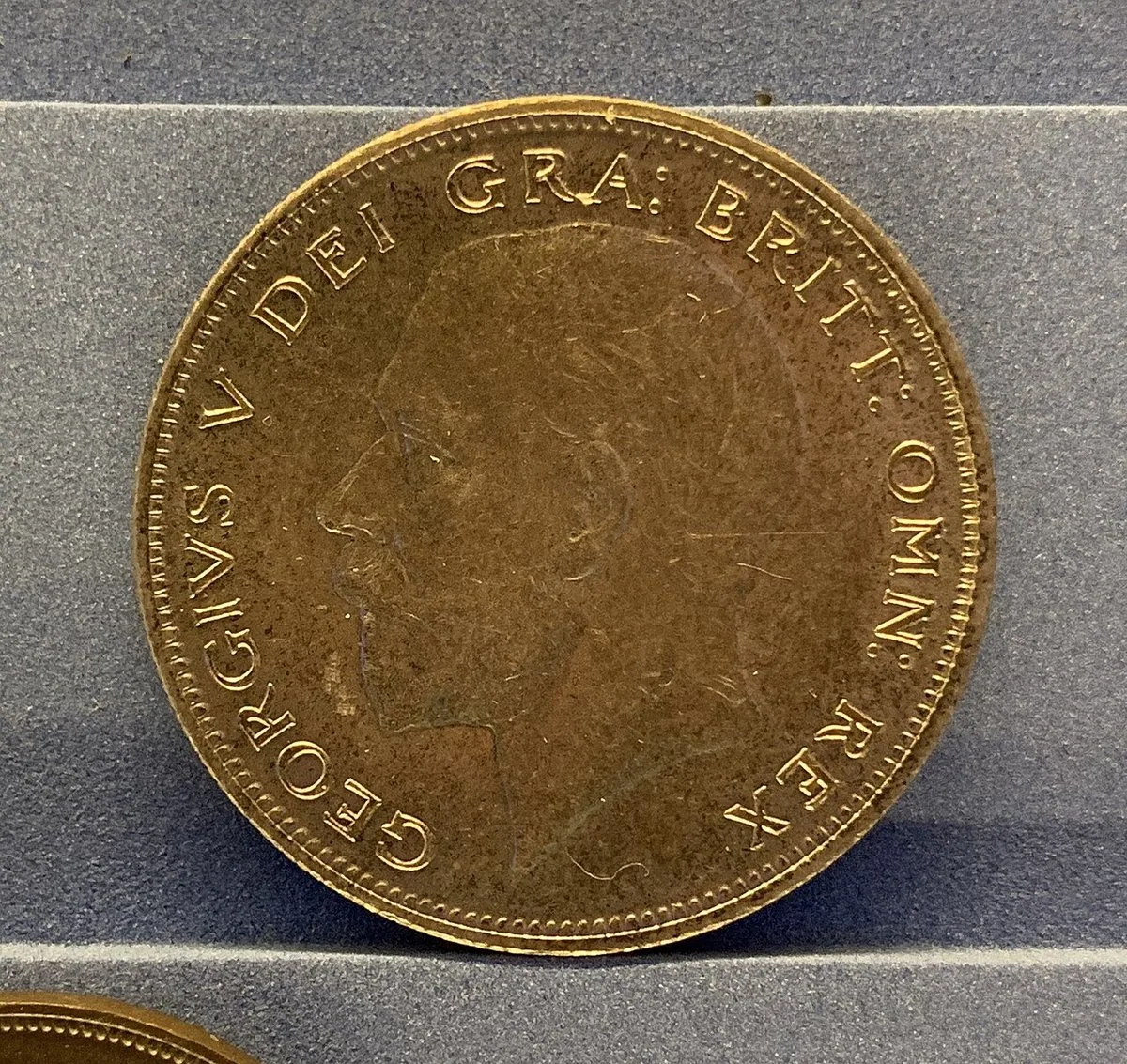
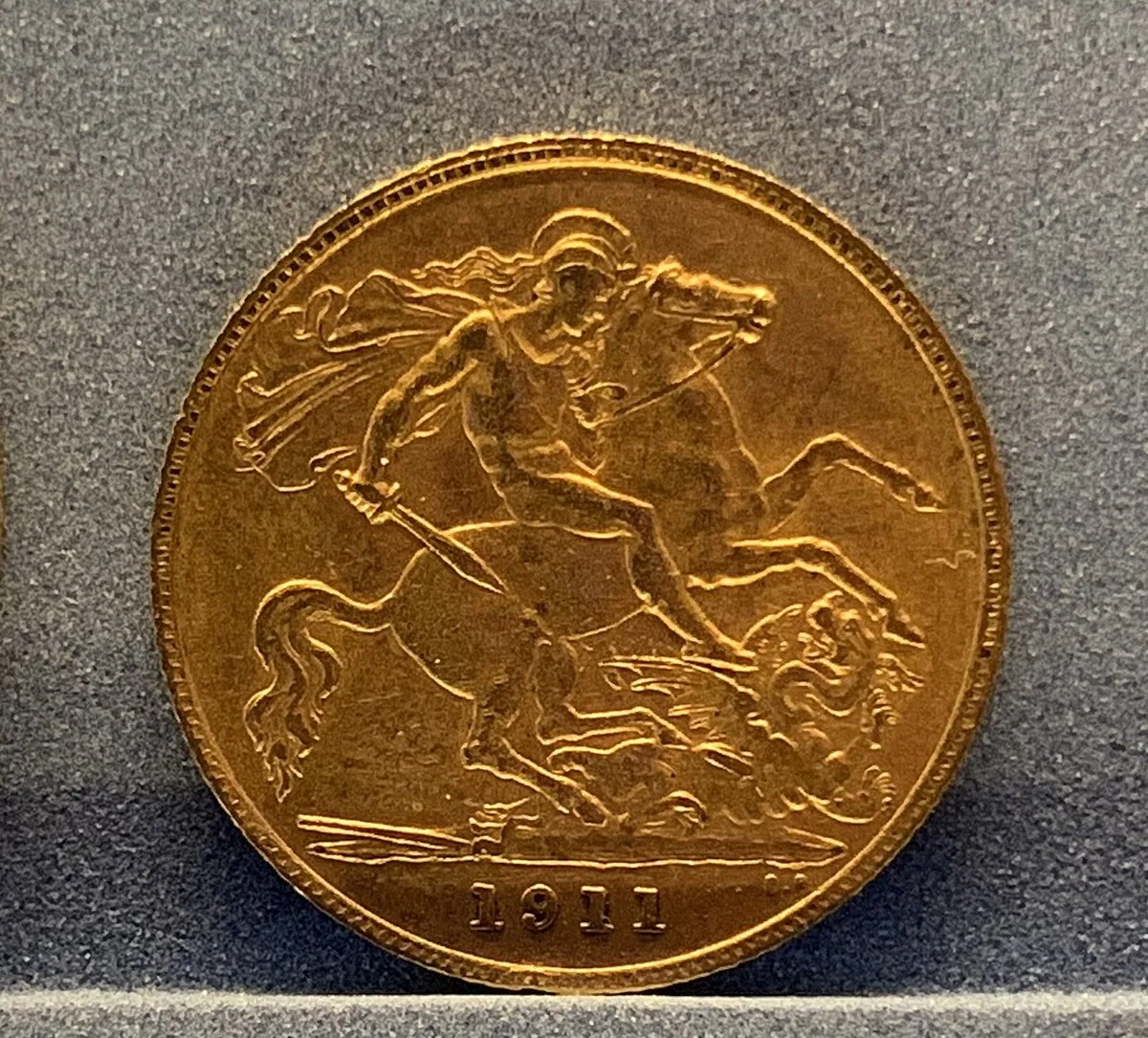
Sir Bertram Mackennal (1863-1931), an Australian-born sculptor and Royal Mint engraver, designed the George V obverse portrait introduced in 1911. The bust is left-facing, crowned, with a slim profile that contrasted with Edward VII's heavier De Saulles portrait. The reverse continued Benedetto Pistrucci's St George and the Dragon design (now in its 100th year of use as of 1917), unchanged from earlier reigns. A modified effigy was introduced in 1929 with subtle changes to the bust truncation and lettering, subtle enough that most collectors don't differentiate, but auction-grade specialists distinguish them. See our Pistrucci St George guide for full reverse design history.
What is the rarest George V sovereign?
Branch-mint key dates dominate the rarity rankings. 1925 SA Pretoria sovereign (mintage 6,000) trades at £3,000-7,500. 1929 SA Pretoria (mintage estimated 2,000): £5,000-12,000. 1930 P Perth: scarce in higher grades, £800-2,500. 1932 SA Pretoria (last year, mintage 6,000): £2,000-5,000. 1916 C Ottawa Canada: only 6,111 struck, £15,000-30,000 in MS-grade. The flagship rarity is the 1916 C Ottawa proof sovereign (mintage estimated 60), which has realised £100,000-180,000 at major auction. London-struck George V sovereigns are mostly common-date pieces; the Empire branch mints carry the rarity premium.
Are George V sovereigns CGT-exempt?
Yes, like all UK sovereigns, George V sovereigns are UK legal tender at £1 face value, making them capital-gains-tax exempt for UK residents on any future profit. The CGT exemption applies regardless of the mint of origin (London, Sydney, Melbourne, Perth, Bombay, Ottawa, Pretoria) and regardless of date. Combined with the gold-content floor (£425 at £1,750/oz spot for the 7.32 g pure gold) and the modest numismatic premium, George V sovereigns are one of the most tax-efficient gold investments available to UK collectors. See our CGT-exempt UK coins guide.
What is the 1925 London "restrike" sovereign?
A controversial Royal Mint piece. The 1925 London sovereign mintage was officially 4,406,000, but in 1949-1952 the Royal Mint restruck a substantial number of 1925-dated sovereigns using original dies to meet international gold-coin demand without raising new coinage capacity. These restrikes are physically identical to genuine 1925 pieces and the Royal Mint has not officially distinguished them. Numismatic researchers estimate the restruck quantity at several hundred thousand to over a million pieces, making the 1925 mintage figure unreliable as a rarity indicator. Genuine 1925-dated sovereigns and restruck 1925-dated sovereigns trade at the same price on the bullion market because authentication has no practical effect on intrinsic gold-content value. Numismatic-grade collectors sometimes pay a premium for documented original 1925 pieces, but the documentation is itself contested.
How does George V coinage handle silver and gold separately?
Gold (sovereigns, half sovereigns, double sovereigns, quintuple sovereigns) was struck continuously throughout the reign at the standard 22-carat 7.32 g pure-gold-per-sovereign specification, unaffected by the 1920 silver-debasement. Silver coinage (shillings, florins, half-crowns, threepences) was reduced from sterling .925 silver to .500 wartime alloy in 1920 due to post-WWI silver shortages and Britain's outstanding silver-loan repayments to the United States. The two metal series were administratively separate. So a George V sovereign struck in 1925 has the same gold content as one struck in 1911 or 1929; but a George V shilling struck pre-1920 has different silver content than one struck post-1920. See our George V coins value guide for the silver context.
How can I authenticate a George V sovereign?
Standard sovereign authentication tests apply. (1) Weight: 7.988 g ± 0.020 g. (2) Diameter: 22.05 mm ± 0.05 mm. (3) Specific gravity: 17.7 g/cm³ (definitive test for tungsten-core fakes). (4) Magnetic test: 22-carat gold is non-magnetic. (5) Edge: milled (reeded), seam-free. (6) Mackennal portrait: should show clear crown detail and slim bust truncation; the modified 1929+ effigy shows subtle redesign of the bust's lower edge. (7) Mint mark (if present): sits beneath the rear hooves of the horse on the St George reverse, verify it's correctly positioned and struck (not engraved on after the fact). For high-value branch-mint pieces, professional grading by PCGS, NGC or CGS UK is essential. See our how to spot a fake sovereign guide for the full test suite.
What is the 1918 I Bombay sovereign?
The single most-collected branch-mint sovereign in numismatic circles. The Royal Mint operated the Bombay (now Mumbai) Mint for one year only, 1918, specifically to provide gold currency to British India during WWI when shipping from London was disrupted by U-boat warfare. Mintage: 1,294,372, not low by mintage standards but the survival rate is poor and demand is enormous (every British and Indian sovereign collector wants one). The mint mark "I" sits beneath the horse's rear hooves, slightly larger and more deeply struck than the Australian S/M/P marks. Realised prices: £800-2,000+ in collectable grade; £3,000-5,000+ in MS-63; £8,000+ in MS-65. The 1918 I is the only year the Bombay Mint struck sovereigns, making it a unique single-year collectable in the entire 200-year sovereign series.
When did George V sovereign production stop?
London Royal Mint stopped striking circulating sovereigns in 1917 as part of WWI gold-recall measures (private gold ownership was restricted under the Defence of the Realm Act). London production briefly resumed in 1925 (the controversial restrike year), then paused again. Branch mints continued through the early 1930s: Sydney closed for sovereign production in 1926; Melbourne in 1931; Perth in 1931; Pretoria in 1932. After 1932, no Royal Mint sovereigns were struck for normal circulation until 1957 (under Elizabeth II for export-only bullion). George V sovereigns dated 1933 through 1936 (the death year) do not exist, sovereign production globally had ceased before George V's death. The next sovereign issue was 1937 George VI Coronation proof.
How does a George V sovereign compare to Charles III?
Identical in specifications: 7.988 g, 22.05 mm, 22-carat, 7.32 g pure gold. Same Pistrucci St George reverse (with brief design breaks for special issues). Different obverses: George V has the Mackennal crowned bust; Charles III has the Martin Jennings uncrowned bust facing left. Pricing: George V common-date sovereign £460-580; Charles III bullion sovereign £430-475. The George V piece carries an additional 5-15% numismatic premium for age and historical interest. Both are CGT-exempt UK legal tender. For investors prioritising bullion-floor protection, modern Charles III is cheaper per gram of gold; for collectors mixing numismatic premium and gold exposure, George V offers more upside potential.
Where should I sell a George V sovereign?
For common-date examples in collectable grade: UK bullion dealers (Atkinsons Bullion, BullionByPost, Baird & Co, Hatton Garden Metals) at competitive spreads (1-3% under spot for common dates). For mint-state, key-date or branch-mint variants: UK numismatic auction houses (Spink, Baldwin's, Noonans). For 1918 I Bombay or 1916 C Ottawa: consider Heritage Auctions (US) for international buyer reach. For slabbed examples: PCGS / NGC slabbed pieces on eBay UK. Avoid Westminster-style direct-mail buyers, who consistently undervalue George V sovereigns by 15-30%.
Read next