Ads off, prices on.Pro is £1.99 a month or £19.99 a year: no adverts, unlimited coins, price alerts. Try it free for 7 days.Try Pro free for 7 days.
Try Pro free →
Guide
Edward VII Coins Value Guide: 1902–1910
Edward VII reigned for nine years, the briefest modern British reign before Edward VIII's abdication
of 1936. His coinage spans the high-water mark of the Edwardian Empire, the introduction of the De Saulles
portrait, and the famous 1902 Coronation matt proof set. This guide covers every denomination, the lowest-mintage
Edwardian (the 1905 half crown), branch-mint Edwardian sovereigns including the legendary 1908 C Ottawa proof,
and how to authenticate.
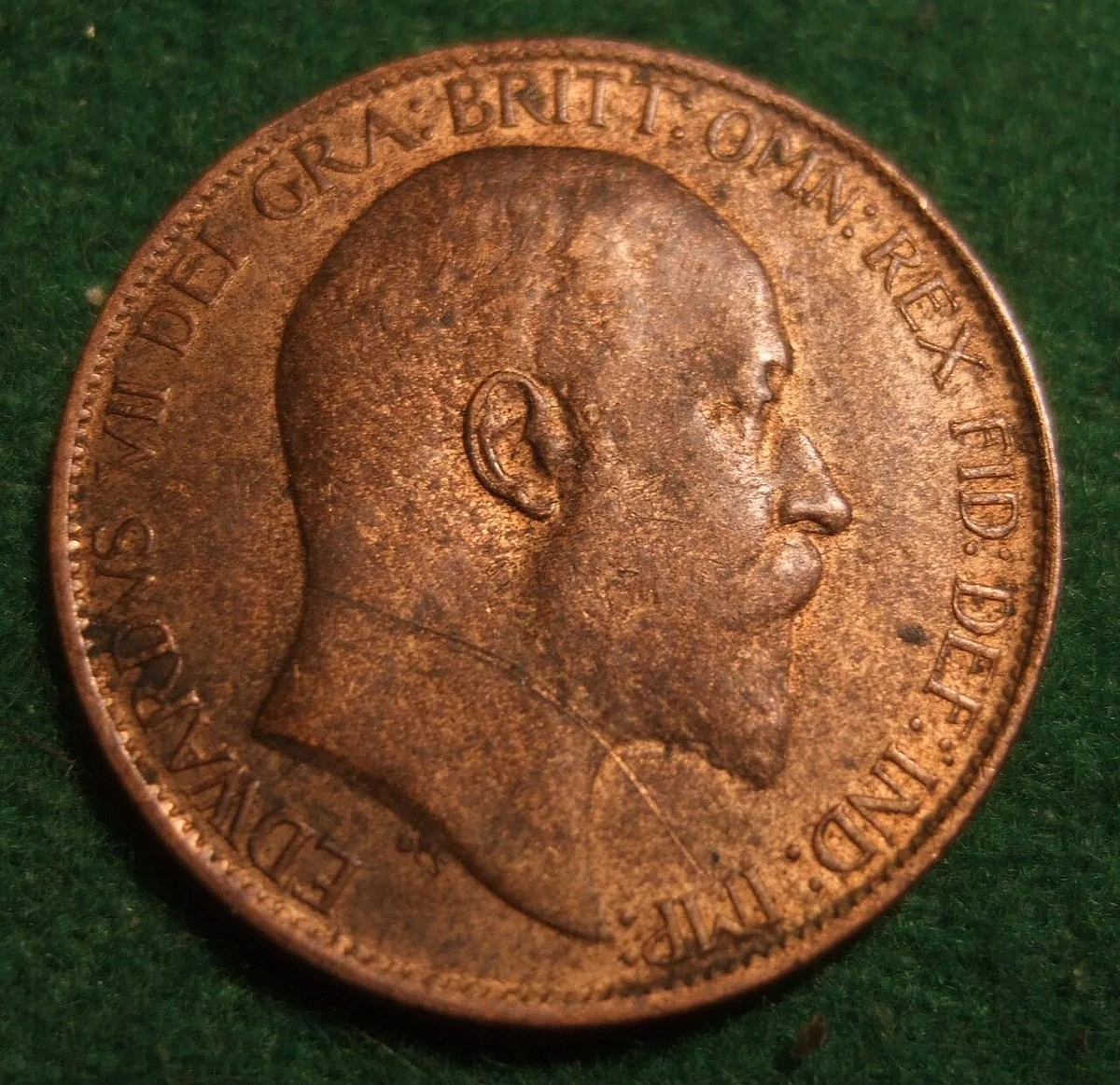
Edward VII's coinage portrait is the work of George William De Saulles (1862-1903), who served
as the Royal Mint's Engraver from 1893 to 1903. The portrait is uncrowned (a break from the long Victorian
tradition of crowned obverses on most denominations) and renders Edward in a more naturalistic, modernist style
inspired by ancient Roman imperial coinage. De Saulles died in 1903 before completing many of his planned designs;
his successors completed the Edwardian portrait series. The De Saulles portrait was used continuously across all
denominations from sovereign to farthing 1902-1910.
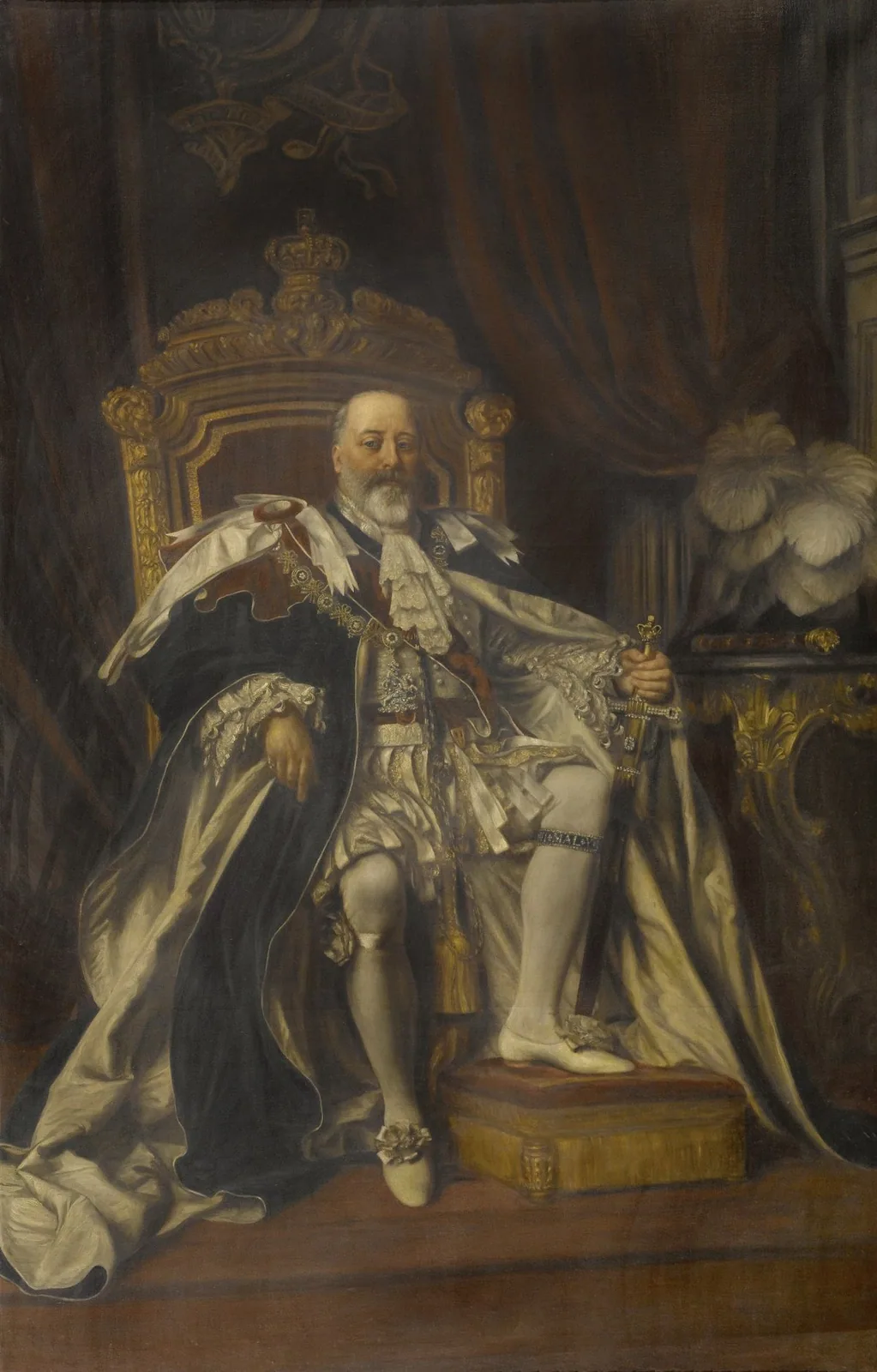
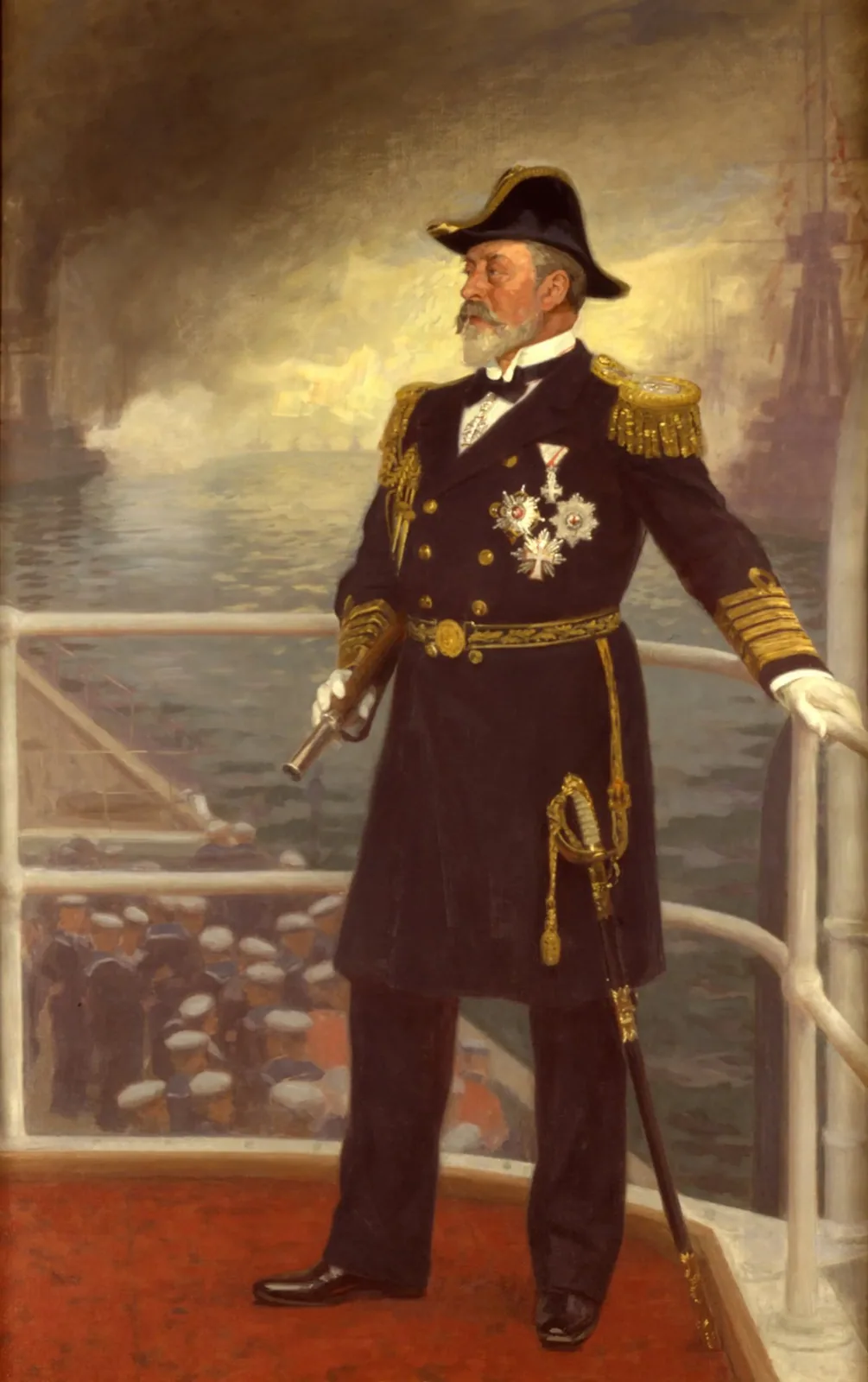
Edward VII reigned from 22 January 1901 (the death of Queen Victoria) to 6 May 1910 (his own death). His reign covers nine calendar years, the briefest of any modern British monarch except Edward VIII (who abdicated before any coins entered circulation). His coinage maintained the Veiled Head Victoria designs initially before the King's own portrait by George William De Saulles appeared from 1902 onwards. The Edwardian era saw the British Empire at its height; Edward VII coins were struck at all six branch mints (London, Sydney, Melbourne, Perth, Ottawa, Pretoria came online in 1923 after his reign).
Are Edward VII coins valuable?
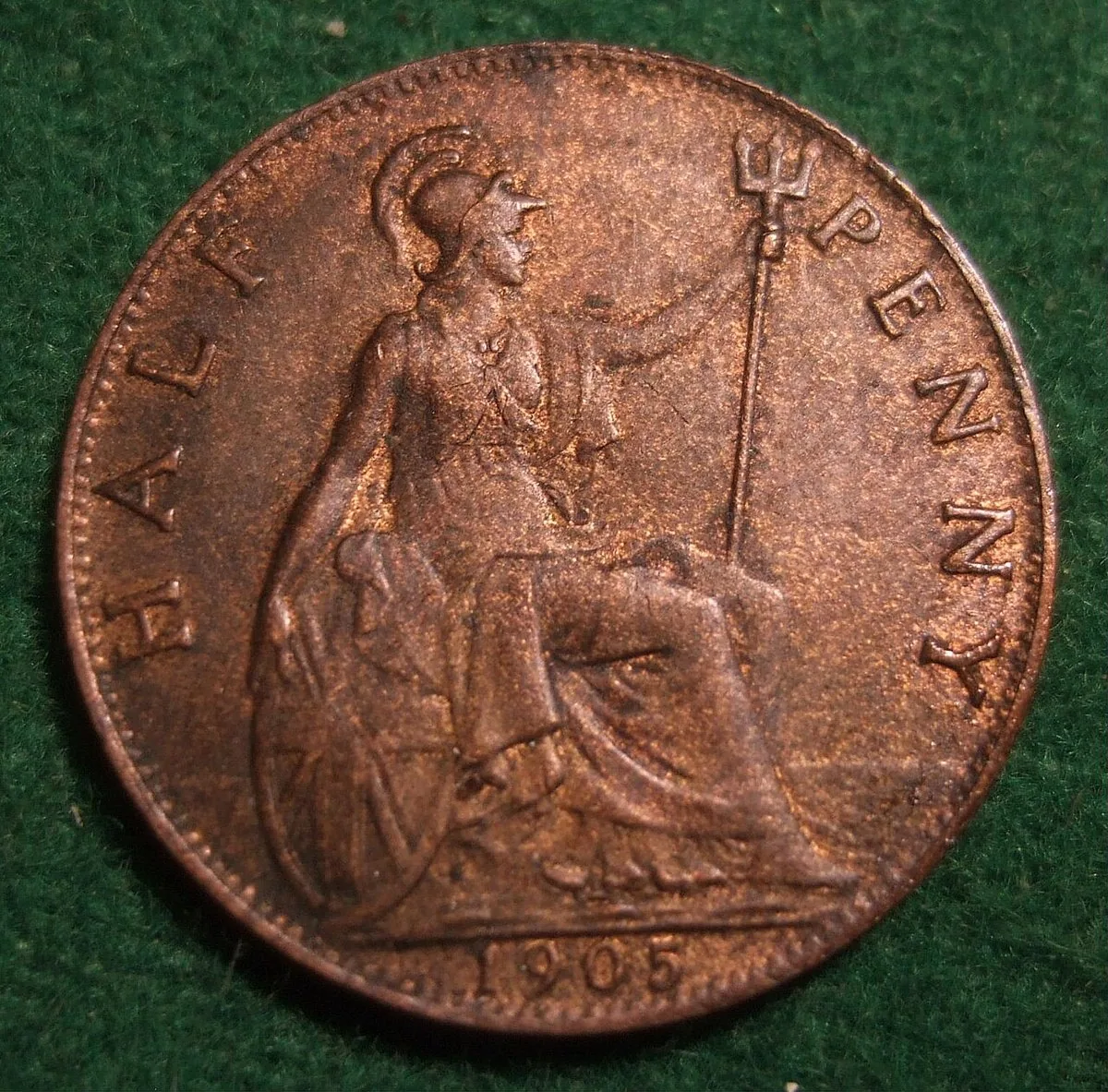
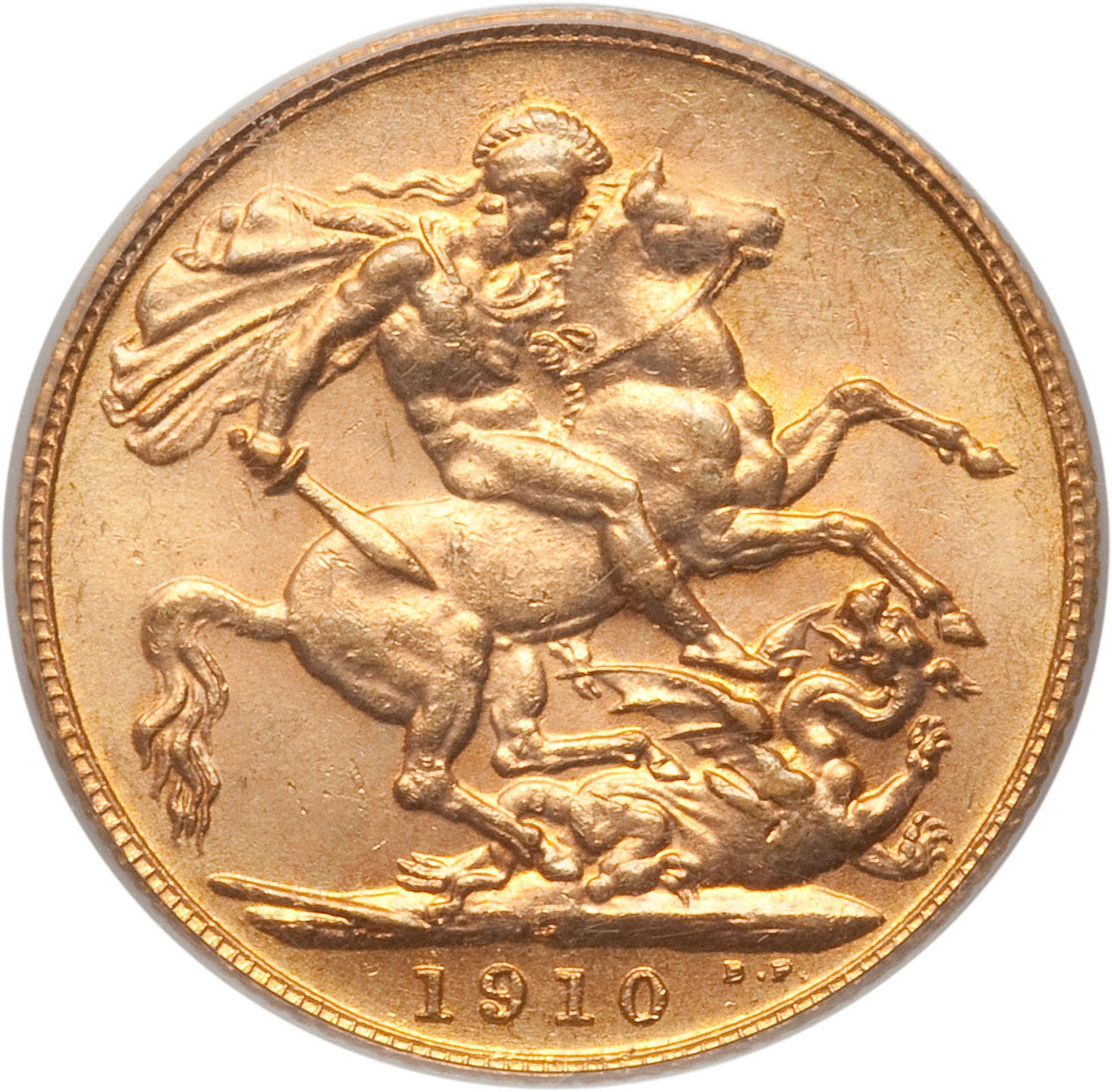
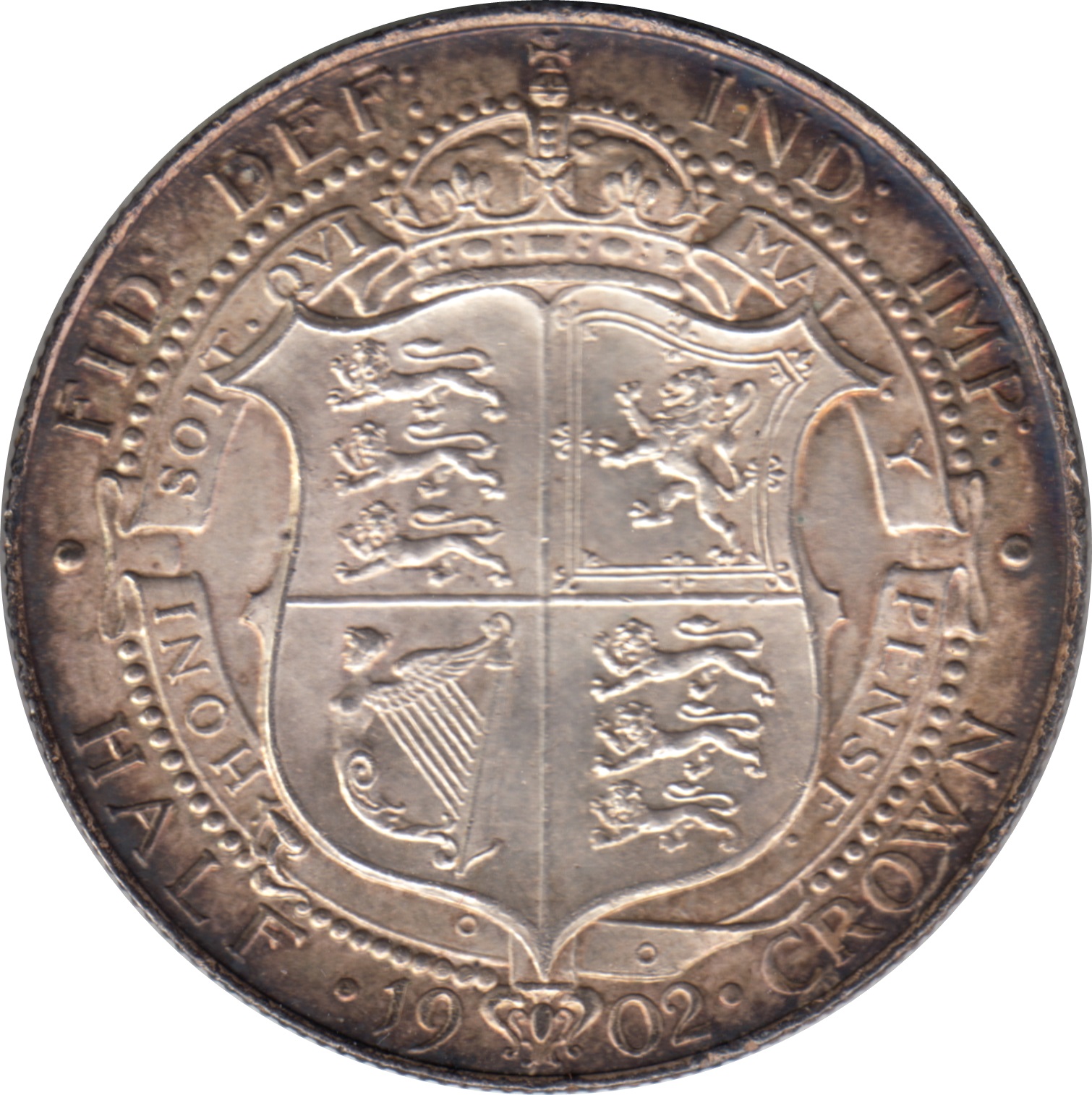
Most Edwardian coins in worn condition trade at modest premiums: pre-1920 sterling silver shillings at £5-15 (junk silver value plus modest numismatic premium); florins at £8-25; half crowns at £10-30. Mint-state and proof Edward VII coins are much more valuable: 1902 Coronation matt proof set (mintage 15,123) trades at £1,500-2,800 in original red box; 1902 Coronation crown matt proof at £200-450; the famous 1905 half crown (lowest Edwardian mintage at 166,008) trades at £200-2,000 depending on grade. Gold sovereigns from Edward VII's reign trade at gold premium plus 5-15% numismatic for common dates.
What is the rarest Edward VII coin?
In modern circulating: the 1905 half crown (mintage 166,008) is the lowest-mintage Edwardian denomination and trades at £200-500 in worn grade, £800-2,000 in mint state, £3,000+ in MS-65. In specimen format: the 1902 matt proof set in original red Royal Mint box (mintage 15,123) trades at £1,500-2,800 complete; individual matt proof crown components sell at £200-450 each. In branch mints: the 1908 C Ottawa proof sovereign (mintage 636) is the rarest Edward VII branch-mint piece, auction realisations £100,000-185,000+. The 1910 Britannia florin in MS-67+ slabbed condition is the strongest secondary-market performer.
Are Edward VII silver coins pre-1920 sterling?
Yes, all Edward VII silver coins (struck 1902-1910) are .925 sterling silver (92.5% silver, 7.5% copper). The wartime alloy debasement from sterling to .500 silver did not happen until 1920 (under George V), so all Edward VII silver coinage falls under the higher-fineness sterling era. This makes Edwardian silver pence-for-pence the highest-silver-content modern UK silver coinage, and the most-collected for "junk silver" purposes among UK pre-1920 silver buyers. A 1902-1910 sterling shilling contains 5.23 g of silver; a sterling florin 10.46 g; a sterling half crown 13.05 g. See our pre-1947 vs post-1947 silver guide.
How much is a 1902 Coronation matt proof set worth?
The 1902 Edward VII Coronation matt proof set is the most-collected pre-decimal British proof set. It contains 13 coins (sovereign, half sovereign, crown, half crown, florin, shilling, sixpence, threepence, plus four Maundy coins) in distinctive Royal Mint dark red box with cream silk lining. Mintage 15,123 sets. A complete set in original box and good condition trades at £1,500-2,800; a pristine sealed set at £3,000-4,500. Individual matt proof components removed from the set: the matt proof crown trades at £200-450; matt proof half crown at £120-280; matt proof florin at £75-180. Provenance is critical, sets with original case and paperwork command 30-50% premium over loose-coin equivalents.
What is a "matt proof"?
A matt proof is a specialised proof finish where the coin's entire surface (both fields and design) is sandblasted to produce a uniform matt, non-reflective finish, distinct from the standard mirror-finish proof. Edward VII matt proofs were struck only for the 1902 Coronation set, later proof sets returned to the standard mirror-finish format. The matt finish was an aesthetic choice by the Royal Mint to produce a more "modern" look for the new reign. Matt proofs are tactile and visually distinct, they look almost frosted compared to the bright mirror of a standard proof. A 1902 matt proof crown commands a 30-50% premium over a standard proof crown of the same year.
How can I authenticate Edward VII coins?
Three checks. (1) Weight: sterling shilling = 5.66 g; sterling florin = 11.31 g; sterling half crown = 14.14 g; gold sovereign = 7.98 g; gold half sovereign = 3.99 g. (2) Diameter: shilling 23.5 mm; florin 28.5 mm; half crown 32 mm; sovereign 22.05 mm. (3) Specific gravity: sterling silver = 10.4 g/cm³; 22-carat gold = 17.6 g/cm³. For high-value matt proofs and the 1908 C Ottawa sovereign, professional grading by PCGS or NGC is essential. Edwardian counterfeits exist but are uncommon for circulating denominations; the matt proofs and gold pieces are the high-risk authentication targets.
Where are Edward VII branch-mint coins struck?
Five branch mints struck Edward VII coins: Sydney (S), Melbourne (M), Perth (P), Ottawa (C, 1908-1910), and London (no mint mark). Bombay (I) and Pretoria (SA) did not strike Edwardian coinage, both opened later (1918 and 1923 respectively). The Ottawa Mint opened in 1908 and struck Edward VII sovereigns from 1908 to 1910, including the famous 1908 C proof sovereign (mintage 636), the rarest modern British coin by surviving mintage. See our sovereign mint marks guide for the full mint-mark reference.
How do Edward VII gold sovereigns compare to Victoria sovereigns?
Edward VII gold sovereigns carry the De Saulles uncrowned bust (a more modern, naturalistic portrait) compared to Victoria's three portraits (Young Head, Jubilee Head, Veiled Head). Most Edwardian sovereigns are dated 1902-1910 and trade at gold premium plus 5-15% numismatic for common dates, similar to common Victorian Veiled Head sovereigns. Branch-mint Edwardian sovereigns (S, M, P, C) carry similar premium tiers to Victorian branch-mint pieces. The 1902 Coronation proof gold sovereign (mintage 8,000) is the most-collected Edwardian gold piece and trades at £1,200-2,500 depending on condition. See our sovereign values UK guide.
Where should I sell Edward VII coins?
For pre-1920 sterling silver as junk silver: bullion dealers at melt + 5-10%. For Edwardian mint-state and proof pieces: UK numismatic auction houses (Spink, Baldwin's, Noonans). For high-grade slabbed Edward VII coins: PCGS or NGC certified examples on eBay UK; the slab adds 25-40% to realised value. For the 1902 Coronation matt proof set: consign to a specialist British numismatic auction house for the strongest realisation. See our where to sell rare coins UK guide.
We use cookies to keep you signed in, a first-party cookie to see how the site is used, and Google Analytics.
No thanks turns off our own record; you can change it any time in your account.
Cookie Policy