1989 500th Anniversary Sovereign: Tudor Reverse, Limited Mintage
The 1989 sovereign marked the 500th anniversary of King Henry VII's 1489 original Tudor sovereign, one of only three modern sovereigns to not use Pistrucci's St George reverse. The one-year-only Tudor royal arms design, by Bernard Sindall, plus the limited proof and Piedfort mintages, makes this the strongest-performing modern UK sovereign by long-term appreciation. This guide covers all six variants, realised prices, the historical context, and authentication.
Featured sovereigns on MyCoinage
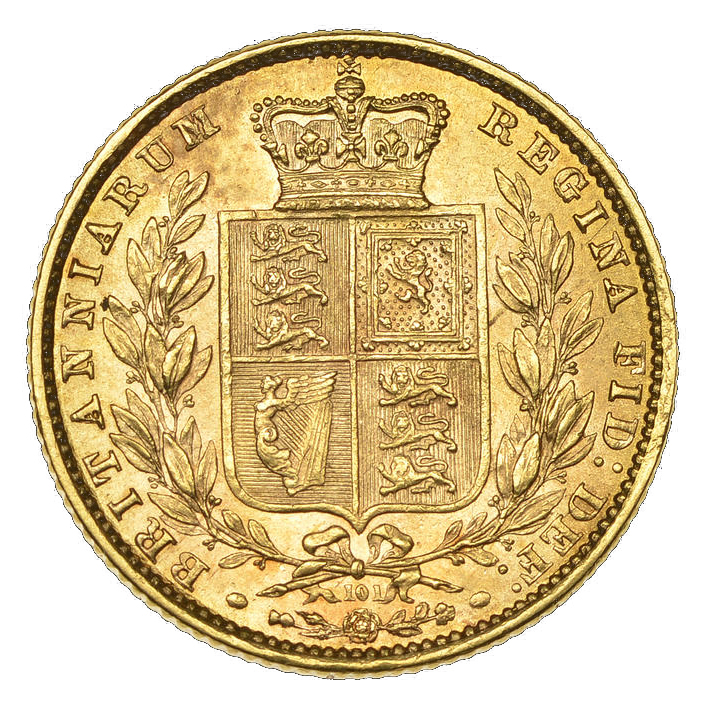
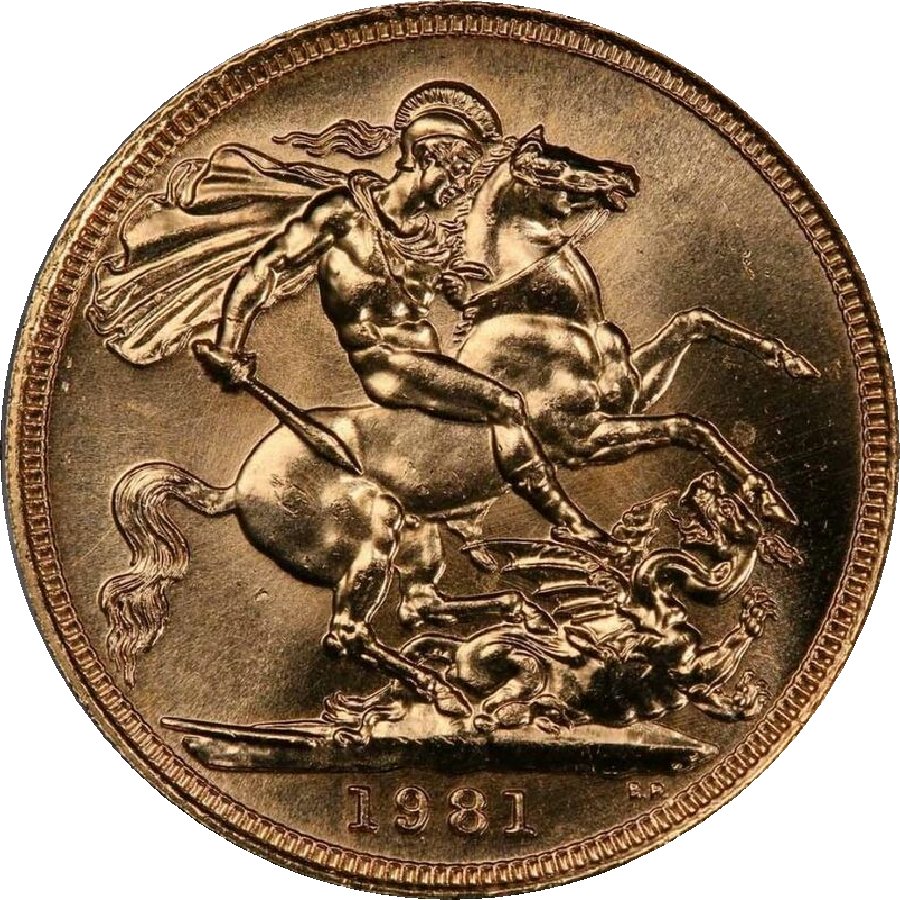
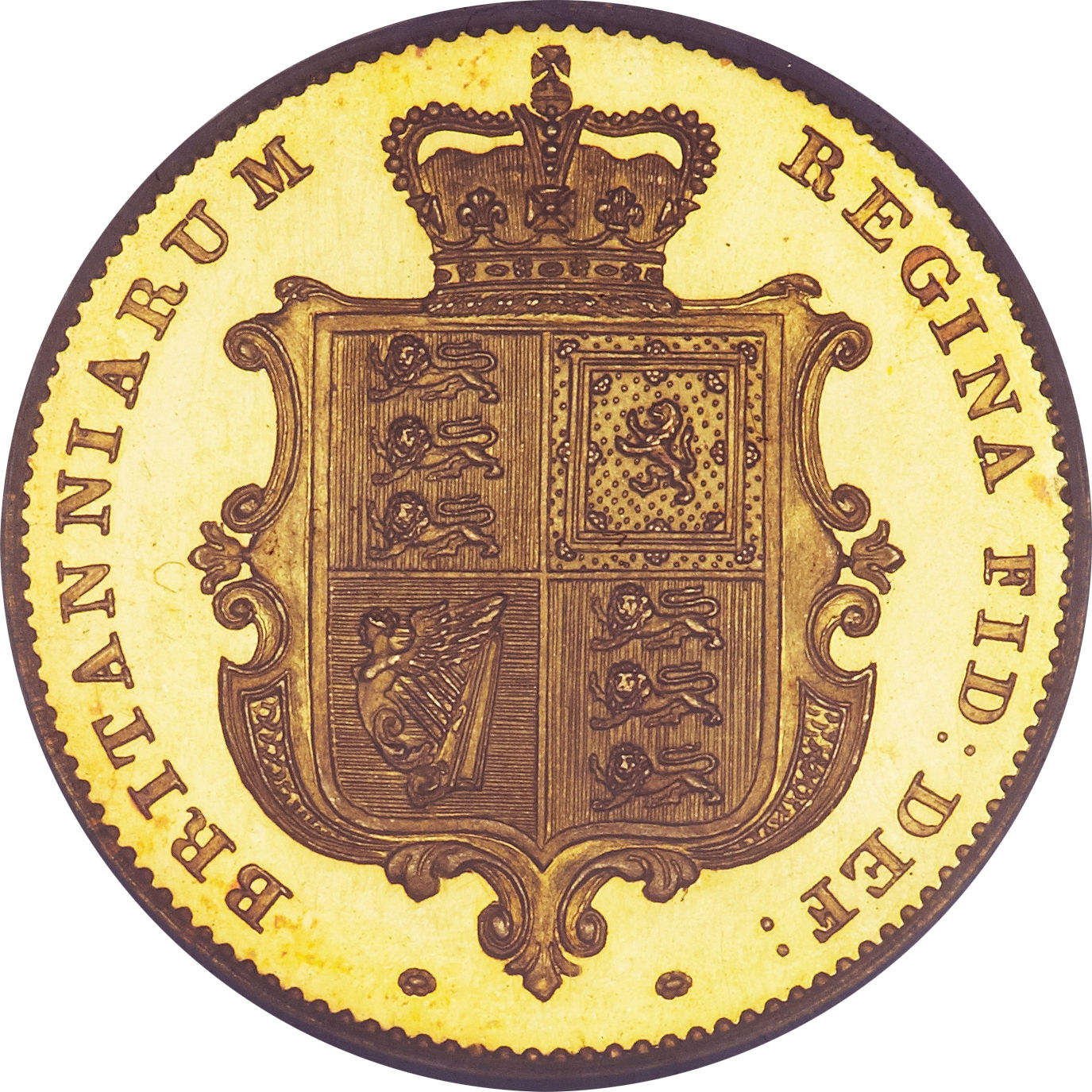
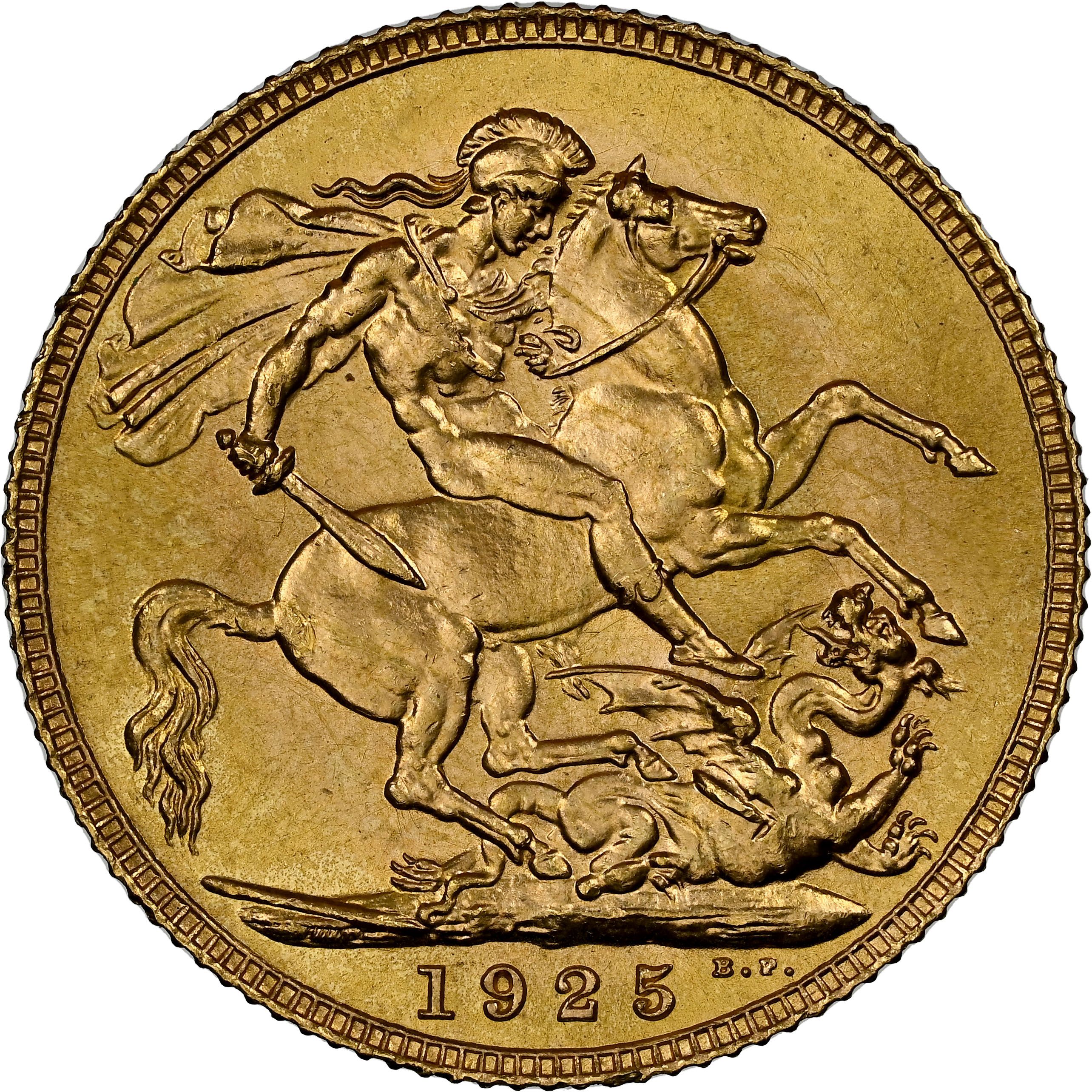
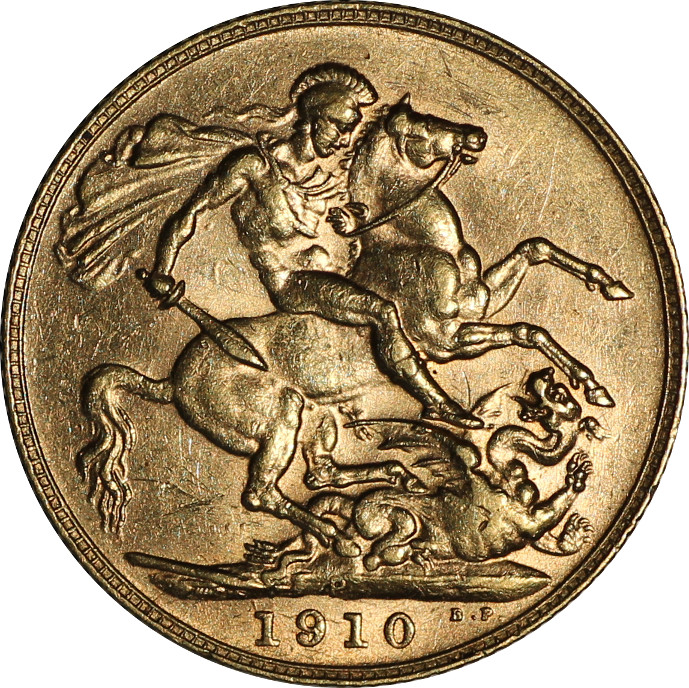
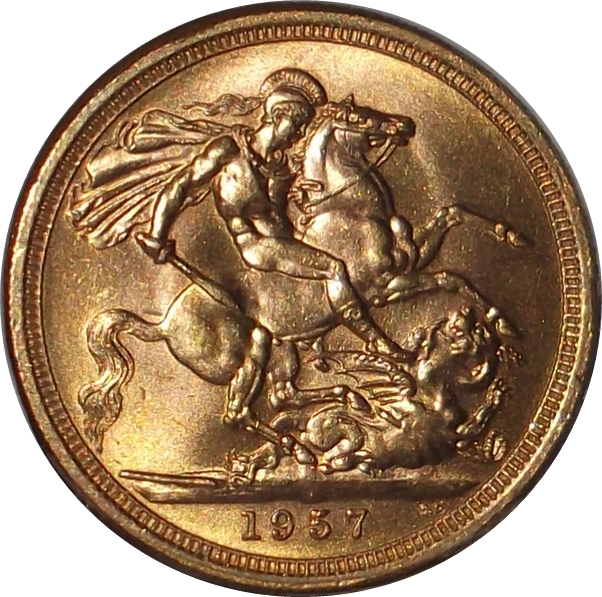
The 1989 anniversary sovereign, what made it different
Two centuries of modern sovereigns are dominated by one image: Benedetto Pistrucci's St George spearing the dragon. The 1989 sovereign broke that rule and is one of only a handful of issues to do so. The Royal Mint chose the year deliberately, it was 500 years to the month since the original Tudor sovereign was struck for Henry VII on 28 October 1489, and the anniversary needed a reverse that referenced that origin rather than Pistrucci's 1817 design.
Sculptor Bernard Sindall was commissioned to design both sides of the coin. The reverse revives the heraldic Tudor royal arms shield within a crowned and ornamented Garter motif, with stylised Tudor roses at the cardinal points, a direct visual quotation of the 1489 original. Sindall's obverse departed from the standard Maklouf portrait and instead showed Elizabeth II enthroned in coronation regalia, holding the orb and sceptre, a deliberate echo of the Henry VII enthroned obverse from 1489. Both faces are unique to the 1989 issue.
The coin's metal specification is identical to a standard sovereign, 7.988 g of 22-carat gold (7.322 g pure), 22.05 mm diameter, milled edge, so the differentiation is design and mintage, not gold content. Specifications match identically across the BU, proof, piedfort and quintuple formats; only the diameter and mass change with denomination.
For pricing context across the wider sovereign series, see our gold sovereign values guide and the Elizabeth II sovereign values reference for date premiums.
Mintages and fields/proofs by format
The 1989 anniversary issue was released across six formats. Mintages were aggressive even by Royal Mint proof standards, the headline proof sovereign at 22,000 is roughly a fifth of an ordinary Elizabeth II proof year, and the piedfort and quintuple variants sit in three- and low-four-figure territory. Those caps are now permanent: no further 1989-dated sovereigns can be struck.
| Format | Mintage | Issue price (1989) | Realised today |
|---|---|---|---|
| Brilliant Uncirculated sovereign in Royal Mint pack | Not formally capped (est. 23,000) | £125 | £700, £1,100 |
| Proof sovereign in clamshell case | 22,000 | £200 | £800, £1,400 |
| Piedfort proof sovereign (double-thickness, 15.976 g) | 1,000 | £500 | £2,200, £3,500 |
| Half-sovereign proof | 7,936 | £110 | £500, £850 |
| Quintuple sovereign £5 proof (1 oz gold) | 2,250 (incl. set issues) | £1,250 | £5,500, £8,500 |
| Four-coin anniversary set (£5, sovereign, half-sovereign, quarter pattern) | 1,500 sets | £1,650 | £3,500, £5,500 |
Mintages drawn from Royal Mint annual reports and the Spink Standard Catalogue of British Coins. Realised ranges reflect auction hammer + buyer premium across UK and international salerooms over the past five years.
1989 vs 2002 Diamond Jubilee vs 2017 200th anniversary sovereign, modern key sovereigns
Three modern sovereigns sit firmly in "collector key" territory rather than ordinary bullion: the 1989 Tudor anniversary, the 2002 Golden Jubilee shield reverse, and the 2017 200th-anniversary Pistrucci re-engraving. Each is a one-year-only design tied to a numismatic milestone, each carries a capped mintage well below ordinary years, and each trades at a meaningful premium to common-date sovereigns. The table below shows how they compare on the metrics that actually drive premium.
| Issue | Anniversary | Reverse designer | Proof mintage | Proof realised | Premium feel |
|---|---|---|---|---|---|
| 1989 500th anniversary | 500 years since 1489 Tudor sovereign | Bernard Sindall (Tudor royal arms) | 22,000 | £800, £1,400 | Strongest non-Pistrucci modern |
| 2002 Golden Jubilee | 50 years of Elizabeth II reign | Timothy Noad (shield within Garter) | 12,500 | £700, £1,200 | Lowest mintage of the three |
| 2017 200th anniversary | 200 years of modern sovereign | Pistrucci original 1817 reverse re-cut | 10,500 (proof) | £700, £1,100 | Bullion variant also widely traded |
The 1989 typically takes the top spot for two structural reasons: it has the strongest design departure (the only Tudor royal-arms reverse in the modern series until 2002), and it predates the modern Royal Mint habit of issuing proof, piedfort, gold proof and bullion variants of every commemorative, that breadth dilutes mintage scarcity for the 2002 and 2017 issues. The 2002 has lower headline mintage but its design (a smaller-scale shield within a circular wreath) is the closer visual cousin and many collectors hold both.
Realised auction prices for 1989 sovereigns by format and grade
The table below maps realised auction outcomes from UK and international specialist sales across the past five years. Prices reflect hammer plus standard 22–25% buyer premium, and assume Royal Mint original case-of-issue or third-party slab. Loose, mishandled or cleaned examples sell at the lower end of each range; certified PCGS or NGC examples at PR68+ sit at the upper end.
| Format | Mid-grade range | Top-grade range | Notes |
|---|---|---|---|
| BU pack (sealed Royal Mint card) | £700, £900 | £950, £1,100 | Sealed packaging adds 10–15%; faded card discounts equally |
| Proof in clamshell, with COA | £850, £1,100 | £1,150, £1,400 | PR69 / PR70 slabbed at upper bound |
| Piedfort proof | £2,200, £2,800 | £2,900, £3,500 | Unbroken seal on outer box adds £200–300 |
| Quintuple £5 (1 oz gold proof) | £5,500, £6,800 | £7,000, £8,500 | Bullion floor moves the band up when gold rises |
| Four-coin anniversary set | £3,500, £4,500 | £4,800, £5,500 | Original outer presentation case essential |
Investment performance, 1989 vs spot gold, 1989 vs Britannia bullion
The 1989 anniversary sovereign is one of the rare modern Royal Mint issues to have meaningfully out-performed gold spot over its lifetime. Issued at £200 for the standard proof in 1989, the same coin trades at roughly £1,100 mid-range today, a multiple of around 5.5×. Over the same window, the LBMA gold price moved from approximately £245/oz in 1989 to roughly £3,400/oz in 2026, a multiple of about 14× per ounce, but the sovereign carries only 0.2354 oz of pure gold, so the bullion-only return on a 1989 sovereign would be a doubling of melt value rather than the full 14×. The numismatic premium has done the rest of the work.
Compared to the obvious bullion alternative, a one-ounce gold Britannia bought new in 1989 and held to today, the 1989 anniversary sovereign has produced a higher percentage return because of its commemorative scarcity, but a lower absolute pound return because each Britannia carries roughly four times the gold content. The takeaway is that the 1989 piece behaves as a numismatic investment with a bullion floor, whereas a Britannia behaves as a bullion investment with a small numismatic kicker. For pure gold exposure, Britannia is more cost-efficient; for collectable upside, the 1989 has been a better bet.
The piedfort and quintuple variants have appreciated more steeply still, the 1 oz gold proof £5, issued at £1,250, now ranges £5,500–£8,500, a multiple of roughly 4–7×, while carrying enough gold to give it a meaningful melt floor. See our sovereigns vs Britannias guide and is a sovereign a good investment for the wider performance picture, and CGT-exempt coins UK for why the gain on a sovereign is tax-free for UK residents but the equivalent gain on a Krugerrand or bullion bar is not.
Spotting fakes and counterfeits
The 1989 anniversary sovereign is not a major counterfeit target compared with common-date Victorian or Edwardian sovereigns, the mintage is too small to provide cover for casual fakes, and the Royal Mint packaging is itself a strong authentication signal. That said, three counterfeit profiles do appear on the secondary market.
- Cast gold-plated copies. Cheap, often in the wrong weight (under 7.93 g or over 8.05 g) and undersize on diameter (typically 21.7–21.9 mm against the correct 22.05 mm). A jewellery scale to 0.01 g resolution and a vernier calliper catch these immediately.
- 22-carat correct-spec restrikes from non-Royal Mint sources. These are the harder cases, full gold content, correct diameter, but lacking the precise die work of a Royal Mint proof. Tells include soft definition on Sindall's "BS" designer mark in the exergue, slightly mushy detail on the four Tudor roses, and a cabochon-style finish on the field rather than the deep mirror polish of a true proof.
- Switched packaging. A genuine standard-issue sovereign repackaged into a 1989 BU folder or proof clamshell. The visual identifier is the reverse: any St George reverse in 1989 packaging is a switch. Always lift the coin (carefully, by the edges) and confirm the Tudor royal-arms reverse is present.
For Piedfort and quintuple variants, professional authentication via PCGS or NGC is worth the £25–50 fee, the slab adds 15–25% to realised price and removes counterfeit risk in a single step. For more general fake-detection technique, see our how to spot a fake sovereign guide.
Related sovereign guides
- Gold sovereign values UK, the umbrella reference for date premiums and bullion mechanics.
- Elizabeth II sovereign values, year-by-year context for the 1957–2022 reign that 1989 sits inside.
- Shield-back sovereign, the historical heraldic reverse the 1989 design quotes.
- Sovereign as a gift UK, why anniversary sovereigns make strong commemorative gifts.
- CGT-exempt coins UK, why the gain on a 1989 sovereign is UK tax-free.
- How to spot a fake sovereign, full authentication walk-through.