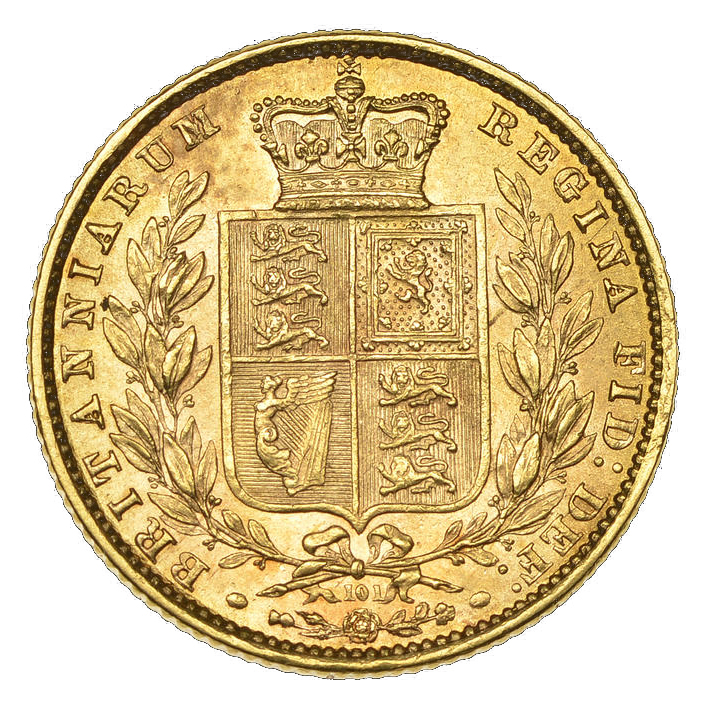
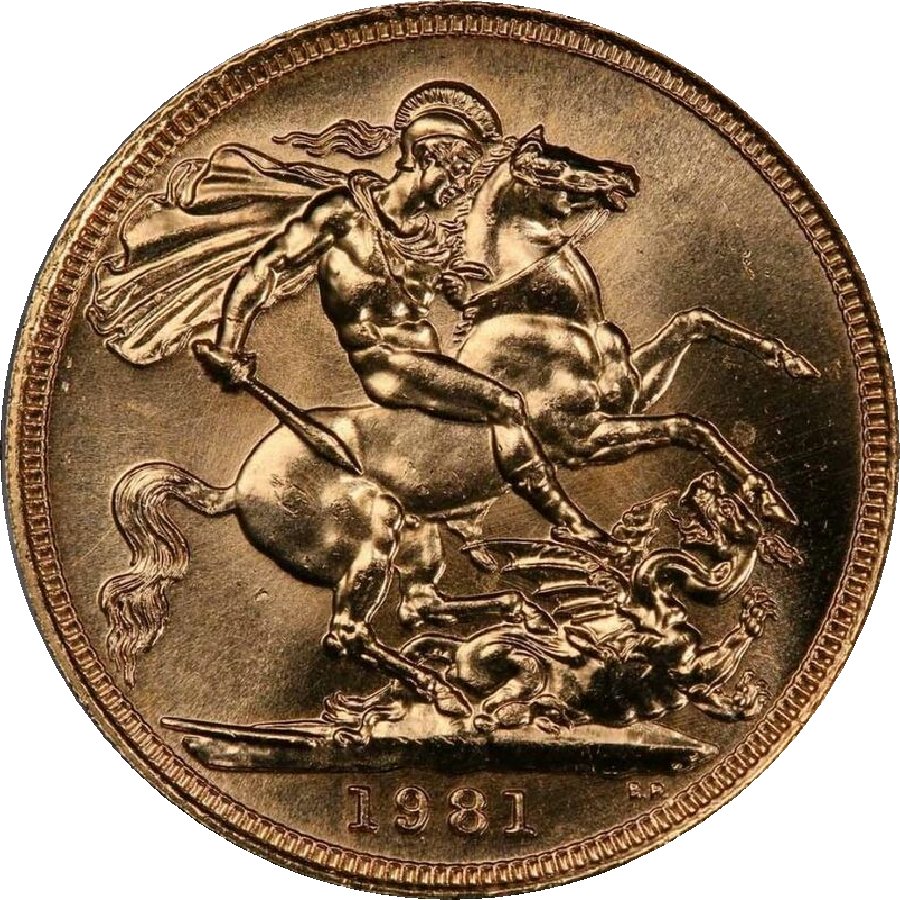
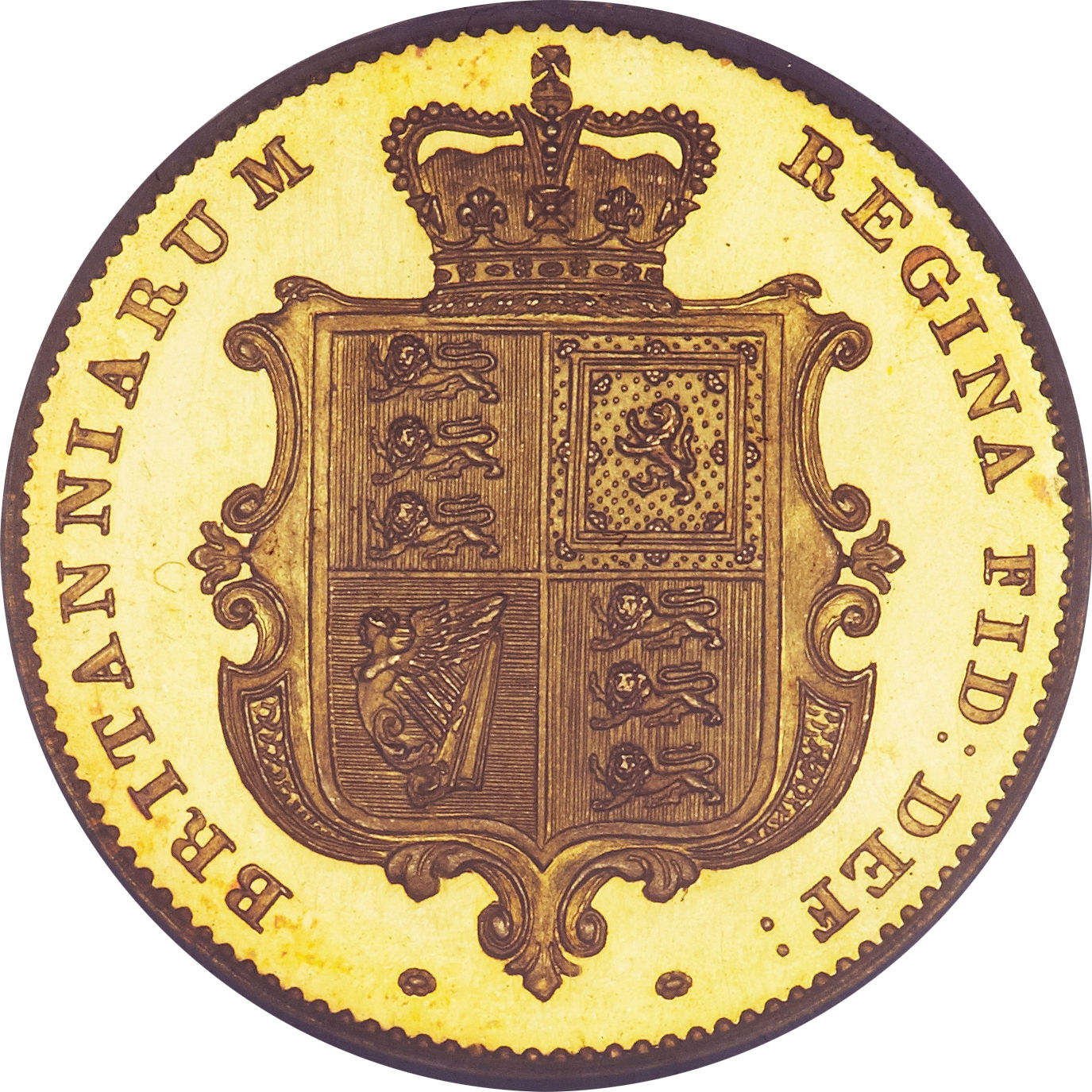
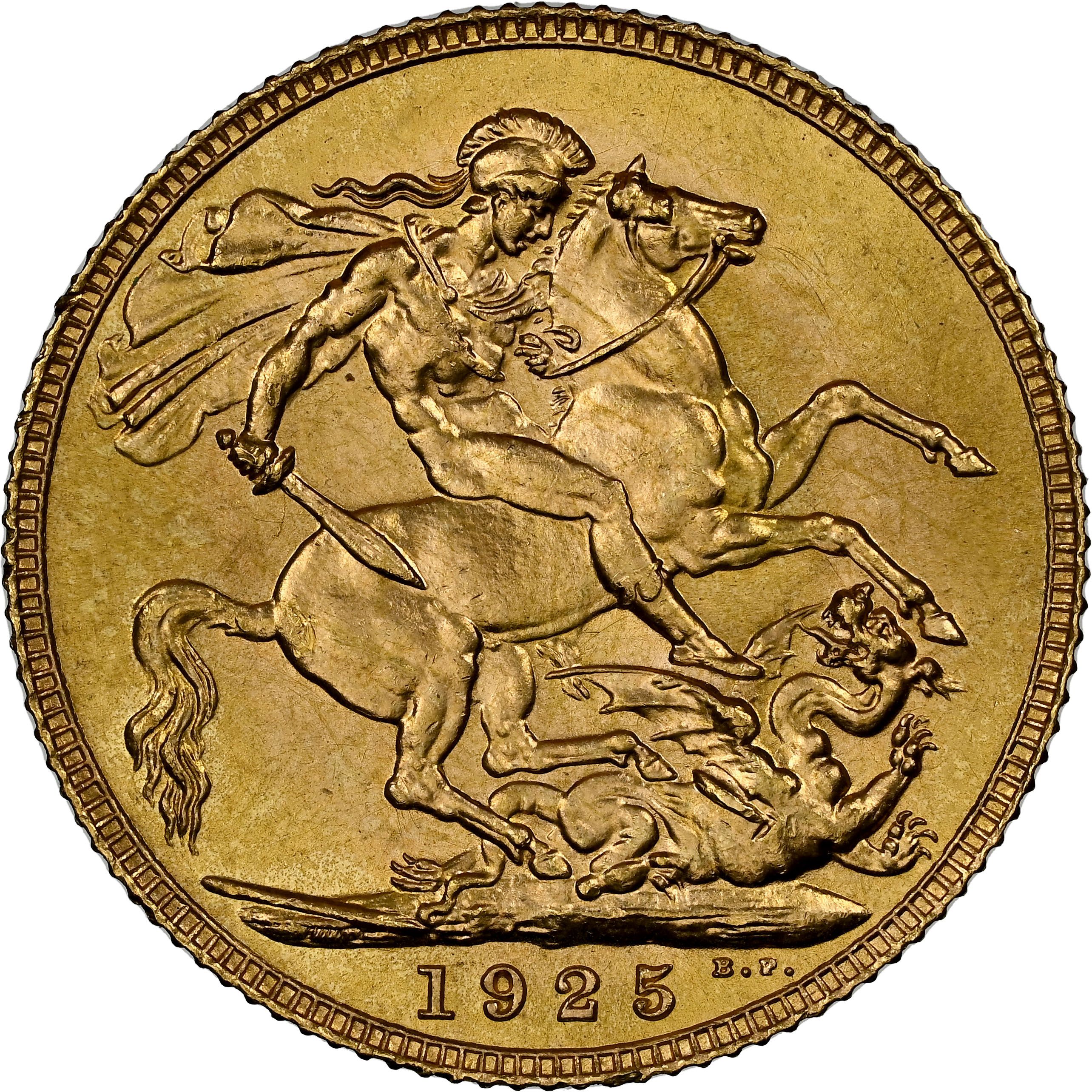
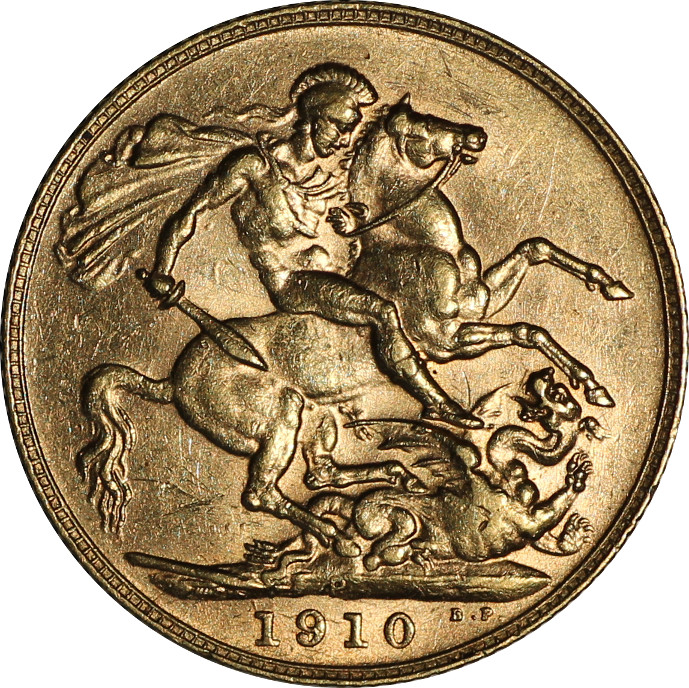
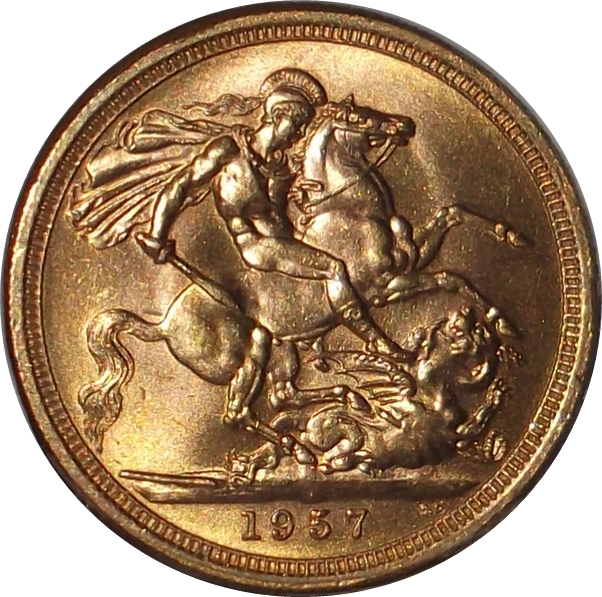
Both the Sovereign and the gold Britannia are UK legal-tender CGT-exempt gold coins issued by the Royal Mint
, the two strongest tax-efficient gold-coin holdings available to UK investors. The choice between them
comes down to gold content, fineness, premium over spot, fractional ladder, and numismatic upside potential.
This guide covers the full side-by-side.
In brief. Both CGT-exempt as UK legal tender. Sovereign: 7.988 g
22-ct gold (7.32 g pure), £1 face value, 1817 onwards, numismatic-upside potential on rare
dates. Britannia: 31.1 g 24-ct fine gold, £100 face value, 1987 onwards,
fractional sizes from 1/40 oz to 10 oz. Sovereign for premium / numismatics; Britannia for pure
gold exposure. Both trade at 3-7% over bullion spot for common dates.
We list reputable UK bullion dealers we'd happily buy from ourselves. Some links may earn us a small
commission at no cost to you, it helps keep MyCoinage free.
Side-by-side comparison
| Sovereign | 1 oz Gold Britannia |
|---|
| First issued | 1817 (modern), 1489 (original) | 1987 |
| Total weight | 7.988 g | 31.1035 g |
| Pure gold content | 7.32 g | 31.1 g |
| Fineness | 22-carat (.916) | 24-carat (.999 / .9999 from 2013) |
| Diameter | 22.05 mm | 38.60 mm |
| Face value | £1 | £100 |
| Typical bullion premium | 4-7% (Eliz II / Charles III) | 3-6% |
| Rare-date premium | 20-100%+ on key dates | Modest (most years still close to floor) |
| CGT-exempt? | Yes (UK legal tender) | Yes (UK legal tender) |
| VAT? | No (gold is VAT-free) | No (gold is VAT-free) |
| Fractional sizes | 1/4, 1/2, 1, 2, 5 sovereigns | 1/40, 1/20, 1/10, 1/4, 1/2, 1, 2, 5, 10 oz |
| Numismatic upside? | High (200+ year history) | Lower (modern series, less catalogued variation) |
Featured UK gold coins on MyCoinage
Browse every gold coin in the catalogue →
Buy gold sovereigns and Britannias on eBay
The links below open eBay UK searches; if you buy through them, MyCoinage earns a small commission at no cost to you.
Full sovereign ↗
Half sovereign ↗
Quarter sovereign ↗
1 oz gold Britannia ↗
1/4 oz gold Britannia ↗
Victorian sovereigns sold ↗
Slabbed sovereigns ↗
Frequently asked questions
Sovereign or Britannia: which is the better investment?
Both are UK legal-tender CGT-exempt gold coins, both are made by the Royal Mint, and both retain bullion-floor protection. The Sovereign (7.988 g 22-carat gold, 7.32 g pure gold content) has been in continuous production since 1817 and carries 200+ years of numismatic provenance. The 1 oz gold Britannia (31.1035 g 24-carat fine gold) is purer, larger, and more bullion-focused. Choose the Sovereign if you want numismatic-premium upside on rare-date / mintmark variants and a smaller-unit gold holding. Choose the Britannia if you want pure-gold purity and easier resale via international bullion channels. Many investors hold both for diversification.
How much gold is in a sovereign vs a Britannia?
A full sovereign weighs 7.988 g and contains 7.32 g of pure gold (22-carat / .916 fineness). A 1 oz gold Britannia weighs 31.1035 g and contains 31.1 g of pure gold (.999 24-carat fineness). Per unit, the Britannia carries 4.25x the gold content. By unit price at £1,800/oz spot: sovereign £425, Britannia £1,800. The Britannia ladders upward via 1/4 oz, 1/2 oz, 1 oz, 2 oz, 5 oz and 10 oz variants; the Sovereign ladders downward via half-sovereign and quarter-sovereign.
Are both CGT-exempt?
Yes. UK Capital Gains Tax exempts
any coin that is legal tender of the United Kingdom. Both the Sovereign and the gold Britannia (in all sizes) are legal tender (face values of £1 and £100 respectively) and therefore CGT-exempt indefinitely, regardless of holding period or capital gain. This is one of the major structural advantages of UK gold coins over imported gold. See our
CGT-exempt coins UK guide.
Which has lower spread (premium over melt)?
Spread depends on date, condition and seller, but as a rule: 1 oz gold Britannia typically trades at 3-6% premium over spot at established UK bullion dealers (BullionByPost, Atkinsons, Chards), common-date Elizabeth II / Charles III sovereigns at 4-7%, Victorian sovereigns at 8-15%, and scarce-date sovereigns (1819, 1879 Sydney, 1908 Canada) at 20-100%+ depending on rarity. For straight bullion exposure, the Britannia is slightly cheaper to acquire; for numismatic upside potential, sovereigns are the better choice.
Can I buy fractional sizes?
Yes, both. Sovereigns: half sovereign (3.994 g, 19.30 mm), quarter sovereign (1.997 g, 13.50 mm), full sovereign (7.988 g, 22.05 mm), double sovereign (15.976 g, 28.40 mm) and quintuple sovereign (39.94 g, 36.02 mm). Britannias: 1/40 oz, 1/20 oz, 1/10 oz, 1/4 oz, 1/2 oz, 1 oz, 2 oz, 5 oz, 10 oz. Fractional sizes carry higher per-gram premiums (smaller coins cost relatively more to mint per gram of gold).
How do I authenticate a sovereign or Britannia?
Five tests.
Weight: sovereigns 7.988 g ±0.020 g; Britannias to specification.
Diameter: sovereign 22.05 mm; 1 oz Britannia 38.60 mm.
Magnet test: 22-ct and 24-ct gold are non-magnetic; any pull means plated steel.
Edge: milled (reeded), seam-free; cast counterfeits show a faint horizontal seam.
Specific gravity: 22-ct gold 17.7 g/cm³, 24-ct gold 19.3 g/cm³. Tungsten counterfeits match weight but fail SG test. For coins worth £500+, professional grading at PCGS / NGC / CGS UK is the safety net, see our
grading services comparison.
Are silver Britannias also CGT-exempt?
Yes, but they have a different tax wrinkle. UK silver Britannias (1 oz, .999 fine, £2 face value) are legal tender and therefore CGT-exempt. However, they carry 20% VAT at purchase (gold coins are VAT-free in the UK and EU), making them more expensive to acquire per ounce of metal. For pure gold investment the Britannia gold is more efficient; for a "stack" of silver, silver Britannias are still useful but understand the VAT cost.
How does the price-floor work?
Bullion floor for both = (gold spot price) × (pure gold content). For a sovereign at £1,800/oz spot: 7.32 g × (1,800/31.1035) = ~£425. The selling price will always be at or above this floor (no rational seller takes less) plus a small numismatic premium. Common-date sovereigns and Britannias trade close to floor; rare-date sovereigns trade well above. The floor is the stop-loss in your investment thesis.
Where should I buy sovereigns and Britannias?
Three tiers. Royal Mint direct (royalmint.com): newest issues, often with limited-mintage proof and BU options at slight premium. UK bullion dealers: BullionByPost, Atkinsons, Chards, Hatton Garden Metals, competitive pricing for common-date material, fast UK delivery. UK auction houses: Spink, Baldwin's, London Coins, Coin Cabinet for rare-date / mintmark material. eBay UK works for graded slabbed pieces but be cautious on raw gold for high-value (use authentication / grading first).
What's the difference between gold proof and bullion?
Bullion: struck for investment. Plain finish, modest packaging, lower premium over spot. The 1 oz gold Britannia bullion is the standard. Proof: struck for collectors. Mirror-finish fields, frosted-cameo design relief, Royal Mint clamshell case with Certificate of Authenticity, 20-50% premium over bullion. Proof variants are limited mintage and held more for numismatic appeal; bullion is held for gold exposure with minimal premium.
How do I store gold sovereigns / Britannias?
Gold doesn't tarnish, so storage is about preventing physical damage rather than chemical preservation. Original Royal Mint capsules are fine indefinitely; for loose coins use individual airtight capsules sized to the diameter (Lighthouse Quadrum, AirTite). For collections worth £5,000+ consider an external safe deposit box (Metropolitan Safe Deposits, Mersey Safe Deposits) or vaulted gold accounts (Royal Mint Vault, IBV International). See our
coin storage UK guide.
Does the Royal Mint produce both forever?
The Sovereign has been struck continuously since 1817 (with brief gaps for major design changes and during WWII shortages); the Royal Mint has stated the Sovereign will continue indefinitely as the flagship UK gold coin. The Britannia has been struck since 1987 and was originally intended as the modern UK bullion answer to the Krugerrand. Both have ongoing programmes through Charles III's reign and beyond.
Can I hold sovereigns or Britannias in an ISA or SIPP?
Sovereigns and Britannias are
not eligible for a Stocks and Shares ISA, physical gold coins fall outside ISA-permitted investments. They can be held inside a
SIPP (Self-Invested Personal Pension), but only if the SIPP provider supports physical-gold storage (e.g. Hargreaves Lansdown does not; specialised SIPPs like
BullionVault-linked schemes do). For most UK retail investors the simplest tax-efficient route is direct ownership and the CGT exemption rather than wrapper-based holding. Pension-linked gold storage typically incurs annual storage fees of 0.4-0.8% of value.
How does the Britannia compare to the South African Krugerrand?
The 1 oz gold Britannia and the 1 oz Krugerrand contain the same gross weight (33.93 g for the Krugerrand, 31.10 g for the Britannia, the Krugerrand is heavier because it is 22-carat copper-alloyed, the Britannia is 24-carat fine gold). Both contain exactly 31.103 g of pure gold. The key UK-investor difference: Britannia is CGT-exempt UK legal tender; the Krugerrand is foreign coinage and fully subject to UK CGT on any gain. For UK-resident investors, Britannia is the materially better choice purely for tax reasons. Krugerrands trade at slightly lower premium (1-3% over spot vs Britannia 3-6%) but the CGT advantage usually outweighs the premium difference.
Do scarce-date sovereigns outperform bullion gold over time?
Historically, yes, but only for genuinely scarce key dates (1819, 1879 Sydney, 1908 Canada Ottawa proof, 1949 / 1952 / 1953 Elizabeth II patterns). A 1908 C Ottawa proof sold at
Spink in 2019 for £55,000+, that coin was £10,000 in 2005, a 5x return that beats gold spot over the same period. Common-date Victorian / Edward VII / George V sovereigns track gold spot more closely with a modest numismatic premium.
For pure gold investment, common-date sovereigns are not a "bet" against bullion; the numismatic premium is small and tracks slowly. Genuine date-by-date research is required to spot the rarities.
What's a Piedfort, and is it worth paying the premium?
A Piedfort (French for "heavy foot") is a double-thickness proof variant of a regular coin, same diameter but twice the weight. Royal Mint silver and gold Piedforts are limited-mintage proof issues with mintages typically 1,500-5,000 for silver and 200-500 for gold. They trade at 30-60% premium over the regular proof equivalents and have generally outperformed regular proofs over 5-10 year holds. The trade-off: Piedforts are collector pieces, not bullion, if gold spot rises, your Piedfort tracks the proof market not the spot market. Best for buyers who want a numismatic sleeve in their gold holdings rather than pure bullion.
Are there fake sovereigns and Britannias on eBay?
Yes, common, particularly for sovereigns. The most prevalent fakes are 22-carat-content but cast (not struck), these match weight and gold purity but are technically forgeries. Worth roughly the same as a real sovereign by gold content, but illegal to sell as authentic. Plated brass or steel fakes are more obvious (fail magnet + diameter + weight). Tungsten-core gold-plated fakes are the most dangerous, they match weight and dimensions but fail the specific-gravity test. For any sovereign or Britannia trading at £500+, buy from a Royal Mint-authorised dealer or a slabbed PCGS / NGC graded example. The slab provides authentication and adds minimal cost relative to the loss risk on a fake.
How do I value a sovereign collection for insurance?
Three steps.
(1) Inventory: list each coin with year, mintmark, grade and current realised auction price.
(2) Multiply by 1.20-1.40× for insurance replacement valuation (insurers use replacement value, not realised; replacement is consistently 20-40% higher than auction realised because it includes dealer margin and time-to-source).
(3) Document with photos and a written appraisal from a BNTA-member dealer or a UK auction house specialist. For collections worth £15,000+, an external appraisal from
Spink or
Baldwin's (typical fee £200-400) is recommended for insurance and probate purposes. See our
coin collection insurance UK guide.
Should I buy from the Royal Mint or a bullion dealer?
For
brand-new releases (proof sets, modern Coronation issues, Charles III definitives): direct from
The Royal Mint. The Royal Mint is the only source for first-day issues at issue price. For
everyday bullion (1 oz Britannia, common-date sovereign): UK bullion dealers (BullionByPost, Atkinsons, Chards, Hatton Garden Metals, Baird & Co) typically beat the Royal Mint on bullion-grade pricing by 1-3%. The Royal Mint adds a small "official mint" premium that bullion dealers don't. For
numismatic / rare-date sovereigns: UK auction houses (Spink, Baldwin's, Noonans). Each tier specialises in different segments of the market.