Is a Gold Sovereign a Good Investment? The UK Guide
Gold sovereigns offer UK-resident investors a tax-efficient gold holding with historical 6-7% annualised returns, crisis-hedge characteristics, and a numismatic premium that has outperformed pure bullion in many holdings. But sovereigns underperform equities long-term, carry acquisition premiums of 1-15%, and are not a wealth-maximising strategy in isolation. This guide answers the big questions: how have they performed historically, what allocation makes sense, which sovereigns are best for investment purposes, and how do they compare to equities, property and Krugerrands.
Sovereign vs Britannia vs gold bars, five-year and ten-year performance
The three vehicles UK investors most often weigh against the sovereign are the 1 oz gold Britannia, the LBMA-bar (typically 100 g or 1 oz), and the half sovereign as a smaller-denomination cousin. Each has a different premium structure on the way in, a different exit spread on the way out, and a different tax treatment. The columns below summarise the practical economics rather than headline gold-spot performance, because the difference between vehicles only shows up once entry and exit costs are netted.
| Instrument | Premium at purchase | Spread at sale | CGT treatment | Divisibility |
|---|---|---|---|---|
| Modern bullion sovereign | 5–8% over spot | Spot − 1–3% | CGT-exempt (UK legal tender) | Excellent, 7.32 g unit |
| Common-date Victorian sovereign | 8–15% over spot | Spot + small numismatic premium | CGT-exempt | Excellent |
| Half sovereign (modern) | 10–15% over spot | Spot − 2–5% | CGT-exempt | Best, 3.66 g unit |
| 1 oz gold Britannia | 3–5% over spot | Spot − 1–2% | CGT-exempt (UK legal tender) | Good, 31.1 g unit |
| 1 oz LBMA gold bar | 2–3% over spot | Spot − 0.5–1% | Taxable, full CGT | Poor, bar is one unit |
| 100 g LBMA gold bar | 1–2% over spot | Spot − 0.3–0.5% | Taxable, full CGT | Poor, cannot split |
Read across the columns rather than down. A 100 g bar looks cheapest at the till and gives the tightest sale spread, but at gain it loses 24% (higher-rate CGT) on anything above the annual exempt amount, and you cannot break it into smaller units to manage that gain. A modern bullion sovereign costs more on entry and sells at a wider discount, but on a 10-year hold with significant gold appreciation the CGT exemption typically saves more than the spread cost. Britannia at 1 oz is the closest competitor to the sovereign, lower premium, also CGT-exempt, but a chunkier 31.1 g unit. The sovereign wins on divisibility (you can sell three of ten and keep seven); the Britannia wins on premium efficiency.
Over a five-year hold with gold rising in line with its long-run trend, the sovereign and Britannia produce near-identical net returns. Over a ten-year hold with sterling weakening against gold, the CGT-exempt coins pull ahead of bars by roughly the realised CGT bill. Over the same horizon, common-date Victorian sovereigns have historically added a numismatic-premium layer of 10–30% on top, although that layer is not guaranteed and behaves more like a slow-moving collector market than a tradable spread.
When the numismatic premium pays back, date premium and grade premium
The numismatic premium is the part of a sovereign's price that sits above bullion. For common-date bullion sovereigns it is small and stable; for date-rare and grade-rare pieces it is the dominant component of price. Whether you should pay for it depends on hold horizon and how realistic your view of resale liquidity is.
Date premium is the surcharge for a year or branch mint that the market knows is scarce. The 1841 Victoria, 1879 London no-die-number, 1908 Ottawa proof, 1916 Ottawa, 1918 Bombay and 1920 Sydney are the headline examples, but date premium operates at every tier, an 1893 Sydney is meaningfully pricier than an 1893 London despite being the same coin geometrically. Date premium tends to grow over decade-scale time horizons because the surviving population of any given year only shrinks (through losses, melts, museum acquisition), while collector demand stays roughly constant.
Grade premium is the surcharge for condition. A PCGS or NGC slabbed MS65 example of a common date is typically worth 1.5–3× an ungraded EF of the same coin; an MS66 or MS67 can be 5–10× the EF price. Grade premium is more volatile than date premium because it depends on grading-service population reports: when a fresh hoard or estate breaks more MS66 examples onto the market, the price for that grade can drop 20–30% even if bullion is rising.
The pay-back rule of thumb: date premium pays back over a 10–20 year hold, grade premium over a 5–10 year hold, both assuming gold spot is rising. On a five-year hold in a flat gold market, paying a 50% numismatic premium is rarely a winning trade against the same money in a modern bullion sovereign. On a 20-year hold with rising gold and shrinking surviving population, the numismatic sovereign typically wins by 1.5–2× the bullion-only return.
The CGT angle, why sovereigns have an asymmetric tax case
The Capital Gains Tax exemption for UK legal-tender gold is the single feature that distinguishes sovereigns from every other gold investment available to a UK resident. The mechanism is straightforward: sovereigns dated 1837 onwards remain legal tender of the realm, and HMRC manual CG78308 exempts disposals of legal-tender coinage from CGT regardless of size of gain. The same exemption covers Britannias and Queen's Beasts coinage; it does not cover Krugerrands, American Eagles, Maple Leafs, bullion bars, or any pre-1837 sovereign.
The asymmetry that matters is between losses and gains. Gains on sovereigns are not taxed; losses on sovereigns also cannot be claimed against other capital gains, because the asset is outside the CGT system. For a buy-and-hold investor, this is purely positive: the upside is sheltered, the downside is handled by the bullion floor. For a frequent trader, it removes one tool (loss harvesting against equity gains) but the saving on realised gains in a rising market is materially larger.
The practical effect: with the annual CGT exempt amount at £3,000 and the higher rate at 24% on gold bars and foreign coins, a UK investor who realises £20,000 of gold gain in a single tax year owes around £4,000 in CGT on bars but zero on sovereigns. Over a 20-year cumulative gold cycle that differential compounds, and is the main reason private wealth managers default to sovereigns for the gold sleeve of UK client portfolios.
See our dedicated CGT-exempt UK coins guide for the full qualifying list and the rules on partial-year disposals.
Sovereign vs Krugerrand vs Maple Leaf, international gold coin comparison
For UK residents, the three main international competitors to the sovereign are the South African Krugerrand, the American Gold Eagle and the Canadian Maple Leaf. All three have larger weight units (1 oz), higher fineness (the Maple Leaf is .9999, vs the Krugerrand and Eagle at .9167 like the sovereign), and typically lower bullion premium than the sovereign because they are produced in massive volumes. None of them is CGT-exempt for a UK resident.
| Coin | Pure gold | Premium | UK CGT | Best for |
|---|---|---|---|---|
| UK Sovereign | 7.32 g | 5–15% | Exempt | UK long-hold gold sleeve |
| UK 1 oz Britannia | 31.1 g | 3–5% | Exempt | Larger UK bullion unit |
| Krugerrand 1 oz | 31.1 g | 2–4% | Taxable | Cheapest global bullion |
| Gold Maple Leaf 1 oz | 31.1 g (.9999) | 3–5% | Taxable | Highest fineness |
| American Gold Eagle 1 oz | 31.1 g | 5–8% | Taxable | USD-denominated |
The trade-off resolves the same way every time for a UK resident: if you intend to sell in the UK at any future point, the sovereign is preferred because the ~5–10 percentage points of CGT saving on gain dwarfs the 2–3 percentage points of acquisition premium. A non-UK holder, or a UK holder planning to emigrate before disposal, has the opposite calculus and the Krugerrand or Maple Leaf is the rational pick. See our deeper comparison at sovereign vs Krugerrand.
Spot price scenarios, how sovereigns perform at £1,500/oz vs £2,500/oz gold
Sovereign returns are dominated by gold spot. To frame the next decade honestly, the table below shows the bullion-content value of one full sovereign at three reference spot prices, alongside the typical realised sale value (bullion content plus a representative numismatic premium for a common-date Elizabeth II piece) and the typical ten-year buy-and-hold outcome from a 2026 entry of around £620 per coin.
| Gold spot scenario | Bullion content | Common-date sale value | 10-year vs £620 entry |
|---|---|---|---|
| £1,500/oz (gold falls) | £353 | ~£390 | Loss, ~37% drawdown |
| £1,800/oz (current zone) | £424 | ~£470 | Loss, ~24% drawdown |
| £2,200/oz (mild rally) | £518 | ~£580 | Roughly flat |
| £2,500/oz (strong rally) | £589 | ~£660 | Modest gain, ~6% |
| £3,000/oz (crisis premium) | £707 | ~£800 | Strong gain, ~29% |
| £3,500/oz (extended bull) | £824 | ~£935 | Strong gain, ~51% |
Two observations matter. First, the bullion floor cushions but does not eliminate downside, a 30% fall in gold spot translates to a ~30% drawdown on the coin, less the numismatic premium component. Second, the CGT exemption only matters when there is a gain. In the scenarios where sovereigns make money, the exemption is doing real work; in the scenarios where they lose money, you are simply taking the loss with no offset. The 5–15% portfolio allocation guidance in the FAQ exists precisely because the distribution of outcomes is wide.
When NOT to buy a sovereign as an investment
Sovereigns are not the right tool for every investor or every situation. The honest list of cases where you should buy something else:
- You need the money inside three years. Gold can correct 20–30% over a 12–18 month window; if your time horizon is shorter than the typical correction-recovery cycle, the bullion floor will not save you. Cash, gilts or short-duration bond funds are the right tool for < 3-year horizons.
- You are early in your wealth-building. If you have not yet filled your annual ISA allowance, equity index funds inside the wrapper produce higher long-run returns than gold, also tax-free, with no acquisition premium. Sovereigns are a complement to a fully-funded ISA, not a replacement.
- You will not store them safely. Sovereigns at home in a desk drawer are an insurance-and-theft problem. If you are not prepared to install a TS 007-rated safe, take out specific cover (see coin collection insurance UK), or pay for vaulted storage, the operational risk eats the tax advantage.
- You will buy at a high-street jeweller. High-street sovereign retail commonly carries 15–25% premium over spot. That premium is rarely recoverable and cancels several years of bullion growth. Buy from a recognised UK bullion dealer or the Royal Mint Bullion site instead.
- You expect dividends or rental income. Sovereigns pay no income. The total return is purely capital. If your portfolio strategy is yield-driven, sovereigns are a poor fit and a dividend ETF or an income-orientated REIT is a better complement.
- You plan to leave the UK before disposal. The CGT exemption only applies for UK residents at the point of sale. If you anticipate emigration, the case for the sovereign over a Krugerrand or Maple Leaf weakens significantly, international coins have lower acquisition premium and the same tax treatment for a non-UK resident.
- You are tempted by "exclusive" direct-mail sovereign offers. Westminster Collection, Bradford Exchange and similar mail-order vendors typically price sovereigns at 50–100% over spot. The exit spread on those purchases is brutal. A new collector who buys five "exclusive presentation" sovereigns at £1,200 each in 2026 will likely realise £620 each at any reputable dealer in 2027.
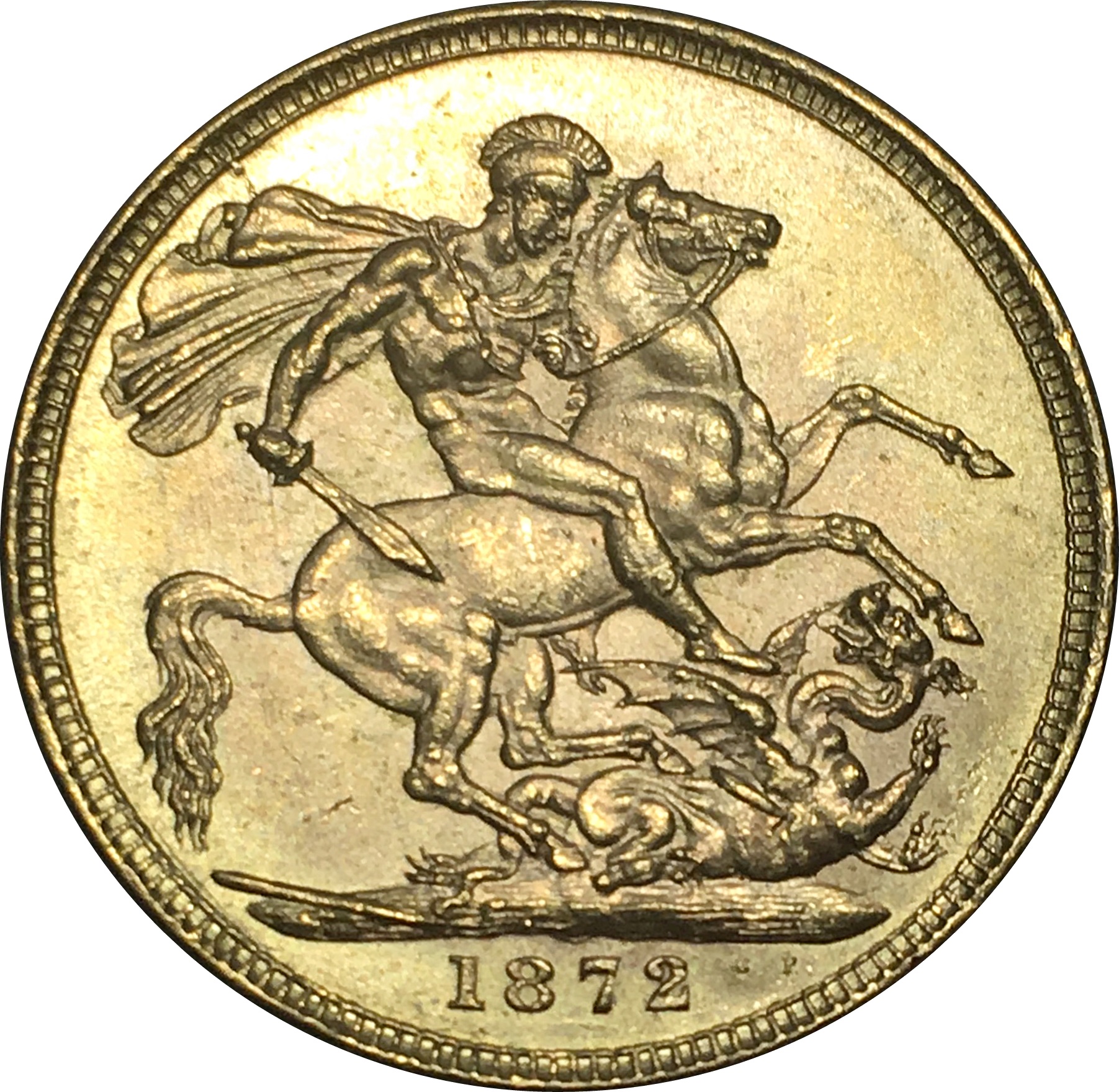
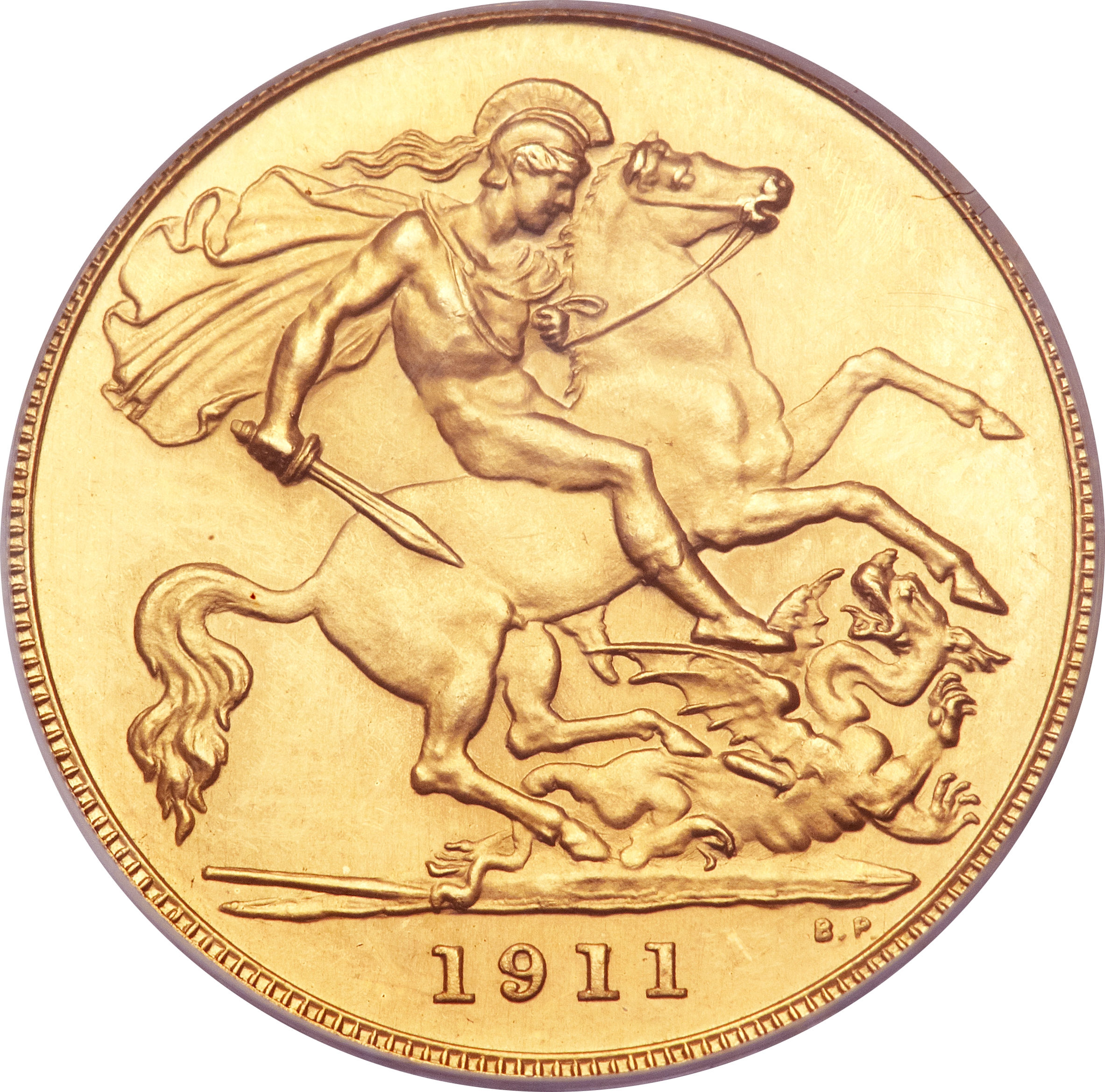
Featured sovereigns on MyCoinage
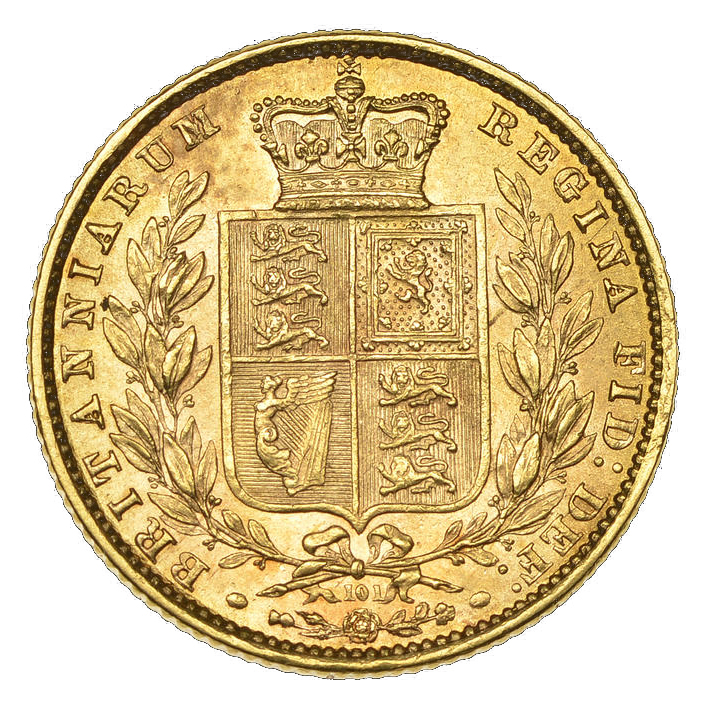
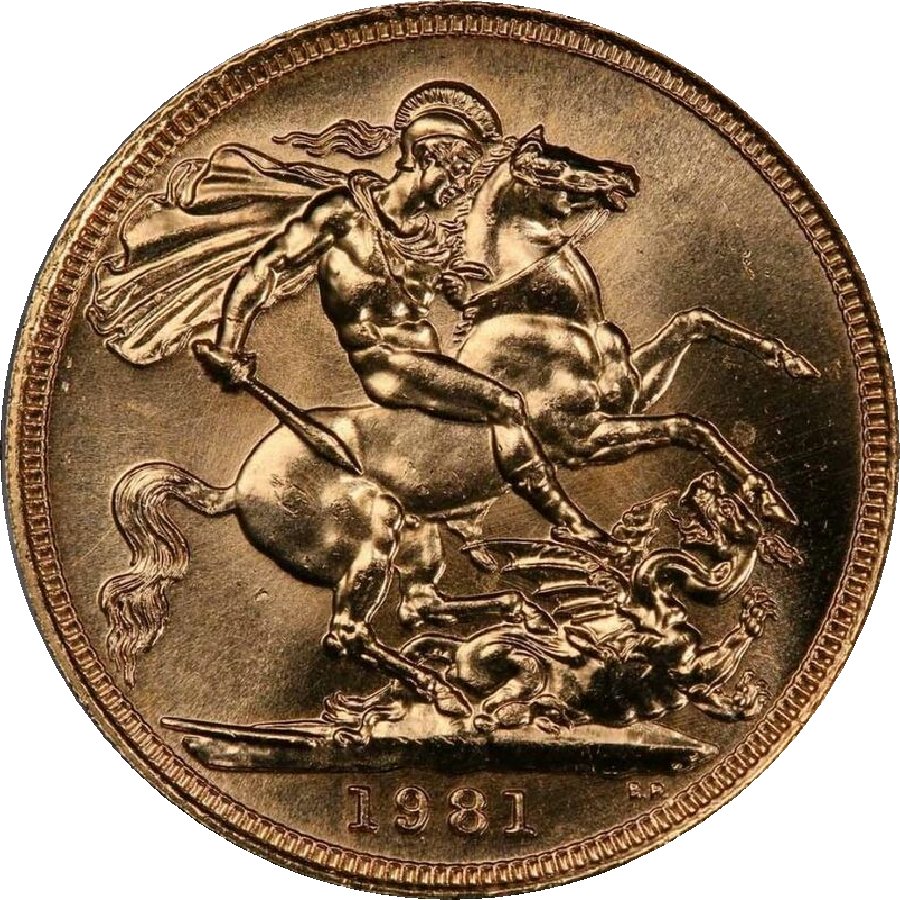


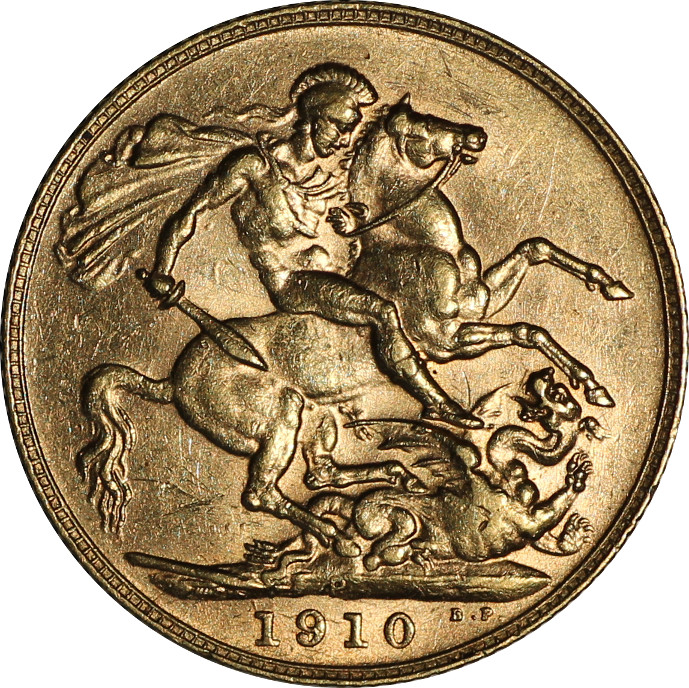
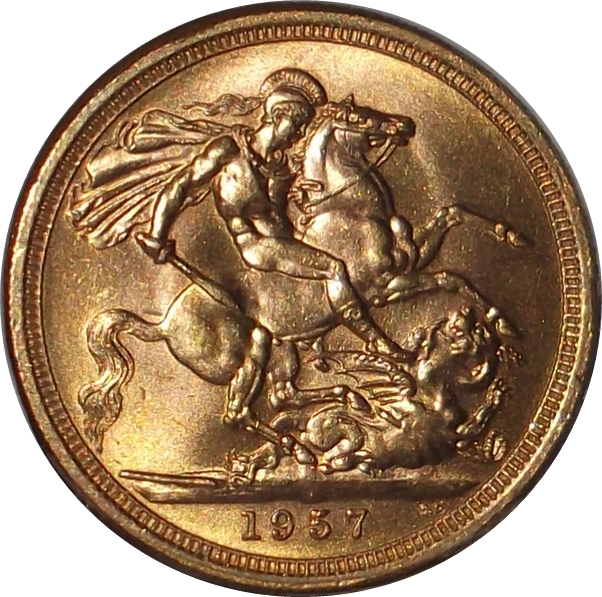
Frequently asked questions
Is a gold sovereign a good investment in 2026?
How have sovereigns performed historically?
How does sovereign investment compare to equities?
How does sovereign investment compare to property?
Why do sovereigns carry a numismatic premium?
What is the best sovereign for investment purposes?
How much should I allocate to sovereigns in my portfolio?
Can I borrow against a sovereign collection?
How do sovereigns perform during economic stress?
Are modern Charles III sovereigns a better investment than Victorian?
How do I track my sovereign collection's value?
Related sovereign guides
- Gold sovereign values UK, the full price guide and bullion calculator.
- Sovereign vs Krugerrand, the international gold-coin comparison in depth.
- How to buy gold sovereigns, venues, premiums and pitfalls for first-time buyers.
- CGT-exempt coins UK, the full qualifying list under HMRC manual CG78308.
- Sovereigns vs Britannias, the head-to-head between the two CGT-exempt UK gold coins.
- Half sovereign values UK, the smaller-denomination cousin and its case for divisibility.