Legendary: fewer than 100 minted.
1 Sovereign - Edward VII Ottawa mint (1908–1910)
| Country | United Kingdom |
| Year | 1908–1910 |
| Denomination | 1 Sovereign |
| Face value | £1 |
| Mintage | 636 |
| Mint | Royal Mint (C) · Llantrisant |
| Series | Sovereign |
| Circulation | Circulating |
| Composition | Gold (.9167) (917/1000 fine) |
| Weight | 7.990g · 0.2355 t oz |
| Diameter | 22.0mm |
| Thickness | 1.00mm |
| Shape | Round |
| Orientation | Medal alignment ↑↑ |
| Obv. artist | George William de Saulles |
| Rev. artist | Benedetto Pistrucci |
| Grade scale | UK (EF/UNC) |
Uncrowned portrait of King Edward VII right, legend around.
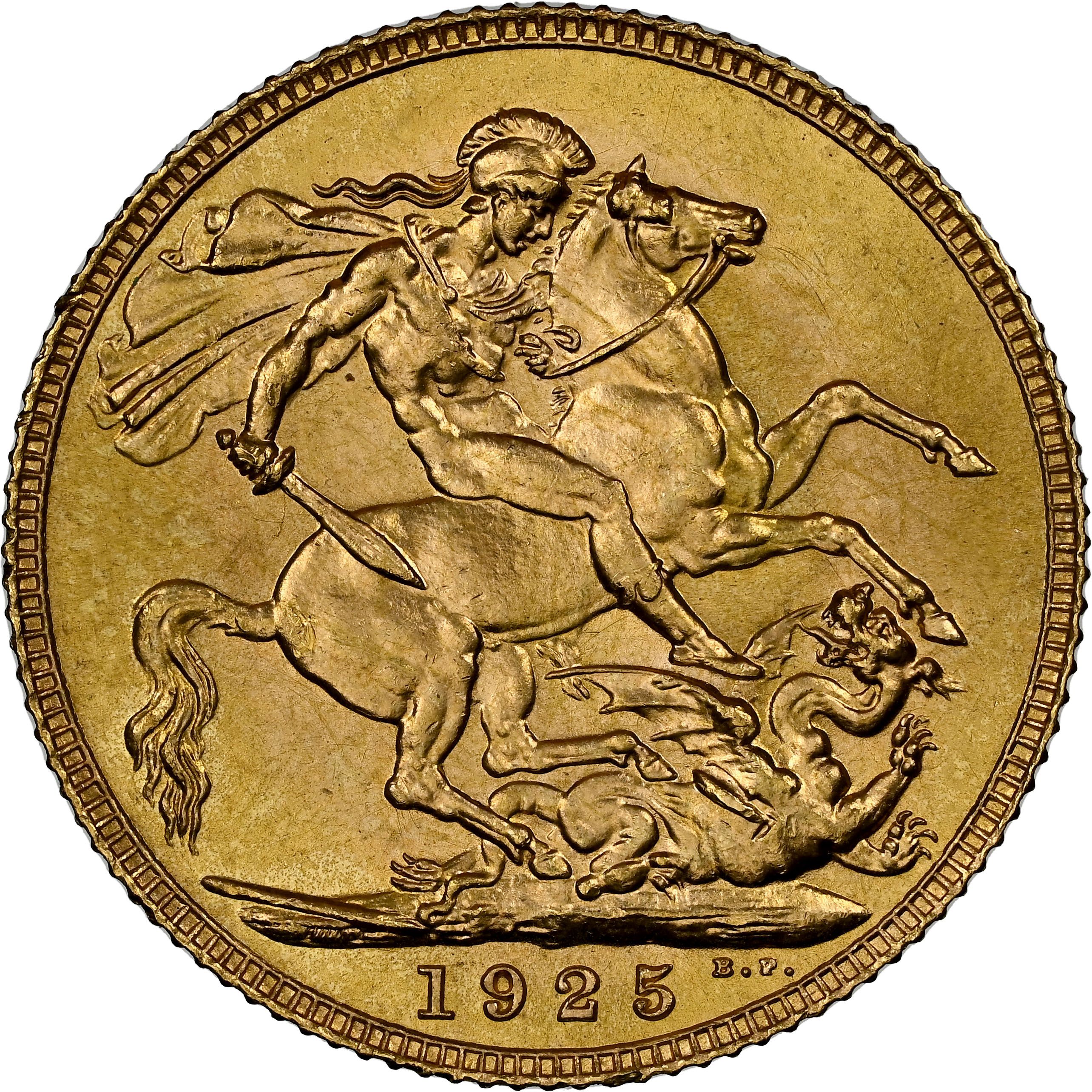
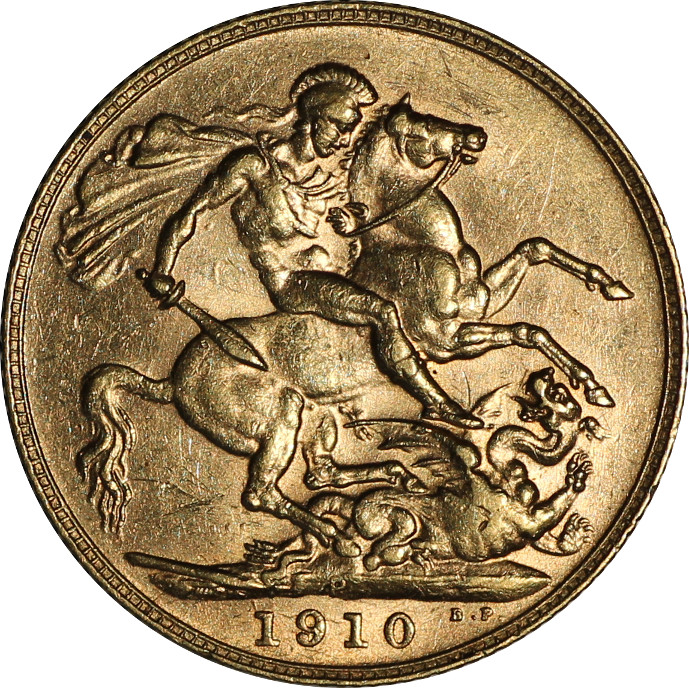
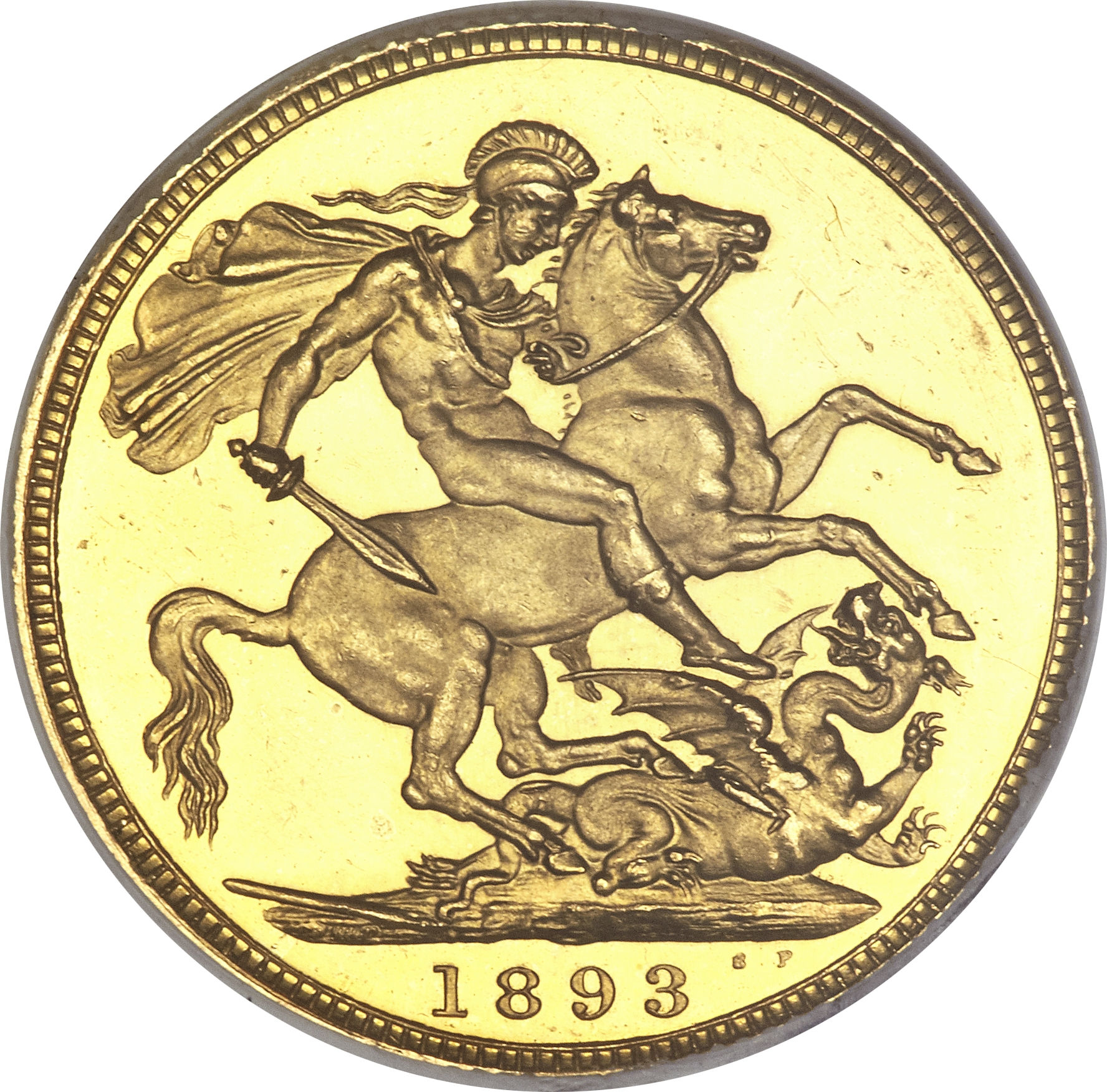
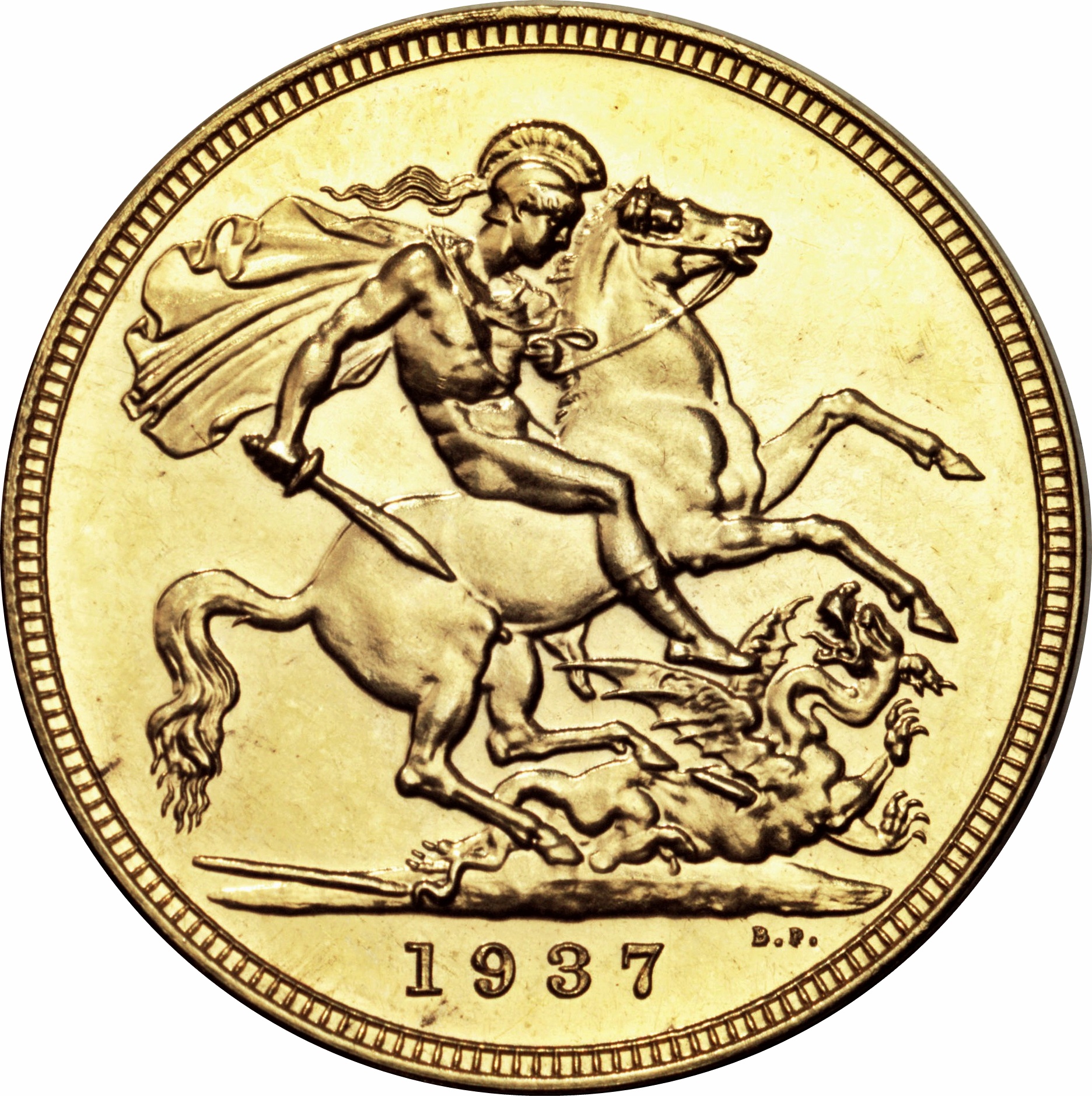
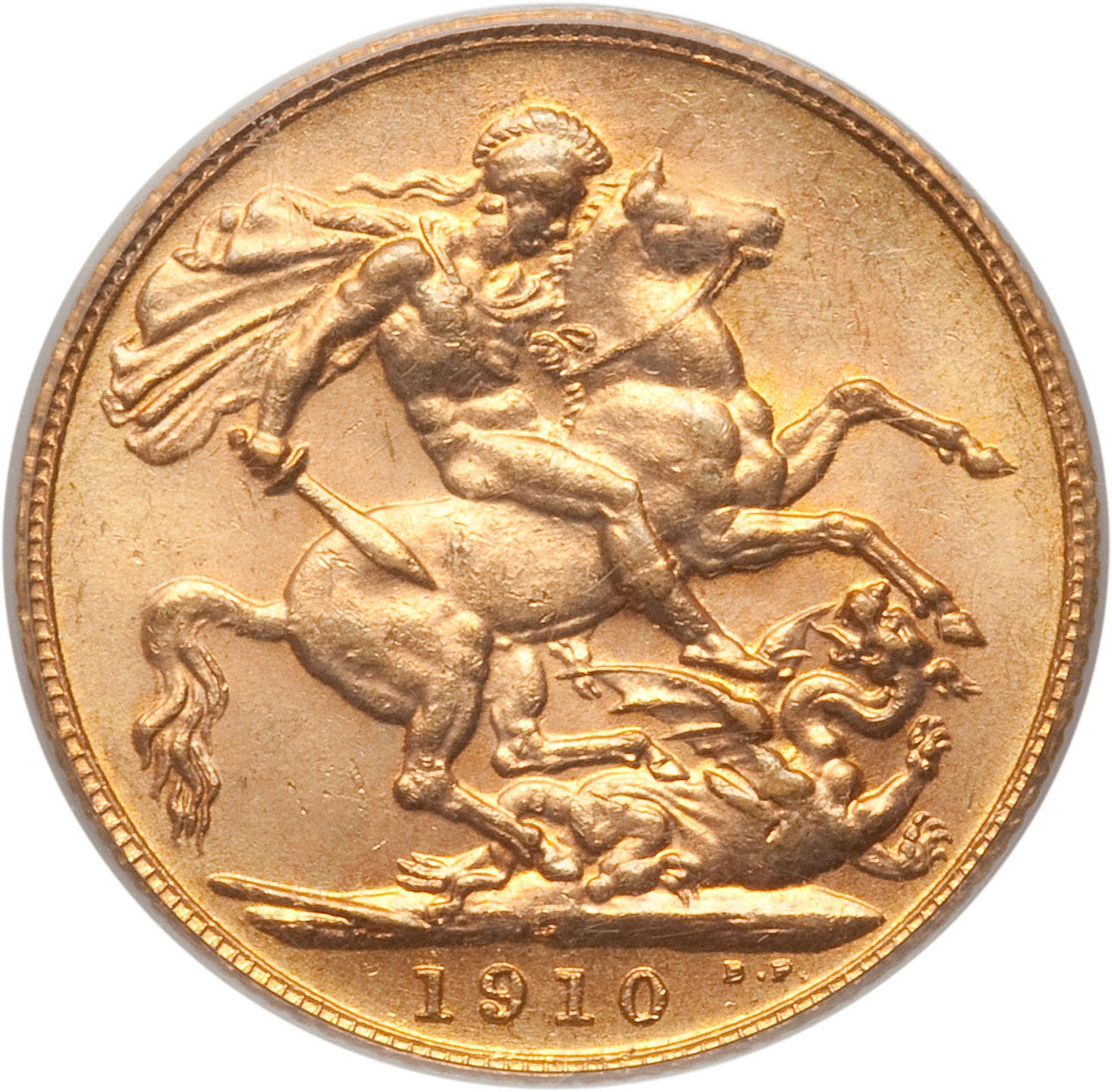
St George on horseback slaying the dragon right, date and
Find this on eBay
Affiliate1 Sovereign - Edward VII Ottawa mint price history
Daily limit reachedAbout the 1908 1 Sovereign - Edward VII Ottawa mint
The 1908 1 Sovereign - Edward VII Ottawa mint is a circulating 1 sovereign coin issued from 1908 to 1910 in the Sovereign series, struck in 91.67% gold. It weighs 7.99g and measures 22mm across. Reverse design: St George on horseback slaying the dragon right, date and.
A mintage of 636 is recorded for one date of this type; figures for each year are not held.
Common questions
How much is the 1908 1 Sovereign - Edward VII Ottawa mint worth?
No verified sale of the 1908 1 Sovereign - Edward VII Ottawa mint has been logged on MyCoinage yet. Its gold content is worth about £708 at today's spot price, which puts a floor under its value.
How many 1908 C sovereigns were made?
About 636. The Charlton catalogue, quoted by Drake Sterling, and the Eliasberg sale catalogue, quoted by CoinVarieties, both give 636. Coin Hunter gives 633 and goldsovereigns.co.uk 646. All were struck as satin-finish specimens, not ordinary currency coins.
Where is the mint mark on an Ottawa sovereign?
The C mint mark sits on the ground line under the horse, above the centre of the date. Goldsovereigns.co.uk says this position applies to Edward VII and George V sovereigns from all the branch mints, and recommends a magnifying glass for a first search.
Why did Canada strike British sovereigns?
After the Klondike gold rush, Canada asked for a branch of the Royal Mint, which opened in Ottawa on 2 January 1908. Wikipedia records that, as a branch mint, it struck sovereigns on request, mostly for export; goldsovereigns.co.uk says the gold came from British Columbia and the Yukon.
Are 1909 and 1910 Ottawa sovereigns rare?
They are scarce rather than rare. Coin Hunter and goldsovereigns.co.uk give 16,300 for 1909 and 28,020 for 1910, tiny next to London's millions. Tony Clayton calls the two later Canadian issues of the reign scarce and the 1908 satin proof rare.
How do I identify the 1908 1 Sovereign - Edward VII Ottawa mint?
Check the weight 7.99g and diameter 22mm and the metal (91.67% gold) against the specification table on this page. The reverse design is described above.
History and design
The Klondike gold rush of the late 1890s led the Canadian government to ask for a branch of the Royal Mint. Wikipedia records that it opened in Ottawa on 2 January 1908, when Lord and Lady Grey set the presses running, and goldsovereigns.co.uk says it was set up to coin gold from British Columbia and the Yukon. As a branch of the Royal Mint it struck British sovereigns, marked C, from 1908 to 1919.
The first Ottawa sovereigns, dated 1908, were made in tiny numbers: 636 according to the Charlton catalogue and the Eliasberg sale catalogue. All were satin-finish specimens marking the opening. Ordinary production followed in 1909 (16,300) and 1910 (28,020). Wikipedia notes the coins were struck on request, mostly for export, and did not circulate much in Canada.
The coin is the standard Edward VII sovereign. The obverse is George William de Saulles's bare-headed portrait of the King facing right, signed De S below the neck. The reverse is Benedetto Pistrucci's St George and the dragon, first used on the sovereign in 1817.
The only difference from a London coin is the small C on the ground line above the date. CoinVarieties' 1908 specimen is described as satiny, with the mint mark below the horse.
Varieties and errors
The 1908 coins form their own class: the whole issue was struck with a satin specimen finish. Drake Sterling notes that even the few that escaped into circulation keep a satiny sheen in the protected areas. No recognised mint errors are documented.
Collecting notes
Tony Clayton calls the 1908 C satin proof rare and the two later Canadian dates of the reign scarce. Goldsovereigns.co.uk adds that rarity does not follow the mintage exactly, since many Ottawa sovereigns are thought to have been melted, and suggests only a handful of 1908 coins may survive.
Check the mint mark under a glass before accepting an attribution. The George V Ottawa sovereigns continued to 1919. The ordinary Edward VII sovereign page covers the London and Australian strikes.
Sources
The history, design, varieties and collecting notes on this page are drawn from these sources. Prices come from recorded sales, not from them.
- Coin values by year, Edward VII (1908, 1909 and 1910 pages), Coin Hunter (read 10 Oct 2026)
- Royal Canadian Mint, Wikipedia (read 10 Oct 2026)
- One Pound: Sovereign, Tony Clayton, Coins of the UK (read 10 Oct 2026)
- Half sovereign, Wikipedia (read 10 Oct 2026)
- Sovereign (British coin), Wikipedia (read 10 Oct 2026)
- Branch Mints: Ottawa Canada, goldsovereigns.co.uk (Chard) (read 10 Oct 2026)
- Canada 1908-C sovereign, CoinVarieties (read 10 Oct 2026)
- 1908 Ottawa Specimen Sovereign, Drake Sterling Numismatics (read 10 Oct 2026)
- George William de Saulles, Wikipedia (read 10 Oct 2026)
- Initials on British coins, TreasureRealm (read 10 Oct 2026)
- Benedetto Pistrucci, Royal Mint Museum (read 10 Oct 2026)
More from Sovereign