Are First-Year-of-Reign Coins Always Rare? The Myth Examined
"First year of reign" is one of the most-cited rarity claims in UK coin collecting and one of the least accurate. Some first-year coins genuinely are rare; many more are extremely common despite the marketing. This guide pulls the actual mintage data for every modern UK first-year-of-reign issue and gives you the real verdict.
The "first year of reign" assumption
The intuition is reasonable. A new monarch means new portrait dies, new legends, often new commemorative designs across the full denomination set. The first year of any reign is a discrete moment in numismatic history, well-defined and culturally significant. So, the reasoning goes, the first-year coins must be limited, must be more collectable, must be worth more than later issues from the same reign.
The reasoning is half-right. First-year coins are historically distinctive and they do attract specific collector demand. But the missing factor is mintage. The Royal Mint and its predecessors have routinely struck millions of first-year coins specifically for collector and souvenir demand, knowing that historical significance generates buyer interest. Supply, not just historical interest, drives price.
The Westminster Collection, Bradford Exchange and similar direct-mail sellers have leant heavily on "first year of reign" as a sales angle in mailings since the late 1980s. The pitch is emotionally compelling and frequently combined with "limited edition" presentation cases that create false scarcity around coins that are objectively common. The effect has been to bake the assumption deep into mainstream UK collector culture.
When first-year-of-reign IS genuinely rare
The exceptions that prove the rule. These are the genuine first-year rarities of the modern era:
Edward VIII (1936-1937 abdication)
Edward VIII's reign ended before any coins were issued for circulation. The Royal Mint had struck pattern coins in 1937 dated 1937 ahead of the planned coronation, but the abdication in December 1936 cancelled the issue. Only handful of pattern pieces survive across the full denomination set: the 1937 EVIII pattern sovereign realised over £1 million at Heritage Auctions; the 1937 EVIII pattern half crown is comparable; the brass threepence is the most-accessible Edward VIII pattern at £30,000-100,000. See our Edward VIII coins guide for the full mintage breakdown.
George VI proof sovereigns (1937)
George VI succeeded Edward VIII in December 1936 and his coronation was held on 12 May 1937. The Royal Mint struck a coronation proof set including a sovereign, but no business-strike sovereigns were produced. The 1937 proof sovereign survives in approximately 5,500 examples from the proof set production; current realised price is £12,000-25,000 depending on grade and freshness. This is the most-accessible "genuinely rare first-year" coin for serious sovereign collectors.
Charles III memorial issues (2022)
Charles III's accession in September 2022 prompted the Royal Mint to strike a small first-year run of memorial coins (sovereign, half sovereign, £5 crown, 50p) before the broader 2023 Coronation programme. Mintages for the 2022 memorial gold sovereign are limited and the secondary market has appreciated meaningfully, current realised price £700-1,500 at bullion plus 30-100% premium. As a "first year of new reign" buy these are the strongest modern picks.
When first-year-of-reign ISN'T rare
The cases where the marketing pitch falls apart. These are common coins despite their first-year status.
Elizabeth II 1953 Coronation issues
The 1953 Coronation produced the largest first-year-of-reign run in modern UK history. The Royal Mint struck a complete denomination set specifically for collector and souvenir demand, knowing that the new young queen and the post-war coronation would generate huge sales:
| Coin | Mintage | Realised price (typical grade) |
|---|---|---|
| 1953 Coronation crown (5/-) | 5,962,621 | £5-30 |
| 1953 Coronation half crown | 3,884,900 | £3-15 |
| 1953 Coronation florin (2/-) | 11,958,710 | £2-8 |
| 1953 Coronation shilling (English) | 41,942,894 | £1-5 |
| 1953 Coronation sixpence | 70,323,876 | £0.50-3 |
| 1953 Coronation proof set (sealed) | 40,000 | £120-220 |
These are not rare coins by any definition. They are historically significant, attractively designed (Mary Gillick obverse, with the Cecil Thomas crown reverse), and worth owning, but they trade at common-coin prices because supply is plentiful.
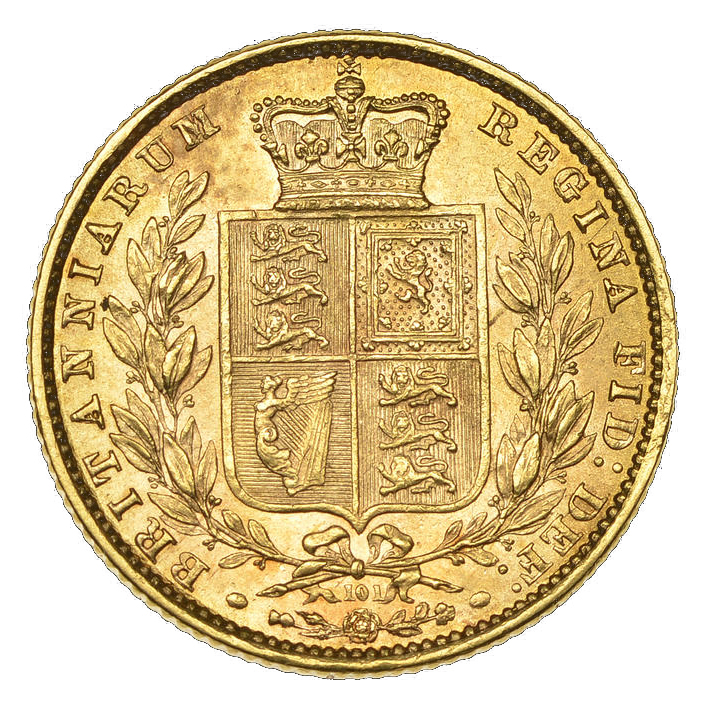
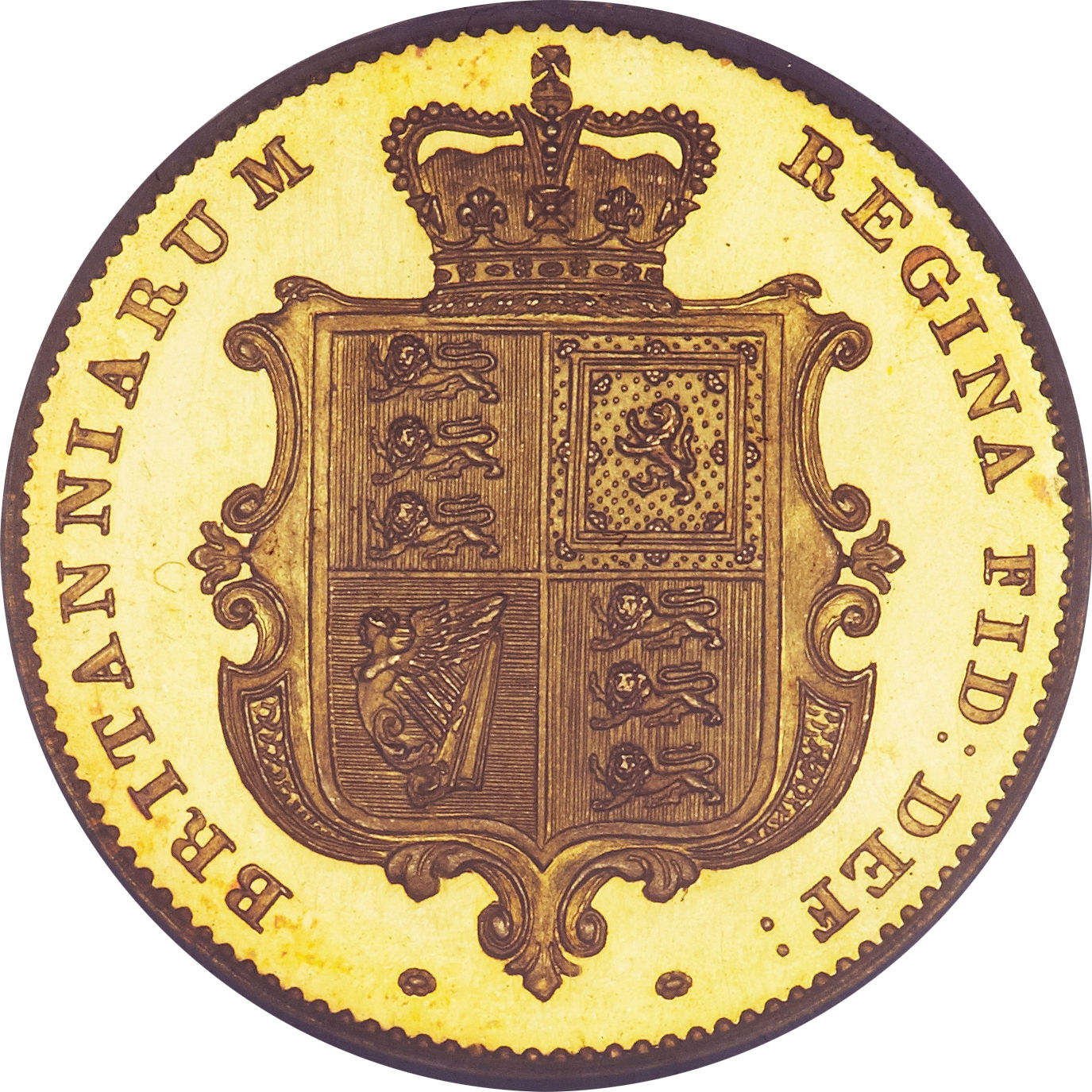
Victoria 1838 sovereigns
Victoria's first-year sovereign has mintage 273,341, modest by Victorian standards but plentiful enough to be available in every reasonable grade. Realised prices:
- VF: £500-800
- EF: £800-1,500
- UNC: £2,000-3,500
Compare against the 1841 Victoria sovereign (mintage c. 124,000) at £2,000-8,000, or the 1879 London "no die number" at £700-3,000, the 1841 and 1879 are rarer despite being later years of the same reign. First-year-of-reign Victoria sovereigns are a sensible collector pickup but not the rarest Victorian dates by a wide margin.
Edward VII 1902 sovereigns
Mintage 4,737,000; comfortably in bullion-grade tier. The 1902 EVII sovereign trades at bullion plus 5-15% premium, roughly £700-850 at current gold spot. The matt proof variant from the 1902 coronation proof set (mintage 15,123) trades at £1,800-3,500; this is the right "first year of reign" Edward VII pickup, not the business strike.
The genuinely rare Edward VII sovereign is the 1908 Ottawa "C" mintmark proof with mintage just 636, a six-figure rarity. That coin is rare because the Ottawa branch mint produced almost nothing in proof, not because it's the inaugural year (it isn't).
How mintage actually drives rarity
The rough rule for first-year-of-reign UK sovereigns and crowns:
| Mintage band | Verdict | Typical premium over bullion / face |
|---|---|---|
| Under 5,000 | Genuinely rare (key date) | 5-100× |
| 5,000-50,000 | Rare | 2-10× |
| 50,000-250,000 | Scarce | 1.5-3× |
| 250,000-1 million | Uncommon | 1.1-1.8× |
| 1-10 million | Common | +0-30% |
| Over 10 million | Plentiful (face value to small premium) | +0-15% |
For modern non-bullion commemoratives (50p, £2, £5), the bands shift down by an order of magnitude: under 250,000 is rare, 250,000-1 million is scarce, 1-3 million is common, over 3 million is plentiful. Always cross-reference mintage against published Royal Mint and Spink data.
Examples decoded, first-year coins by monarch
| Monarch | First year | First-year sovereign mintage | Verdict |
|---|---|---|---|
| Victoria | 1838 | 273,341 | Scarce, not rare |
| Edward VII | 1902 | 4,737,000 | Common |
| George V | 1911 | 30,317,921 (with subsidiary issues) | Common |
| Edward VIII | 1937 (cancelled) | Pattern only, c. 6 known | Genuinely rare (six figures) |
| George VI | 1937 (proof only) | ~5,500 | Rare (£12-25k) |
| Elizabeth II | 1953 (no sovereign struck) | None (sovereigns paused 1932-1957) | n/a |
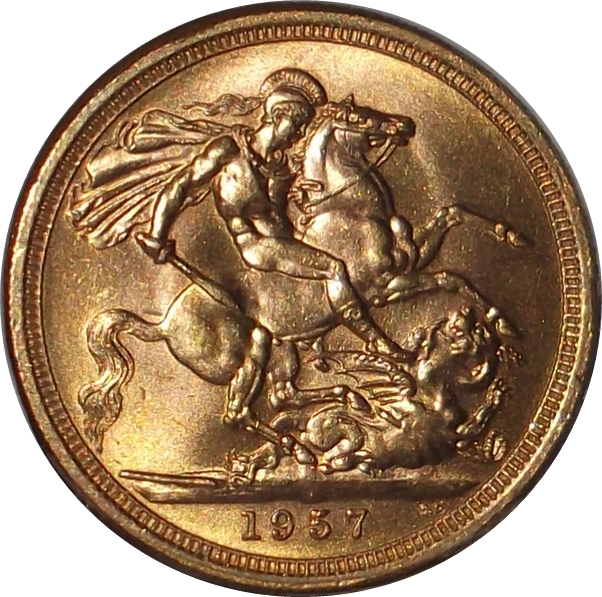
| Elizabeth II (sovereign first) | 1957 | 2,072,000 | Common |
| Charles III (memorial) | 2022 | Limited; details not published | Modest premium |
| Charles III (coronation proof) | 2023 | 9,995 (silver proof crown) | Scarce, attractive |
Three observations from the table. (1) Edward VIII and George VI are the only modern first-year reigns where the inaugural sovereign is rare. (2) Most first-year-of-reign sovereigns sit comfortably in common-or-uncommon territory and trade at bullion plus modest premium. (3) The 1953 Elizabeth II case is instructive, despite being one of the most historically significant first-years in modern UK history, no sovereign was struck (sovereign production was paused 1932-1957) and the available crowns and silver are common.
How to spot a genuinely rare first-year piece
Five-step verification checklist before paying first-year-of-reign premium:
- Look up the published mintage. Royal Mint publishes mintage for every modern coin; Spink Standard Catalogue covers historical issues. Apply the mintage bands above. Anything over 500,000 mintage is not rare regardless of marketing.
- Cross-reference with eBay sold listings. Sold listings in the last 90 days for the exact same coin in similar condition. The realised median is the market price. Walk away from listings more than 15% above.
- Check the proof variant. Most first-year-of-reign coins have a proof variant struck in low numbers from the coronation proof set. The proof is usually 10-100× rarer than the business strike. The 1902 EVII matt proof, 1937 GVI proof, and 2023 Coronation proofs are all the right pickups within their reigns.
- Check the gold and silver proof variants. Modern Royal Mint commemoratives are issued in BU, silver proof, gold proof and (for some) Piedfort variants. The Piedfort and gold proofs are typically struck in mintages of 500-3,000 and are the meaningful collectable pieces.
- Beware Westminster-style packaging. A first-year coin presented in an expensive Westminster Collection mailer with COA is almost always a common coin sold at 100-200% premium. The packaging adds nothing to numismatic value. Buy raw or in original Royal Mint packaging only.
Featured sovereigns on MyCoinage
Related guides
- Charles III coin guide, the full 2022-onwards Charles III issue list with mintages.
- 2023 Coronation 50p Charles III, the dedicated Coronation issue deep-dive.
- Edward VIII coins guide, the patterns from the cancelled coronation.
- Coin collecting myths 2026, the 12 most persistent UK coin myths.
- Elizabeth II coins value guide, the full 1953-2022 Elizabeth II series.
- Victoria coins value guide, the full Victorian series including 1838 first-year sovereigns.