Ads off, prices on.Pro is £1.99 a month or £19.99 a year: no adverts, unlimited coins, price alerts. Try it free for 7 days.Try Pro free for 7 days.
Try Pro free →
Guide
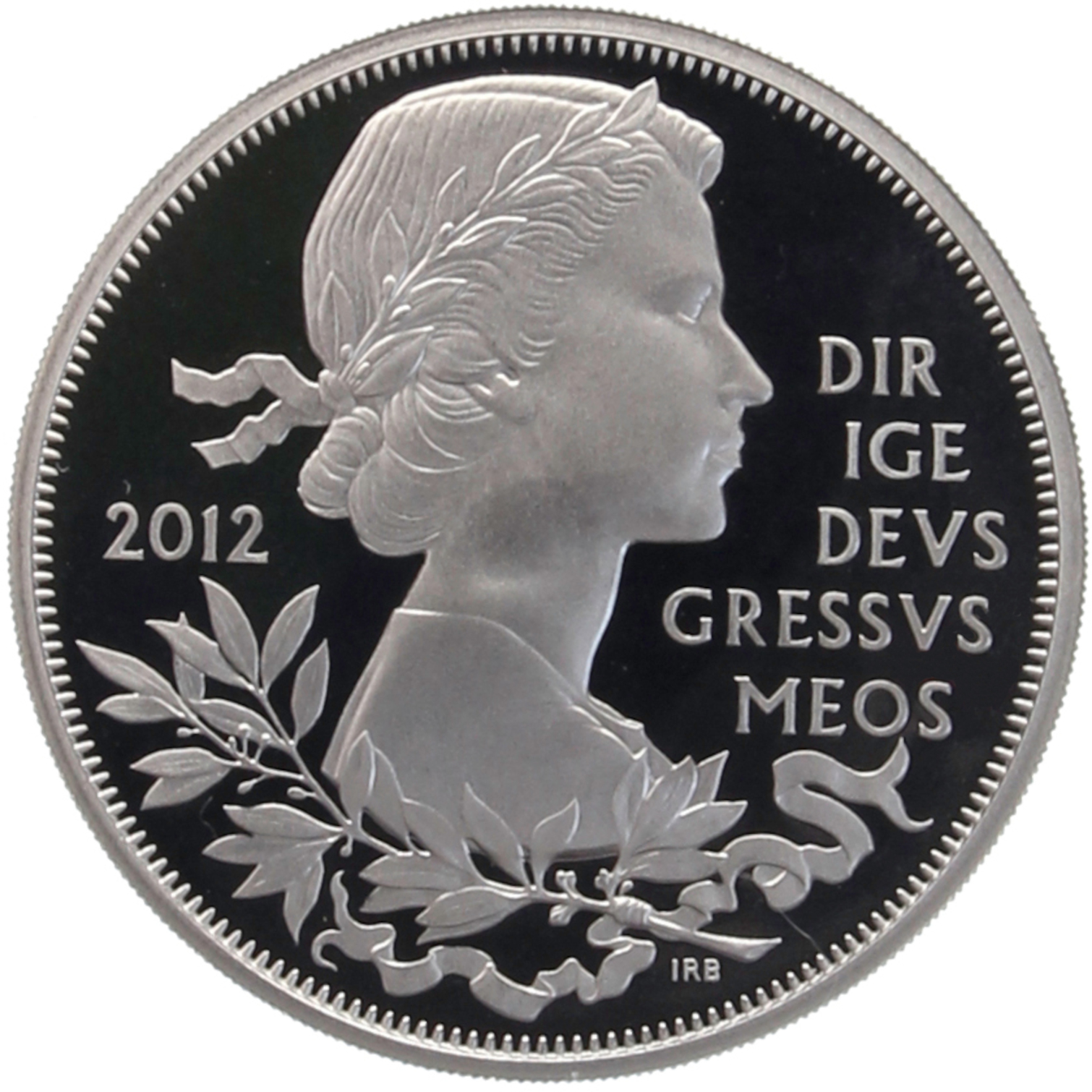
Elizabeth II Coins Value Guide: Five Portraits, 70 Years, Every Issue
Queen Elizabeth II reigned for 70 years and 214 days, the longest of any British monarch. Her coinage
spans pre-decimal sterling, the 1971 decimalisation, the introduction of the £1 (1983), the bimetallic
£2 (1997), the 12-sided £1 (2017), and dozens of commemorative designs. Five different official
portraits were used across her reign, by five different artists. This guide covers every era, the most-collected
issues, the famous rarities (Kew Gardens 50p, 1992 EU Presidency 50p, 2008 undated 20p), and the 2022 memorial 50p.
In brief. Five portraits: Gillick (1953-1968), Machin (1968-1984), Maklouf (1985-1997),
Rank-Broadley (1998-2015), Jody Clark (2015-2022). Most circulating Elizabeth II coins trade at face value;
rarities (Kew Gardens 50p, 1992-93 EU 50p, 2008 undated 20p, 2002 Commonwealth Games NI £2,
Olympic Football 50p) range £15-280. Decimal Elizabeth II coinage remains fully legal tender after
her 8 September 2022 death.
WatchThe Top 10 Most RARE & VALUABLE Queen Elizabeth II CoinsTop 10 rare and valuable Elizabeth II coins (Bit's & Bob's) Video: Bit's & Bob's on YouTube
The five portraits in detail
Years
Portrait
Sculptor
Defining feature
1953–1968
1st
Mary Gillick
Laureate young head, pre-decimal era only, no crown
1968–1984
2nd
Arnold Machin
Crowned bust, mature face, neck visible. The decimal-launch portrait.
1985–1997
3rd
Raphael Maklouf
Crowned bust, older face, chest detail visible.
1998–2015
4th
Ian Rank-Broadley
Crowned head, fifty-something. Olympic 50p era.
2015–2022
5th
Jody Clark
Crowned head, sixty-something, finer detail. Final portrait.
Pre-decimal Elizabeth II coinage runs from her February 1952 accession through to Decimal Day on 15 February 1971.
Denominations: farthing, halfpenny, penny, threepence, sixpence, shilling, two shillings (florin),
half crown and crown. Most are common; key collectables are:
1953 Coronation crown, equestrian reverse by Cecil Thomas, mintage 5.96 million circulating + 40,000 proof. BU £15-50; proof £30-80.
1953 plastic-set specimens, the original Coronation specimen sets in blue plastic boxes. £30-100 depending on condition.
1953 plain-edge proof penny, legendary rarity, only a handful known. £30,000+ at auction.
1956 ENGLISH-shilling vs SCOTTISH-shilling varieties, both struck for the same year, identifiable by reverse arms.
1965 Churchill commemorative crown, first British coin to feature a non-royal commoner. Mintage 19.6 million; common in worn condition, £5-15 BU.
The decimal era covers four of the five portraits (Machin through Jody Clark) and dozens of commemorative designs. Key rarities:
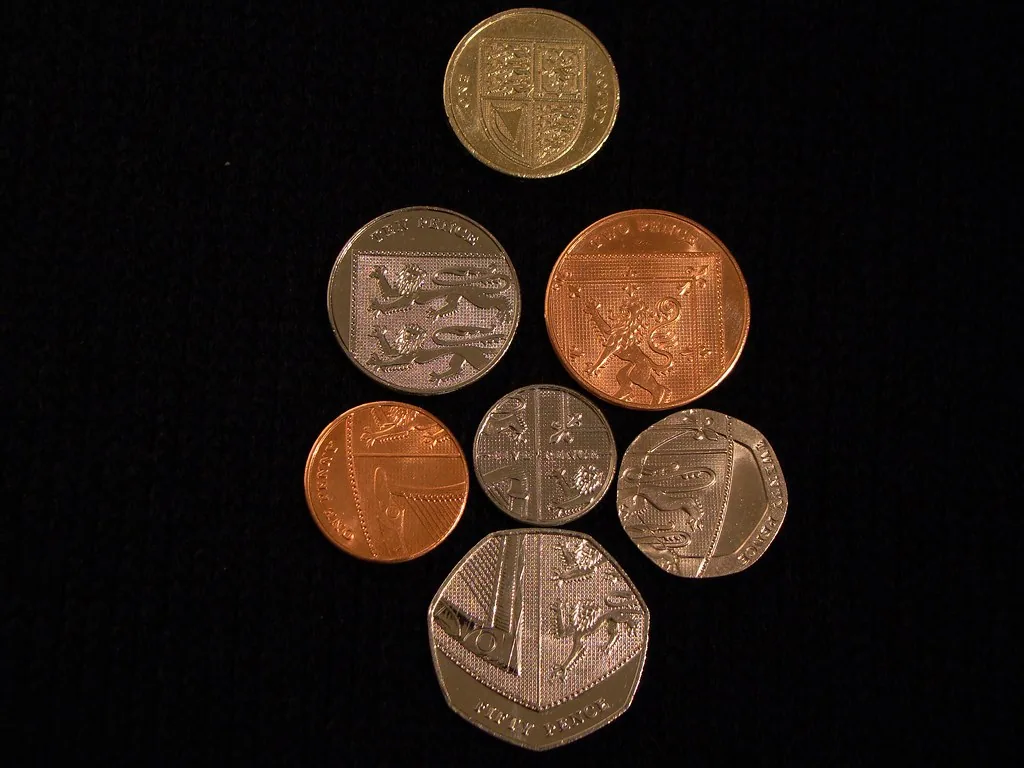
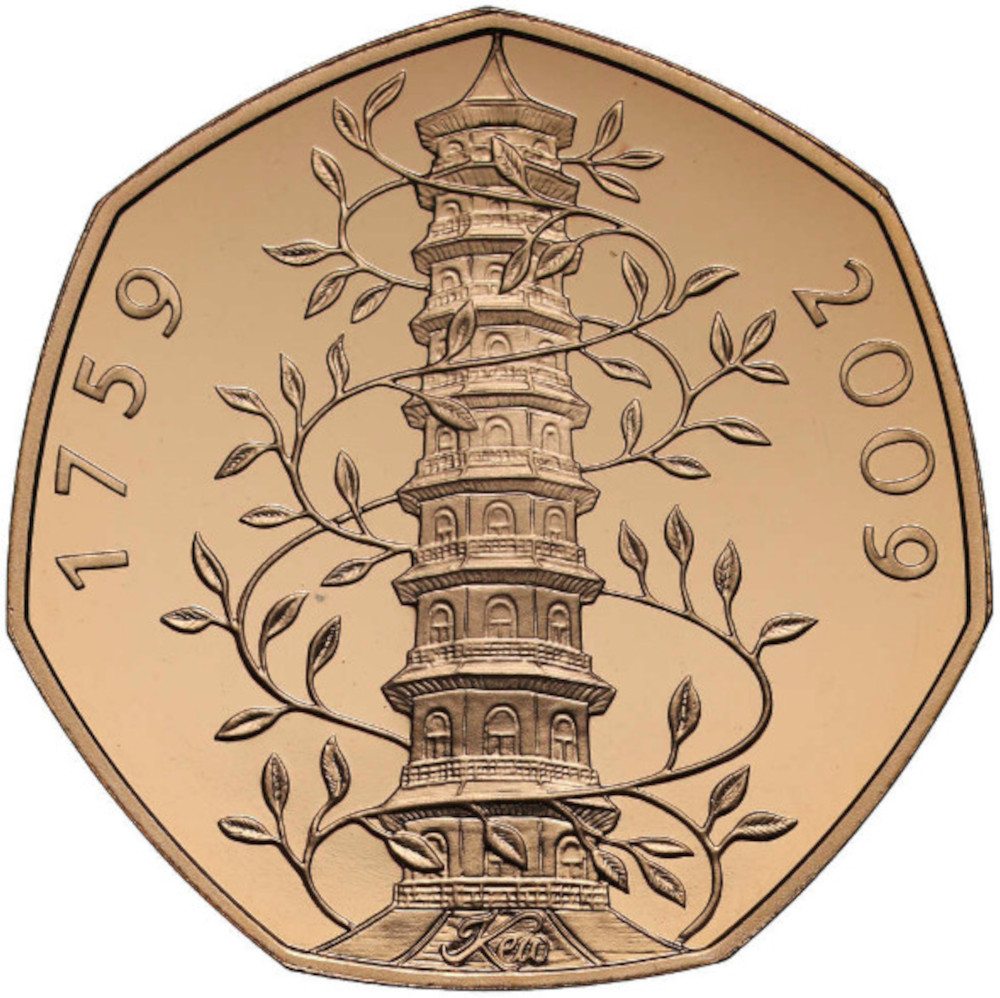
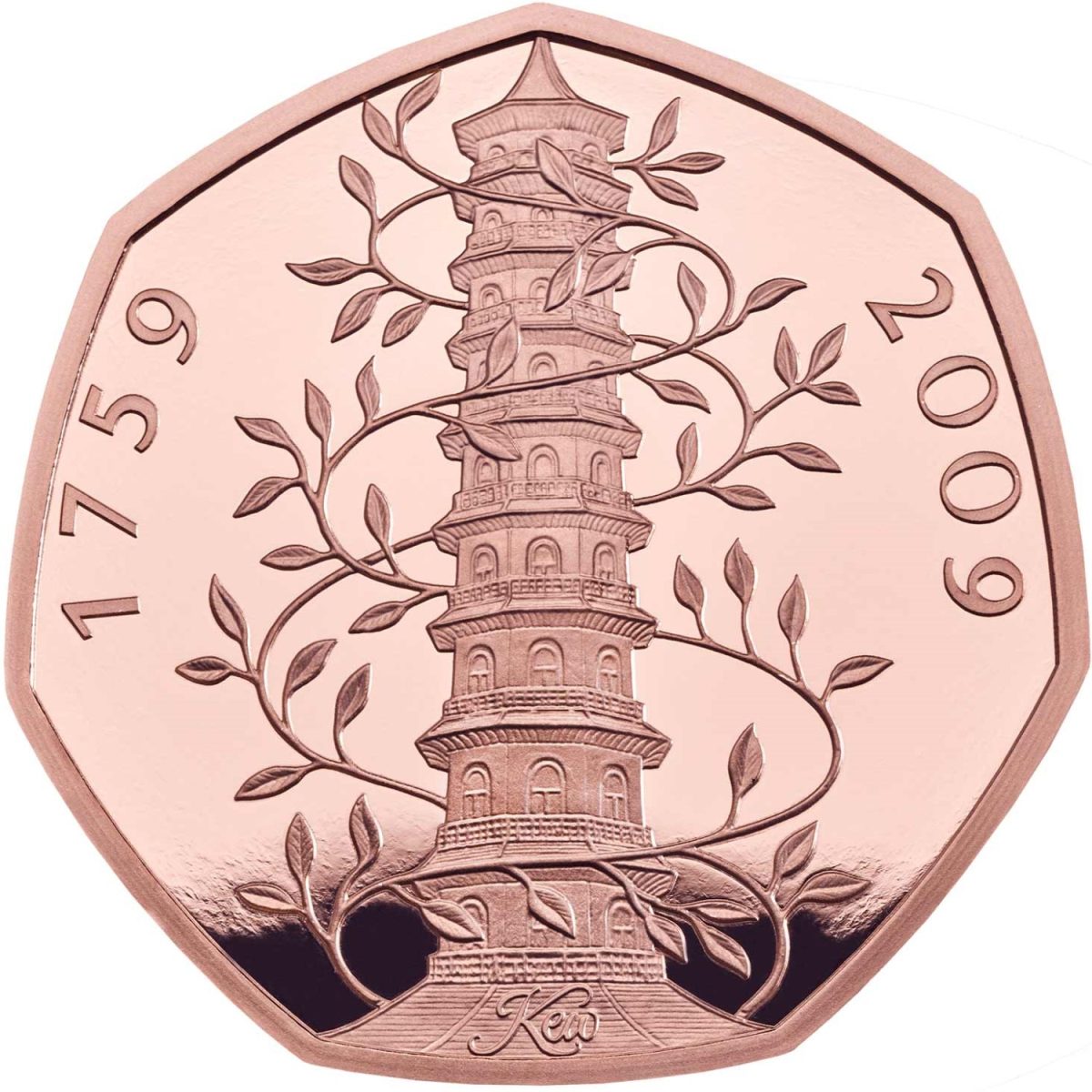
2009 Kew Gardens 50p (mintage 210,000). The most-collected modern UK rarity. Full guide.
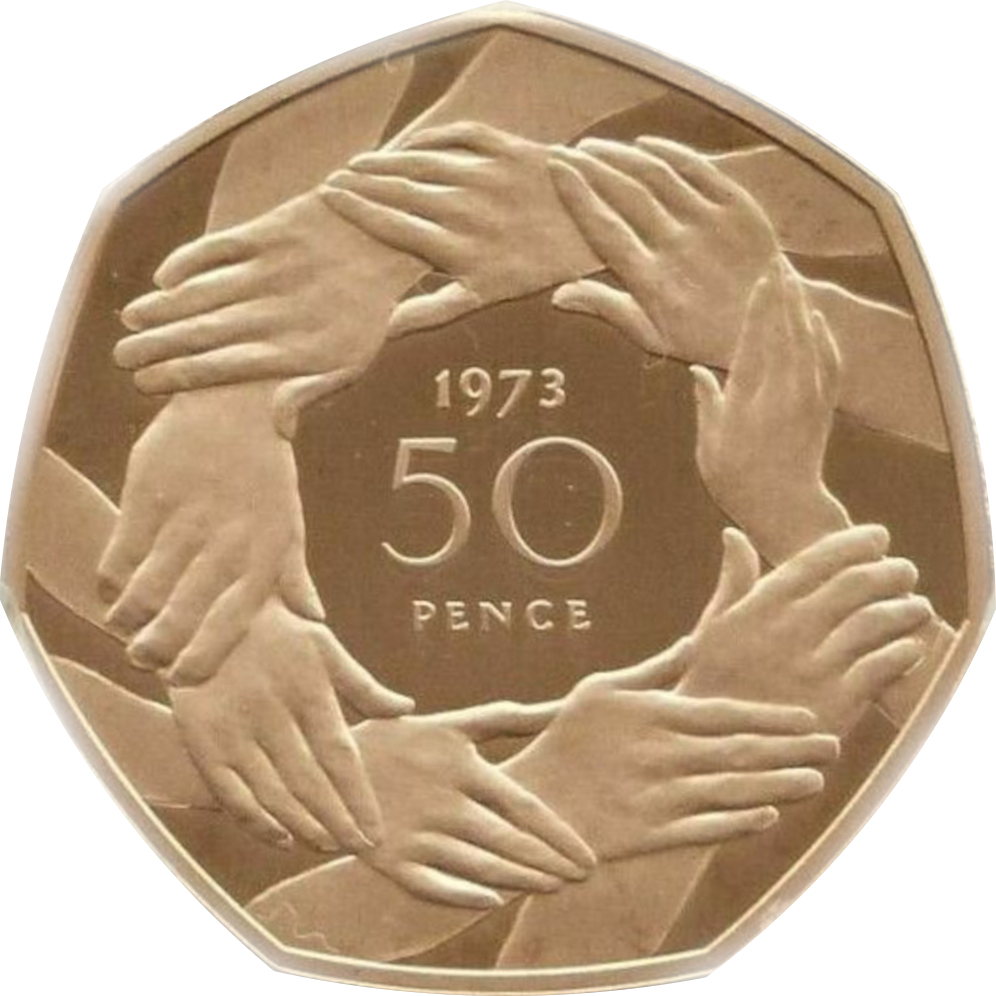
1992–1993 EU Presidency 50p (mintage 109,000). The lowest-mintage 50p ever issued; technically rarer than the Kew Gardens but is the older large-50p format. £30-150.
2008 undated 20p mule (mintage estimated 50,000-200,000). Wrong-die strike; first undated UK coin in 300 years. £50-150. Full guide.
2002 Commonwealth Games £2 Northern Ireland (mintage 485,500). The rarest circulating £2. £30-60.
2011 Olympic Football 50p (mintage 1,125,500). The famous "offside rule" coin and the lowest-mintage of the 29 Olympic 50ps. £15-30.
1996 European Football Championship £2, the first bimetallic £2 commemorative. £5-15.
The 2022 memorial 50p
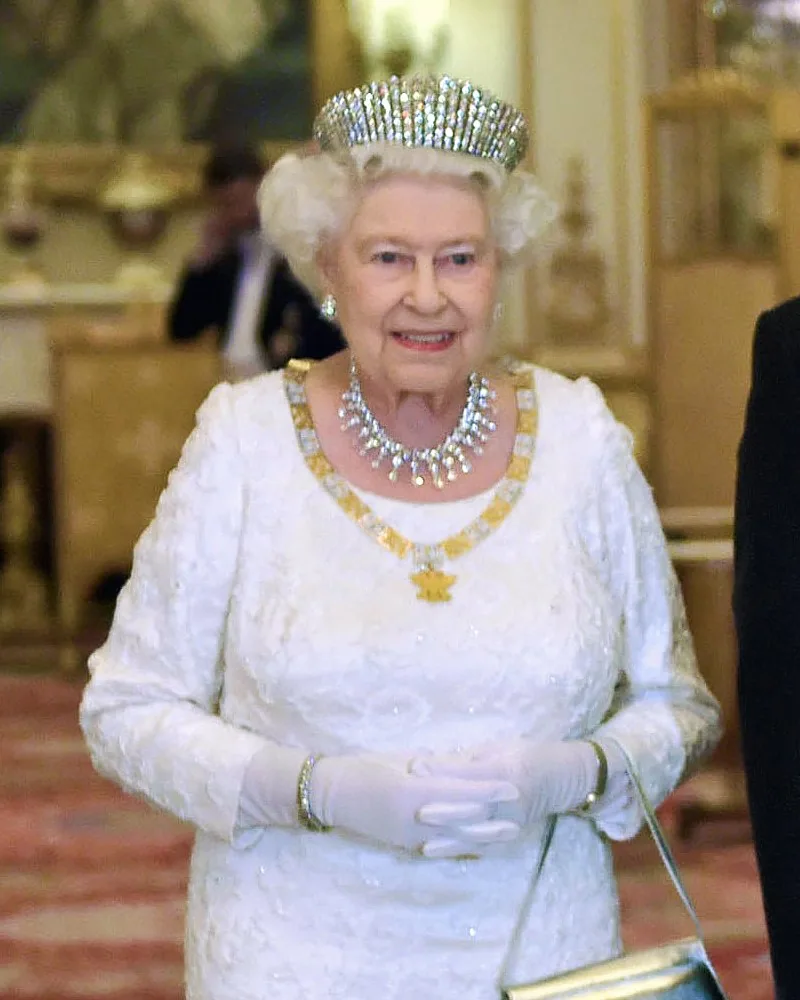
Queen Elizabeth II, whose portrait appears on her coinage.Image: HM Queen Elizabeth II by Presidencia de la República Mexicana, Wikimedia Commons, licensed under CC BY 2.0
Two weeks after Queen Elizabeth II's death on 8 September 2022, the Royal Mint released a special memorial 50p
with a Charles III portrait obverse by Martin Jennings and a coat-of-arms reverse adapted from Elizabeth II's royal cypher.
Circulating mintage was 5 million; finding one in change is uncommon but realistic. BU examples sealed
in Royal Mint memorial cards trade at £5-12. The memorial 50p was the first Charles III coin to enter
circulation and a transitional moment in modern British numismatics.
How many portraits of Queen Elizabeth II appeared on UK coins?
Five distinct portraits across her 70-year reign. 1st: Mary Gillick (1953-1968), the laureate young head used through the pre-decimal era. 2nd: Arnold Machin (1968-1984), the iconic crowned bust used on the first decimal coinage. 3rd: Raphael Maklouf (1985-1997), the older crowned portrait. 4th: Ian Rank-Broadley (1998-2015), the fifty-something portrait used through the millennium. 5th: Jody Clark (2015-2022), the final portrait used until her death on 8 September 2022. The fifth portrait is the most-recent and the rarest in mint-state because production was lower in her later years.
What Elizabeth II coins are worth money?
The most valuable Elizabeth II circulating coins are the 2009 Kew Gardens 50p (mintage 210,000, £140-280), the 1992–1993 EU Presidency 50p (mintage 109,000, £30-150), the 2008 undated 20p mule (mintage estimated 50,000-200,000, £50-150), the 2002 Commonwealth Games £2 Northern Ireland (mintage 485,500, £30-60), and the 2011 Olympic Football 50p (mintage 1,125,500, £15-30). Pre-decimal Elizabeth II coins of the 1953-1970 era are mostly common; the famous Coronation crown of 1953 is the most-collected pre-decimal piece.
Which Elizabeth II coins are pre-decimal?
Elizabeth II pre-decimal coins (1953-1970) include the farthing, halfpenny, penny, threepence, sixpence, shilling, two shillings (florin), half crown and crown. Most Elizabeth II pre-decimals are common in worn condition and trade at face value to a few pounds. Mint-state red examples and proof set components carry premium. The 1953 Coronation crown (the largest Elizabeth II coin) trades at £15-50 in BU. After Decimal Day on 15 February 1971, all pre-decimal Elizabeth II coinage was demonetised in stages.
Are Elizabeth II coins still legal tender?
Decimal Elizabeth II coinage (1971-2022) remains fully legal tender, even after her death. The Royal Mint has confirmed that all decimal coinage bearing her portrait will continue in circulation alongside the new Charles III issues. Bank of England English banknotes featuring Elizabeth II ceased to be legal tender on 30 September 2022; this does not apply to coins. Pre-decimal Elizabeth II coins (1953-1970) are NOT legal tender, they were progressively demonetised between 1968 (the half crown) and 1980 (the sixpence).
What is the most valuable Elizabeth II coin?
In gold proof: the 2009 gold proof Kew Gardens 50p (mintage 629) trades at £3,000-4,500. In specimen format: the 1953 plastic-set proof crown in original packaging (mintage ~40,000) is the most-collected pre-decimal Elizabeth II piece. In bullion: 1989 500th anniversary £5 sovereigns (Saint George and the Dragon double obverse) trade at £3,500-5,000. The flagship rarity across her reign is the 1953 plain-edge proof penny, of which only a handful are known; auction realisations exceed £30,000.
How do I tell which Elizabeth II portrait my coin has?
Date is the easiest test. 1953-1968: Gillick laureate young head (no crown, hair tied with laurels). 1968-1984: Machin first portrait (crowned bust, mature face, neck visible). 1985-1997: Maklouf (crowned bust, older face, chest detail). 1998-2015: Rank-Broadley (crowned head, fifty-something, neck cropped at base). 2015-2022: Jody Clark fifth portrait (crowned head, sixty-something, finer detail). The portrait change years are the most-collected: 1968, 1985, 1998, 2015. First-year-of-portrait BU coins from sealed Royal Mint sets trade at premium.
Are Elizabeth II commemorative crowns valuable?
Mostly no. The big-budget commemorative crowns (£5 face value from 1990 onwards; 25-pence face value before that) were sold to the public at £15-30 each but trade now at £5-15 in worn condition. The 1981 Royal Wedding crown, 1980 Queen Mother 80th, and various Silver/Diamond Jubilee crowns are the most common, struck in tens of millions and worth face value plus a few pounds in BU. The 1953 Coronation crown is the original and most-collected: £15-50 in BU. Silver proof commemorative crowns from sealed Royal Mint cases trade at £30-70.
Which year is the Queen Elizabeth II memorial coin?
The Royal Mint released a special memorial 50p in September 2022, two weeks after Queen Elizabeth II's death on 8 September 2022. The reverse design is one of two coats of arms used on her royal cypher; the obverse carries the new Charles III portrait by Martin Jennings. The memorial 50p had a circulating mintage of 5 million, high enough that finding one in change is straightforward but lower than typical 50p commemoratives. BU examples sealed in Royal Mint cards trade at £5-12; circulated in change at face value or a small premium.
What is the Elizabeth II Coronation crown of 1953?
The 1953 crown is the first major Elizabeth II commemorative, struck to mark her 2 June 1953 Coronation. The reverse shows the Queen on horseback wearing the Sash and Star of the Order of the Garter, sword raised, a striking equestrian portrait by Cecil Thomas. Mintage 5,962,000 in cupronickel for circulation, plus 40,000 in proof sets. Worn examples trade at £5-10; BU examples in original Royal Mint card from coronation packs at £15-50; proof set examples at £30-80. The 1953 Coronation crown is the most-collected single piece of pre-decimal Elizabeth II coinage.
When did Elizabeth II coins start being replaced by Charles III?
The Royal Mint released the first Charles III coin in October 2022, the memorial 50p struck for circulation. Charles III definitive coinage (the 8-coin "Coinage Portrait" series with flora-and-fauna reverses) followed in 2023. Elizabeth II coinage continues to circulate alongside Charles III; the Royal Mint has not announced any plan to demonetise Elizabeth II decimal coins. In change today (2026), Elizabeth II coins still vastly outnumber Charles III, you may not see a Charles III coin every day.
How can I quickly tell which Elizabeth II portrait is on a coin?
Six tests, in order of speed. (1) Date on the obverse is the most reliable: 1953-1968 = Gillick; 1968-1984 = Machin; 1985-1997 = Maklouf; 1998-2015 = Rank-Broadley; 2015-2022 = Jody Clark. (2) Crown shape: Gillick has no crown (laurel wreath only); the others all wear different crowns. (3) Hair detail: Gillick has loose curls and a fillet/laurel; Machin shows a tight diadem with hair gathered behind; Maklouf adds visible earrings and royal robes; Rank-Broadley has a more austere bust truncation; Jody Clark uses the George IV State Diadem with the most-detailed crown work. (4) Initials below truncation: IRB for Rank-Broadley (1998-2015), JC for Jody Clark (2015-2022). (5) Border / inner beads: Gillick had two minor variants. (6) Designer name appears on official Royal Mint listings. The portrait is the single quickest dating cue for any post-1953 UK coin.
What is the most-collected Elizabeth II commemorative?
Three contenders. (1) The 1953 Coronation crown (mintage 5.96M circulating + 40,000 proof) is the foundational piece for any Elizabeth II collection, nearly every UK collector owns one. (2) The 2009 Kew Gardens 50p (mintage 210,000) is the most-searched single Elizabeth II coin online and the highest-profile modern rarity. (3) The 1981 Charles and Diana Royal Wedding crown (mintage 26.7 million) is the most-collected by total purchases, the cross-generational royal-wedding souvenir effect. For investment-grade collecting, the focus shifts to scarce-date Wreath Crowns, the 2008 undated 20p mule, and key modern silver proofs.
Was Elizabeth II the longest-reigning British monarch?
Yes, 70 years and 214 days from accession on 6 February 1952 to death on 8 September 2022. She surpassed Queen Victoria's 63-year-216-day record on 9 September 2015. Both Victoria and Elizabeth II are the only British monarchs whose coinage spans more than two distinct definitive portrait periods (Victoria: Young Head/Jubilee/Old Head; Elizabeth II: Gillick/Machin/Maklouf/Rank-Broadley/Clark). For collectors, this longevity creates the deepest single-monarch collecting territory in modern numismatics.
We use cookies to keep you signed in, a first-party cookie to see how the site is used, and Google Analytics.
No thanks turns off our own record; you can change it any time in your account.
Cookie Policy