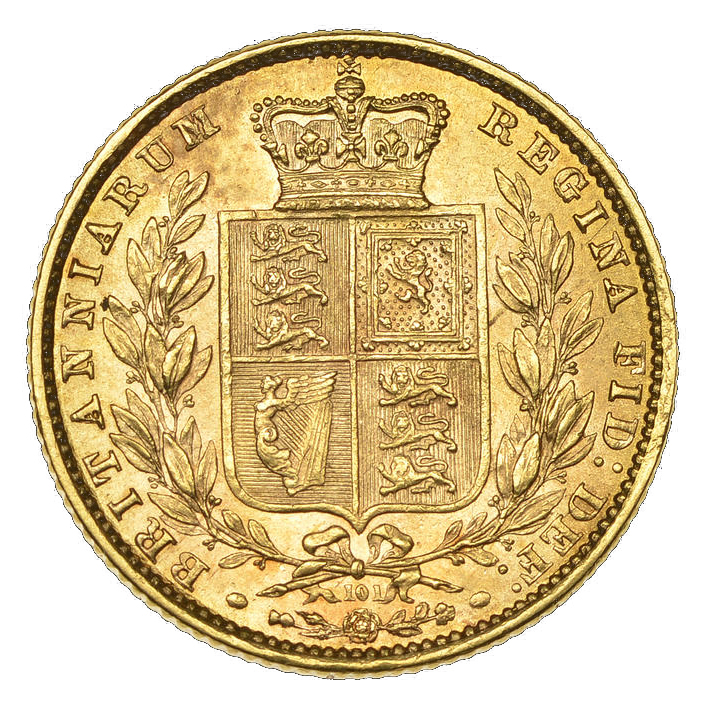
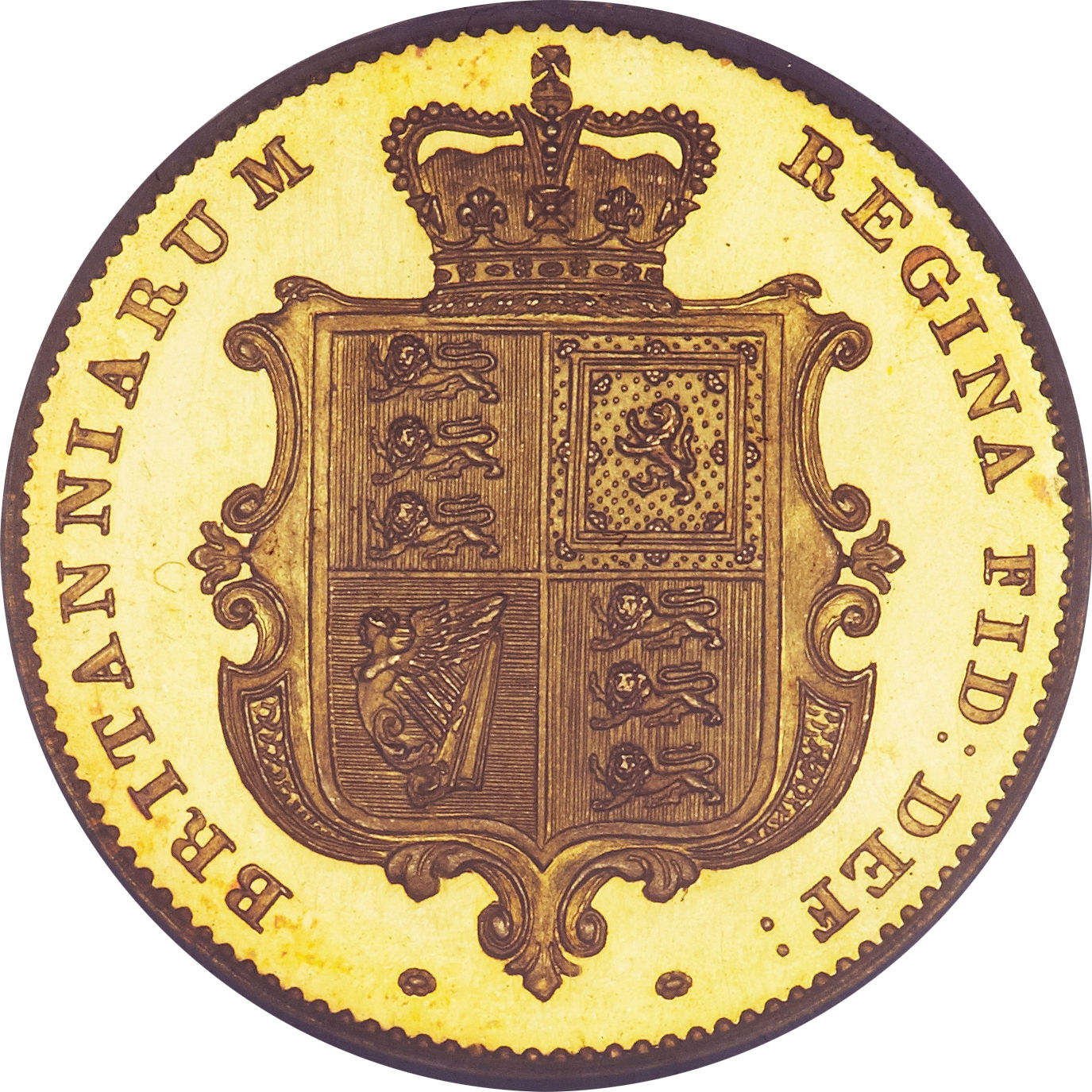
Queen Victoria's 64-year reign produced three distinct coin portraits, Young Head (1838-1887)
by Wyon, Jubilee Head (1887-1893) by Boehm, and Old Head (1893-1901) by Brock. Common-date Victorian
coinage trades at £1-30 across pre-decimal denominations; the famous rarities (1839 Una and the
Lion, 1853 Gothic crown, 1854 Gothic florin) reach six-figure auction realisations. This guide covers
every reign-era denomination with current realised prices.
In brief. Three portraits across 64 years. Young Head (Wyon) 1838-1887; Jubilee Head
(Boehm) 1887-1893; Old Head (Brock) 1893-1901. Common pre-decimal silver and copper trades at
£1-30 in collectable grade; Victorian sovereigns at £425-650
common-date / Old Head, £500-1,500+ Young Head shield, key-date sovereigns
(1879 Sydney, etc.) £1,000-5,000+. The 1839 Una and the Lion gold £5 crown
is the all-time British numismatic icon at £100,000-500,000+.
Victorian coins by denomination
| Denomination | Era | Common-grade range | Key-date / variety |
|---|
| Farthing | 1838-1901 | 50p – £3 | £15-80 (1860 toothed/beaded) |
| Halfpenny | 1838-1901 | £1 – £5 | £30-200 (1860 varieties) |
| Penny (Bun head, copper / bronze) | 1838-1894 | £2 – £20 | £200-1,000+ (1860 beaded, 1869) |
| Penny (Old Head) | 1895-1901 | £3 – £25 | £30-100 in EF/UNC |
| Threepence | 1838-1901 | £3 – £15 | Maundy £100-300 |
| Sixpence | 1838-1901 | £5 – £25 | £30-150 in EF/UNC |
| Shilling | 1838-1901 | £6 – £40 | £100-400 key dates |
| Florin (Godless 1849) | 1849 | £30 – £80 F/VF | £1,500+ in mint state |
| Florin (Gothic) | 1851-1887 | £15 – £60 | £800-3,000 (1854 key date) |
| Half crown | 1838-1901 | £15 – £60 | £200-800 key dates |
| Crown (5 shillings) | 1844-1901 | £30 – £200 | £500-3,000 high grade |
| Half sovereign | 1838-1901 | Bullion + £30-80 | £400-1,500 key dates |
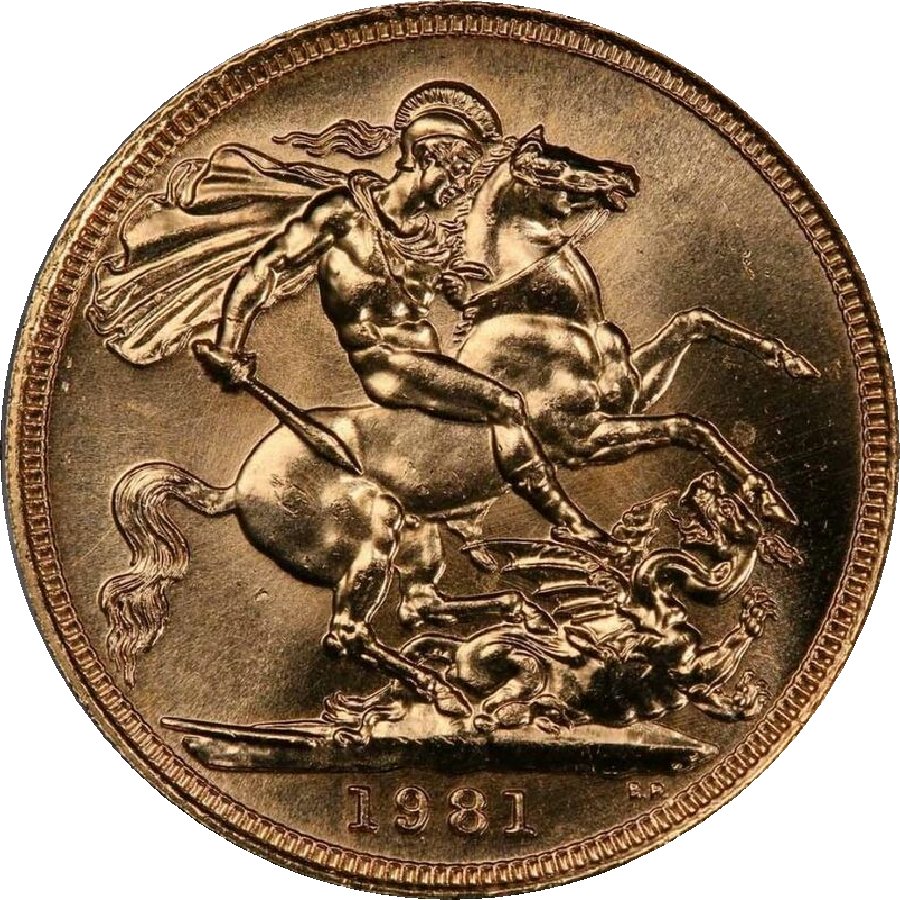
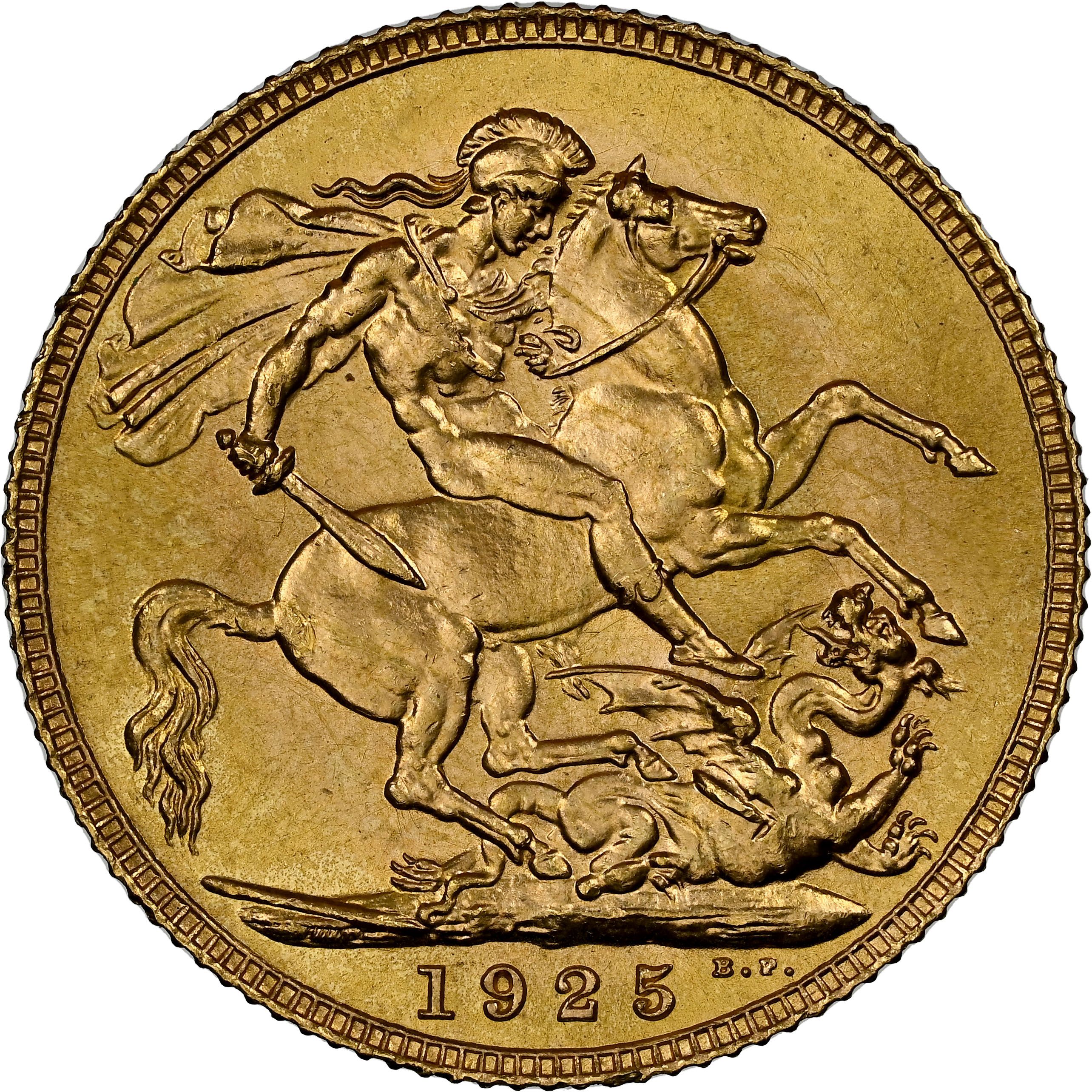
| Sovereign (London) | 1838-1901 | Bullion + £50-100 | £500-1,500 Young Head shield |
| Sovereign (branch mints S, M, P) | 1872-1901 | Bullion + £80-300 | £1,000-5,000+ key dates |
| 1839 Una and the Lion £5 | 1839 | £100,000-500,000+ (~400 minted) |
Featured Victorian coins on MyCoinage
Buy Victorian coins on eBay
The links below open eBay UK searches; if you buy through them, MyCoinage earns a small commission at no cost to you.
Young Head sovereign ↗
Jubilee Head sovereign ↗
Old Head sovereign ↗
Gothic florin ↗
Godless florin (sold) ↗
Bun head penny ↗
Victorian silver crown ↗
Slabbed Victorian sovereigns ↗
Frequently asked questions
What are Victoria's three coin portraits?
Queen Victoria reigned 1837–1901, the longest reign of any British monarch before Elizabeth II. Her coinage shows three distinct portraits across the 64 years. Young Head (1838-1887) by William Wyon. Jubilee Head (1887-1893) by Joseph Edgar Boehm, marking the 50th year of reign. Old Head (1893-1901) by Thomas Brock, the final portrait. Each is identifiable instantly by Victoria's portrayal: Young Head shows her as a young woman; Jubilee with crown; Old Head with widow's veil. Collectors often build sets across all three portraits for any given denomination.
What is the most valuable Victorian coin?
The 1839 Una and the Lion gold £5 crown by William Wyon, mintage approximately 400 pieces, regarded as one of the most beautiful British coin designs ever issued. Realised auction prices: £100,000-300,000 in average grade, £500,000+ in top grade. Outside that pinnacle, the 1853 gothic crown proof, the 1854 Gothic florin, the 1879 Sydney sovereign, and the 1893 small head sovereign mules all trade at five-figure realisations. Common-date Victorian coins (Bun head pennies, Young head shillings) trade at £3-30 in average grade.
How much is a Victorian penny worth?
Common-date Bun head pennies (1860-1894) trade at £1-5 in average circulated grade, £10-30 in EF, £50-150 in mint state. Old Head pennies (1895-1901) similar. Key dates:
1860 toothed-vs-beaded varieties (rare beaded type £200-1,000+);
1869 penny (mintage 2.4M, £30-150);
1882 with no mintmark at Birmingham (£40-200). The famously rare 1933 penny is George V, not Victoria. See our
1933 penny guide for the parallel rarity.
Are Victorian sovereigns a good investment?
Yes, for two reasons. First, every Victorian sovereign has the bullion-floor protection (currently around £425 at £1,800/oz spot for the 7.32 g of pure gold). Second, Victorian sovereigns carry meaningful numismatic premium over melt:
common London-mint Old Head sovereigns trade at 8-15% premium,
Young Head shield reverses at 20-40% premium, and
scarce-date or mintmark variants (1879 Sydney, 1908 Canada) at 50-200%+ premium. Plus they're CGT-exempt as UK legal tender. See our
CGT-exempt coins UK guide.
What is "Maundy money"?
A small set of silver coins (penny, twopence, threepence, fourpence) struck for the annual Royal Maundy ceremony, where the Sovereign distributes specially-minted alms to elderly recipients. Maundy money has existed since the medieval period; modern Maundy issues are continued today in tiny mintages (typically a few hundred sets per year). Victorian Maundy sets trade at £100-400 depending on year. They're always struck in sterling silver to a high standard and are technically legal tender at face value.
How can I tell sterling Victorian silver from .500 silver?
Pre-1920 Victorian silver coins (florins, shillings, sixpences, half-crowns, crowns) are sterling silver (.925 fineness). The .500 silver alloy was introduced AFTER Victoria's reign, in 1920, by George V. So any Victorian-era silver coin (Young Head 1838-1887, Jubilee 1887-1893, Old Head 1893-1901) is sterling. The bullion floor is correspondingly high, a Victorian florin contains 10.5 g pure silver, worth £5-7 at current silver spot.
What are mintmarks on Victorian sovereigns?
During Victoria's reign, gold sovereigns were also struck at branch mints in the Empire to support local circulation. Mintmarks identify the source: S Sydney (1871-1926), M Melbourne (1872-1931), P Perth (1899-1931). Branch-mint sovereigns trade at premium over London-mint equivalents because mintages were lower; specific years (1879 Sydney, 1881 Melbourne, 1899 Perth) are considered key dates and trade at multiples of bullion floor.
How do I authenticate a Victorian coin?
Five tests.
Weight: known to spec for each denomination.
Diameter: known to spec.
Edge: milled (reeded), seam-free; cast counterfeits show seams.
Magnet: sterling silver and 22-ct gold are non-magnetic.
Surface relief: the Wyon, Boehm and Brock portraits are highly detailed; cast counterfeits lose definition in the queen's diadem and crown. For coins worth £100+, professional grading at PCGS, NGC or CGS UK is the safety net, see our
grading services comparison.
Where should I sell Victorian coins?
For collections worth under £500: eBay UK (with sold-listings cross-check) or BNTA-member dealer. For single coins worth £500-2,000: BNTA dealer outright purchase, or list slabbed (PCGS / NGC / CGS UK) on eBay. For high-value rarities (£2,000+, key-date sovereigns, Gothic crowns, Una-and-the-Lion): consign to a specialist UK auction house, Spink, Baldwin's, or London Coins. See our
UK auction house comparison.
How do I display a Victorian collection?
Cardboard 2x2 mylar flips for circulated material in albums. Hard plastic capsules (Lighthouse Quadrum, AirTite) for £50+ coins. PCGS / NGC / CGS UK slabs for anything £200+. Original Royal Mint or auction-house provenance documents add 10-30% to resale value, never throw out the certificate or auction-lot receipt. See our
coin storage UK guide for the full storage tier reference.
Are there Victorian "test pieces" that surface occasionally?
Yes, pattern coins, trial pieces, mules and proof restrikes are continuously surfacing from old collections. The Royal Mint maintained extensive engraver-trial files; some trickle out via auction houses every few years. Notable categories: 1860 toothed/beaded penny varieties (transition year), 1879 Sydney sovereign mules, 1853 gothic crown proofs, 1893 sovereign small head transition pieces. Trade publications (Coin News, the British Numismatic Journal) document new emergences.
How does Victorian collecting compare to George V?
Victorian collecting is "deeper", 64 years of issues with three portraits, three reigns of sovereigns, and a long pre-bullion silver history. George V (1910-1936) is "tighter" with 26 years and a single portrait, but with more error-variety interest because of the silver-content transition (1920) and the famous 1933 penny. Both are mainstream pre-decimal collecting territory. Many UK collectors specialise in one specific reign rather than spreading across the long 19th-20th century timeline. See our
George V coins value guide.
What is the Bun Head penny?
The "Bun Head" is the bronze penny portrait used 1860-1894, designed by Leonard Charles Wyon (William Wyon's son) for the new bronze coinage. It depicts Victoria with hair drawn back into a tight bun, a more mature look than the earlier Young Head laureate portrait used on silver. The 1860 transition year saw both copper and bronze pennies struck, with the rare 1860/59 mule (copper obverse paired with bronze reverse) being one of the most valuable British pennies; high-grade examples have realised £30,000-60,000. The Bun Head era ended in 1895 when the Veiled Head replaced it on bronze.
What was the Jubilee Head and why was it unpopular?
The 1887-1893 Jubilee Head by Joseph Edgar Boehm was introduced for Queen Victoria's Golden Jubilee. It depicts Victoria wearing a small crown perched at the back of her head, with the royal robes visible. Contemporary commentary was harsh, satirists called the small crown "the postage stamp" and the portrait was widely judged undignified. The Jubilee Head was used on silver and gold for only six years before being replaced by the more dignified Veiled Head (Old Head) by Sir Thomas Brock in 1893. This makes Jubilee Head silver and gold a relatively short-window collecting area. The bronze coinage retained the Bun Head until 1894, and the Veiled Head bronze followed from 1895.
What is the Gothic Crown?
The Gothic Crown of 1847 is one of the most-collected Victorian coins. Designed by William Wyon, it depicts Victoria in elaborate Gothic-script lettering with a richly-detailed crowned bust. Mintage approximately 8,000 in proof, with two edge variants: UNDECIMO (the eleventh year of reign) and SEPTIMO. Mid-grade examples trade at £4,000-8,000; high-grade PR64+ examples at £15,000-30,000+. The Gothic Crown is considered one of the most beautiful British coin designs of the 19th century. A separate 1839 plain-edge proof crown is even rarer and has realised over £75,000 at auction.
What is the Wreath Crown series?
The Wreath Crown series ran 1927-1936 under George V (not Victoria, but often confused). George V crowns were struck only as collector issues with deliberately limited mintages: 1927 (15,030 proofs only), 1928 (9,034), 1929 (4,994), 1930 (4,847), 1931 (4,056),
1932 (2,395, the rarest), 1933 (7,132),
1934 (932, the key date), 1936 (2,473). The 1934 Wreath Crown is the most-collected piece: VF £2,500-4,000; EF £6,000-10,000; UNC £15,000-30,000+. See our
George V coins value guide for full Wreath Crown context.