How to Value a UK Coin: Identify, Grade and Price Any British Coin
A structured walk-through for valuing any British coin: identify it, grade it, look up the realised auction price for that grade, then decide whether to authenticate or sell. If you do not yet know which coin you have, start with the UK coin checker. Every figure cited on MyCoinage is a hammer price from a published auction archive or a verified eBay sold listing, not dealer asking prices.
Check your coins against real sale prices
Free MyCoinage valuation tool · realised auction prices · no card needed
Add any UK coin to a free MyCoinage collection and see what it has actually realised at auction, grade by grade, with a running total for everything you own.
Step 1: Identify your coin
Before you can value a coin you need to know which coin it is. The five pieces of information that uniquely identify almost any British coin:
- Denomination (face value): 1p, 2p, 5p, 10p, 20p, 50p, £1, £2, £5, sovereign, half sovereign, etc. Usually obvious from the size, shape and inscription.
- Year of issue: on the obverse below the bust (post-2008 designs) or on the reverse (pre-2008). Pre-decimal pennies sometimes carry the date in the legend rather than as a numeral.
- Monarch: identifies the era and portrait variant. Modern: Elizabeth II (4 different portraits 1953–2022) or Charles III (2023+). Pre-1953: George VI, George V, Edward VII, Victoria (3 portraits), William IV, George IV, George III, etc.
- Mintmark: a small letter on the reverse identifying which mint struck the coin. London is unmarked; branches use S (Sydney), M (Melbourne), P (Perth), I (Bombay), SA (Pretoria), C (Ottawa). Critically affects sovereign value.
- Variety: minor design differences within a year (different obverse portraits, edge inscriptions, error variants). On the catalogue page each documented variety is a separate entry.
Use our catalogue search with any combination of those five fields. Or work through the structured UK coin identifier, which steps through identification one decision at a time.
Step 2: Grade your coin
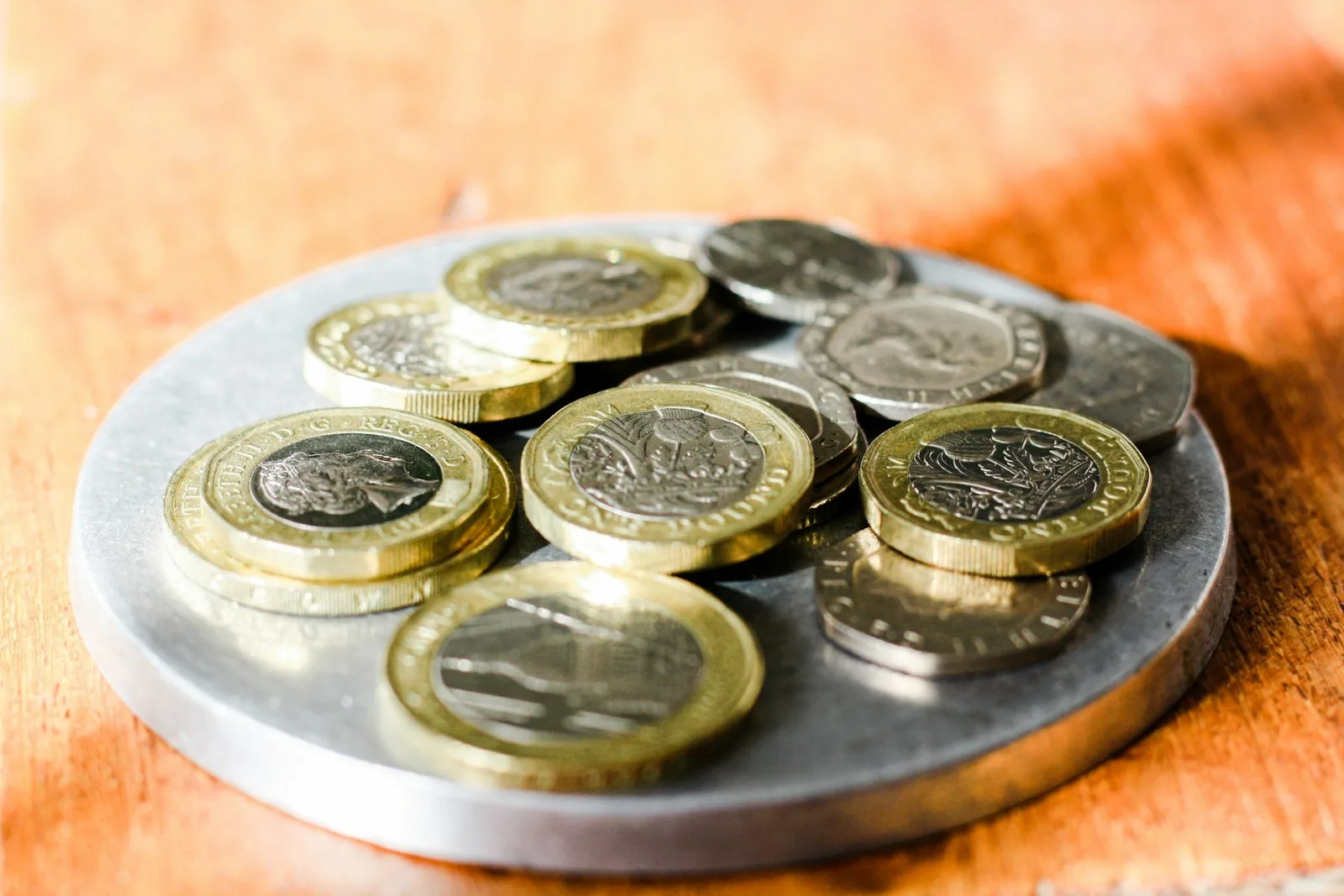
Grade is the single biggest determinant of value. The same coin in Fine and PR-65 grades can differ by a factor of 50 or 100. Two scales are in active use:
UK descriptive scale
From worst to best:
- Poor (P): Barely identifiable. Date may be missing.
- Fair (FR): Major design elements visible but heavily worn.
- About Good (AG): Heavy wear; legend partially worn through.
- Good (G): Heavy wear; design and legend visible but faint.
- Very Good (VG): Well worn but main features clear.
- Fine (F): Moderate even wear; detail still sharp on main features.
- Very Fine (VF): Light to moderate wear; high points smooth, design crisp.
- Extremely Fine (EF): Very light wear on highest points only.
- almost Uncirculated (aUNC): Slight friction on high points; lustre present.
- Uncirculated (UNC): No wear, full mint lustre, possible bag marks.
- Brilliant Uncirculated (BU): No wear, full lustre, minimal marks.
- Fleur de Coin (FDC): Perfect proof or near-perfect specimen.
Sheldon scale (US, increasingly used internationally)
Numeric 1–70 where Poor=1, Fair=2–3, AG=3, G=4–6, VG=8–10, F=12–15, VF=20–35, EF=40–45, AU=50–58 (almost uncirculated tier), MS=60–70 (mint state, business strikes), PR=60–70 (proof). Anything 65 or above is "gem" grade. 70 is theoretically perfect, achievable on modern proofs and BU issues, vanishingly rare on older circulating coins.
The full grading guide has photographs of each grade with the wear patterns to look for, plus a UK–Sheldon crossover table.
Step 3: Look up the realised price
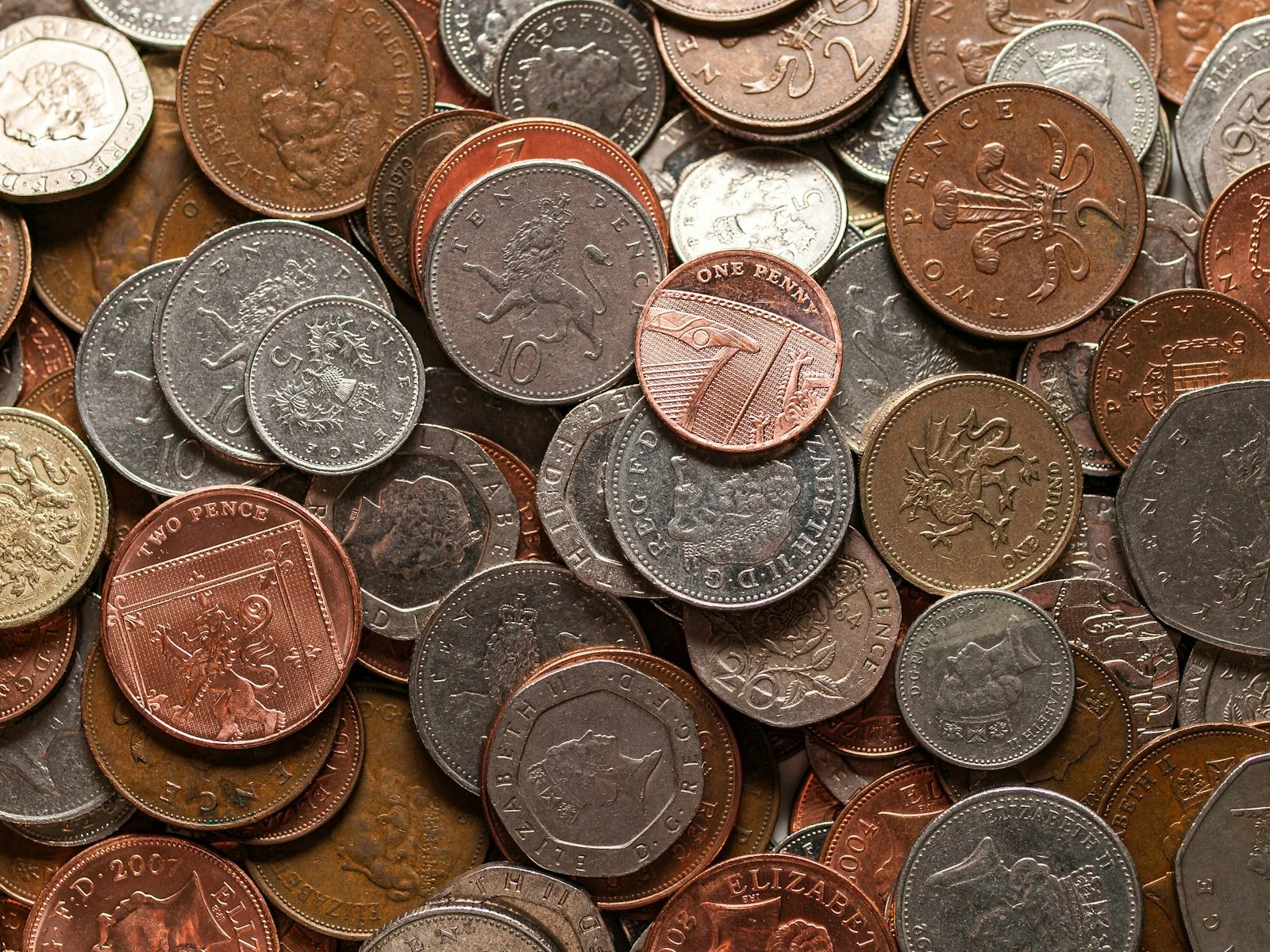
Open the coin's catalogue page. The grade table shows the realised price per grade, sourced from our auction-data pipeline. Headlines you'll see:
- Latest sale price for each grade.
- 30-day percentage change showing whether prices are trending up or down.
- All-time price range showing the lowest and highest realised sales for the coin/grade.
- Sample count, how many verified sales we have for that exact (coin, grade). High counts (10+) mean a reliable price; low counts (1–3) mean the figure is more indicative than authoritative.
- Liquidity score, rolling 12-month sale frequency. High score means the coin actually trades; low score means the published value is theoretical and you may wait years to find a buyer at it.
For coins missing same-grade data, our system falls back to the all-time average for that exact grade, and only as a last resort to a cross-grade weighted average. Each coin page makes the data source explicit.
Step 4: Authenticate (for higher-value coins)
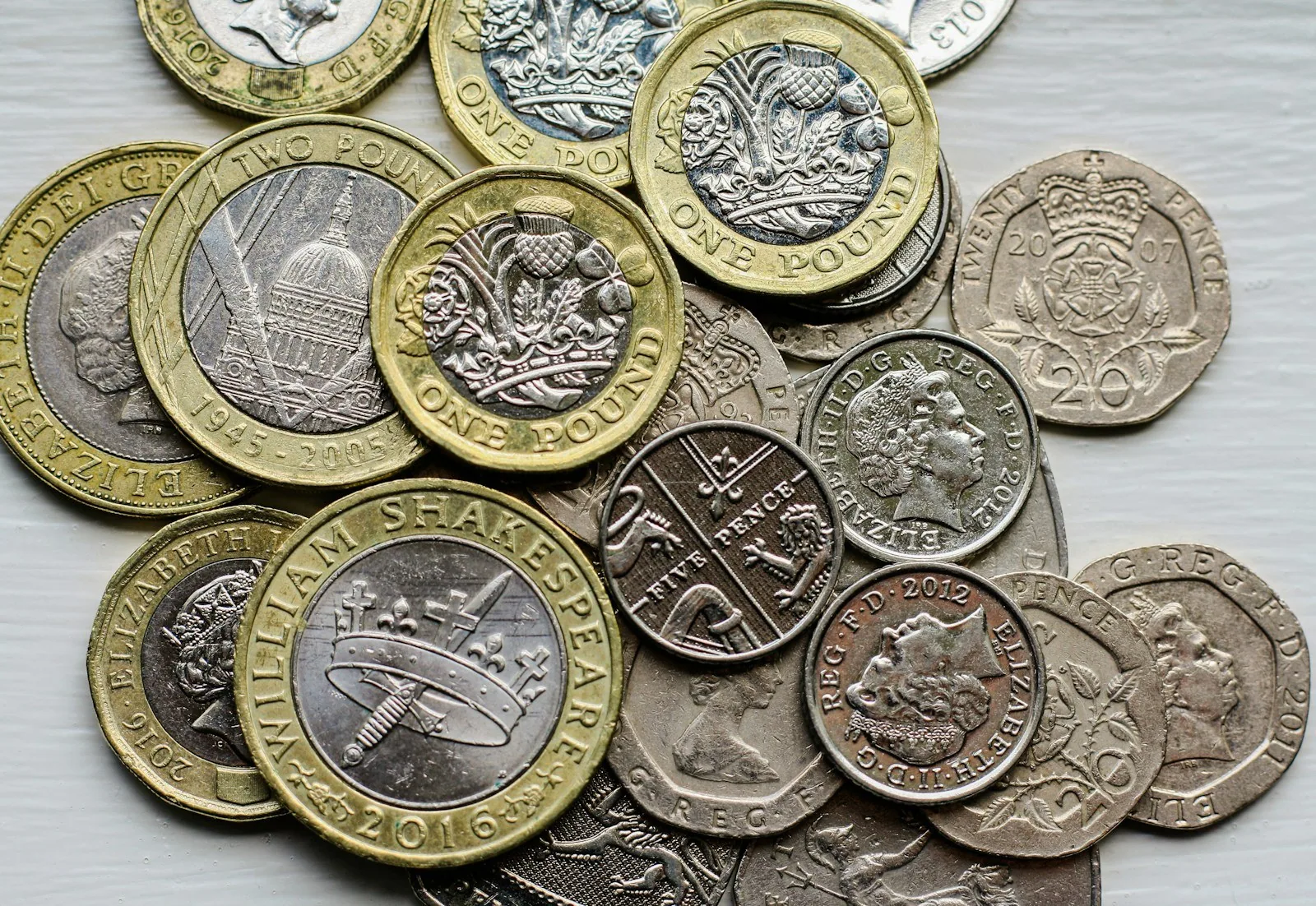
For any coin you believe is worth £200+, third-party authentication is worth the fee:
- CGS UK, British grading service. Lower fees, faster domestic turnaround. Recognised by UK auction houses.
- NGC UK, American Numismatic Guaranty Company's UK office. Strong on UK coverage; direct UK submission.
- PCGS, American, world's largest grading service. Premium pricing but the strongest international slab brand.
Fees: typically £25–£50 per coin depending on declared value. A slabbed coin realises 10–25% more than the same coin raw because the buyer trusts the grade and authentication. For exceptionally rare coins (1933 penny, 1819 sovereign, Una and the Lion), slabbing is essentially mandatory, nobody pays five or six figures for a raw coin without third-party verification.
Step 5: Sell via the right venue
| Coin value tier | Right venue | Net return notes |
|---|---|---|
| Under £100 | eBay UK or local coin fair | Slabbing rarely cost-effective at this tier |
| £100–£500 | eBay UK with third-party-graded slab | Slab adds ~30–50% to realised price by removing counterfeit risk |
| £500–£5,000 | UK auction house (slabbed) | Hammer commission ~15–20%; net usually beats private dealer offers |
| £5,000+ | Specialist consignment (Spink, Baldwin's, Noonans, Heritage) | Realised prices on rare dates reliably exceed private offers; slab mandatory |
The where to sell rare coins guide has commission structures, net-return calculations and dealer recommendations per tier.
Worked examples: three real-world value lookups
Example 1: A 2009 Kew Gardens 50p found in change
- Identify: 50p (heptagonal), 2009, Royal Shield with pagoda design = Kew Gardens 50p, Royal Mint reverse design by Christopher Le Brun. Mintage: 210,000.
- Grade: normal-handling circulated condition = VF (likely some bag marks but full design clear).
- Look up: our catalogue page for the 2009 Kew Gardens 50p shows VF realised prices around £100–£130; UNC at £150–£200; PR-65 (slabbed silver proof, different issue) at £300+.
- Authenticate: for a single VF specimen, no, not worth a slab fee. For a high-grade UNC find, yes, CGS UK at ~£25 will lift sale price by £30–£50.
- Sell: eBay UK with raw photographs and a reference to mintage data is the standard route. Expect £120–£160 net.
Example 2: An inherited Victorian sovereign
- Identify: 22 mm gold coin, Queen Victoria portrait, year 1880 visible on reverse below St George. Check below the design for a mintmark (S, M etc); none = London. So: 1880 London Victoria sovereign, Young Head shield reverse.
- Grade: light wear on high points of the queen's hair = VF.
- Look up: catalogue page shows VF 1880 London Young Head shield at £500–£700 (mostly bullion plus modest premium). The same coin in PR-65 would be £3,000+.
- Authenticate: at this value, marginal. If selling to a bullion dealer no slab needed. If selling at auction, slabbing is recommended. CGS UK or NGC at £30–£50.
- Sell: bullion dealer (BullionByPost, Atkinsons, Chards) for the bullion-grade VF; auction house (Spink, Baldwin's) if slabbed and you want to capture any numismatic premium. Bullion route is faster; auction route may net 5–10% more.
Example 3: Suspected 1933 penny found in a coin album
- Identify: a copper penny, George V "small head" portrait, date appearing to read 1933.
- Grade: almost irrelevant, if genuine, the coin is worth £70,000+ in any grade.
- Look up: the 1933 penny guide covers known specimens, locations and authentication.
- Authenticate: mandatory. Fakes vastly outnumber genuine specimens. Send to PCGS or NGC immediately; do not handle the surfaces; do not clean.
- Sell (only if authenticated): through Spink, Baldwin's, Noonans or Heritage. Hammer prices at recent auctions: £72,000 (Heritage 2020), £72,500 (Spink 2016).
Use eBay sold listings as a price sanity-check
The links below open eBay UK searches; if you buy through them, MyCoinage earns a small commission at no cost to you. The "sold" filter is the single most useful free price reference for British coins.
Once you've identified and graded a coin, the cheapest sanity-check is to look up recent sold listings on eBay UK, not active asks, which mean nothing until a buyer agrees. The links below pre-filter eBay to the sold/completed view (sorted newest first) for common British coin categories. They're a free supplement to our catalogue's realised-price data; the catalogue is more comprehensive, but eBay sold listings are useful for low-population coins where our auction-house pipeline doesn't have many samples yet.
Rare 50p sold ↗ Rare £2 sold ↗ Rare £1 sold ↗ UK coins PCGS-slabbed (sold) ↗ UK coins NGC-slabbed (sold) ↗ UK coins CGS-slabbed (sold) ↗ Victorian sovereigns sold ↗ UK error coins sold ↗ Charles III 50p (BIN) ↗ British coin collection lots ↗
Frequently asked questions
How does MyCoinage's coin value checker work?
Is the service free?
What's the difference between "asking price" and "realised price"?
How do I grade my coin?
Should I pay for professional grading?
What information do I need to identify my coin?
Why are there so many different prices for the same coin?
Are old coins always worth more?
How much is a 1971 New Pence coin worth?
How much is a £2 commemorative coin worth?
Can MyCoinage value a coin I can't identify?
Should I clean my coin before checking its value?
Resources and further reading
- Coin catalogue search, the live coin lookup with realised prices.
- Coin grading guide, UK and Sheldon scales explained with photographs.
- UK coin identifier, structured step-through for identifying any British coin.
- Rare UK Coins List, the headline rarities by realised auction price.
- UK Coin Errors List, mint mistakes worth more than face value.
- Where to sell rare coins UK, commission and net-return comparisons by venue.
- Value your collection, portfolio-level valuation tool.
- Royal Mint Museum, official reference on Royal Mint history.
- British Numismatic Society, academic society with the *British Numismatic Journal*.
- British Numismatic Trade Association, directory of vetted UK dealers.
- Predecimal.com, the British Coin Forum, the place to ask "is this real?".