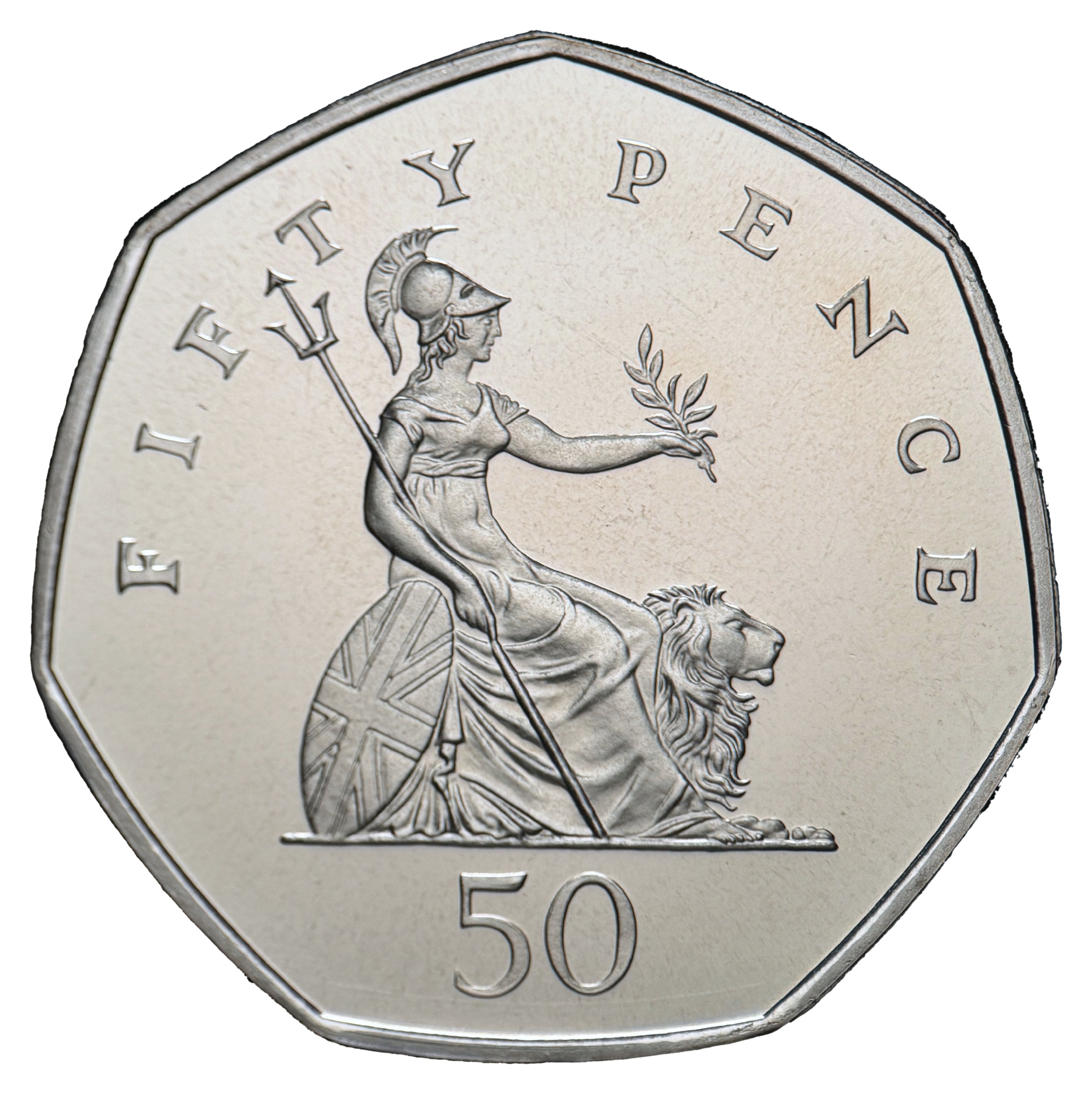
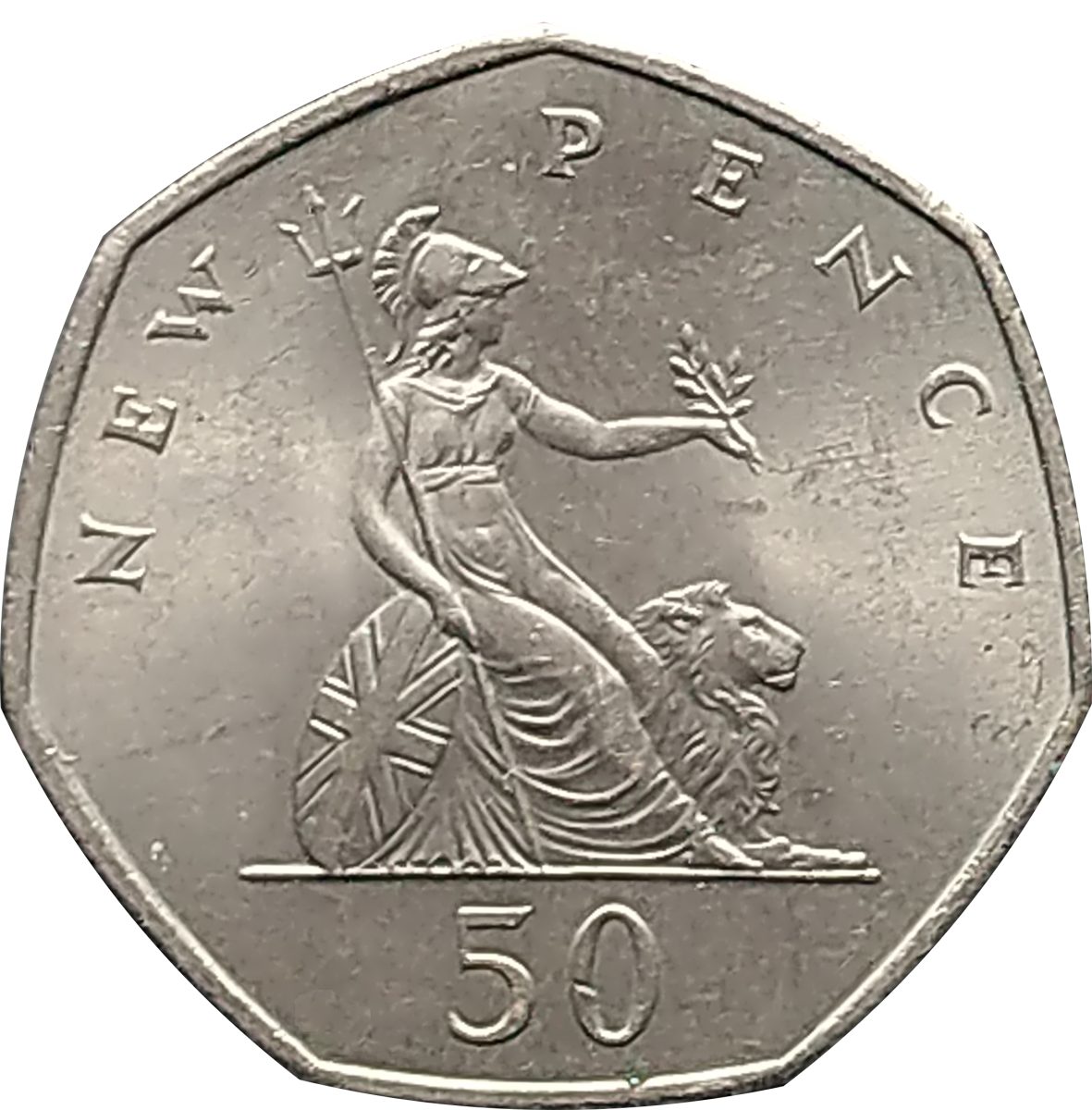
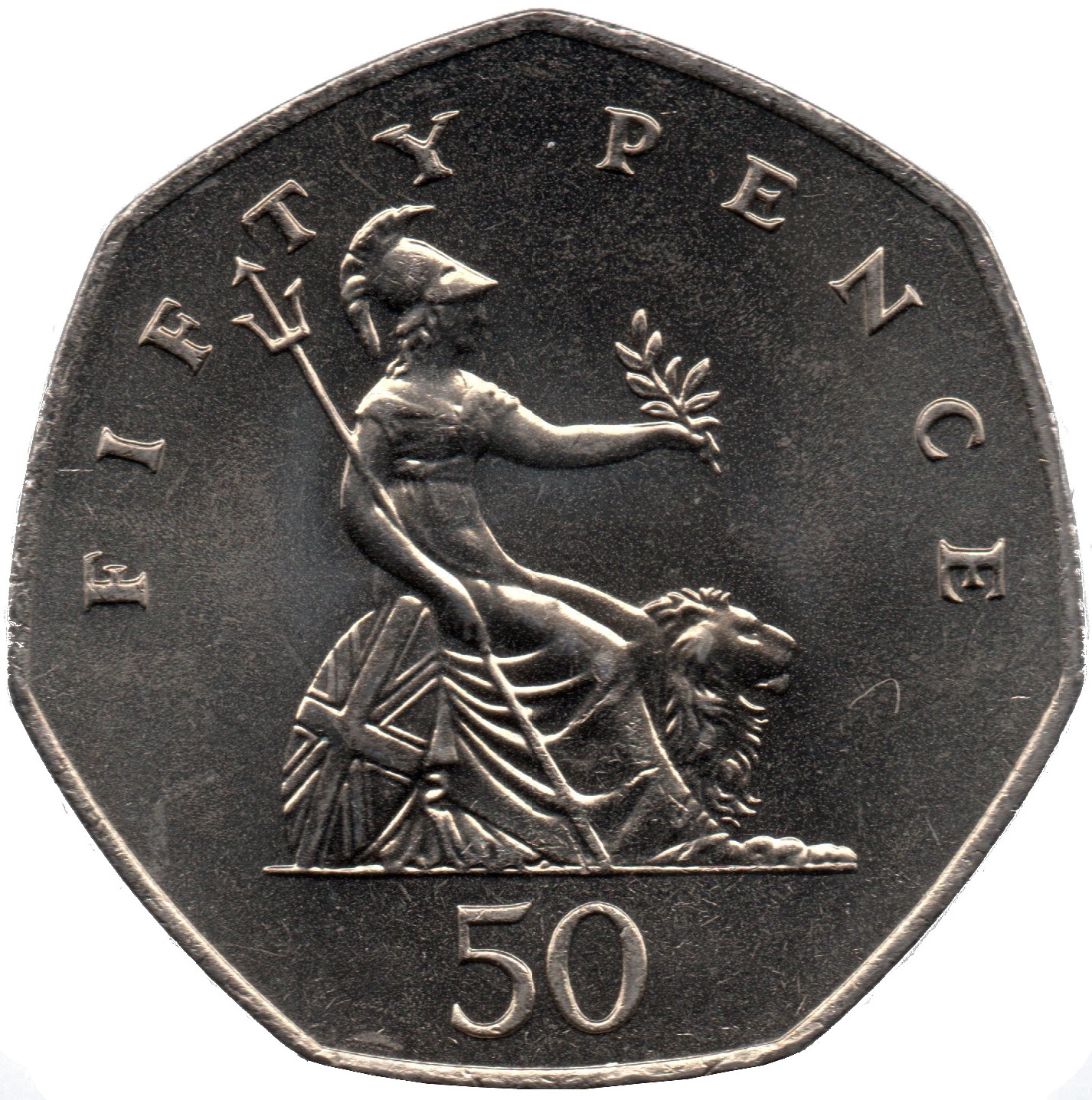
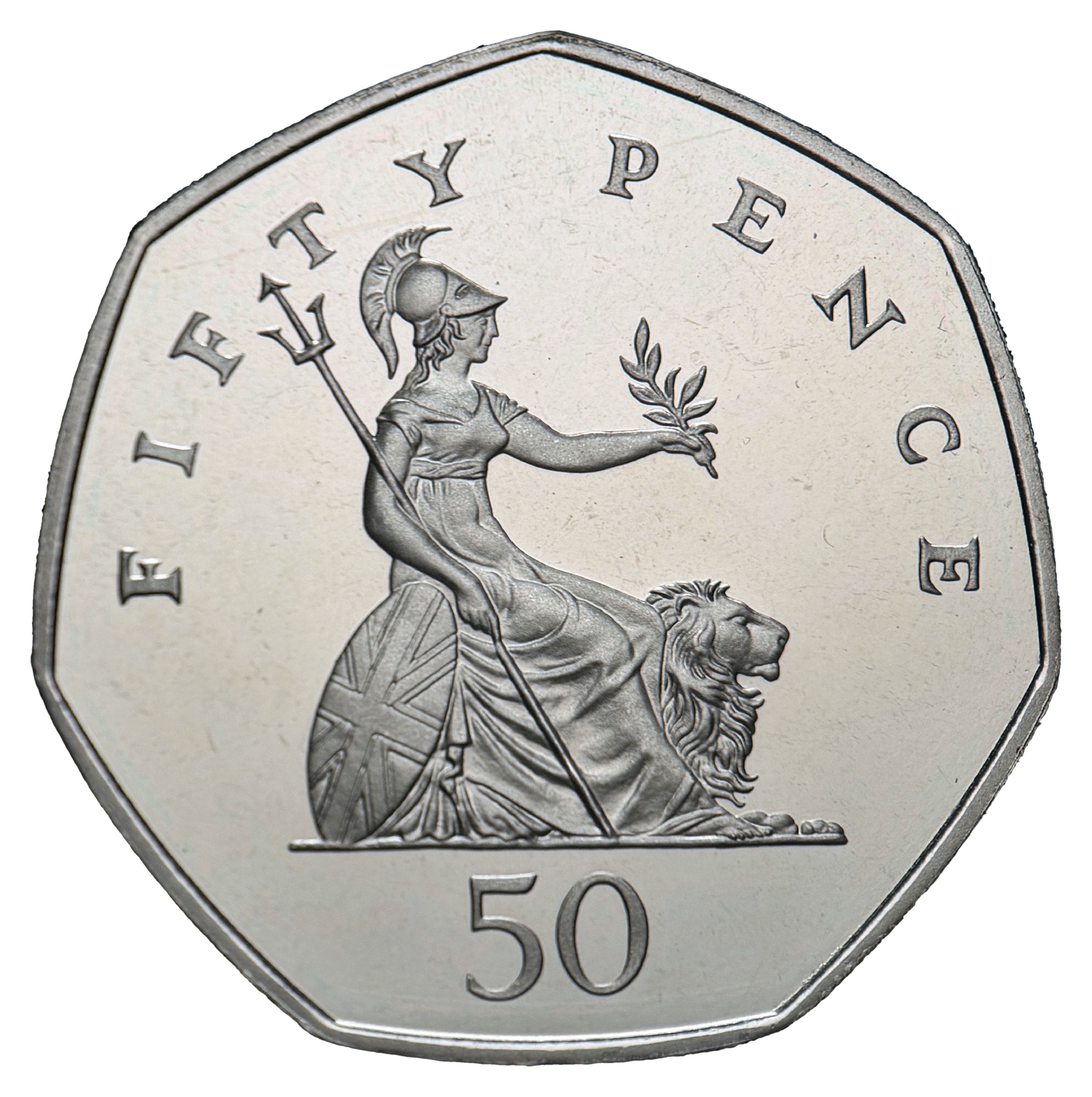
The 1971 50p was the inaugural decimal-currency 50p coin, issued for Decimal Day on 15 February 1971 with a
mintage of 188.4 million. Despite its historical significance, the standard cupronickel issue is common at face
value. The silver proof variant from the 1971 Royal Mint set is the genuine collectable. This guide covers
every 1971 50p type, the "NEW PENCE" inscription, the original large-coin format, and current realised prices.
In brief. The 1971 cupronickel 50p (mintage 188,400,000) trades at face value to £2 in circulated grade.
The 1971 silver proof 50p (mintage ~5,000, from the inaugural Royal Mint silver proof set) trades at £30-80 in original packaging.
Sealed 1971 BU Decimal Day sets containing the 50p plus the other denominations trade at £5-15.
The "NEW PENCE" inscription is correct for 1971-1981; not an error. The 1971 50p is the original 30 mm large size,
demonetised on 31 December 1997.
1971 50p prices by variant
| Variant | Mintage | Circulated grade | BU / proof grade |
|---|
| 1971 cupronickel circulation | 188,400,000 | 50p – £2 | £3 – £8 |
| 1971 BU (from Decimal Day set) | ~750,000 | , | £5 – £15 (sealed set) |
| 1971 silver proof (Royal Mint set) | ~5,000 | , | £30 – £80 |
Featured 50p coins on MyCoinage
Buy a 1971 50p on eBay
The links below open eBay UK searches; if you buy through them, MyCoinage earns a small commission at no cost to you.
1971 silver proof 50p ↗
1971 Decimal Day BU set ↗
1971 50 New Pence (cupronickel) ↗
1969 50 New Pence (first issue) ↗
Slabbed 1971 50p (sold) ↗
Pre-1997 large-50p lots ↗
Frequently asked questions
How much is a 1971 50p worth?
Almost nothing in normal circulation grade, face value, 50p. The 1971 50p was the first decimal 50p ever issued, with a mintage of 188,400,000 (188 million) struck for the launch of decimal currency on Decimal Day, 15 February 1971. So many were made that even the original "Decimal Day" boxed sets sit comfortably in supply. A loose 1971 50p in circulated grade trades on eBay at 50p-£2; a sealed 1971 Royal Mint Decimal Set (which contained the 50p alongside the other denominations) at £5-15.
Why does the 1971 50p say "NEW PENCE"?
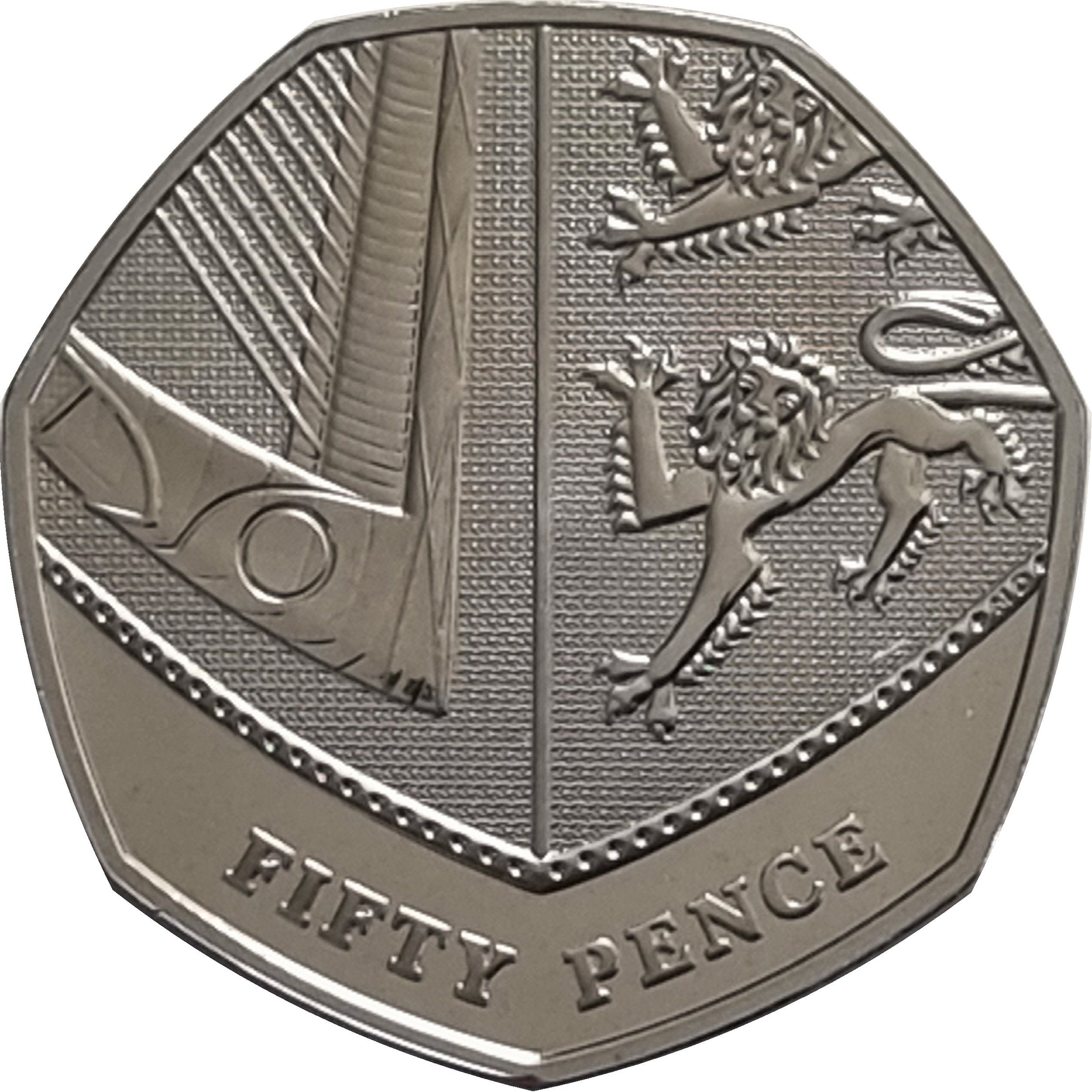
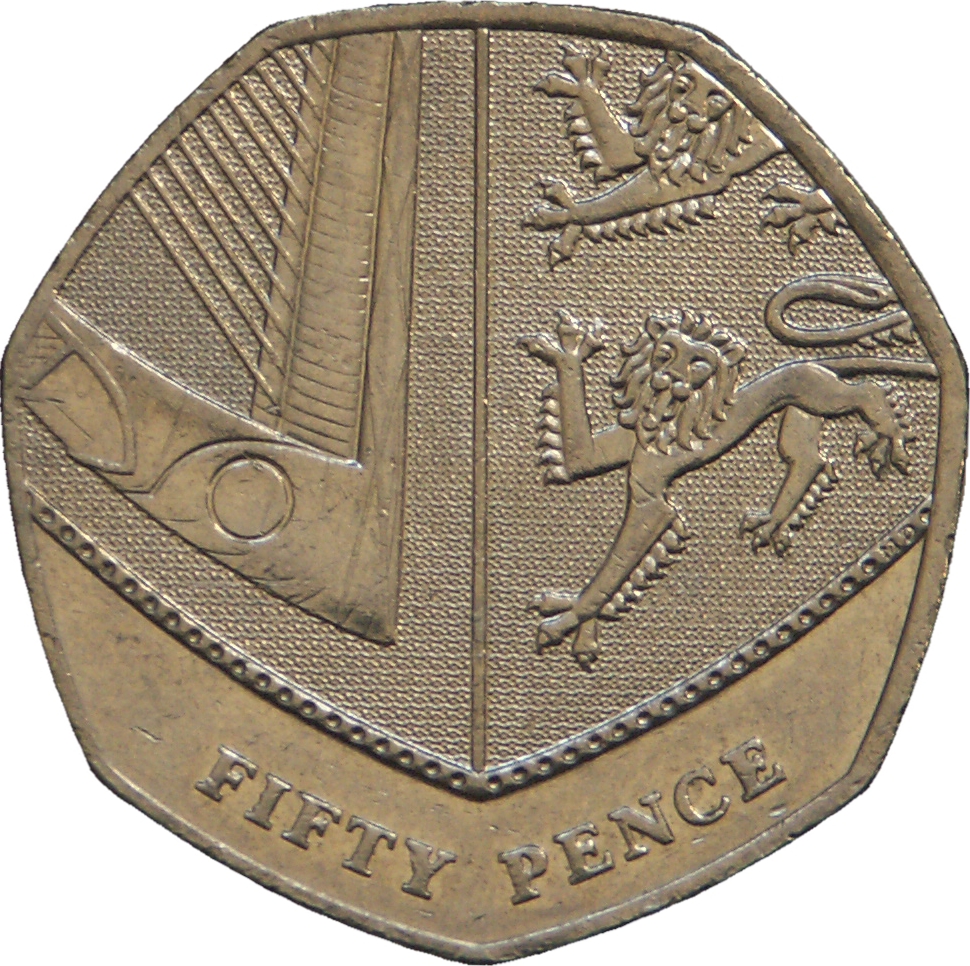
Decimal coinage was introduced under the heading "New Pence" to distinguish the new currency from the old £sd system that had run for centuries. From 1971 to 1981 the inscription on every decimal coin (1p, 2p, 5p, 10p, 50p, £1) read "NEW PENCE" or "NEW PENNY". From 1982 onwards the word "NEW" was dropped because the public had adapted; the current 50p reads "FIFTY PENCE". So a 1971 50p showing "NEW PENCE" is correct and not an error.
Is there a rare or valuable 1971 50p?
Two exist. The standard 1971 cupronickel 50p (mintage 188 million) is common at face value. The 1971 silver proof 50p from the inaugural Royal Mint silver proof set is rare (mintage approximately 5,000) and trades at £30-80 in cased condition. The famous 1971 New Pence 2p mule, where a 1983 proof set accidentally received a 2p with the obsolete 1971 "NEW PENCE" reverse, is a different coin and well-known rarity. There is no 1971 50p mule equivalent.
What about the 1971 BU set?
The 1971 Royal Mint Decimal Set (sometimes called the Decimal Day Set or Coinage of Great Britain and Northern Ireland set) was sold to the public ahead of Decimal Day so households could familiarise themselves with the new coins. It contained 1p, 2p, 5p, 10p, 50p, and the half-penny (1/2p), all in BU finish, in a blue plastic wallet with a printed booklet explaining decimalisation. Sealed BU sets in original packaging trade at £5-15. Loose sets where the wallet has been damaged or coins removed trade at £3-8.
Is the 1971 50p the first 50p ever?
No, the original 50p was actually issued in 1969, two years before Decimal Day. The Royal Mint introduced the 50p in 1969 (with a mintage of 188,400,000) to replace the 10-shilling note in advance of decimalisation. The 1969-1970 50ps say "FIFTY NEW PENCE" and circulated alongside the old £sd money. So if you find a 50p with date 1969 or 1970, it's slightly older than the 1971. None of these dates are scarce; the 1969 in BU (from sealed Royal Mint sets) trades at £5-15.
How can I tell if my 1971 50p is silver?
Two checks. Weight: the standard cupronickel 50p weighs 13.5 g (the original large 50p, withdrawn 1997). The 1971 silver proof variant from the Royal Mint set is the same dimensions but sterling silver (.925) and weighs 13.5 g (silver and cupronickel are coincidentally close in density). The reliable test is finish: silver proofs have a frosted-cameo design with mirror-finish fields and were always sold in a Royal Mint case with a Certificate of Authenticity. A loose 1971 50p without packaging is virtually certain to be the cupronickel circulation issue.
What size is the 1971 50p?
The 1971 50p is the original large 50p, 30 mm across and 13.5 g. This was the standard until 1997, when the Royal Mint reduced the 50p to 27.3 mm and 8.0 g to ease vending-machine compatibility. Pre-1997 50ps remained legal tender until 31 December 1997, after which they were demonetised. So the 1971 50p you can identify by size alone, it's noticeably larger than every 50p minted since 1997.
Are 1971 50ps still legal tender?
No. All pre-1997 large 50ps (1969-1997) were demonetised on 31 December 1997. They cannot be spent at face value. Banks accept them for exchange or deposit on a discretionary basis but are not obliged to. So a 1971 50p is purely a collector's item now, modest value (50p-£2 for circulated, £30-80 for the silver proof), but no longer money.
Why was the original 50p so big?
The original 50p replaced the 10-shilling note (worth half a pound) and was sized for ease of identification by touch, particularly important for visually-impaired users. The seven-sided heptagonal shape, designed by Hugh Conway, was specifically chosen to be distinguishable from round coins by feel. The size and shape are the original Decimal Day brief: distinct, not confusable with any other coin in the set. The 1997 size reduction shaved both diameter and weight by roughly 35% to ease vending-machine handling, which had become a complaint by the 1990s.
Where can I sell a 1971 50p?
For circulation-grade examples (worth 50p-£2): not really worth selling individually; combine with other 50ps in a date-run lot on eBay. For BU 1971 50ps in original Royal Mint packaging: eBay listings or BNTA-member dealers. For 1971 silver proof 50ps in original capsule with CoA: eBay, BNTA dealers, or for high-grade examples consign to
Baldwin's or
Spink. Free price reference: our
1971 50p catalogue page shows realised prices by grade.
Are 1971 50ps a good investment?
Not for the cupronickel circulation issue, mintage is too high (188 million) for any meaningful appreciation. The silver proof from the 1971 set is a different story: limited mintage, sealed Royal Mint packaging, and a date that marks a once-in-history moment (the start of decimal coinage in Britain). Silver proofs from 1971 have appreciated roughly 4-7% per year over the long term and are likely to continue. The 1971 BU set is a sentimental keepsake more than an investment.