Royal Mint History: 1,100 Years from Alfred to Llantrisant
The Royal Mint is one of the oldest continuously-operating manufacturing institutions in the world. From a network of Anglo-Saxon mints established under King Alfred from 886, to consolidation at the Tower of London in 1279, to the Tower Hill steam-press era of the 19th century, to the modern Llantrisant plant that struck the decimal coinage from 1968 onwards, the institution has survived eleven centuries of British political upheaval. This guide covers the full story: locations, Masters, Chief Engravers, the Trial of the Pyx as continuous quality-check, and the modern commemorative-coin era.
The Anglo-Saxon era (886–1066)
The institutional ancestor of the modern Royal Mint emerged with the consolidation of English minting under King Alfred (871–899). Alfred reorganised the previously chaotic system of independent regional mints operated by ealdormen and bishops into a network of royally-licensed mints producing standardised silver pennies of fixed weight. By the late 9th century there were around twelve operational mints; the London mint rapidly became the largest by output, struck silver pennies for King Alfred himself and for his successors Edward the Elder, Athelstan and Edgar.
Under King Edgar’s 973 reform the mint network expanded to over 40 sites and silver-penny standards were further tightened. The London mint remained the principal producer through the late Anglo-Saxon period and the Norman conquest of 1066, surviving every regime change because the Crown depended on its output.
The Tower of London Mint (1279–1810)
The pivotal moment in the institution’s consolidation was Edward I’s 1279 reform, which closed the minor regional mints and concentrated production within the Tower of London. The Tower Mint occupied a long range of buildings between the inner and outer curtain walls (the "Mint Street" location) and operated there for an extraordinary 531 years, longer than any subsequent Royal Mint site. The Trial of the Pyx, also instituted by Edward I in 1282, ran from this site from its inception.
The Tower era covers the late medieval, Tudor, Stuart and Hanoverian centuries. Notable events:
- 1485–1509: Henry VII’s 1504 facing-portrait groat, the first realistic royal portrait on an English coin, struck at the Tower. See our pre-1816 British coins guide for the full Tudor-Stuart numismatic context.
- 1544–47: Henry VIII’s third coinage debasement, the "Coppernose" scandal, struck at the Tower under Mint officials whose names are recorded in the Pyx trial books.
- 1656–58: Cromwell’s portrait coinage struck at the Tower under the Protectorate.
- 1662: Mechanical milling introduced under Charles II; the Tower screw-press replaces hand-hammered production.
- 1699–1727: Isaac Newton’s 28-year tenure as Master.
- 1696: Great Recoinage of William III, with the Tower Mint operating round the clock for over a year.
Isaac Newton, Master of the Mint (1699–1727)
Sir Isaac Newton’s tenure as Master of the Mint is the most celebrated chapter in the institution’s history. Newton was appointed Warden of the Mint in 1696 (a more junior role focused on counterfeiting) and promoted to Master in 1699 on the death of his predecessor. He held the post for 28 years until his death in 1727, a tenure that overlapped with his Presidency of the Royal Society and his publication of the Optics in 1704.
Newton took the role seriously and substantively. He personally prosecuted counterfeiters, including the notorious William Chaloner, whom Newton secured a conviction against and sent to the gallows in 1699. He drove the recoinage of the late 1690s through to completion, raised the Trial of the Pyx’s pass standards, and supervised the introduction of new coin designs and edge-inscription technology. He passed all seven Trials of the Pyx held during his tenure.
The role paid handsomely, around £500 per year plus a share of profits, making Newton one of the wealthiest men in early 18th-century England by the time of his death. He is buried in Westminster Abbey; the Tower of London Mint office where he worked has been preserved and reconstructed at the Royal Mint Experience visitor centre at Llantrisant.
Tower Hill (1810–1968)
By the late 18th century the Tower Mint was structurally inadequate for the volume and technical demands of industrialised coinage production. The introduction of Boulton & Watt steam-press technology required larger workshops, more reliable power supply and a layout that the Tower’s constrained medieval site could not provide. The decision was therefore taken to build a new Royal Mint immediately east of the Tower, on Tower Hill, completed in 1809 and operational from 1810.
The Tower Hill plant operated for 158 years and was the home of the Royal Mint through the entire 19th and most of the 20th century. Notable events from this era:
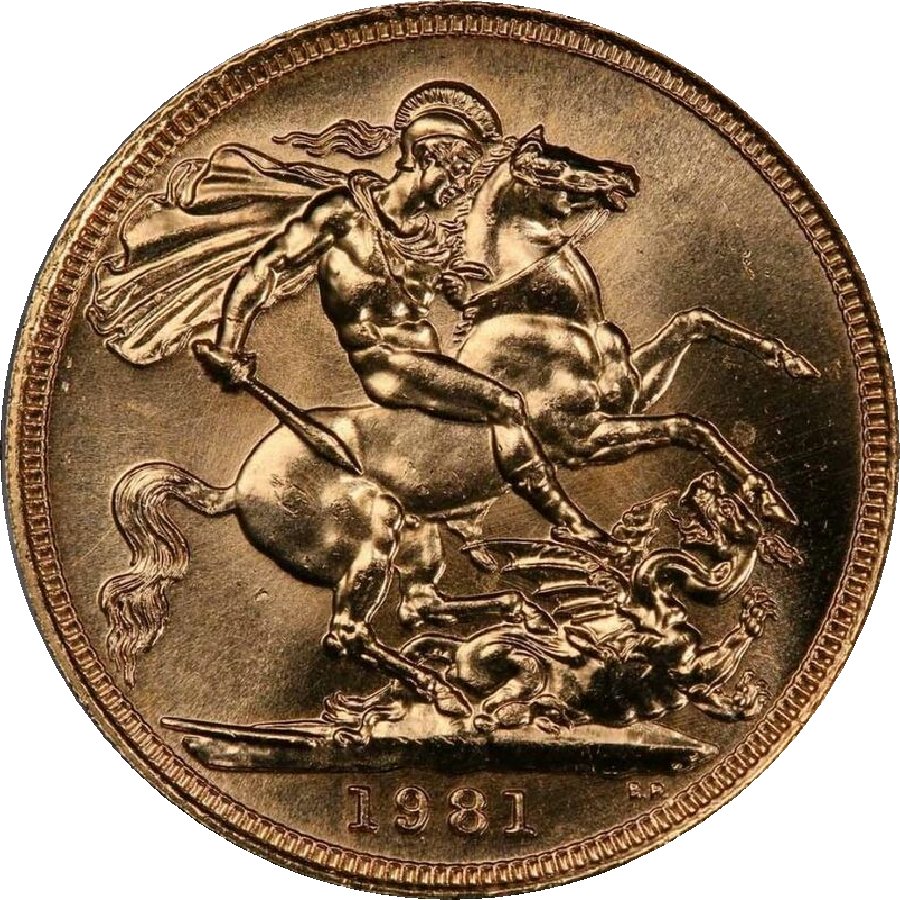
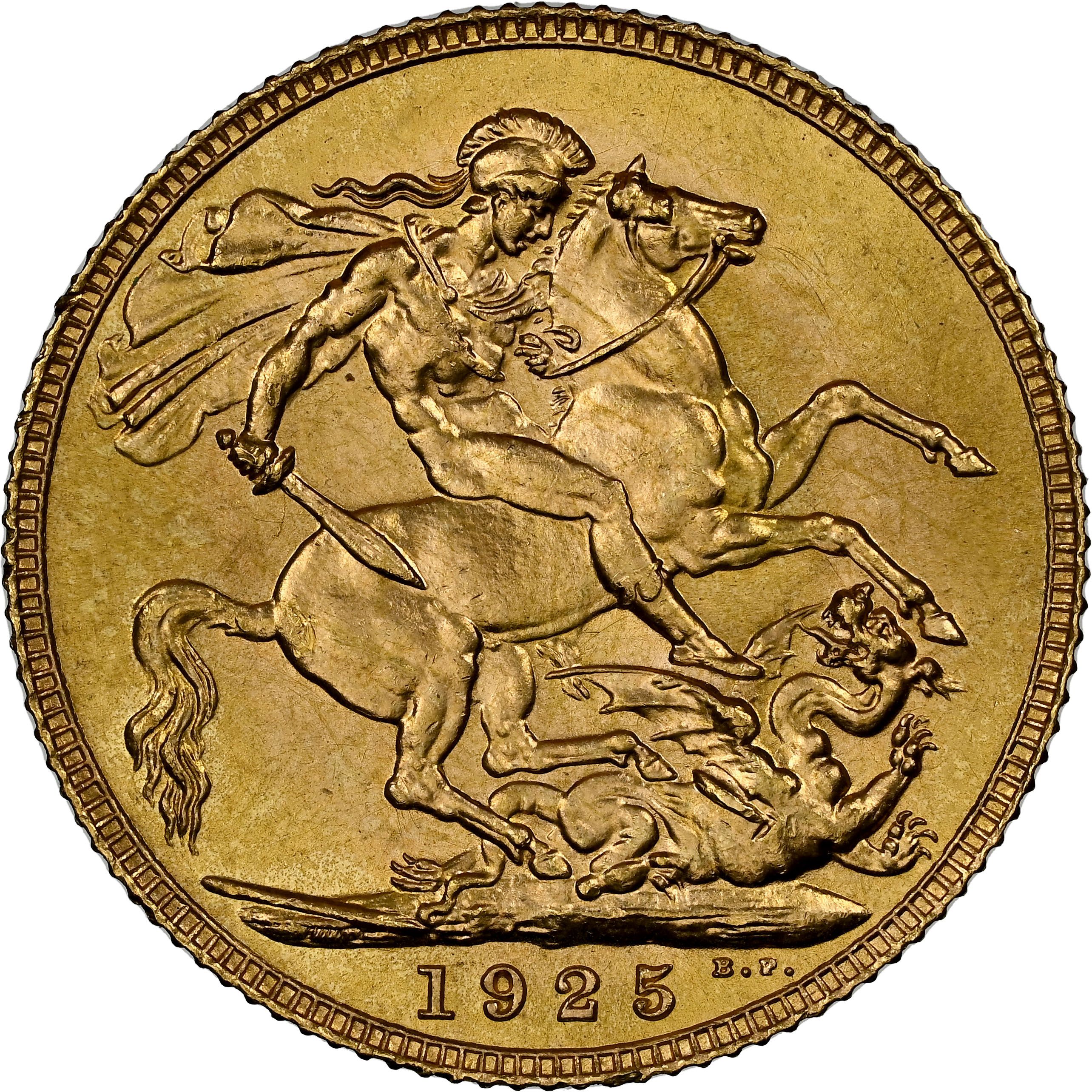
- 1816 Great Recoinage: the entire silver coinage was reset to .925 fineness, and the gold sovereign, designed by Pistrucci, was introduced from 1817. The Tower Hill plant operated round the clock for over a year to produce the new coinage.
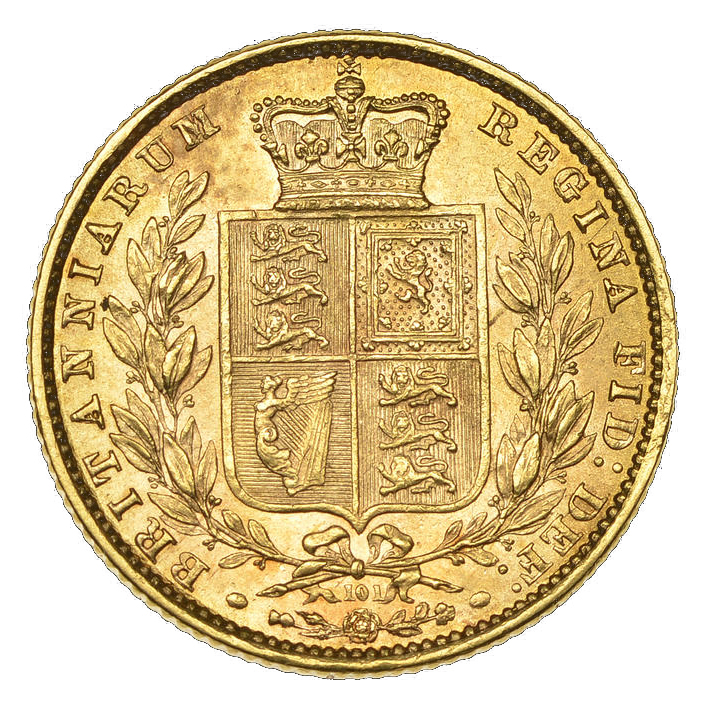
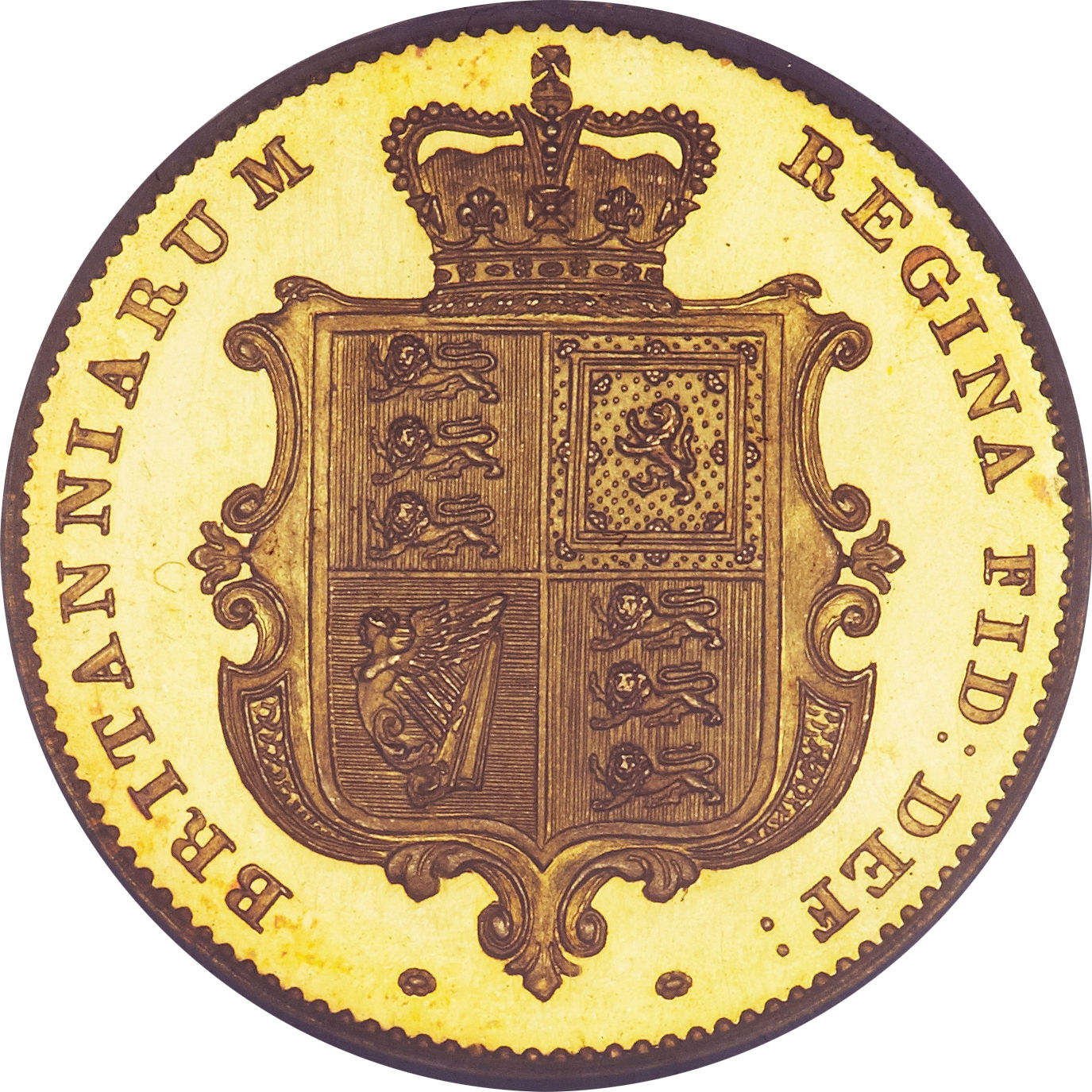
- 1838–1851: William Wyon’s "young head" Victoria portrait, used on most UK coinage of the period.
- 1855–1932: the branch-mint era, Royal Mint authorisation of branch mints in Sydney, Melbourne, Perth, Bombay, Pretoria and Ottawa to strike sovereigns from locally-produced bullion. See our gold sovereign values UK guide for the full mintmark series.
- 1947: silver removed from circulating UK coinage and replaced with cupronickel.
- 1953: Mary Gillick’s first Elizabeth II portrait introduced for the new reign.
- 1968–1971: decimal-coin striking begins (initially at Tower Hill, transferred to Llantrisant in stages) ahead of the 15 February 1971 changeover.
The Tower Hill buildings were vacated in 1968 and have since been redeveloped as the Royal Mint Court office complex.
Llantrisant (1968–present)
The decision to relocate the Royal Mint from Tower Hill was taken in 1967, driven by two pressures. First, the imminent transition to decimal coinage on 15 February 1971 required production volumes that the constrained Tower Hill site could not deliver within the available timeframe. Second, the Welsh Office offered a regional-development grant for relocation to Llantrisant in South Wales, which solved the space problem and supported wider government policy.
The Llantrisant foundation stone was laid in 1968 by HM Queen Elizabeth II. The first decimal coins were struck there later that year (in advance of the 1971 changeover). Full transfer of operations from Tower Hill completed by 1975. The Llantrisant complex now occupies a 35-acre site about 10 miles north-west of Cardiff and houses:
- The circulation-coin production line (UK and foreign-mint contracts).
- The commemorative-coin production line (Royal Mint annual sets, themed series, licensed-IP issues).
- The bullion line (sovereigns, Britannias, Queen’s Beasts and Tudor Beasts series).
- The Royal Mint Experience visitor centre, opened in May 2016.
- Engineering, design and finance support functions.
Although the Royal Mint operates in Wales, it remains a UK government body owned by HM Treasury. The Master of the Mint is the Chancellor of the Exchequer; day-to-day management is handled by the Deputy Master, the title held by the Royal Mint chief executive.
Master of the Mint, from medieval Crown appointment to ex officio Chancellor
The Master of the Mint was historically a senior Crown appointment, sometimes held by London merchants (Hugh Brice, Lord Mayor 1486–88), sometimes by serving politicians (Henry Pelham, later Prime Minister, 1721–30), and most famously by Sir Isaac Newton (1699–1727). The role paid handsomely and carried both ceremonial and operational weight. The 1870 Coinage Act reformed the office: from that point onwards the Master of the Mint became ex officio the Chancellor of the Exchequer, with day-to-day management handled by the Deputy Master.
The reform was driven by Treasury efficiency rather than scandal: the Master’s share-of-profits structure was an awkward fit with the modern civil-service paradigm, and absorbing the office into the Treasury simplified accountability. The current Master of the Mint is therefore the serving Chancellor of the Exchequer; the current Deputy Master is the Royal Mint chief executive.
The Chief Engravers, Pistrucci, the Wyons, the modern era
The Chief Engraver of the Royal Mint historically led the in-house design work for new coinage and was one of the most influential roles in British numismatic art. The headline holders:
| Engraver | Years | Notable work |
|---|---|---|
| Benedetto Pistrucci | 1828–1849 (Chief Engraver, having joined 1816) | 1817 St George and Dragon (sovereign reverse, still in use); Waterloo Medal; George IV Coronation Medal |
| Thomas Wyon Jr | 1815–1817 | 1816 shilling and sixpence; died young aged 25 |
| William Wyon | 1828–1851 (in practical leadership) | Victoria "young head" portrait (1838); 1839 Una and the Lion £5 |
| Leonard Charles Wyon | 1851–1891 | Victoria "jubilee head" (1887); late-19th-century bronze coinage |
| George William De Saulles | 1893–1903 | Victoria "old head" / veiled portrait; Edward VII coinage |
| Mary Gillick | 1953 portrait commission | First Elizabeth II portrait (used 1953–1968) |
| Arnold Machin | 1968 portrait commission | Second Elizabeth II portrait (used 1968–1984) |
| Raphael Maklouf | 1985 portrait commission | Third Elizabeth II portrait (used 1985–1997) |
| Ian Rank-Broadley | 1998 portrait commission | Fourth Elizabeth II portrait (used 1998–2015) |
| Jody Clark | 2015 portrait commission | Fifth Elizabeth II portrait (used 2015–2022) |
| Martin Jennings | 2022 portrait commission | Charles III portrait (in current use) |
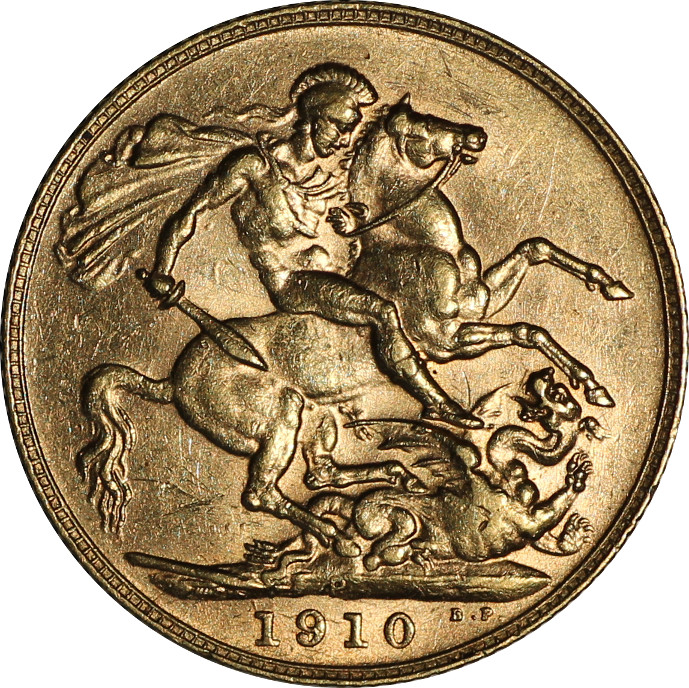
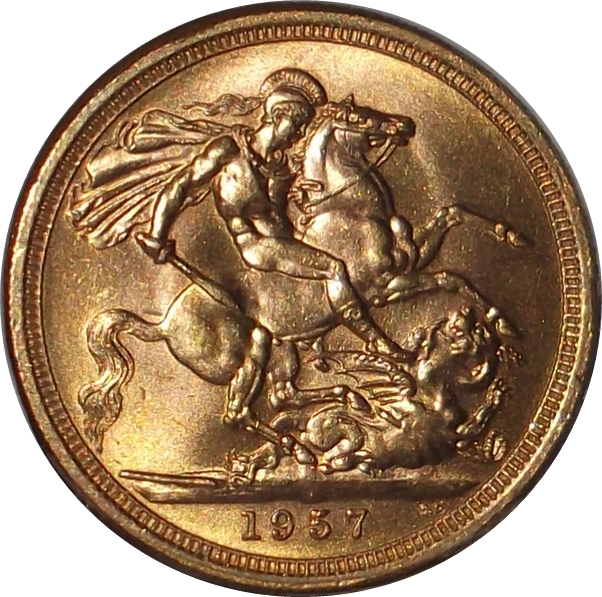
The Pistrucci St George reverse, designed in 1817, remains in regular use on Royal Mint sovereigns over 200 years later, one of the longest-running coin designs in any modern series. See our Pistrucci St George sovereign guide for the full design history.
Trial of the Pyx: continuous quality-check since 1282
Running through the entire 1100-year Royal Mint story is one ceremony: the Trial of the Pyx, the annual judicial quality-check on the Crown’s coinage, instituted by Edward I in 1282 and run unbroken since. Every year a representative sample of the Royal Mint’s output is tested by a jury of Goldsmiths’ Company liverymen at Goldsmiths’ Hall in London for weight, dimensions, fineness and composition. The verdict is delivered to the Master of the Mint, now the Chancellor of the Exchequer, in February or March of the following year.
The Trial is the longest-running judicial procedure in any English-speaking jurisdiction and arguably the most important institutional continuity within the Royal Mint story. It survived the Black Death, the Wars of the Roses, the Civil War, both World Wars and COVID-19. Newton passed all seven of his Trials. No full failure has been recorded since the 1696 Recoinage scandal that brought him to the role.
Modern operations: circulation, commemorative, bullion, foreign mints
The Royal Mint of 2026 has four principal lines of business:
- UK circulating coinage. The 1p, 2p, 5p, 10p, 20p, 50p, £1 and £2 denominations struck for the Bank of England’s circulation needs. Volumes have declined sharply since 2015 as cashless payments have grown, but the line remains active.
- Commemorative coinage. Royal Mint annual sets (BU packs and Proof sets, see our BU pack vs Proof set guide), themed series (Beatrix Potter, Olympic, James Bond, Harry Potter, Music Legends), and one-off commemoratives (Coronation, Royal Wedding, anniversary issues).
- Bullion. Sovereign, Britannia, quarter-sovereign, two-pound and five-pound sovereign, plus the Queen’s Beasts and Tudor Beasts series. The bullion line is one of the fastest-growing Royal Mint revenue lines, particularly post-2020.
- Foreign-mint contracts. The Royal Mint manufactures coinage on contract for over 60 foreign governments, a meaningful share of annual output. Contracts vary year by year as countries renew or change their minting partner.
The licensed-IP commemorative era (2018–present)
The most recent strategic chapter in the Royal Mint story is the move from traditional commemoration (royal anniversaries, military centenaries, scientific landmarks) to licensed-intellectual-property commemoratives targeting a broader retail audience. The breakthrough was the 2018 launch of the Music Legends series with Queen, followed by James Bond from 2020 and Harry Potter from 2022. These programmes have driven Royal Mint commemorative revenue significantly upward and have been controversial within the traditional collecting community for diluting the "serious commemoration" tradition. They have also been demonstrably successful in commercial terms: 2022 Harry Potter 50p sealed BU packs sold out within hours and traded at multiples of issue price within weeks.
The earlier modern programmes, Beatrix Potter 50p from 2016, Olympic 50ps in 2011–12, Royal Wedding crowns, were the gateway to the current model. Whether the licensed-IP era will be remembered as the defining strategic move of the 2020s Royal Mint or as a short-term commercial experiment is a question the next decade will answer.
Featured coins on MyCoinage
Related guides
- Trial of the Pyx, the continuous quality-check ceremony since 1282.
- Gold sovereign values UK, the longest-running modern Royal Mint series, with mintmark scarcity tables.
- Pre-1816 British coins guide, the Tower Mint era in numismatic depth.
- Pistrucci St George sovereign, the 1817 design that remains in use today.
- The 2017 new £1 coin, the bimetallic redesign produced at Llantrisant.
- Upcoming UK coins, confirmed Royal Mint releases through 2030.
- Charles III coin guide, the 2022-onwards reign in detail.