The 2017 12-Sided £1 Coin: Launch Story, Designer and Realised Values
On 28 March 2017 the Royal Mint launched the new 12-sided £1 coin, a redesign driven by the rising counterfeit rate on the old round £1 (estimated 2–3 per cent of circulation by 2014). The reverse was designed by David Pearce, then 15 years old, who beat 6,000+ other entries in a public competition. This guide covers the launch, the design, the security features, the round £1 demonetisation and what 2017 £1 coins are worth in 2026.
The launch: 28 March 2017
The new 12-sided £1 coin entered circulation on 28 March 2017. The Royal Mint and HM Treasury had announced the redesign three years earlier, in March 2014, citing the rising counterfeit rate on the old round £1. By 2014 the Royal Mint estimated that 2–3 per cent of round £1 coins in circulation were counterfeit , roughly 45 million fake coins in active everyday use, an unsustainable level for any circulating denomination. A complete redesign with new security features was the only viable fix.
The new design and security platform were developed and tested through 2015–16, with circulation strikes commencing late 2016 ahead of the public release. Royal Mint chief executive Adam Lawrence called it “the most secure coin in the world” at launch. More than 1.5 billion 12-sided £1 coins were struck for the launch year to replace the demonetised round £1 stock.
The designer: David Pearce, age 15
The reverse was designed by David Pearce, a 15-year-old school student from Walsall in the West Midlands, who won the Royal Mint’s open public design competition in 2014. Pearce was then a Year 11 student at Queen Mary’s Grammar School. His entry beat more than 6,000 other submissions from across the UK, including many from professional designers and design studios. The judging panel was chaired by then-Chancellor George Osborne and included Royal Mint engravers and external numismatic specialists.
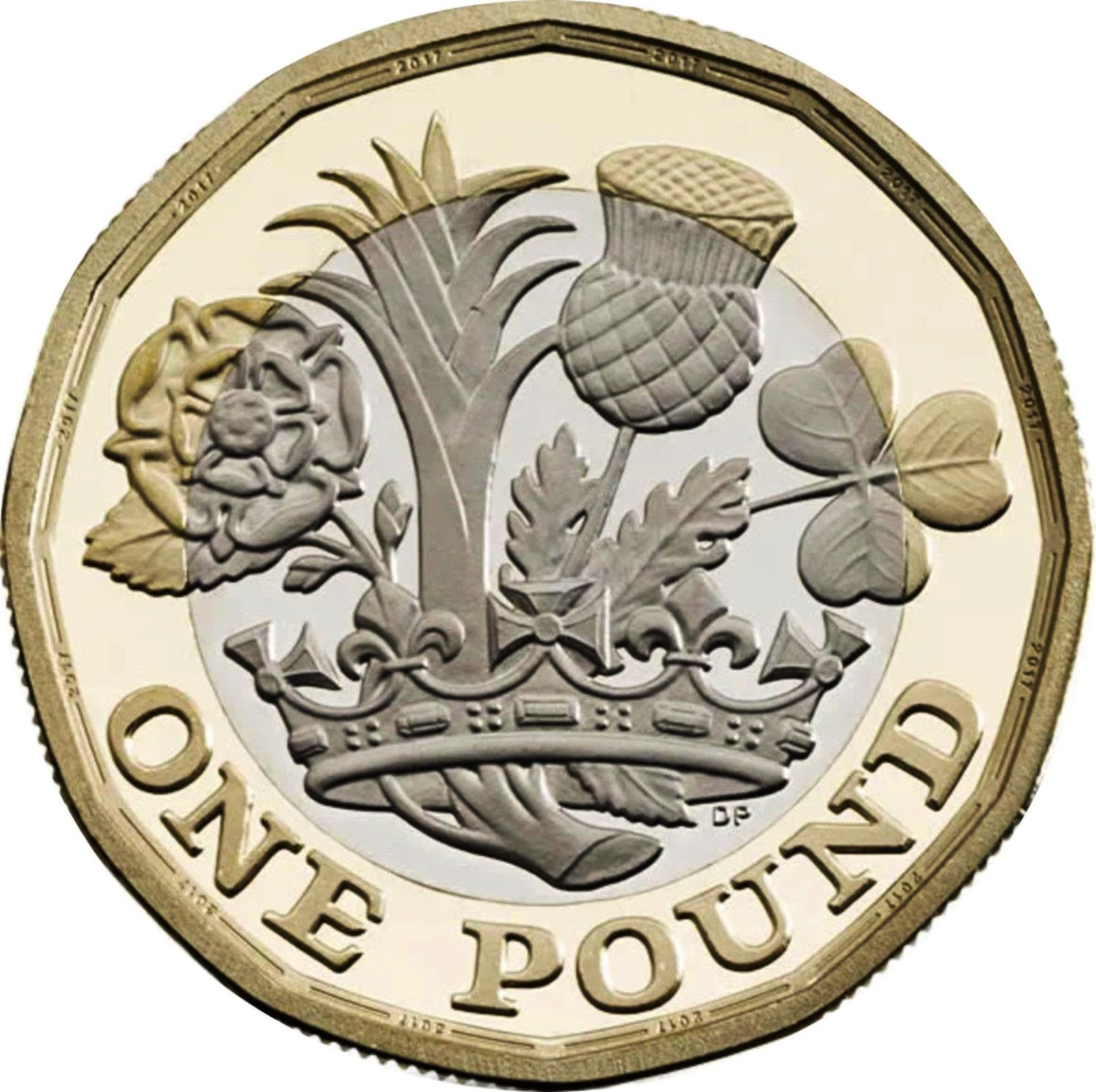
Pearce’s composition combines the four UK national floral emblems, English rose, Welsh leek, Scottish thistle and Northern Irish shamrock, emerging from a single royal coronet. The four plants intertwine to form a unified national symbol; the coronet anchors them politically. It is an unusually elegant solution for a brief that required representing all four nations of the United Kingdom on a coin smaller than 24 mm.
Pearce’s case is one of the most exceptional examples of a non-professional designer winning a major UK coinage commission in the modern era. He went on to study product design at university and continues to work as a designer; the 12-sided £1 reverse remains his best-known work.
The reverse: rose, leek, thistle, shamrock
The four floral emblems on the David Pearce reverse map to the four constituent nations of the United Kingdom:
| Emblem | Nation | Heraldic origin |
|---|---|---|
| Rose | England | Tudor rose, fusing the white rose of York and red rose of Lancaster after 1485 |
| Leek | Wales | National emblem since at least the 16th century; legendary association with St David |
| Thistle | Scotland | National emblem since the reign of Alexander III, 13th century |
| Shamrock | Northern Ireland | Three-leaved emblem associated with St Patrick’s mission |
| Royal coronet | The Crown | Anchoring the four emblems under a single sovereign authority |
The obverse used Jody Clark’s fifth definitive portrait of Queen Elizabeth II, which had only entered UK coinage two years earlier in 2015. Clark, then aged 33, was the first Royal Mint engraver to design a definitive portrait in over a century, a historical bookend with Pearce on the reverse.
Anti-counterfeit features
Five layered security features were designed jointly by the Royal Mint and external security consultants. The combination is widely judged the most secure circulating coin design in international issue:
- Bimetallic construction. Outer ring of nickel-brass (Cu 76 / Zn 20 / Ni 4) and inner disc of nickel-plated alloy, harder to replicate than the single-metal round £1. The seam between the two metals must be sharp and seamless, counterfeits frequently show glue lines or visible halos.
- Twelve-sided shape. The dodecagonal outline is harder to cast or strike accurately than a circle; tooling tolerances are tighter, and edge geometry must match exactly across all twelve sides.
- Micro-engraved edge inscription. Alternating sections of plain mill and the inscription “ONE POUND”, repeated twice around the circumference.
- Latent (hologram-like) image. A multi-tilt optical feature: viewing the obverse from one angle shows £, viewing from another angle shows 1. The latent image is the fastest authentication test for everyday users.
- Hidden second layer (iSIS technology). An internal authentication signature embedded in the alloy structure, only readable by high-speed bank coin-counting machines. This is the deepest layer and the one counterfeiters cannot replicate.
By 2024 the Royal Mint estimated counterfeit rates on the 12-sided £1 had fallen below 0.1 per cent of circulation, a 20-fold improvement on the round £1 it replaced.
The round £1 demonetisation
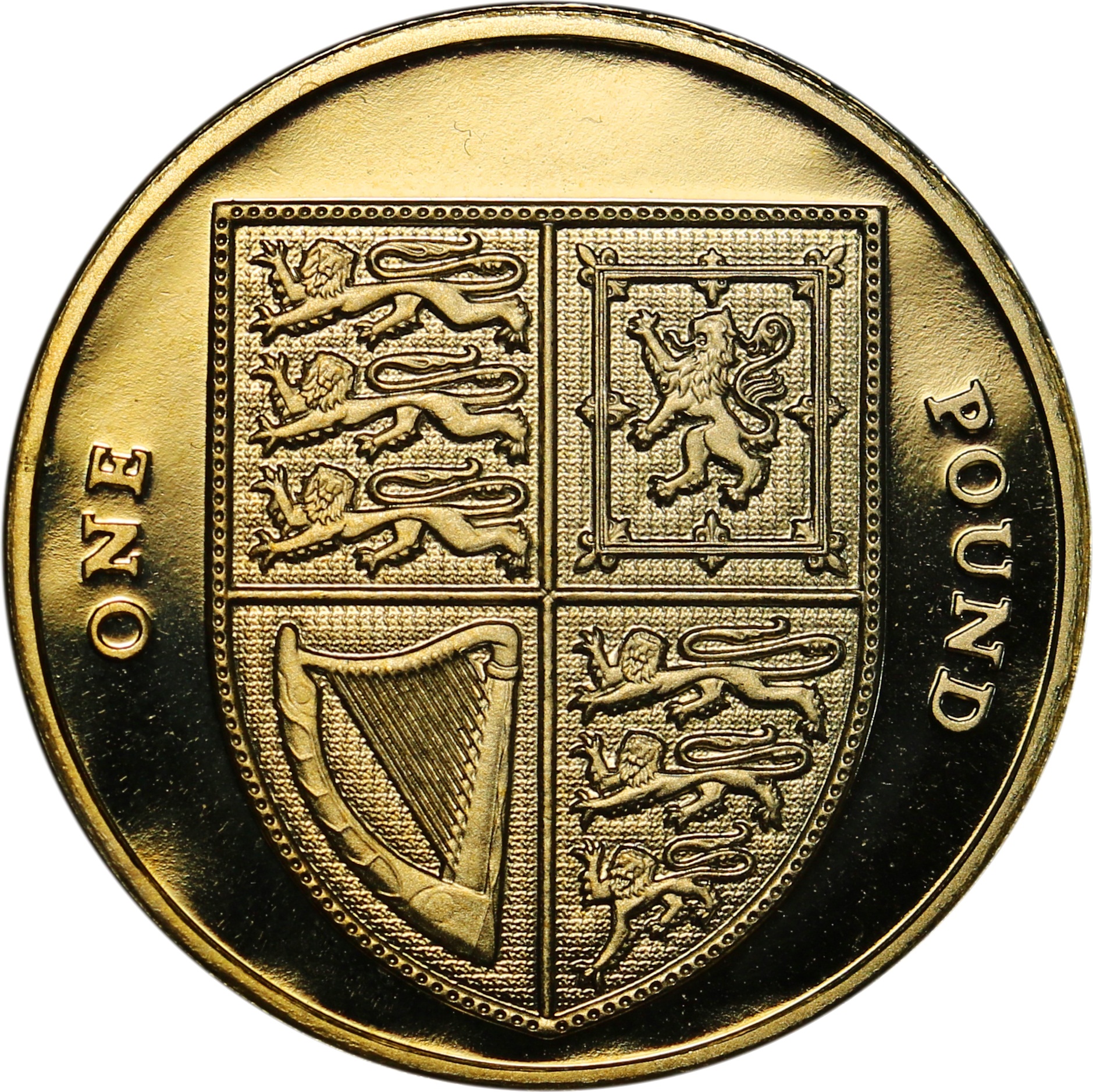
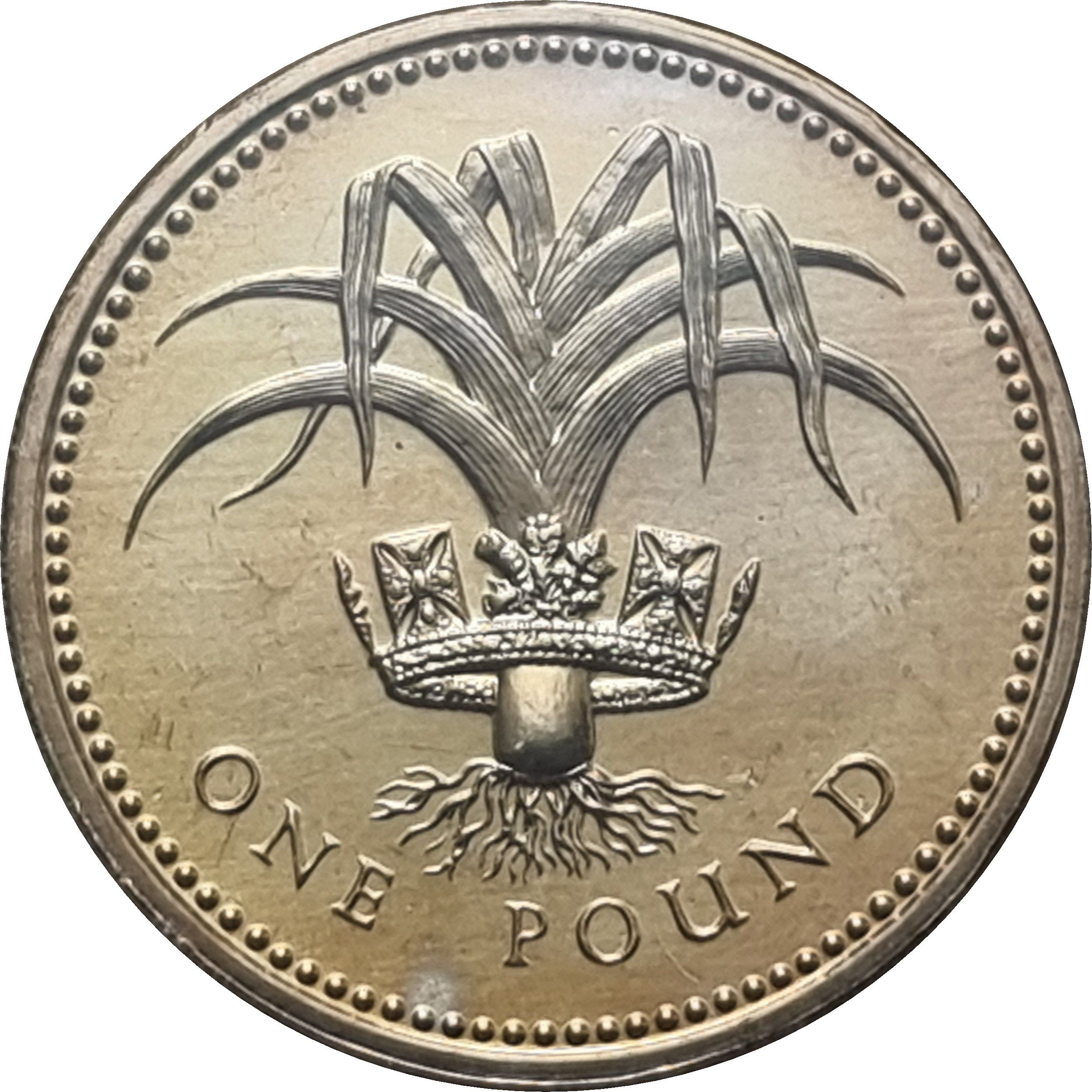
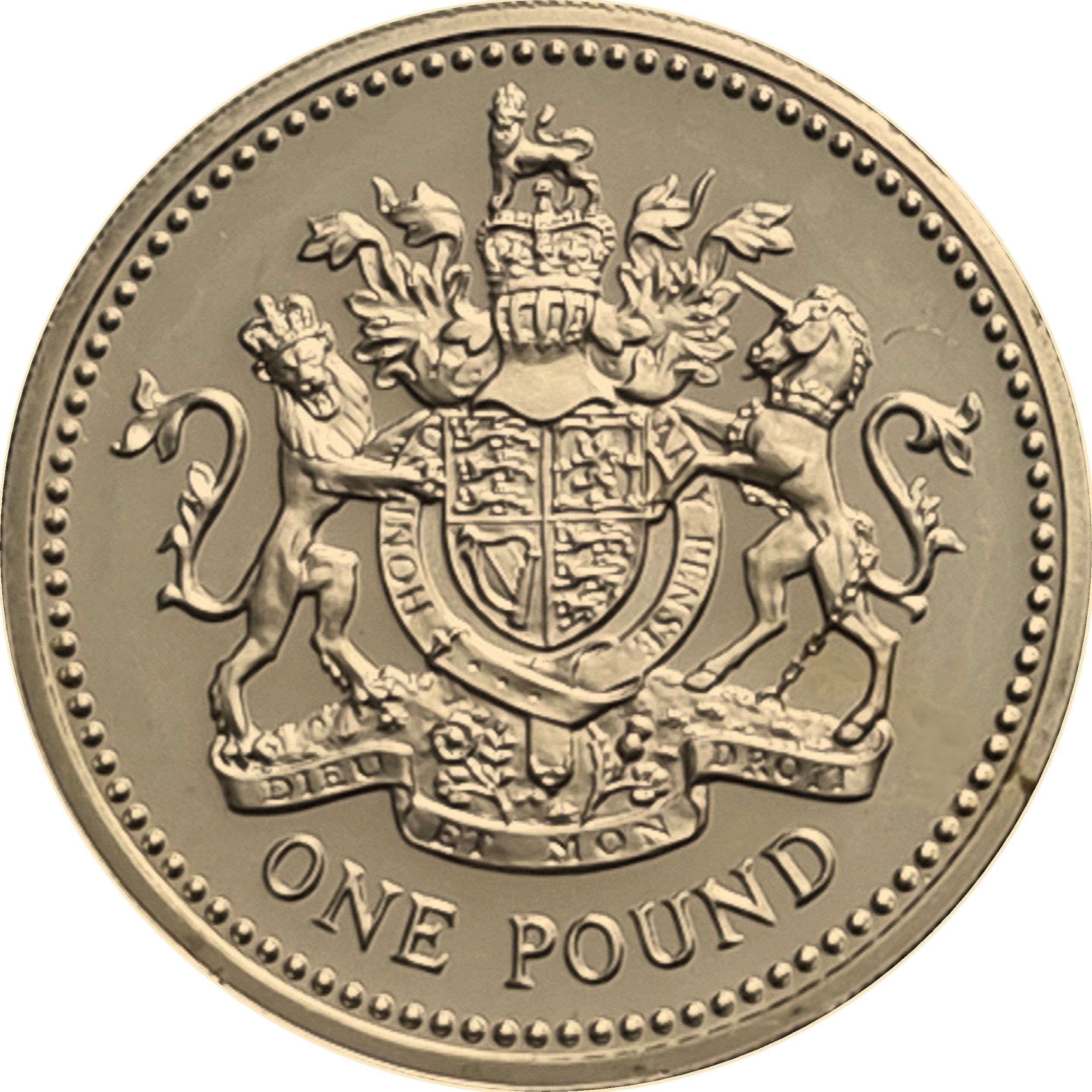
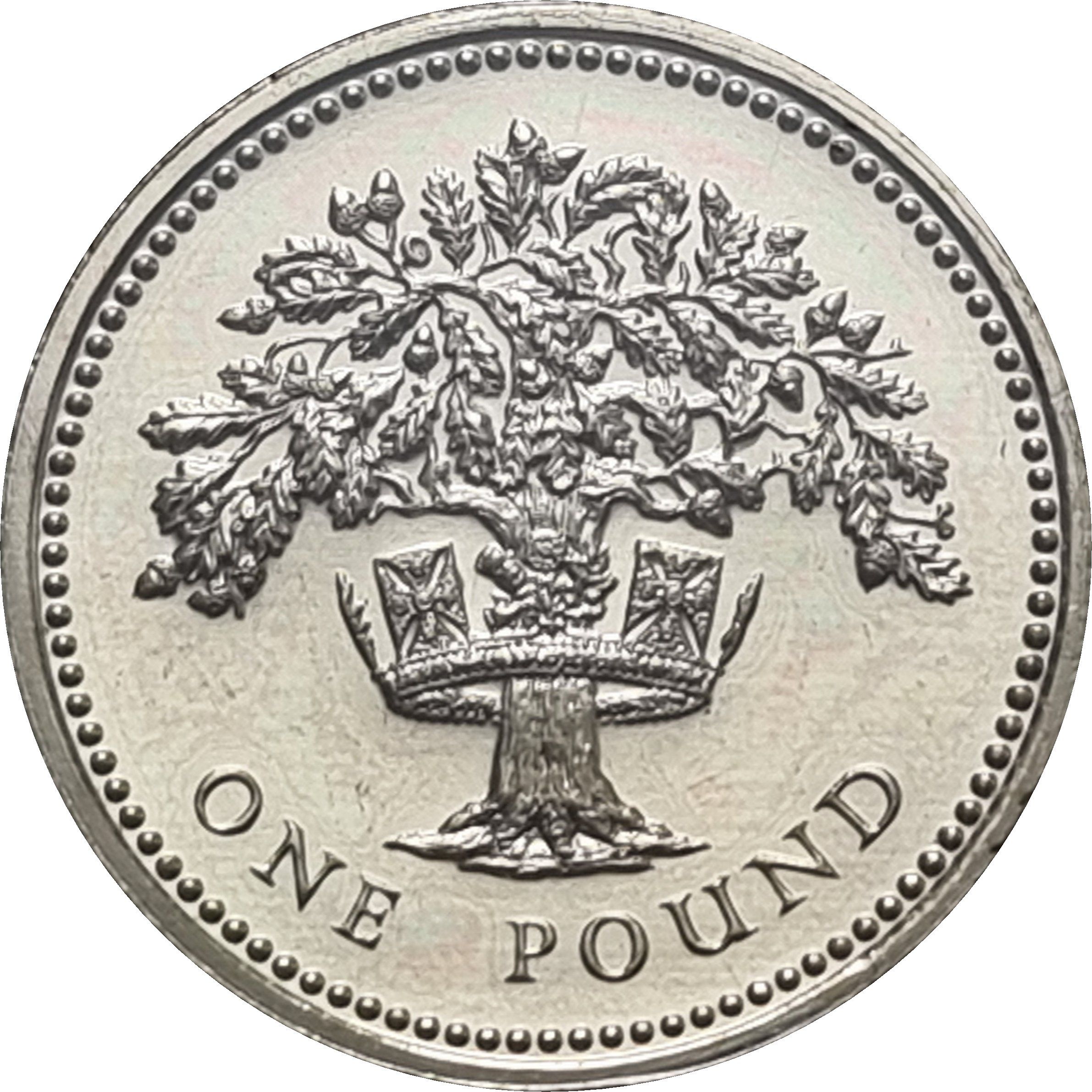
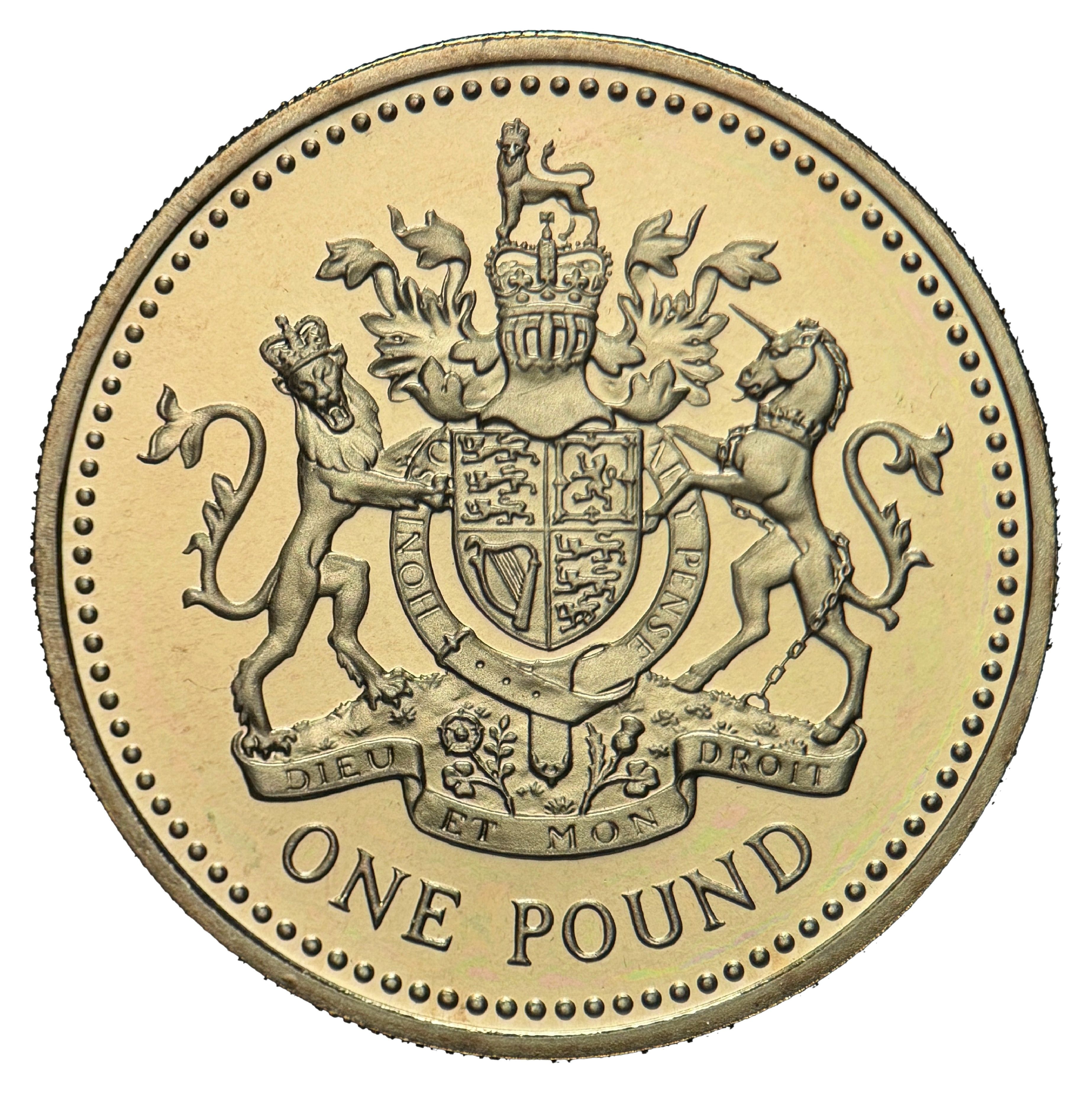
The round £1 had been in circulation since 21 April 1983, originally introduced to replace the £1 banknote (which itself was withdrawn in 1988). It was the longest-serving UK denomination of the modern post-decimalisation era at 34 years in circulation. The Royal Mint had issued more than two dozen distinct annual designs across that span, including the famous 2010–11 Capital Cities four-coin set (the rarest UK £1 coins ever, headed by the 935,000-mintage Edinburgh).
| Date | Event |
|---|---|
| March 2014 | Treasury announces redesign and 12-sided format |
| 2014–15 | Public design competition; David Pearce wins |
| Late 2016 | Royal Mint commences circulation strikes of new 12-sided £1 |
| 28 March 2017 | New 12-sided £1 enters circulation |
| March – October 2017 | Six-month dual-circulation period (both old and new accepted) |
| 15 October 2017 | Round £1 ceases to be legal tender |
| 2018–present | Round £1 only redeemable at high-street banks (policy varies) |
At demonetisation the Royal Mint estimated approximately 500 million round £1 coins remained unredeemed, in jars, kept as keepsakes, or otherwise out of bank circulation. Many of these are now permanently lost. UK high-street banks have continued to accept round £1 deposits at face value through 2018–2024, though policy varies bank to bank and year to year.
Realised prices by format
| Format | Mintage | Realised range |
|---|---|---|
| Circulation strike (cupronickel + nickel-brass) | 1.5 billion+ | Face value |
| BU sealed in Royal Mint card | included in 2017 BU sets | £2 – £5 |
| Silver proof | 17,500 | £55 – £95 |
| Silver Piedfort proof | 4,500 | £75 – £150 |
| Gold proof | 1,500 | £700 – £1,400 |
| Gold Piedfort proof | 200 | £1,800 – £3,200 |
Realised prices aggregated from eBay UK sold listings, Noonans and Baldwin’s over the past 24 months. Gold and silver Piedfort prices track precious-metal spot more than collector demand, gold at roughly £58/gram in 2026 carries the gold proof tier well above issue.
The 2017 first-year-of-issue premium
The 2017 dating attracts a small but genuine collector premium over later 12-sided £1 issues (2018, 2019, 2020 dated). Realised BU prices show 2017 typically £0.50 – £1.50 above the equivalent 2018–2022 BU. This premium reflects the first-year-of-issue dynamic that applies to most modern UK coinage redesigns: a coin’s inaugural year is permanently the best-known, and collectors instinctively prefer the “first” example.
The 2018-dated 12-sided £1 had a substantially lower circulation strike than other years, which has driven that one specific year above 2017 in BU realised price. For first-year-of-issue purposes 2017 remains the canonical buy; for outright scarcity within the 12-sided series, the 2018 is the more interesting target. Both sit modestly above face in BU and are clearly not investment-grade pieces.
Investment outlook
The 2017 12-sided £1 is not an investment coin in the strict sense. The realised price track record over 2017–2026 has been broadly flat for circulation pieces; only the silver Piedfort and gold proof variants have appreciated meaningfully (and those appreciations track precious-metal spot rather than collector demand). The mintage is too high and the supply is too easy.
What it is is a useful set anchor. Every Charles III £1 issued from 2023 onwards builds directly on the 2017 design platform, same 12-sided format, same weight, same diameter, same security features, same bimetallic construction. A complete modern £1 narrative collection naturally runs from the 2010–11 Capital Cities round £1 set, through the 2017 first 12-sided £1 by David Pearce, to the 2023 first Charles III 12-sided £1 (the bee, part of the Coinage Portrait series). Four coins that bookend the entire post-1983 history of the UK £1.
Related £1 coins on MyCoinage
Browse every £1 in our database →
Frequently asked questions
How much is a 2017 12-sided £1 coin worth?
When did the new 12-sided £1 coin enter circulation?
Who designed the 2017 12-sided £1 reverse?
What anti-counterfeit features does the 2017 £1 have?
When was the round £1 coin demonetised?
Are 2017 £1 coins rare?
How do I tell a real 2017 £1 from a fake?
How much is a 2017 silver Piedfort £1 worth?
Are 2017 £1 coins a good investment?
Can I still spend a round £1 coin?
What does the edge inscription on the 2017 £1 say?
How does the 2017 £1 fit in a Charles III collection?
Further reading
- £1 coin values UK, the full reference for round and 12-sided £1 values.
- Capital Cities £1 set, the rarest round £1 ever (Edinburgh 935,000).
- Is my £1 rare?, quick check for round and 12-sided £1.
- Elizabeth II coins value guide, the 70-year reign that ended in 2022.
- Charles III coin guide, the new reign and the post-2023 12-sided £1 successors.
- Best UK coin investments 2026, eight coins worth holding, with realised-price evidence.
- How to spot a fake £1 coin, six checks for the 12-sided £1.