Trial of the Pyx: The Annual Ceremony That Has Tested British Coinage Since 1282
Every year since Edward I’s reign, a sample of every coin struck by the Royal Mint has been formally tested by a jury of Goldsmiths’ Company liverymen against the legal weight, dimension and fineness specification set out in the Coinage Act. The Trial of the Pyx is the oldest judicial procedure in continuous use in the United Kingdom, older than Parliament, older than the Inns of Court, older than the modern Royal Mint itself. This guide covers what the Trial is, how it works, why it has run unbroken for over 740 years, and what it means for collectors today.
What is the Trial of the Pyx?
The Trial of the Pyx is the formal annual quality-control test of British coinage. It is held under the authority of the King’s Remembrancer, one of the oldest judicial offices in England, dating to the late 12th century, and conducted at Goldsmiths’ Hall in the City of London by a jury of senior liverymen of the Worshipful Company of Goldsmiths. Its purpose has been the same for over seven centuries: to verify that the Master of the Mint has struck the Crown’s coinage to the legally required weight, dimensions and fineness, and to certify the year’s output as fit for circulation.
The name comes from the "pyx" (Greek pyxis, "box"): the locked wooden chest into which the Royal Mint sealed sample coins as they were struck through the year, ready for the jury to open. A modern pyx is a set of sealed bags rather than a single box, but the principle, and the name, has not changed.
The Trial is unique in three ways. It is the oldest live judicial procedure in any English-speaking jurisdiction. It is the only ceremony in which the Crown formally submits its own work to inspection by a non-Crown body. And it is one of the very few medieval institutions that still performs an entirely modern, technically substantive function, not a re-enactment, but a real assay whose outcome could in principle disgrace a serving Chancellor of the Exchequer.
A timeline since 1282
Below is the abridged historical timeline of the Trial. The full ceremonial record is held by the Goldsmiths’ Company archive and runs to many thousand entries.
| Date | Event | Significance |
|---|---|---|
| 1282 | First documented Trial under Edward I | Royal writ requires Master of the Mint to set aside "one in fifteen" coins for sampling. |
| 1327 | Worshipful Company of Goldsmiths chartered | The body that supplies the jury is formally incorporated by Edward III. |
| 1696 | Great Recoinage failure | Master Thomas Neale forced to resign after silver tolerances fail; recoinage chaos under William III. |
| 1699–1727 | Isaac Newton as Master of the Mint | Seven consecutive passes; Newton’s personal supervision raises Royal Mint standards markedly. |
| 1810 | Move to Tower Hill | Trial samples follow the Royal Mint to its new Tower Hill premises after the Great Recoinage of 1816. |
| 1968 | Move to Llantrisant | Mint relocates to South Wales; Trial continues at Goldsmiths’ Hall in London. |
| 2008 | King’s/Queen’s Remembrancer presides | Modernised role retains medieval ceremonial title and judicial standing. |
| 2020 | COVID-19 Trial | Reduced jury, delayed verdict; the Trial is held without interruption for the first time in pandemic conditions. |
| 2023 | First Trial of the Pyx of King Charles III | 2022 sample includes both Elizabeth II memorial coinage and the first Charles III obverses. |
How the Trial works in practice
The mechanics break into four steps. The first happens daily, the rest annually.
- Sampling. Throughout the year the Royal Mint sets aside a representative sample of coins as they come off the press. Historically the rule was "one in fifteen" for gold and a smaller fraction for silver and base metal; modern practice samples by mintage band and by die set, totalling roughly 50,000 to 80,000 coins across all denominations and contracts. Each sample is bagged, sealed, dated and passed to the Mint’s custody until the Trial.
- Opening ceremony. In late January or early February of the following year, the King’s Remembrancer formally opens the Trial at Goldsmiths’ Hall, swears in the jury of Goldsmiths’ Company liverymen and receives the sealed sample bags from the Master of the Mint or the Deputy Master.
- Assay. The Goldsmiths’ Assay Office, on the same site, then performs the technical work over several weeks: bulk weighing of each bag, individual weighing of selected coins, calliper measurement of diameter and thickness, and destructive fineness assay (cupellation for gold and silver; spectroscopic analysis for cupronickel, brass and steel-cored alloys). Each test result is compared to the published Coinage Act tolerance for that denomination.
- Verdict. In February or March, the jury reports back to the King’s Remembrancer. The verdict ceremony is held publicly at Goldsmiths’ Hall, attended by the Chancellor of the Exchequer (as Master of the Mint), the Deputy Master, senior Goldsmiths’ officers and a small number of invited guests. The Remembrancer formally reads out whether the Mint has passed.
Who is involved
| Role | Held by | Responsibility |
|---|---|---|
| Master of the Mint | Chancellor of the Exchequer (ex officio) | Notional defendant; receives the verdict in person. |
| Deputy Master of the Mint | Royal Mint chief executive | Operational head; presents the year’s sample. |
| King’s Remembrancer | Senior Master of the King’s Bench Division | Presides; swears in the jury; reads the verdict. |
| Trial jury | Liverymen of the Worshipful Company of Goldsmiths | Inspect, weigh and assay the sample. |
| Goldsmiths’ Assay Office | Permanent Goldsmiths’ Company staff | Performs the technical assay work. |
| Prime Warden, Goldsmiths’ Company | Senior elected officer | Hosts the Trial at Goldsmiths’ Hall. |
The Trial in the modern Royal Mint era
Since the Royal Mint moved to Llantrisant in 1968, the operational distance between the Mint (in South Wales) and the Trial venue (in London) has grown, but the ceremony has not. The Mint sends sealed sample bags to London by secured courier; the Goldsmiths’ Assay Office handles the assay; the Royal Mint sends senior representatives to both the opening and the verdict. The press release announcing each year’s pass is co-issued by HM Treasury and the Royal Mint and forms part of the Mint’s annual financial reporting.
The 2020 Trial was the first held under pandemic conditions and was conducted with a reduced jury, social distancing and a delayed verdict ceremony, but it was held. That continuity through COVID, like the continuity through the Black Death, the Civil War and both World Wars, is the Trial’s most striking feature: it has not missed a year in over 740.
When the Mint has failed
Historic failures are rare but documented. The most notorious is the 1696 silver coinage under William III, when the circulating coinage had become so debased and clipped that the Recoinage Act required a complete rerun of the silver series. Master of the Mint Thomas Neale, presiding, was found wanting at the Trial and forced to resign. His successor Isaac Newton, appointed Master in 1699, used the Trial process to enforce the new Mint standards: under Newton’s tenure (1699–1727) every annual Trial passed, and the Royal Mint emerged with a reputation for metallurgical reliability that has, broadly, held ever since.
Modern failures have not occurred at the level of an annual Trial. There have been minor adjustments and partial findings, specific denominations where the Mint was asked to tighten tolerances on next year’s output , but no full failure since the introduction of decimal coinage in 1971. The reason is simple: modern Mint quality control is so far inside the legal tolerance that the Trial is, in effect, an external audit of an internal system that already over-engineers the standards.
"Pyx Trial coins" as a collector category
A small but real collector niche centres on coins documented as having passed through the Trial of the Pyx and then been retained, rather than melted, afterwards. These pieces appear sporadically at major UK auction houses with the Trial provenance noted in the catalogue and command a documented premium over equivalent date and grade examples.
- 18th- and 19th-century Pyx-attested coins, occasional Goldsmiths’ Company retention pieces, sometimes from the personal collections of Trial jurors of the period. Premium over typical equivalent: 20–50% depending on documentation strength and date.
- Royal Mint presentation Pyx samples, in some 19th- and 20th-century years the Mint elected to release a small curated selection of post-Trial samples as presentation gifts to officers of the Crown or the Goldsmiths’ Company. These typically come with original documentation; premium 30–100% on commemorative issues.
- Modern (post-1968) Pyx-trial coins, effectively non-existent on the open market because modern sample coins are returned to the Mint and melted. There is no annual Royal Mint "Trial of the Pyx" commemorative product; collectors seeking the connection should buy any annual Royal Mint output knowing it has been Pyx-tested as part of its lifecycle.
For pricing and provenance research on Pyx-attested pre-1816 pieces in particular, see our pre-1816 British coins guide.
The Trial and hallmarking: same custodian
The Goldsmiths’ Assay Office, the same body that runs the Trial, is also one of the four UK Assay Offices that hallmark privately-submitted precious-metal items. The leopard’s-head punch on a sterling silver item from London is, in effect, a miniature Trial pass: the Goldsmiths’ Company has tested the metal, confirmed the fineness and authorised circulation. The same logic applies at scale to the annual Trial of the Pyx: the Goldsmiths’ Company tests the Crown’s coinage, confirms the fineness, and authorises the year’s coinage output. Same custodian, same standard, different scale.
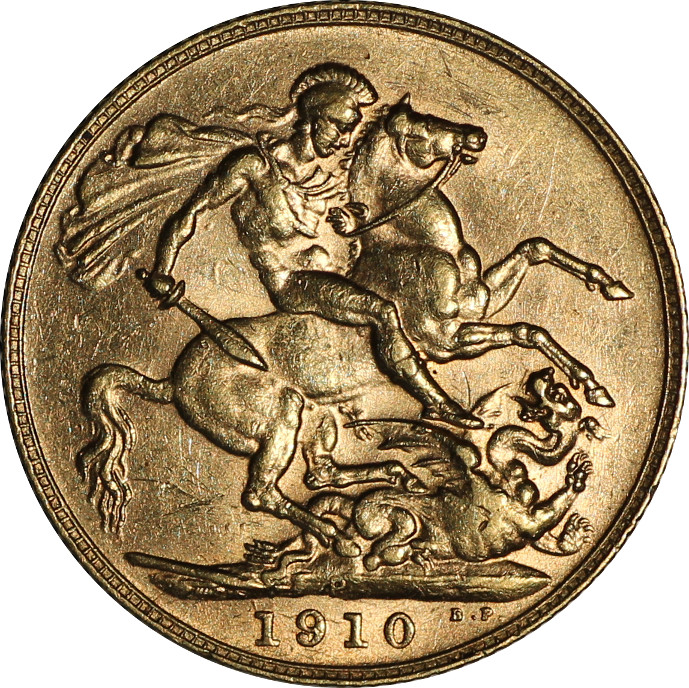
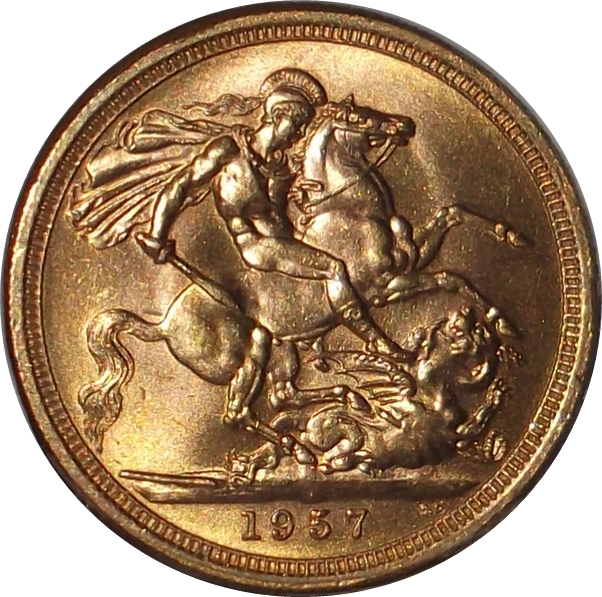
For collectors this is a useful continuity. Anyone testing a sovereign’s fineness today can rely on the same institutional chain that ran the 1282 Trial, the Newton-era Trials and the 2024 Trial.
Featured coins on MyCoinage
Related guides
- Pre-1816 British coins guide, the era when Trial failures had real consequences for the Master of the Mint.
- Sovereign weight specifications, the exact tolerances Trial juries test against.
- Gold sovereign values UK, the most direct collector application of the Trial’s metallurgical standards.
- How to spot a fake sovereign, what genuine Royal Mint tolerances look like in your hand.
- Coin collecting glossary, pyx, assay, fineness, remedy, fineness explained.
- The 2017 new £1 coin, the bimetallic redesign that was tested at the 2018 Trial.