1920 UK Silver Transition: Sterling to .500 Fineness
For 762 years, from Henry II in 1158 through to George V in 1919, British silver coinage was struck at sterling fineness (.925, 92.5% silver). In 1920, that ended. Under the Coinage Act 1920, the Royal Mint reduced silver fineness to .500 (50% silver, 50% copper) to manage post-WWI silver shortage and stop melt-arbitrage as world silver prices climbed. The 1920 transition created the first of three British silver-coinage tiers and produced one of the most-discussed alloy splits in UK numismatic collecting.
- Why 1920? Post-WWI silver pressure
- The Coinage Act 1920
- Sterling vs .500 visual differences
- Denominations affected
- The 1919-1920 transition pair
- The pre-1920 sterling premium
- Specific-gravity test for sterling vs .500
- Cleaning warning, patina matters
- Realised prices by era and grade
- Frequently asked questions
Why 1920? Post-WWI silver pressure
Britain emerged from the First World War with depleted silver reserves, a strained Treasury and a pound under foreign-exchange pressure. Three pressures combined to force the first British silver debasement in over seven centuries.
WWI silver depletion
During WWI, the British government drew heavily on Treasury silver for industrial and munitions purposes, silver in detonator components, electrical contacts, photographic film for aerial reconnaissance, and various small-scale wartime uses. Royal Mint silver-coinage production also surged through the war years to meet wartime currency demand: 1915–1918 mintages of small silver denominations were sharply higher than pre-war years, with much of that silver dispersing into household drawers and into the wider currency circulation, never recovered into Treasury.
By 1919, Treasury silver reserves were notably reduced and the cost of replenishing those reserves on world markets had become prohibitive. The Coinage Act 1920 was the legislative response.
Rising world silver prices
World silver prices climbed steadily through 1919, partly because of post-war industrial-demand rebound and partly because of supply disruption from major silver-producing regions (Mexico, particularly, was politically unstable in 1919–1920). At one point in late 1919, the silver content of a sterling shilling approached the point where the bullion value exceeded the face value , creating an arbitrage where a melt-trader could profit by destroying British silver coinage for the silver content. The 1920 reduction to .500 fineness halved the silver content per coin, removing the melt-arbitrage risk and protecting the integrity of the circulating coinage stock.
Treasury balance of payments
Britain ended WWI with substantial international debt, particularly to the United States. Servicing that debt required physical foreign-exchange reserves. Treasury silver was a fungible reserve asset in 1920, and continuing to strike sterling-silver coinage exported real silver value into the domestic economy when those reserves were needed for international debt service. Halving the silver content per circulating coin freed up an estimated 1,500 tons of silver across the 1920s for Treasury reserve uses.
The Coinage Act 1920
Parliament passed the Coinage Act 1920 in early 1920, authorising the Royal Mint to reduce silver fineness on circulating coinage from .925 sterling to .500 with effect during 1920. The Act was framed as a temporary war-emergency measure but was not in fact reversed: the .500 standard remained in force for 26 years, until the further switch to cupronickel under the Coinage Act 1946. Maundy money was specifically excluded from the 1920 change and continued at sterling fineness throughout (and continues today).
Critically, the Act left dimensions, designs, weight and face values unchanged. A 1919 sterling sixpence and a 1921 .500 sixpence are physically indistinguishable except by alloy composition and the date stamp. Same diameter, same weight (because the higher copper content of .500 makes it slightly less dense per cubic centimetre, the weight tolerance was adjusted to give the same nominal coin weight). This deliberate dimensional continuity was important for vending machines and counting equipment of the time, which had been calibrated to the existing physical coin specs.
Sterling vs .500 visual differences
The two alloys can be distinguished visually with practice, though date alone is sufficient for most purposes (pre-1920 = sterling, 1921+ = .500, 1920-dated = transitional and either alloy).
Toning behaviour
Sterling silver tarnishes slowly to a soft, even grey patina. The 7.5% copper content provides minimal influence on toning behaviour. Original sterling coins from the 19th century show characteristic warm-grey patinas that deepen at the rim and fade toward the centre, with subtle blue and gold transitions in the highlights of the relief.
.500 silver tarnishes more aggressively because the 50% copper content is highly reactive to atmospheric sulphur. Original 1920–1946 .500 coins typically show rose-grey or "wartime grey" tones, sometimes blackish in heavily-tarnished examples. The toning is darker, the contrasts harsher, and the overall colour cooler than sterling. With practice, the eye learns to recognise the .500 tone instantly.
Colour cast in fresh-struck examples
Newly-struck or recently-cleaned sterling silver has a pure white-grey colour with a slight cool blue cast. Newly-struck .500 has a subtle rose-pink or beige cast from the higher copper content, visible as a slight warmth in the metal colour even before any toning has developed. This colour difference is most obvious in BU-grade coins and proof strikes, less visible in circulated examples where wear and tarnish dominate the surface appearance.
Ring tone
Sterling silver rings clearer at higher pitch, with a longer sustain when balanced on a fingertip and tapped. .500 silver has a slightly duller tone, though still rings clearer than cupronickel. The ring-tone difference between sterling and .500 is subtle, trained collectors can distinguish, but it is not a definitive test on its own.
Denominations affected
The 1920 transition applied to all "silver" denomination circulating coins:
- Crown (5 shillings), weight 28.28 g, diameter 38.61 mm. The wreath crowns 1927–1934 are .500 silver.
- Half crown (2 shillings 6 pence), weight 14.14 g, diameter 32.31 mm.
- Florin (2 shillings), weight 11.31 g, diameter 28.5 mm.
- Shilling, weight 5.66 g, diameter 23.5 mm.
- Sixpence, weight 2.83 g, diameter 19.5 mm.
- Silver threepence, weight 1.41 g, diameter 16.25 mm. Production ceased in 1944; replaced by 12-sided brass threepence from 1937.
The penny, halfpenny, farthing were already bronze and unchanged. The brass threepence (12-sided, introduced 1937) was already non-silver. Maundy money remained at .925 sterling silver throughout and was unaffected by the 1920 change, a special exemption written into the Coinage Act 1920 to preserve the ceremonial-coinage tradition.
The 1919-1920 transition pair
Many pre-decimal collectors target the 1919 final-sterling / 1920 first-.500 pair for each affected denomination as a narrative collection. The pair physically demonstrates the alloy change in a way that is harder to do for the 1946-1947 transition (which crosses the silver-to-cupronickel divide and is therefore visually more obvious).
Where the 1919–1920 pair becomes interesting is the transitional 1920 issue: the Royal Mint switched alloys progressively through 1920 as old sterling die-stock and silver blanks were used up at each production line. Some 1920-dated half crowns, florins, shillings and sixpences are sterling; others are .500. Distinguishing them requires specific-gravity testing (sterling = 10.4 g/cm³ vs .500 = 9.7 g/cm³).
Specialist collectors with specific-gravity testing equipment have built sub-collections of "sterling 1920" coins identified by SG testing, and these can sell at modest premium over the standard ".500 1920" issue. The premium is typically 2–5× the .500 1920 melt value for an authenticated sterling-content 1920 coin in average circulated grade. For collectors without SG testing equipment, the safer course is to treat 1920 as ambiguous and rely on pre-1920 dates (1919 and earlier) for confirmed sterling content.
The pre-1920 sterling premium
Pre-1920 sterling commands a modest but persistent premium over post-1920 .500 silver in the UK bullion-and-collector market. The premium reflects both intrinsic and collector factors.
Intrinsic: silver content
A pre-1920 sterling coin contains roughly 86% more silver per coin than a same- denomination .500 coin. At £25/oz silver spot:
| Denomination | Pre-1920 sterling Ag content | 1920+ .500 Ag content | Sterling melt | .500 melt |
|---|---|---|---|---|
| Crown | 26.16 g | 14.14 g | £21.00 | £11.36 |
| Half crown | 13.08 g | 7.07 g | £10.50 | £5.68 |
| Florin | 10.46 g | 5.66 g | £8.40 | £4.55 |
| Shilling | 5.23 g | 2.83 g | £4.20 | £2.27 |
| Sixpence | 2.62 g | 1.41 g | £2.10 | £1.13 |
| Threepence | 1.31 g | 0.71 g | £1.05 | £0.57 |
Collector premium
On top of the raw melt-value gap, pre-1920 sterling carries a modest collector premium of typically 5–15% above bullion-floor for common-date coins in average circulated grade. Reasons:
- "True silver" preference. Many serious bullion collectors specifically target pre-1920 sterling for purity and historical authenticity. .925 fineness is the British silver standard going back to 1158; .500 is regarded as wartime debasement.
- Refining cost. Refining .500 silver back to bullion-grade fineness has slightly higher processing cost per ounce of recovered silver than refining sterling. Bullion dealers price this in.
- Numismatic spillover. Pre-1920 sterling includes the late-Victorian, Edward VII and George V "first reign" issues, which carry independent numismatic interest. Even mid-grade circulated examples have a small premium over bullion floor.
For pre-1920 key dates (1862 Victorian shilling, 1905 Edward VII half crown, 1839 Una and the Lion proof, etc.), the numismatic premium can be many multiples of the silver-content premium. Those are different categories, see our denomination guides for specific key-date coverage.
Specific-gravity test for sterling vs .500
Specific gravity is the ratio of a substance\'s density to water. It is the most reliable physical test for distinguishing silver alloys when the date is unclear or the coin is suspected of being a counterfeit.
Reference values for UK silver-denomination coins
| Alloy | Specific gravity | Density (g/cm³) |
|---|---|---|
| .925 sterling silver | 10.4 | 10.36 |
| .500 silver (1920–1946) | 9.7 | 9.68 |
| Cupronickel (1947+) | 8.9 | 8.94 |
| Pure silver (.999 fine) | 10.5 | 10.49 |
| Pure copper | 8.96 | 8.96 |
Method
- Weigh the coin dry on an accurate digital scale (0.01 g precision recommended).
- Suspend the coin from a thin thread or place in a small basket attached to the scale, with the basket / thread submerged in distilled water.
- Record the "wet" weight, the apparent weight of the coin while submerged. The water displacement reduces the apparent weight by the volume of water displaced.
- Calculate specific gravity: SG = dry_weight / (dry_weight - wet_weight).
For a sterling silver shilling, expect SG ≈ 10.4 ± 0.1. For a .500 silver shilling, expect 9.7 ± 0.1. For cupronickel, expect 8.9 ± 0.1. The 7% gap between sterling and .500 is detectable with reasonable scales; the 11% gap between .500 and cupronickel is unmistakable. For sterling vs .500 testing, prefer 0.01 g precision scales and use distilled water at room temperature for repeatable results.
See our companion specific gravity test guide for gold sovereigns for the full sister-technique applied to UK gold, same method, different reference densities (22-carat gold = 17.4, pure gold = 19.3).
Cleaning warning, patina matters
Original patina genuinely matters for value on pre-1920 sterling silver coins, in some cases far more than collectors realise. The reasoning is twofold.
Authenticity signal. Original toning developed over a century is genuinely difficult to fake. A pre-1920 sterling coin with century-deep toning can be authenticated at a glance by an experienced dealer or grader. Cleaning or polishing destroys this signal, leaving a coin that looks "fresh" but cannot be distinguished from a modern counterfeit by surface inspection alone. Authentication requirements increase substantially for cleaned coins, and the resale market is correspondingly thinner.
Surface integrity. Cleaning physically damages the coin. Silver dip strips the oxide layer and exposes fresh metal that begins to re-tarnish unevenly. Polishing creates micro- scratches in unnatural directions (typically circular hairlines from cloth motion). Abrasive cleaning (toothpaste, baking soda, scratch pads) damages high-relief detail. Even gentle silver- cleaning cloths leave faint hairlines visible at 10x magnification.
A cleaned pre-1920 sterling coin typically drops 30–60% in value compared with an equivalent original-surface example in the same nominal grade. For genuine key-date coins, cleaning damage is sometimes irrecoverable: a heavily-cleaned 1839 Una and the Lion proof crown may lose 70–80% of its value compared with an original-surface example.
The only acceptable "cleaning" is gentle warm distilled-water rinsing to remove loose surface dirt, followed by careful air-drying. Anything else, silver dip, polish, abrasive cloth, ultrasonic bath, destroys collector value. If a coin is heavily tarnished, accept the patina as authentic and original. The tarnish IS the value.
Realised prices by era and grade
| Coin / era | Avg circulated | EF | BU original |
|---|---|---|---|
| Pre-1920 sterling sixpence | £3–6 | £6–15 | £20–50 |
| 1920+ .500 sixpence | £2–4 | £4–10 | £12–30 |
| Pre-1920 sterling shilling | £5–10 | £12–30 | £40–100 |
| 1920+ .500 shilling | £3–6 | £7–18 | £25–65 |
| Pre-1920 sterling florin | £8–15 | £18–40 | £60–150 |
| 1920+ .500 florin | £5–10 | £12–28 | £40–90 |
| Pre-1920 sterling half crown | £10–20 | £25–55 | £80–200 |
| 1920+ .500 half crown | £5–12 | £15–35 | £50–130 |
| Pre-1920 sterling crown (where issued) | £25–60 | £75–180 | £250–700 |
| 1920+ .500 wreath crown 1927-1934 | £120–500 | £400–1,500 | £1,000–6,000+ |
Wreath crowns 1927–1934 are key-date rarities trading well above bullion floor on numismatic grounds. The 1934 wreath crown (mintage 932) is the famous example; the 1932 wreath crown (mintage 2,395) and other low-mintage wreath crowns also command four-figure auction prices. Common-date pre-1920 sterling and 1920+ .500 prices reflect the bullion-plus-modest-collector-premium market.
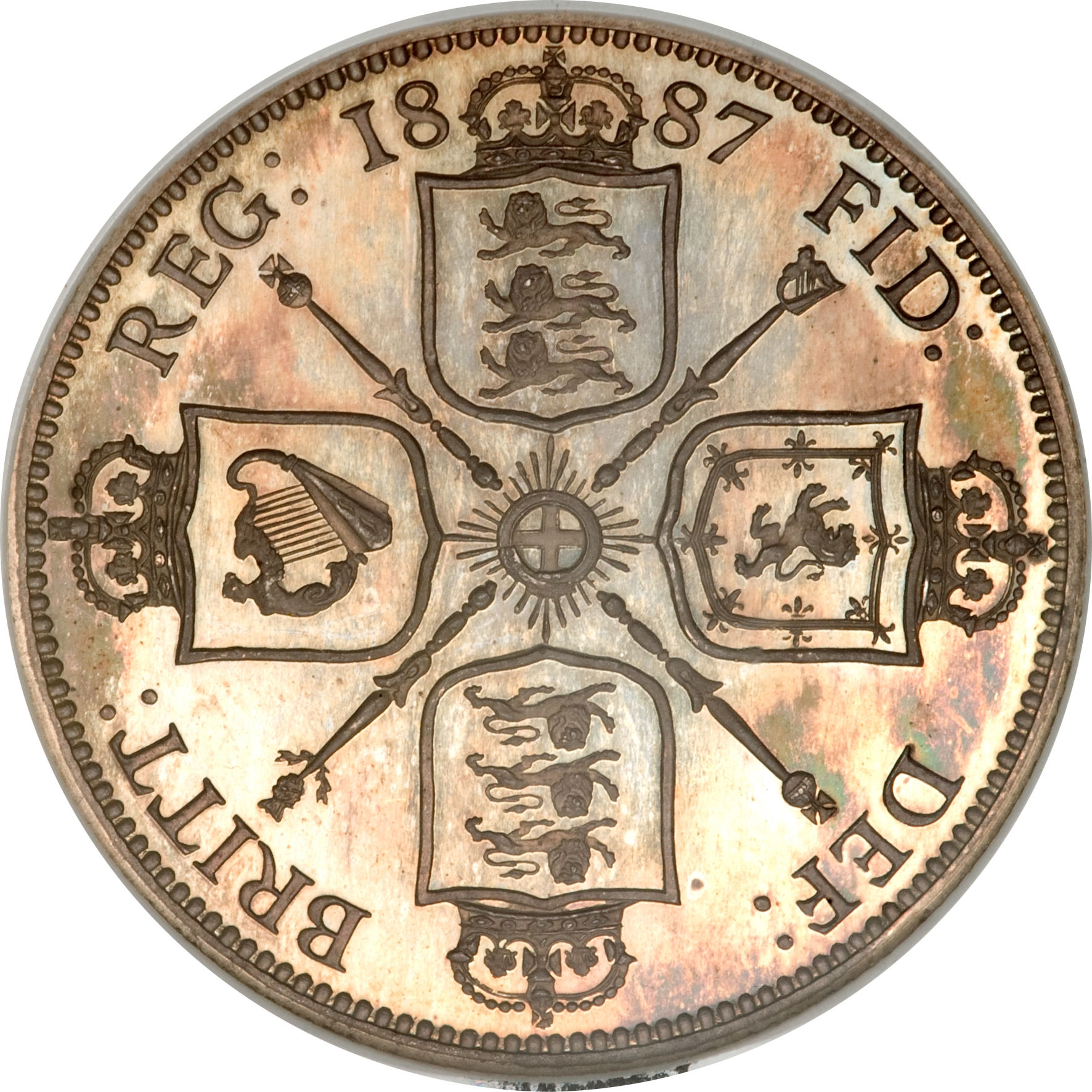
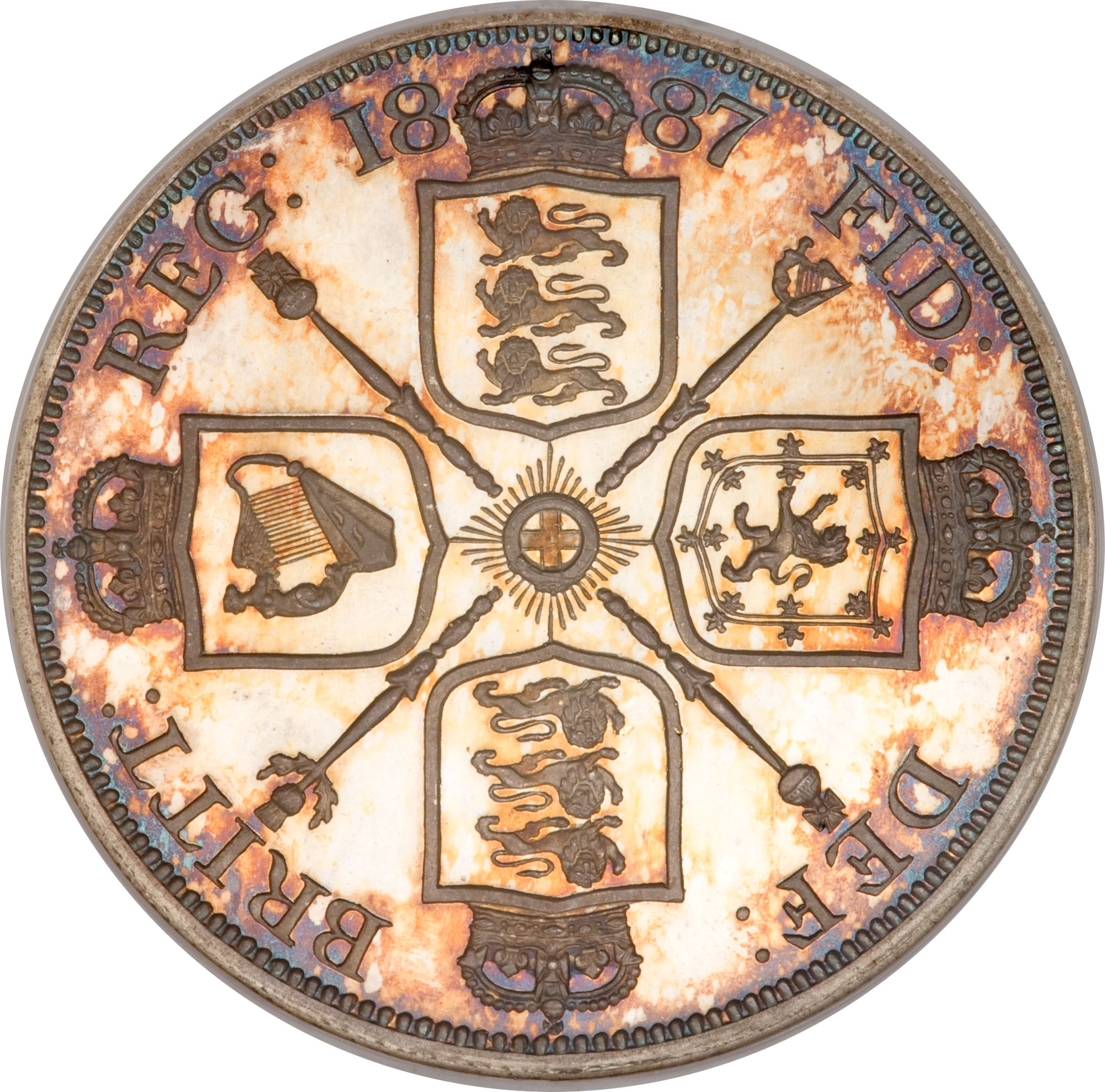
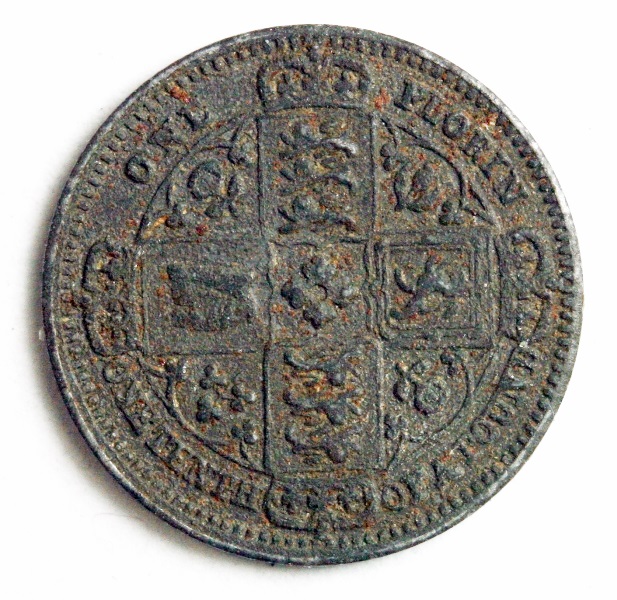
Featured pre-decimal silver coins on MyCoinage
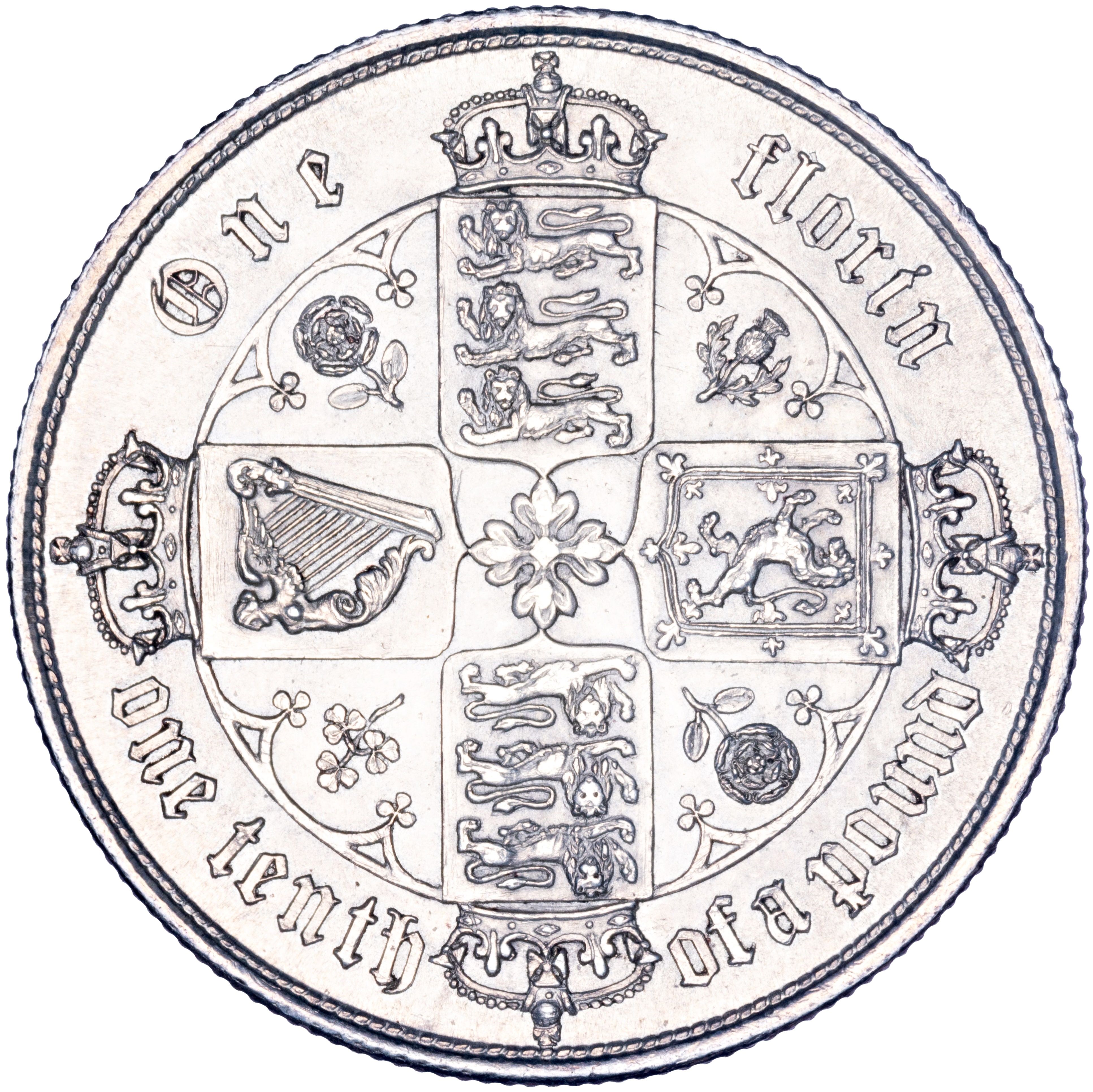
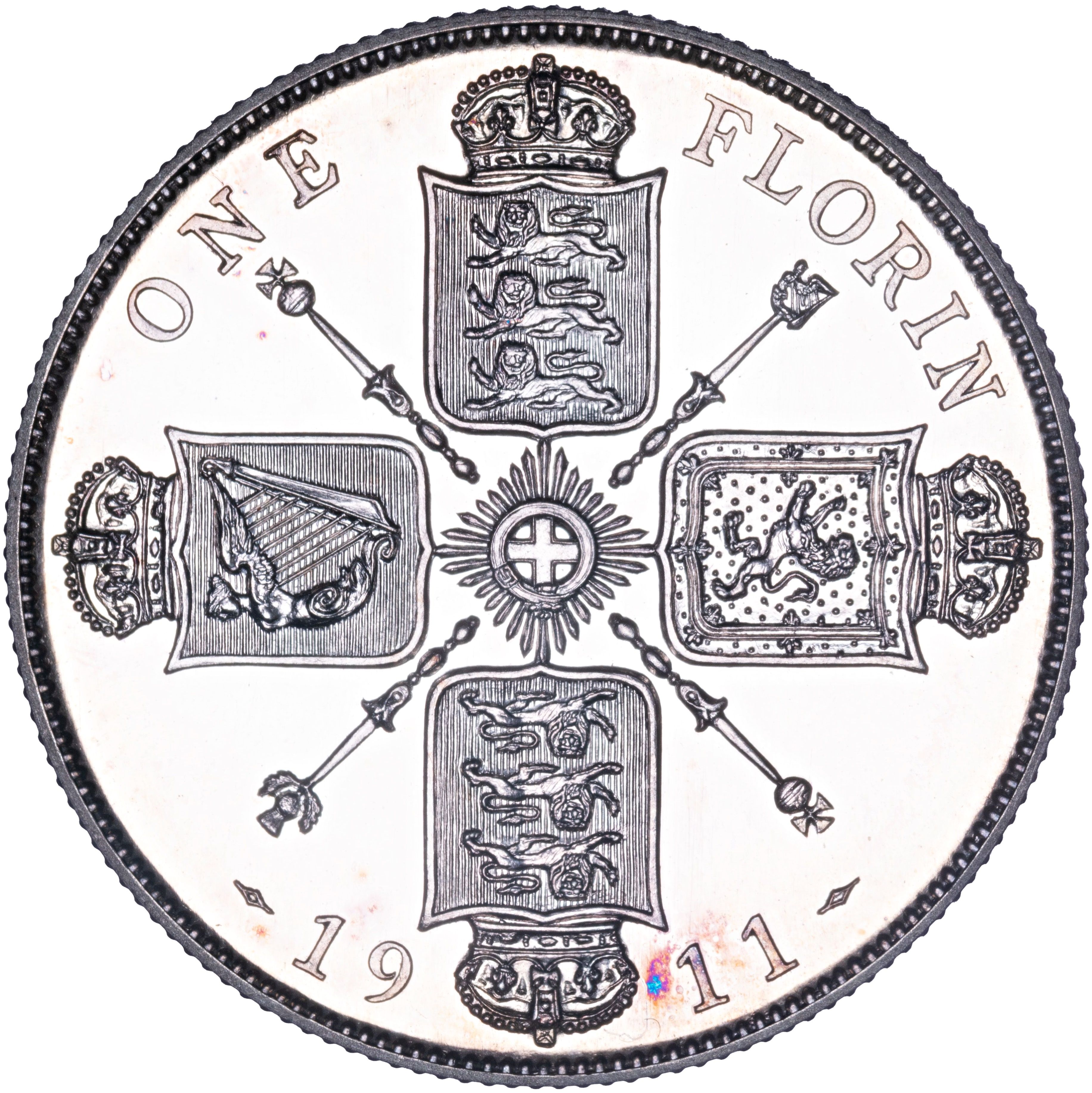
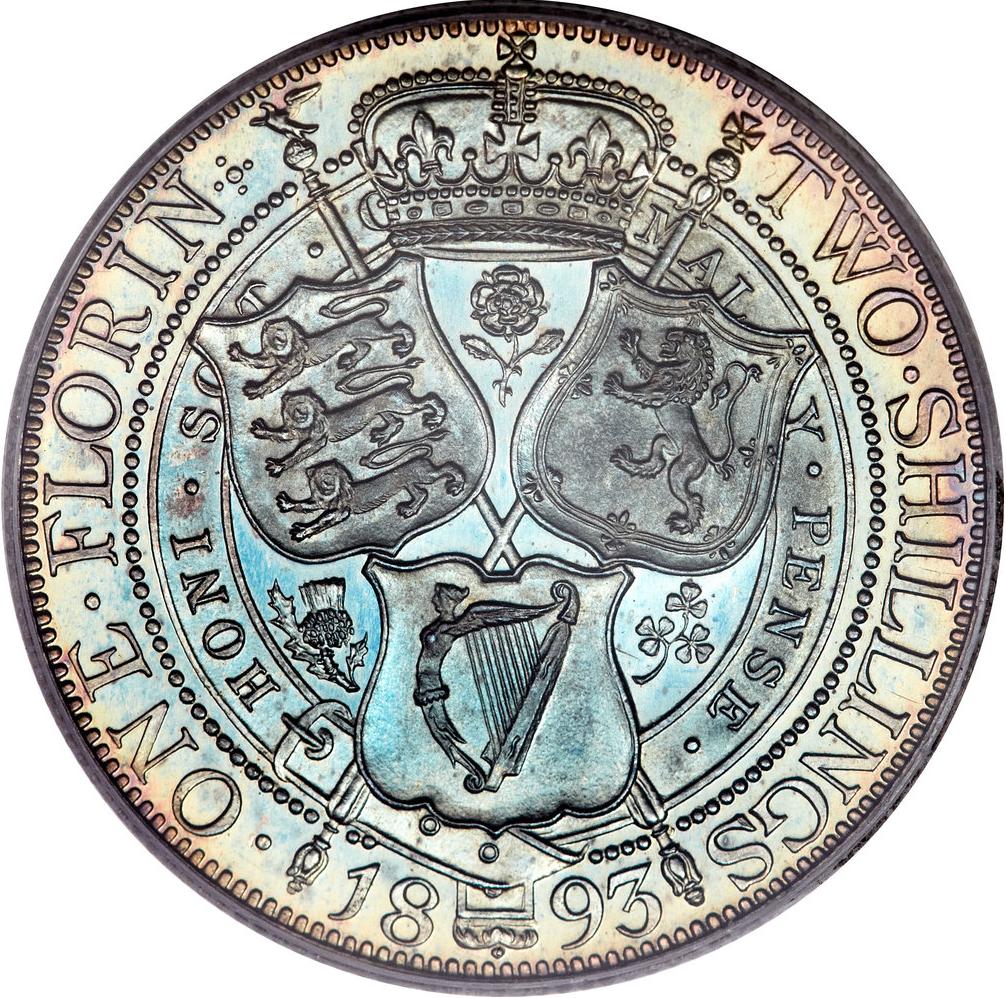
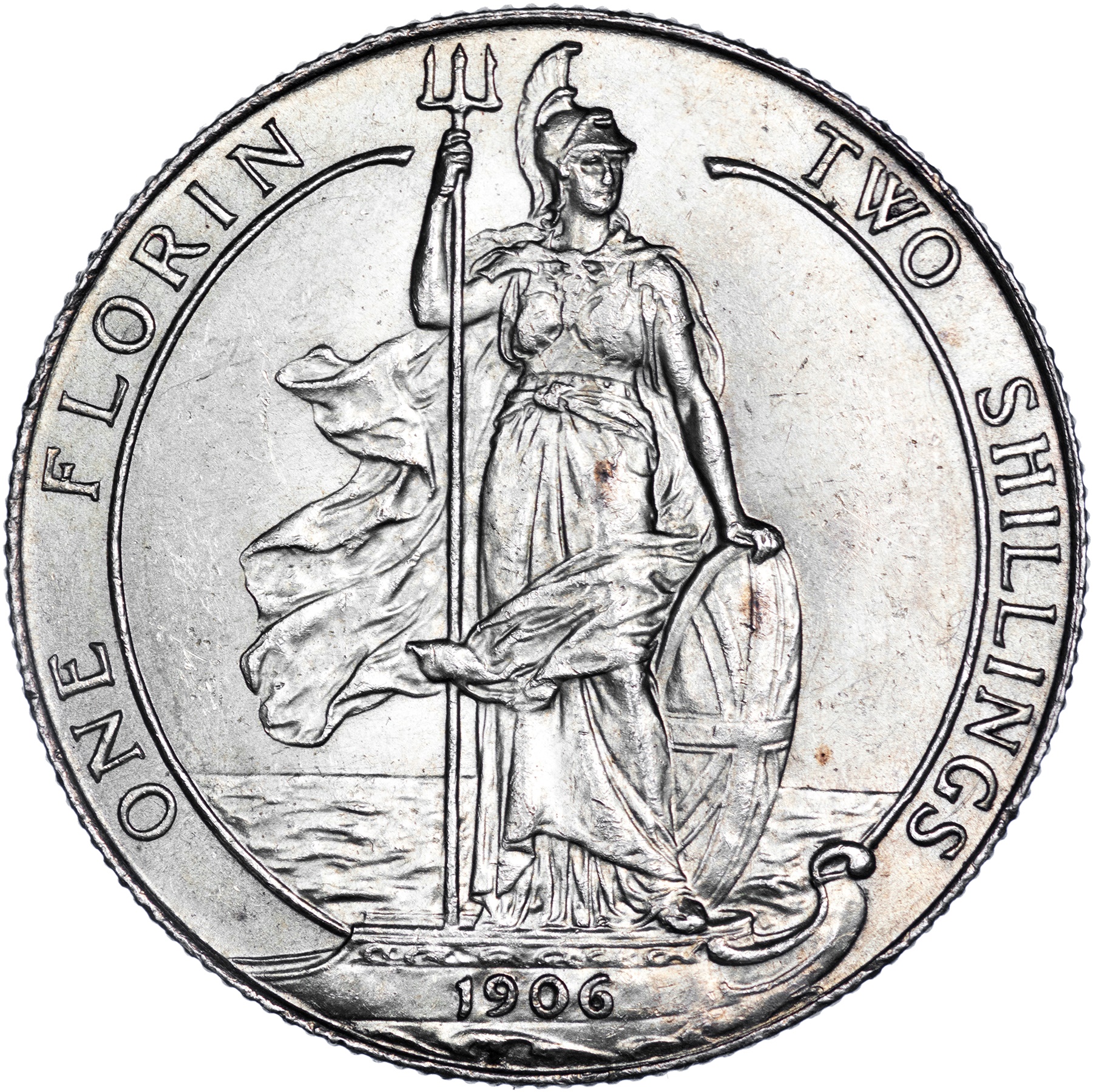
Related guides
- Junk silver UK coins, complete denomination-by-denomination silver content for pre-1947 British coinage.
- Pre-1947 vs post-1947 silver, the specific value difference across the 1947 cut.
- 1947 UK silver debasement, the second silver transition, sterling to cupronickel.
- George V coins value guide, the reign covering both sterling pre-1920 and .500 from 1920 onwards.
- Florin values UK, the two-shilling silver florin 1849-1970, including the 1920 transition.
- Shilling values UK, the pre-decimal shilling, English and Scottish reverses.
- Specific gravity test for gold coins, the sister technique applied to gold sovereigns.
- Silver melt calculator, live silver-spot melt value for any pre-1947 UK coin.