1947: The Year British Silver Coinage Ended
For 700 years, from Henry II in 1158 to George VI in 1946, British circulating silver coinage contained actual silver. In 1947, that ended. The Coinage Act 1946 authorised the change to cupronickel for all "silver" denomination coins (shilling, florin, sixpence, threepence and half crown) effective 1 January 1947. The driver was post-war silver shortage and US lend-lease silver repayment. This guide covers what changed, what 1947 coins are worth today, and why "junk silver UK" still means strictly pre-1947.
- Why 1947? The silver shortage and lend-lease
- What changed: alloys and dates
- Denominations affected
- The 1946-1947 transition pair
- 1947 coin specs and identification
- Realised prices for 1947 coins
- Why "junk silver UK" means pre-1947
- Distinguishing silver from cupronickel
- The Maundy exception
- Frequently asked questions
Why 1947? The silver shortage and lend-lease
Britain emerged from WWII with an exhausted Treasury, severe foreign-exchange shortages, and a specific silver-debt obligation to the United States. Two pressures combined to force the 1947 silver-coinage transition.
The post-war silver shortage
During WWII, the British government drew heavily on Treasury silver for munitions production (silver in detonator components), electrical contacts in radar and signal equipment, and various industrial uses. By 1945, UK silver reserves were depleted. Globally, silver mining had been disrupted across the war years, particularly in South America, and post-war industrial demand was rebounding faster than mining supply. World silver prices climbed steadily from 1945 through 1947, making continued .500-fineness silver coinage increasingly uneconomic.
US Lend-Lease silver repayment
The decisive factor was the US Lend-Lease Act obligation. Under Lend-Lease, the United States had transferred approximately 88 million troy ounces of silver to Britain during 1942–1945 to support both wartime industry and the British silver coinage standard. This silver was loaned, not gifted, and the post-war Anglo-American Loan Agreement of 1946 confirmed that Britain was required to repay the silver in kind, that is, in physical silver bullion, on a fixed schedule running through the late 1940s and early 1950s.
Continuing to strike .500 silver coinage at the pre-war scale would have required Britain to simultaneously buy silver on the open market (to repay the US) and strike silver into circulating coinage (which then dispersed into household drawers and never came back). The mathematics did not work. Switching circulating coinage to cupronickel freed up enough silver that the lend-lease repayment could proceed without crippling Treasury balance-of-payments. The decision saved an estimated 2,000 tons of silver across the following decade.
The Coinage Act 1946
Parliament passed the Coinage Act 1946 in late 1946, authorising the Royal Mint to strike circulating "silver" denomination coins in cupronickel from 1 January 1947. The Act left dimensions, designs and face values unchanged, only the alloy was switched. Royal proclamation in early 1947 made the new cupronickel coins legal tender alongside the older silver issues. There was no recall of pre-1947 silver coinage; both circulated side-by-side until the silver versions gradually accumulated into private holdings (where they remain today as the basis of the UK "junk silver" market).
What changed: alloys and dates
Three eras of British silver-denomination coinage, each separated by a clean date cutoff:
| Era | Dates | Alloy | Fineness |
|---|---|---|---|
| Sterling silver | Pre-1920 | 92.5% Ag, 7.5% Cu | .925 |
| Wartime / .500 silver | 1920–1946 | 50% Ag, 50% Cu | .500 |
| Cupronickel | 1947 onwards | 75% Cu, 25% Ni | No silver |
Each transition was driven by silver-supply pressure. The 1920 transition (sterling to .500) was a response to post-WWI silver shortage and Treasury foreign-exchange pressure under the Coinage Act 1920. The 1947 transition (.500 silver to cupronickel) was a response to post-WWII silver shortage and US lend-lease repayment under the Coinage Act 1946. The two acts mark the bookends of the "wartime silver" era of British circulating coinage.
Denominations affected
Five denominations went from .500 silver in 1946 to cupronickel in 1947:
- Half crown (2 shillings 6 pence), weight 14.14 g, diameter 32.31 mm.
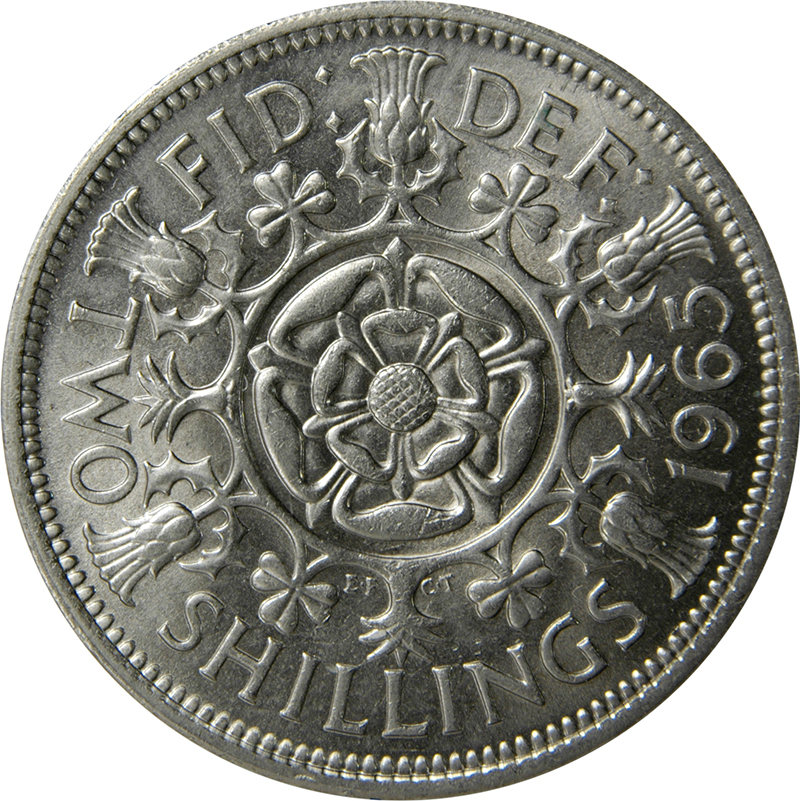
- Florin (2 shillings), weight 11.31 g, diameter 28.5 mm.
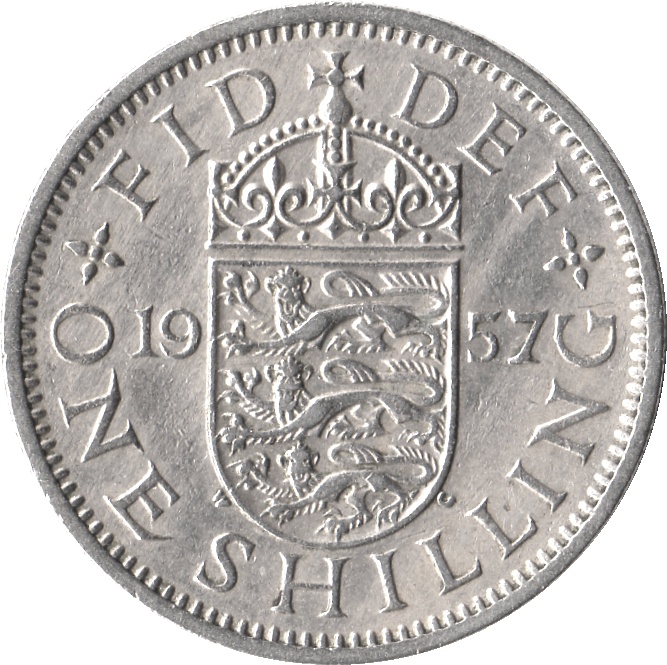
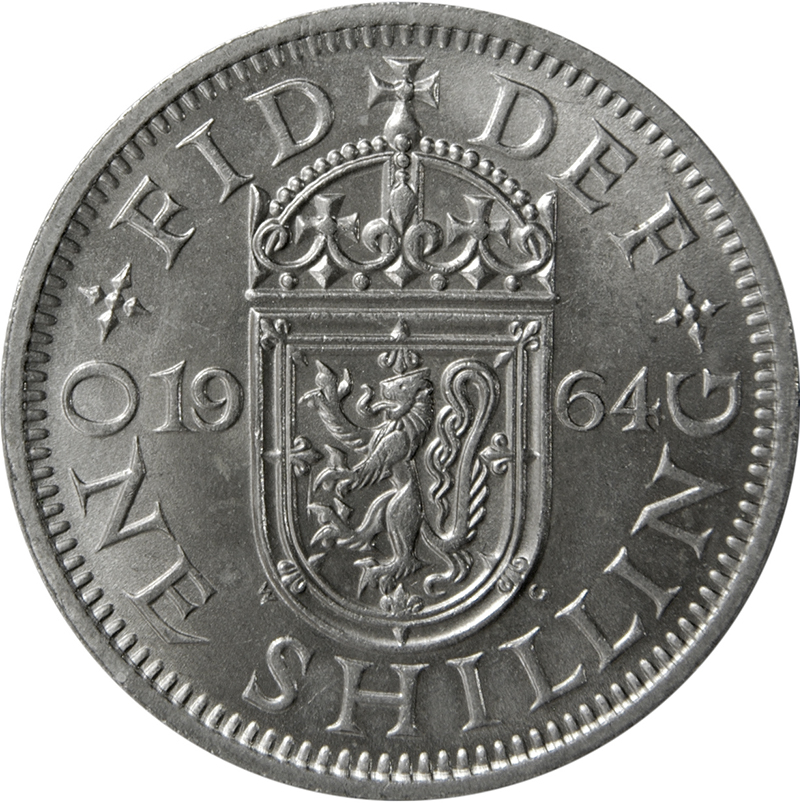
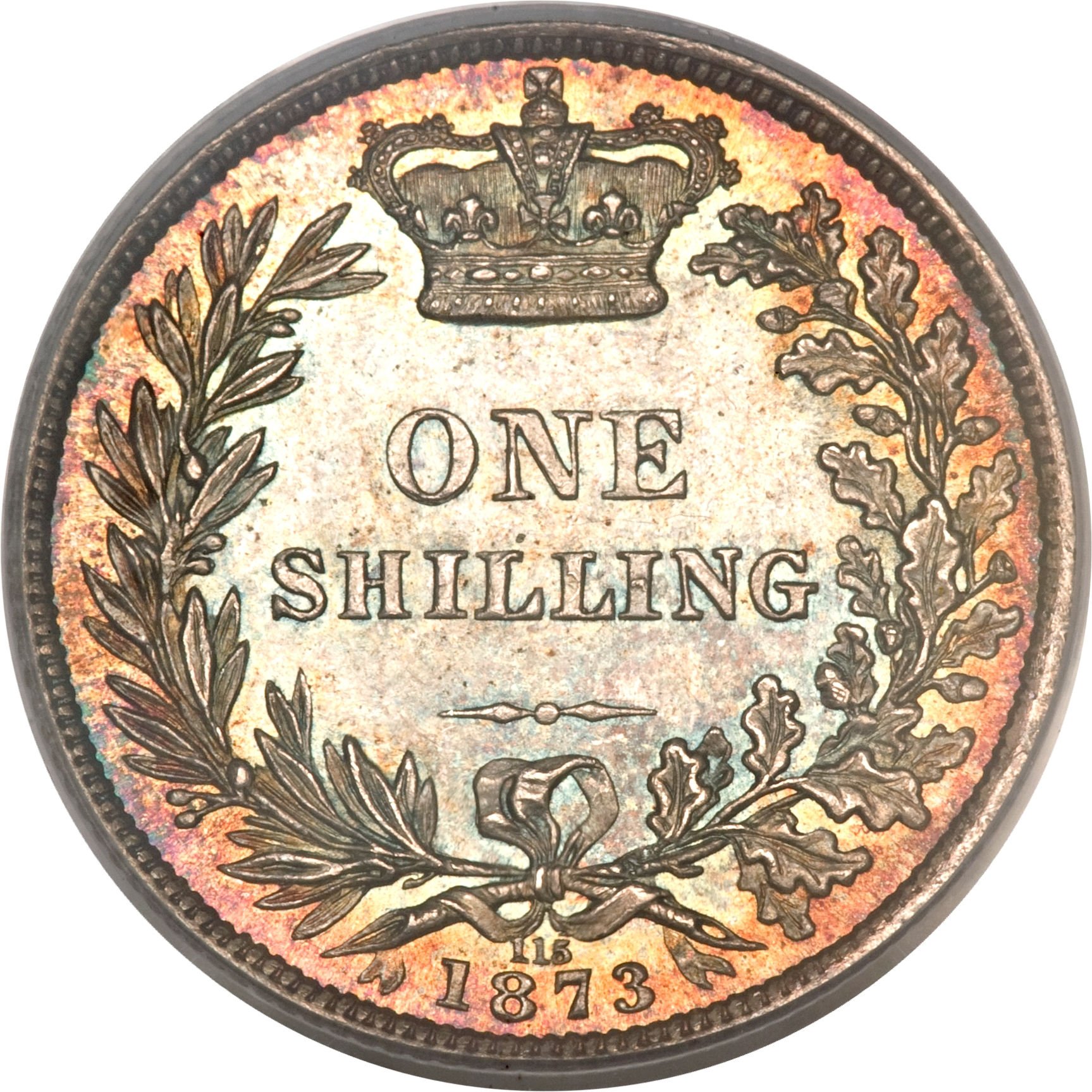
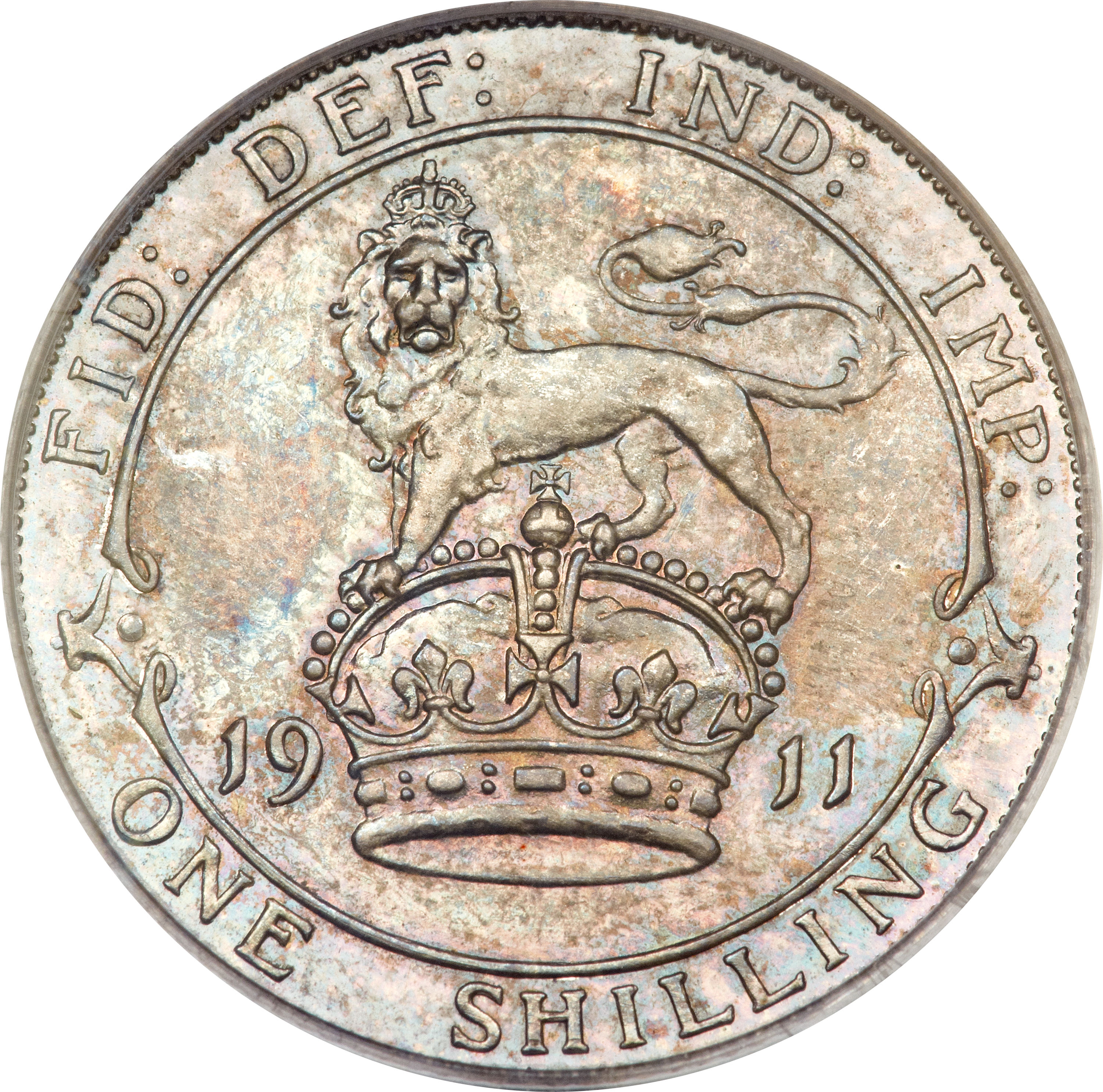
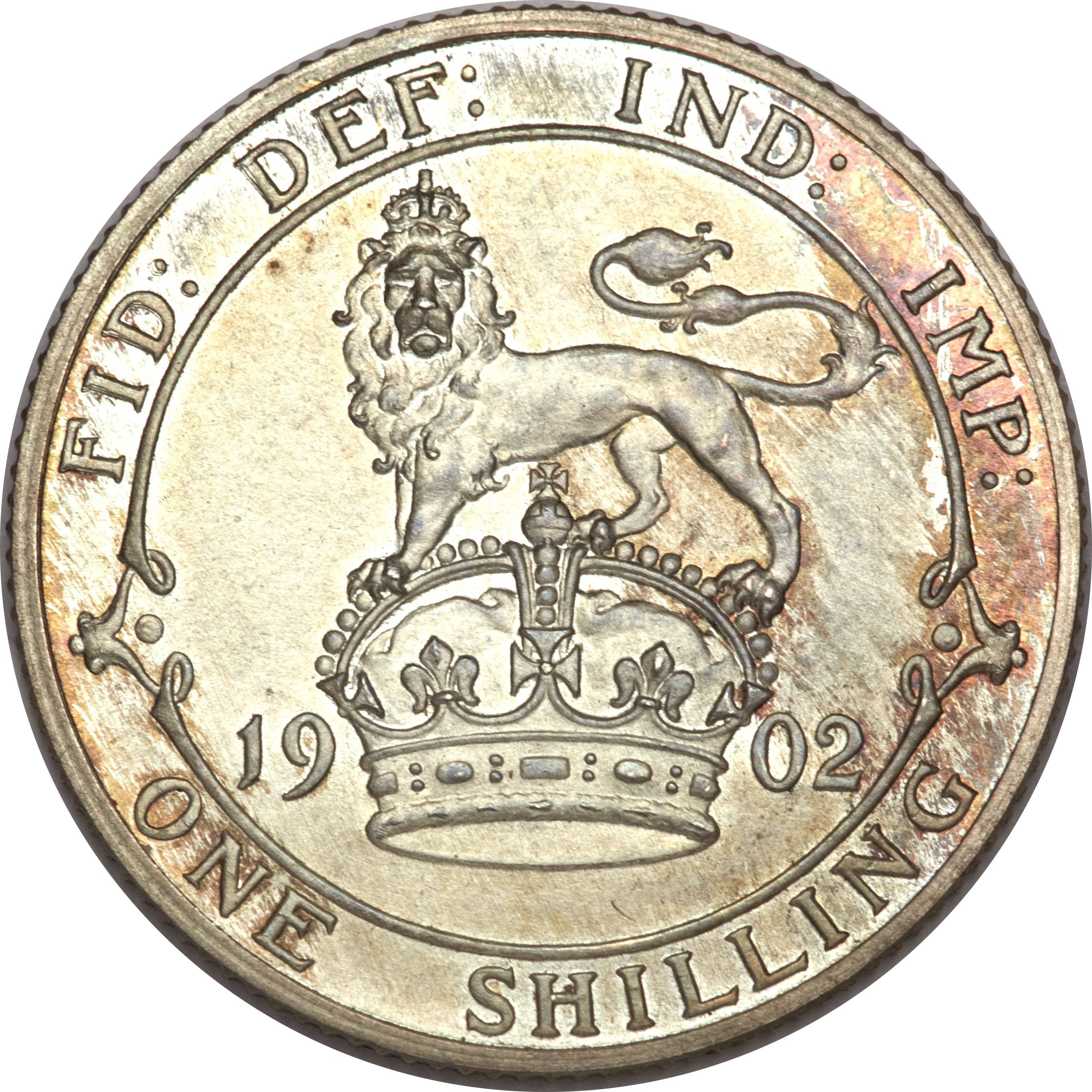
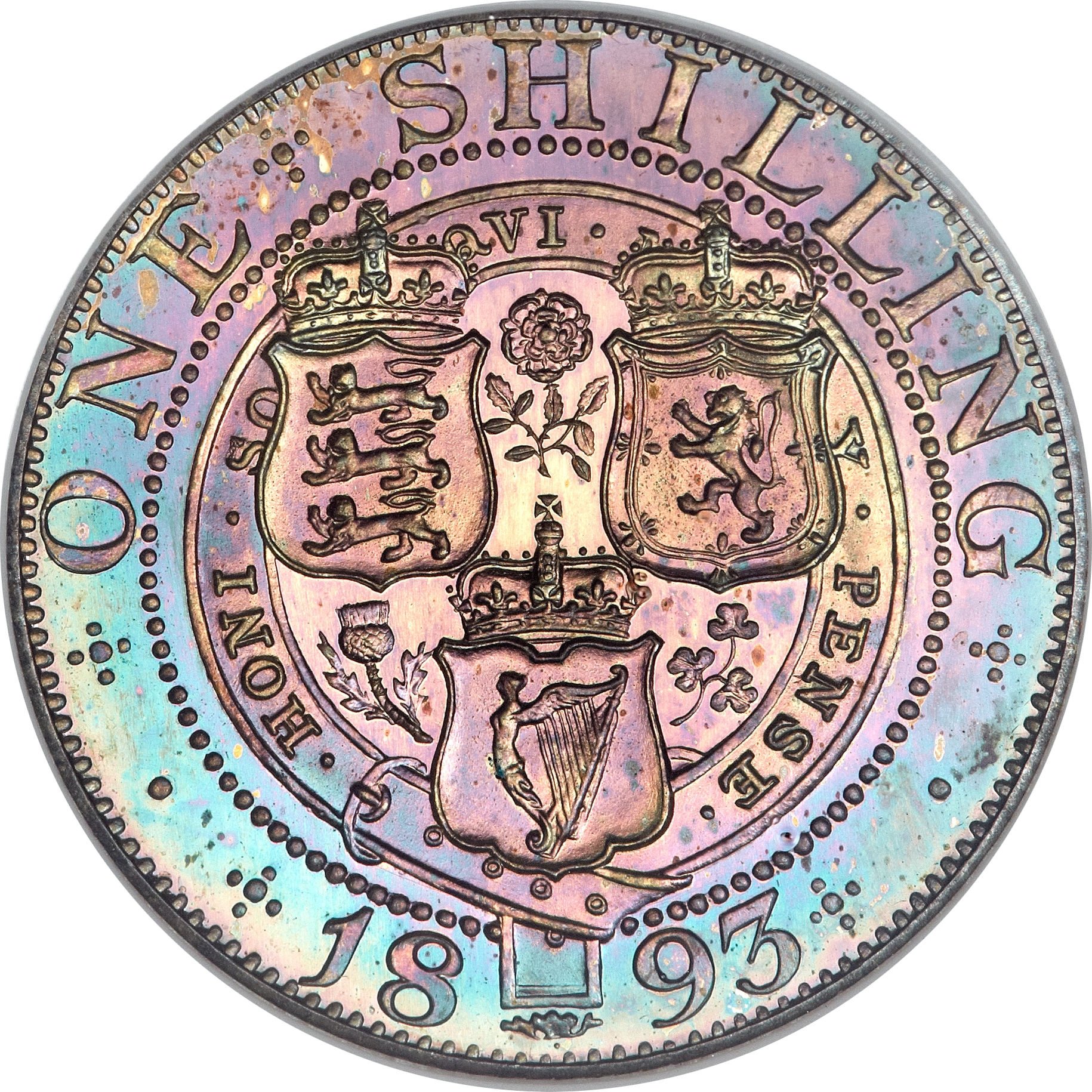
- Shilling, weight 5.66 g, diameter 23.5 mm. Two reverse types: English (lion above crown) and Scottish (lion rampant).
- Sixpence, weight 2.83 g, diameter 19.5 mm.
- Silver threepence, weight 1.41 g, diameter 16.25 mm. The small flat threepence; production ceased entirely in 1944, so 1947 saw no silver-type threepence at all.
The brass threepence (12-sided, weight 6.6 g) was already non-silver from 1937 onwards and continued unaffected by the 1947 change. The penny, halfpenny and farthing were already bronze and unchanged. The crown (5 shillings) was a non-circulating commemorative denomination and the next crown issue (1951 Festival of Britain) was already planned in cupronickel.
The 1946-1947 transition pair
Many UK pre-decimal collectors deliberately collect the 1946 final-silver / 1947 first-cupronickel pair for each affected denomination as a narrative collection telling the debasement story. The pair physically demonstrates the alloy change: the 1946 example has the slightly warmer-toned silvery look characteristic of .500 silver (where the higher copper content produces a softer rose tint as it tarnishes), while the 1947 example has the cooler whiter cupronickel finish that ages differently.
Cost of a complete 1946-1947 transition set
| Denomination | 1946 silver (avg circ) | 1947 cupronickel (avg circ) | Pair cost |
|---|---|---|---|
| Half crown | £5–10 | £2–5 | £7–15 |
| Florin | £3–7 | £2–4 | £5–11 |
| Shilling (English) | £3–6 | £1–3 | £4–9 |
| Shilling (Scottish) | £3–6 | £1–3 | £4–9 |
| Sixpence | £2–5 | £0.50–2 | £2.50–7 |
| Complete 5-pair set | , | , | £25–50 |
For BU pairs in original Royal Mint paper presentation envelopes, expect to pay roughly 3× these figures. The 1946-1947 transition pair set is one of the most popular thematic collections among UK pre-decimal collectors and is an excellent starter project: cheap to enter, narratively complete, and physically informative.
1947 coin specs and identification
Identification is straightforward because dimensions did not change in 1947, only the alloy. Date alone is sufficient.
| Denomination | 1947 alloy | Weight | Diameter | Designer (reverse) |
|---|---|---|---|---|
| Half crown | Cupronickel | 14.14 g | 32.31 mm | George Kruger Gray |
| Florin | Cupronickel | 11.31 g | 28.5 mm | George Kruger Gray |
| Shilling (English) | Cupronickel | 5.66 g | 23.5 mm | George Kruger Gray |
| Shilling (Scottish) | Cupronickel | 5.66 g | 23.5 mm | George Kruger Gray |
| Sixpence | Cupronickel | 2.83 g | 19.5 mm | George Kruger Gray |
| Brass threepence | Brass (unchanged from 1937) | 6.6 g | 21 mm | Frances Madge Kitchener |
Obverse of all 1947 issues: George VI portrait by Thomas Humphrey Paget. The legend on 1947 coins still reads GEORGIVS VI D.G. BR. OMN. REX F.D. IND. IMP., "George VI by the Grace of God King of all the Britons, Defender of the Faith, Emperor of India". The "IND. IMP." (Emperor of India) title was dropped from later issues after Indian independence in August 1947, but the change was not introduced until the 1949 dies. 1947 coins are therefore the last UK issues bearing the IND. IMP. title alongside the new cupronickel alloy, a unique intersection of two transitions.
Realised prices for 1947 coins
The 1947 cupronickel issues are common, mintages were high (typically 10–30 million per denomination) and survival rates strong, but they carry a small first-year-cupronickel collector premium. Realised prices over the past 18 months at UK auction and on eBay UK sold listings:
| Denomination | Avg circulated | EF | BU original | PCGS MS-65+ |
|---|---|---|---|---|
| 1947 half crown | £2–5 | £5–15 | £15–35 | £50–100 |
| 1947 florin | £2–4 | £3–10 | £10–25 | £30–75 |
| 1947 shilling (English) | £1–3 | £2–8 | £8–20 | £25–60 |
| 1947 shilling (Scottish) | £1–3 | £2–8 | £8–20 | £25–60 |
| 1947 sixpence | £0.50–2 | £2–6 | £5–15 | £20–45 |
| 1947 brass threepence | £1–3 | £3–10 | £8–20 | £25–55 |
| 1947 BU set (Royal Mint pack) | , | , | £60–120 | , |
1947 BU set premium reflects the original Royal Mint Year Set packaging containing all five circulating denominations, an attractive package for collectors of the transition story. Mid-grade circulated examples have negligible premium and are not worth the postage to acquire individually; build via mixed lots or estate clearances.
Why "junk silver UK" means pre-1947
The 1947 cut-off date is the cleanest possible silver-content marker for British coinage. Every UK denomination coin before 1947 contains silver (either .925 sterling pre-1920 or .500 from 1920–1946); every UK denomination coin 1947 and later contains no silver until the modern silver-proof commemoratives (which are not "junk silver" because they are sold at significant premium and held as collectables).
Bullion dealers, scrap-metal traders and casual silver-stackers therefore use a single date rule: "is it pre-1947?" If yes, it has melt value; if no, it does not. No need to check denomination, monarch or design. The rule is so reliable that the entire UK junk-silver market operates on it.
For computing actual melt value, use our silver melt calculator. Enter the denomination and date, and it returns the silver content in troy ounces and the current melt value at live silver spot prices. For comprehensive denomination-by-denomination melt content, see our junk silver UK coins guide and our pre-1947 vs post-1947 silver guide.
Distinguishing silver from cupronickel
Date is the most reliable test: pre-1947 = silver, 1947+ = cupronickel. But four physical tests confirm the silver content for any specific coin where the date is unclear or the coin is suspected of being a counterfeit:
Ring test
Balance the coin on a fingertip and tap it gently with another coin. Silver rings clearly at high pitch with a long sustain (1–2 seconds of tone). Cupronickel sounds duller and the tone fades quickly. With practice, the difference is unmistakable. The ring test does not distinguish .925 sterling from .500 silver, but both ring better than cupronickel.
Weight / specific gravity
Same dimensions, different densities:
- Sterling silver (.925): 10.4 g/cm³
- .500 silver (1920–1946): 9.7 g/cm³
- Cupronickel (1947+): 8.9 g/cm³
Identical-diameter coins of the same denomination differ in weight by 5–15% across the eras. A 1946 .500 silver shilling weighs 5.66 g; a 1947 cupronickel shilling weighs the same 5.66 g but the metals are different densities so the dimensions or thickness differ subtly. Precision-scale weighing combined with caliper measurement gives a reliable specific-gravity result. For high-value coins, a dedicated specific-gravity test using water displacement is decisive.
Magnetism
None of these alloys are magnetic. The magnet test rules out modern steel-core coins (e.g. post-2012 UK 5p and 10p) and most counterfeits, but does not distinguish silver from cupronickel. A magnetic "silver coin" is always a counterfeit.
Edge / colour observation
Sterling silver tarnishes slowly to a soft warm grey patina. .500 silver darkens more aggressively because of its higher copper content, often developing a rose-grey or black-grey tone. Cupronickel develops a cooler, whiter patina that resists the warmth of silver tarnish. The differences are subtle but become clear with experience. For valuable coins, prefer specific-gravity testing or third-party authentication; for everyday identification, date is sufficient.
The Maundy exception
Royal Maundy money is the great exception to the 1947 rule. The Royal Mint continued to strike Maundy sets (1d, 2d, 3d, 4d) in .925 sterling silver from 1947 onwards , and continues to do so today. Maundy coins are produced in tiny numbers (typically 1,500–2,000 sets per year) for the Royal Maundy Thursday distribution by the monarch to elderly recipients. They are technically circulating legal tender at face value but never enter circulation.
Practical consequence: a 1947 sterling silver Maundy threepence exists alongside a 1947 cupronickel sixpence and shilling. The Maundy threepence carries the same George VI portrait but is .925 sterling. Realised prices for 1947 Maundy: individual coins £15–40, complete four-coin sets in original royal-issue case £80–200, depending on grade. Always check whether a small 1947 silver coin is a circulation issue or a Maundy issue, the price difference is large.
Featured pre-decimal coins on MyCoinage
Related guides
- Junk silver UK coins, complete denomination-by-denomination silver content for pre-1947 British coinage.
- Pre-1947 vs post-1947 silver, the specific value difference for each denomination across the 1947 cut.
- George VI coins value guide, the complete reign reference covering both silver and cupronickel issues.
- Florin values UK, the two-shilling silver florin 1849-1970, including the 1947 transition.
- Shilling values UK, the pre-decimal shilling, English and Scottish reverses.
- Half crown values UK, the largest pre-decimal silver coin.
- Silver melt calculator, live silver-spot melt value for any pre-1947 UK coin.