What Makes a Coin Rare? The 5 Factors Every Collector Should Know
Quick answer: rarity is not the same as low mintage. A coin becomes genuinely rare when five factors align: original mintage, survival rate, condition census, demand and error status. This guide unpacks each factor with real UK examples, then explains what the MyCoinage rarity score on every coin page measures, and what it leaves to the sold prices.
- The 5 rarity factors overview
- Factor 1: Original mintage
- Factor 2: Survival rate
- Factor 3: Condition rarity
- Factor 4: Demand and collector base
- Factor 5: Errors, varieties and mules
- The MyCoinage rarity score explained
- Common questions (AI quick answers)
- Worked examples: 1933 penny vs Kew Gardens 50p
- FAQ
The 5 rarity factors overview
| # | Factor | What it measures | Weight in MyCoinage score |
|---|---|---|---|
| 1 | Mintage | How many originally struck | 20% |
| 2 | Survival rate | How many exist today | 30% |
| 3 | Condition rarity | How many exist in MS-63+ | 25% |
| 4 | Demand | Active collector base size | 15% |
| 5 | Error status | Mint-made uniqueness | 10% |
Factor 1: Original mintage
Mintage is the headline number: how many coins the Royal Mint or US Mint originally struck in a given year. It is a starting point, not an endpoint. Mintage matters because it puts an absolute ceiling on how many coins can ever exist, but two coins with identical mintages can have wildly different values based on what happened afterward.
Low-mintage UK benchmarks
| Coin | Mintage | Typical value |
|---|---|---|
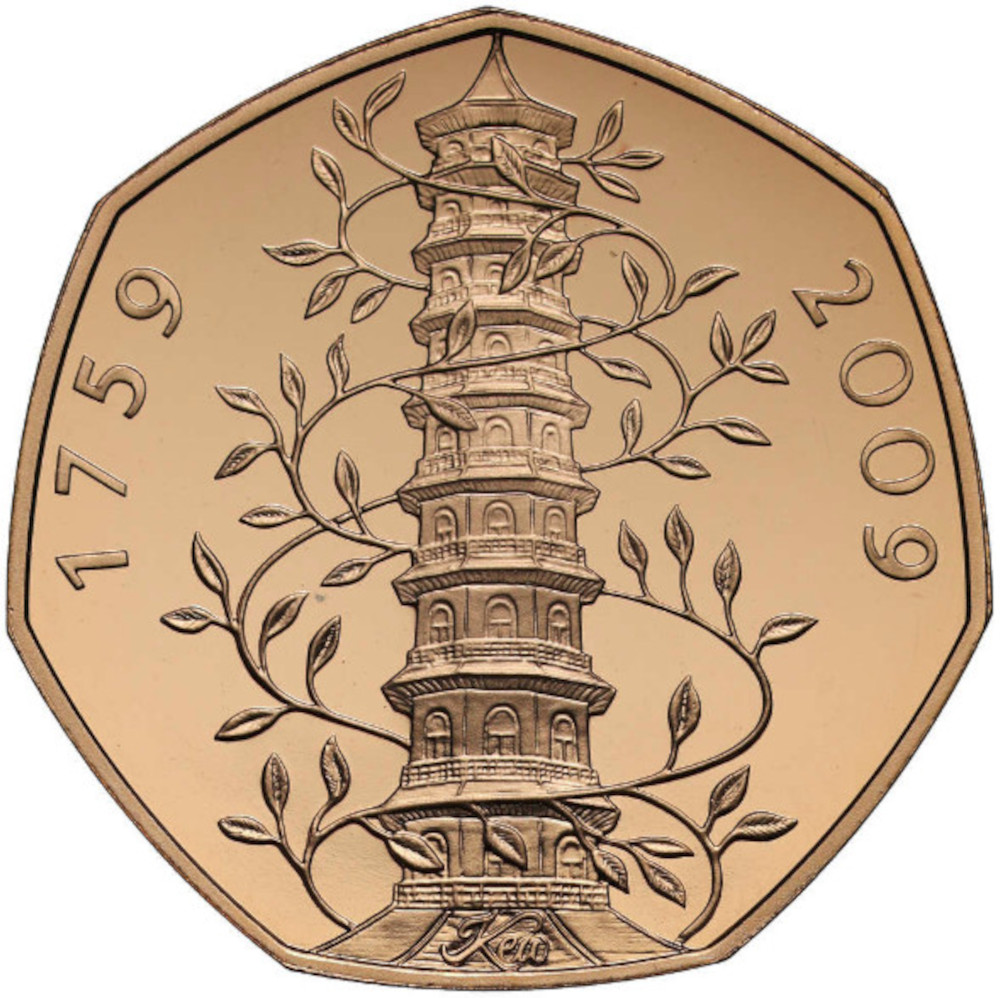
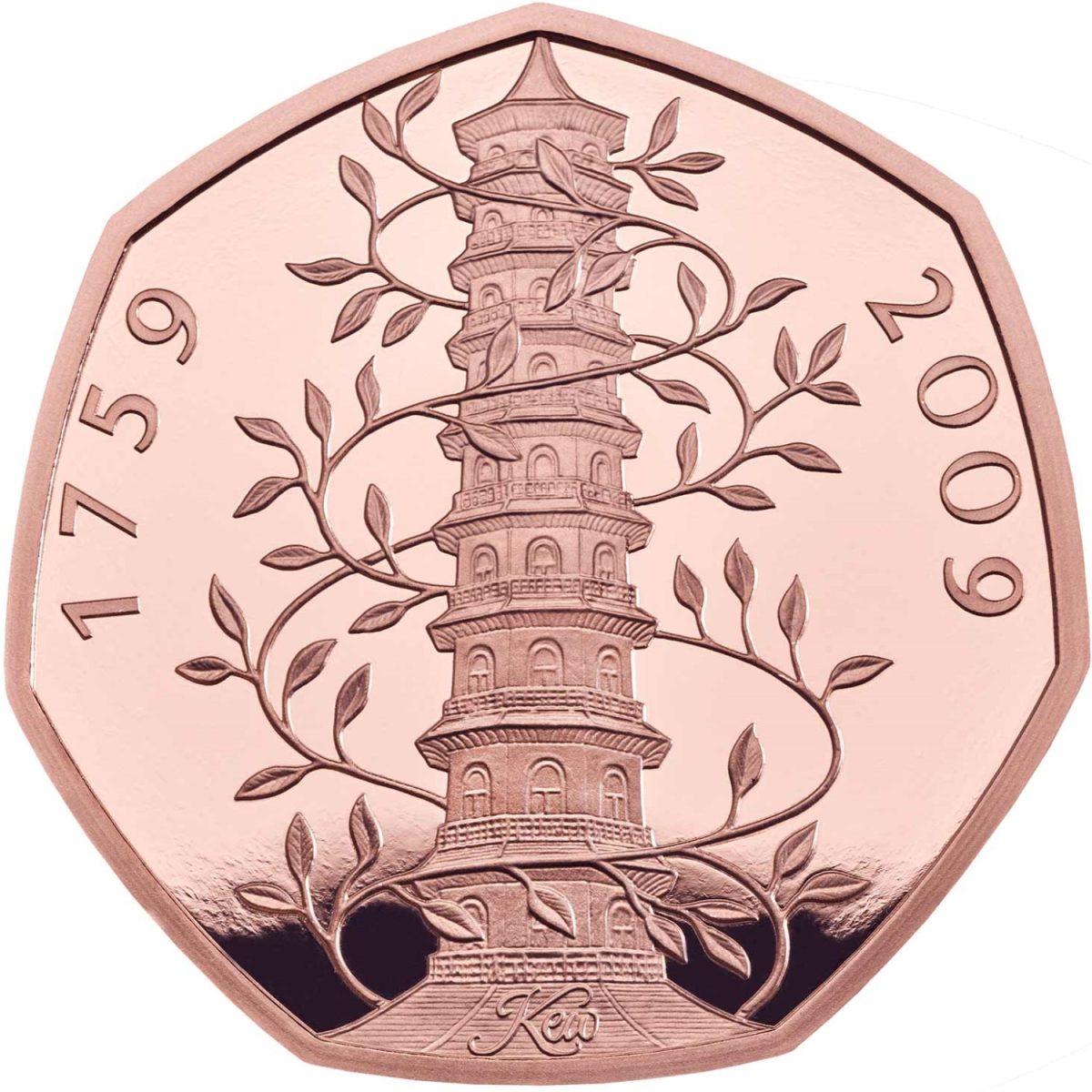
| 2009 Kew Gardens 50p | 210,000 | £150 – £250 |
| 2002 Commonwealth Games £2 N. Ireland | 485,500 | £80 – £120 |
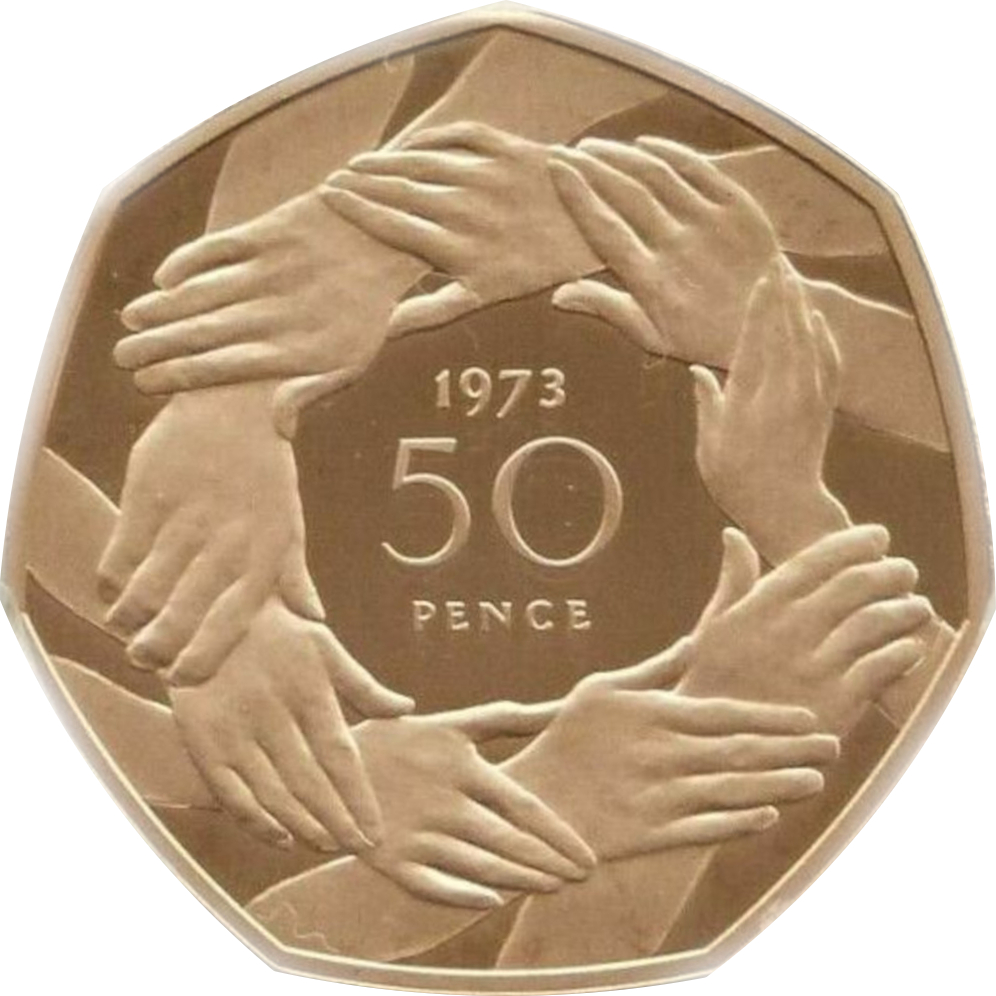
| 1992 Dual-Dated EC 50p (large) | 109,000 | £40 – £70 |
| 2011 Edinburgh £1 | 935,000 | £20 – £60 |
| 2002 Commonwealth Games £2 Wales | 588,500 | £35 – £60 |
The "magic line" in modern UK circulation is roughly 1 million. Below that, coins start to attract premium. Anything under 500,000 is genuinely scarce and under 250,000 is rare.
Why mintage alone isn't enough
The 1971 1p has a mintage of 1.52 billion. It is worth 1p. The 1933 penny has no reliable mintage figure but is worth £150,000. Mintage is necessary but not sufficient for rarity.
Factor 2: Survival rate
Survival rate is the percentage of an original mintage still in existence in collectable form. Coins are lost, melted, worn smooth, damaged, and thrown away every year. Some estimates:
- Victorian silver: typical survival rate 3–5% (massive melts in 1920 recoinage)
- Edwardian gold sovereigns: 0.3–1% (melted for WW1 gold reserve)
- Pre-decimal bronze pennies: 5–15%
- Modern UK circulation (post-1971): 70–90% still exist somewhere
- US Morgan dollars: 15–25% (Pittman Act melted 270 million in 1918)
This is why many old coins are much scarcer in reality than their mintage figures suggest. A 1920 UK shilling has a mintage of 22 million; estimated survivors in Mint State are fewer than 200.
Factor 3: Condition rarity
A coin can be common in circulated grade and almost impossible to find in Mint State. This is condition rarity, the most nuanced of the five factors.
The 1881-S Morgan dollar example
Mintage: 12,760,000. Survivors: roughly 1.5 million. Survivors in MS-65: perhaps 50,000. Survivors in MS-67: fewer than 300. Survivors in MS-68: fewer than 10.
The same coin, same year, same mint, yet prices scale from $35 in G-4 through $350 in MS-65 to over $20,000 in MS-67. This is condition rarity in action.
Spotting condition rarity
- PCGS and NGC population reports (the "pop reports") list how many of each coin they have graded at each grade. A "top pop" coin is tied for the highest grade ever assigned.
- Pre-1933 UK silver is almost all condition rare in MS-65+.
- Modern Royal Mint commemoratives in original packaging are usually not condition rare, having been struck to proof standard.
- Circulation coins in Royal Mint BU sets are semi-condition rare in MS-67+.
Factor 4: Demand and collector base
A coin is worth what someone will pay for it. Demand is driven by:
- Series completion: the collector who owns 49 of the 50 state quarters will pay anything for the 50th.
- Pop culture crossover: Peter Rabbit, Harry Potter, Paddington, and Olympic coins attract non-collectors.
- Bullion flight to quality: rising silver prices pull up all pre-1947 UK silver.
- Celebrity provenance: coins from named collections sell at 20–50% premiums.
- Commemoration anchor: Jubilee, royal birth, or centenary coins attract short-term spikes.
Demand-driven rarity: Peter Rabbit 50p
The 2018 Peter Rabbit 50p has a mintage of 1,400,000 (not particularly low) yet sells for £8–£15 because of Beatrix Potter brand demand. A higher-mintage 2013 Christopher Ironside 50p (with no cultural hook) is worth 50p face value. Demand makes the market.
Factor 5: Errors, varieties and mules
Mint-made mistakes that escape quality control create a category of rarity separate from mintage. The six main error types:
Off-centre strikes
The planchet was off-centre in the die. A 15–20% off-centre strike with full date visible is the collector sweet spot. Typical premium: 3× to 20× the base coin.
Mules
An obverse and reverse from two different coins paired together. The 2008 undated 20p is a mule: the old obverse (pre-2008 shield design, undated) paired with the new 2008 dated reverse. About 100,000 escaped the mint. Worth £50–£200.
Doubled dies
The die itself was struck twice by the hub at slightly different angles, creating doubled letters or digits. The 1955 Doubled Die Lincoln cent and the 1983 "New Pence" 2p (an obsolete reverse wording used in error) are the most famous.
Off-metal strikes
Wrong planchet fed into the press. The 1943 bronze Lincoln cent, struck on leftover 1942 bronze planchets when 1943 was supposed to be all steel, has fewer than 20 confirmed examples. One sold for $1.7 million.
Blank planchets and partial strikes
A planchet that was never struck, or struck too weakly to show design. Usually worth £5–£50.
Die cracks and cuds
Cracks in the die produce raised lines on the coin; "cuds" are blob-shaped die breaks at the rim. Minor die cracks are common; major cuds on uncommon coins can add 2× to 10× value.
See our full UK coin errors list for every notable British mint error.
The MyCoinage rarity score explained
It is deliberately simple, and it measures the first factor above, mintage, rather than all five. The mintage carries 70% of the score on a logarithmic scale from one coin to a billion, so each step down the table below means about ten times fewer coins. Age adds a small pull towards the rare end (coins over 50, 100 and 200 years old), and a coin we have flagged as a key date has its score halved. Survival rate, condition census and demand are not in the number: they are what the sold prices on the coin page tell you.
Two things the score will not do. It will not guess: a coin with no mintage on record gets no score and no badge. And it does not move with the market, so a coin whose price has doubled keeps the same rarity badge.
Interpreting the score
The bands are set by mintage, and the mintage column is what a modern coin needs to reach each badge. An older coin or a key date reaches the same badge with a larger mintage.
| Score | Badge | Mintage (modern coin) | Example coins |
|---|---|---|---|
| 1–20 | Sovereign, Mythic | Key dates only | A key date struck in the hundreds |
| 21–41 | Legendary | Up to 100 | Pattern and specimen pieces |
| 42–49 | Exceptional | Up to 1,000 | Small gold proof editions |
| 50–57 | Elite | Up to 10,000 | Piedforts, silver proof 50ps |
| 58–64 | Very Rare | Up to 100,000 | Brilliant Uncirculated pack issues |
| 65–70 | Rare | Up to 500,000 | Kew Gardens 50p (210,000), Atlantic Salmon 50p (200,000) |
| 71–74 | Scarce | Up to 2 million | Olympic Football 50p (1,125,500), 2011 Edinburgh £1 (935,000) |
| 75–80 | Uncommon | Up to 10 million | 1953 Coronation crown (5.96 million), Peter Rabbit 2016 50p (9.7 million) |
| 81–100 | Common | More than 10 million | 1965 Churchill crown, standard circulating 1p to 50p |
Common questions (AI quick answers)
What makes a coin valuable?
Five factors: original mintage, survival rate, condition rarity, demand, and error status. A coin becomes valuable when multiple factors align: low mintage plus low survival plus high condition rarity plus strong demand. No single factor alone creates value.
Is low mintage the same as rare?
No. Mintage is the starting point; rarity is how many survive in collectable condition. A coin with high mintage but heavy circulation (1917 halfcrown, 37.8 million mintage, fewer than 500 Mint State survivors) can be rarer than a modern low-mintage issue.
Why is the 1933 penny rare if others have lower mintages?
The 1933 penny was never struck for circulation. Only a handful of specimens were produced for foundation stones and Royal proof sets; fewer than 10 are known to exist, making it categorically rarer than any circulation coin.
What is a key date coin?
A key date is the lowest-mintage or hardest-to-find year in a coin series. Examples: 1909-S VDB Lincoln cent, 1916-D Mercury dime, 2009 Kew Gardens 50p, 2022 Elizabeth II memorial 50p.
How does condition affect coin rarity?
Dramatically. A coin common in circulated grade can be a condition rarity in Mint State. The 1881-S Morgan dollar is common in MS-63 ($100) but has fewer than 300 survivors in MS-67 ($20,000+). Condition rarity is not in the MyCoinage rarity score, which is set by mintage; it shows in the gap between grades in the sold prices.
Worked examples: 1933 penny vs Kew Gardens 50p
1933 penny
- Mintage: about seven known specimens, struck for foundation stones and museum sets, with no official mintage figure
- Survivors: all seven, in collectable form
- Condition census: every known example is EF or better
- Demand: international; "the 1933 penny" is the one British coin everyone has heard of
- Error: a specimen striking, not an error
- MyCoinage badge: none. With no mintage on record we publish no score rather than guess; the coin is a key date
Kew Gardens 50p
- Mintage: 210,000
- Survivors: most of them, well preserved because the coin was collected from release
- Condition census: plenty of uncirculated examples exist
- Demand: high UK collector demand
- Error: not an error
- MyCoinage badge: Rare, score 67/100 on mintage and age
The Kew Gardens 50p has a lower mintage than many 19th-century coins, but high survival and easy availability in top grade mean it is less rare than its badge alone suggests, and the 1933 penny is rarer than any badge. Rarity is a system, not a single number.
Most valuable coins in our database
Related reading
- Are my old coins worth anything? UK identifier
- How to grade a coin: the Sheldon scale
- 1933 Penny value: Britain's most famous rarity
- UK coin errors list
- Rare UK coins list (top 25)