Scottish Coin Mintmarks: E, B, A and Modern Scottish-Themed UK Coins
Scotland operated an independent coinage from the 12th century until the Acts of Union 1707, with branch mints at Edinburgh (mintmark E), Berwick (B), Aberdeen (A), Perth, Roxburgh and Stirling. Mary Queen of Scots, James VI and earlier Stuart kings struck silver and gold at these mints. After 1707 Scottish coinage was demonetised and recoined as British currency, but Scottish-themed designs continue on modern UK circulating coinage, including the 2011 Edinburgh round £1, the rarest UK £1 coin ever struck. This guide covers the pre-Union Scottish mintmarks, the famous Scottish hammered series, and the modern UK Royal Mint Scottish issues.
Scotland’s independent coinage tradition
From David I (1124–1153) onwards, Scotland operated as an independent kingdom with its own legislature, legal system, fiscal regime and coinage. Scottish kings struck silver pennies, halfpennies, farthings, groats (4d) and shillings (12d), and gold lions, half-lions, unicorns, ryals, sword-and-sceptre pieces and crown gold over six centuries. Scottish mints operated at Edinburgh, Berwick-upon-Tweed, Aberdeen, Perth, Roxburgh, Stirling and (briefly) Forres, though Edinburgh was overwhelmingly the dominant mint from the 14th century onwards.
The Scottish pound was originally on parity with English sterling but was repeatedly devalued through the medieval and early modern period to reflect Scottish silver content reductions. By the 17th century the standard exchange rate was 12 Scottish pounds = 1 pound sterling. The two coinages circulated in parallel along the border but were treated as separate currencies for legal-tender purposes.
The Acts of Union 1707 merged the Scottish and English Parliaments into the new Parliament of Great Britain on 1 May 1707, and merged the two coinage systems into a single British coinage. Scottish coinage was withdrawn from circulation and recoined as British coinage under Queen Anne. The Edinburgh Mint continued briefly post-Union producing British-standard coinage, before closing permanently in 1709.
Pre-Union Scottish coinage by reign
The headline reigns and their realised value ranges (representative mid-grade examples; rarities and high-grade pieces sit well above the upper bounds):
| Reign | Years | Notable issues | Mid-grade range |
|---|---|---|---|
| David I – Alexander III | 1124–1286 | Earliest Scottish silver pennies; "sterling penny" patterned on English issues | £200, £3,000 |
| Robert the Bruce | 1306–1329 | Silver pennies and halfpennies; minimal mintage during Wars of Independence | £500, £5,000+ |
| David II | 1329–1371 | Gold noble (rare); silver groat (introduced 1357); halfgroat | £300, £6,000 |
| Robert II – Robert III | 1371–1406 | Silver groats and pennies; gold lion (5/-) introduced under Robert III | £200, £5,000 |
| James I – III | 1406–1488 | Gold demy and lion; silver groat varieties; cu-billon black money | £150, £8,000 |
| James IV | 1488–1513 | Crown gold; unicorn; silver placks; portraiture introduced | £200, £12,000 |
| James V | 1513–1542 | Silver groats; unicorn-and-half; ducat (gold) | £200, £15,000 |
| Mary Queen of Scots | 1542–1567 | Silver testoon, ryal, half-ryal; gold ryal; sword-back testoon | £200, £80,000 |
| James VI of Scotland | 1567–1625 | Sword and sceptre piece (1601–1604); thirty shillings; merk silver | £200, £15,000 |
| Charles I | 1625–1649 | Last large Scottish silver issues; Civil War Briot dies; turners | £150, £6,000 |
| Charles II – James VII | 1660–1689 | Final Scottish-only silver and gold; thistle reverses | £200, £5,000 |
| William II / Anne (pre-Union) | 1689–1707 | Last pre-Union issues, mostly silver; Anne 5/- and 10/- the closing types | £200, £3,500 |
Scottish mintmarks: E, B, A and friends
Pre-Union Scottish coinage carries mintmarks identifying the branch mint that struck the coin, similar to the later post-1707 sovereign mintmark system. Scottish mintmarks are typically letter abbreviations of the city name, struck small at the start or end of the legend, in the field, or in the obverse legend. Reading them requires a good light, magnification, and the Spink "Coins of Scotland, Ireland and the Islands" reference catalogue.
| Mark | Mint | Active | Notes |
|---|---|---|---|
| E | Edinburgh | 13th century – 1709 | Dominant Scottish mint; majority of post-1300 issues. Default for unmarked late issues. |
| B | Berwick-upon-Tweed | 13th – 14th century | Town changed Scottish/English hands repeatedly; Scottish issues only when town was Scottish |
| A | Aberdeen | 13th century | Alexander III pennies; very scarce |
| P | Perth | 13th – 14th century | Lesser mint; small number of types |
| R | Roxburgh | 13th – 14th century | Border mint; scarce |
| S | Stirling | 13th century | Very rare; Alexander III pennies primarily |
| F | Forres | 13th century | Extremely rare; documentary attestation only for some types |
| (none) | Edinburgh (default) | Late period | Many late Stuart issues unmarked, presumed Edinburgh |
For the late period (Mary, James VI, Charles I) Edinburgh was effectively the only operating mint, so Scottish hammered coins from this period are almost universally Edinburgh-struck and frequently carry no explicit mintmark. The classic mintmark question applies to 13th and 14th century pennies and groats where multiple mints operated in parallel, and a clear branch-mint mark adds material premium over an unmarked Edinburgh equivalent.
Modern Scottish-themed UK coinage
Post-Union, all British coinage is struck at the Royal Mint to British standards, but Scottish heraldry, landmarks and themes have appeared regularly on modern circulating UK coinage. The standout modern issues:
2014 Glasgow Commonwealth Games £2
The 2014 £2 coin commemorating the XX Commonwealth Games held in Glasgow features a thistle reverse by Jim Sneddon, with the obverse the standard Ian Rank-Broadley effigy of Elizabeth II. Mintage 650,000, making it among the scarcer modern bimetallic £2 coins (though not as scarce as the 2002 Commonwealth Games NI £2 at 485,500). Realised prices: £5–£25 in circulated grade, £30–£80 in BU, £55–£180 silver proof.
1999 Round £1 with Scottish lion rampant
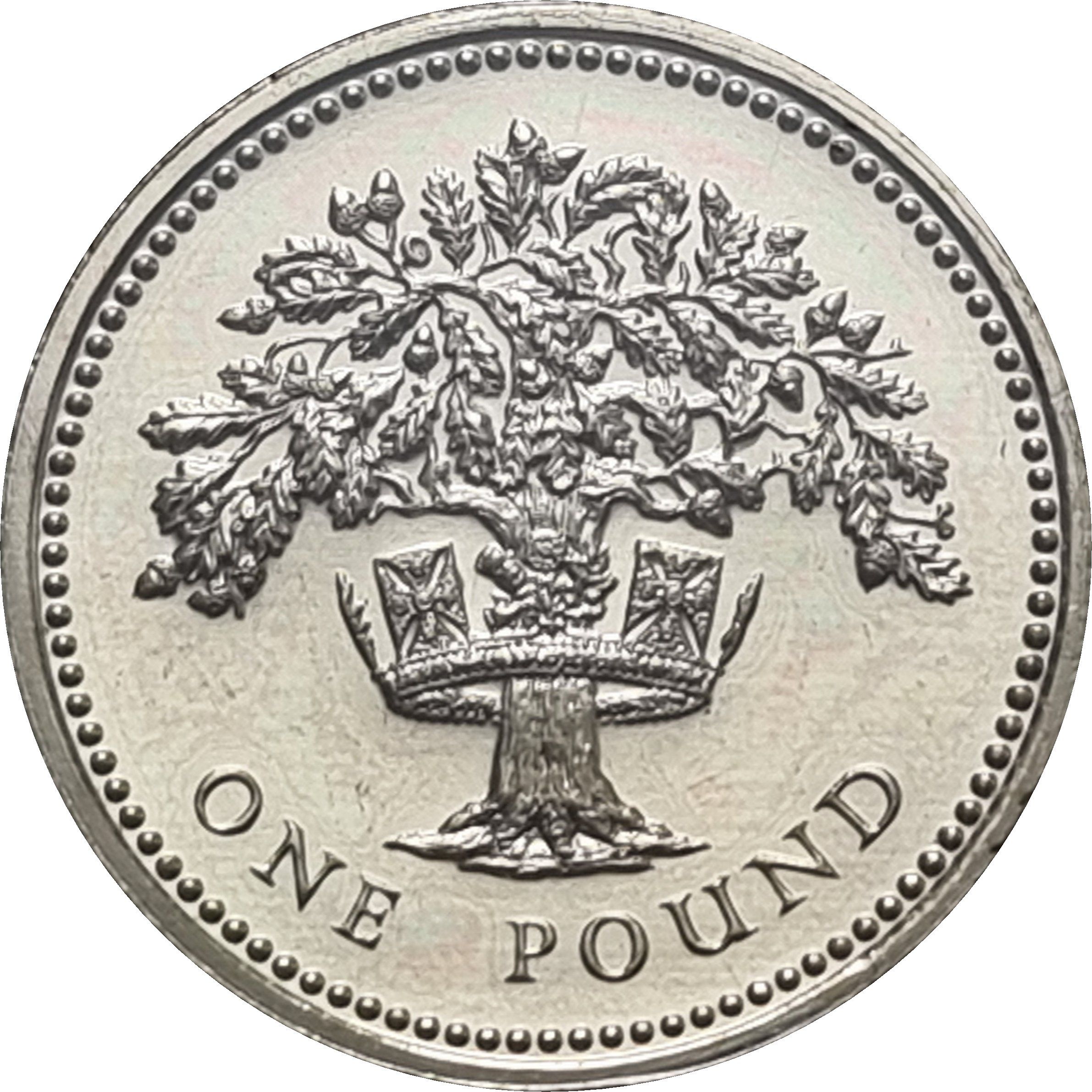
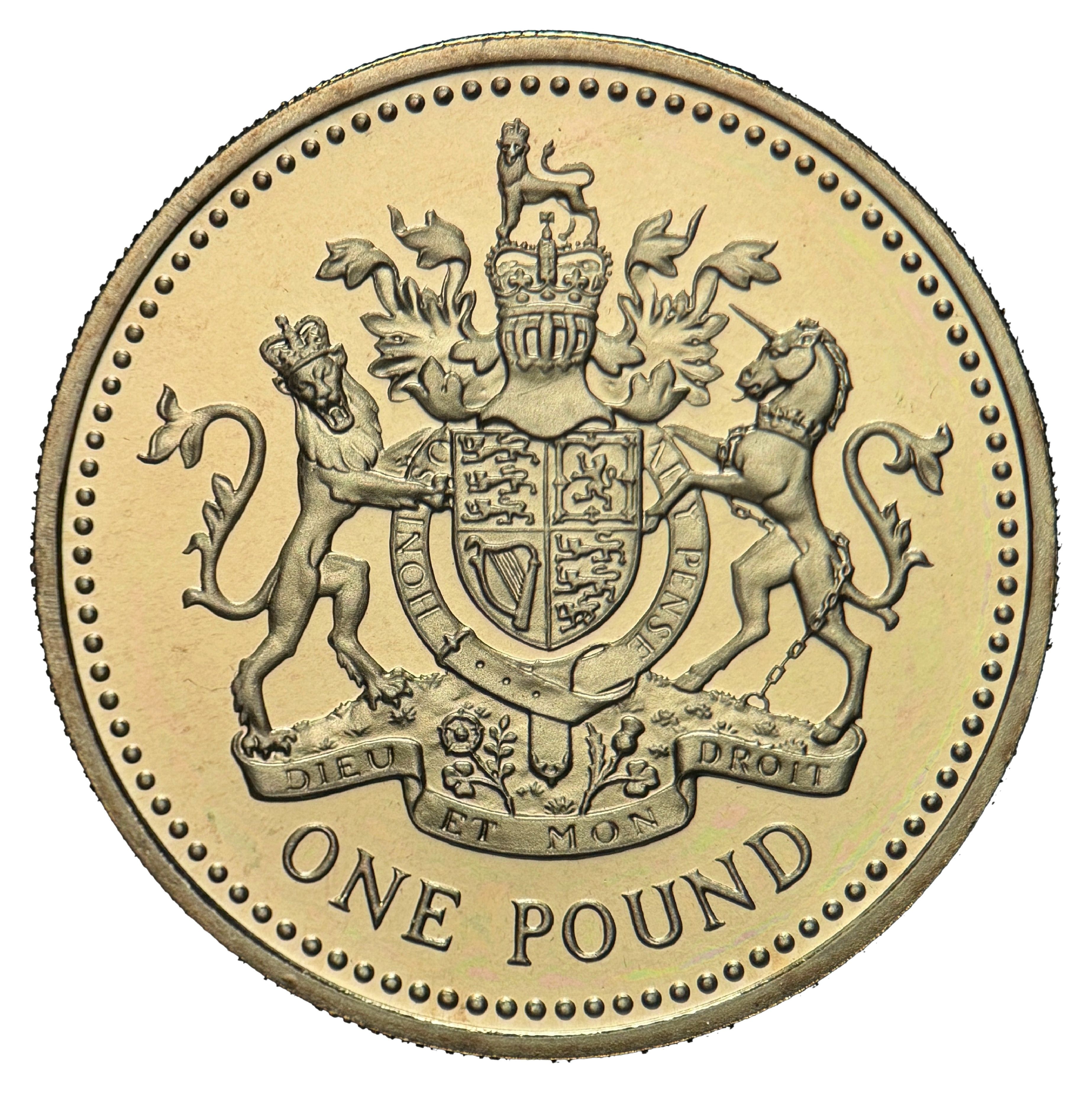
Part of the Royal Mint’s rotating four-nation round £1 series (England 1997 / 2002, Northern Ireland 1996 / 2001, Scotland 1999, Wales 2000) the 1999 issue features the St Andrew’s lion rampant on a shield, with the legend NEMO ME IMPVNE LACESSIT (the motto of the Order of the Thistle: "no one provokes me with impunity"). Mintage 22,769,000, common in circulation. Realised prices: face to £3 circulated; £6–£15 BU; £30–£65 silver proof.
2011 City of Edinburgh round £1, the rarest UK £1 ever
The standout modern Scottish-themed coin is the 2011 City of Edinburgh round £1, part of the four-coin Capital Cities of the United Kingdom set issued 2010-2011. Mintage just 935,000, the lowest mintage of any UK £1 coin ever struck for circulation. Designed by Stuart Devlin, the reverse depicts the city arms of Edinburgh: a triple-towered castle on a rocky base.
Realised auction prices for the 2011 Edinburgh round £1:
- Circulated grade: £25–£65
- BU (Brilliant Uncirculated): £80–£180
- Silver proof (mintage ~12,000): £220–£500
- Silver Piedfort: £380–£800+
- Gold proof (very small mintage ~750): £3,000–£6,500
See our full Capital Cities £1 Set guide for the complete four-coin programme breakdown including the Cardiff, Belfast and London counterparts.
1986 Commonwealth Games (Edinburgh) £2 commemorative crown
The 1986 £2 coin commemorates the XIII Commonwealth Games held in Edinburgh and is the first commemorative £2 coin in modern UK history. The reverse depicts a thistle encircled by a Scottish crown. Issued in cupronickel for circulation (mintage 8.2 million; realised £3–£15) and silver proof (~ 50,000; realised £25–£80). It pre-dates the bimetallic £2 series introduced in 1997 and is technically a single-metal commemorative crown under the Coinage Act, not a circulating £2.
Scottish bank £1 notes (briefly)
Scotland is one of the few jurisdictions in the world that has retained private bank-issued paper money into the modern era. Three Scottish banks, Royal Bank of Scotland, Bank of Scotland and Clydesdale Bank, issue their own banknotes. The Scottish £1 banknote (now demonetised but still redeemable at issuing banks) is widely collected as a cross-cultural Scottish numismatic item alongside the coinage. Standard 1980s RBS £1 notes trade at £3–£15 in mid-grade; commemorative low-serial-number first-day-of-issue notes reach £30–£120. Strictly outside the scope of a coinage guide, but worth knowing exists for completionists.
Pre-Union Scottish hammered: realised auction prices
Pre-Union Scottish coinage trades almost exclusively at specialist auction (Spink, Baldwin’s, Noonans, Heritage). Realised auction ranges:
| Type | Reign | Mid-grade | Choice |
|---|---|---|---|
| Silver penny | 13th c. (Alexander III) | £200, £800 | £1,500, £5,000+ |
| Silver groat | David II onwards | £300, £1,500 | £3,000, £8,000 |
| Silver testoon | Mary Queen of Scots | £600, £2,500 | £5,000, £15,000+ |
| Mary "Sword" testoon 1561 | Mary Queen of Scots | £6,000, £15,000 | £20,000, £50,000+ |
| Sword and sceptre piece (gold) | James VI 1601–1604 | £1,500, £5,000 | £8,000, £25,000+ |
| Lion gold (5 shillings) | Robert II / III | £1,500, £6,000 | £10,000, £30,000 |
| Half lion gold | Robert II / III | £800, £3,000 | £4,500, £12,000 |
| Crown gold | James IV | £3,000, £12,000 | £18,000, £45,000+ |
| Unicorn gold | James III / IV | £2,500, £10,000 | £20,000, £60,000+ |
| Mary gold ryal "Mary Ryal" | Mary Queen of Scots | £3,500, £15,000 | £25,000, £80,000+ |
Sources: realised auction data from Baldwin’s, Spink, Noonans (DNW), last 5 years.
Where to buy Scottish hammered safely
- Specialist auction houses. Noonans (DNW), Spink and Baldwin’s hold dedicated Scottish coinage sales 1–3 times per year. Buyer’s premium 18–25% on hammer. Each catalogues provenance and supplies condition reports. Primary market for Scottish hammered.
- BNTA-member specialist dealers. A small number of UK dealers specialise in hammered Scottish coinage; the BNTA member directory identifies current Scottish-coinage specialists. Edinburgh-based dealers in particular maintain consistent stock.
- Heritage Auctions and major US sales. Significant Scottish numismatic material now travels through US specialist sales; Heritage Auctions in particular holds important Scottish lots in their World & Ancient sales.
- eBay UK is the wrong primary channel for high-value Scottish hammered. Restrict to common late-James VI silver under £200 and only from established sellers with feedback in the category. Higher-value pieces should always be cross-checked against PCGS, NGC or CGS UK encapsulated examples.
Featured £1 coins on MyCoinage
Related guides
- Pre-1816 British Coins Guide, the wider hammered and early milled coinage context.
- Sovereign Mint Marks Guide UK, the post-Union mintmark system on British sovereigns.
- Capital Cities £1 Set, the Edinburgh round £1 and its three sister cities.
- Where to Buy Rare Coins UK, channel-by-channel buying guide.
- UK Auction House Comparison, Spink, Baldwin’s, Noonans commission and specialism breakdown.
- CGT-Exempt Coins UK, why pre-1837 coinage (including Scottish hammered) is not CGT-exempt.