Track your first 25 coins free.Catalogue your coins against live realised auction prices, no card needed. Pro (£1.99/month) adds unlimited tracking, full price history and alerts.No card needed.
Sign up →
Guide
Rare 1p Coins & Penny Values UK: What Your Pennies Are Worth
Most pennies are worth exactly a penny — but not all. Early decimal proofs trade at £2–£10,
bronze pre-1992 coins in mint state at £3–£10, silver piedforts at £90–£160,
and the pre-decimal bronze penny hides genuine rarities: 1869, the Kings Norton and Heaton mintmarks, the
proof-only 1950–51 — and the legendary 1933 penny,
seven known, £70,000–£120,000+. This guide covers which 1p coins and pennies are actually
worth money, and how to check yours in under a minute.
In brief. Worn decimal 1ps trade at face value. Bronze pre-1992 1ps in BU: £3-10.
Silver proof (mintage 2,500-5,000): £12-25. Silver Piedfort: £90-160.
Gold proof: £1,200-1,800. Magnet test distinguishes pre-1992 bronze (non-magnetic) from
post-1992 steel (strongly magnetic). 2024 was the first year ever with zero new 1p production.
Rare and error 1p coins worth money (Bit's & Bob's) Video: Bit's & Bob's on YouTube
Two different coins share the name: the decimal 1p (1971 onwards) and the
pre-decimal penny (1d, bronze from 1860). The valuable ones split accordingly:
Decimal 1p (1971–present)
1971 proof — £2–£5 in the original case, £10+ still sealed.
1972 proof-only — no circulation 1p was struck in 1972; set coins trade at £3–£8.
Silver piedfort proofs — issued in commemorative sets, £90–£160.
2017 — the lowest circulating mintage of the modern era (122,140,000); face value now, the long-term scarcity candidate.
The “2008 undated” error is a 20p, not a 1p — often mislabelled in listings. The famous “New Pence” mule is a 2p. No confirmed decimal 1p legend errors exist.
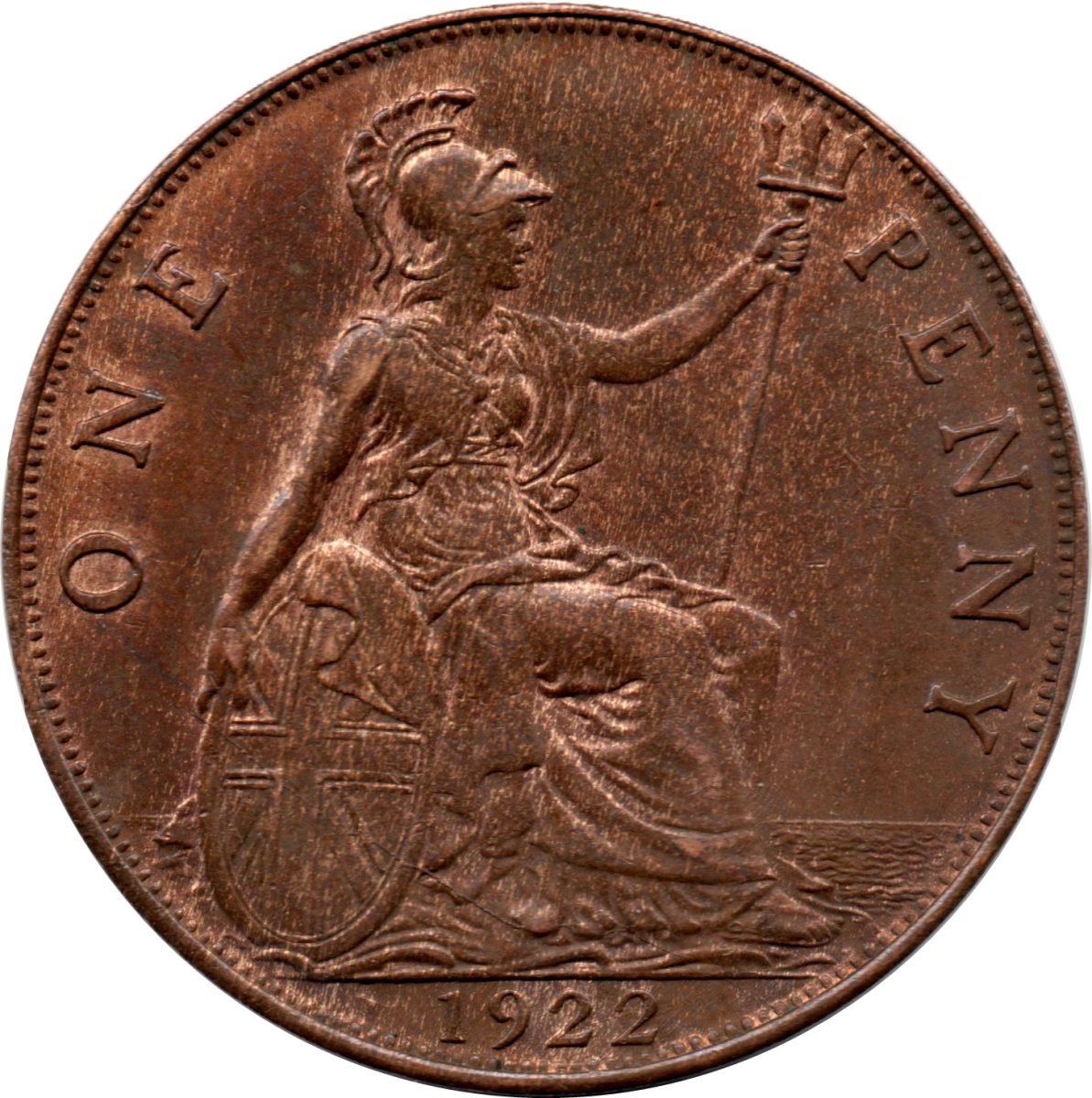
Pre-decimal penny key dates (1860–1967)
Year
Why it matters
Typical realised (EF)
1933
~7 struck, all traceable — the holy grail. See the 1933 penny guide.
£70,000–£120,000+
1869
Low mintage (2,580,000), scarce in any grade
£300–£1,500
1950 / 1951
Tiny end-of-reign mintages, mostly proofs
£100–£400
1918 KN / 1919 KN
Kings Norton mintmark left of the date
£20–£150
1912 H
Heaton mintmark left of the date
£15–£80
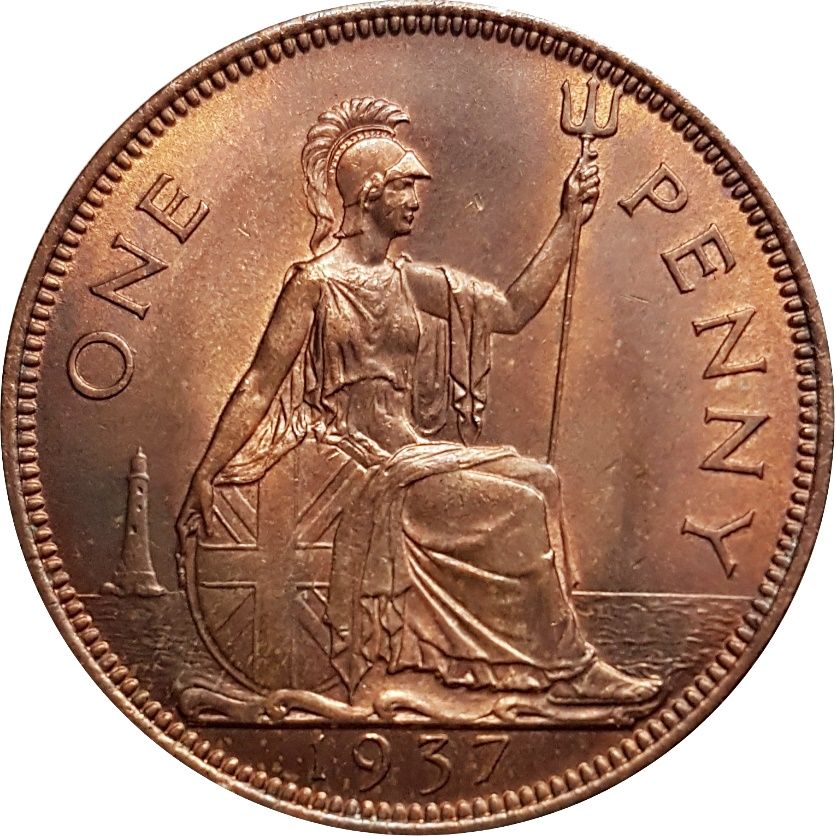
Quick triage for any penny: check the exact date (1930 and 1936 are common and often misread as 1933),
look left of the date for an H or KN mintmark, and put a magnet on decimal coins — anything that sticks
is post-1992 steel and almost certainly face value. Mirror-like fields with frosted lettering mean a
proof that has escaped a set. The 1967 penny, the commonest of
all with over 650 million struck, is face value unless it keeps full mint red, and an
Edward VII penny such as the 1907 makes a pound or two
worn. See Victorian penny values
for the 1860–1901 dates and are my old coins worth anything
for the general triage method.
Bronze vs steel
From 1971 to August 1992 the 1p was struck in bronze: 97% copper, 2.5% zinc, 0.5% tin.
From September 1992 onwards it became copper-plated steel: a steel core with a copper plating
of around 0.04 mm. The change was driven by copper prices rising above 1p per coin in metal content. The two
versions look identical, weigh the same (3.56 g), and have identical dimensions (20.3 mm diameter). The only
quick test is magnetism: bronze is non-magnetic; steel is strongly magnetic.
Most decimal 1p coins (1971–present) trade at face value. Real value sits in (1) the 1971 first-decimal 1p in BU from the original blue Royal Mint wallet, (2) silver-proof 1p variants from Royal Mint annual sets at £12-25 per coin, (3) the 2008 Royal Shield first-issue and 2017 large-shield variants in mint-state, and (4) any pre-decimal penny in mint-state red. The 1933 penny is the famous British numismatic rarity but it is a pre-decimal penny, not a decimal 1p, the two are entirely different coins. See our 1933 penny guide.
What is the rarest 1p coin?
Among decimal 1p coins, no issue has had a Kew Gardens-level low mintage. Lowest circulating mintage was the 2017 1p at 122,140,000, still vastly higher than any rare 50p. Genuinely scarce decimal 1p variants exist only in proof formats: the 2008 silver Piedfort 1p (mintage 1,930) trades at £90-160; gold-proof 1p variants from Royal Mint sovereign sets clear £1,200-1,800. Among pre-decimal pennies, the 1933 penny is famously the rarest (fewer than 10 confirmed examples; auction realisations £100,000+).
How much is a 1971 1p worth?
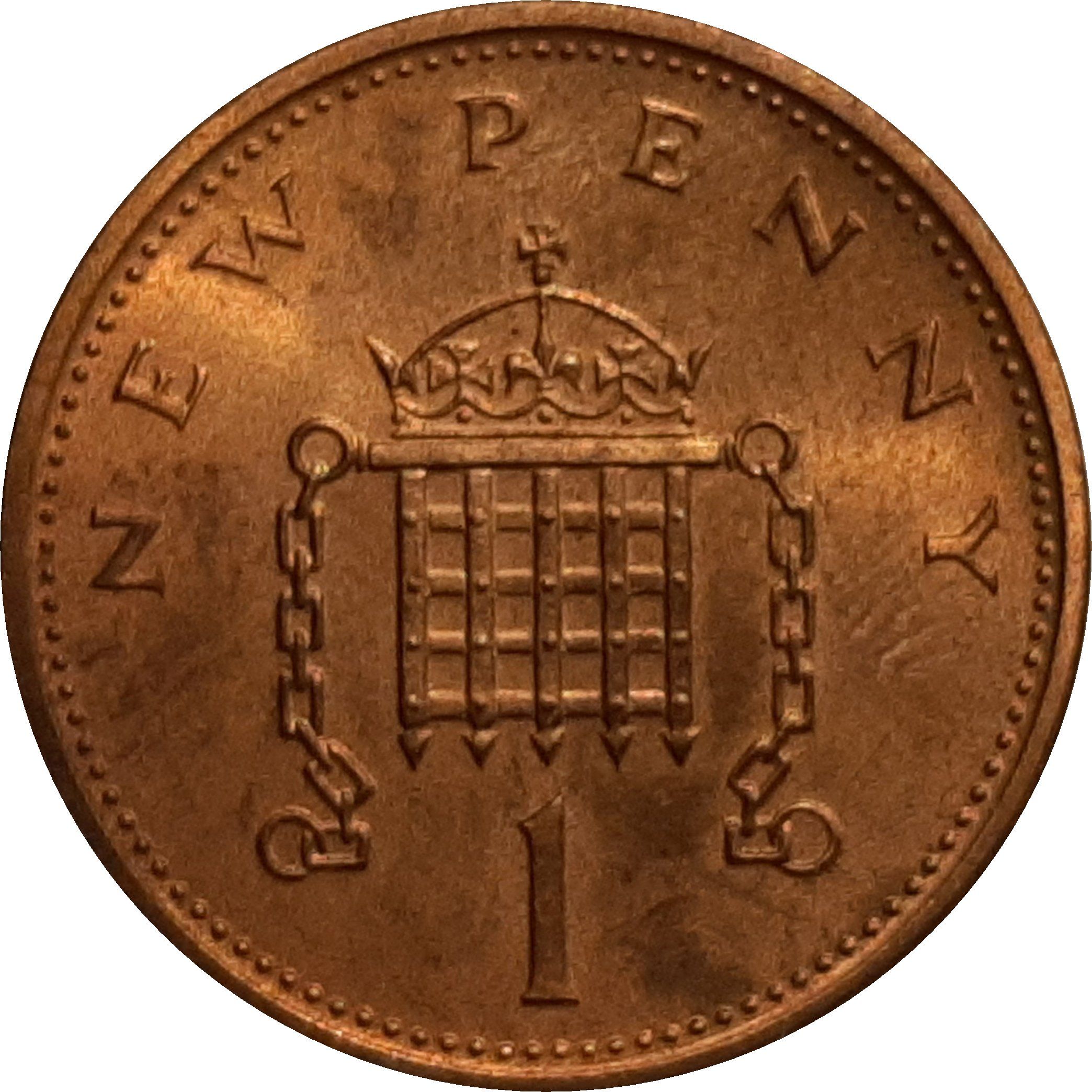
The 1971 1p is the first decimal 1p, struck for circulation alongside the older sterling penny in the run-up to Decimal Day. Standard cupronickel-plated bronze examples in worn condition are worth face value. Uncirculated examples from sealed Royal Mint BU sets (the famous blue plastic wallet containing all six decimal denominations) sell at £3-7. Original sealed 1971 BU wallets trade at £15-25. Note that many "1971 New Pence" coins encountered in change are perfectly common; they are the genuine first-decimal issue, not the 1983 "New Pence" mule error.
When did the 1p change metal?
The 1p was struck in bronze (97% copper, 2.5% zinc, 0.5% tin) from 1971 to 1991, and then switched to copper-plated steel from September 1992 onwards. The change was driven by metal cost: a bronze 1p contained roughly 3.4 g of copper, which by 1992 was worth more than 1p face value as scrap. The post-1992 1p has the same dimensions and external appearance but is strongly magnetic, the magnet test is the quickest way to tell pre-1992 from post-1992. The 2008 Royal Shield redesign retained the copper-plated-steel composition.
Are bronze 1p coins worth more than face value?
Slightly. A bronze 1p (1971–1991) contains around 3.4 g of copper. At a copper price of £7/kg, the metal value is roughly 2.4p, about 2.4× face value. Melting 1p coins is illegal under the UK Currency Act and would not be commercially viable at this scale anyway. Some collectors hoard bronze 1ps as a long-term copper bullion play, but the meltable upside is small relative to the storage volume. Pre-decimal pennies (1860–1970) contain even more copper at 9.45 g each.
What is on the 1p reverse?
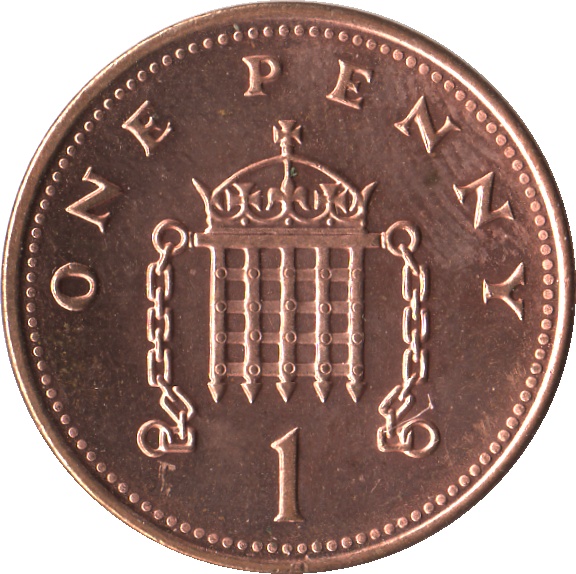
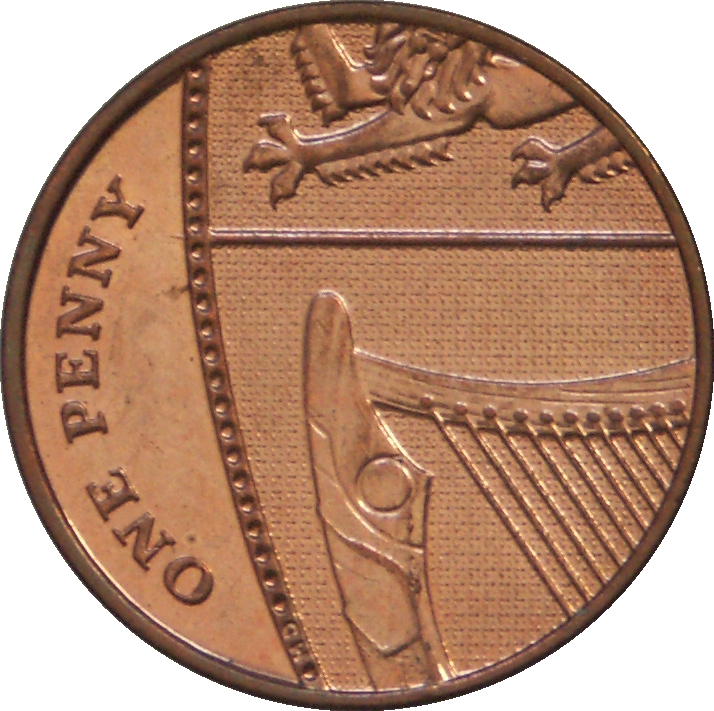
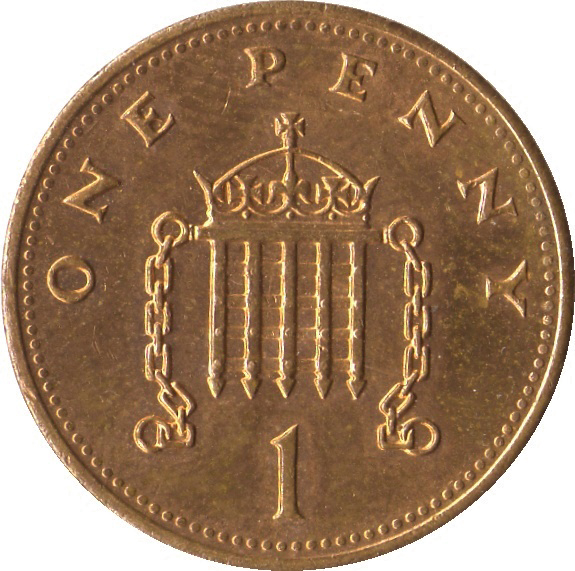
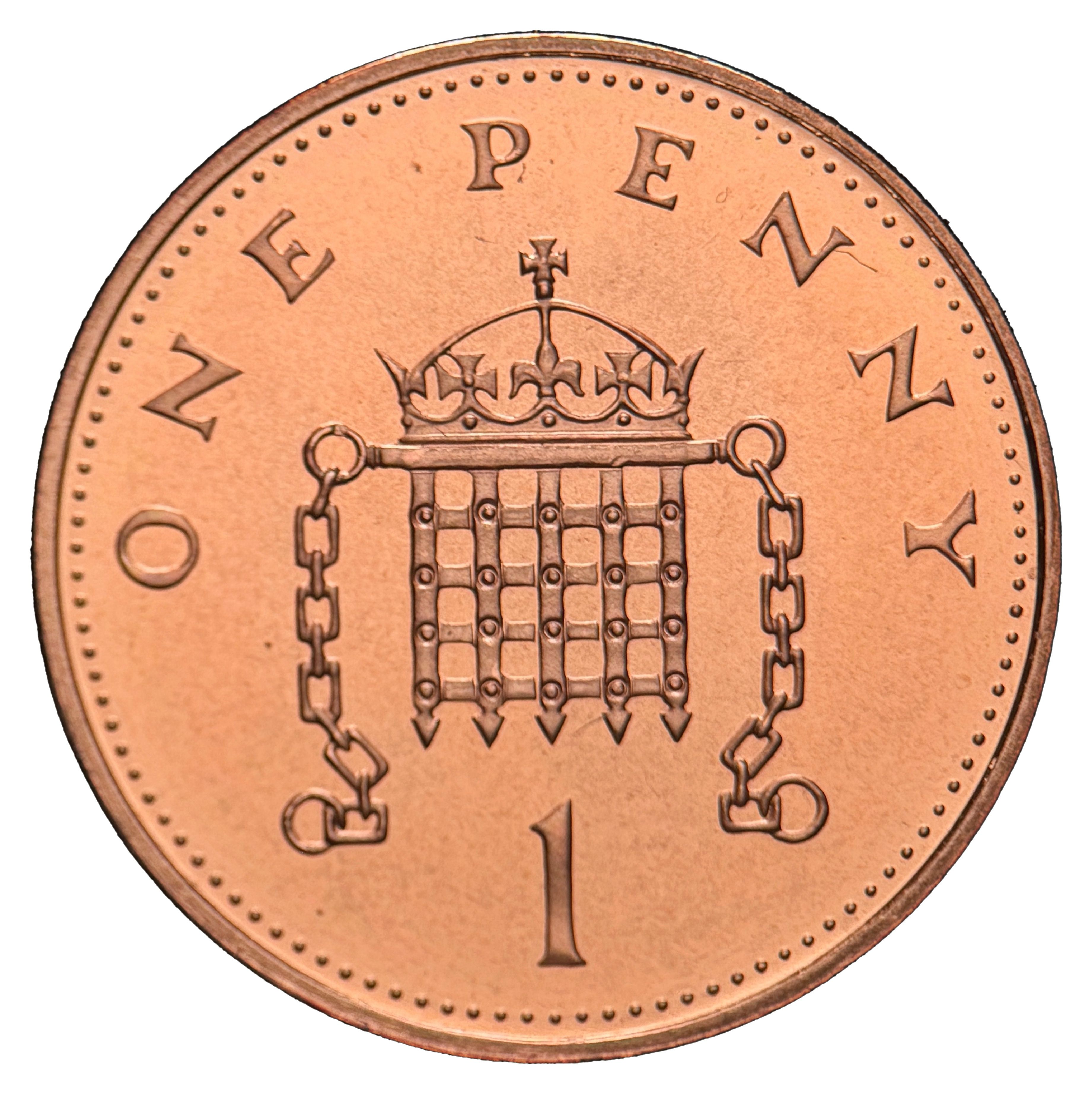
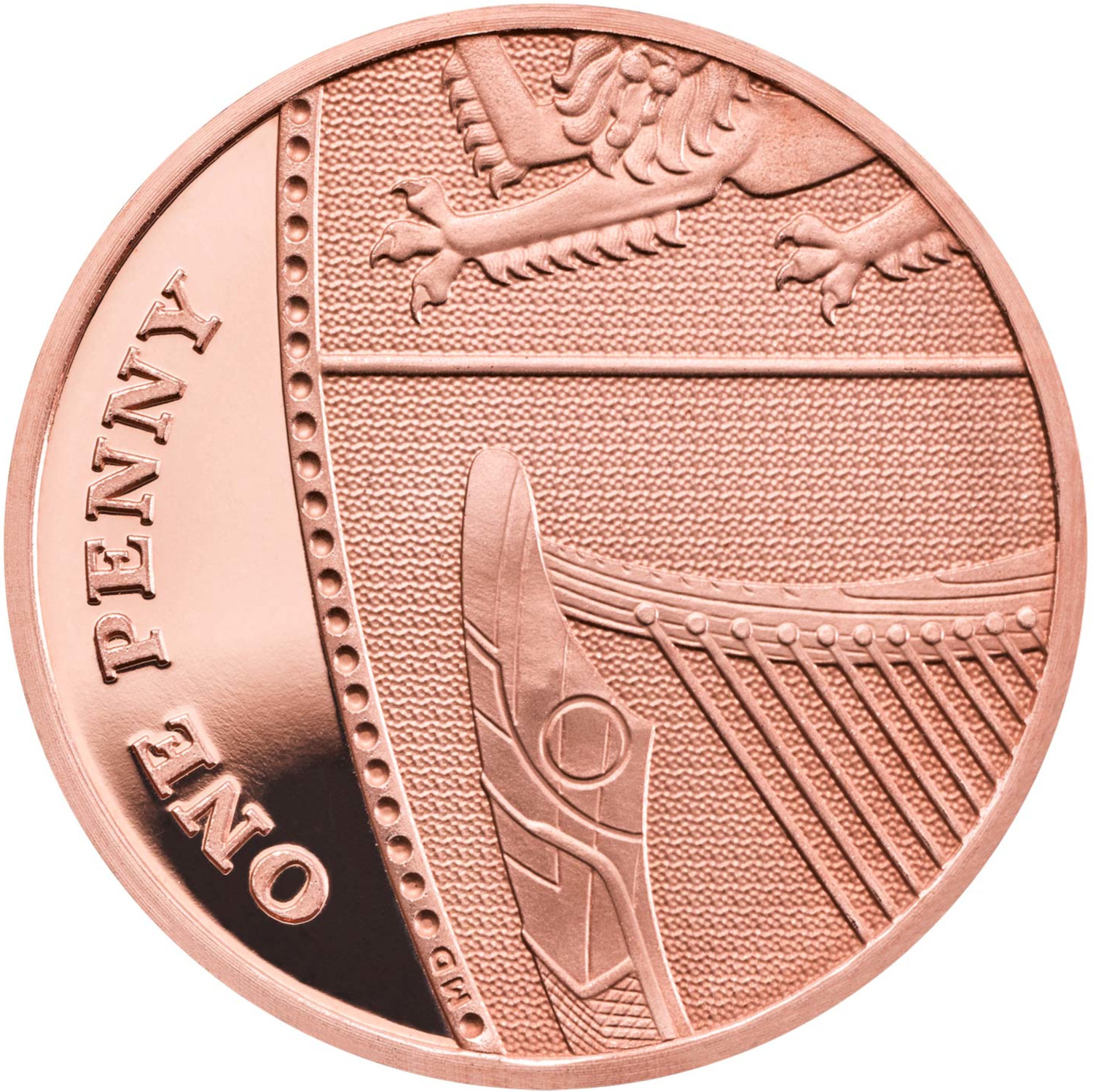
From 1971 to 2008 the reverse showed the Crowned Portcullis with Chains by Christopher Ironside, derived from the badge of the Palace of Westminster. From 2008 to 2022 the reverse changed to a fragment of the Royal Shield (the lower-right segment showing the harp of Ireland) by Matthew Dent. From 2023 onwards, as part of the Charles III flora-and-fauna series, the reverse shows the Common dormouse (Muscardinus avellanarius) by Iain Macarthur on a hazel sprig.
How can I tell a pre-1992 bronze 1p from a post-1992 steel 1p?
The magnet test is decisive: pre-1992 bronze is non-magnetic; post-1992 steel is strongly magnetic. Hold a fridge magnet to the coin; if it sticks, it is the post-1992 copper-plated steel issue. The two coins look identical to the eye and weigh almost the same (3.56 g for bronze vs 3.56 g for plated steel by design). Both are 20.3 mm in diameter. The change date was September 1992; coins dated 1992 exist in both compositions and the magnet test is the only quick way to distinguish them.
Should I keep my old pre-1992 bronze 1ps?
For collection purposes, yes, bronze 1ps have stable collector demand and the supply is shrinking as banks and Royal Mint progressively withdraw older issues. Mint-state red bronze 1ps (especially 1971, 1983, and 1992) trade at £3-10 each in BU condition. As a copper hedge, bronze 1ps return roughly 2.4× face value at current copper prices, better than a savings account but small in absolute terms. Storage is the big constraint: 1,000 bronze 1ps weighs 3.5 kg and is worth roughly £24 in copper.
What is a 1992 1p worth?
A worn 1992 1p is worth face value. The 1992 is interesting because the metal switch happened mid-year, so 1992-dated 1ps exist in both bronze and copper-plated steel. The bronze 1992 is the more collectable variant; uncirculated red bronze 1992 1ps from sealed BU packs trade at £5-15. The steel 1992 is the more common variant and trades at face value or just above in BU. The magnet test (bronze = non-magnetic; steel = magnetic) is the only way to identify which version you have.
Are silver 1p coins valuable?
Yes. The Royal Mint strikes a silver-proof 1p as part of most years' silver-proof annual set. Mintages are typically 2,500-5,000. The silver-proof 1p contains around 3.56 g of .925 sterling silver; melt value is roughly £1.95 at current silver spot. Realised resale on eBay UK runs £12-25 for individual coins still sealed in Royal Mint capsule. Silver Piedfort 1p variants (struck on a double-thick blank, mintage typically <2,000) trade at £90-160. Gold-proof 1p variants from Royal Mint sovereign sets command £1,200-1,800 and ship in elaborate clamshell cases.
Are 1p coins being phased out?
There are no current plans to demonetise the 1p, but circulation has fallen sharply, the Royal Mint struck zero new 1p coins in 2024 for the first time in modern history, citing surplus stock and reduced cash use. The 2025 production run was also minimal. Treasury reviews of the 1p and 2p have been ongoing since 2018. If the 1p is demonetised, expect a 12-18 month exchange window similar to the 2017 round £1 demonetisation. For now, the 1p remains legal tender.