Probate Coin Valuation UK: HMRC, IHT and the Estate Process
When coins enter an estate, the executor faces a specific legal-financial process: HMRC requires an open-market valuation at date of death for Inheritance Tax purposes; that valuation must be produced by an appropriately-qualified valuer; and the executor has roughly six months from the end of the month of death to file the estate return. This guide covers BNTA-registered valuers, insurance vs probate valuation, the 2026/27 IHT thresholds, the CGT exemption framework for legal-tender UK coins, the DIY-vs-professional decision, typical costs, and the four sale options for the eventual disposition.
What probate valuation means
A probate coin valuation is the figure HMRC accepts as the value of the coins for Inheritance Tax purposes when calculating the deceased's estate. The legal standard is "open market value at date of death", defined under section 160 of the Inheritance Tax Act 1984 as the price the property might reasonably be expected to fetch if sold in the open market at the relevant date.
Three points follow:
- The value is what the coin would realise on sale, not what it would cost to replace from a dealer. This is the critical distinction from insurance valuation.
- The valuation is fixed at date of death, not date of valuation. A coin worth £800 at the date of death does not become a £1,200 coin at probate purely because the gold price rose in the interim. The probate value freezes as at the moment of death.
- Subsequent gain or loss in value (between death and eventual sale by the heir) is for the heir's account, not the estate's. The probate value "rebases" the cost basis for any future Capital Gains Tax calculation.
Who can produce a valid probate valuation
HMRC will accept valuations produced by appropriately-qualified valuers. For coins, this typically means one of the following:
- British Numismatic Trade Association (BNTA) members. The BNTA is the primary trade body for UK coin dealers and operates an authentication and ethical code. BNTA-member dealers regularly produce probate valuations and their methodology is recognised by HMRC. Find a member at bnta.net.
- Specialist auction-house valuers. Spink, Baldwin's, Noonans and Heritage UK have in-house numismatic specialists qualified to produce probate valuations. For substantial or specialised collections, the auction houses are typically the right choice because their depth of expertise and access to realised-price databases is difficult to match.
- Royal Institution of Chartered Surveyors (RICS) members with numismatic specialism. A small number of RICS-qualified valuers maintain numismatic expertise. Their valuations carry the weight of RICS professional standards but are less common for coin work specifically.
What HMRC will not accept: an unsigned eBay valuation, a Google search summary, or a casual estimate from a non-specialist. The valuation must be in writing, signed, dated, and produced by a named valuer with stated qualifications. Anything less invites HMRC challenge.
Probate valuation vs insurance valuation
The two valuations are deliberately different numbers and are used for different purposes. Confusing them is the single most expensive mistake executors make.
| Aspect | Insurance valuation | Probate valuation |
|---|---|---|
| Standard | Replacement cost retail | Open market value at date of death |
| Purpose | Set sum insured for cover | Set value for IHT calculation |
| Includes dealer markup? | Yes | No |
| Typical level vs sale realisation | +30% to +50% | Equal to expected sale realisation |
| Updated | Annually | Single point in time (date of death) |
| Used for | Insurer schedule | HMRC IHT400 return |
| Effect of using wrong one for IHT | Overstates estate, overpays IHT | (Correct) |
A typical example: a 1908 Ottawa branch-mint sovereign. Insurance valuation might be £120,000 (the cost to replace at retail from a specialist dealer). Probate valuation might be £85,000 (the realistic auction realisation for the coin in its grade at the date of death). Using £120,000 on the IHT400 overstates the estate by £35,000, which at the 40% IHT rate above the nil-rate band overpays £14,000 in tax. Always use the probate figure for IHT, the insurance figure for cover.
Capital Gains Tax considerations
Probate valuation interacts with Capital Gains Tax in two distinct ways:
- Rebasing. When an heir inherits coins through probate, the cost basis for future CGT purposes "rebases" to the probate value at date of death. The deceased's original purchase price is irrelevant for the heir's CGT calculation. This means the probate valuation effectively forgives any unrealised capital gain accumulated during the deceased's lifetime.
- Sovereign and Britannia exemption. Sovereigns minted from 1837 onwards and Britannias minted from 1987 onwards are exempt from Capital Gains Tax as UK legal tender, under HMRC manual CG78308. For these coins, the rebasing is academic, no CGT applies whether the heir sells at probate value, double the probate value or any other figure. See our CGT-exempt coins UK guide for the full exemption framework.
For non-exempt coins (foreign gold coins, gold bars, pre-1837 sovereigns, ancient and medieval pieces), the probate rebasing matters substantially. A Krugerrand bought by the deceased in 1980 for £200 and worth £1,800 at date of death has a rebased £1,800 cost basis for the heir; if the heir later sells at £2,000, the gain is only £200 (against the heir's annual CGT allowance), not £1,800.
Inheritance Tax thresholds 2026/27
The 2026/27 Inheritance Tax framework continues the established structure with periodic adjustments by Finance Act:
- Standard nil-rate band: £325,000 per individual. The first £325,000 of the estate passes free of IHT.
- Residence nil-rate band: £175,000 additional, where the family home (or its sale proceeds) passes to direct descendants (children, grandchildren). Tapers above £2 million estate value.
- Combined maximum nil-rate band: £500,000 per individual, or £1,000,000 for a married couple where the surviving spouse inherits both bands.
- IHT rate above nil-rate band: 40% standard, reduced to 36% if at least 10% of the estate goes to qualifying charity.
Coins are assessed at probate value as part of the total estate. For estates below the nil-rate band, accurate coin valuation matters less for tax purposes (the estate is below threshold either way) but still matters for fair distribution among beneficiaries. For estates above the nil-rate band, every £1,000 of coin value above threshold incurs £400 of IHT, making accurate, defensible valuation important.
The valuation process: physical inspection to written report
A typical professional probate valuation involves four stages over 2–6 weeks:
- Initial consultation. The executor contacts a BNTA dealer or auction-house valuer, describes the collection roughly (number of coins, denominations, any known rarities), provides photographs of representative pieces, and agrees a fee structure and timetable.
- Physical inspection. The valuer examines each coin in person. Bullion sovereigns may be batch-handled (weighed, identified by date, graded as "bullion" or by Sheldon scale); rare-date and condition-rare pieces are examined individually under magnification, weighed, measured, and photographed.
- Market reference pulls. The valuer cross-references each coin against realised auction prices at major UK and international auction houses over the previous 12–24 months. Realised hammer prices, not asking prices, not active listings, are the reference standard. Modern Royal Mint issues cross-reference against MyCoinage realised-price data, Numista catalogue values, and dealer trade prices.
- Written report. A signed, dated valuation document listing each coin (or each grouped lot), its grade, its open-market valuation, the methodology used, and the valuer's qualifications. The report is submitted with the IHT400 estate return as supporting evidence.
What to do BEFORE you commission a valuation
Five rules apply between date of death and the valuer's visit:
- Never clean any coin. Cleaning destroys value, PCGS, NGC and CGS UK assign "Cleaned" details grades that cap value 20–40% below original-condition examples. The deceased's coins are exactly what they should be; do not improve them.
- Never re-mount, re-flip or transfer between containers. If a coin has been in a 2x2 paper flip for 40 years, leave it. Moving it tells the valuer nothing useful and risks mechanical damage or PVC contamination.
- Photograph everything in situ before moving anything. Wide photographs of cabinets, drawers and storage locations document the deceased's organisation. This evidence may be useful later if items go missing or beneficiaries dispute composition.
- Do not separate or rebox sets. Original Royal Mint proof sets in their presentation cases are worth substantially more than the same coins individually. If the deceased held a 1953 Coronation proof set in original case, leave it as a set.
- Secure the collection. Move coins to a secure location (a safe, a bank deposit box, a solicitor's strongbox) but document the move with photographs and a written inventory before and after. Notify the household insurer of the death and any change in storage location.
See our inherited coin collection UK guide for the full pre-valuation protocol and our coin collection insurance UK guide for the insurance considerations during probate.
Costs: what professional valuation actually charges
Costs vary widely by collection size, complexity and choice of valuer:
| Collection profile | Typical valuer | Typical cost |
|---|---|---|
| Hobbyist (50–200 coins, <£25,000 total) | BNTA-member dealer | £150, £500 |
| Substantial (200–1,000 coins, £25,000–£250,000) | BNTA dealer or junior auction-house specialist | £1,000, £5,000 |
| Major (rare-date, branch-mint, hammered, ancients, £250,000+) | Spink, Baldwin's or Noonans senior specialist | 1–3% of valuation |
| Specialist single piece (e.g. an 1819 sovereign) | Spink or Baldwin's individual valuation | £200, £500 |
Auction-house valuations are often credited against eventual consignment commission if the estate sells the collection through them. Always negotiate this point upfront.
Get two quotes for any collection over £10,000. Quote variance can be substantial: a hobbyist collection valued at £200 by one BNTA dealer may be quoted £800 by an auction house wanting the future consignment relationship. Both valuations may be equally valid for HMRC; the cost differential reflects business model rather than quality.
When you can DIY using realised-price references
DIY probate valuation is feasible for low-value, well-documented collections. HMRC will accept a reasoned valuation with realised-price references if the methodology is sound. The break-points:
- Below £5,000 total estate coin value: DIY is normal practice. Use realised hammer prices from Spink, Baldwin's and Noonans archives (free online) plus MyCoinage realised-price data for modern issues. Document each coin with its identification, grade assessment, and the comparable realised-price reference. Keep the documentation indefinitely.
- £5,000–£25,000: DIY is feasible but professional valuation is the safer choice. The cost (£150–£500) is small relative to the IHT exposure, and HMRC challenge risk is materially reduced.
- Above £25,000: Always use a professional valuer. Rare-date and branch-mint pieces require expertise that DIY cannot replicate; HMRC challenge risk is meaningful; the cost of professional valuation is small relative to the amounts involved.
If you do DIY, three sources are essential references: realised hammer prices on Spink, Baldwin's, Noonans and Heritage archives; realised eBay UK sold-listings (filtered to "Sold" only, ignoring asking prices); and trade prices from BNTA dealer websites. See our where to sell rare coins UK and auction house comparison UK guides for the realised-price reference framework.
The six-month grace period (England & Wales)
For estates in England and Wales, the executor has approximately six months from the end of the month of death to file the IHT400 estate return and pay any IHT due. The exact deadline is six months from the end of the month of death, so a death on 3 January gives a deadline of 31 July, and a death on 30 January gives the same deadline.
Within that six-month window, the executor must:
- Identify all assets and liabilities of the estate.
- Commission valuations for assets requiring professional valuation (property, business interests, art, coins, jewellery, vehicles).
- Complete the IHT400 form and supporting schedules.
- Pay any IHT due (or arrange the instalment option for property).
- Apply for grant of probate.
Coin valuations should be commissioned as early as practical in this window because rare or specialised pieces may need 4–8 weeks for thorough valuation, and major auction-house specialists are often booked weeks ahead. Late-filed IHT400 incurs interest on unpaid IHT (currently around 7.5% per annum) plus potential penalties.
Scotland operates a similar timetable under the Scottish Confirmation process. Northern Ireland operates its own equivalent with broadly aligned timing. In all three jurisdictions, plan for valuation completion within 3 months of death.
Selling decision tree: keep, gift, sell at auction, sell to dealer
After probate, the heir or beneficiaries face four options for the eventual disposition of the coins:
| Option | Best for | Net realisation | Time to cash |
|---|---|---|---|
| Keep | Heirs valuing the collection emotionally; long-horizon investors | (N/A, held) | (N/A) |
| Gift to family | Continuing family tradition; spreading IHT exposure | (N/A, gift) | Immediate |
| Sell at specialist auction | Rare-date, condition-rare, branch-mint pieces | Probate value × 1.0–1.4 (after 18–25% commission) | 3–9 months |
| Sell to BNTA dealer | Bullion sovereigns; common-date material | Probate value × 0.85–1.0 | 1–4 weeks |
The choice depends on the type of coins, the time available, and the heir's appetite for the auction process. For bullion sovereigns and modern commemoratives, BNTA dealer sale is fast and predictable. For rare-date and condition-rare pieces, auction realisation typically beats dealer offers by 20–40%. A common pattern is to split: bullion sovereigns to a dealer for cash, rare pieces to Spink or Baldwin's for auction, mid-tier collectables to Noonans or other UK auction houses.
See our where to sell rare coins UK guide for the full venue-by-venue commission breakdown and our sovereign as a gift UK guide for the family-gift considerations including seven-year IHT taper.
Coins in our valuation database
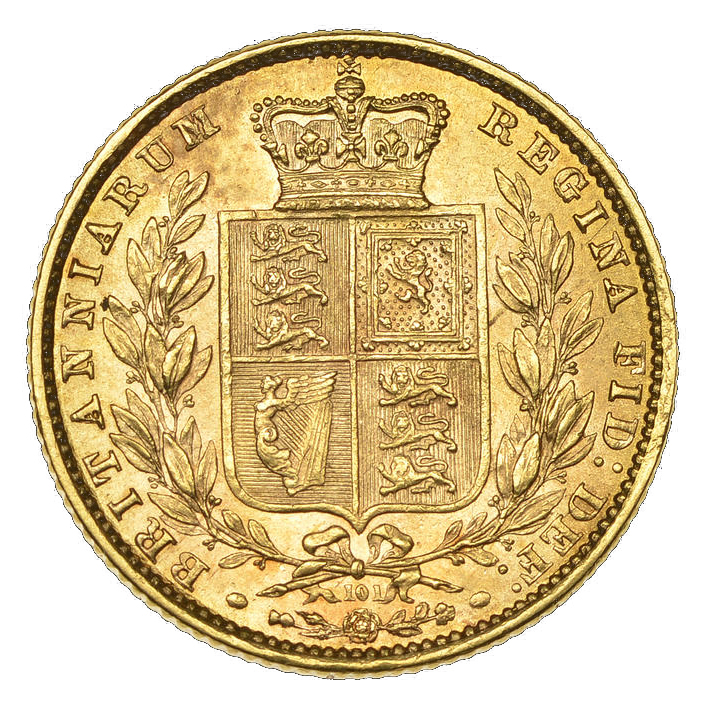
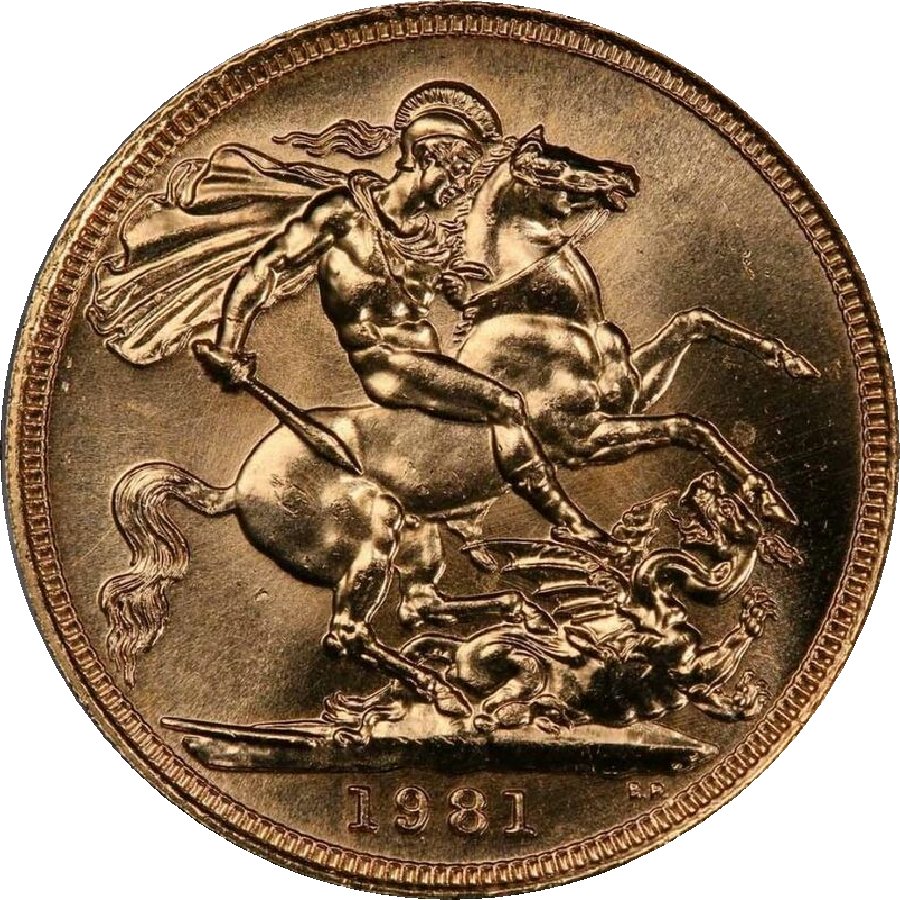
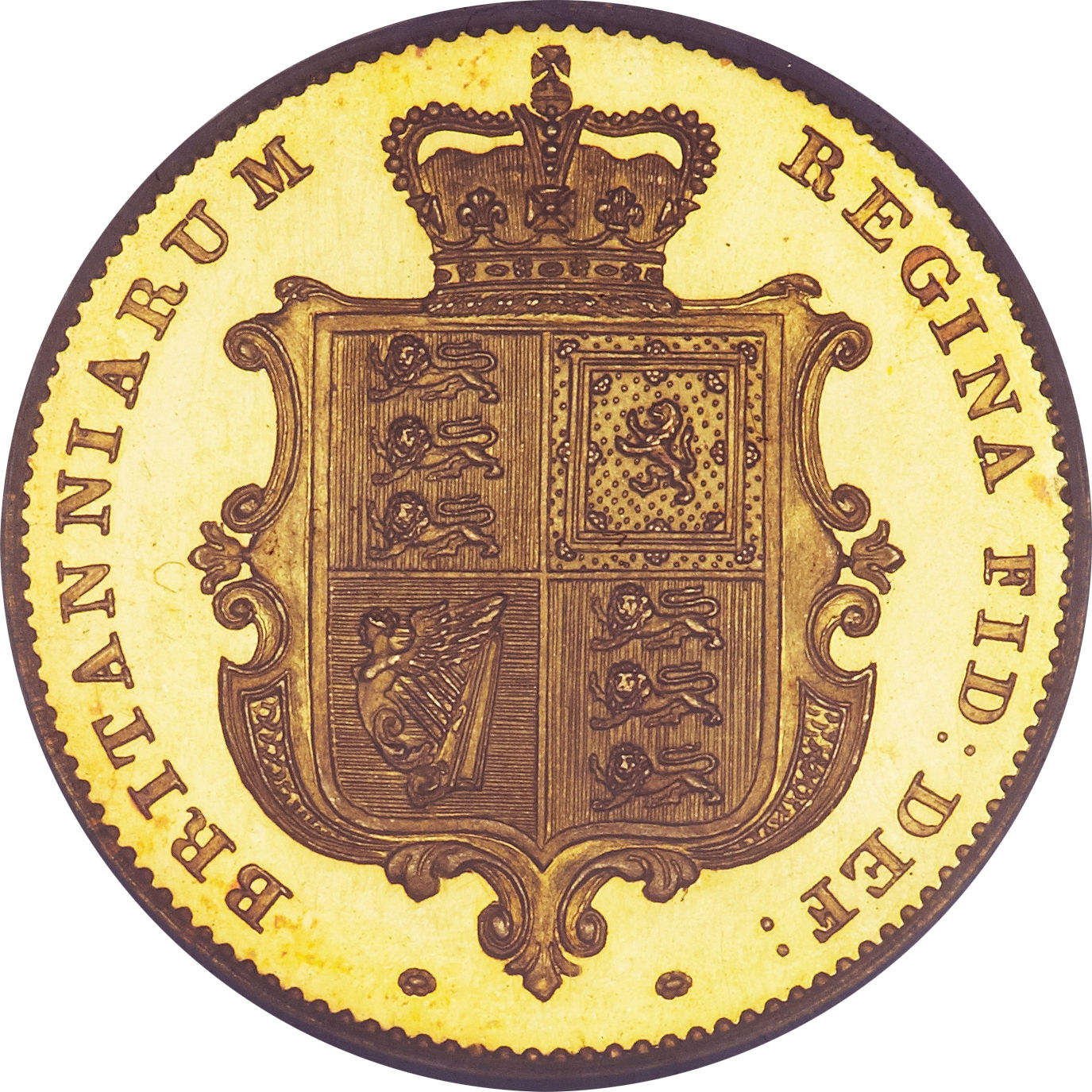
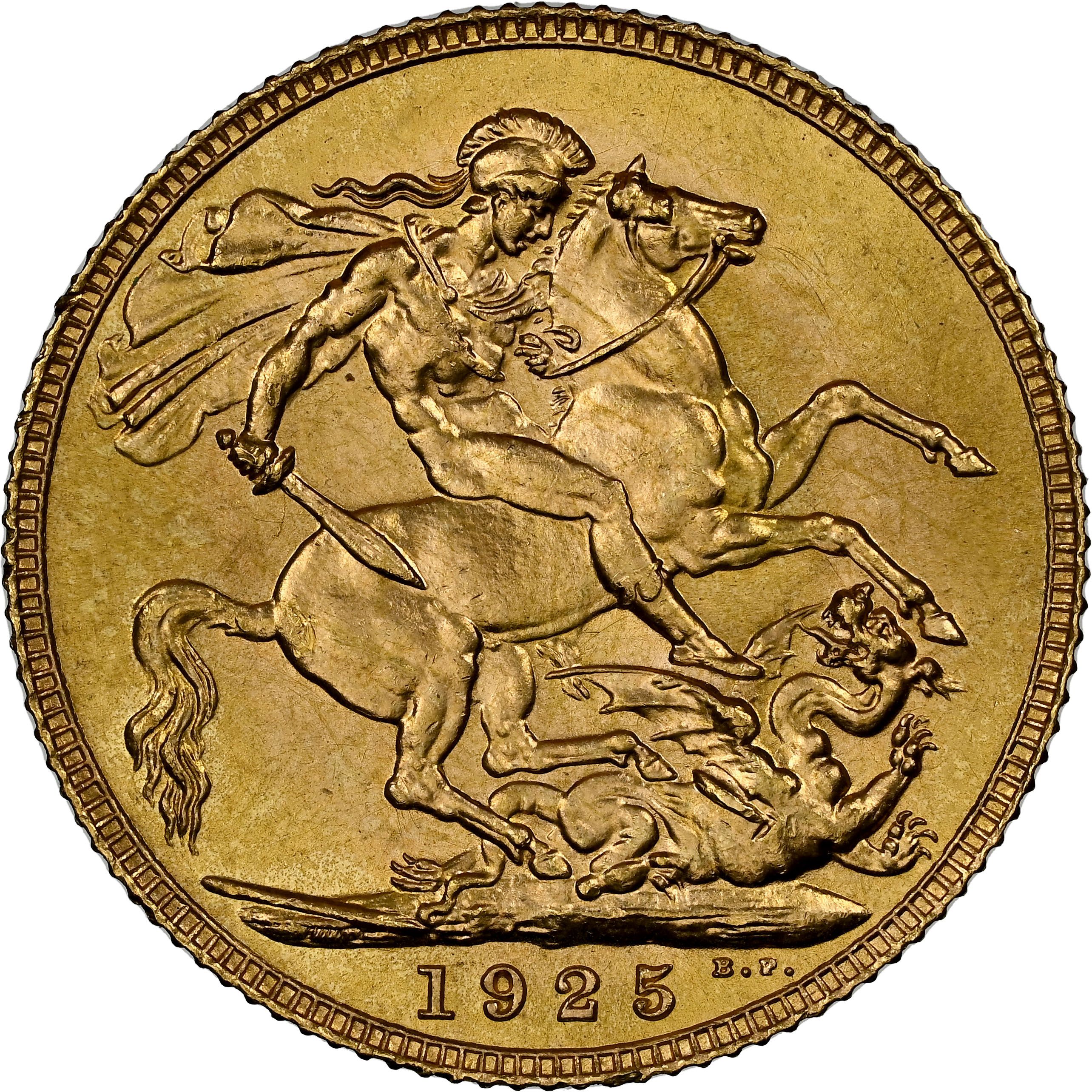
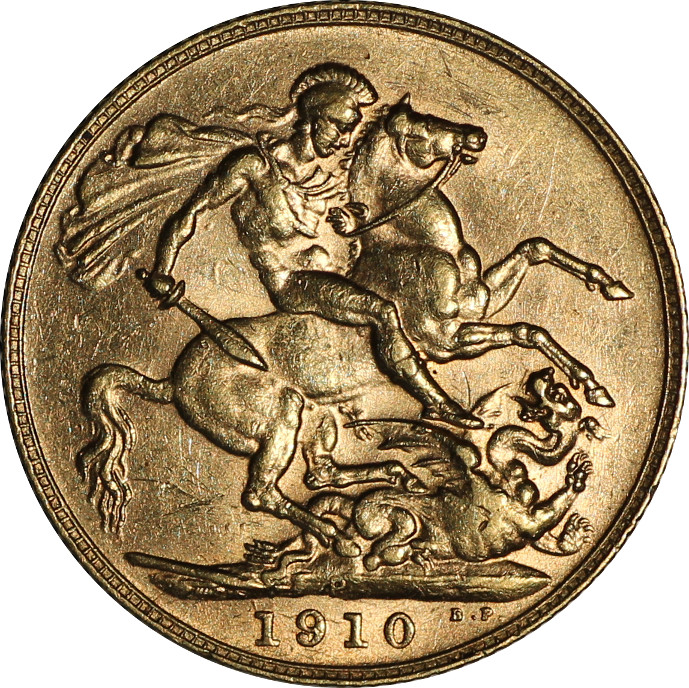
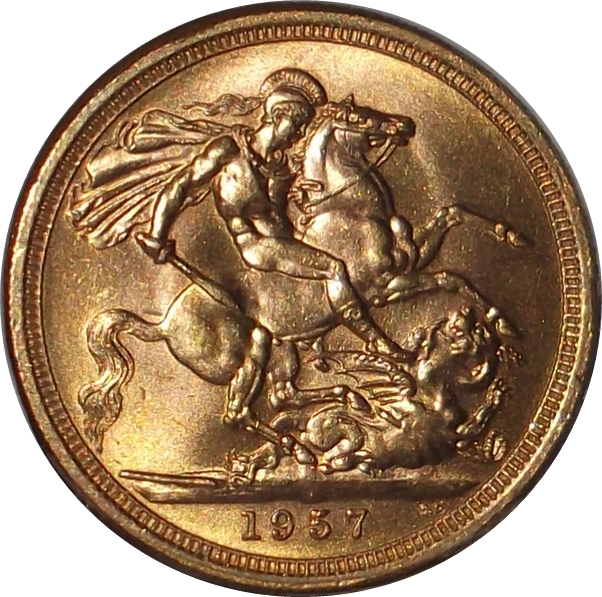
Browse the full UK coin catalogue with realised prices →
Related guides
- Inherited coin collection UK, the full step-by-step protocol from receiving coins to deciding what to do with them.
- Coin collection insurance UK, insurance valuation, household scheduling, specialist insurers; companion to probate work.
- CGT-exempt coins UK, the full Capital Gains Tax exemption framework for legal-tender UK coins.
- Auction house comparison UK, Spink, Baldwin's, Noonans and Heritage compared on commission and reach.
- Where to sell rare coins UK, venue-by-venue net-realisation comparison.
- Should I grade my coins UK, whether to slab inherited coins before sale.
- Sovereign as a gift UK, the family-gift considerations including seven-year IHT taper.