London 2012 Olympic 50p Guide: All 29 Coins, Mintages & Values
The largest circulating-coin commemorative series ever issued in the UK: 29 different 50p designs, each marking a different Olympic or Paralympic sport for the London 2012 Games. Some still turn up in change; the rarest now command 40 times face value. Every design was chosen through a public competition that drew around 17,000 entries. This guide lists every coin with mintage, designer and realised value.
The London 2012 Olympic 50p programme
The 2012 Olympic 50p series originated in 2008 as a partnership between the Royal Mint and the London Organising Committee of the Olympic and Paralympic Games (LOCOG). Rather than commission a small in-house design team, the Royal Mint announced an open public design competition: any UK resident could submit a design for any of 29 listed sports, and the winning entry for each sport would be struck on a circulating 50p.
The competition opened in 2009, attracted approximately 17,000 entries (a Royal Mint record at the time) and closed with selection by a panel including the sculptor Sir Anthony Caro. The 29 winning designers ranged from amateur illustrators and graphic designers to schoolteachers; only a handful had any prior coin-design experience. Each was paid a reported £5,000 commission for their winning design.
Coins entered circulation progressively from late 2010 through 2011 and into the Games year of 2012, with all 29 designs available in change by the start of the Games on 27 July 2012. Total mintage across the 29 designs was approximately 53 million coins, making it the largest single coordinated circulating-commemorative production run in modern UK history.
All 29 London 2012 Olympic 50ps by mintage
The list is ordered from rarest to most common. The five lowest-mintage coins (the “big five”) drive almost all secondary-market premium.
| # | Sport | Mintage | Typical BU value | Notes |
|---|---|---|---|---|
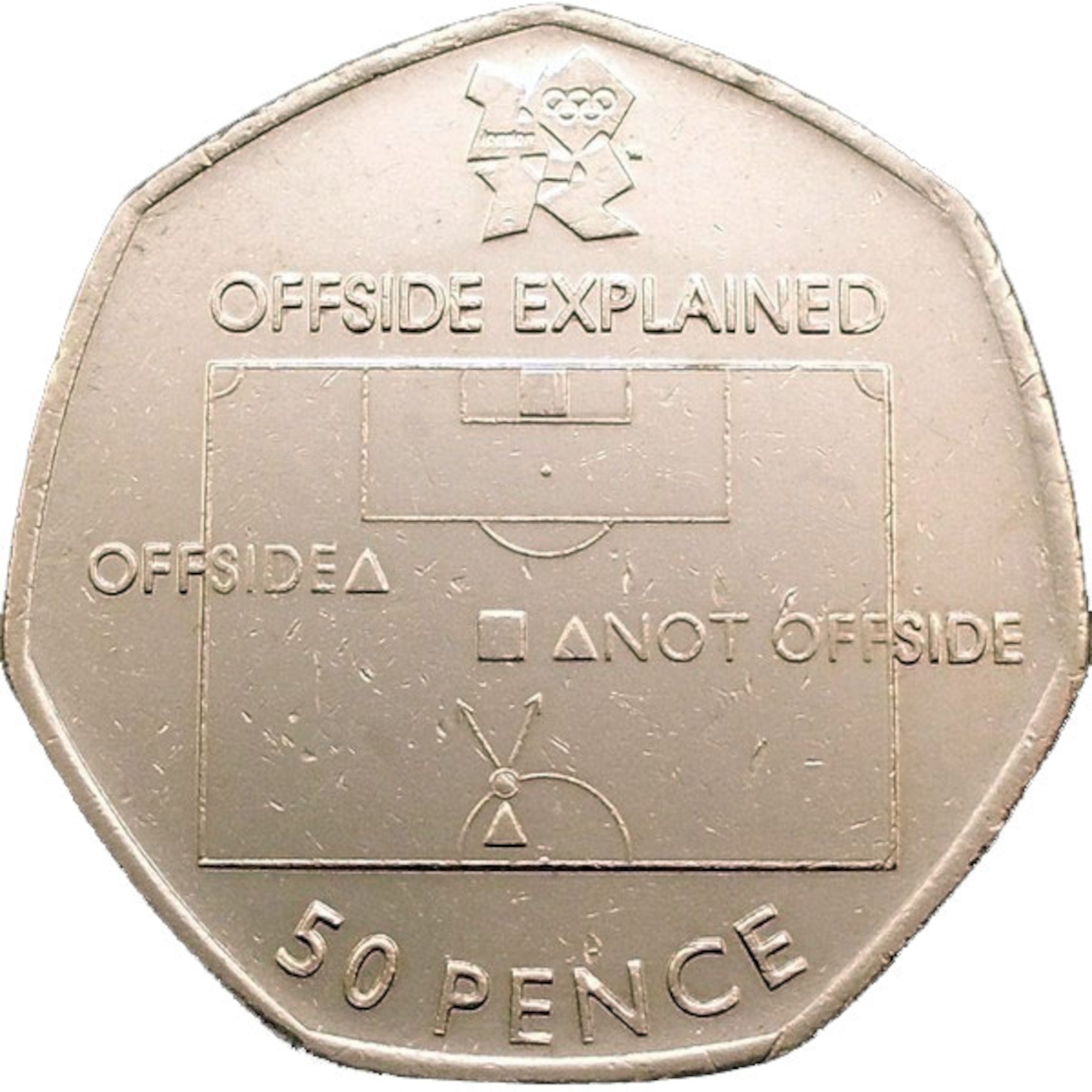
| 1 | Football (offside diagram) | 1,125,500 | £20 – £40 | Lowest mintage; offside-rule diagram on reverse |
| 2 | Wrestling | 1,129,500 | £20 – £35 | Second-lowest mintage |
| 3 | Judo | 1,161,500 | £15 – £25 | Throw stance design |
| 4 | Triathlon | 1,163,500 | £12 – £20 | Three discipline icons |
| 5 | Tennis | 1,454,000 | £10 – £18 | Net and racket composition |
| 6 | Goalball | 1,615,500 | £8 – £15 | Paralympic sport; first UK coin to feature it |
| 7 | Shooting | 1,656,500 | £7 – £14 | Pistol grip and target rings |
| 8 | Archery | 1,662,500 | £6 – £12 | Bow and target |
| 9 | Taekwondo | 1,664,000 | £7 – £13 | Kicking stance design |
| 10 | Handball | 1,676,500 | £7 – £13 | Ball mid-throw |
| 11 | Modern Pentathlon | 1,689,500 | £7 – £14 | Five-discipline icons |
| 12 | Rowing | 1,717,300 | £6 – £11 | Single sculls in motion |
| 13 | Gymnastics | 1,720,000 | £6 – £11 | Acrobatic figure |
| 14 | Table Tennis | 1,737,500 | £6 – £11 | Bat and ball |
| 15 | Basketball | 1,748,000 | £6 – £11 | Player at hoop |
| 16 | Sailing | 1,749,500 | £6 – £11 | Dinghy under sail |
| 17 | Wheelchair Rugby | 1,765,500 | £7 – £13 | Paralympic sport |
| 18 | Hockey | 1,773,500 | £6 – £11 | Stick and ball |
| 19 | Weightlifting | 1,879,500 | £6 – £12 | Lifter at clean and jerk |
| 20 | Canoeing | 1,981,500 | £6 – £12 | Single canoe with paddle |
| 21 | Cycling | 2,090,500 | £5 – £10 | Track cyclist in motion |
| 22 | Fencing | 2,115,500 | £5 – £9 | Foil and stance |
| 23 | Volleyball | 2,133,500 | £6 – £12 | Net and ball |
| 24 | Badminton | 2,133,500 | £5 – £10 | Racket and shuttlecock |
| 25 | Equestrian | 2,142,500 | £5 – £9 | Show-jumping pose |
| 26 | Boxing | 2,148,500 | £5 – £10 | Glove and ring corner |
| 27 | Boccia | 2,166,960 | £5 – £10 | Paralympic-only sport |
| 28 | Aquatics | 2,179,000 | £5 – £10 | Redesigned mid-issue (see below) |
| 29 | Athletics | 2,224,000 | £5 – £9 | Highest mintage; Florence Jackson’s high jumper. The 2009-dated Blue Peter 50p is the rare one |
Mintage figures from Royal Mint published mintage figures. BU values reflect realised eBay UK sold listings averaged over the past 12 months.
The “big five” Olympic 50p rarities
The five lowest-mintage Olympic 50ps drive almost all secondary-market activity in the series. Their mintages cluster in a tight 1.13–1.45 million band, well below the 1.6–2.2 million range of the other 24 designs. In ascending mintage order:
- Football (1,125,500), designer Neil Wolfson chose to engrave a diagram of the offside rule rather than a literal football scene, the first time a rulebook graphic had appeared on a UK circulating coin. The original 2011 design was judged too cluttered after a public preview; a corrected version with a cleaner version of the same diagram was substituted before mass production. Pre-correction proofs realise £400–£800 at specialist auction.
- Wrestling (1,129,500), depicts two wrestlers locked in a Greco-Roman hold. The composition’s tight cropping inside the heptagonal frame is widely admired in design circles. Currently £20–£35 in BU on eBay UK.
- Judo (1,161,500), throwing stance design. Slightly higher mintage than Wrestling but commonly traded at similar prices because of design appeal.
- Triathlon (1,163,500), three icons (swimmer, cyclist, runner) arranged around the central composition.
- Tennis (1,454,000), net stretching across the coin face with a racket and ball above. Designed by Tracy Baines.
A focused collector hunting only the big five can usually source four of the five from change in 12–18 months; the Football 50p is consistently the holdout. Most collectors buy the missing one or two from eBay or specialist dealers. Higher-grade slabbed examples (NGC MS65 or PCGS MS65 and above) have cleared £60–£120 each at Spink and Baldwin’s.
The Aquatics “swimmer face” redesign
The Aquatics 50p designed by Jonathan Olliffe is the most unusual coin in the set because two visually distinct versions exist with the same 2011 date. The original design showed horizontal water lines passing across the swimmer’s face, an artistic choice that some viewers found visually difficult to read. After early proof striking and a small public preview, the design was redrawn so that the water lines pass only across the lower portion of the swimmer, leaving the face clear above the surface.
The corrected face-clear version is what circulated and is the common Aquatics 50p in everyday change today. The pre-correction face-obscured version was retained mostly internally; surviving examples are extremely rare in the public market. They have realised £1,500–£3,500 at specialist auction over the past five years. Always check the Aquatics 50ps in your collection against a verified image; the face-obscured variant is the single most valuable single-coin find in the entire series.
Silver, Piedfort and gold variants
| Format | Specification | Mintage | RM retail (2011–12) | Current secondary |
|---|---|---|---|---|
| Silver-proof set (29 coins) | .925 sterling, individually capsuled in album | 3,000 sets | £1,500 | £1,800 – £2,500 |
| Silver-proof single | .925 sterling, 8.00 g | ~10,000 per design | £55 each | £60 – £130 |
| Silver Piedfort (selected designs) | .925 sterling, 16.00 g (double thickness) | 3,500–5,000 | £95–£110 | £150 – £350 |
| Gold proof (selected designs) | .9167 (22 carat), 15.5 g | 500–1,000 | £1,200–£1,500 | £1,400 – £2,400 |
The complete silver-proof set is the headline collector format: 29 individually capsuled sterling silver coins, individually serial-numbered, in a presentation album. Production was capped at 3,000 sets and most were sold within the issue window in 2011–2012. Complete sets at auction now consistently clear £1,800–£2,500 against a 2011 issue price of around £1,500.
The silver Piedforts are the strongest individual performers. Royal Mint issued Piedfort versions of selected designs (notably Football, Athletics and the popular Paralympic sports) at mintages of 3,500–5,000 each. The Football Piedfort and Athletics Piedfort regularly clear £200–£350 in current trading.
Completing the set
The 29-coin Olympic set is one of the most-attempted UK circulating-coin builds. There are three main completion formats:
- Raw circulated set (sourced from change): the most common build, requiring 12–24 months of focused checking. Total cost £0–£30 in coins fed into the bank from change, plus £30–£80 to buy the “big five” rarities that almost never come up. Resale: £150–£250 for a complete set in mixed circulated grade.
- Brilliant uncirculated in Royal Mint sports album: the official 2012 Royal Mint album has 29 numbered slots, an introduction page, individual sport descriptions and the official Olympic Games branding. Albums in original packaging with all 29 BU coins still present trade at £280–£450 on eBay UK; broken-up albums missing one or two coins discount to £200–£320.
- Silver-proof set (limited to 3,000): the prestige format. Sealed presentation case with 29 individually capsuled silver-proof coins, certificate of authenticity, individually numbered. Currently £1,800–£2,500 at auction.
Individual raw circulated 50ps from the set are usually £3–£8 each except the big five rarities. Change Checker sells gap-filler coins by sport to help collectors complete from change.
Design and provenance
The Olympic 50p set is the only major UK commemorative programme in which every individual reverse design was created by a member of the public rather than a Royal Mint engraver. The 2009 competition was structured by sport, with separate panels for the Olympic and Paralympic disciplines; entrants could submit designs for any number of sports. Around 17,000 entries were received; a panel chaired by Royal Mint Director and including sculptor Sir Anthony Caro selected the 29 winners.
Notable designer biographies: Neil Wolfson (Football) was a graphic designer based in London; his offside-rule design was selected over more literal football compositions because it captured something genuinely distinctive about the sport. Jonathan Olliffe (Aquatics) was an illustrator whose original face-obscured design was redrawn after public preview. Sarah Payne (Boccia) was a teacher who had never previously designed a coin; her design remains the only Boccia coin issued by any major mint.
All 29 obverses use the Ian Rank-Broadley fourth-portrait of Queen Elizabeth II, in use on UK circulating coinage from 1998 until the introduction of the Jody Clark fifth-portrait in 2015. Each reverse carries the London 2012 Olympic Games logo in the upper field above the sport-specific design.
How to spot a genuine Olympic 50p
- Weight. 8.00 g ± 0.05 g on a 0.01 g jewellery scale.
- Diameter. 27.30 mm flat-to-flat across the seven sides.
- Shape. True heptagonal Reuleaux (constant-width seven-sided curve), not a flat-edged seven-sided polygon.
- Edge. Plain, no reeding. Reeded edge is an immediate fail.
- Obverse. Ian Rank-Broadley fourth-portrait of Queen Elizabeth II. The Jody Clark fifth-portrait (introduced March 2015) does not appear on any Olympic 50p; if you see it, the coin is a replica.
- Reverse. Sport design plus London 2012 Olympic Games logo in upper field. Sharp relief on athlete figures and equipment.
For full grading methodology and the British Numismatic Trade Association scale, see our how to grade a coin guide. The coin collecting glossary covers Piedfort, BU and proof terminology in detail. For known errors and varieties across the 50p denomination see our UK coin errors list.
Where Olympic sits in the 50p commemorative lineage
The London 2012 Olympic 50p set is the largest single circulating-coin commemorative programme ever issued in the UK by some distance: 29 designs in a single coordinated release, against 13 across three years for the Beatrix Potter series, six across five years for the Paddington series and 12 across three years (mostly collector-only) for the Harry Potter series.
The Olympic programme also set the template for subsequent multi-design 50p commemoratives, demonstrating that the public would actively collect across a large set if the underlying theme had broad popular appeal. The format has not been repeated at the same scale since; later programmes have been more focused (3–6 designs per year) and increasingly collector-only rather than circulating. For the full 50p denomination context across all commemoratives from 1969 to today, see our 50p coin values UK guide.
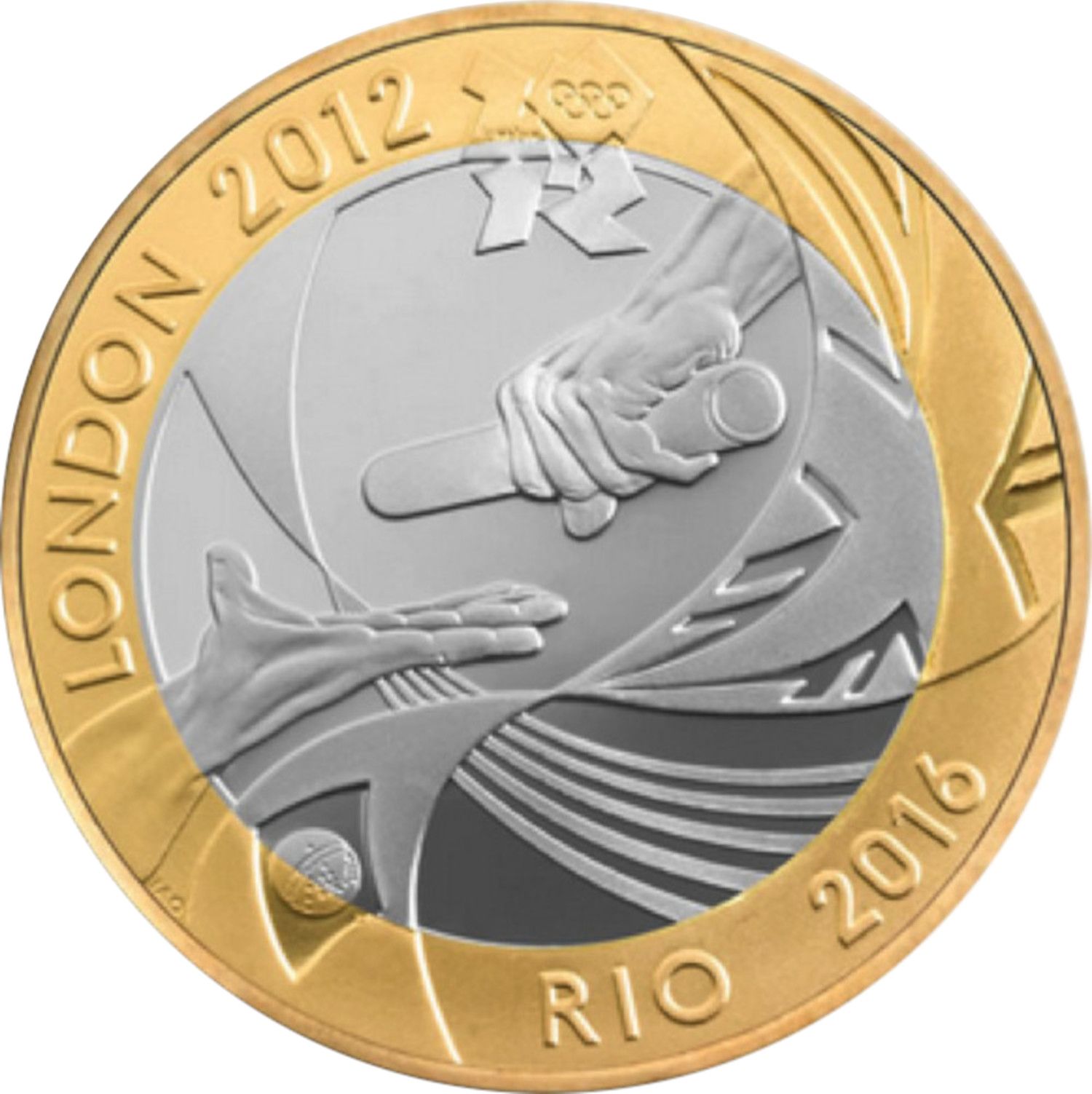
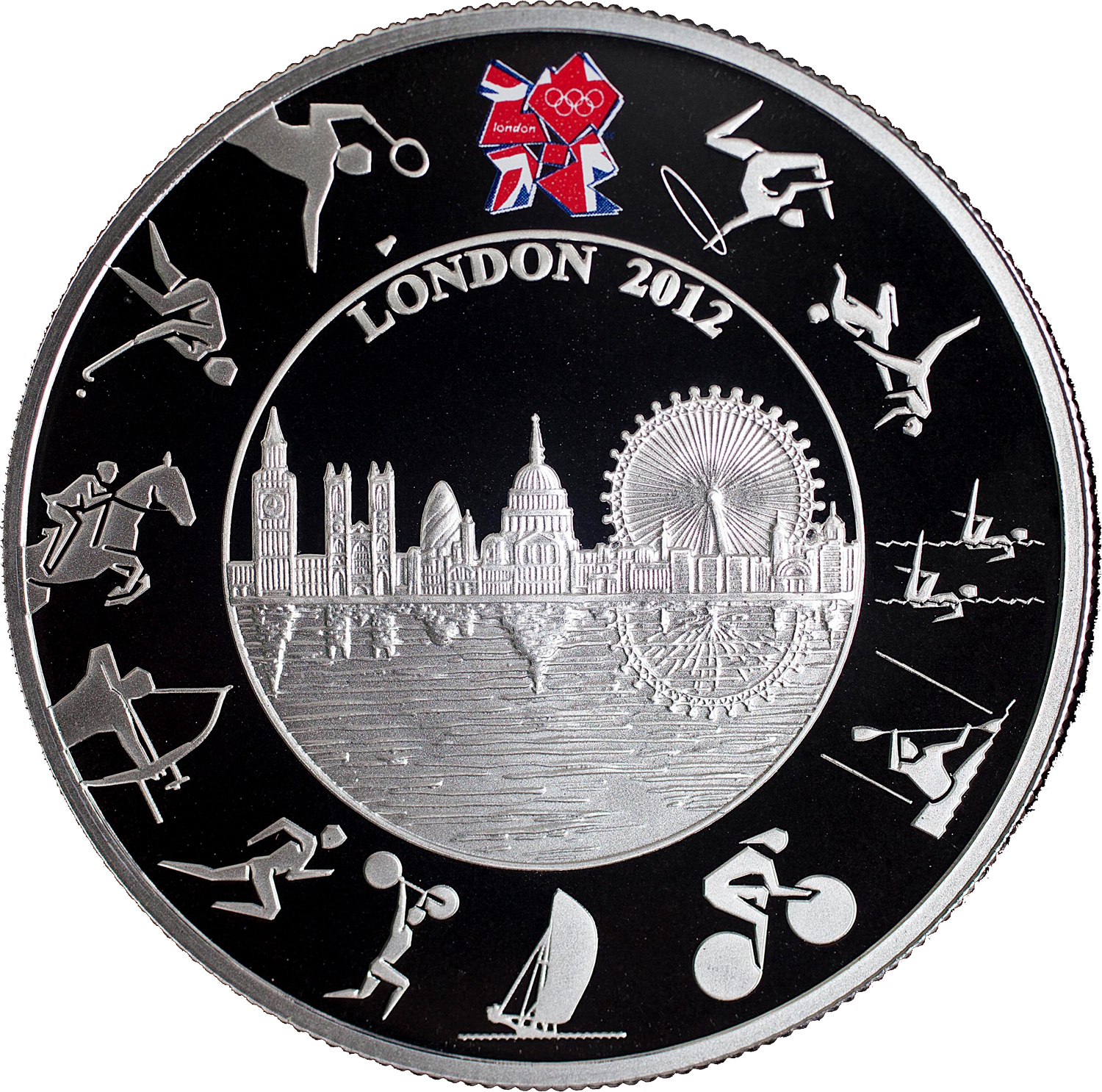
Featured Olympic 50p coins on MyCoinage
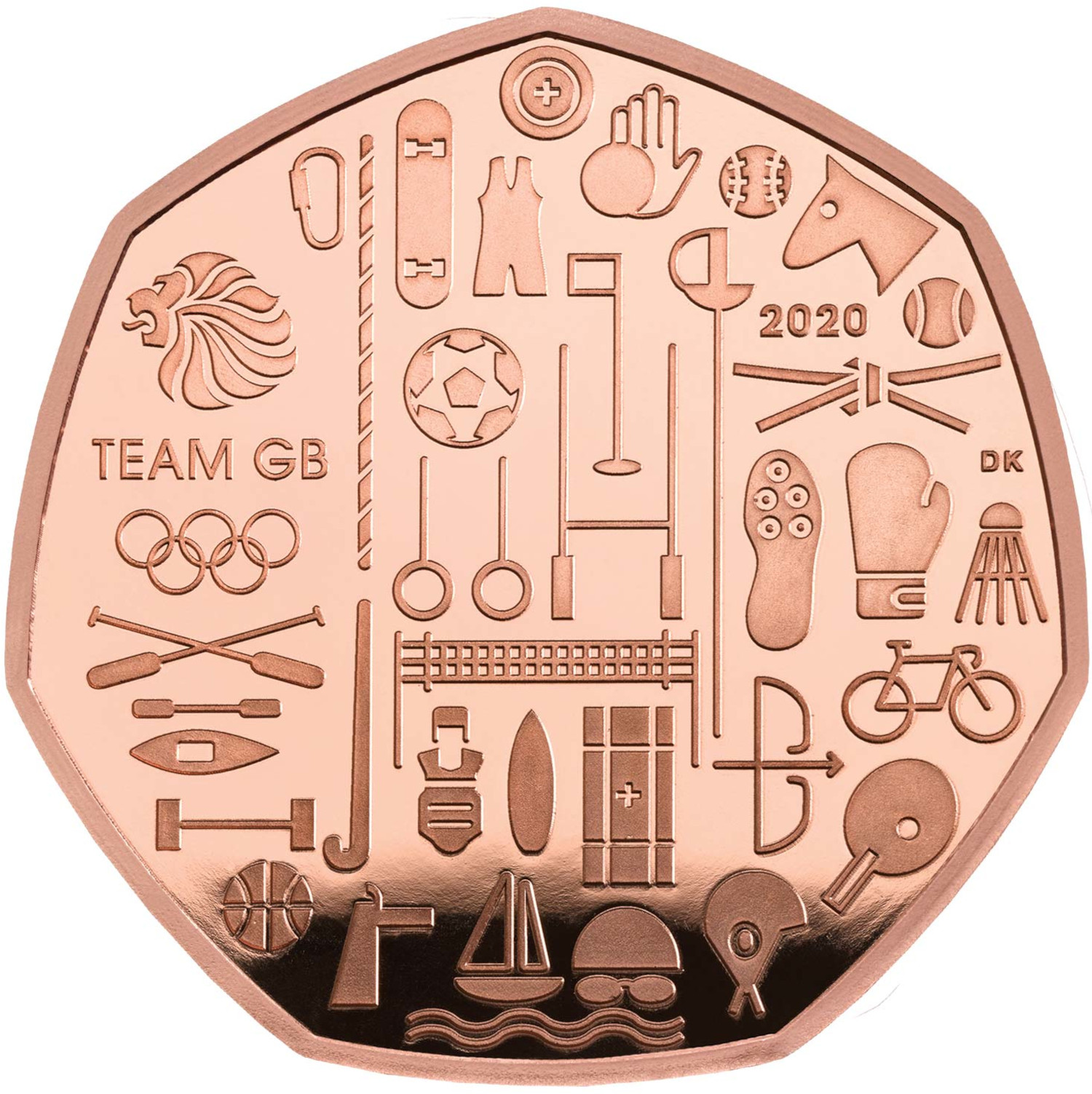
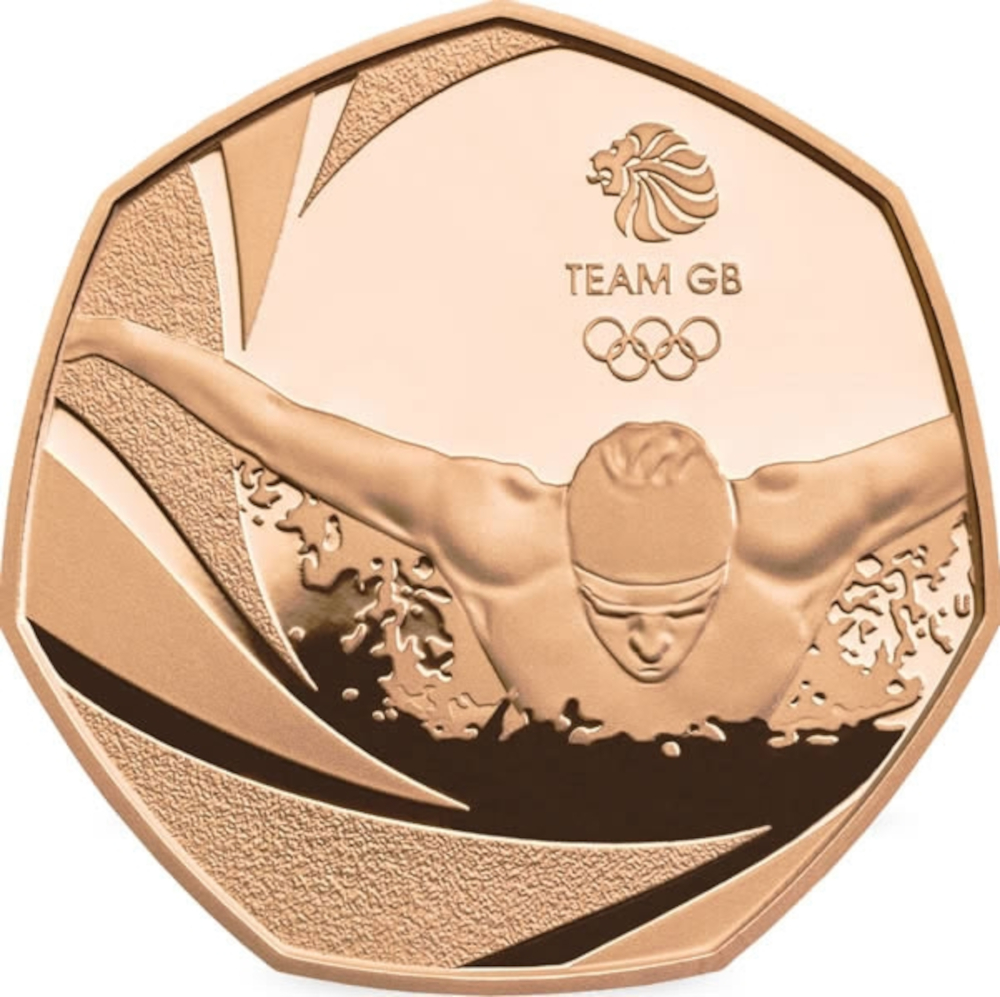
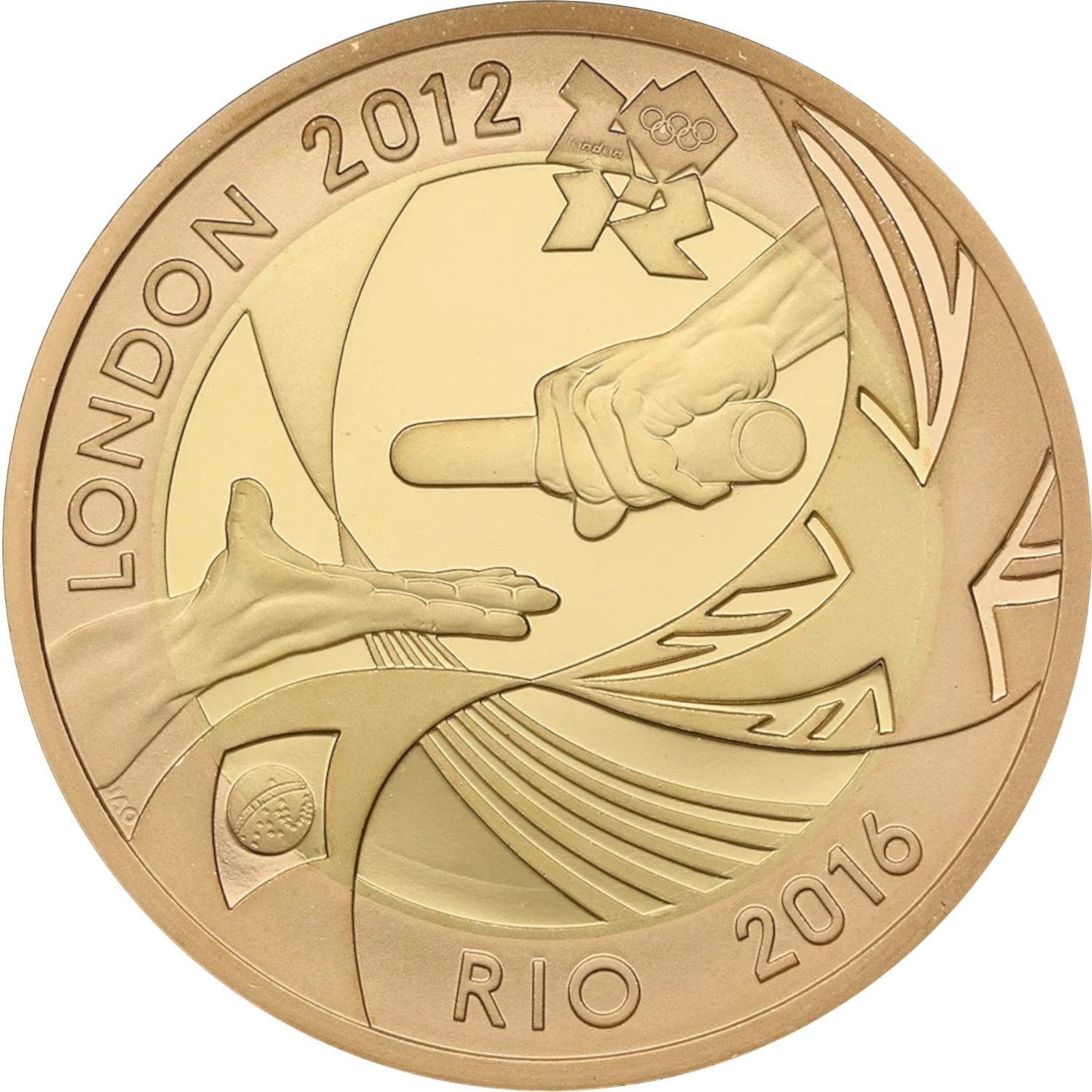
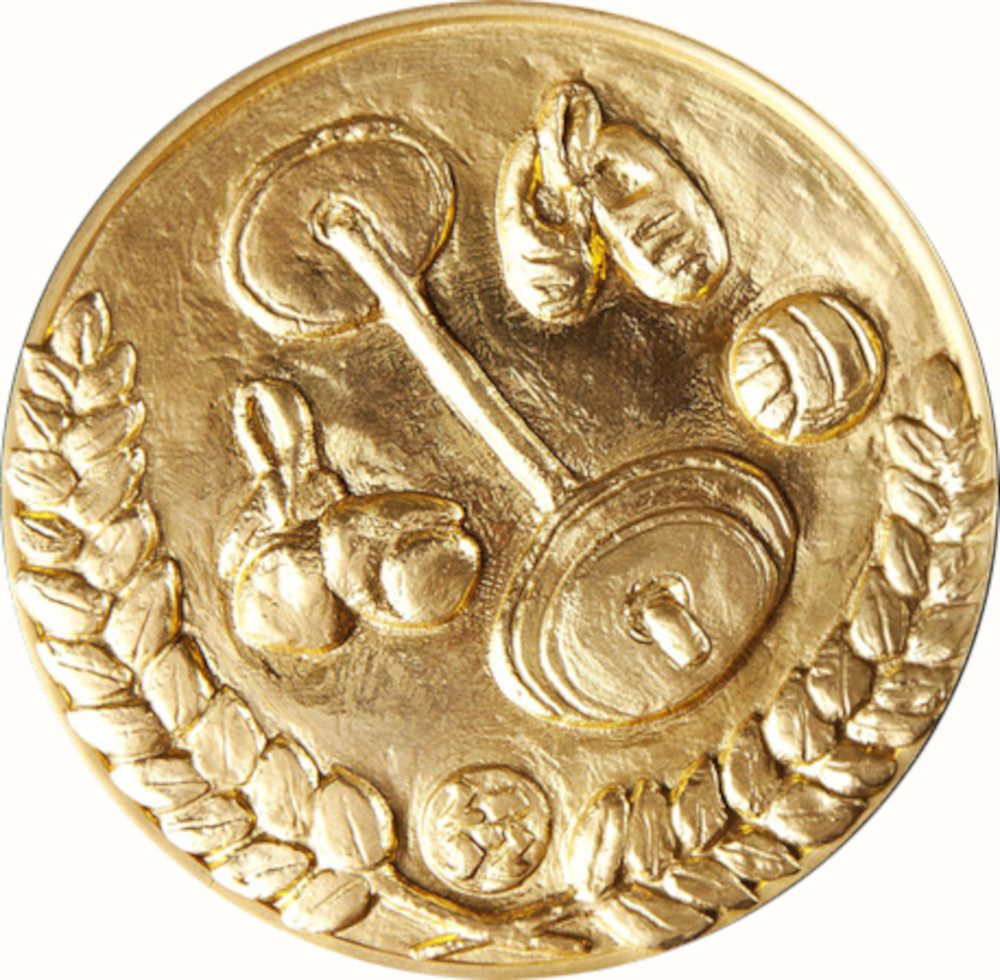
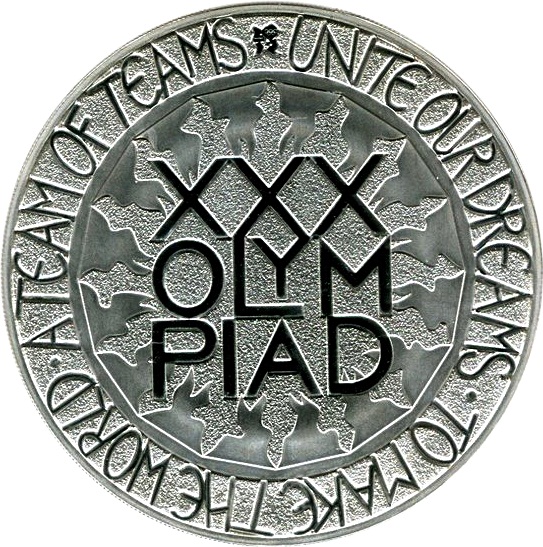
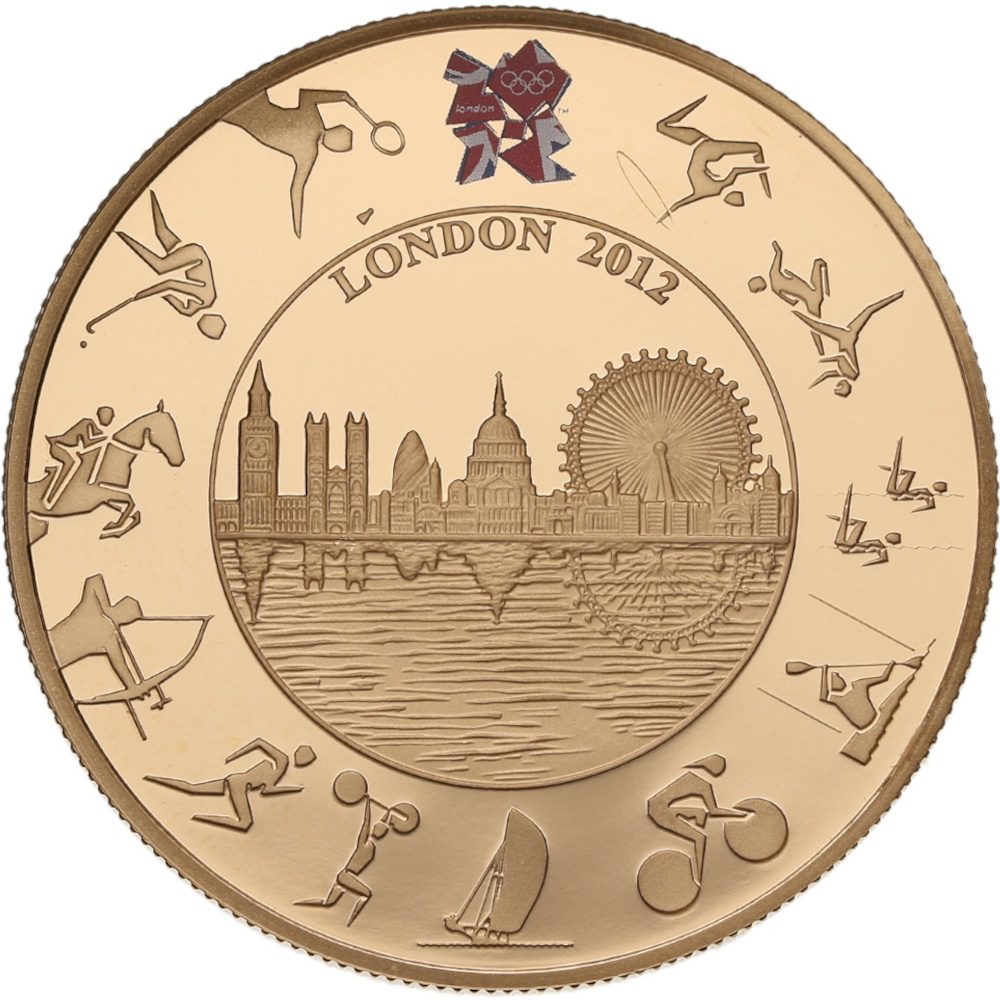
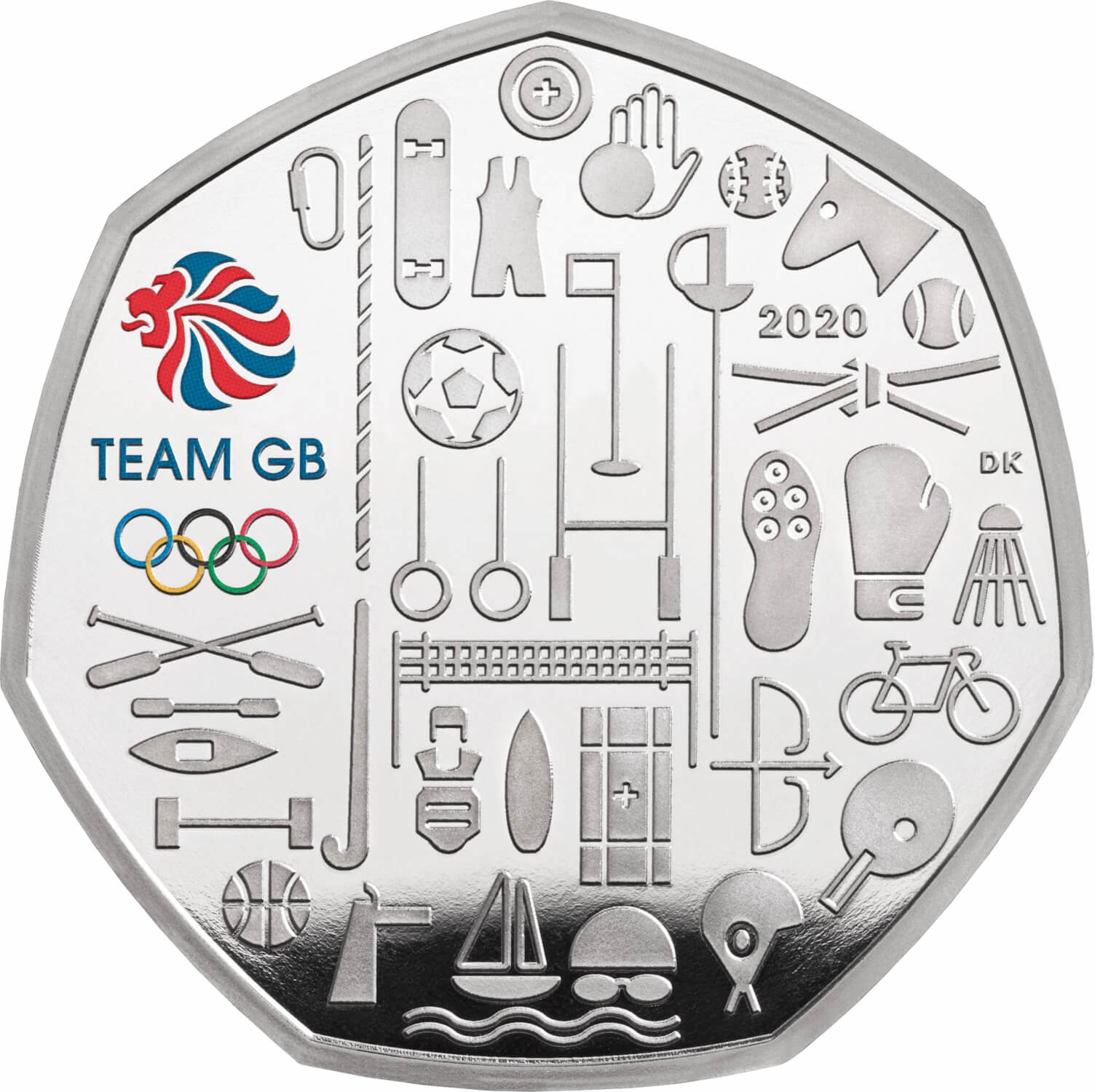
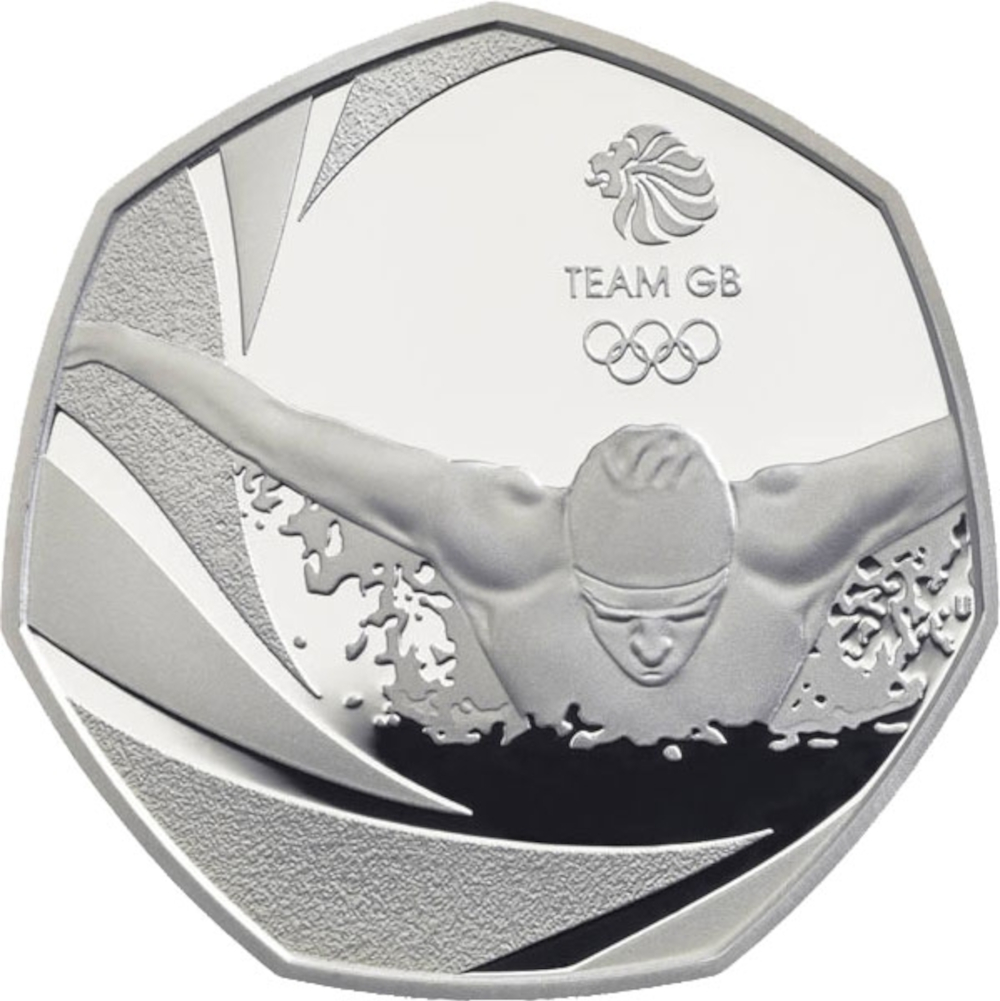
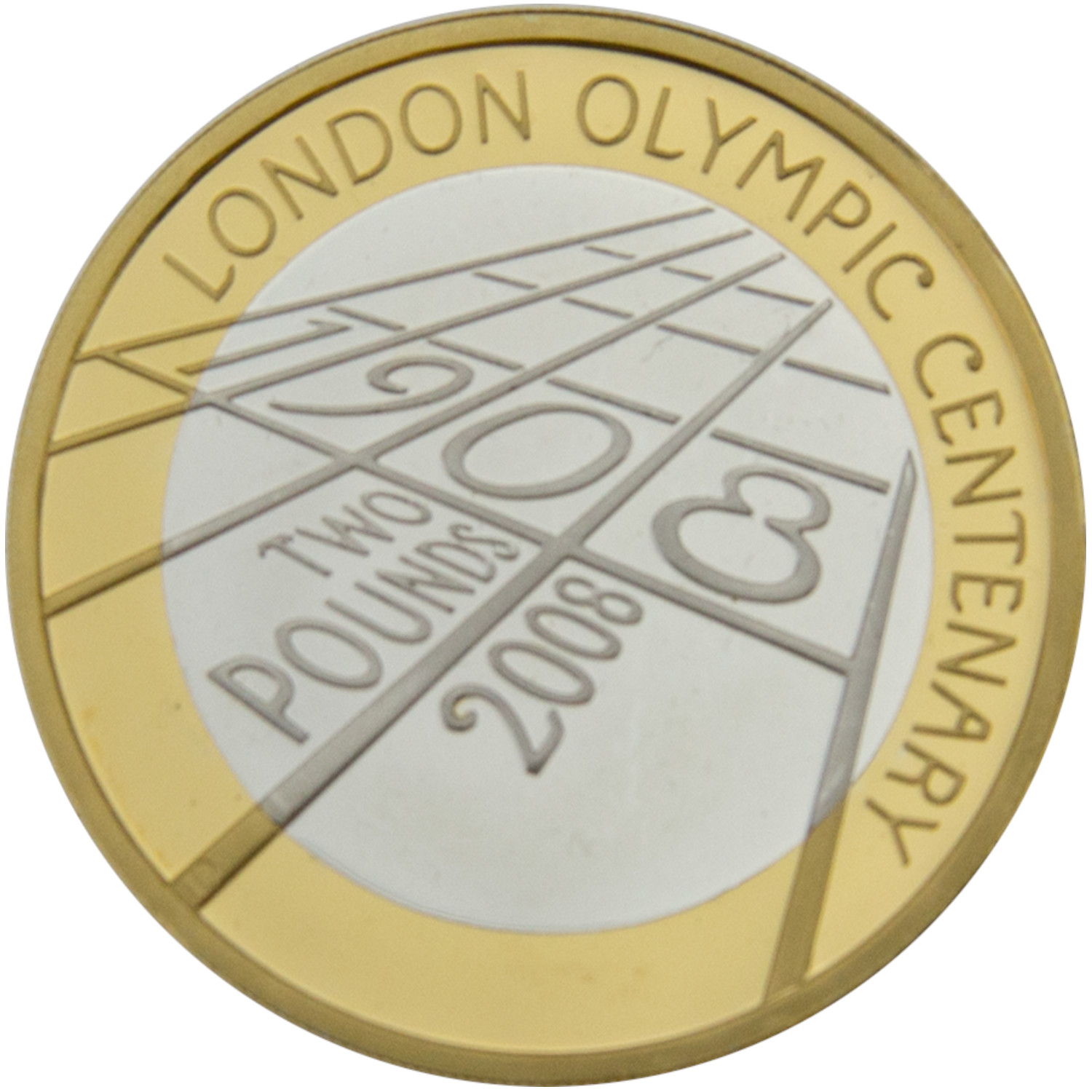
Browse every Olympic coin in our database →
Frequently asked questions
How many 2012 Olympic 50p coins are there?
Which Olympic 50p is the rarest?
How much is the 2011 Football 50p worth?
Who designed the Olympic 50p coins?
What is the “Aquatics swimmer face” variant (Lines Over Face)?
Are the 2012 Olympic 50ps still in circulation?
How much is a complete Olympic 50p set worth?
Was there an Olympic 50p design that was withdrawn?
How can I tell a real 2012 Olympic 50p from a fake?
Will the Royal Mint issue more Olympic 50ps?
Are silver Olympic 50ps a good investment?
Where should I sell Olympic 50ps?
Further reading
- Royal Mint mintage figures, the official source for circulating mintage data.
- Royal Mint Museum, historical reference and design provenance.
- Baldwin’s of St James’s, auction realisations for Piedfort, complete sets and pre-correction proofs.
- Spink, specialist coin auction house with regular UK modern decimal sales.
- Noonans, Mayfair auction house, regular modern UK decimal sales.
- 50p coin values UK, the full denomination context.
- Where to sell rare coins UK, venue-by-venue commission breakdown.
- Coin collecting glossary, BU, proof, Piedfort and other terms.
- How to grade a coin, UK and Sheldon scales explained.
- UK coin errors list, known mules, off-centre strikes and other varieties.