Counterfeit Sovereign Detection: 7 Foolproof Tests (2026)
Approximately 1 in 200 gold sovereigns sold through online auction sites is counterfeit, with the figure rising sharply for sales sourced from outside Europe. Three counterfeit categories dominate: gilt-brass historical forgeries (low value); modern tungsten-cored fakes with correct surface gold; and altered-date examples where common Victorian sovereigns are reworked to mimic six-figure rarities. This guide covers the seven tests that catch all three patterns, in order of cost and certainty.
- How common are fake sovereigns?
- Test 1: Weight (catches 70% of fakes)
- Test 2: Diameter
- Test 3: Magnet test
- Test 4: Edge inspection
- Test 5: Specific gravity (catches tungsten cores)
- Test 6: Ultrasonic / professional thickness gauge
- Test 7: Slab + grading service authentication
- Altered-date fakes: the high-value pattern
- Featured sovereigns on MyCoinage
- FAQ
How common are fake sovereigns?
Royal Mint, dealer association, and police data combined suggest counterfeit sovereigns appear in the secondary market at the following approximate rates:
- Royal Mint direct, BullionByPost, Atkinsons, Chards, Baird & Co, essentially zero. Reputable UK dealers test every coin before resale and are insured against the rare slip.
- UK auction houses (Baldwin’s, Spink, Noonans), near zero. Catalogued coins are professionally authenticated before listing.
- eBay UK, strong seller feedback (1,000+ at 99%+), very low (under 1 in 500). Buyer protection via PayPal Goods & Services provides recourse.
- eBay UK, weak seller feedback or new seller, meaningfully higher (1 in 50 to 1 in 100). The risk is concentrated in this segment.
- Facebook Marketplace, Gumtree, informal private sale, highest risk. Limited recourse. Avoid for sovereigns above £500 unless you can authenticate in person.
- Overseas sales (particularly China, Vietnam, Eastern Europe), very high risk. Tungsten-cored fakes originate predominantly from Asian manufacturing operations.
Test 1: Weight (catches 70% of fakes)
A modern sovereign weighs 7.988 g with manufacturing tolerance of approximately ±0.02 g, plus an allowance for circulation wear of up to 0.15 g on heavily-worn 19th-century examples. Acceptance criterion:
- 7.82 g or above, plausibly genuine. Continue to other tests.
- 7.70–7.82 g, possibly genuine if heavily worn; further tests essential.
- Below 7.70 g, almost certainly counterfeit, even allowing for catastrophic wear.
Use a digital jewellery scale that reads to 0.01 g. Kitchen scales reading to 1 g are not precise enough. Many sovereign-fake patterns weigh in the 7.0–7.7 g range, enough to look approximately right but easily caught with a precise scale.
Test 2: Diameter
A modern sovereign measures 22.05 mm in diameter. Manufacturing tolerance is approximately ±0.05 mm; circulation wear typically reduces this by no more than 0.1 mm. Acceptance criterion: 21.95–22.10 mm. Any coin reading 0.2 mm low (21.85 or below) is suspect; 0.5 mm low is almost certainly counterfeit.
Measure using digital callipers (inexpensive). A steel ruler is too imprecise for the ±0.05 mm tolerance.
Test 3: Magnet test
22-carat gold is completely non-magnetic. Bring a strong rare-earth magnet within 5 mm of the coin; any pull or attraction indicates a ferromagnetic core (typically steel). This test catches the cheapest and most common counterfeit category.
Note: a small fraction of counterfeit sovereigns use non-magnetic base metals (brass, copper, lead, tungsten) and pass this test. Use it as a fast first filter, not the only test.
Test 4: Edge inspection
A genuine sovereign has a sharp milled (reeded) edge with uniform parallel grooves and no seam. Common counterfeit failures:
- Casting seam, a faint line running around the edge perpendicular to the milling, indicating the coin was cast in a two-part mould rather than die-struck.
- Soft milling, the reeds are rounded or shallow, indicating worn dies or low-pressure striking.
- Wrong reed count, a genuine modern sovereign has approximately 90–100 reeds per coin; specialist references give the exact count by year. Counterfeits often miss the correct reed count.
Use a 10× jeweller’s loupe for edge inspection. Available for a few pounds; pays for itself many times over.
Test 5: Specific gravity (catches tungsten cores)
The Archimedes water-displacement method. 5 minutes with kitchen equipment.
- Weigh the coin dry on a scale that reads to 0.01 g. Record as Wdry.
- Suspend the coin from a thin thread tied to the hook of a kitchen balance (or with a sturdy wire loop). Lower it into a glass of room-temperature water until fully submerged but not touching the sides or bottom. Record the new reading as Wwet.
- Calculate: SG = Wdry / (Wdry − Wwet).
Genuine 22-carat sovereign: SG = 17.50–17.70 g/cm³ (theoretical 17.6, measurement tolerance). Counterfeit signatures:
- Brass-cored fake: SG 8–10 g/cm³ (obvious).
- Lead-cored fake: SG 11–13 g/cm³ (obvious).
- Tungsten-cored fake: SG 18.5–19.2 g/cm³ (close to gold but detectably high). Pure tungsten is 19.30 vs gold’s 19.32 for the pure element, but a real sovereign averages 17.6 because it’s 22-carat (mixed with copper).
The SG test is the single most powerful kitchen-equipment test and catches every counterfeit type. Combine with weight and magnet and you have approximately 99% detection.
Test 6: Ultrasonic / professional thickness gauge
Bullion dealers and large pawn shops use a Sigma Metalytics Precious Metal Verifier or similar device that measures the acoustic resonance through the coin. Gold and tungsten have different resonance signatures even at similar density, the ultrasonic test catches tungsten cores that pass weight, diameter, magnet and SG tests. Cost is approximately £400–£1,000 for the device, so this isn’t a household test, but a reputable dealer should perform it on any high-value purchase.
Test 7: Slab + grading service authentication
For sovereigns worth £500+, submit to a professional grading service:
- CGS UK, £15–£25 per coin, 4–6 week turnaround. UK-specialised.
- PCGS, £25–£50 per coin depending on declared value. The international gold standard for graded coins.
- NGC, similar to PCGS. UK office in Brentwood.
The slab is tamper-evident; the serial number is verifiable via the grading service’s online database. Slabbed sovereigns also realise 10–20% more at resale than equivalent raw coins, so the authentication fee is often net-positive.
Altered-date fakes: the high-value pattern
The most economically rational counterfeit is not a melted-down fake but an altered common-date coin. Common sovereigns sell for £400 (bullion floor); rare-date sovereigns sell for £5,000–£500,000. Engraving a new date or mintmark on a common coin is a high-margin operation.
The most-targeted dates:
- 1879 London Mint, no die number, date sometimes engraved over a common 1878 or 1880.
- 1908 Ottawa (C mintmark), C added to a common London-struck coin.
- 1820 George III, very rare; sometimes faked from a 1822 or 1823.
- 1841 Victoria Young Head, date altered from a common 1842 or 1843.
- 1837 William IV, extremely rare; even one altered example is highly profitable.
Detection requires comparing exact die-feature signatures (specific letter spacing, reverse die polish marks, edge milling characteristics) against published references like the Marsh Gold Sovereign reference. For any sovereign with a five-figure asking price, professional authentication is mandatory not optional.
Featured sovereigns on MyCoinage
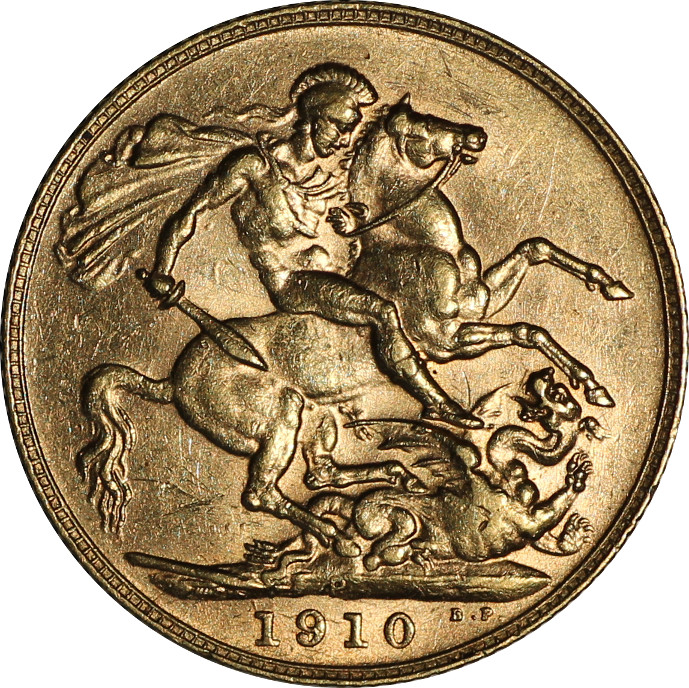
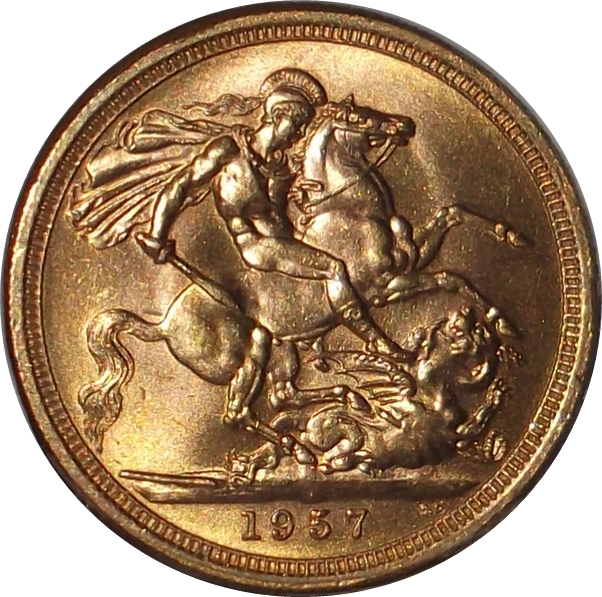
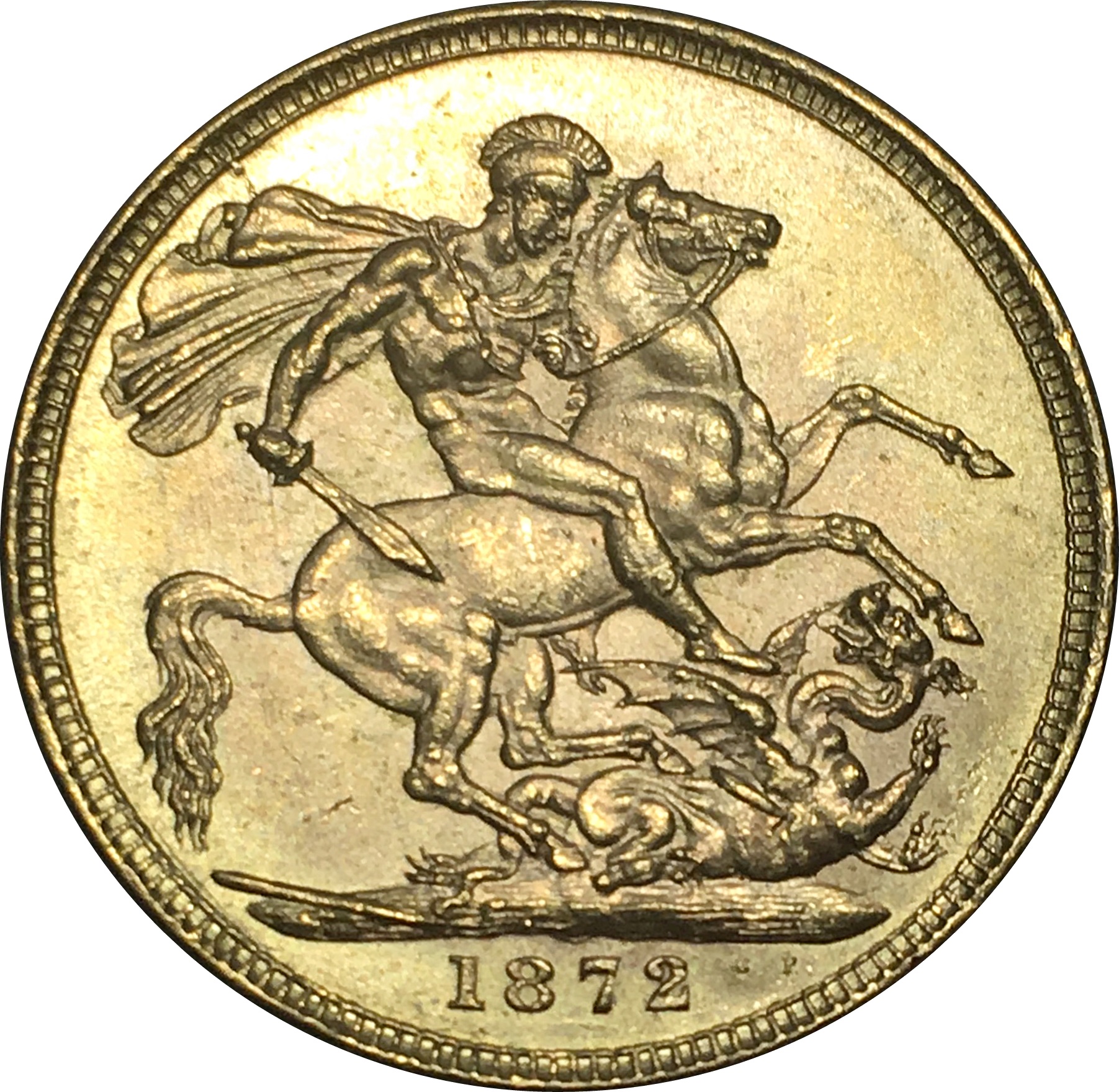
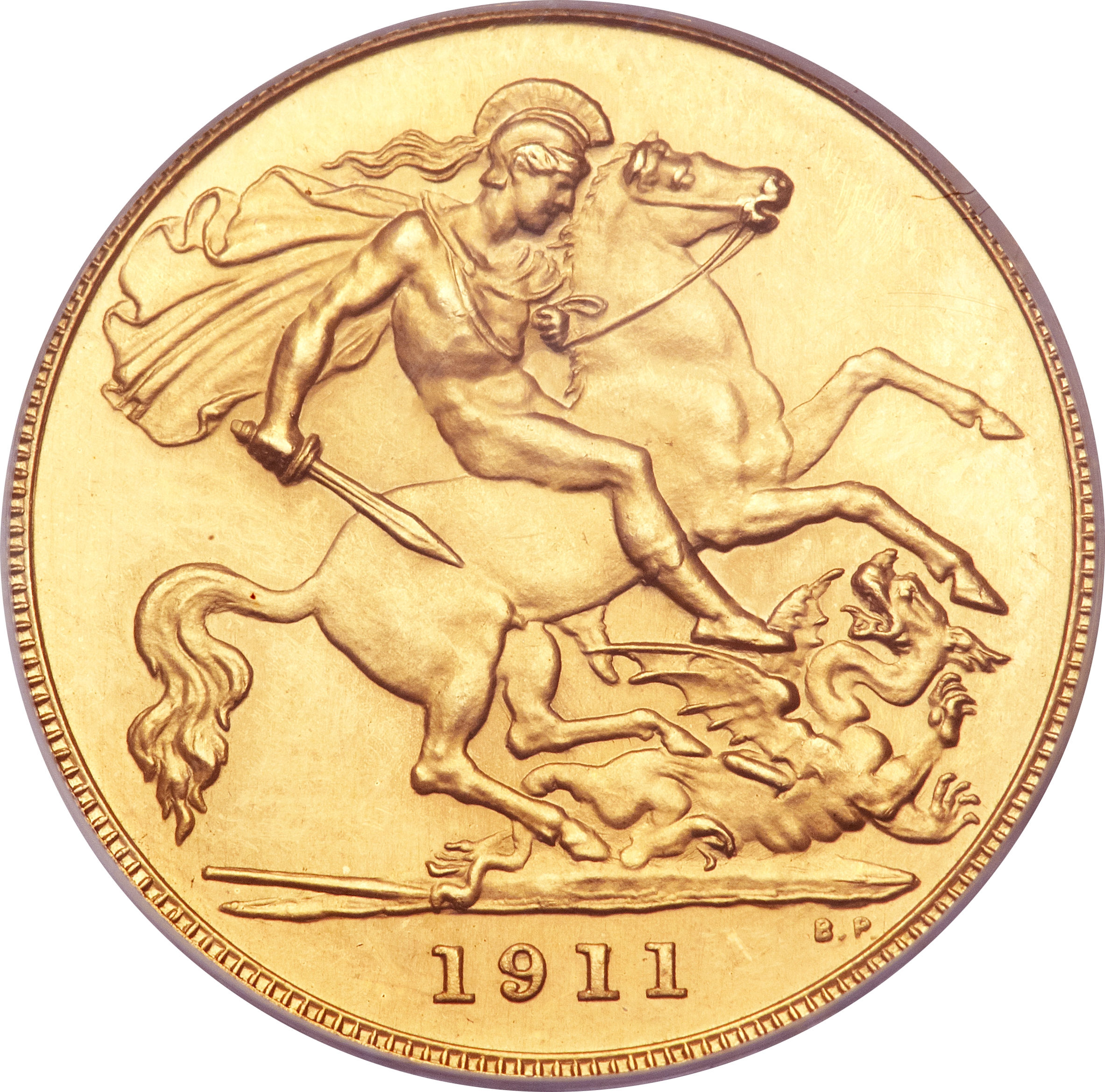
Frequently asked questions
How can I tell if a gold sovereign is real?
How common are fake gold sovereigns in the UK?
What is a tungsten-cored fake sovereign?
Can a real sovereign weigh less than 7.988 g?
How do I do a specific gravity test on a sovereign?
Where should I buy sovereigns to avoid fakes?
Are old sovereigns easier to fake than modern ones?
What is the most common altered-date sovereign fake?
How much does professional sovereign authentication cost?
Further reading
- Gold sovereign values UK, the master sovereign reference.
- Sovereign mint marks UK, identification of London vs branch-mint coins.
- Sovereign weight specifications, per-year weight data.
- Half sovereign values UK, the same authentication principles apply at half scale.
- Coin weight identifier, quick weight match against the catalogue.