How to Buy Gold Sovereigns in the UK: 2026 Buyer's Guide
The gold sovereign is the most tax-efficient gold investment available to UK private investors: VAT-free as investment gold, Capital Gains Tax exempt as legal tender. With gold at £3,267/oz a full sovereign carries £769 of bullion content, and common-date examples sell at melt + 5–15% premium. This is the practical buyer's guide: where to buy, what premium to expect, how to authenticate, and which sovereigns to avoid as a beginner.
Some links below take you to eBay; if you buy through them we earn a small commission at no cost to you. This never affects what we recommend.
UK dealers we recommend for first-time sovereign buyers
Lower premium than eBay, no authentication risk on brand-new bullion.
We list reputable UK bullion dealers we'd happily buy from ourselves. Some links may earn us a small commission at no cost to you, it helps keep MyCoinage free.
Looking for older dates, branch-mint coins or auction action? eBay UK is the deepest secondary market:
Find gold sovereigns on eBay → Buy a 2024 sovereign on eBay → Bid on a sovereign auction ending soon →
Why buy sovereigns at all?
Gold sovereigns sit at the rare intersection of bullion investment and numismatic collectable. For UK private investors specifically, the case is unusually strong:
- Tax efficiency. Sovereigns from 1837 onwards are exempt from Capital Gains Tax as UK legal tender under HMRC manual CG78308. Investment gold of qualifying purity is exempt from VAT under VAT Notice 701/21A. Sovereigns clear both. No other physical gold investment is as tax-efficient for UK private holders.
- Recognisability and liquidity. The St George reverse, the standard 22-carat composition and the fixed weight (7.988 g) mean every UK bullion dealer recognises and prices sovereigns instantly. Selling on a Tuesday morning is a 30-minute job.
- Numismatic optionality. Buy a common-date and you have bullion at melt + 10%. Buy a rare-date or high-grade and you have a coin that can sell for many multiples of bullion regardless of where the gold price goes. The downside is bullion-floored; the upside is open.
- Durability. Sovereigns are 22-carat (.9167) gold-copper alloy, harder than 24-carat (.9999) bullion bars. They handle better, store better, and circulate without meaningful wear in protected storage.
The case against: 5–15% premium over melt is real cost; smaller-denomination coins (half sovereigns) carry higher per-gram cost than 1oz coins; Inheritance Tax still applies; and bullion is a long-duration position that does not pay yield.
Where to buy sovereigns: by tier
The UK market splits into five clean tiers, each appropriate for a different buyer profile. Pricing, authentication risk and liquidity differ at each tier.
Tier 1: Royal Mint direct
The Royal Mint Bullion sells current-year sovereigns and a back-catalogue of recent issues at retail. Premium is the highest of any new-coin source, typically 8–15% over spot, but authentication is bulletproof, packaging is mint-fresh, and CGT-exempt status is confirmed at point of sale. Best for: first-time buyers, gift purchases, and anyone uncomfortable with secondary-market risk.
Tier 2: UK bullion dealers
The major UK bullion houses run live spot pricing on sovereigns with tight buy/sell spreads. Premium typically 4–8% over spot for common-date back-year bullion. All four publish per-coin pricing and accept bank transfer, card and (with limits) cryptocurrency:
- BullionByPost , the largest UK online bullion dealer; insured Royal Mail dispatch; published live per-year sovereign pricing.
- Atkinsons Bullion , Birmingham; tight spreads on sovereign and Britannia; in-person or online.
- Chards , Blackpool; sovereign specialists with strong educational content alongside live pricing.
- Sharps Pixley , London Mayfair; LBMA member; pricing tracks LBMA fix exactly.
Best for: bulk back-year bullion purchases, dealer-network resale, and anyone wanting a paper trail that survives an HMRC enquiry.
Tier 3: eBay UK auctions and BIN
The deepest source for specific years, branch mints and graded coins. Premium ranges from 0% to 30% over melt depending on date, condition and seller. Counterfeit risk is real and authentication is your responsibility, but with the right tools and patience, eBay UK offers price discovery that no bullion dealer can match.
Cite the sold listings filter to gauge fair price before bidding, Buy-It-Now asking prices on eBay are negotiable, but completed-sale prices are the truth.
Check sold sovereign prices → Find Elizabeth II sovereigns → Find half sovereigns → Find PCGS slabbed sovereigns → Find NGC slabbed sovereigns →
Best for: collectors targeting specific years or branch mints, anyone willing to authenticate, and bargain-hunters with patience.
Tier 4: BNTA-registered dealers
The British Numismatic Trade Association registers professional coin dealers to a strict code of ethics. BNTA dealers are the highest authentication standard outside professional grading: provenance is recorded, fakes are filtered before display, and most offer written guarantees. Premium 8–15% over melt for common bullion; numismatic-grade pieces priced individually.
Best for: rare-date purchases, anyone uncomfortable evaluating coins independently, and buyers prioritising provenance for resale.
Tier 5: Specialist auctions
For rare-date sovereigns above £5,000, the right venue is a specialist numismatic auction house. Hammer commissions are 15–20% but realisations on rare dates consistently beat private sale offers because international bidders compete on the same lot.
- Baldwin's, London; British coin specialists since 1872.
- Spink, London; publisher of the standard reference catalogue.
- Noonans, London Mayfair; strong British and Commonwealth coverage.
- Heritage Auctions, Dallas; the largest numismatic house globally; international bidder pool.
Dealer comparison: typical premium
| Source | Common-date premium | Authentication | Resale value |
|---|---|---|---|
| Royal Mint direct | +8–15% | First-party guaranteed | Strong |
| UK bullion dealers | +4–8% | Dealer-verified | Strong |
| eBay UK (BIN, recent dates) | +3–7% | Buyer responsibility | Variable |
| eBay UK (auctions, common dates) | +0–5% | Buyer responsibility | Variable |
| BNTA-registered dealer | +8–15% | Professional, written guarantee | Strongest |
| Specialist auction (rare dates) | + buyer's premium 20% | Catalogued, photographed | Strongest |
| High-street jeweller | +10–20% | Dealer-verified, often slow | Moderate |
Five-step authentication for any sovereign
Counterfeit sovereigns exist at every price tier, from worn-bullion fakes to deceptive numismatic forgeries. Five home checks catch most of them. For any sovereign worth £2,000+, professional grading is the only fully reliable option.
- Weight. A genuine full sovereign weighs 7.988 g ± 0.05 g. Use a calibrated jewellery scale to 0.01 g resolution. Anything outside 7.93–8.05 g is almost certainly fake or holed/repaired. Half sovereign: 3.994 g ± 0.03 g.
- Diameter. Full sovereign 22.05 mm; half 19.30 mm. Measure with callipers. Cast counterfeits typically run 0.1–0.3 mm undersize because of cooling shrinkage in the cast.
- Edge milling. The reeded edge should be sharp, uniform and free of any seam. Cast counterfeits often show a faint horizontal line where mould halves met. Rotate the coin slowly under bright light to check for any flat or interrupted milling.
- Gold tone. 22-carat gold has a distinctive warm yellow with a slight reddish undertone from the copper alloying. Pure 24-carat looks colder and brighter. Brass copies look noticeably greener-yellow. Compare side-by-side with a known-good sovereign in daylight, not under tungsten or LED lighting.
- Ring sound. Balance the coin on a fingertip and tap with another coin. A genuine sovereign rings clearly for 1–2 seconds. Cast counterfeits typically give a short dull tone. This test is unreliable on its own but useful as a final cross-check.
Common sovereign scams
The three counterfeit categories the Royal Mint and major dealers warn about most:
- Gold-plated tungsten. Tungsten has a density very close to gold (19.25 vs 19.32 g/cm³), so a tungsten core gold-plated to the right thickness can pass weight and dimensions tests simultaneously. Detection: ring test (tungsten gives a dull thud), or destructive edge cut (revealing the silver-grey core). For sovereigns above £2,000 always slab.
- Brass and gilded base-metal copies. Cheaper fakes targeting bullion buyers. Underweight (7.5–7.8 g typical), wrong tone in daylight, fail the ring test, may weakly attract a strong rare-earth magnet if iron is present in the alloy. Easy to detect with the five-step check.
- Cleaned coins sold as "uncirculated". Genuine but harshly cleaned sovereigns sold at uncirculated-grade prices. Tells: hairline scratches under magnification, unnatural "wet" brightness, no patina. Cleaning destroys numismatic value while leaving bullion value untouched, so you overpay if you mistake one for an UNC piece. Compare against PCGS or NGC photographs of properly graded equivalents.
A useful rule: if a sovereign is priced significantly below dealer rates, it is almost always either a fake or has a hidden problem (cleaned, holed, repaired). Dealer rates are the floor on genuine common-date pricing.
Best sovereigns to buy as a beginner
Stick to common, recognisable, well-documented dates while you learn the series. The list below is roughly ordered by rising premium and rising knowledge required.
| Sovereign | Why beginner-friendly | Typical premium |
|---|---|---|
| Charles III (2023–2026) | Brand new from Royal Mint, mint condition, no authentication risk | +8–15% (Royal Mint), +5–10% (secondary) |
| Elizabeth II decimal (1974–2022) | Ubiquitous, predictable price, deep secondary market | +5–10% |
| Elizabeth II early (1957–1968) | Mary Gillick portrait, slight nostalgic premium, still cheap | +5–15% |
| 2002 Golden Jubilee shield reverse | One-year-only design, attractive, modest collector premium | +50–120% |
| 2012 Diamond Jubilee Pistrucci redesign | Paul Day variation, anniversary issue, recognisable | +15–40% |
| George V London bullion (1911–1925) | Classic Pistrucci St George, century-old, melt-plus pricing | +10–20% |
What to skip until you know the series: branch-mint sovereigns (Sydney S, Melbourne M, Perth P, Bombay I, Pretoria SA, Ottawa C), pre-1837 coins, all rare-date Victorian Young Heads, proof issues, and any sovereign priced significantly above the bullion + 15% benchmark.
Some practical entry points on eBay UK:
Find Charles III sovereigns → Find 2002 shield sovereigns → Find George V sovereigns →
Half sovereigns: smaller entry, slightly higher premium
Half sovereigns (3.994 g, 19.30 mm, 3.66 g pure gold) sit at the same tax-exempt status as full sovereigns and are priced at roughly half the bullion value. With gold today at £3,267/oz, a half sovereign holds approximately £384 of bullion content. Per-gram premium is typically 2–4 percentage points higher than the full sovereign because the small-coin minting overhead is the same.
Half sovereigns work well as: gifts, smaller increments to dollar-cost-average a holding, and the natural fractional sovereign for anyone uncomfortable holding £769+ per coin. Full sovereigns remain the better per-gram buy for serious bullion stacking.
Find half sovereigns BIN → Bid on half sovereign auctions →
Featured sovereigns on MyCoinage
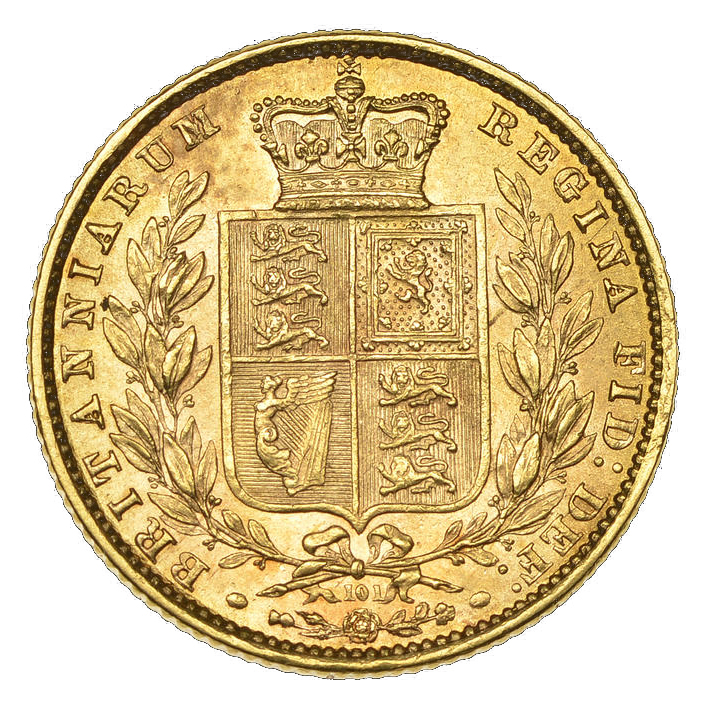
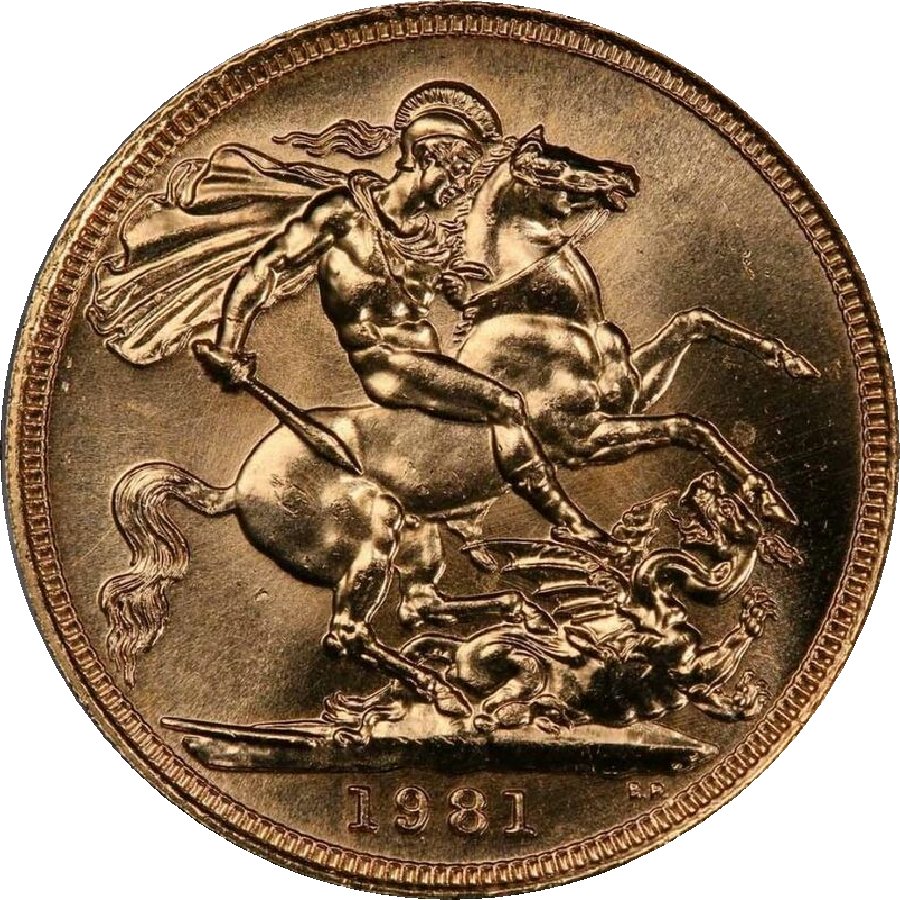
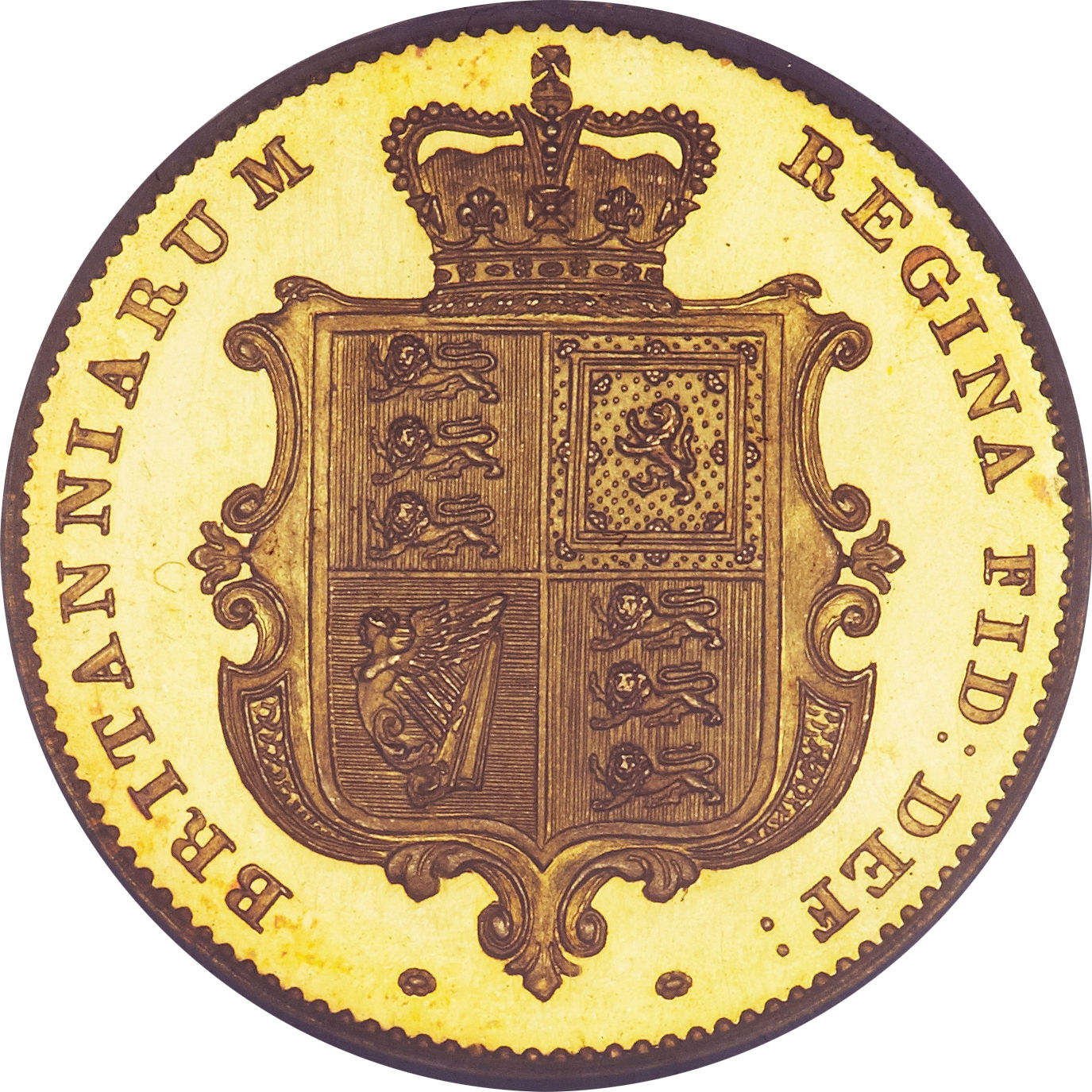
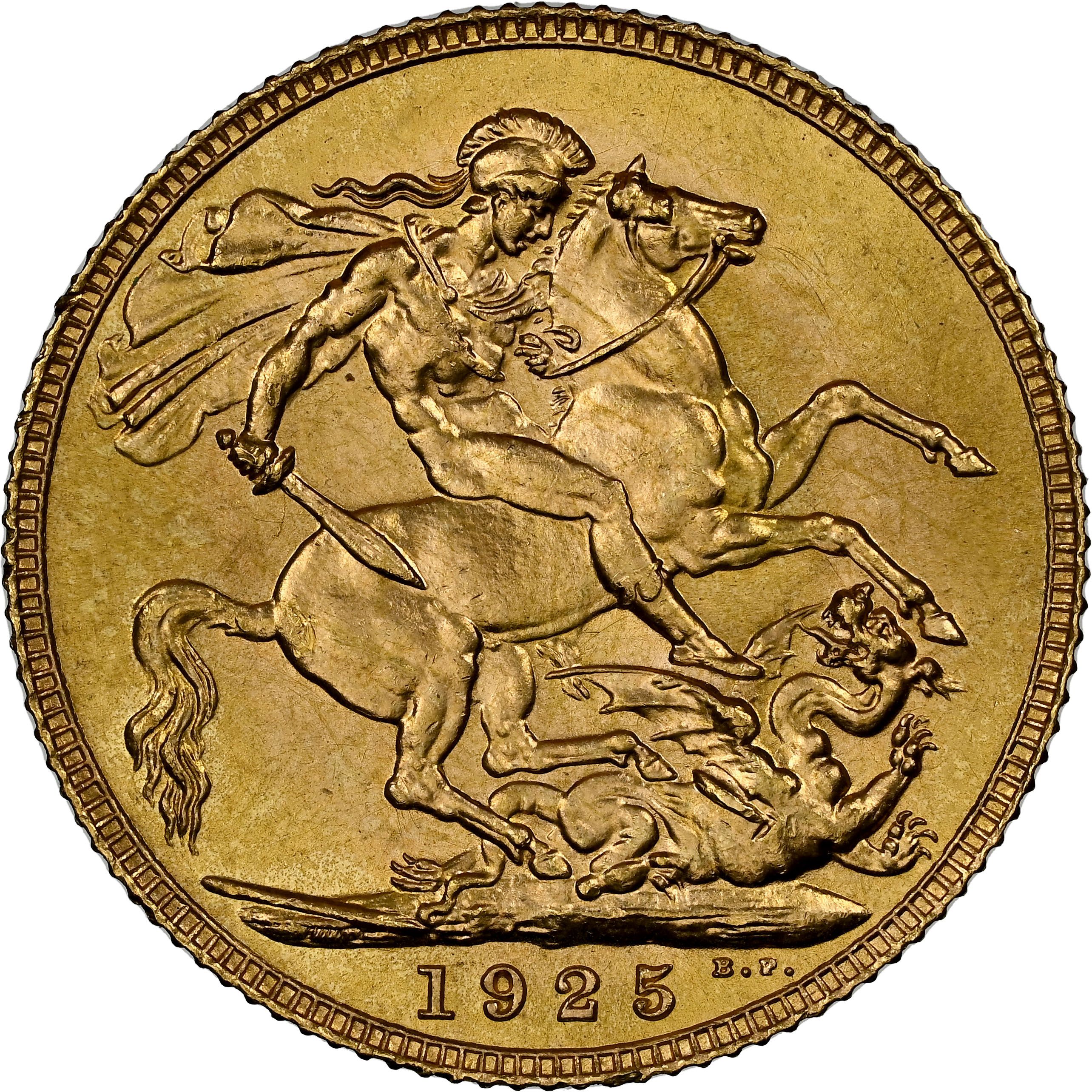
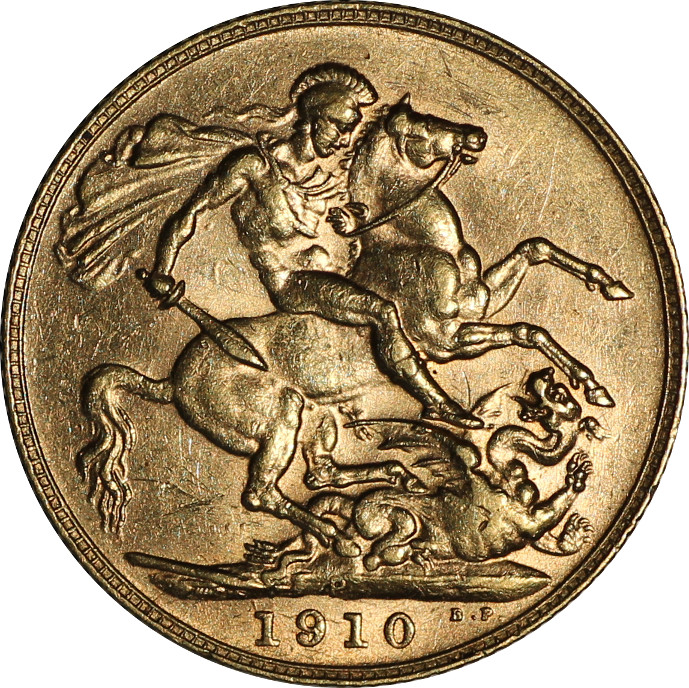
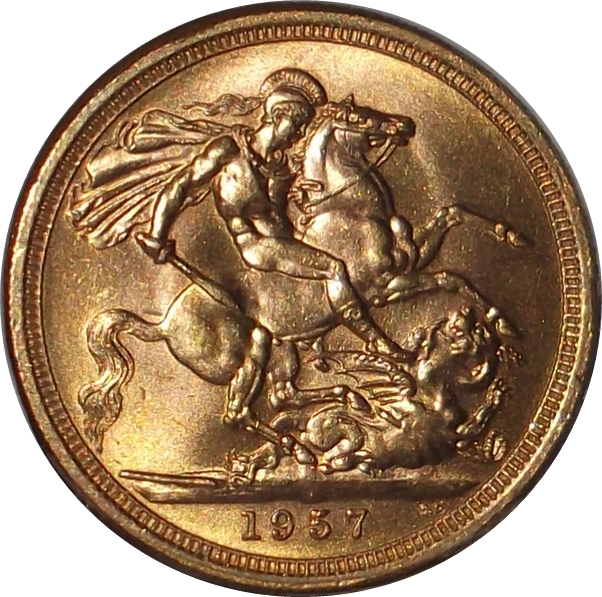
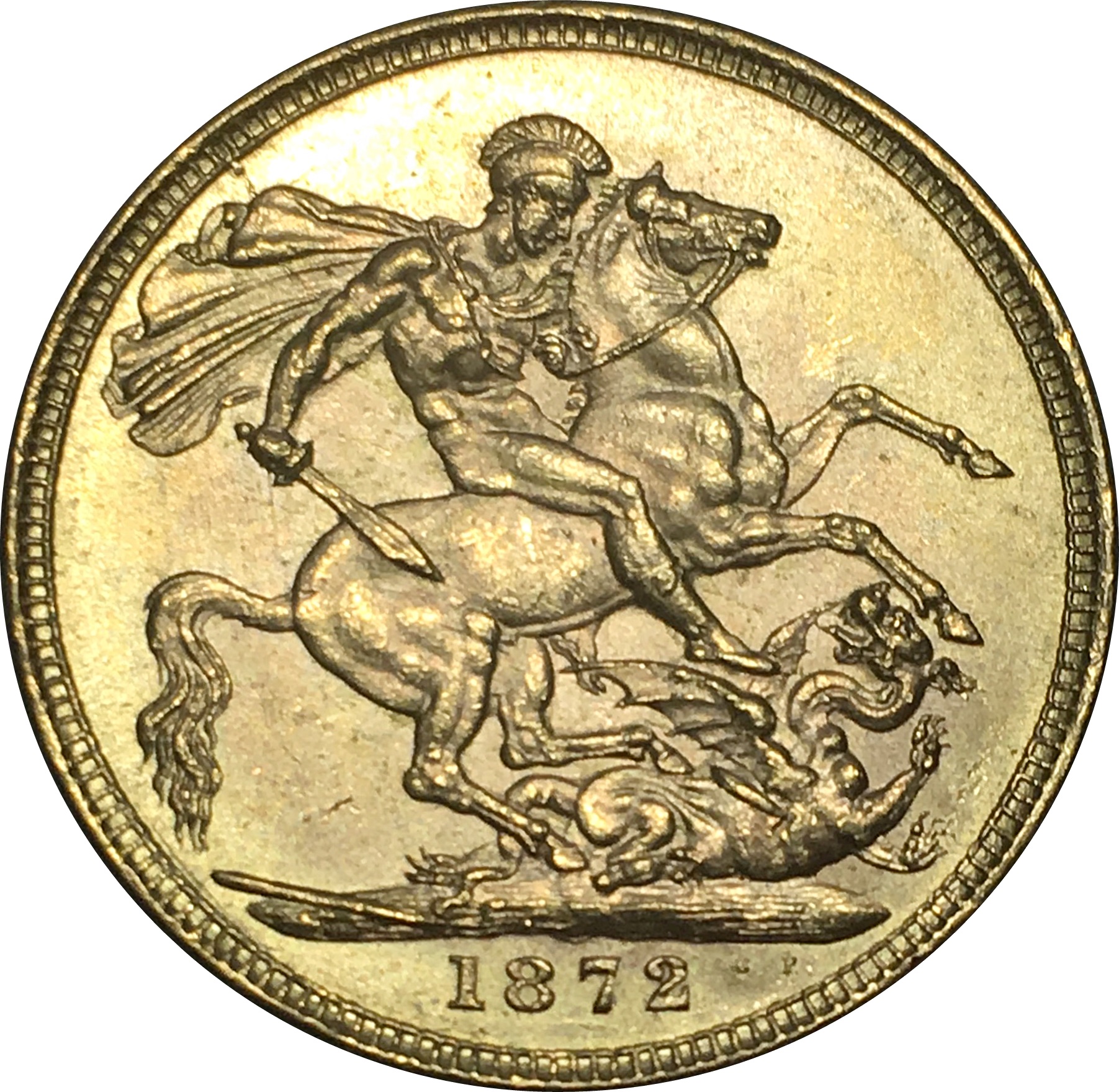
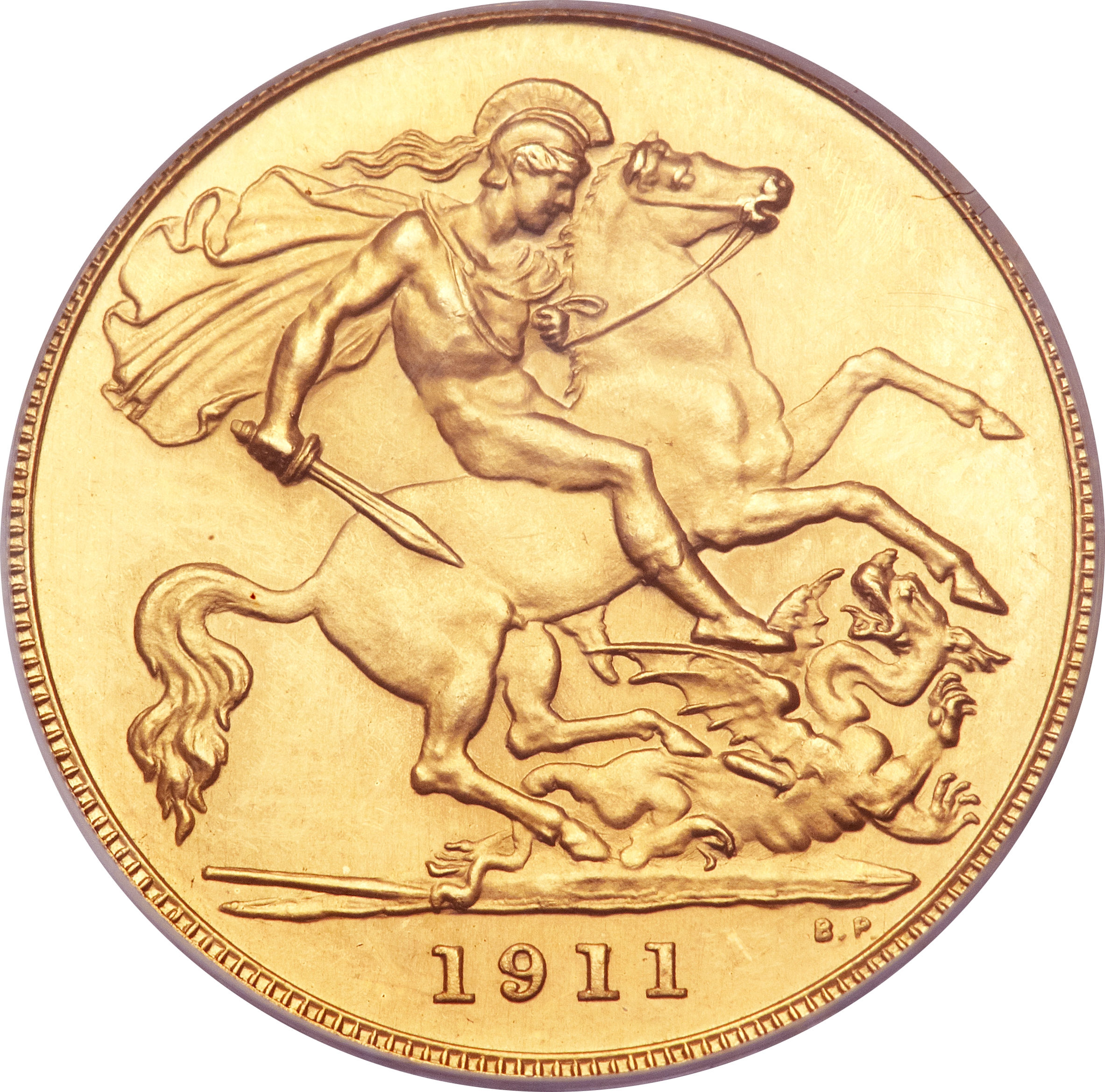
See the full sovereign values reference →
Related MyCoinage guides
- Sovereign value calculator, check the live bullion floor for any date before you pay a dealer premium.
- Gold sovereign values UK, full 1817–2026 price reference, mintmarks, rare dates and tax treatment.
- Junk silver UK coins, the silver-stacking alternative for UK private investors.
- Britannia 1oz silver £2 guide, the CGT-exempt silver coin sister to the sovereign.
- Coin collection insurance UK, how to value and insure a sovereign holding.
- Where to sell rare coins UK, venue-by-venue commission breakdown for sovereigns.
- How to authenticate a coin, the full home authentication procedure for any UK coin.
- How to get a coin graded UK, PCGS, NGC and CGS UK submission steps.
Frequently asked questions
How do I buy a gold sovereign in the UK?
How much does a gold sovereign cost?
What is the cheapest sovereign to buy?
Are sovereigns a good investment?
What is the difference between a bullion sovereign and a numismatic sovereign?
How do I authenticate a gold sovereign?
Are there fake gold sovereigns?
Where is the best place to buy gold sovereigns in the UK?
What sovereigns should I avoid as a beginner?
Should I buy a half sovereign instead of a full sovereign?
How do I store gold sovereigns?
Can I sell sovereigns back to a bullion dealer?
Further reading
- The Royal Mint Bullion, first-party current-year sovereign sales, plus authentication notes.
- Royal Mint Museum: The Sovereign, historical reference for every issue from 1817.
- LBMA precious metals prices, daily gold fix, the reference for melt calculations.
- HMRC manual CG78308, CGT exemption rules for legal-tender coins.
- VAT Notice 701/21A, the official investment gold coins list.
- British Numismatic Trade Association, member directory of registered UK coin dealers.
- Baldwin's of St James's, specialist British coin auctions.
- Spink Standard Catalogue of British Coins, the trade reference for sovereign dates, mintages and grade-specific values.