Rarely sells: 2 verified sales in the last 12 months.
½ Guinea - George III 2nd portrait (1764–1775)
| Country | United Kingdom |
| Year | 1764–1775 |
| Denomination | ½ Guinea |
| Face value | 52.5p |
| Mint | Royal Mint · Llantrisant |
| Circulation | Circulating |
| Demonetised | 1891 |
| Composition | Gold (.9167) (917/1000 fine) |
| Weight | 4.200g · 0.1238 t oz |
| Diameter | 20.0mm |
| Shape | Round |
| Edge | Milled |
| Orientation | Coin alignment ↑↓ |
| Obv. artist | Richard Yeo |
| Grade scale | UK (EF/UNC) |
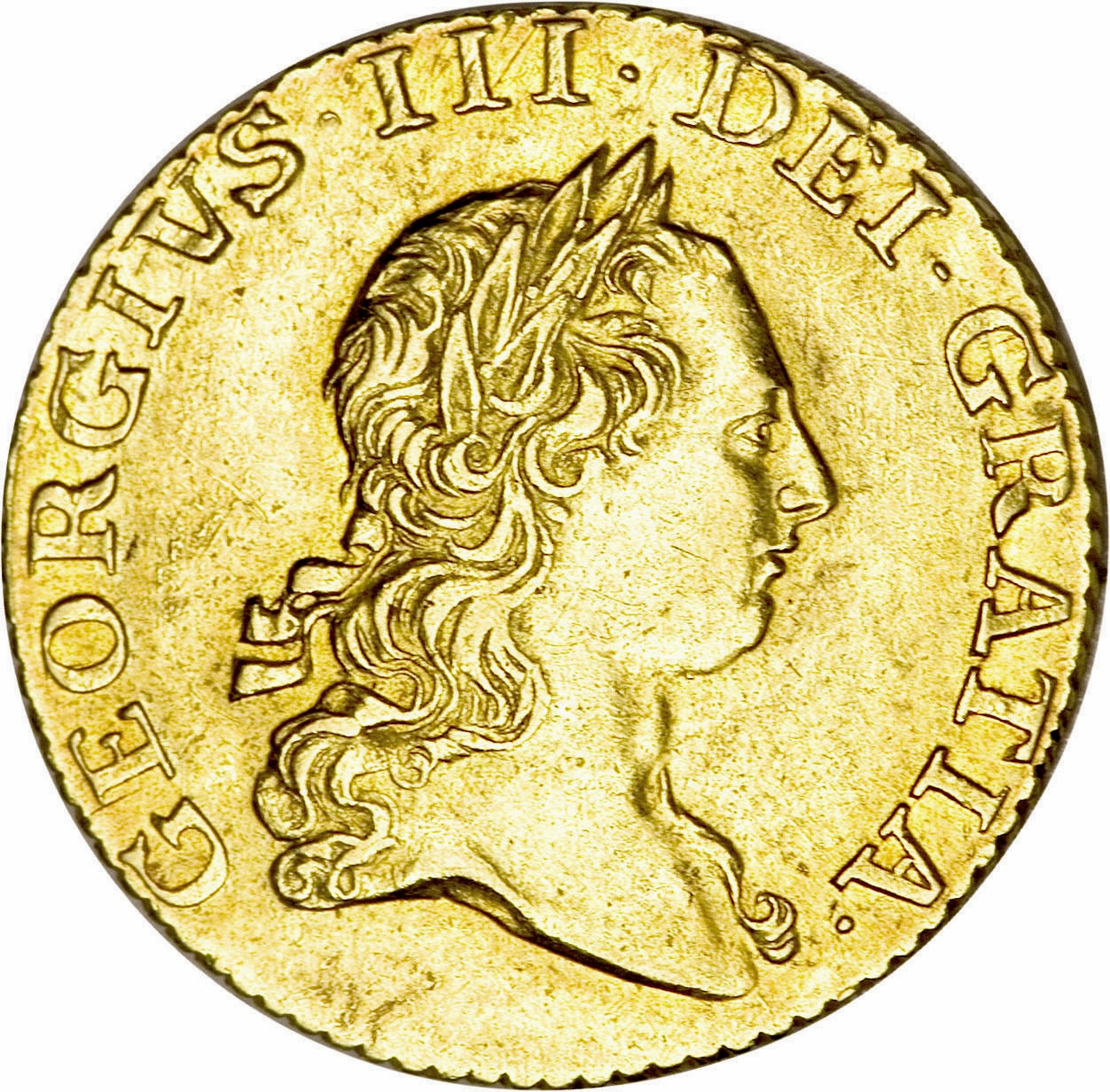
Second laureate portrait of King George III right, legend around.
GEORGIVS III DEI GRATIA
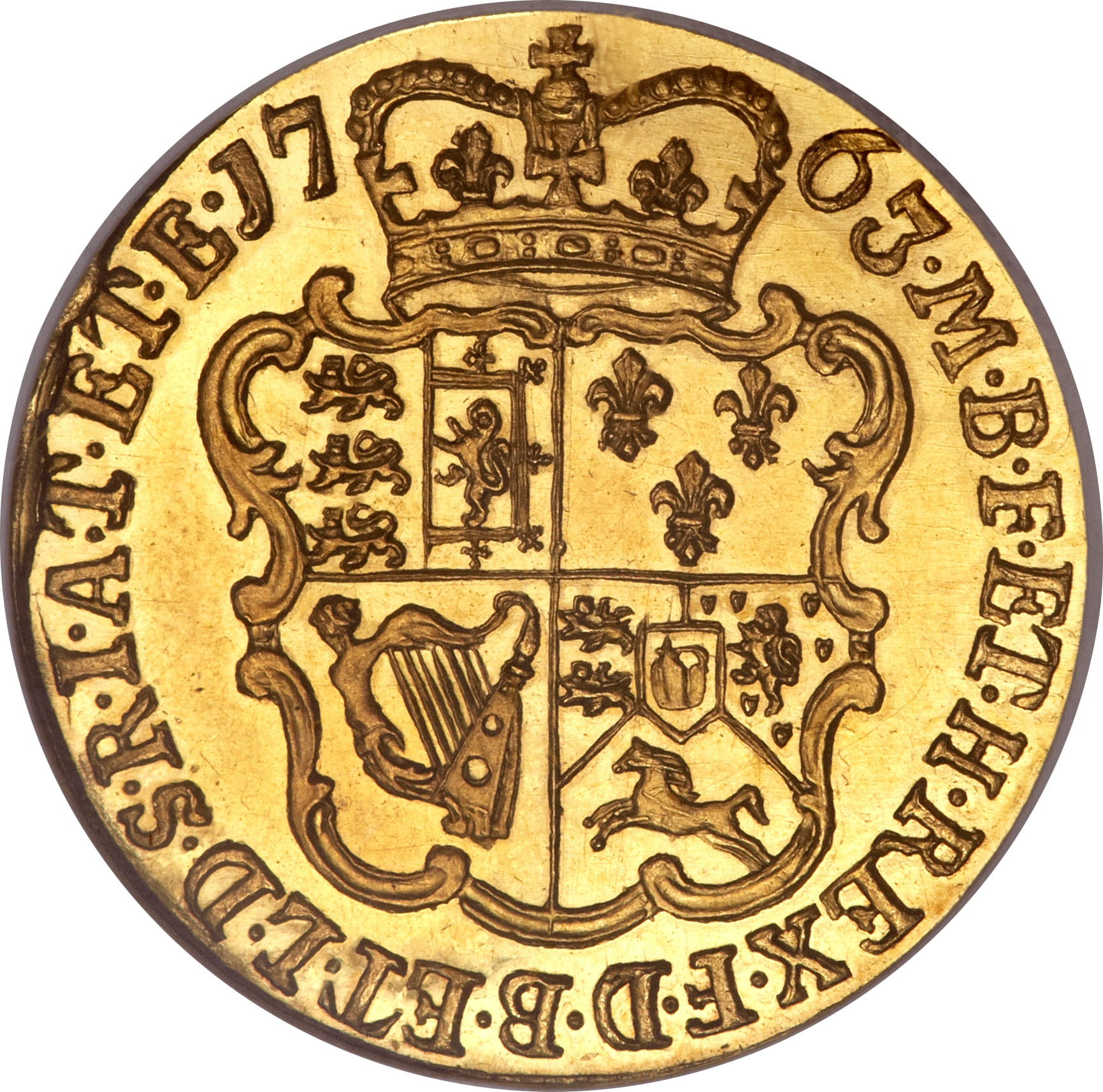
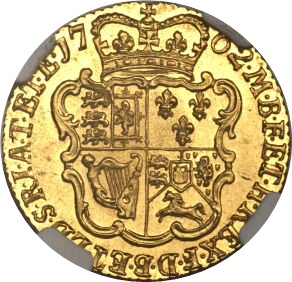
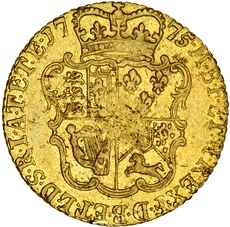
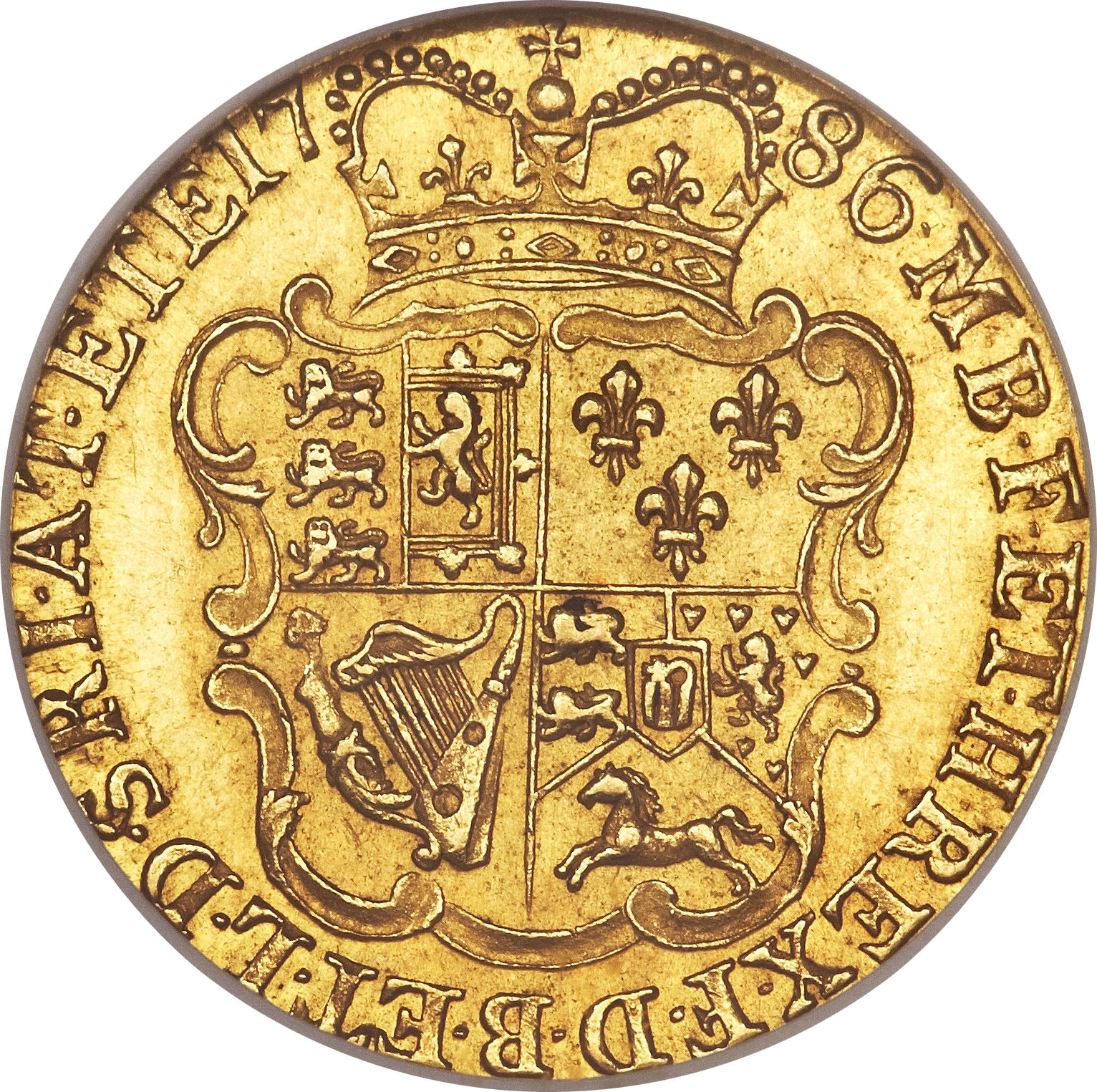
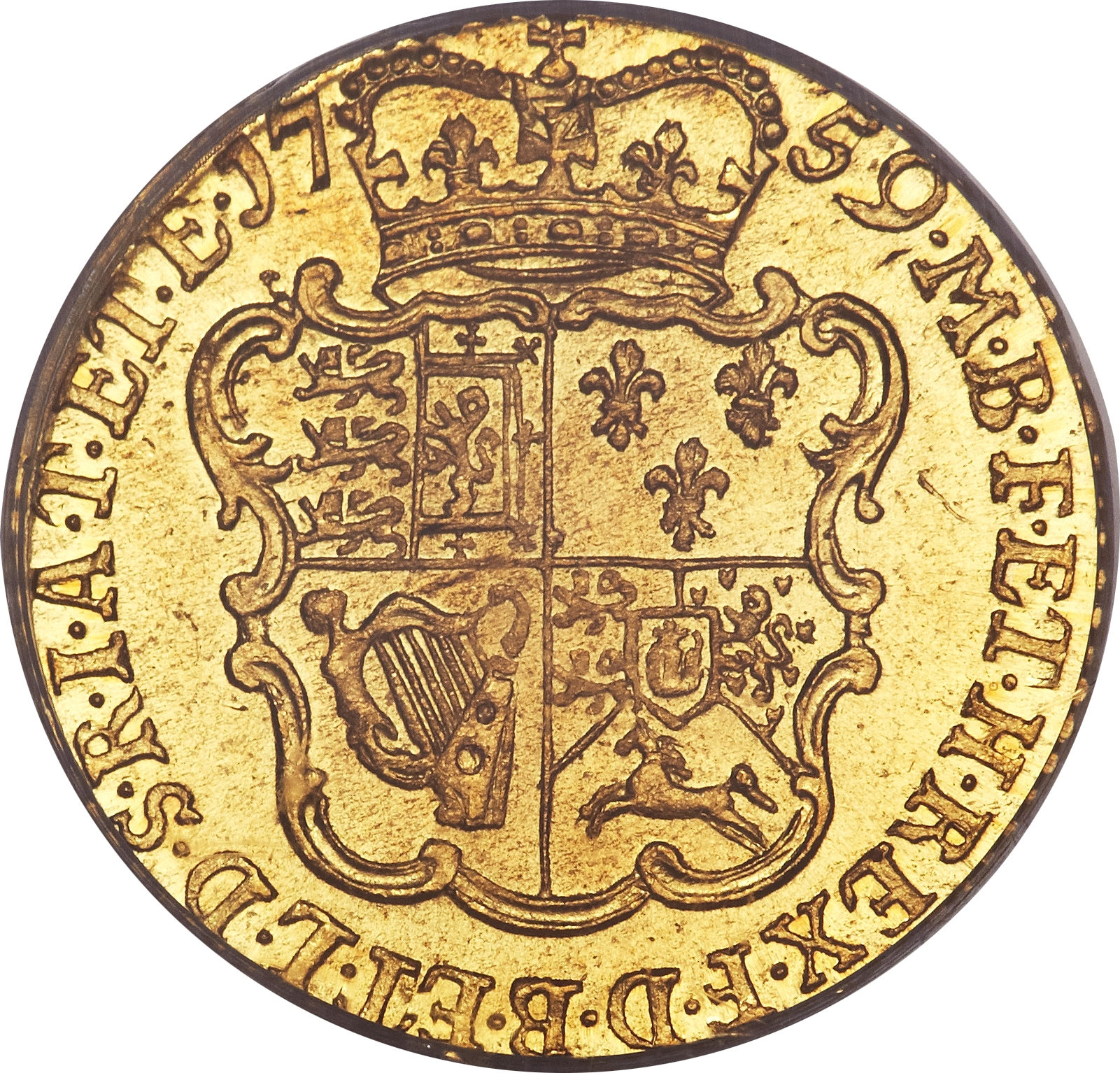
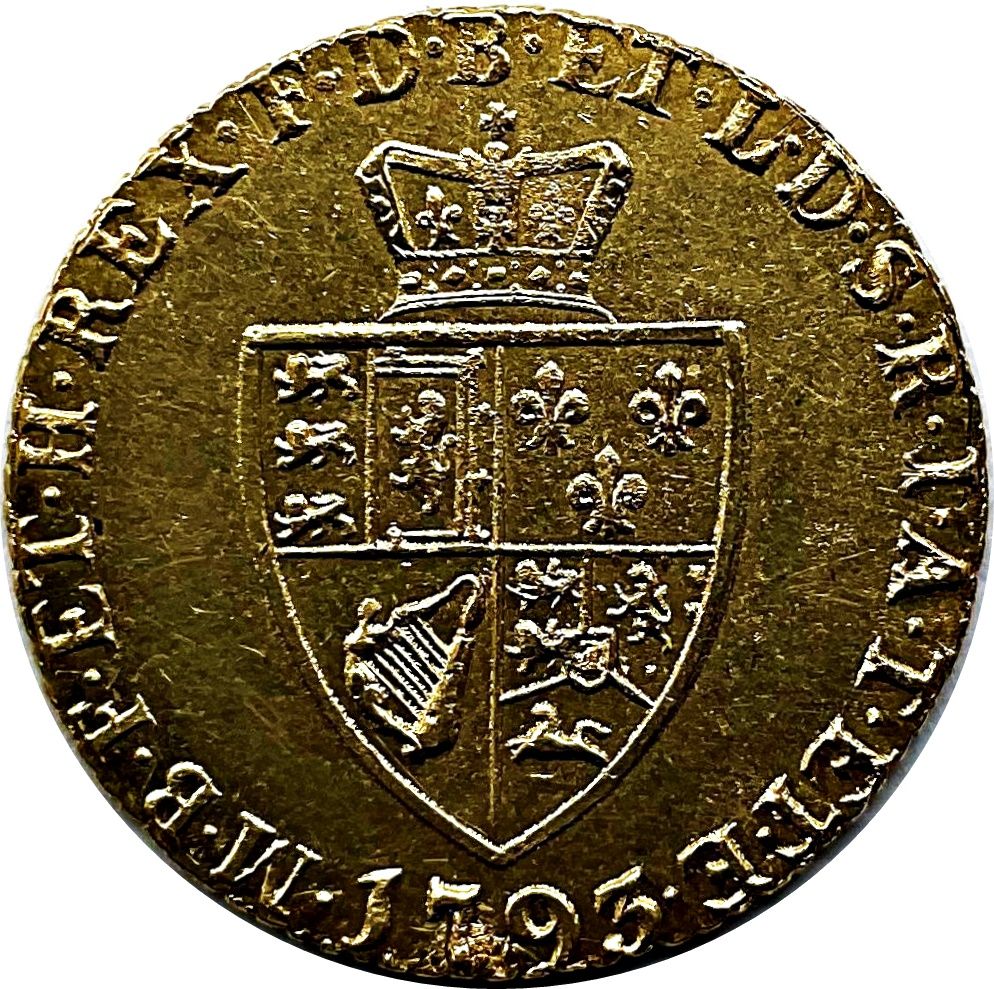
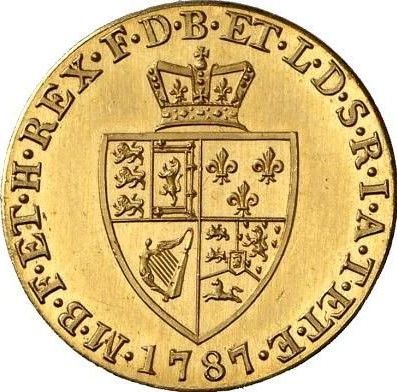
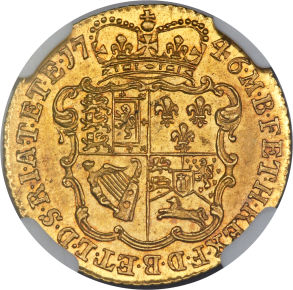
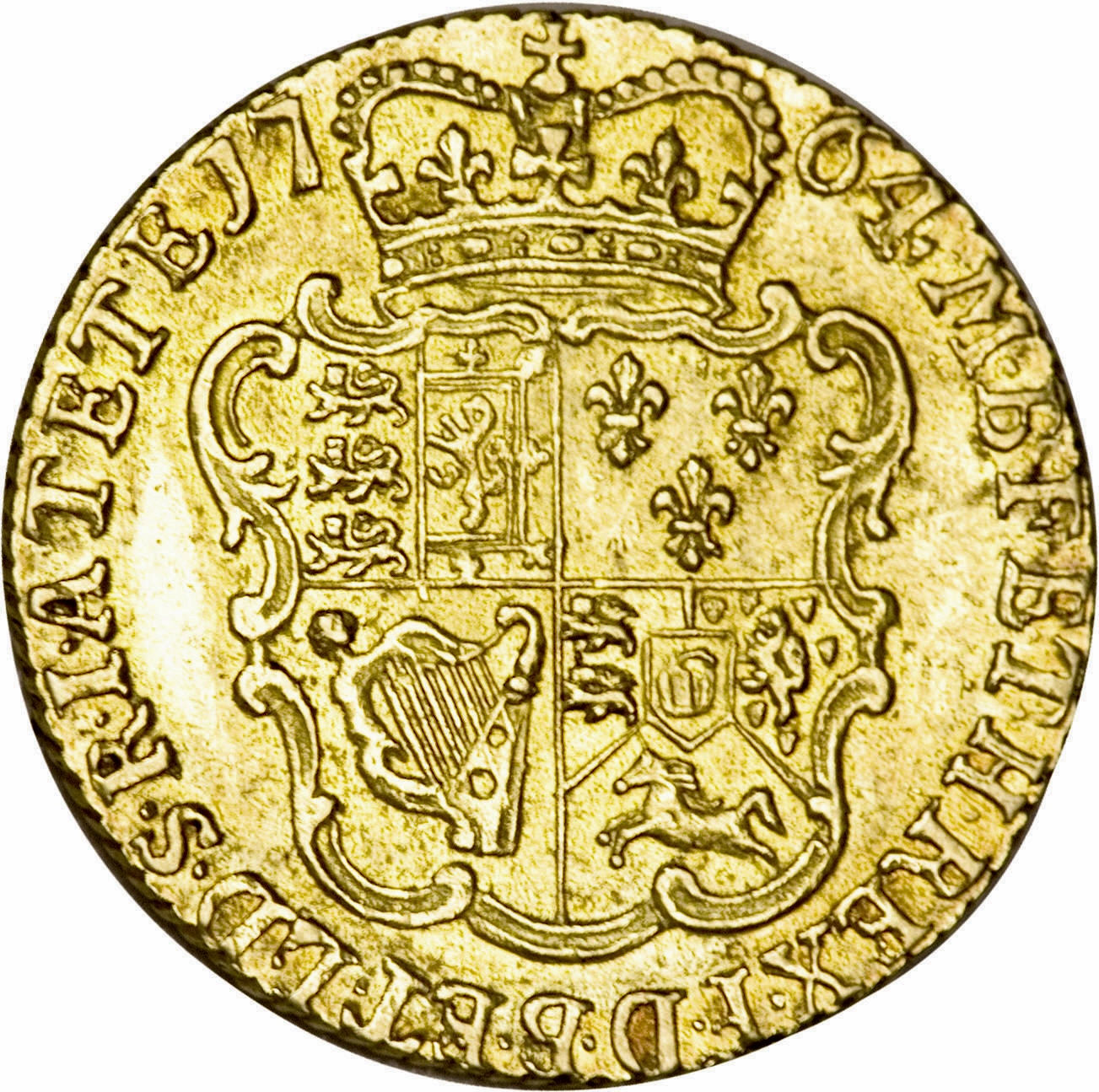
Orante crowned quartered shield of arms, divided date above, legend around.
M B F ET H REX F D B ET L D S R I A T ET E
Half Guinea - George III market value
Find this on eBay
AffiliateHalf Guinea - George III value by grade
Realised auction prices · ⭐ Pro Expand rows for individual sale records| Grade | Latest | Median | 30d Δ | All-time range | Sales (1yr) | Total sales | Last sale | |
|---|---|---|---|---|---|---|---|---|
| UNC | £1,800.00 🔒 | £1,800.00 (1) | – | £1,800.00 – £1,800.00 | 0 | 1 | 07-03-2021 | |
|
Loading…
|
||||||||
| EF | £1,400.00 🔒 | £1,400.00 (1) | – | £1,400.00 – £1,400.00 | 1 | 1 | 07-06-2026 | |
|
Loading…
|
||||||||
| VF | £800.00 🔒 | £800.00 (1) | – | £700.00 – £800.00 | 1 | 2 | 08-03-2026 | |
|
Loading…
|
||||||||
| F | £480.00 🔒 | £480.00 (1) | – | £320.00 – £480.00 | 0 | 2 | 05-03-2023 | |
|
Loading…
|
||||||||
| VG | £420.00 🔒 | £420.00 (1) | – | £420.00 – £420.00 | 0 | 1 | 02-12-2019 | |
|
Loading…
|
||||||||
About the 1764 Half Guinea - George III
The 1764 Half Guinea - George III is a circulating ½ guinea coin issued from 1764 to 1775, struck in 91.67% gold. It weighs 4.2g and measures 20mm across. Reverse design: Orante crowned quartered shield of arms, divided date above, legend around.
It is no longer legal tender (withdrawn 1891), so its value is to collectors only.
Common questions
How much is the 1764 Half Guinea - George III worth?
Verified sold prices for the 1764 Half Guinea - George III run from £420 to £1,800 across 5 grades, taking the median for each grade. Condition makes the difference, so check the grade table above before pricing one. Its gold content is worth about £372 at today's spot price, which puts a floor under its value.
What years have the second portrait half guinea?
Tony Clayton lists 1764, 1765, 1766, 1768, 1769, 1772, 1773 and 1774. CoinVarieties gives the portrait's run as 1764 to 1769 and 1773 to 1774. No half guineas were struck in 1767, 1770 or 1771, and 1774 also exists with the third portrait.
Which second portrait half guinea dates are scarce?
Clayton marks 1772 as exceptionally rare and gives no values for it, and he lists 1774 among the scarce George III half guinea dates. No mintage figure survives for any date, so these judgements come from how rarely coins appear.
How can I identify the second portrait?
The king's head is laureate and faces right, with long flowing hair behind and a love-lock over the left shoulder, as Hocking describes the Royal Mint's 1764 coin. The first portrait of 1762 to 1763 is more youthful, and the reverse of both is the same ornate crowned shield.
Is a George III half guinea legal tender?
No. All gold coins struck before Queen Victoria's reign were called in by a royal proclamation of 22 November 1890 and ceased to be legal tender from 28 February 1891.
How do I identify the 1764 Half Guinea - George III?
Check the weight 4.2g and diameter 20mm and the metal (91.67% gold) against the specification table on this page. The reverse design is described above.
History and design
The second portrait replaced the first on the half guinea in 1764 and stayed in use until 1774. Clayton lists coins dated 1764, 1765, 1766, 1768, 1769, 1772, 1773 and 1774. The half guinea was then worth ten shillings and sixpence, and CoinVarieties notes that by this time the Mint was producing little besides gold coins and Maundy sets.
The type ends in the year of a major gold recoinage. In 1774 almost 20 million worn guineas of William III and Queen Anne were melted and recoined as guineas and half guineas, and an Act of Parliament of the same year set minimum legal weights for gold, sending light coins back to the Mint. The 1774 date is found with both this and the third portrait. No mintage figure survives for any date.
The obverse is a young laureate head of George III facing right, which Hocking describes on the Royal Mint's 1764 coin as having long flowing hair behind and a love-lock over the left shoulder, with GEORGIVS III DEI GRATIA. The Royal Mint Museum credits the youthful gold portraits of these years to Richard Yeo, formally made Chief Engraver in 1768.
The reverse keeps the ornate crowned shield, quartering England and Scotland, France, Ireland and Hanover, with M B F ET H REX F D B ET L D S R I A T ET E and the date. The edge is grained obliquely, and the Royal Mint Museum's 1764 example weighs 4.21 g.
Collecting notes
Clayton marks 1772 as exceptionally rare and includes 1774 among the scarce George III dates; the others turn up more often. On a 1774 coin, check the portrait, since the third head was also used that year and is much rarer. The edge graining should run unbroken around the coin, as filing gold from the coins was the problem the 1774 Act tackled.
The type was preceded by the first portrait half guinea. All gold struck before Victoria was called in by proclamation of 22 November 1890 and demonetised from 28 February 1891.
Sources
The history, design, varieties and collecting notes on this page are drawn from these sources. Prices come from recorded sales, not from them.
- Half guinea, Wikipedia (read 12 Oct 2026)
- Catalogue of the Coins, Tokens, Medals, Dies and Seals in the Museum of the Royal Mint, Vol. I Part I (Hocking, 1906), page 162, Nos. 1779 to 1781, Royal Mint Museum library (read 12 Oct 2026)
- George III, Royal Mint Museum (read 12 Oct 2026)
- Catalogue of the Coins, Tokens, Medals, Dies and Seals in the Museum of the Royal Mint, Vol. I Part I (Hocking, 1906), page 155, No. 1698, Royal Mint Museum library (read 12 Oct 2026)
- George III half-guinea, 1764 (RMM 960), The Royal Mint Museum, via Museum Data Service (read 12 Oct 2026)
- Coins of the UK: values of half guineas and half sovereigns (date listing), Tony Clayton, Coins of the UK (read 12 Oct 2026)
- Great Britain 1773 1/2 guinea, CoinVarieties (read 12 Oct 2026)
- Great Britain 1764 1/2 guinea, CoinVarieties (read 12 Oct 2026)
- Sovereign (British coin), Wikipedia (read 12 Oct 2026)
- Coins of the UK: Ten Shillings and Half Guinea, Tony Clayton, Coins of the UK (read 12 Oct 2026)
More ½ Guinea coins from nearby years