½ Guinea - George III 3rd portrait (1774–1775)
| Country | United Kingdom |
| Year | 1774–1775 |
| Denomination | ½ Guinea |
| Face value | 52.5p |
| Mint | Royal Mint · Llantrisant |
| Circulation | Circulating |
| Demonetised | 1891 |
| Composition | Gold (.9167) (917/1000 fine) |
| Weight | 4.200g · 0.1238 t oz |
| Diameter | 21.0mm |
| Shape | Round |
| Orientation | Coin alignment ↑↓ |
| Grade scale | UK (EF/UNC) |
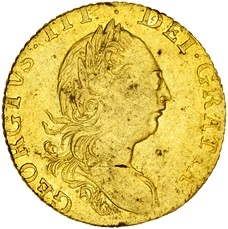
Third laureate portrait of King George III right, legend around.
GEORGIVS III DEI GRATIA
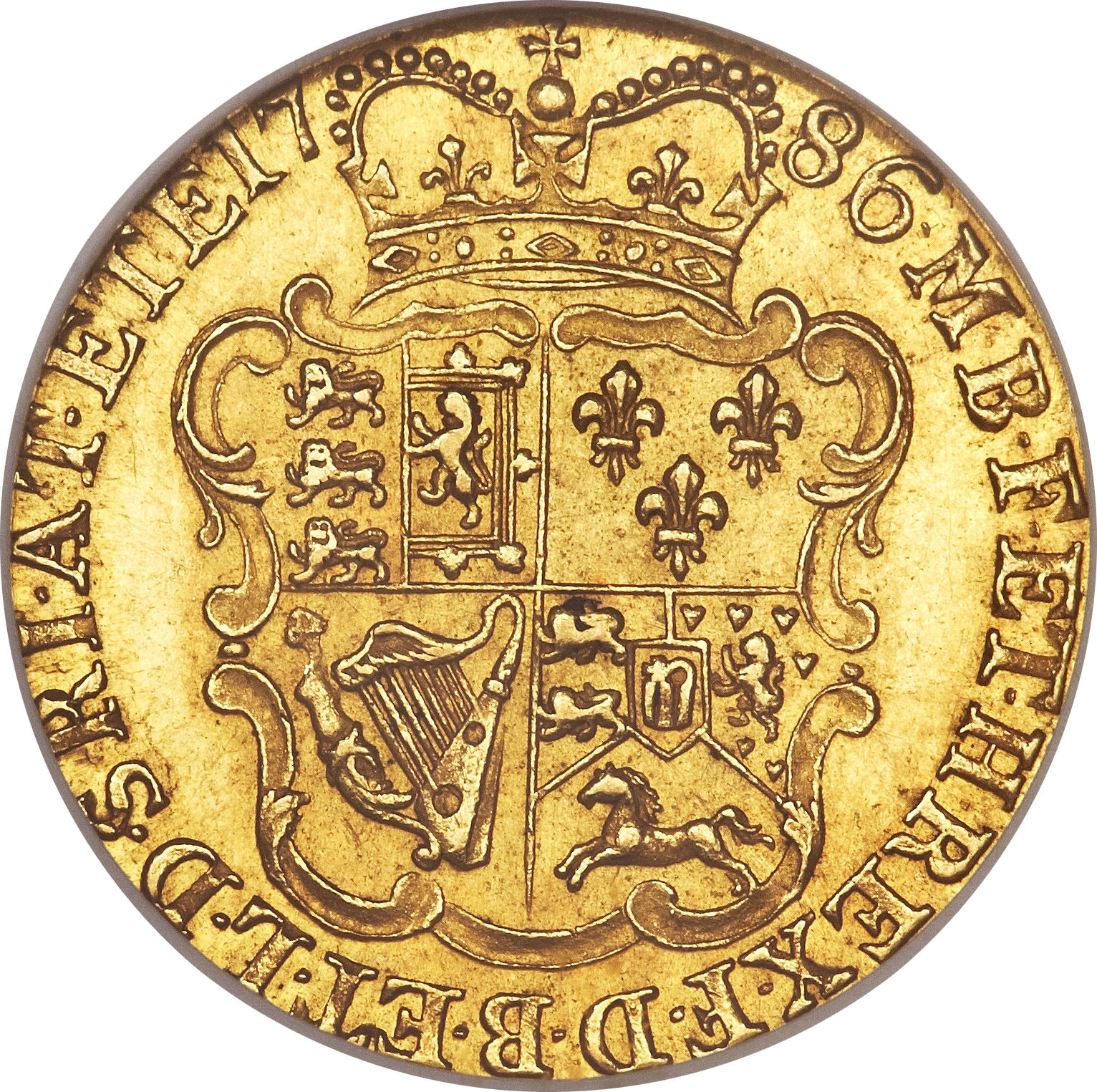
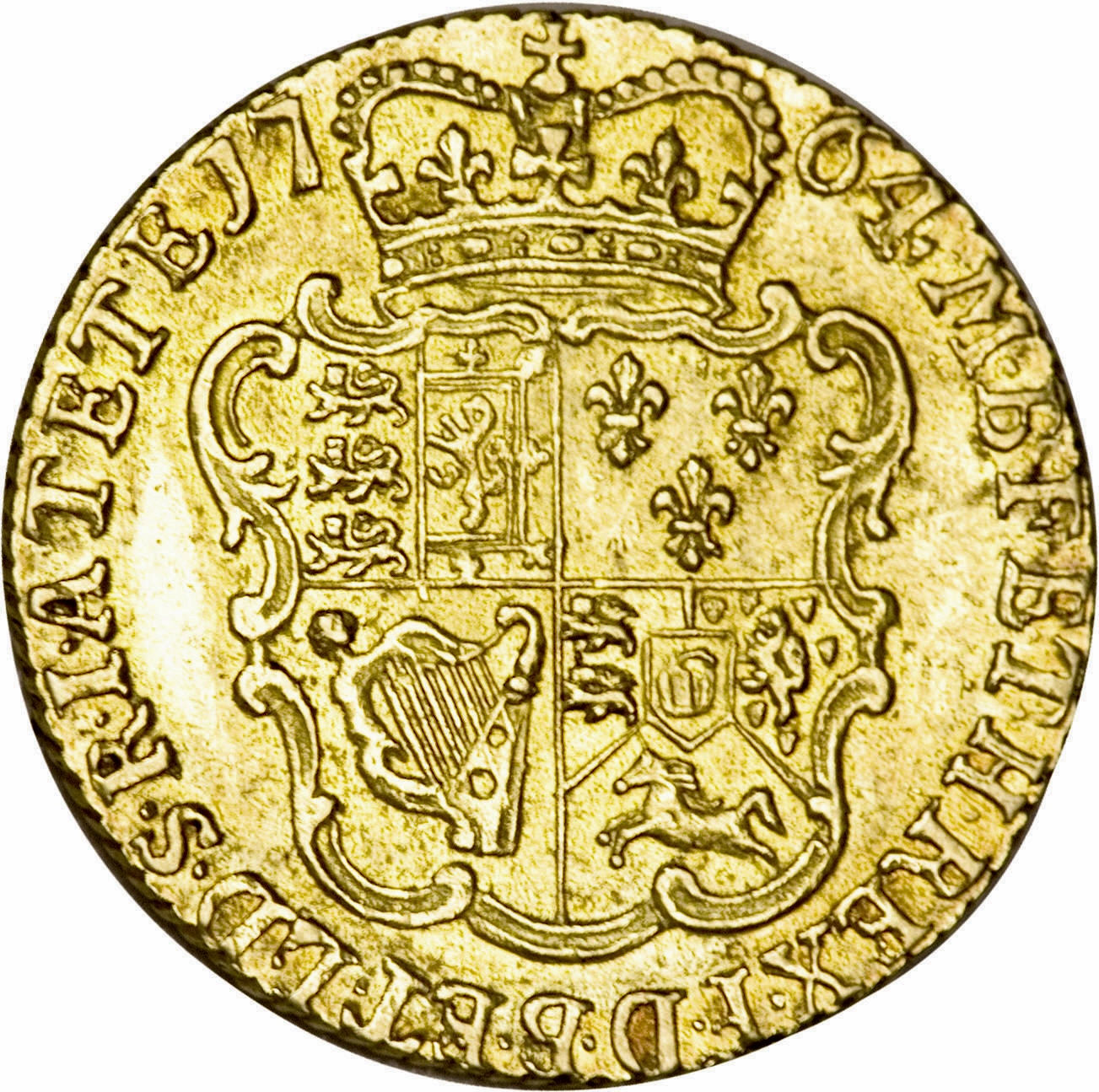
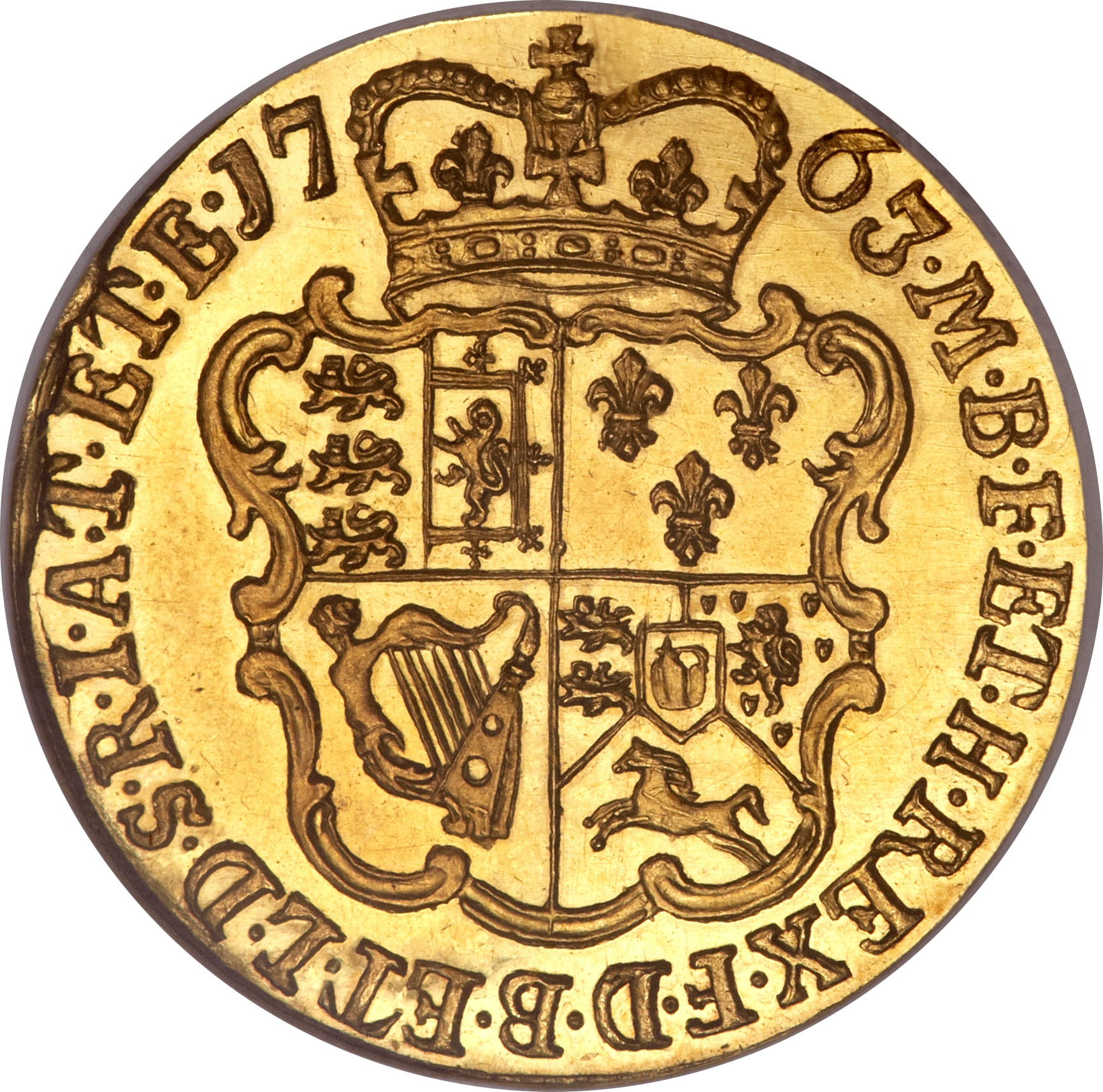
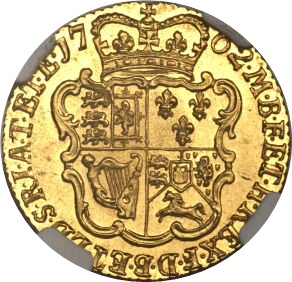
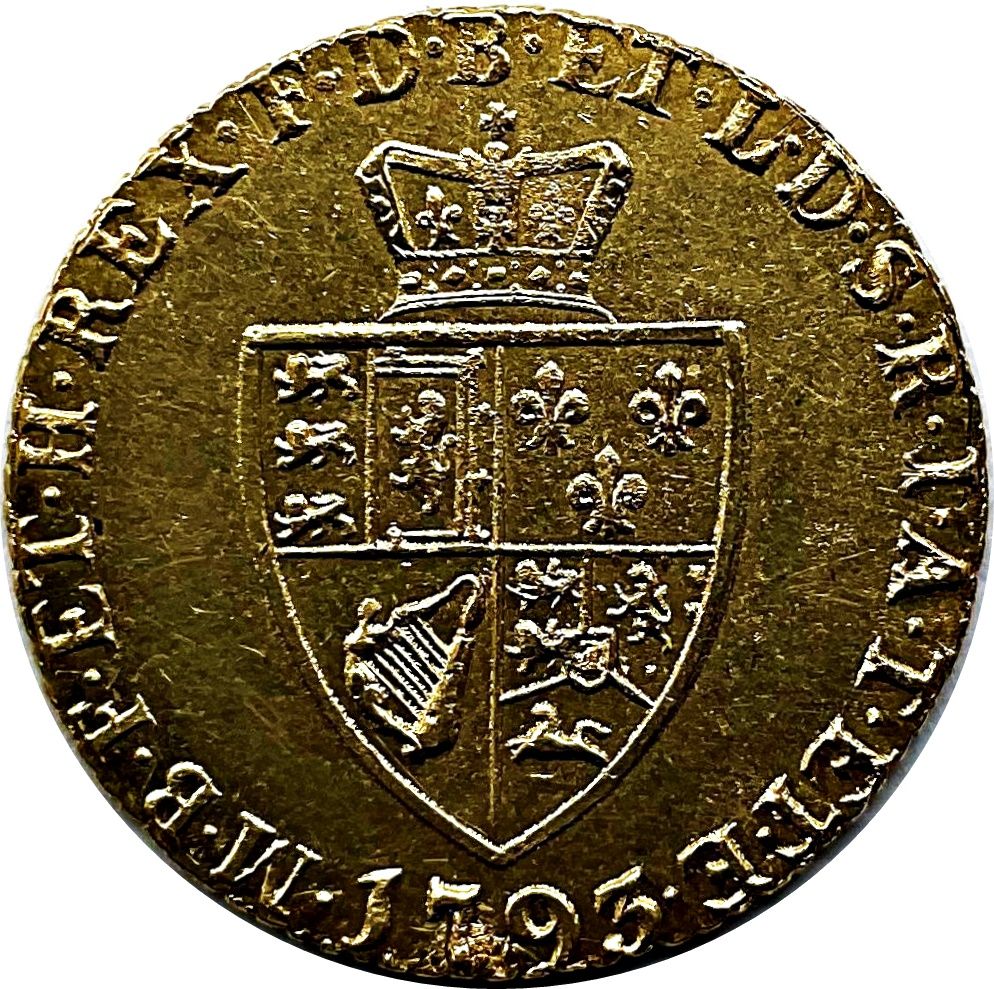
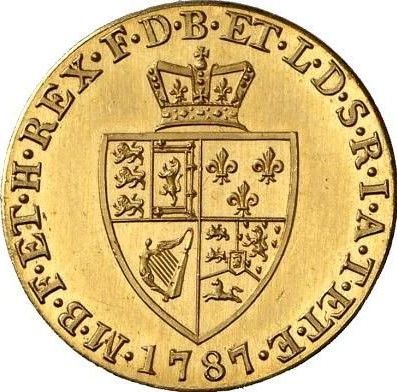
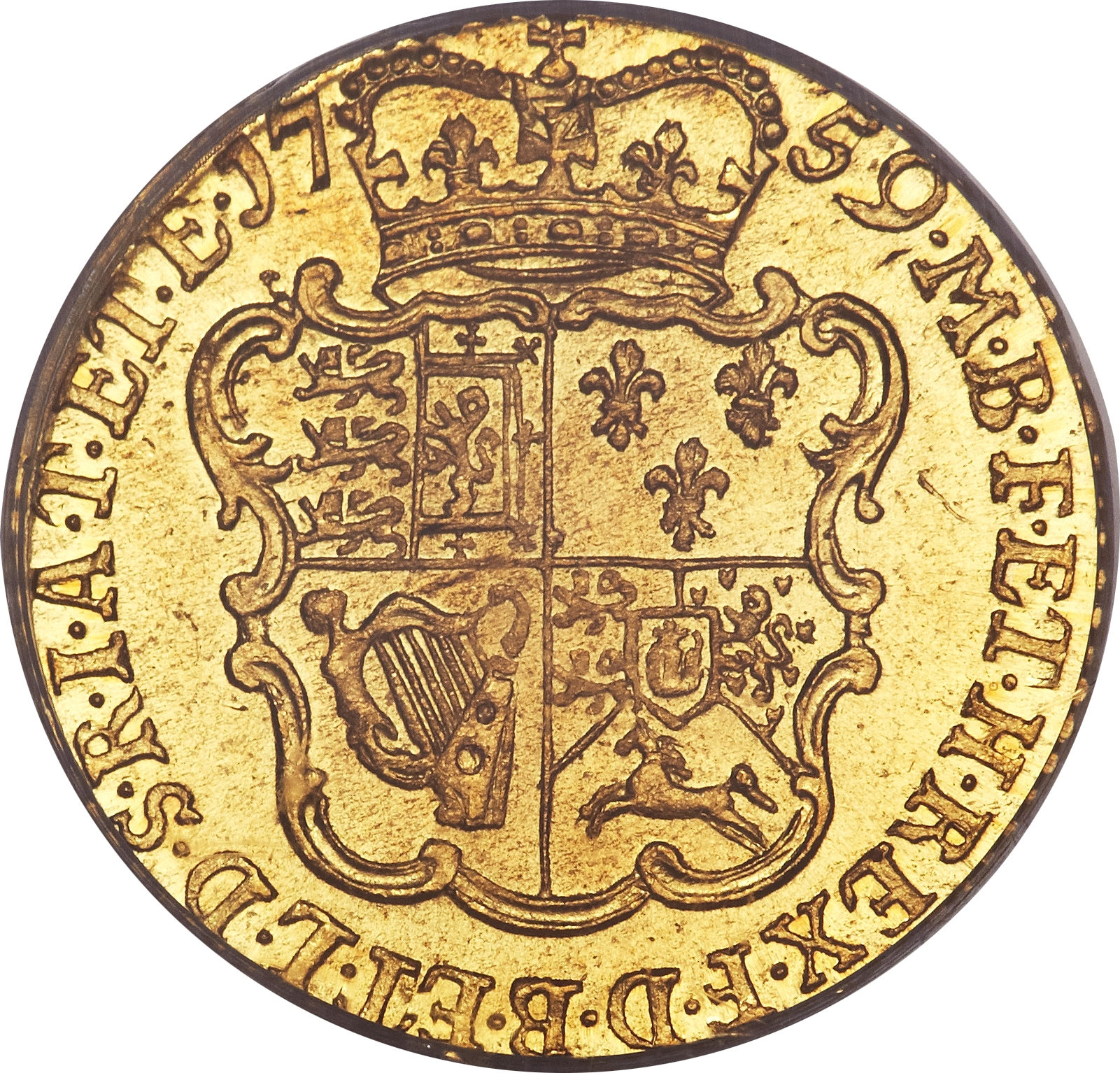
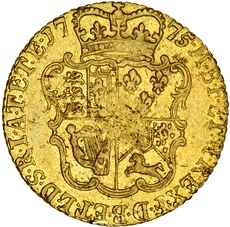
Crowned quartered shield showing the arms of England & Scotland, France, Ireland and Hanover, divided date above, legend around.
M B F ET H REX F D B ET L D S R I A T ET E
Find this on eBay
AffiliateAbout the 1774 Half Guinea - George III
The 1774 Half Guinea - George III is a circulating ½ guinea coin issued from 1774 to 1775, struck in 91.67% gold. It weighs 4.2g and measures 21mm across. Reverse design: Crowned quartered shield showing the arms of England & Scotland, France, Ireland and Hanover, divided date above, legend around.
It is no longer legal tender (withdrawn 1891), so its value is to collectors only.
Common questions
How much is the 1774 Half Guinea - George III worth?
No verified sale of the 1774 Half Guinea - George III has been logged on MyCoinage yet. Its gold content is worth about £372 at today's spot price, which puts a floor under its value.
How rare is the third portrait half guinea?
It is one of the two rarest half guinea types of George III. CoinVarieties ranks the 1774 to 1775 third portrait (Friedberg 360) equal with the 1762 to 1763 first portrait as the rarest of the reign, and Tony Clayton lists the 1774 third portrait coin as exceptionally rare, without values.
Which dates have the third portrait?
Only 1774 and 1775. Both dates were also struck with other portraits: 1774 with the second portrait and 1775 with the fourth, so the date alone does not identify the type. No mintage figure survives for either.
Is a George III half guinea legal tender?
No. A royal proclamation of 22 November 1890 called in all gold coins struck before Queen Victoria's reign, and they ceased to be legal tender from 28 February 1891.
How do I identify the 1774 Half Guinea - George III?
Check the weight 4.2g and diameter 21mm and the metal (91.67% gold) against the specification table on this page. The reverse design is described above.
History and design
The third portrait was one of the shortest-lived of George III's half guinea types. Tony Clayton lists it for only two dates, 1774 and 1775, and both years were also struck with other portraits: the second portrait was still in use in 1774, and the fourth had arrived by 1775. No mintage figure survives for either date.
It belongs to a year of large gold output. In 1774 almost 20 million worn guineas of William III and Queen Anne were melted down and recoined as guineas and half guineas, and an Act of the same year set minimum legal weights for gold coin. CoinVarieties ranks this type with the first portrait of 1762 to 1763 as the rarest half guinea of the reign.
The obverse is a new laureate portrait of George III facing right, with GEORGIVS III DEI GRATIA. The Royal Mint Museum notes that when a new portrait was required in the 1770s it was not Richard Yeo but Thomas and Lewis Pingo who produced the more mature heads of the later coins; Thomas Pingo had been Assistant Engraver since 1771.
The reverse is unchanged: the ornate crowned shield quartering England and Scotland, France, Ireland and Hanover, with M B F ET H REX F D B ET L D S R I A T ET E and the date.
Collecting notes
Because 1774 and 1775 were struck with other portraits, attribution depends on comparing the head with the second portrait, which CoinVarieties dates to 1764 to 1774, and the fourth, used from 1775 to 1786. Clayton lists the 1774 third portrait coin as exceptionally rare and the 1775 as the date more likely to be met.
Like all gold struck before Victoria, it was called in by proclamation of 22 November 1890 and ceased to be legal tender from 28 February 1891.
Sources
The history, design, varieties and collecting notes on this page are drawn from these sources. Prices come from recorded sales, not from them.
- Half guinea, Wikipedia (read 12 Oct 2026)
- George III, Royal Mint Museum (read 12 Oct 2026)
- Coins of the UK: values of half guineas and half sovereigns (date listing), Tony Clayton, Coins of the UK (read 12 Oct 2026)
- Great Britain 1762 1/2 guinea, CoinVarieties (read 12 Oct 2026)
- Coins of the UK: Ten Shillings and Half Guinea, Tony Clayton, Coins of the UK (read 12 Oct 2026)
- Sovereign (British coin), Wikipedia (read 12 Oct 2026)
- Great Britain 1773 1/2 guinea, CoinVarieties (read 12 Oct 2026)
- Great Britain 1776 1/2 guinea, CoinVarieties (read 12 Oct 2026)
More ½ Guinea coins from nearby years