½ Guinea - George II (1747–1760)
| Country | United Kingdom |
| Year | 1747–1760 |
| Denomination | ½ Guinea |
| Face value | 52.5p |
| Mint | Royal Mint · Llantrisant |
| Circulation | Circulating |
| Demonetised | 1891 |
| Composition | Gold (.9167) (917/1000 fine) |
| Weight | 4.200g · 0.1238 t oz |
| Diameter | 20.0mm |
| Shape | Round |
| Edge | Milled |
| Orientation | Coin alignment ↑↓ |
| Obv. artist | John Sigismund Tanner |
| Rev. artist | John Ochs |
| Grade scale | UK (EF/UNC) |
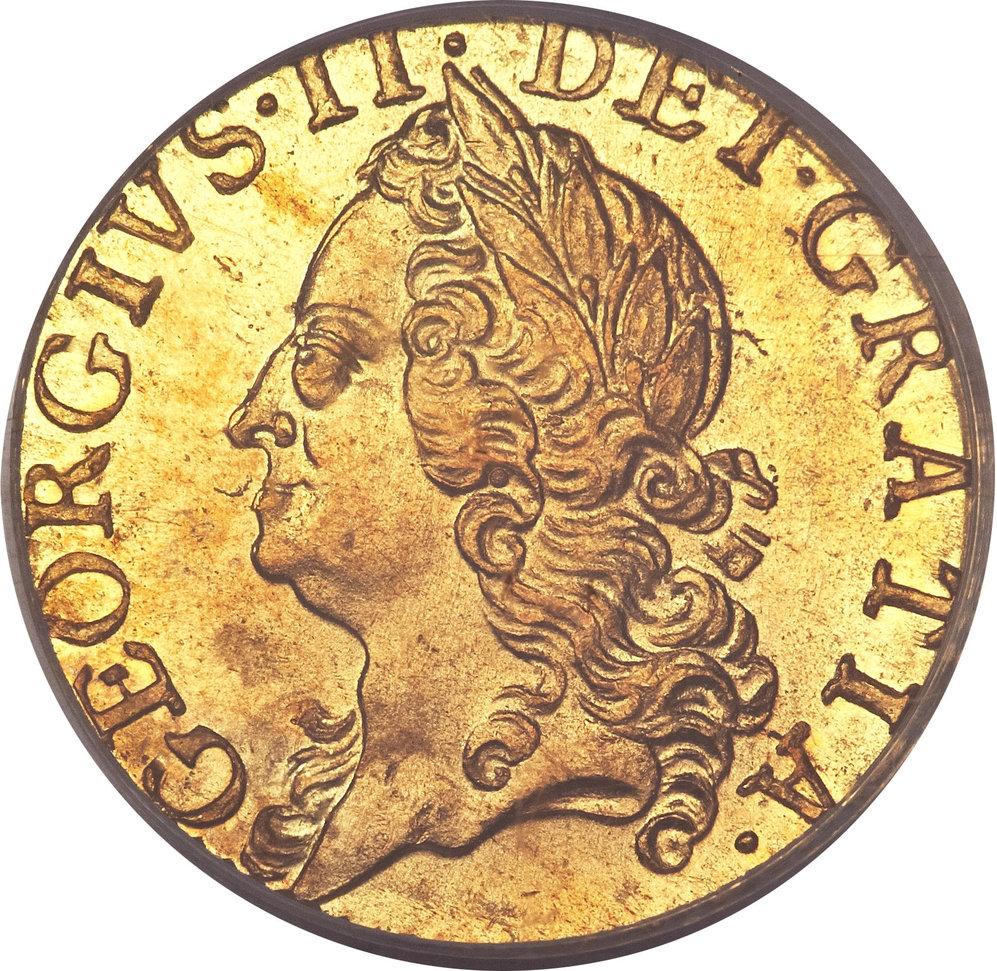
Old laureate portrait of King George II left, legend around.
GEORGIVS II DEI GRATIA
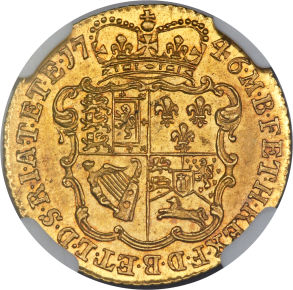
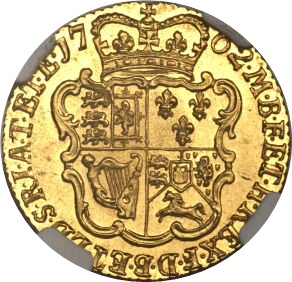
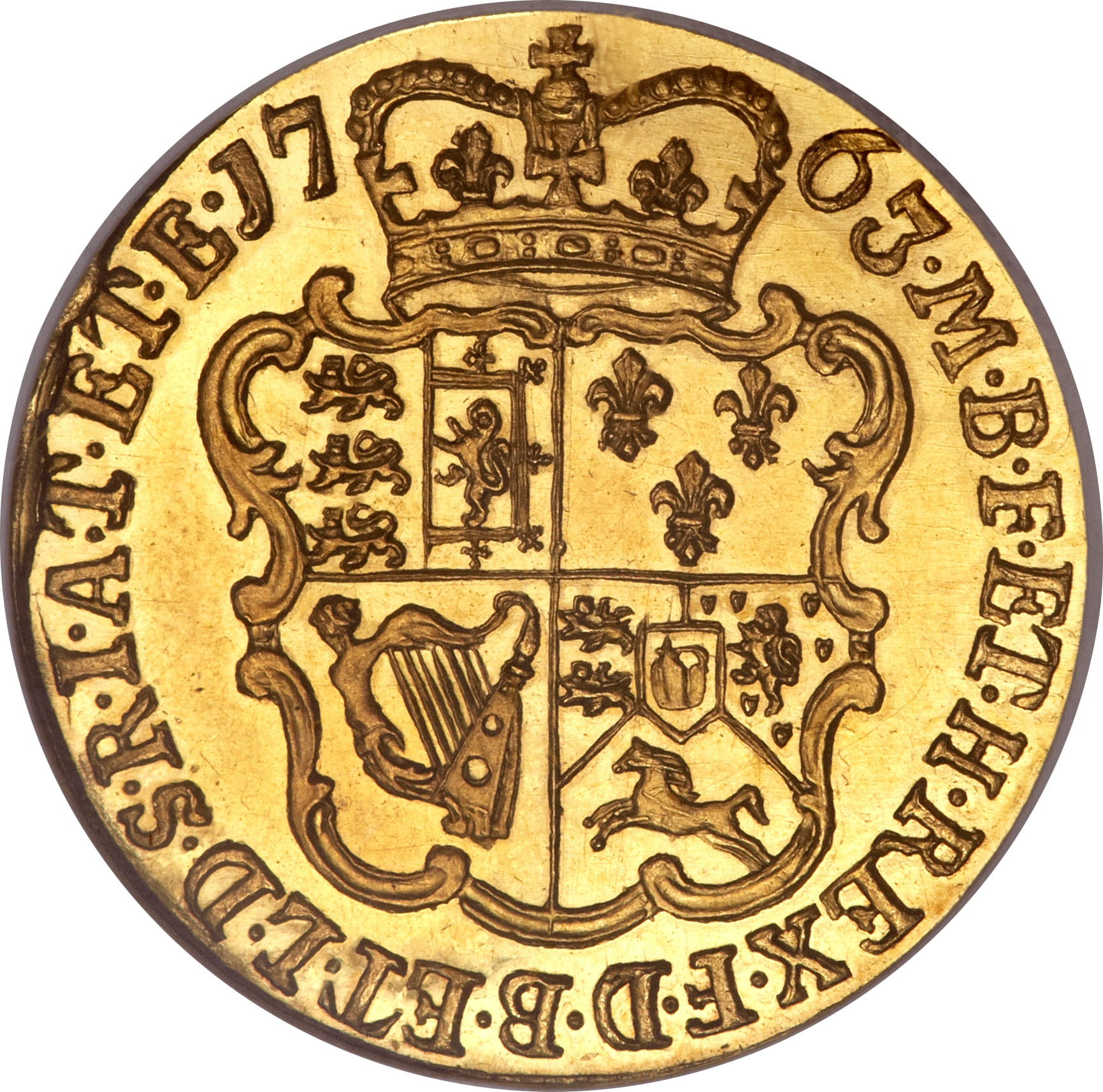
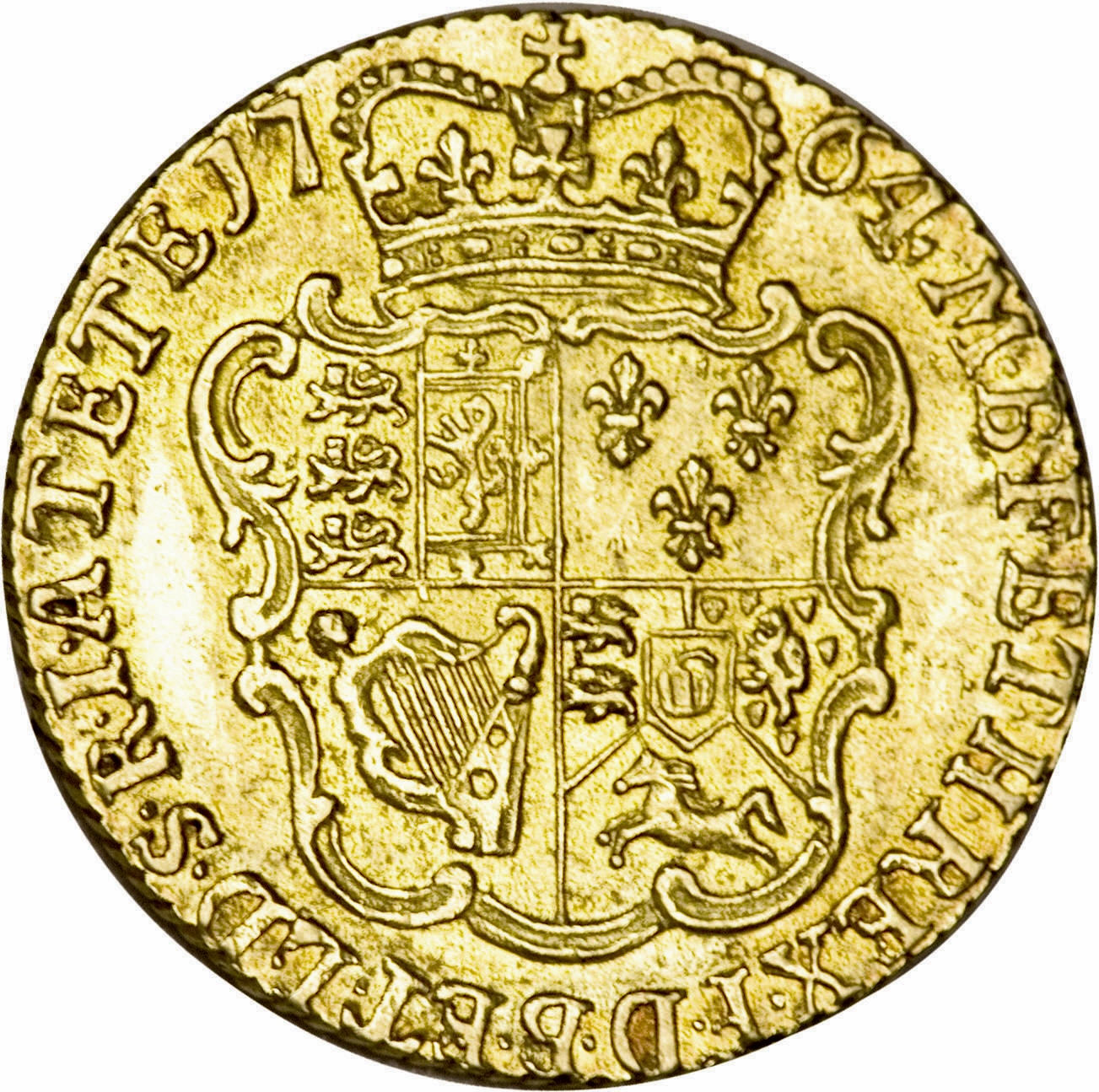
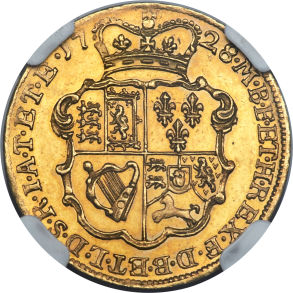
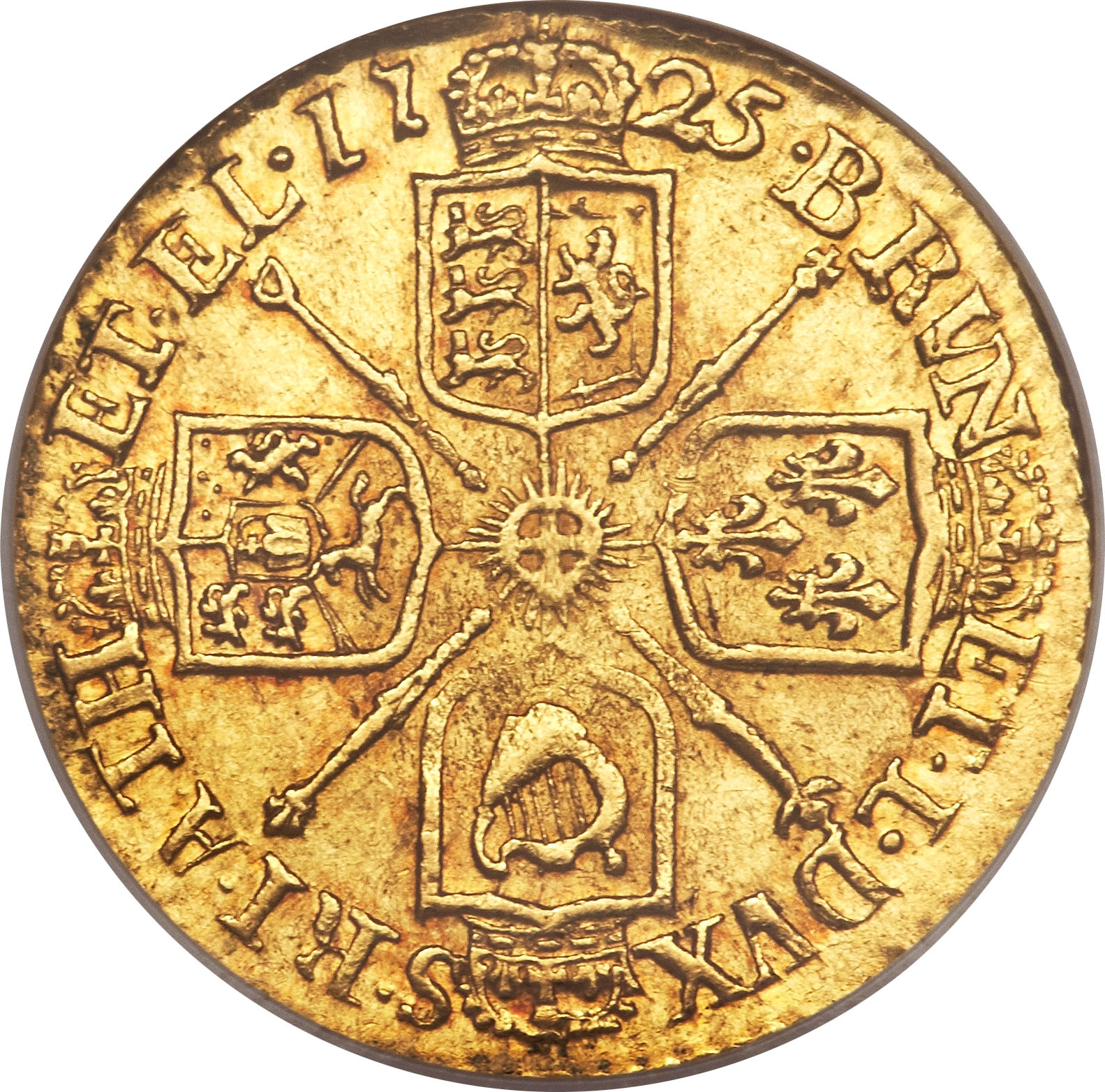
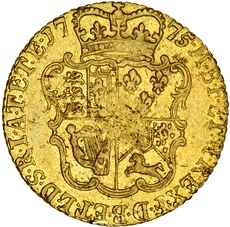
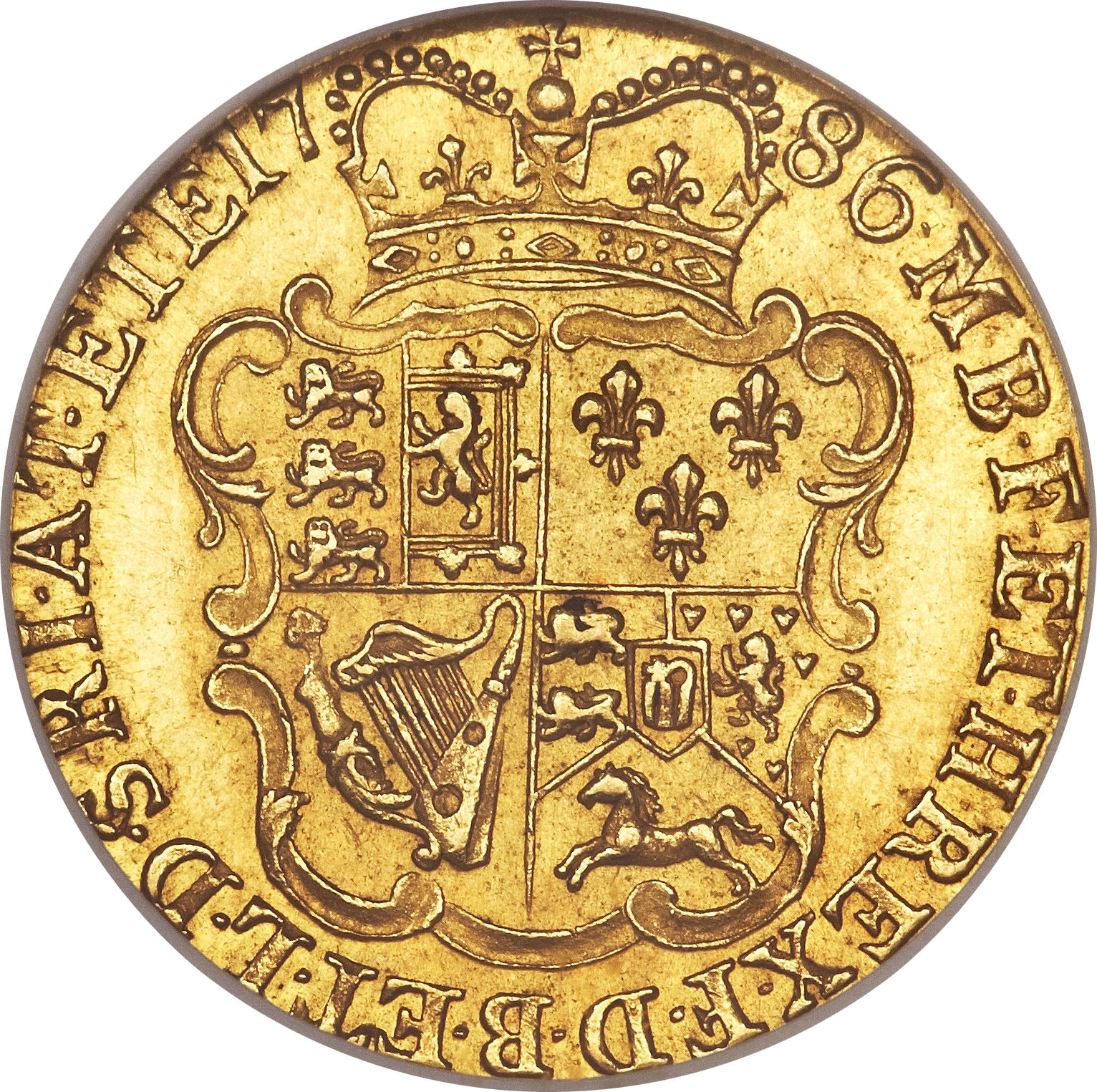
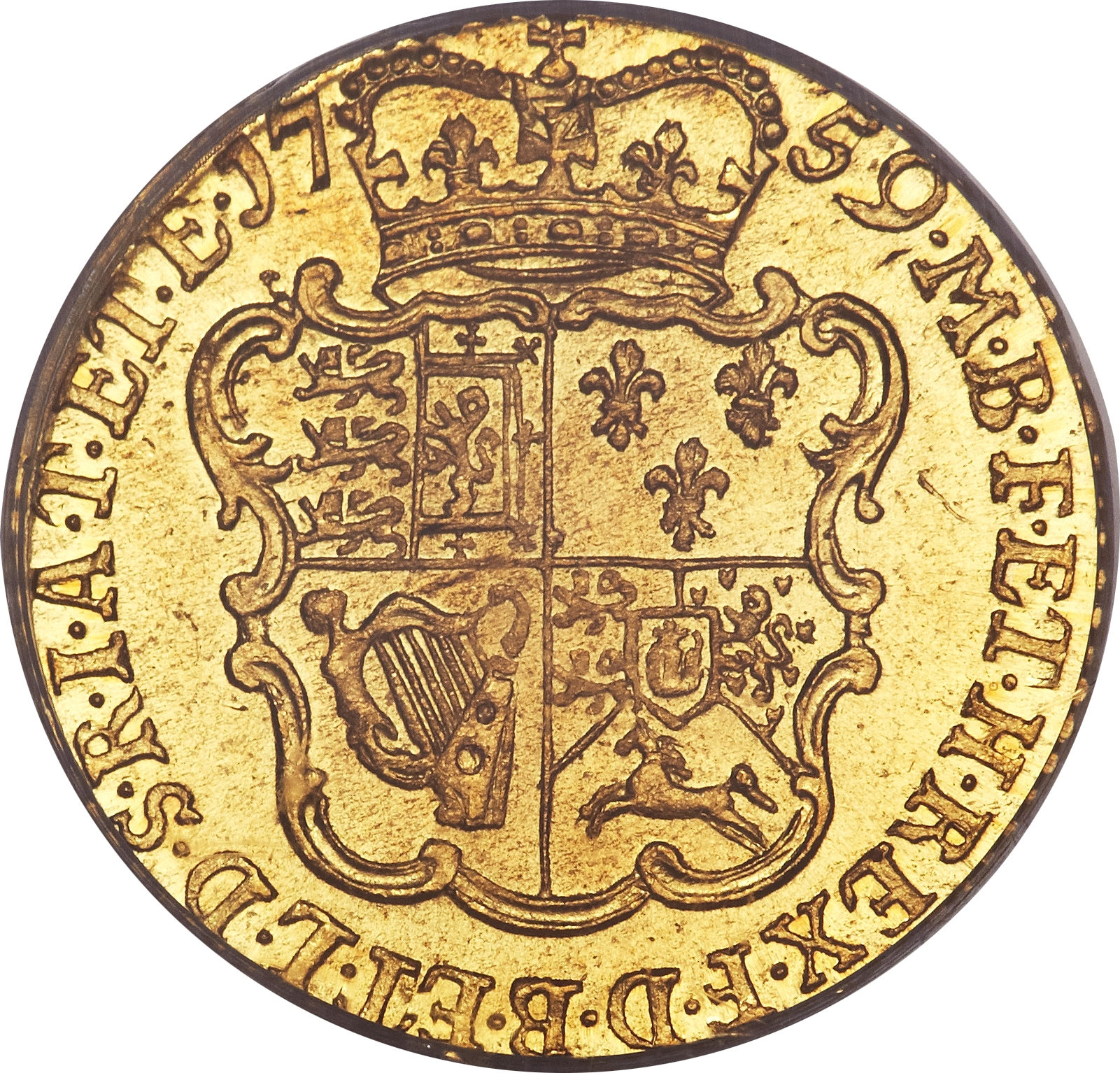
Ornate crowned quartered shield of arms, divided date above, legend around.
M B F ET H REX F D B ET L D S R I A T ET E
Find this on eBay
AffiliateHalf Guinea - George II price history
Daily limit reachedHalf Guinea - George II value by grade
Realised auction prices · ⭐ Pro Expand rows for individual sale records| Grade | Latest | Median | 30d Δ | All-time range | Sales (1yr) | Total sales | Last sale | |
|---|---|---|---|---|---|---|---|---|
| F | £500.00 🔒 | £300.00 (2) | – | £100.00 – £500.00 | 0 | 2 | 02-09-2018 | |
|
Loading…
|
||||||||
About the 1747 Half Guinea - George II
The 1747 Half Guinea - George II is a circulating ½ guinea coin issued from 1747 to 1760, struck in 91.67% gold. It weighs 4.2g and measures 20mm across. Reverse design: Ornate crowned quartered shield of arms, divided date above, legend around.
It is no longer legal tender (withdrawn 1891), so its value is to collectors only.
Common questions
How much is the 1747 Half Guinea - George II worth?
The 1747 Half Guinea - George II has a price in one grade on MyCoinage so far: £300 in F, the median of its verified sales. Its gold content is worth about £371 at today's spot price, which puts a floor under its value.
Is the George II old head half guinea rare?
Not by the standards of the reign. No mintage figures survive, but CoinVarieties describes it as the first issue of the denomination that is not very scarce. Gold coinage grew in this reign while silver production dwindled, and the type was struck in most years from 1747 to 1760.
Why is the lettering larger on the 1747 half guinea?
To deter filing. The Reverend Peter Vallavine suggested moving the legend close to the rim, so that any filing of the edge would cut into the letters and show. The Royal Mint Museum says the lettering was made larger and moved closer to the edge with the old head of 1747.
Which years were old head half guineas struck?
1747 to 1760, except 1754 and 1757. Wikipedia lists George II half guineas for every year of the reign apart from 1735, 1741, 1742, 1744, 1754 and 1757. No mintage figure is recorded for any date.
Who engraved the old head of George II?
John Sigismund Tanner, Chief Engraver from 1741 after John Croker's death. The Royal Mint's 1906 collection catalogue credits the young bust to Croker and the old one to Tanner, who had joined the Mint as Croker's assistant in 1729.
How do I identify the 1747 Half Guinea - George II?
Check the weight 4.2g and diameter 20mm and the metal (91.67% gold) against the specification table on this page. The reverse design is described above.
History and design
The old head was the last of George II's three main portraits, and on the half guinea it ran from 1747 until the king's death in 1760. Wikipedia lists half guineas for every year of the reign except 1735, 1741, 1742, 1744, 1754 and 1757, so this type was struck in twelve years. The reign saw gold production rise while silver coinage dwindled, and CoinVarieties describes this as the first George II half guinea that is not very scarce.
The new head came with a change aimed at fraud. After a notice offering a reward for information on guinea filers, the Reverend Peter Vallavine observed that William and Mary pieces, with lettering close to the edge, were rarely filed, and proposed moving the legend towards the rim. The Royal Mint Museum records that the lettering was made larger and moved close to the edge with the old head of 1747, and that Vallavine was rewarded for the idea. No mintage figure survives.
The obverse is John Sigismund Tanner's old laureate head of George II facing left, which the Royal Mint's 1906 catalogue credits to Tanner. Tanner had come to the Mint as John Croker's assistant in 1729 and succeeded him as Chief Engraver in 1741. The 1906 catalogue describes its 1756 half guinea as having larger letters in the legend than the earlier coins.
The reverse is the crowned, garnished shield credited by the Royal Mint Museum to John Ochs, with the arms of England and Scotland, France, Hanover and Ireland, the legend M B F ET H REX F D B ET L D S R I A T ET E and the date. Wikipedia notes that the half guinea kept an obliquely milled edge because it was too thin to take the curved graining used on larger gold from 1739.
Collecting notes
The Royal Mint Museum's 1756 example weighs 4.21 g, a check against filing. A 1759 coin sold by Ponterio showed a small raised die break at the bottom of the obverse; that is a flaw of one die, not a recognised variety. Look for mount marks and smoothed fields, as with all gold of the period.
The type replaced the intermediate head half guinea of 1740 to 1746, and George III's half guineas followed from 1762.
Sources
The history, design, varieties and collecting notes on this page are drawn from these sources. Prices come from recorded sales, not from them.
- Half guinea, Wikipedia (read 12 Oct 2026)
- George II, Royal Mint Museum (read 12 Oct 2026)
- Catalogue of the Coins, Tokens, Medals, Dies and Seals in the Museum of the Royal Mint, Vol. I Part I (Hocking, 1906), pages 158 to 159, Royal Mint Museum library (read 12 Oct 2026)
- George II half-guinea, 1756 (RMM 474), The Royal Mint Museum, via Museum Data Service (read 12 Oct 2026)
- Great Britain 1747 1/2 guinea, CoinVarieties (read 12 Oct 2026)
- Great Britain 1753 1/2 guinea, CoinVarieties (read 12 Oct 2026)
- Great Britain 1760 1/2 guinea, CoinVarieties (read 12 Oct 2026)
- Great Britain 1759 1/2 guinea, CoinVarieties (read 12 Oct 2026)
- Sovereign (British coin), Wikipedia (read 12 Oct 2026)
More ½ Guinea coins from nearby years