½ Guinea - George III 5th portrait (1787–1800)
"Spade half guinea"
| Country | United Kingdom |
| Year | 1787–1800 |
| Denomination | ½ Guinea |
| Face value | 52.5p |
| Mint | Royal Mint · Llantrisant |
| Circulation | Circulating |
| Demonetised | 1891 |
| Composition | Gold (.9167) (917/1000 fine) |
| Weight | 4.200g · 0.1238 t oz |
| Diameter | 20.0mm |
| Thickness | 0.60mm |
| Shape | Round |
| Edge | Milled |
| Orientation | Medal alignment ↑↑ |
| Rev. artist | Lewis Pingo |
| Grade scale | UK (EF/UNC) |
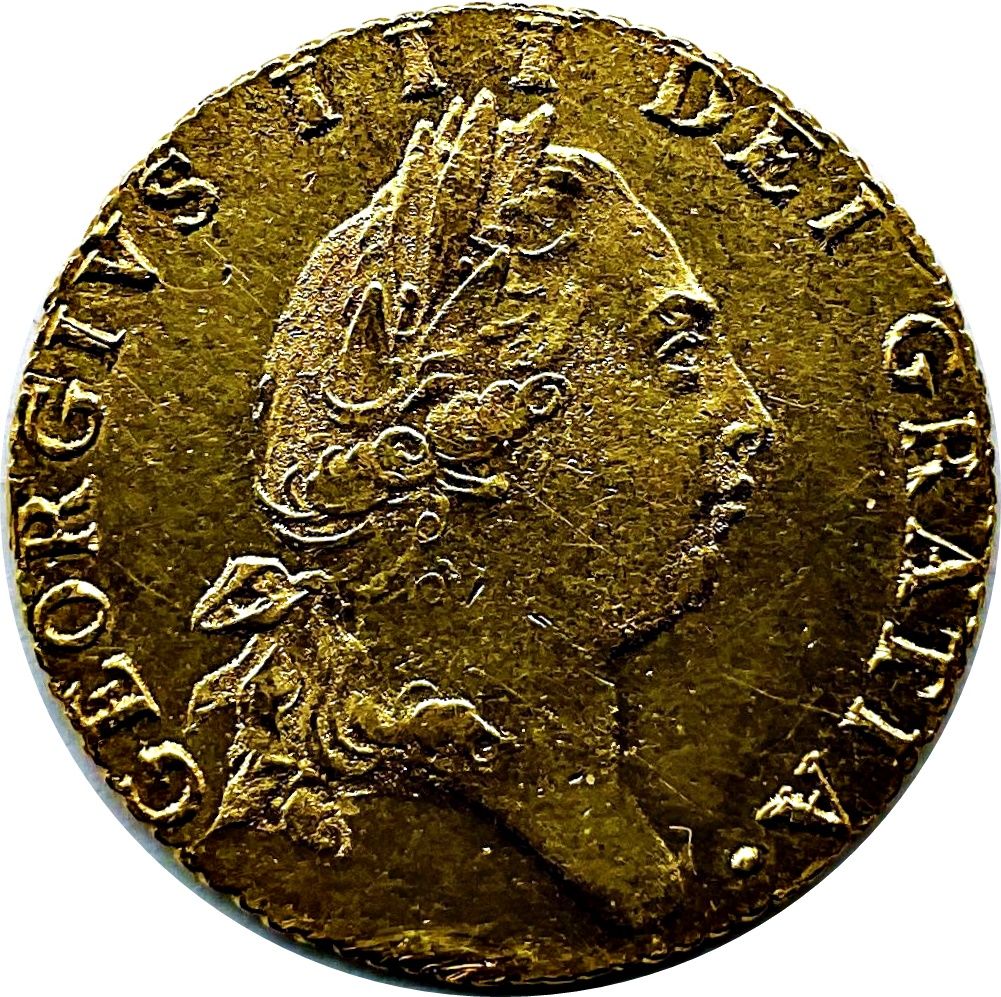
Fifth laureate portrait of King George III right, legend around.
GEORGIVS III DEI GRATIA
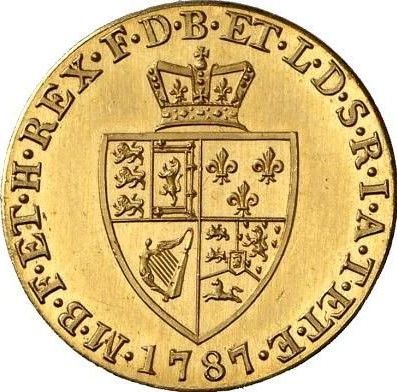
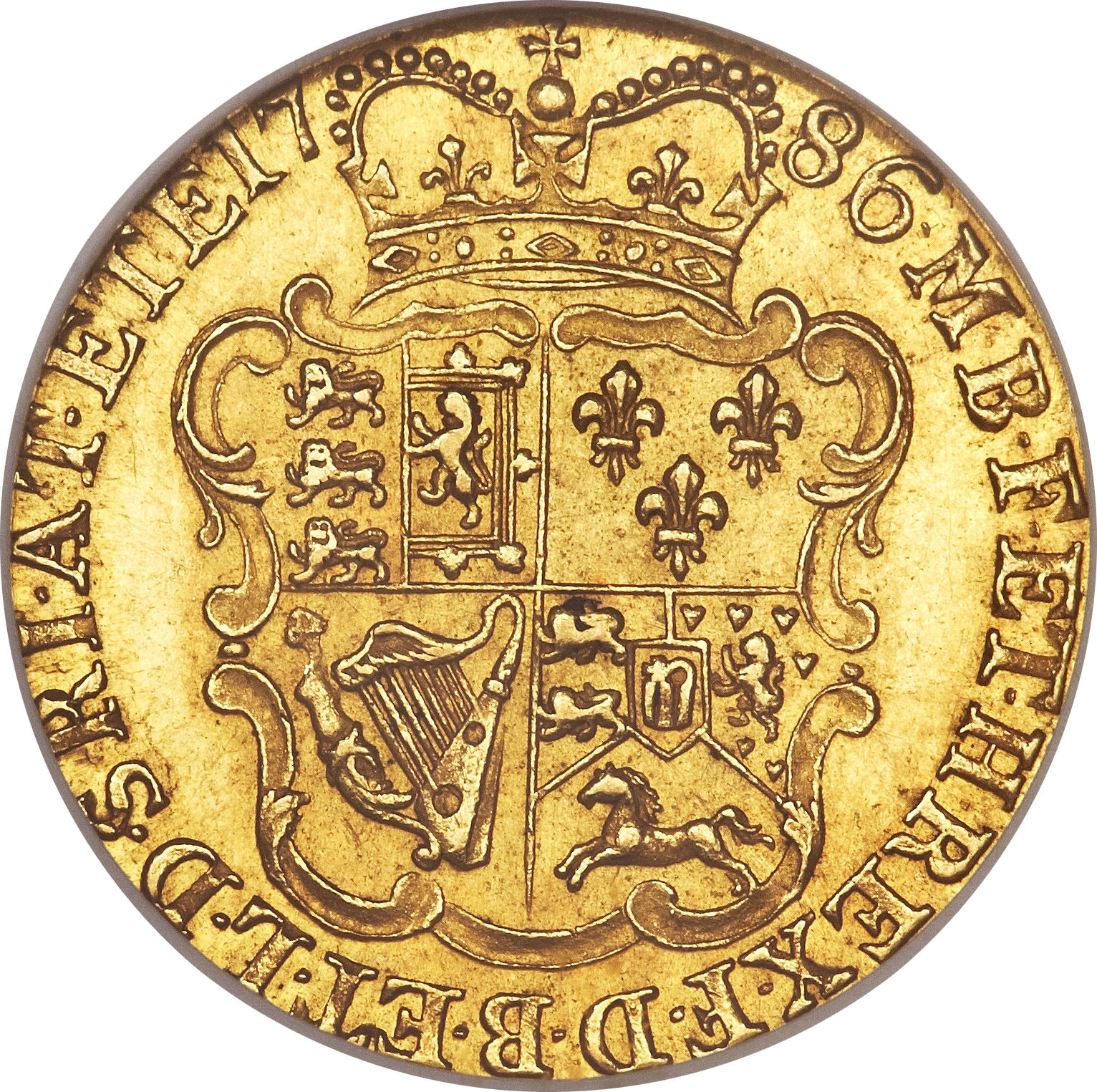
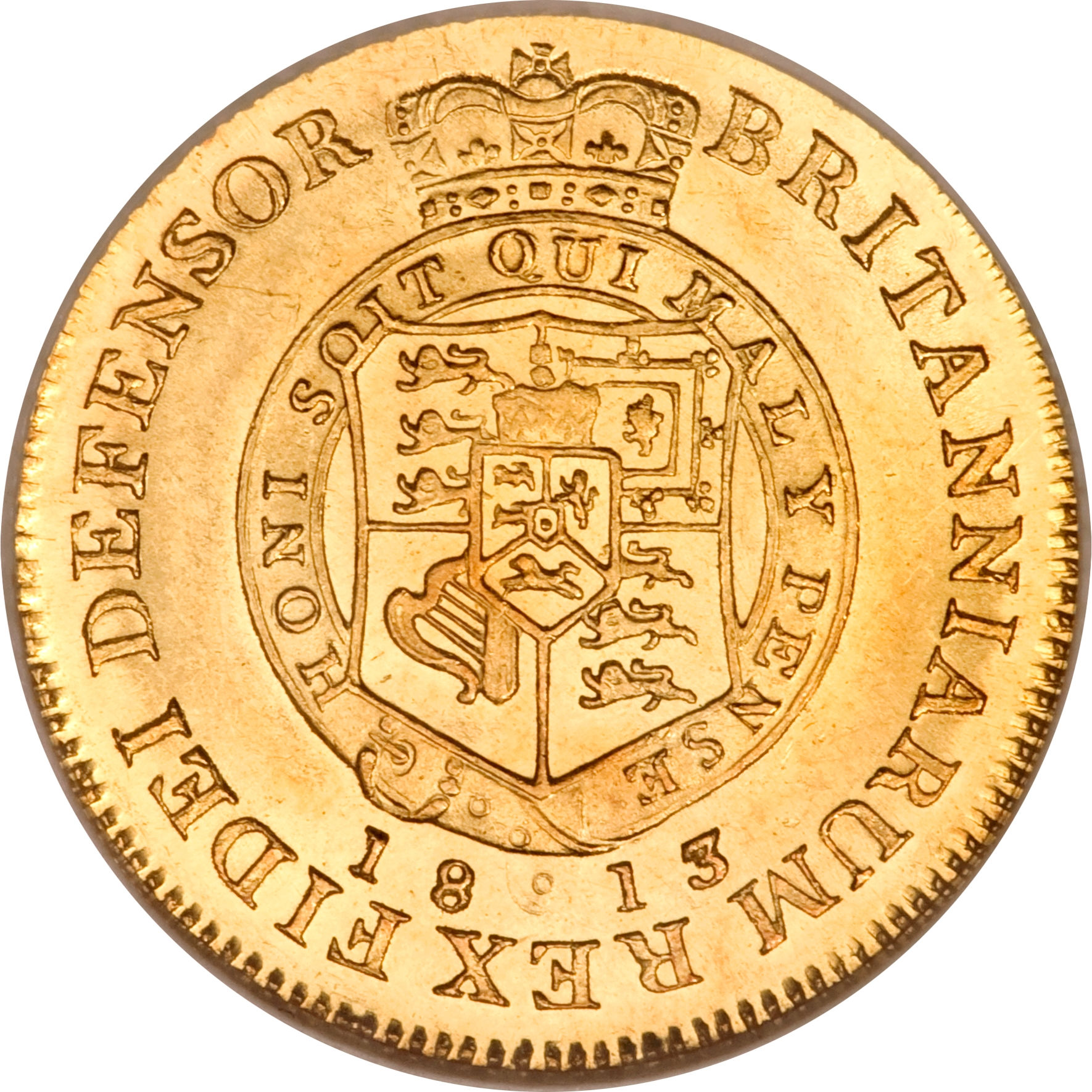
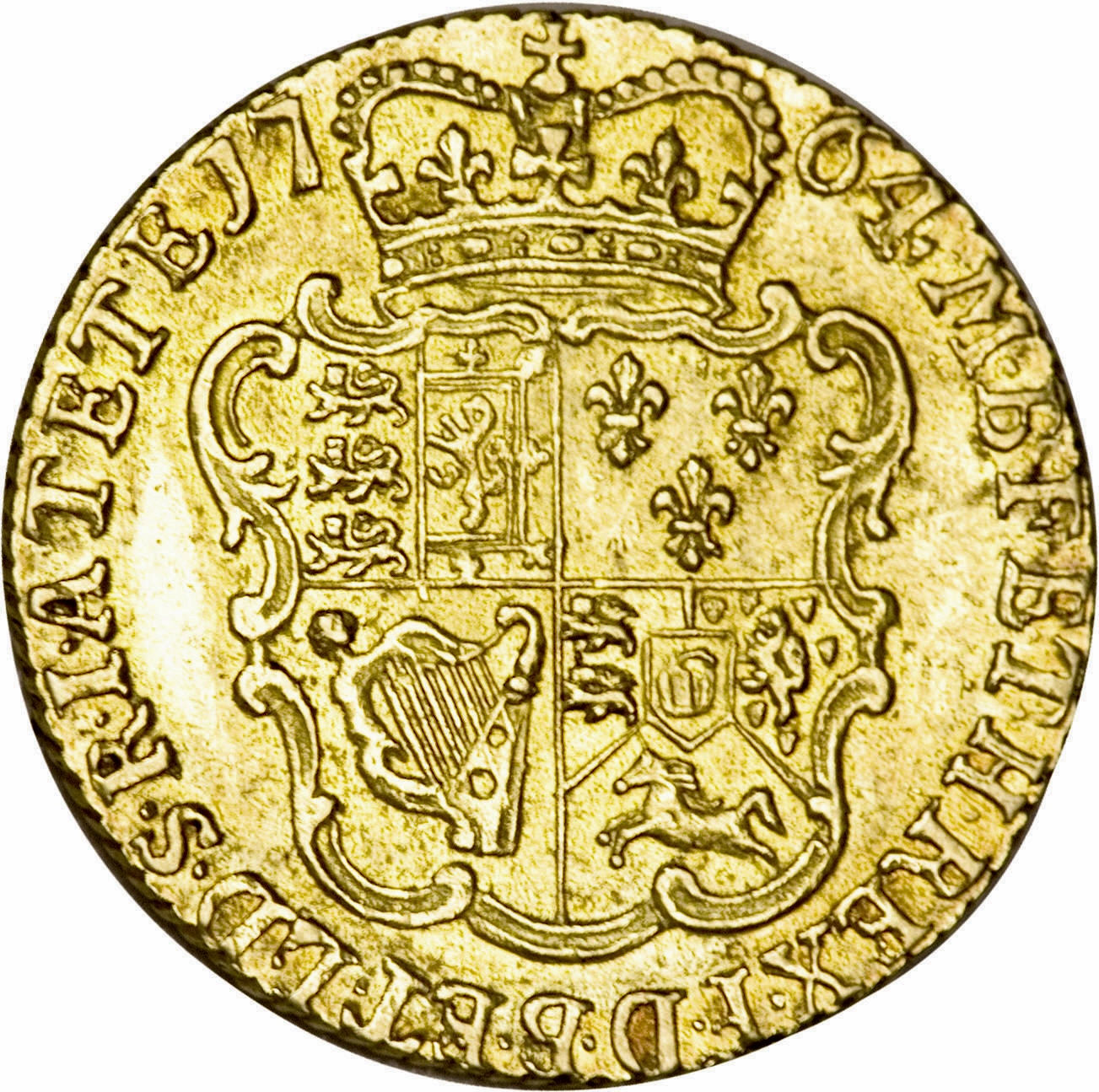
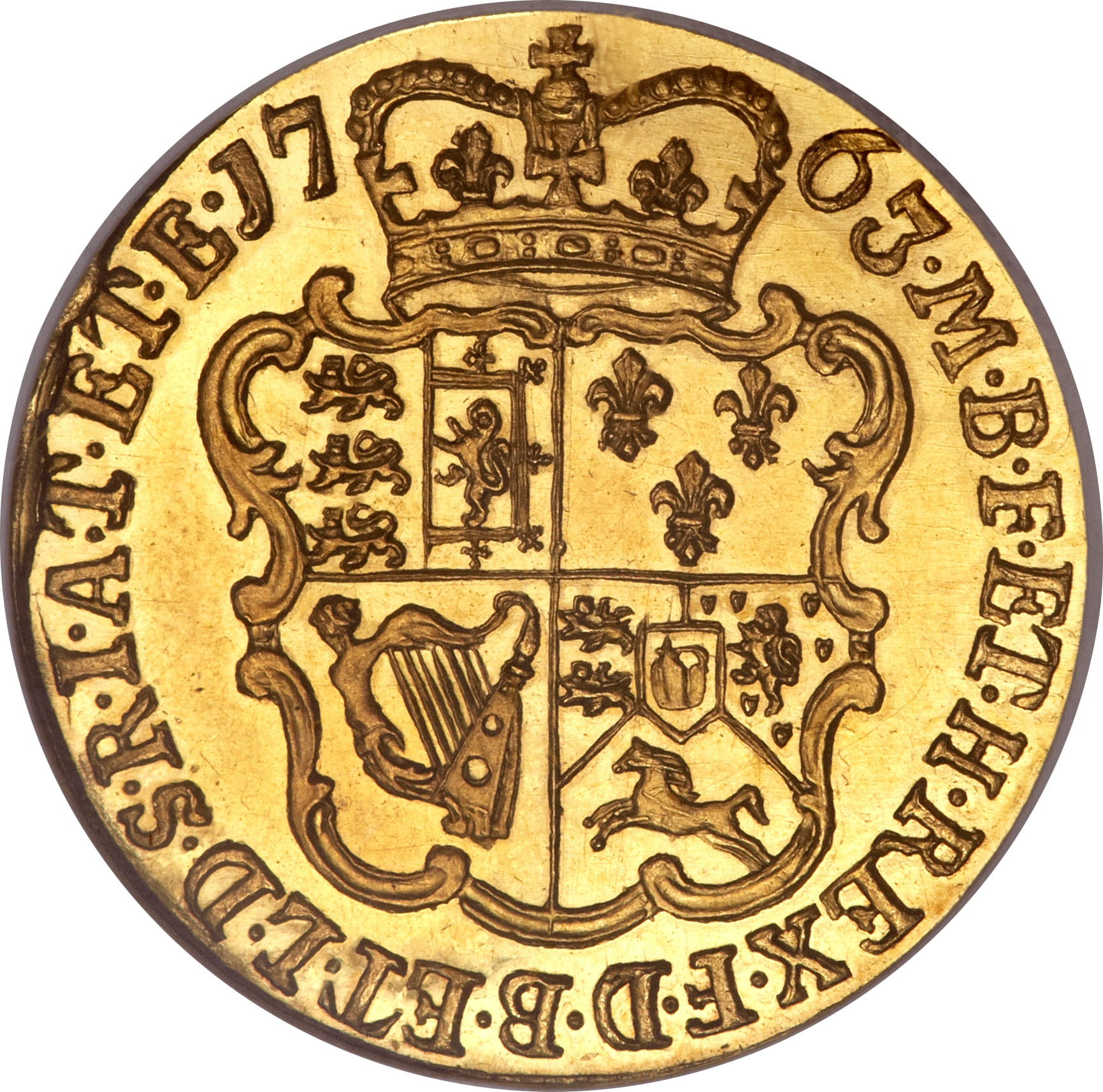
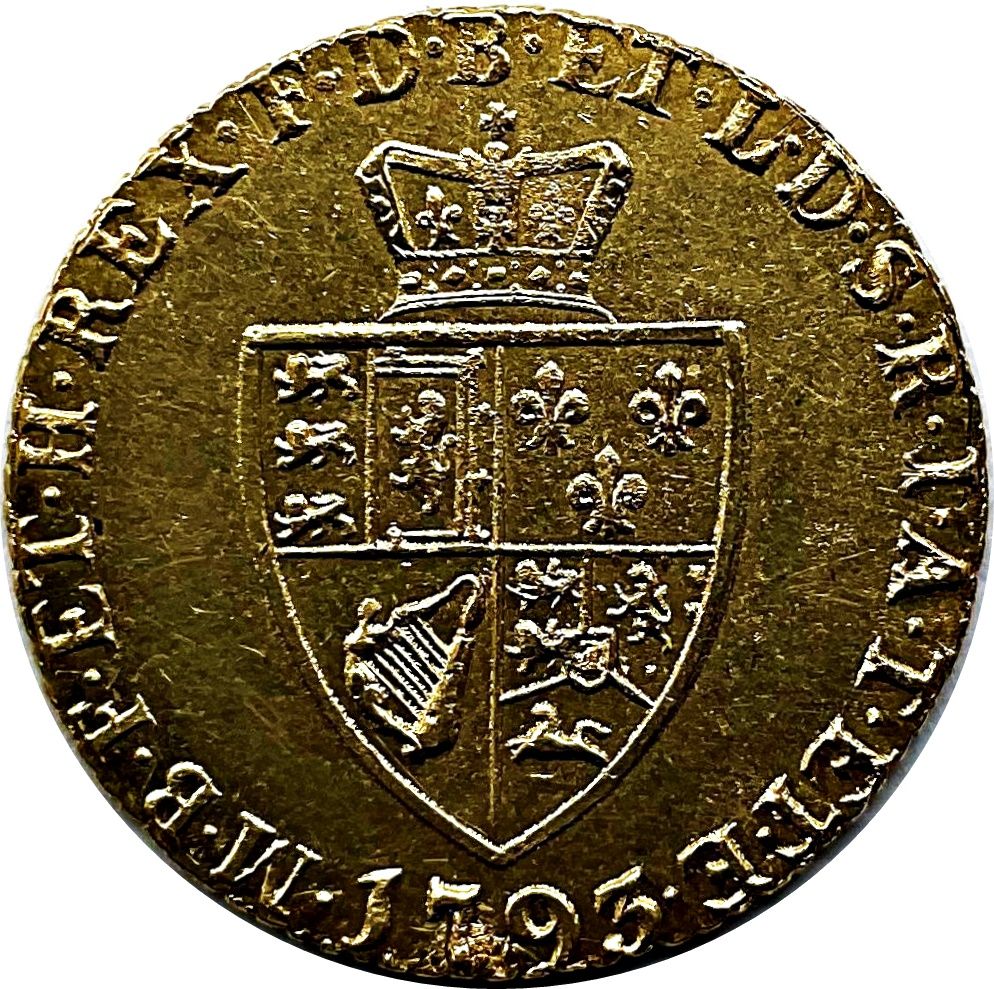
Crowned quartered shield of arms in the shape of a spade, legend around, date below.
M B F ET H REX F D B ET L D S R I A T ET E
Half Guinea - George III market value
Find this on eBay
AffiliateHalf Guinea - George III price history
Daily limit reachedHalf Guinea - George III value by grade
Realised auction prices · ⭐ Pro Expand rows for individual sale records| Grade | Latest | Median | 30d Δ | All-time range | Sales (1yr) | Total sales | Last sale | |
|---|---|---|---|---|---|---|---|---|
| FDC | £1,400.00 🔒 | £3,200.00 (2) | – | £1,400.00 – £5,000.00 | 0 | 2 | 02-12-2019 | |
|
Loading…
|
||||||||
| EF | £700.00 🔒 | £520.00 (2) | – | £340.00 – £700.00 | 0 | 2 | 06-12-2020 | |
|
Loading…
|
||||||||
| VF | £520.00 🔒 | £520.00 (1) | – | £100.00 – £520.00 | 0 | 4 | 05-03-2023 | |
|
Loading…
|
||||||||
| F | £250.00 🔒 | £200.00 | – | £75.00 – £250.00 | 0 | 5 | 04-09-2016 | |
|
Loading…
|
||||||||
| VG | £200.00 🔒 | £200.00 (1) | – | £200.00 – £200.00 | 0 | 1 | 02-06-2013 | |
|
Loading…
|
||||||||
| PR-65 | £1,100.00 🔒 | £1,650.00 (2) | – | £1,100.00 – £2,200.00 | 0 | 2 | 03-03-2013 | |
|
Loading…
|
||||||||
About the 1787 Half Guinea - George III
The 1787 Half Guinea - George III is a circulating ½ guinea coin issued from 1787 to 1800, struck in 91.67% gold. It weighs 4.2g and measures 20mm across. Reverse design: Crowned quartered shield of arms in the shape of a spade, legend around, date below.
It is no longer legal tender (withdrawn 1891), so its value is to collectors only.
Common questions
How much is the 1787 Half Guinea - George III worth?
Verified sold prices for the 1787 Half Guinea - George III run from £200 to £3,200 across 6 grades, taking the median for each grade. Condition makes the difference, so check the grade table above before pricing one. Its gold content is worth about £372 at today's spot price, which puts a floor under its value.
Why is it called a spade half guinea?
Because the shield of arms on the reverse is pointed at the base, like an old-fashioned spade. The Royal Mint Museum says the spade design replaced the ornate shield in 1787 and that spade guineas were later fondly remembered, worn as watch chain pendants and copied as tokens.
Are spade half guineas rare?
Not as a type. CoinVarieties calls the 1787 to 1800 spade half guinea the commonest English gold coin of the 18th century. No mintage survives for any date, and CoinVarieties describes 1800, the last date, as a better date than the others.
How can I tell a real spade half guinea from a token?
Read the reverse legend. Genuine coins read M B F ET H REX F D B ET L D S R I A T ET E. Brass gaming tokens copied the design with other wording, such as one by W.C.B. and Co. of Birmingham dated 1790, and copper imitations dated 1790 and 1800 are in the Fitzwilliam Museum.
Is a spade half guinea legal tender?
No. All gold coins struck before Queen Victoria's reign were called in by a royal proclamation of 22 November 1890 and ceased to be legal tender from 28 February 1891.
How do I identify the 1787 Half Guinea - George III?
Check the weight 4.2g and diameter 20mm and the metal (91.67% gold) against the specification table on this page. The reverse design is described above.
History and design
In 1787 the half guinea and guinea received a new reverse: the ornate shield used since 1761 gave way to a plain, pointed shield whose likeness to an old-fashioned spade gave the coins their name. The spade half guinea was struck every year from 1787 to 1798 and again in 1800, and CoinVarieties calls the type the commonest English gold coin of the 18th century.
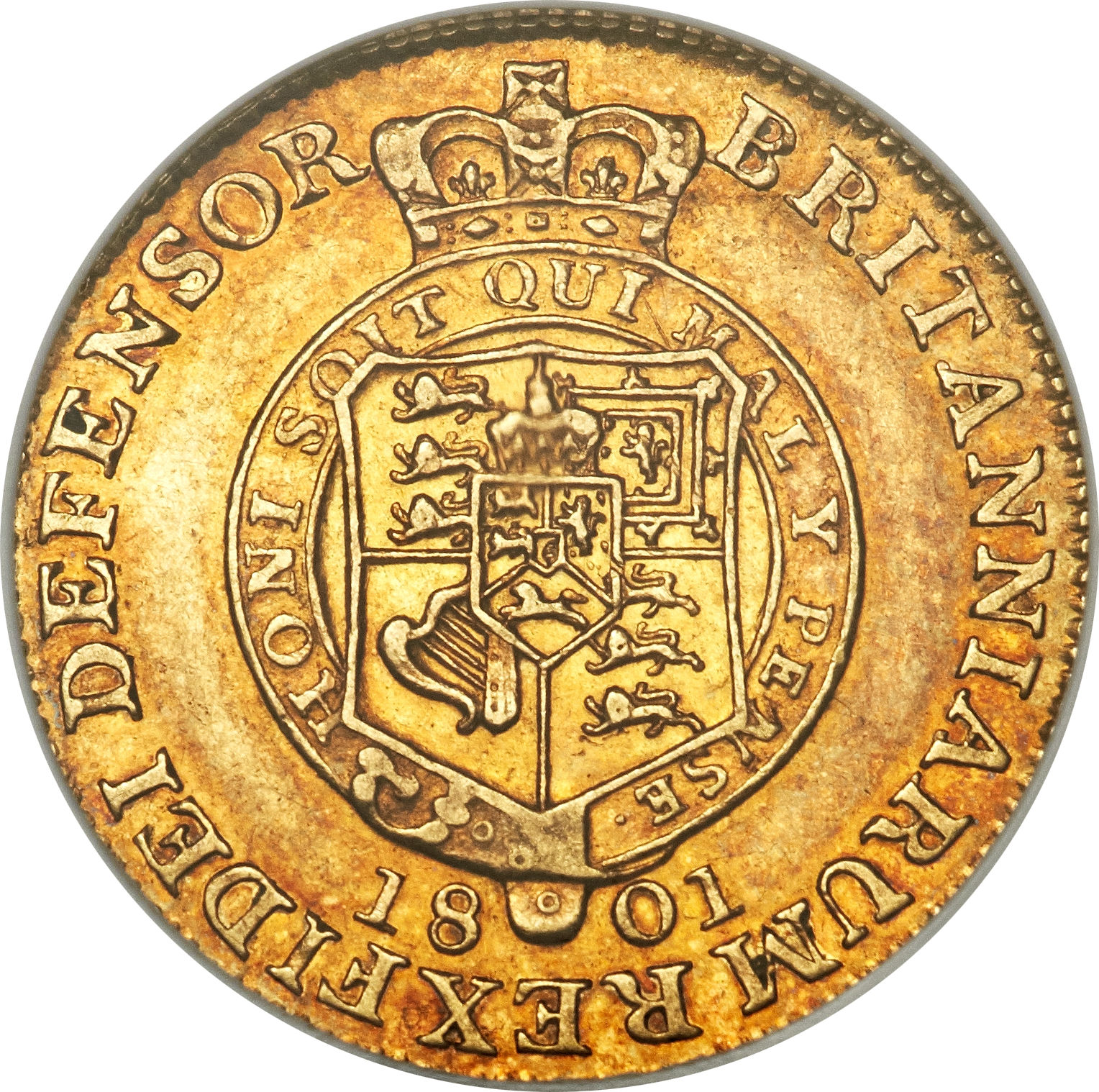
The war with France ended that plenty. Gold grew scarce, banknotes were made legal tender in any amount, and guinea production stopped in 1799, while half and third guineas continued. In 1801 the change in the king's titles brought a new half guinea reverse. No mintage figure survives for any date.
The obverse is the fifth portrait of George III, laureate and facing right, which Hocking describes as an older-looking head with the hair tied with a ribbon and curls over the right shoulder, with GEORGIVS III DEI GRATIA.
The reverse is the crowned spade-shaped shield quartering England and Scotland, France, Ireland and Hanover, with M B F ET H REX F D B ET L D S R I A T ET E around it and the date below. The Royal Mint Museum credits the spade guinea design to Lewis Pingo, Chief Engraver from 1779. The edge is milled obliquely.
Varieties and errors
A plain-edged proof of 1787 exists; the Royal Mint Museum's example weighs 4.75 g.
Collecting notes
CoinVarieties singles out 1800 as a better date. The spade design was popular long after the coins were called in, and it was widely copied: brass gaming tokens such as Holst 63, made by W.C.B. and Co. of Birmingham and dated 1790, change the legend to the makers' names, and the Fitzwilliam Museum holds copper imitations dated 1790 and 1800 weighing between 1.86 g and 2.57 g. A gold coin should weigh close to 4.2 g and read the full royal titles.
All gold struck before Victoria was called in by proclamation of 22 November 1890 and demonetised from 28 February 1891. The 1787 proof has its own entry as the 1787 pattern half guinea.
Sources
The history, design, varieties and collecting notes on this page are drawn from these sources. Prices come from recorded sales, not from them.
- Half guinea, Wikipedia (read 12 Oct 2026)
- Great Britain 1787 1/2 guinea, CoinVarieties (read 12 Oct 2026)
- George III coins: Holst 63, brass imitation spade half guinea game token, Wildwinds (read 12 Oct 2026)
- Half guinea, AE imitation of George III half guinea, 1790, The Fitzwilliam Museum (read 12 Oct 2026)
- Half guinea, AE imitation of George III half guinea, 1800, The Fitzwilliam Museum (read 12 Oct 2026)
- Guinea (coin), Wikipedia (read 12 Oct 2026)
- Lewis Pingo, Wikipedia (read 12 Oct 2026)
- Coins of the UK: Ten Shillings and Half Guinea, Tony Clayton, Coins of the UK (read 12 Oct 2026)
- George III, Royal Mint Museum (read 12 Oct 2026)
- Catalogue of the Coins, Tokens, Medals, Dies and Seals in the Museum of the Royal Mint, Vol. I Part I (Hocking, 1906), page 156, Nos. 1700 and 1701, Royal Mint Museum library (read 12 Oct 2026)
- Coins of the UK: values of half guineas and half sovereigns (date listing), Tony Clayton, Coins of the UK (read 12 Oct 2026)
- Great Britain 1800 1/2 guinea, CoinVarieties (read 12 Oct 2026)
- Sovereign (British coin), Wikipedia (read 12 Oct 2026)
- George III proof half-guinea, 1787 (RMM 962), The Royal Mint Museum, via Museum Data Service (read 12 Oct 2026)
- Catalogue of the Coins, Tokens, Medals, Dies and Seals in the Museum of the Royal Mint, Vol. I Part I (Hocking, 1906), page 162, No. 1781, Royal Mint Museum library (read 12 Oct 2026)
More ½ Guinea coins from nearby years