½ Guinea - George III Pattern (1787)
"Spade half guinea"
| Country | United Kingdom |
| Year | 1787 |
| Denomination | ½ Guinea |
| Face value | 52.5p |
| Mint | Royal Mint · Llantrisant |
| Circulation | Non-circulating |
| Demonetised | Yes |
| Composition | Gold (.9167) (917/1000 fine) |
| Weight | 4.680g · 0.1379 t oz |
| Diameter | 20.0mm |
| Shape | Round |
| Edge | Plain |
| Orientation | Medal alignment ↑↑ |
| Rev. artist | Lewis Pingo |
| Grade scale | UK (EF/UNC) |
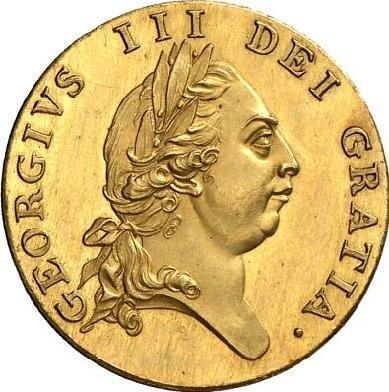
Fifth laureate portrait of King George III right, legend around.
GEORGIVS III DEI GRATIA
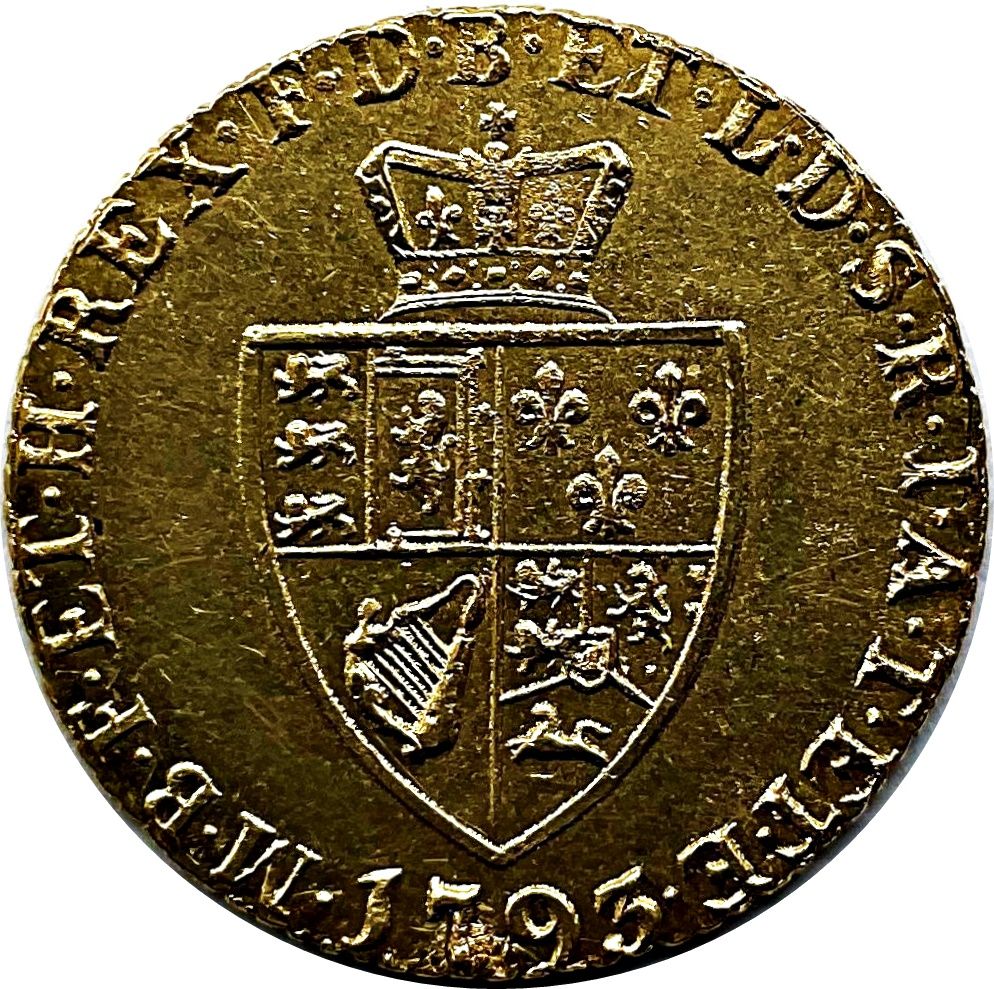
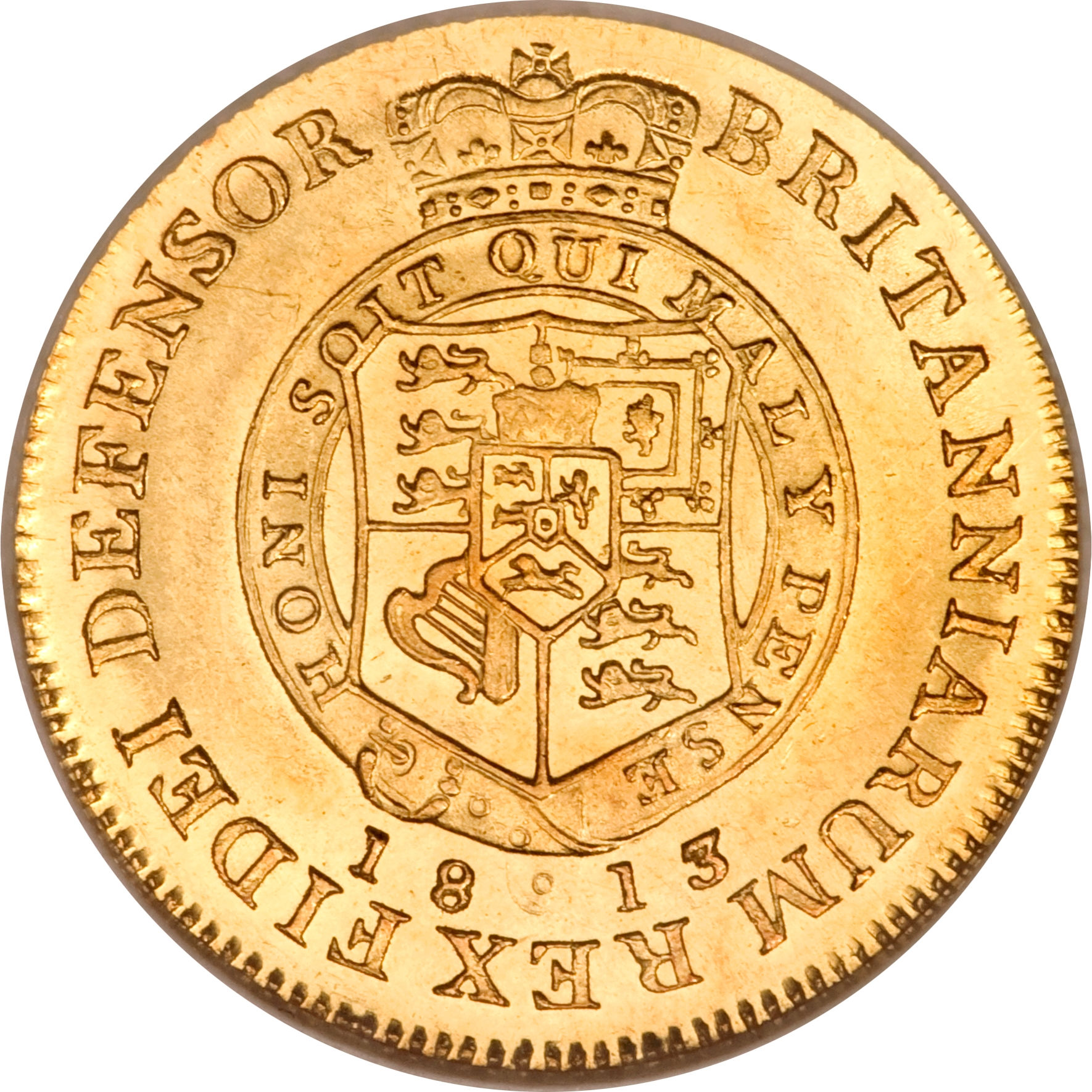
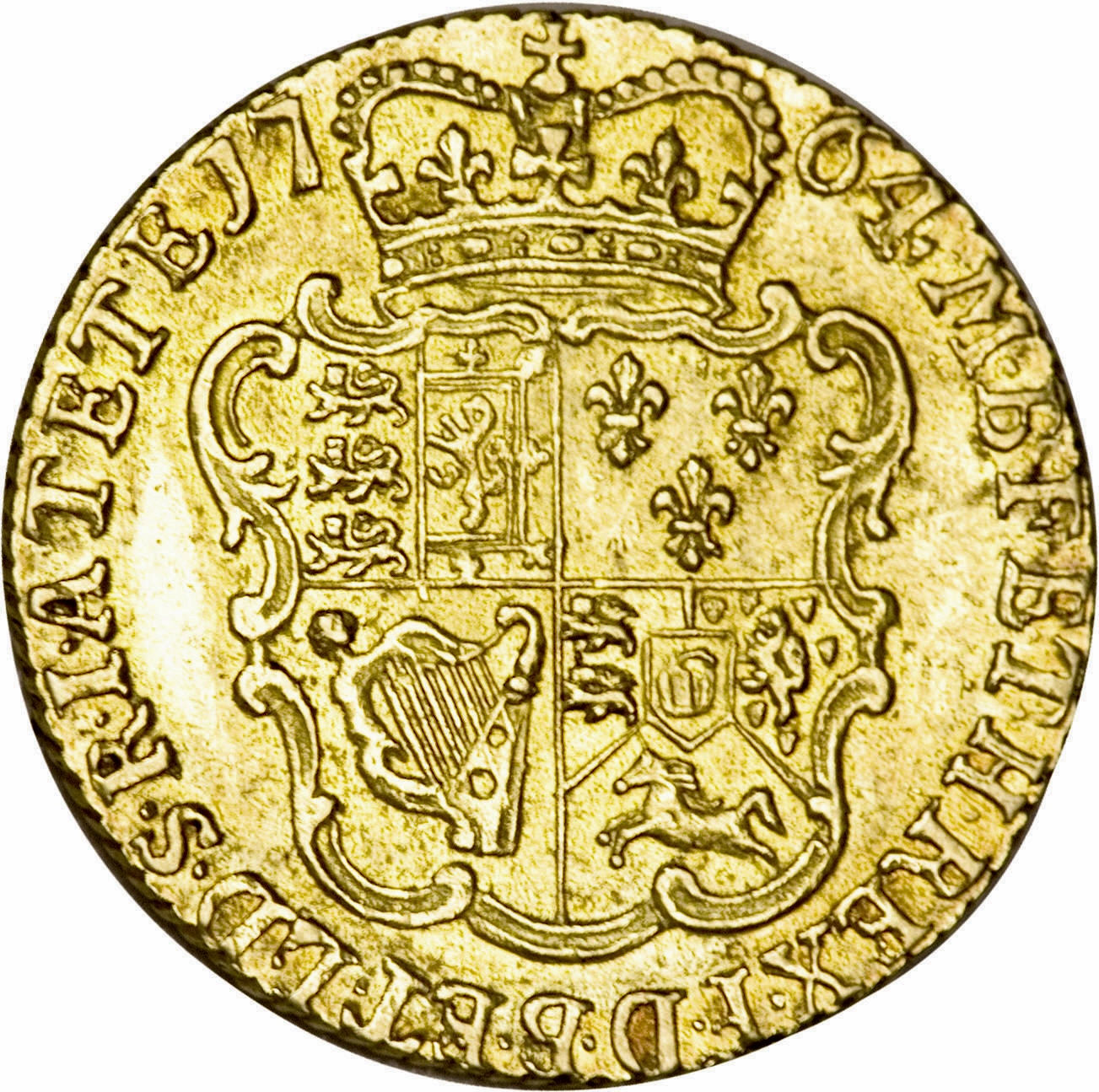
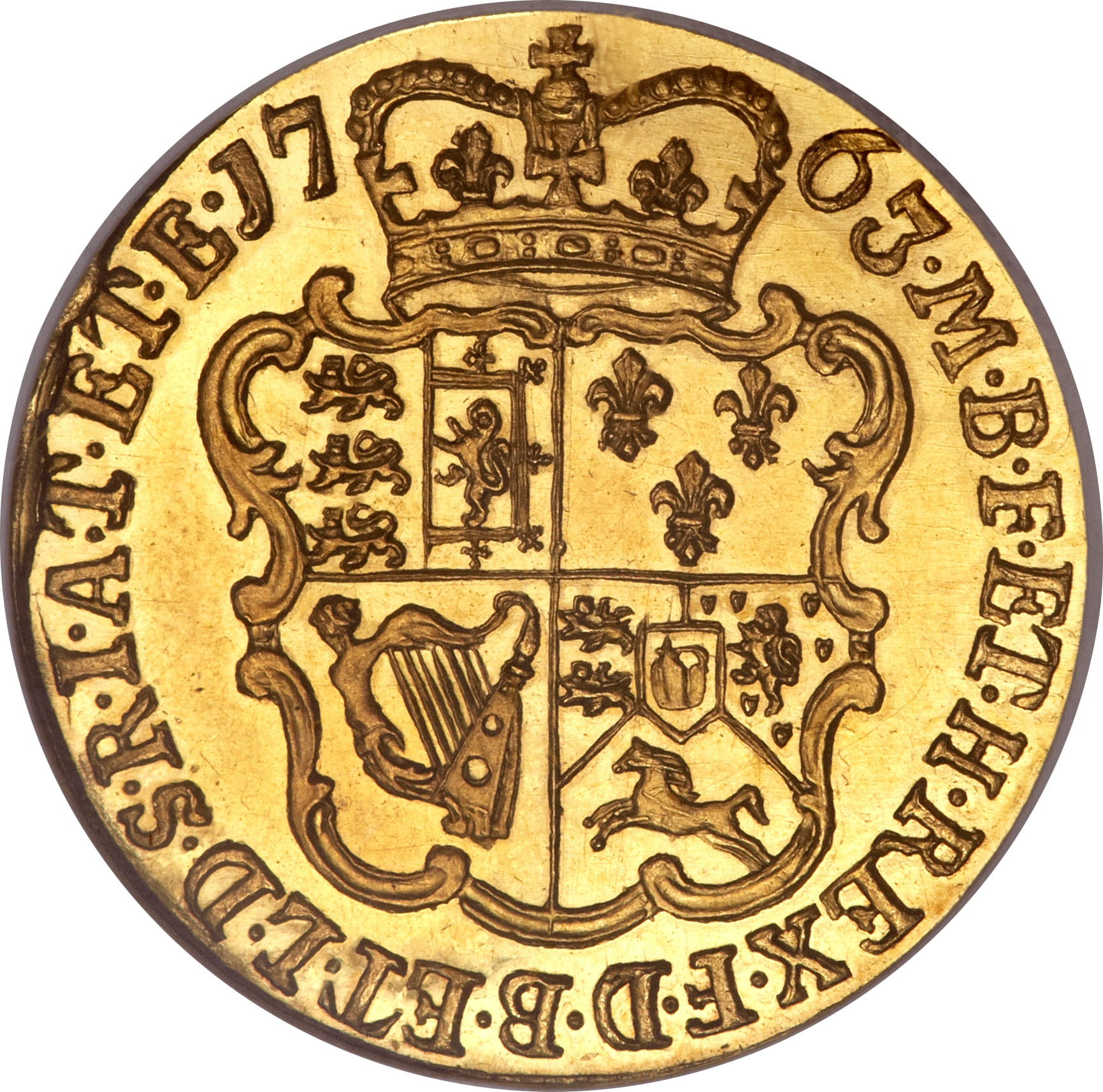
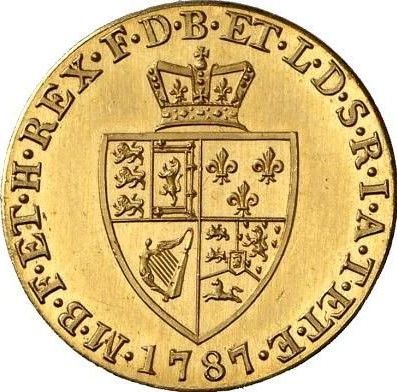
Crowned quartered shield of arms in the shape of a spade, legend around, date below.
M B F ET H REX F D B ET L D S R I A T ET E
Find this on eBay
AffiliateHalf Guinea - George III Pattern price history
Daily limit reachedAbout the 1787 Half Guinea - George III Pattern
The 1787 Half Guinea - George III Pattern is a collector ½ guinea coin, struck in 91.67% gold. It weighs 4.68g and measures 20mm across. Reverse design: Crowned quartered shield of arms in the shape of a spade, legend around, date below.
It is no longer legal tender, so its value is to collectors only.
Common questions
How much is the 1787 Half Guinea - George III Pattern worth?
No verified sale of the 1787 Half Guinea - George III Pattern has been logged on MyCoinage yet. Its gold content is worth about £413 at today's spot price, which puts a floor under its value.
What is the 1787 pattern half guinea?
A proof striking of the new spade half guinea, made in 1787 when the spade-shaped shield replaced the ornate shield on George III's gold. The Royal Mint Museum's example, catalogued as a proof (Wilson and Rasmussen 130), has a plain edge, while the currency coins have milled edges.
Why is it called a spade half guinea?
Because the pointed shield on the reverse resembles the blade of an old-fashioned spade. The Royal Mint Museum says the name was given to the guineas of this design, and Wikipedia records the half guinea version as the spade half guinea.
How can you tell a proof from an ordinary 1787 half guinea?
Check the edge. The Royal Mint's 1906 catalogue records the proof with a plain edge, while the currency half guineas of this issue were milled obliquely. The Mint's own proof also weighs 4.75 g, a little more than its currency half guineas of about 4.2 g.
Who designed the spade half guinea?
The Royal Mint Museum credits Lewis Pingo, Chief Engraver after John Sigismund Tanner, with the design for the spade guinea, and the half guinea carries the same spade-shaped shield. The portrait shows the king laureate, with his hair tied by a ribbon.
How do I identify the 1787 Half Guinea - George III Pattern?
Check the weight 4.68g and diameter 20mm and the metal (91.67% gold) against the specification table on this page. The reverse design is described above.
History and design
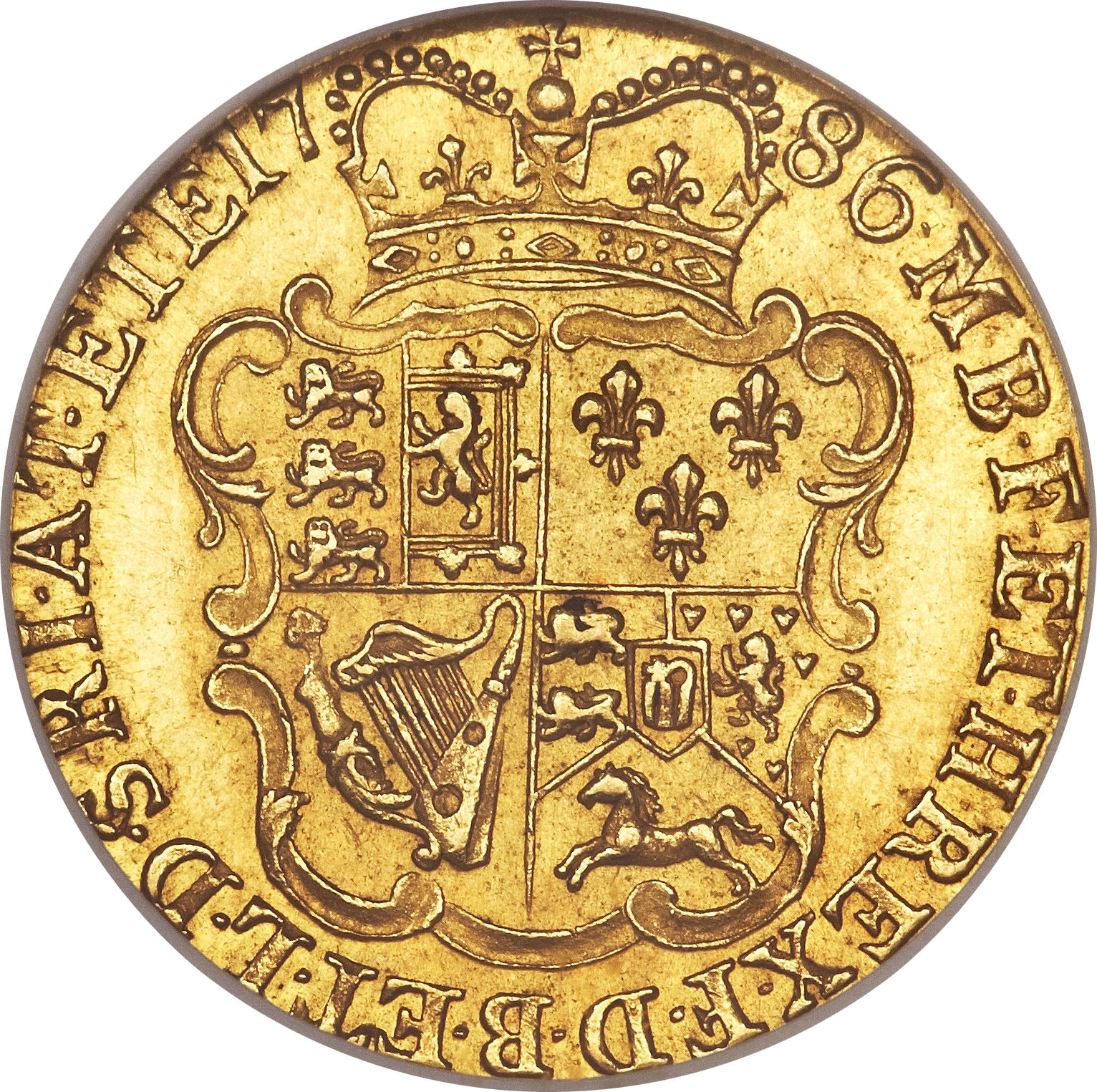
The spade reverse arrived in 1787. Until then George III's guineas and half guineas carried an elaborate garnished shield, and Wikipedia records that a new spade-shaped shield was introduced that year with the same legend, giving the coin the name spade half guinea. CoinVarieties describes the spade half guinea, struck from 1787 to 1800, as the commonest English gold coin of the 18th century, and notes that proofs exist of the first date.
This entry is one of those proofs. The Royal Mint Museum holds an example, catalogued as a proof (Wilson and Rasmussen 130) and recorded in the Mint's 1874 and 1906 collection catalogues. It is struck in gold, weighs 4.75 g and has a plain edge. No figure for the number struck survives.
The Royal Mint's 1906 catalogue describes the obverse as the king's bust laureate to right, with the hair tied behind with a ribbon and two curls lying over the right shoulder, with the legend GEORGIVS III DEI GRATIA. The reverse is a crowned spade-shaped shield of arms with the date 1787 below and the legend M B F ET H REX F D B ET L D S R I A T ET E. The Royal Mint Museum translates it as King of Great Britain, France and Ireland, Defender of the Faith, Duke of Brunswick and Lüneburg, Arch Treasurer and Elector of the Holy Roman Empire.
The Royal Mint Museum credits Lewis Pingo, who became Chief Engraver after John Sigismund Tanner, with the spade design, and notes that spade guineas were later fondly remembered and worn as watch chain pendants.
Collecting notes
The edge is the first check. The same catalogue records the currency spade half guinea with the edge milled obliquely, so a plain edge, together with proof surfaces, separates this piece from an ordinary 1787 coin. Weight is the second check: the Mint's proof is 4.75 g.
Brass imitations of the spade design were made in Birmingham after 1790 as gaming counters, and Clayton notes that their legends are wrong. Chippenham Museum holds examples, often pierced for a watch chain. The currency coin is the spade half guinea.
Sources
The history, design, varieties and collecting notes on this page are drawn from these sources. Prices come from recorded sales, not from them.
- Half guinea, Wikipedia (read 12 Oct 2026)
- George III proof half-guinea, 1787 (RMM 962), The Royal Mint Museum, via Museum Data Service (read 12 Oct 2026)
- George III, Royal Mint Museum (read 12 Oct 2026)
- Catalogue of the Coins, Tokens, Medals, Dies and Seals in the Museum of the Royal Mint, Vol. I Part I (Hocking, 1906), pages 156 and 162, Royal Mint Museum library (read 12 Oct 2026)
- Great Britain 1787 1/2 guinea, CoinVarieties (read 12 Oct 2026)
- One Pound (The Sovereign or Guinea), Tony Clayton, Coins of the UK (read 12 Oct 2026)
- Token or gaming counter, imitation 'spade' guinea of George III, Chippenham Museum, via Museum Data Service (read 12 Oct 2026)
More ½ Guinea coins from nearby years