½ Guinea - George II (1740–1746)
Circulating version: 1740 Halfpenny - George II old bust
| Country | United Kingdom |
| Year | 1740–1746 |
| Denomination | ½ Guinea |
| Face value | 52.5p |
| Mint | Royal Mint · Llantrisant |
| Circulation | Circulating |
| Demonetised | 1891 |
| Composition | Gold (.9167) (917/1000 fine) |
| Weight | 4.200g · 0.1238 t oz |
| Shape | Round |
| Edge | Milled |
| Orientation | Coin alignment ↑↓ |
| Obv. artist | John Sigismund Tanner |
| Rev. artist | John Ochs |
| Grade scale | UK (EF/UNC) |
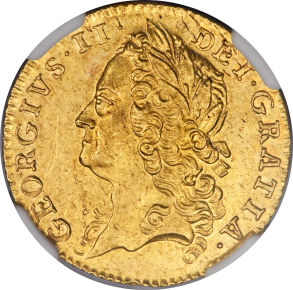
Intermediate laureate portrait of King George II left, legend around.
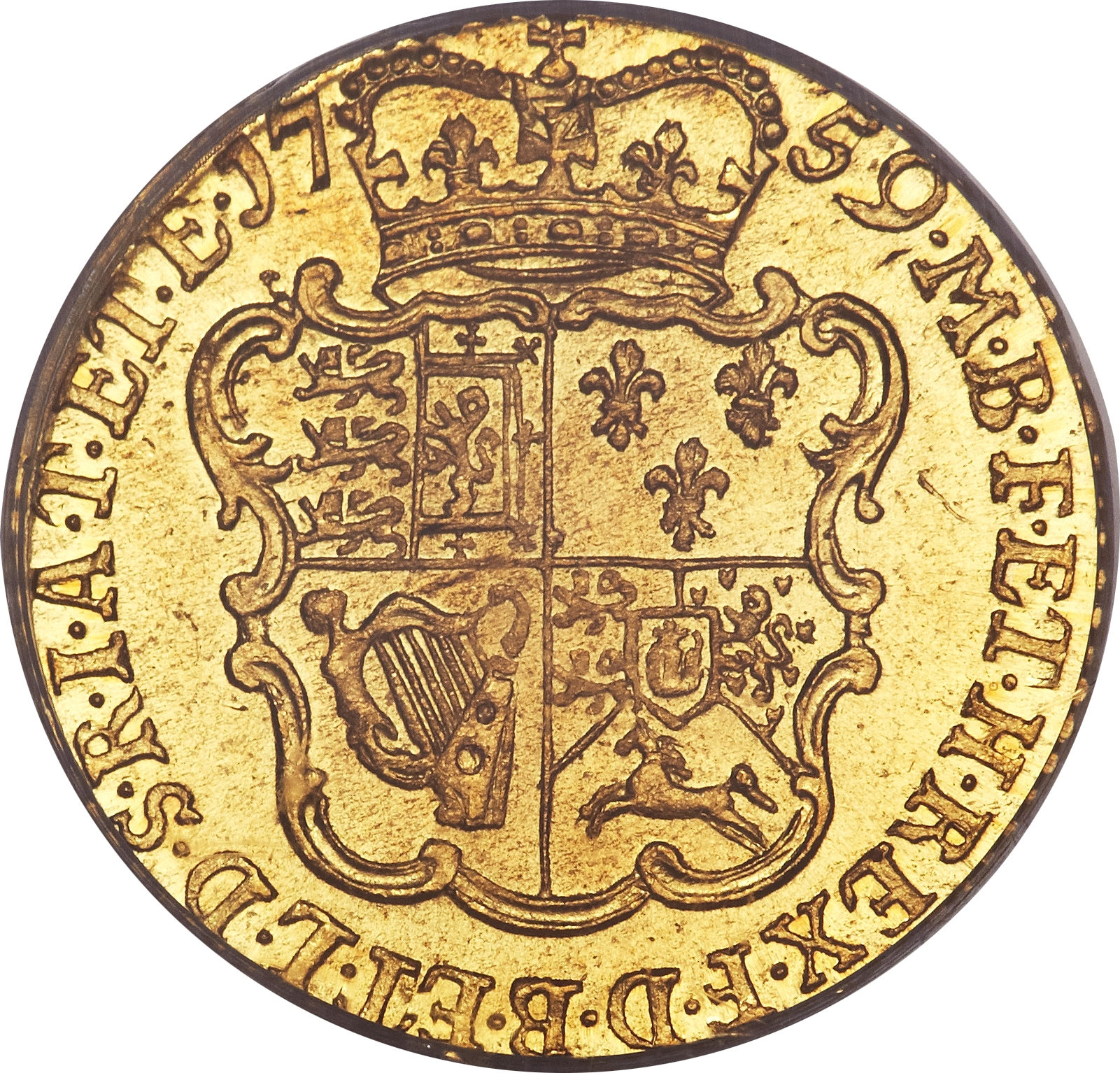
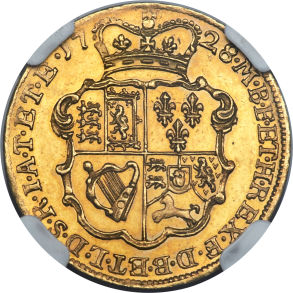
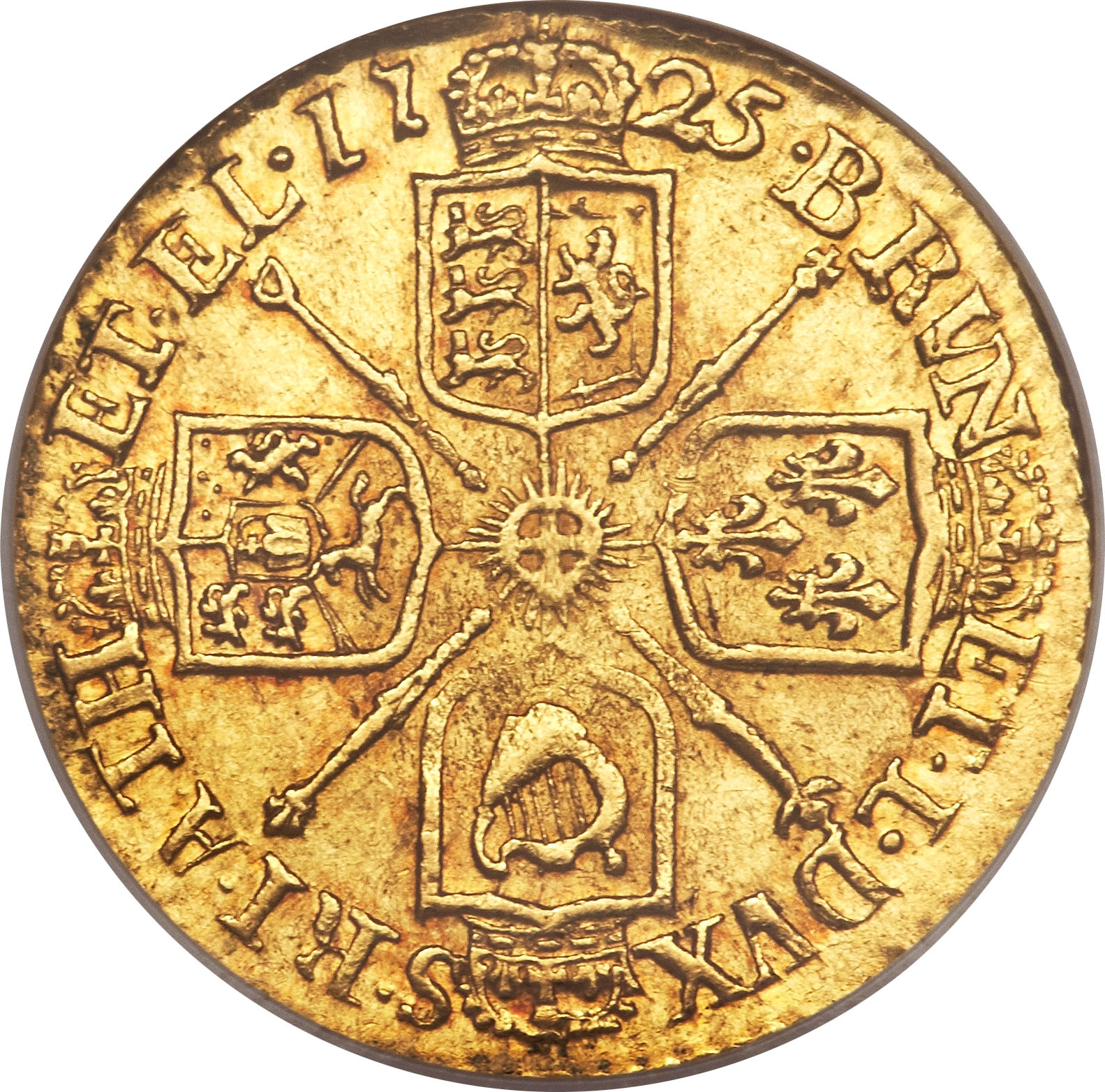
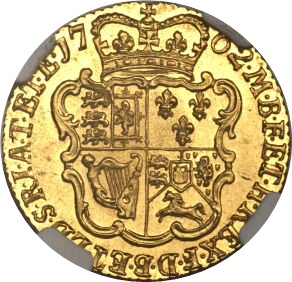
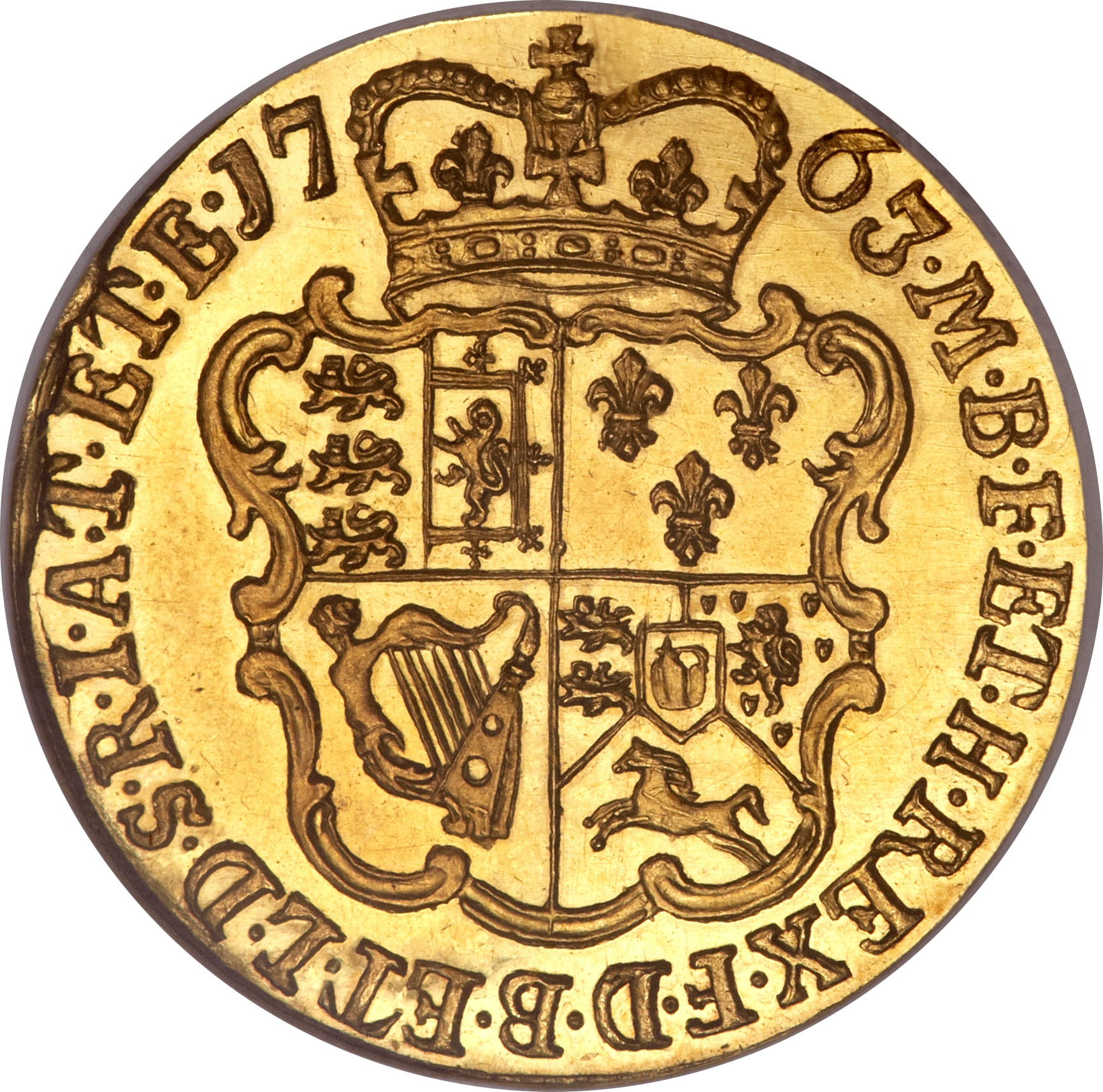
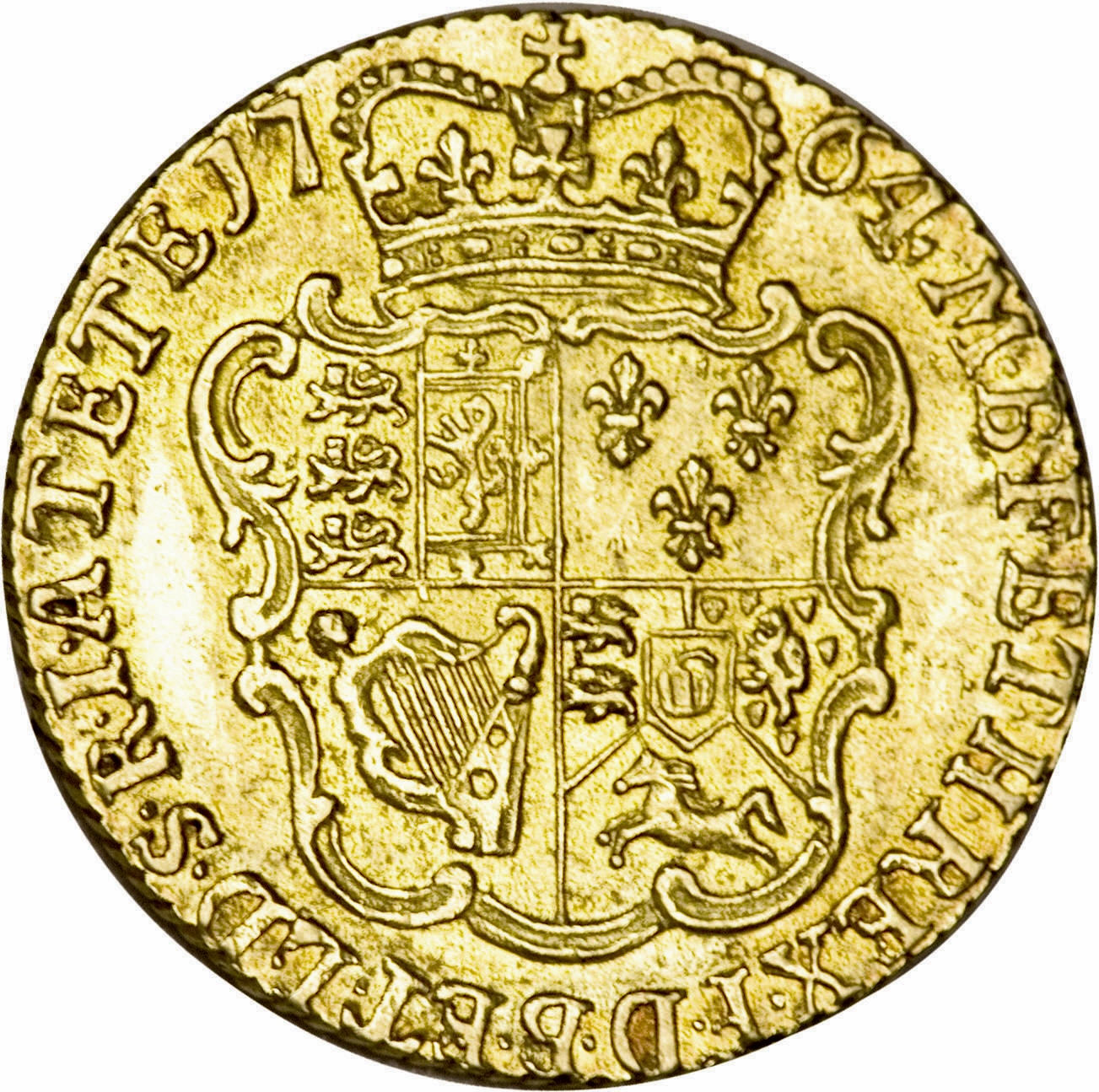
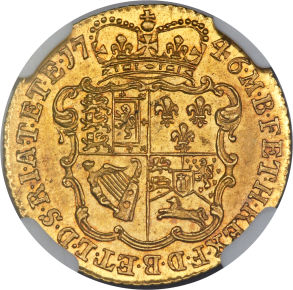
Crowned garnished shield of arms, divided date above, legend around.
M B F ET H REX F D B ET L D S R I A T ET E
Half Guinea - George II market value
Find this on eBay
AffiliateHalf Guinea - George II price history
Daily limit reachedHalf Guinea - George II value by grade
Realised auction prices · ⭐ Pro Expand rows for individual sale records| Grade | Latest | Median | 30d Δ | All-time range | Sales (1yr) | Total sales | Last sale | |
|---|---|---|---|---|---|---|---|---|
| F | £700.00 🔒 | £700.00 (1) | – | £700.00 – £700.00 | 0 | 1 | 04-12-2022 | |
|
Loading…
|
||||||||
About the 1740 Half Guinea - George II
The 1740 Half Guinea - George II is a circulating ½ guinea coin issued from 1740 to 1746, struck in 91.67% gold. It weighs 4.2g. Reverse design: Crowned garnished shield of arms, divided date above, legend around.
It is no longer legal tender (withdrawn 1891), so its value is to collectors only.
Common questions
How much is the 1740 Half Guinea - George II worth?
The 1740 Half Guinea - George II has a price in one grade on MyCoinage so far: £700 in F, the median of its verified sales. Its gold content is worth about £371 at today's spot price, which puts a floor under its value.
What does LIMA mean on a 1745 half guinea?
It marks coins struck from gold captured at sea and brought to the Royal Mint, named after the area of Peru where the gold was mined. A warrant of 11 December 1745 authorised the word. The Royal Mint Museum holds a 1745 LIMA half guinea weighing 4.16 g.
Which dates of the intermediate head half guinea exist?
CoinVarieties gives 1740, 1743, 1745 and 1746, though some of its pages omit 1743. In 1745 coins were struck both with and without LIMA. No mintage figure survives for any date, and the 1740 is described as rare.
Who designed the George II intermediate head?
John Sigismund Tanner. The Royal Mint Museum says that by 1739 John Croker, then 69, was too infirm to make the tooling for an older portrait of the king, so the new dies were Tanner's. Tanner succeeded Croker as Chief Engraver in 1741.
Why does the legend read GEORGIUS?
On the half guineas of 1740 to 1745 the king's name is spelt GEORGIUS, with a U, instead of the usual Latin GEORGIVS. The Royal Mint Museum notes the V was replaced by U on some later pieces of the reign. A 1746 half guinea sold by Spink reads GEORGIVS.
How is the 1740 Half Guinea - George II different from the circulating coin?
This is a collector version of the 1740 Halfpenny - George II old bust, not the coin found in change. At 4.2g of 91.67% gold it is lighter than the 9.86g copper circulating coin, so weighing it is the quickest check.
How do I identify the 1740 Half Guinea - George II?
Check the weight 4.2g and the metal (91.67% gold) against the specification table on this page. The reverse design is described above.
History and design
By 1739 the gold coins still showed John Croker's young head of George II. Croker, then 69, was too infirm to make the tooling for a new portrait, so the work passed to his assistant John Sigismund Tanner. Tanner's intermediate head appeared on the half guinea in 1740, and was used until 1746, when the old head of 1747 replaced it.
No mintage is recorded for any date. Wikipedia lists half guineas for every year of the reign except 1735, 1741, 1742, 1744, 1754 and 1757, giving 1740, 1743, 1745 and 1746 for this type. In 1745 part of the issue was struck from captured treasure and marked LIMA, under a warrant of 11 December that year.
The obverse shows Tanner's laureate bust of the king facing left, older than Croker's young head. The legend is spelt GEORGIUS II DEI GRATIA on the coins of 1740 to 1745, a change the Royal Mint Museum notes on some later pieces of the reign; a 1746 coin sold by Spink reads GEORGIVS. Tanner succeeded Croker as Chief Engraver in 1741.
The reverse keeps the crowned, garnished shield credited by the Royal Mint Museum to John Ochs, with England and Scotland, France, Hanover and Ireland in its quarters and the legend M B F ET H REX F D B ET L D S R I A T ET E around. Wikipedia says the half guinea was too thin to take the curved graining given to larger gold from 1739 and kept an oblique milled edge.
Varieties and errors
The 1745 LIMA half guinea carries the word under the bust. The Royal Mint Museum relates the mark to the area of Peru where the gold was mined, and thinks it most likely the bullion was taken from French ships by the privateers Duke and Prince Frederick.
Collecting notes
Check the spelling of the legend and the date together, and look under the bust for LIMA on any 1745. The Royal Mint Museum's LIMA coin weighs 4.16 g, a useful check against filing. Sincona catalogued a 1740 as rare; the examples CoinVarieties illustrates include a scratched 1740 and a lightly cleaned 1745, so inspect the fields closely. The type was followed by the old head half guinea of 1747 to 1760.
Sources
The history, design, varieties and collecting notes on this page are drawn from these sources. Prices come from recorded sales, not from them.
- Half guinea, Wikipedia (read 12 Oct 2026)
- Sovereign (British coin), Wikipedia (read 12 Oct 2026)
- Guinea (coin), Wikipedia (read 12 Oct 2026)
- George II, Royal Mint Museum (read 12 Oct 2026)
- Catalogue of the Coins, Tokens, Medals, Dies and Seals in the Museum of the Royal Mint, Vol. I Part I (Hocking, 1906), pages 158 to 159, Royal Mint Museum library (read 12 Oct 2026)
- George II half-guinea, 1745, LIMA (RMM 473), The Royal Mint Museum, via Museum Data Service (read 12 Oct 2026)
- Great Britain 1746 1/2 guinea, CoinVarieties (read 12 Oct 2026)
- Great Britain 1740 1/2 guinea, CoinVarieties (read 12 Oct 2026)
- George II 1746 half-guinea, lot 185, Spink (read 12 Oct 2026)
- Great Britain 1745 1/2 guinea Fr-347, CoinVarieties (read 12 Oct 2026)
- Great Britain 1745 1/2 guinea Fr-348 (LIMA), CoinVarieties (read 12 Oct 2026)