½ Guinea - George III 1st portrait (1762–1763)
| Country | United Kingdom |
| Year | 1762–1763 |
| Denomination | ½ Guinea |
| Face value | 52.5p |
| Mint | Royal Mint · Llantrisant |
| Circulation | Circulating |
| Demonetised | 1891 |
| Composition | Gold (.9167) (917/1000 fine) |
| Weight | 4.200g · 0.1238 t oz |
| Diameter | 20.0mm |
| Shape | Round |
| Edge | Milled |
| Orientation | Coin alignment ↑↓ |
| Obv. artist | Richard Yeo |
| Grade scale | UK (EF/UNC) |
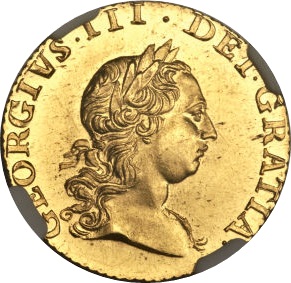
First laureate portrait of King George III right, legend around.
GEORGIVS III DEI GRATIA
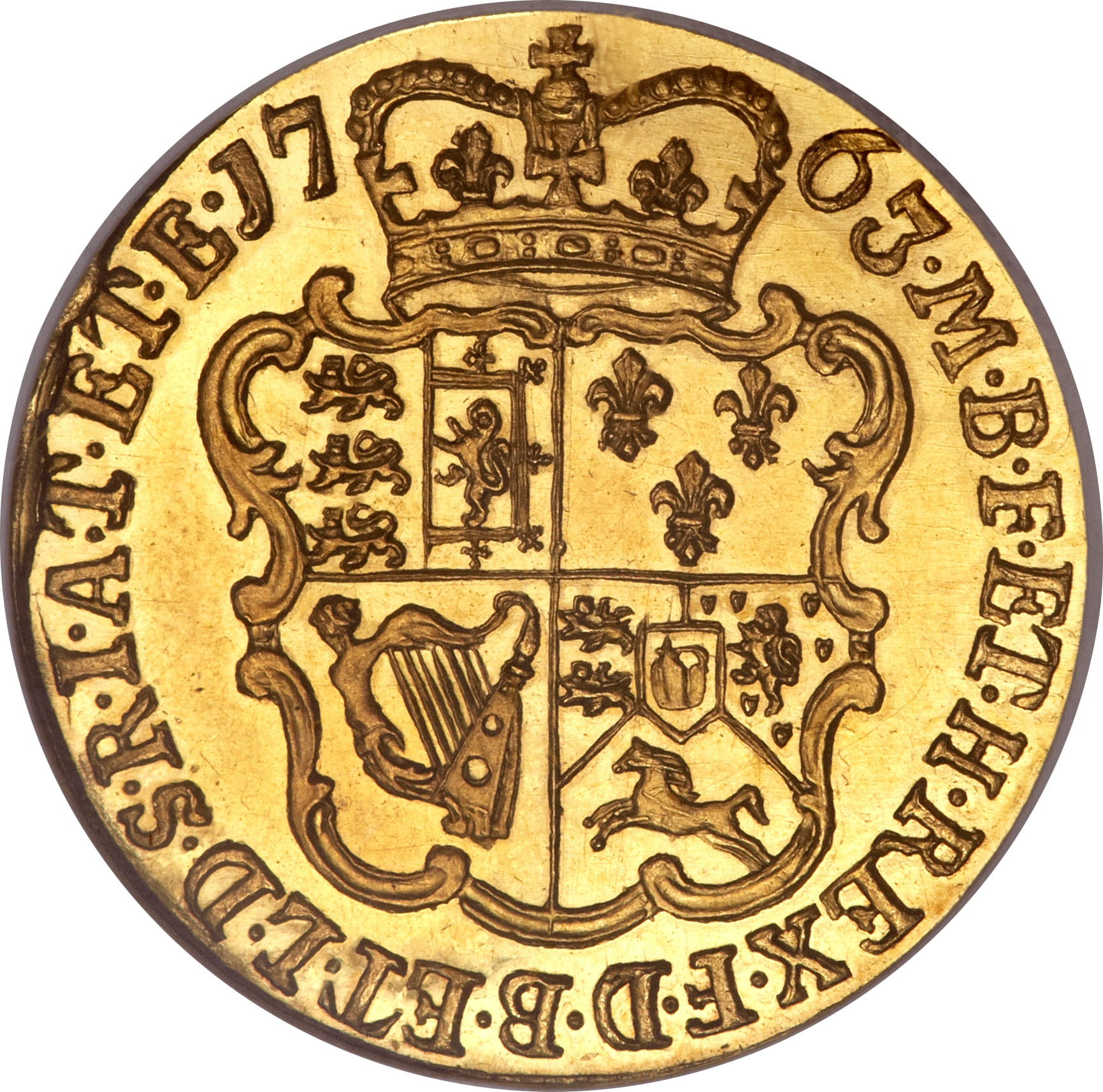
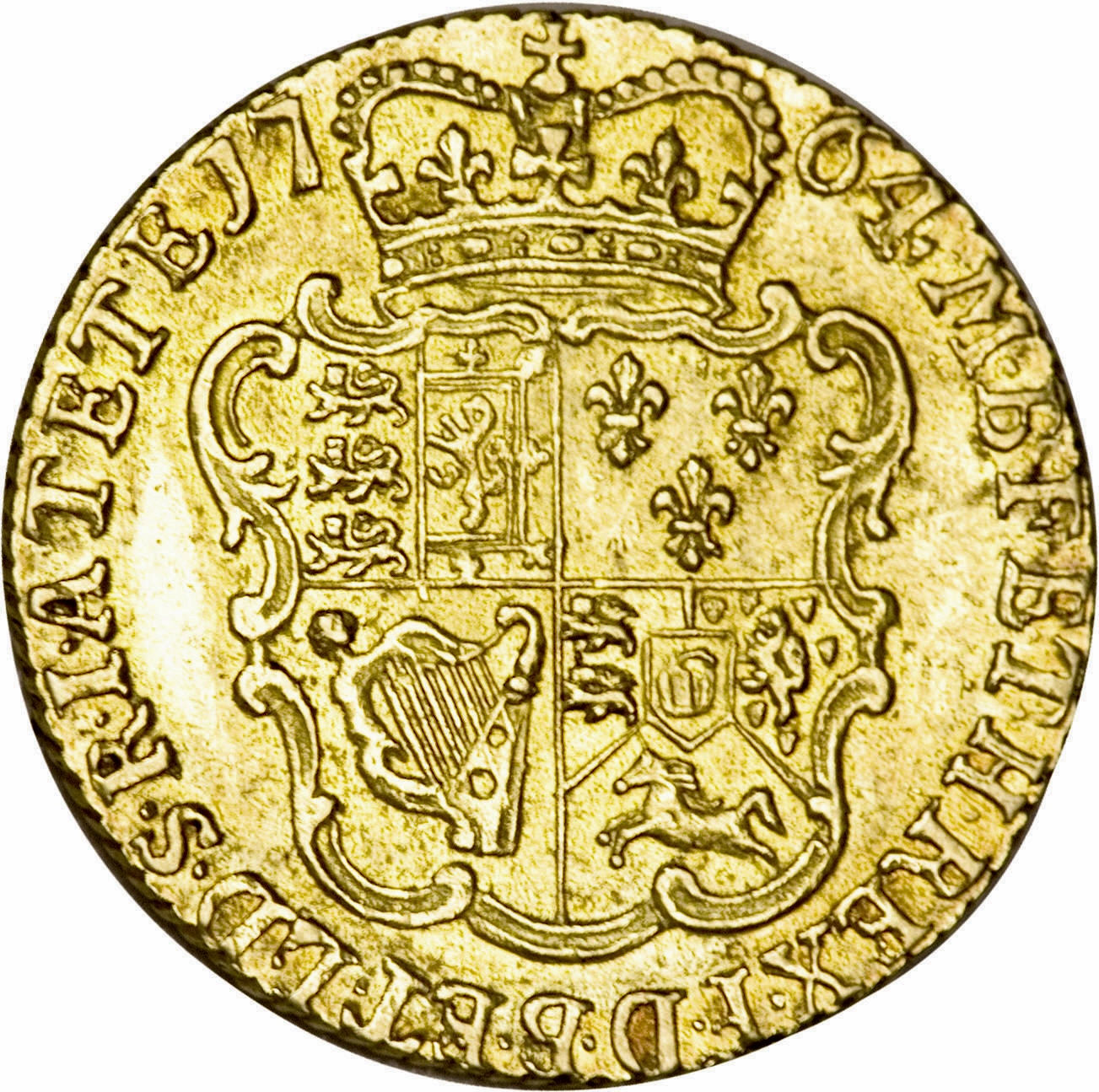
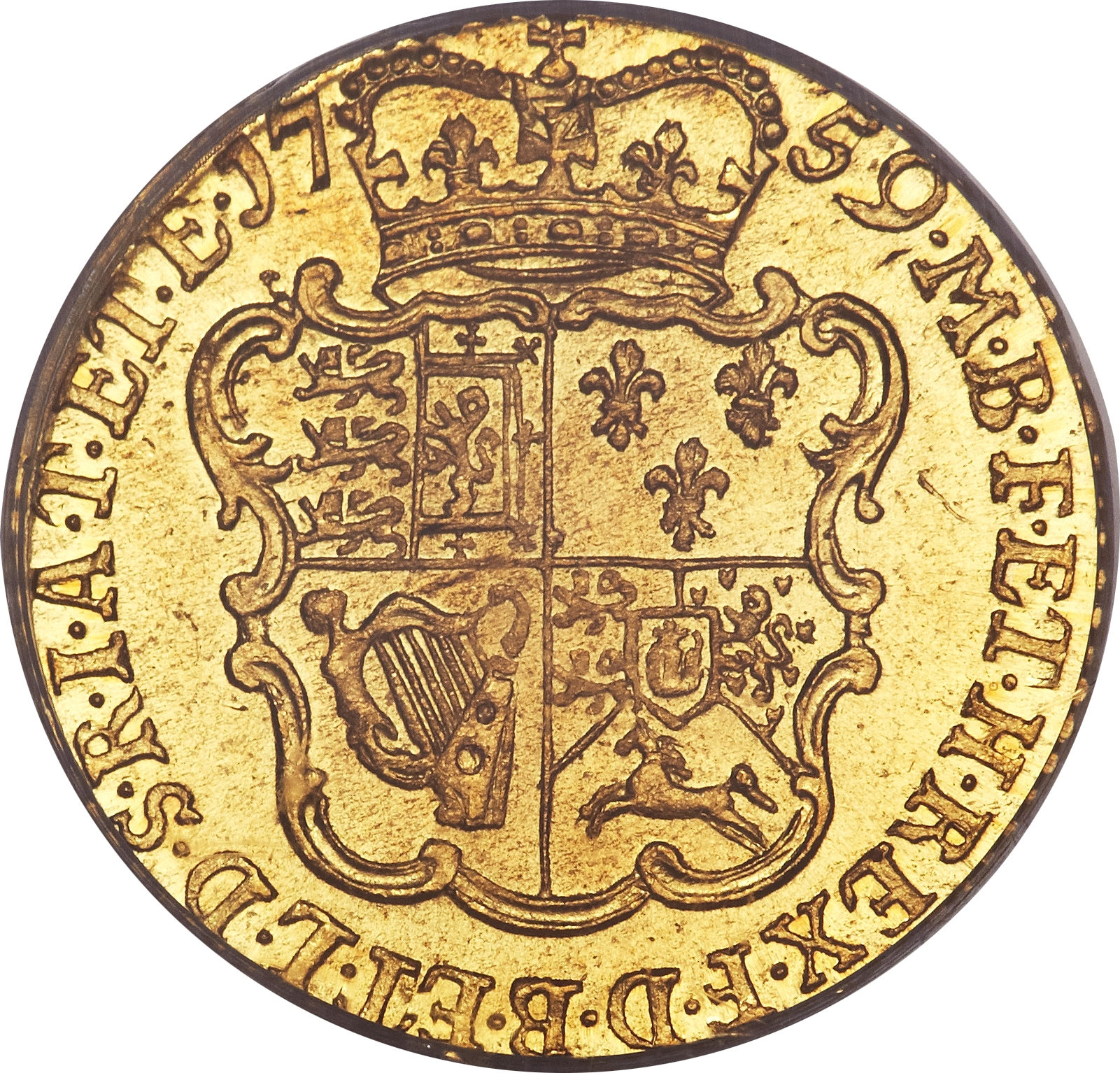
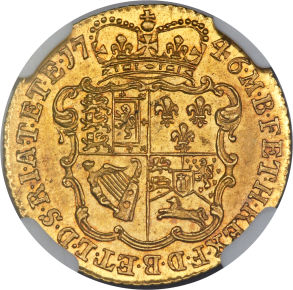
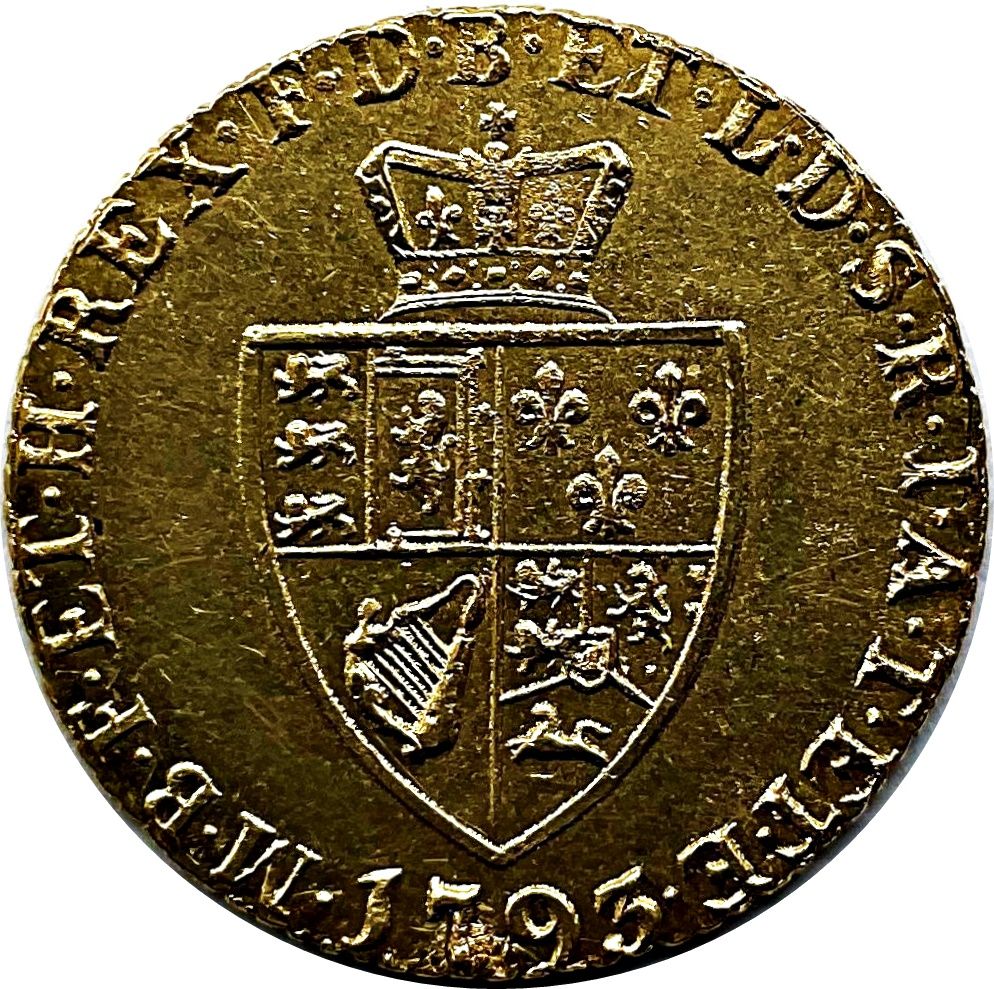
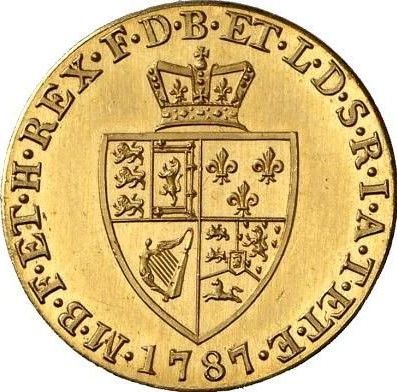
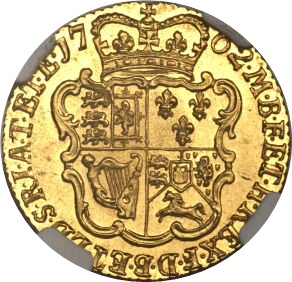
Ornate crowned quartered shield of arms, divided date above, legend around.
M B F ET H REX F D B ET L D S R I A T ET E
Find this on eBay
AffiliateHalf Guinea - George III price history
Daily limit reachedHalf Guinea - George III value by grade
Realised auction prices · ⭐ Pro Expand rows for individual sale records| Grade | Latest | Median | 30d Δ | All-time range | Sales (1yr) | Total sales | Last sale | |
|---|---|---|---|---|---|---|---|---|
| EF | £1,000.00 🔒 | £1,000.00 (1) | – | £1,000.00 – £1,000.00 | 0 | 1 | 04-09-2011 | |
|
Loading…
|
||||||||
About the 1762 Half Guinea - George III
The 1762 Half Guinea - George III is a circulating ½ guinea coin issued from 1762 to 1763, struck in 91.67% gold. It weighs 4.2g and measures 20mm across. Reverse design: Ornate crowned quartered shield of arms, divided date above, legend around.
It is no longer legal tender (withdrawn 1891), so its value is to collectors only.
Common questions
How much is the 1762 Half Guinea - George III worth?
The 1762 Half Guinea - George III has a price in one grade on MyCoinage so far: £1,000 in EF, the median of its verified sales. Its gold content is worth about £371 at today's spot price, which puts a floor under its value.
How rare is the 1762 half guinea?
It is one of the two scarcest half guinea types of George III. CoinVarieties says the first portrait type, struck only in 1762 and 1763, is tied with the third portrait of 1774 to 1775 as the rarest of the reign. No mintage figure survives for either date.
Who designed the first George III half guinea?
The Royal Mint Museum credits the youthful portrait on George III's early gold to Richard Yeo, the Assistant Engraver, who did the work because the Chief Engraver, John Sigismund Tanner, had failing eyesight. Yeo was formally made Chief Engraver in 1768.
What was a half guinea worth?
Ten shillings and sixpence, written 10s 6d or 10/6. The guinea had been fixed at 21 shillings by a proclamation of December 1717, and the half guinea was half of that. It weighed about 4.2 g of 0.917 fine gold.
Is a George III half guinea legal tender?
No. A royal proclamation of 22 November 1890 called in all gold coins struck before Queen Victoria's reign, and they ceased to be legal tender from 28 February 1891.
How do I identify the 1762 Half Guinea - George III?
Check the weight 4.2g and diameter 20mm and the metal (91.67% gold) against the specification table on this page. The reverse design is described above.
History and design
George III came to the throne in 1760, and the guinea and its fractions were the main coins the Royal Mint struck in the early years of his reign. The half guinea was worth ten shillings and sixpence. Its first type, with the king's first portrait, was struck only in 1762 and 1763, and no mintage figure survives for either year.
1762 was a busy year for small gold. A Treasury letter of 7 April 1762 directed the coinage of 200,000 pounds' worth of quarter guineas, which were issued in that year only, and the Mint also struck threepences. CoinVarieties judges this first half guinea type, together with the third portrait of 1774 to 1775, the rarest half guinea of the reign.
The obverse is a youthful laureate head of George III facing right, with GEORGIVS III DEI GRATIA. The Royal Mint Museum credits the early youthful gold portraits to Richard Yeo, the Assistant Engraver, who effectively did the Chief Engraver's work because John Sigismund Tanner's eyesight was failing.
The reverse is the ornate crowned shield of the royal arms, quartering England and Scotland, France, Ireland and the Electorate of Hanover. The legend M B F ET H REX F D B ET L D S R I A T ET E stands for King of Great Britain, France and Ireland, Defender of the Faith, Duke of Brunswick and Luneburg, Arch-Treasurer and Elector of the Holy Roman Empire, followed by the date. CoinVarieties gives the standard as 4.175 g of 0.917 fine gold.
Collecting notes
Only two dates exist, and both are scarce. The Royal Mint Museum also holds a pattern half guinea of 1762 with a youthful head with ringlets and a plain edge, weighing 3.97 g; currency coins have a grained edge, so the edge separates the two. A 1763 pattern half guinea is also recorded.
The first portrait was replaced in 1764 by the second portrait half guinea. Like all gold struck before Victoria, these coins were called in by proclamation of 22 November 1890 and ceased to be legal tender from 28 February 1891.
Sources
The history, design, varieties and collecting notes on this page are drawn from these sources. Prices come from recorded sales, not from them.
- Half guinea, Wikipedia (read 12 Oct 2026)
- George III pattern half-guinea, 1762 (RMM 959), The Royal Mint Museum, via Museum Data Service (read 12 Oct 2026)
- Catalogue of the Coins, Tokens, Medals, Dies and Seals in the Museum of the Royal Mint, Vol. I Part I (Hocking, 1906), page 162, No. 1779, Royal Mint Museum library (read 12 Oct 2026)
- George III, Royal Mint Museum (read 12 Oct 2026)
- Catalogue of the Coins, Tokens, Medals, Dies and Seals in the Museum of the Royal Mint, Vol. I Part I (Hocking, 1906), page 155, George III table of issues and Nos. 1696 to 1698, Royal Mint Museum library (read 12 Oct 2026)
- Catalogue of the Coins, Tokens, Medals, Dies and Seals in the Museum of the Royal Mint, Vol. I Part I (Hocking, 1906), page 156, No. 1699, Royal Mint Museum library (read 12 Oct 2026)
- Great Britain 1762 1/2 guinea, CoinVarieties (read 12 Oct 2026)
- Great Britain 1763 1/2 guinea, CoinVarieties (read 12 Oct 2026)
- Coins of the UK: values of half guineas and half sovereigns (date listing), Tony Clayton, Coins of the UK (read 12 Oct 2026)
- Sovereign (British coin), Wikipedia (read 12 Oct 2026)
- Catalogue of the Coins, Tokens, Medals, Dies and Seals in the Museum of the Royal Mint, Vol. I Part I (Hocking, 1906), page 157, Treasury letter of 7 April 1762, Royal Mint Museum library (read 12 Oct 2026)
More ½ Guinea coins from nearby years