1 Guinea - George III Pattern (1776)
| Country | United Kingdom |
| Year | 1776 |
| Denomination | 1 Guinea |
| Face value | £1.05 |
| Mint | Royal Mint · Llantrisant |
| Circulation | Non-circulating |
| Demonetised | Yes |
| Composition | Gold |
| Shape | Round |
| Edge | Plain |
| Grade scale | UK (EF/UNC) |
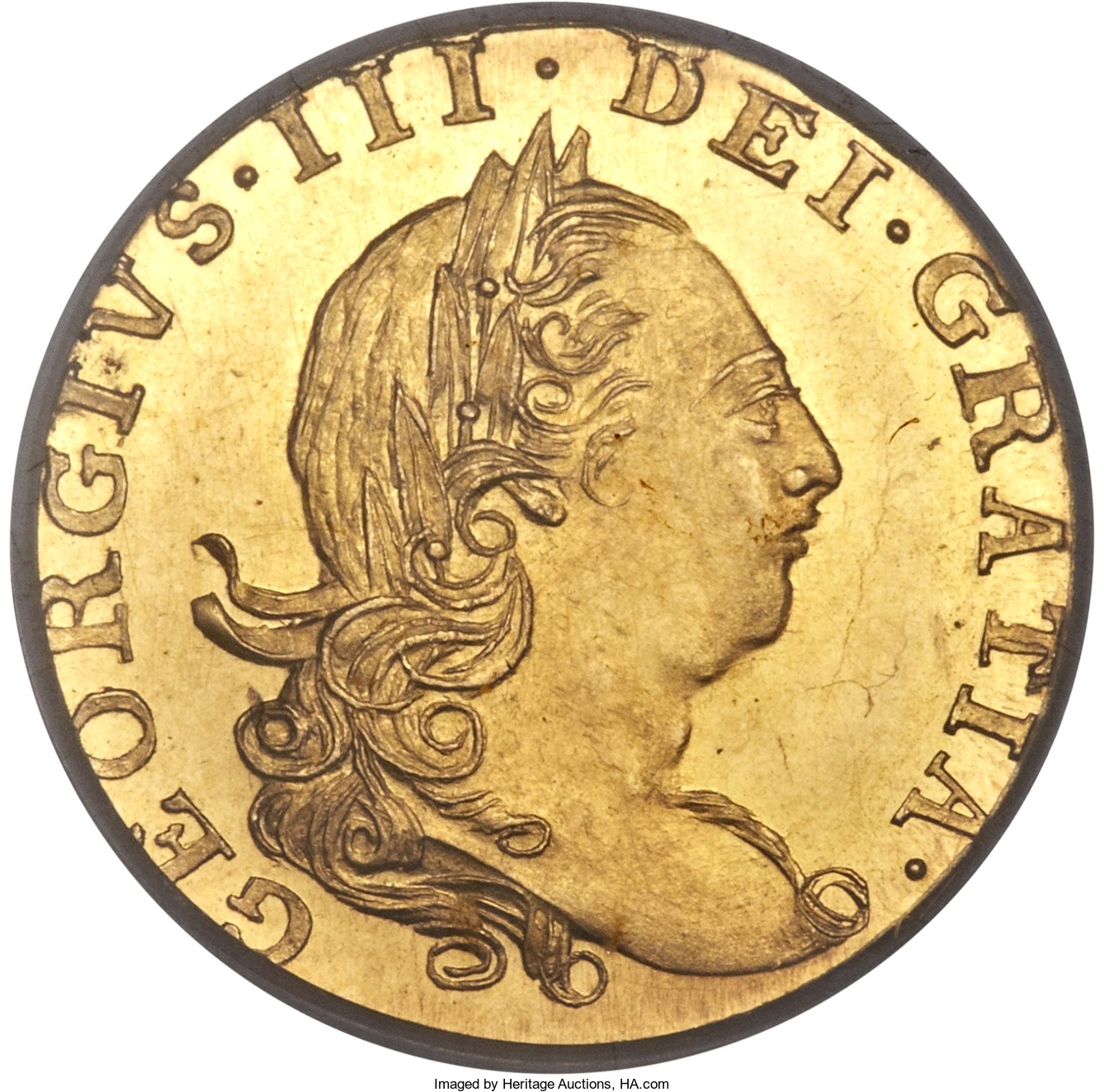
Laureate portrait of King George III right, legend around.
GEORGIVS III DEI GRATIA
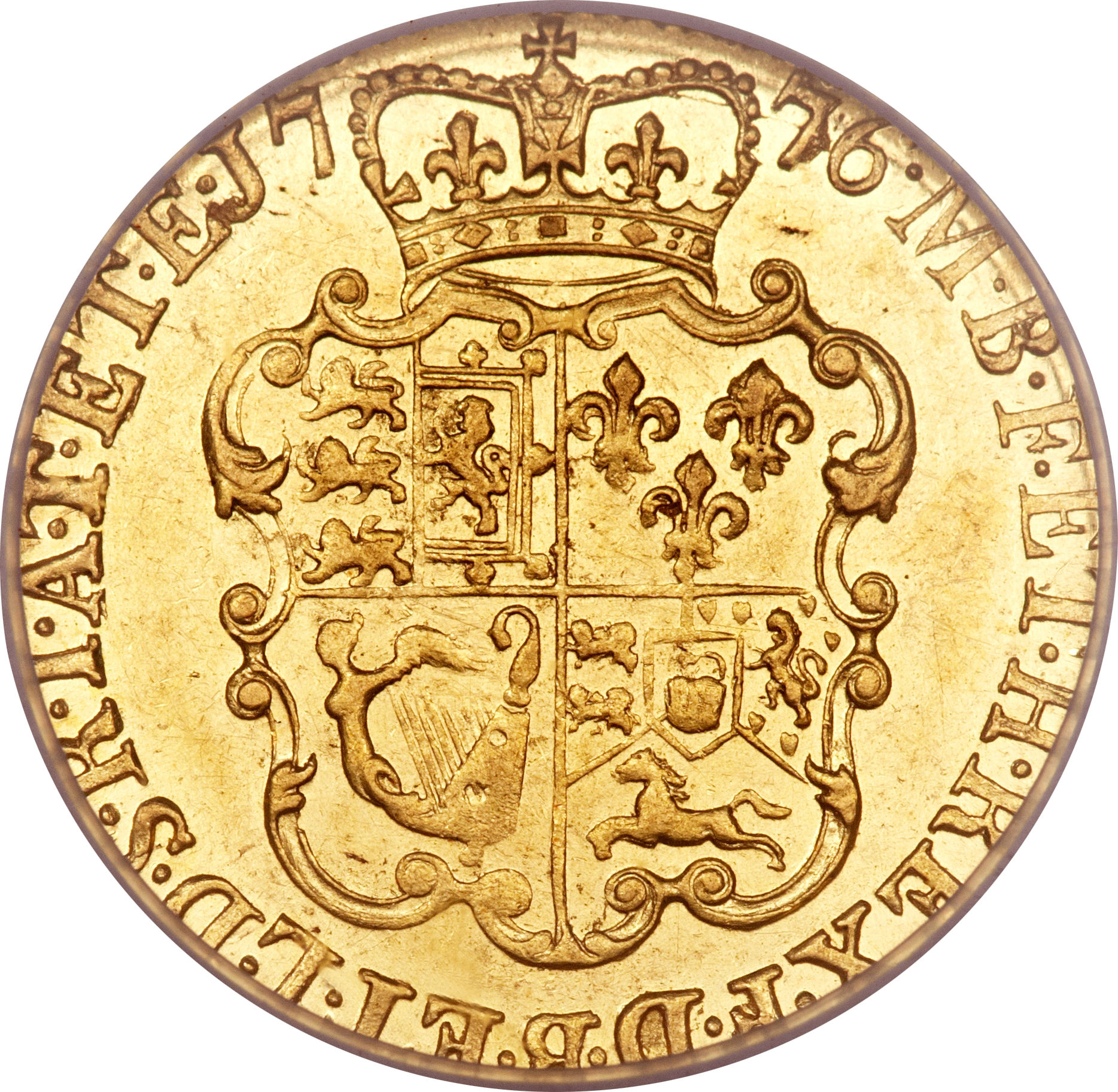
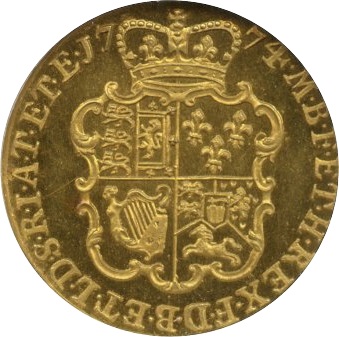
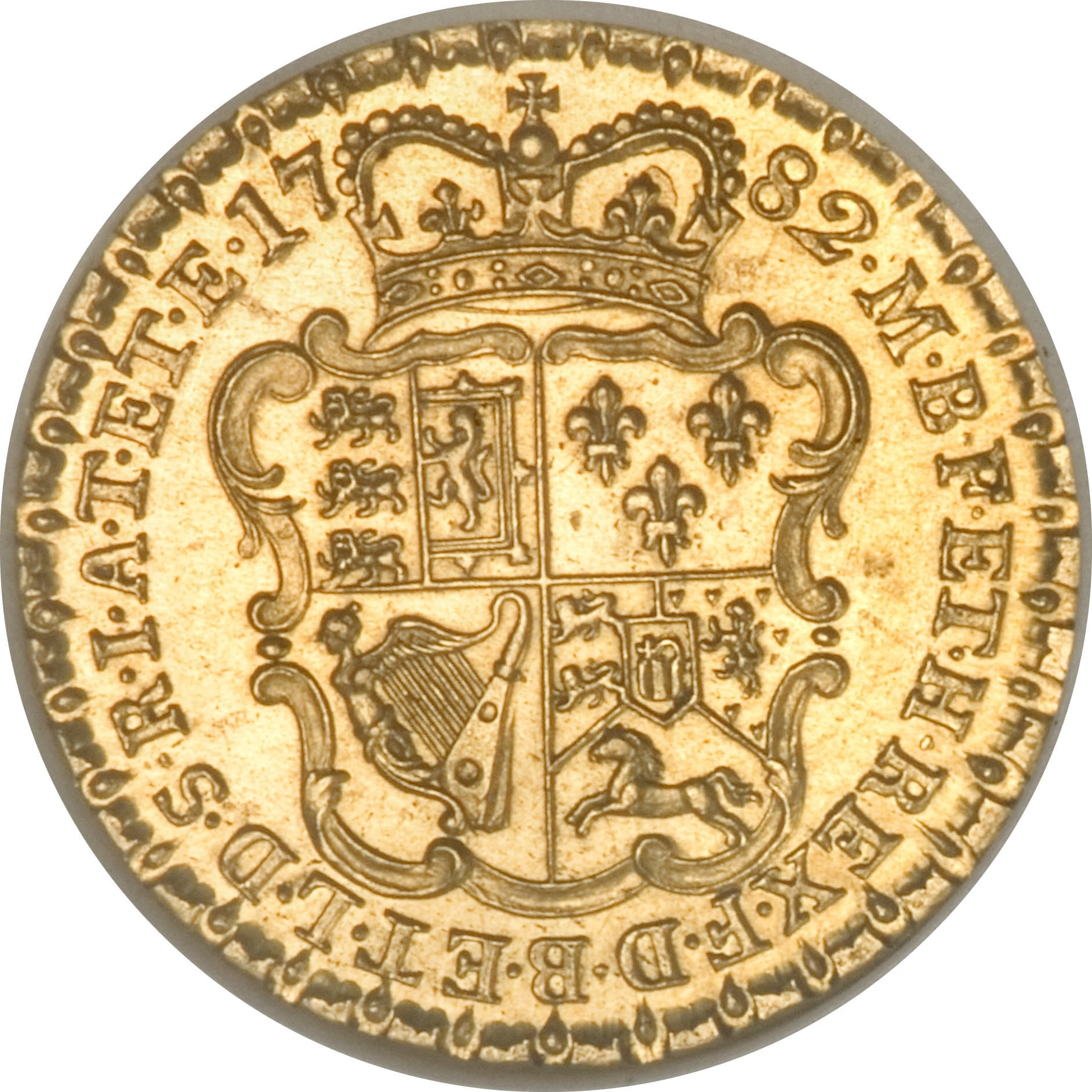
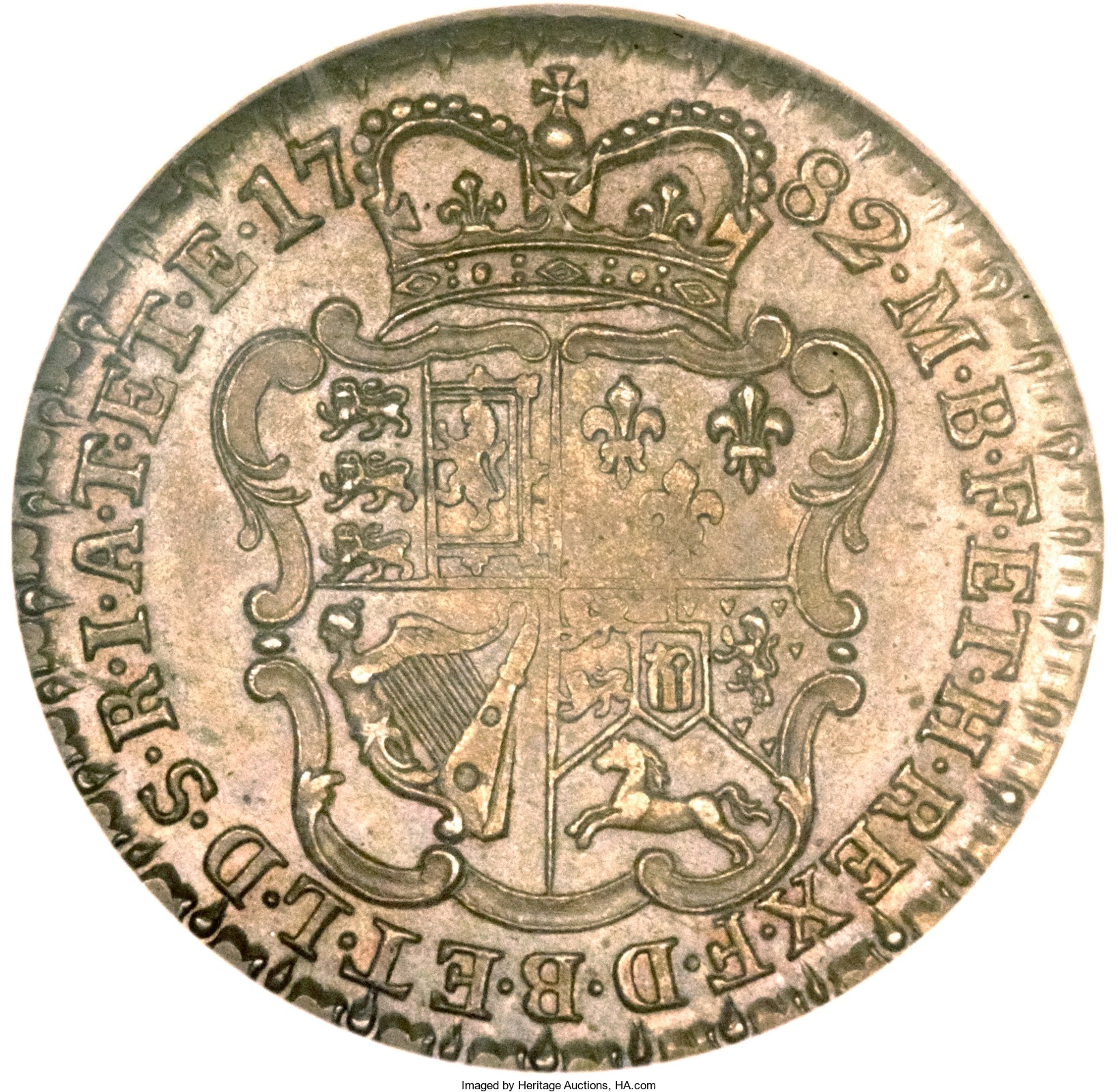
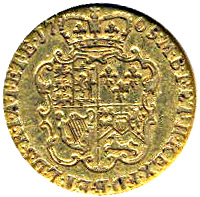
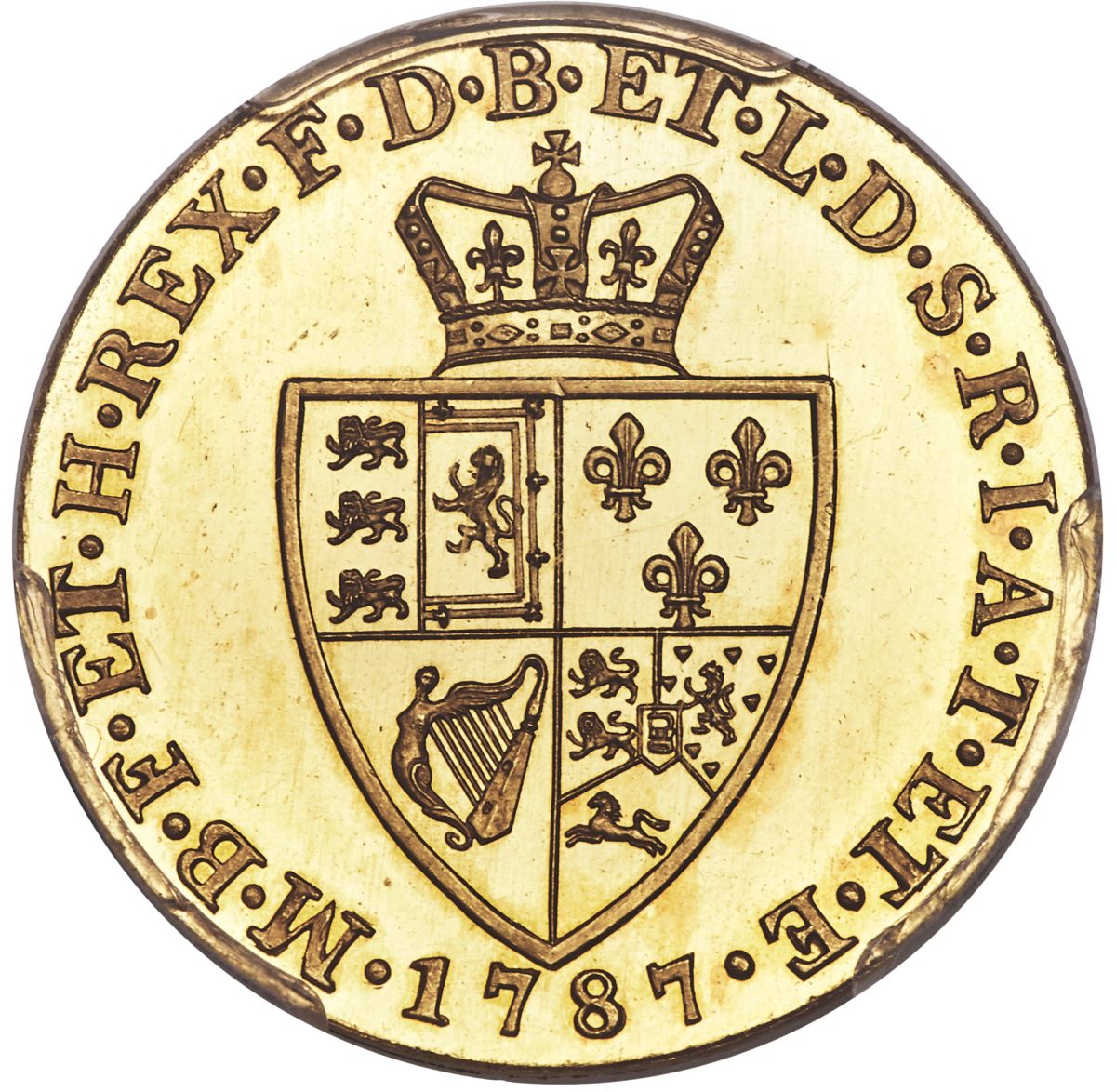
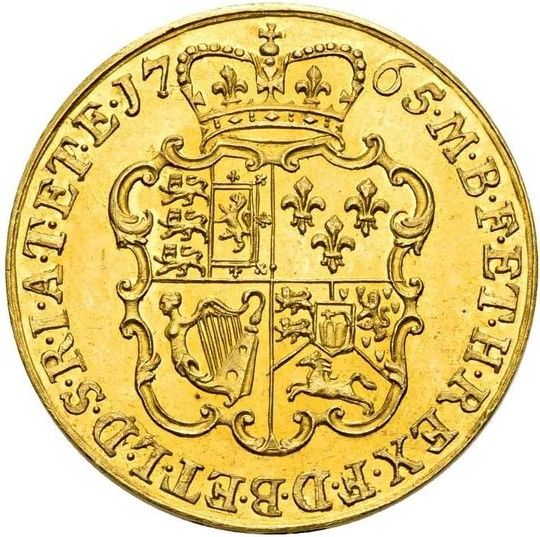
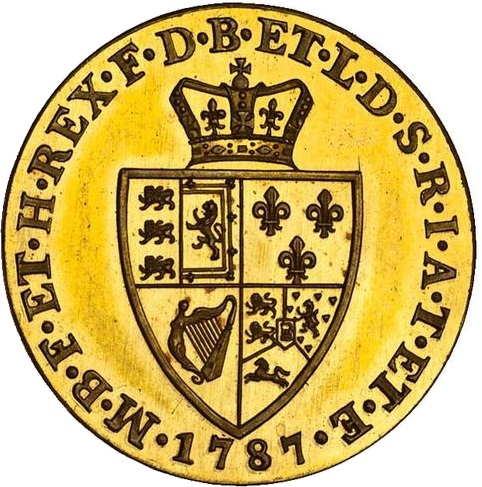
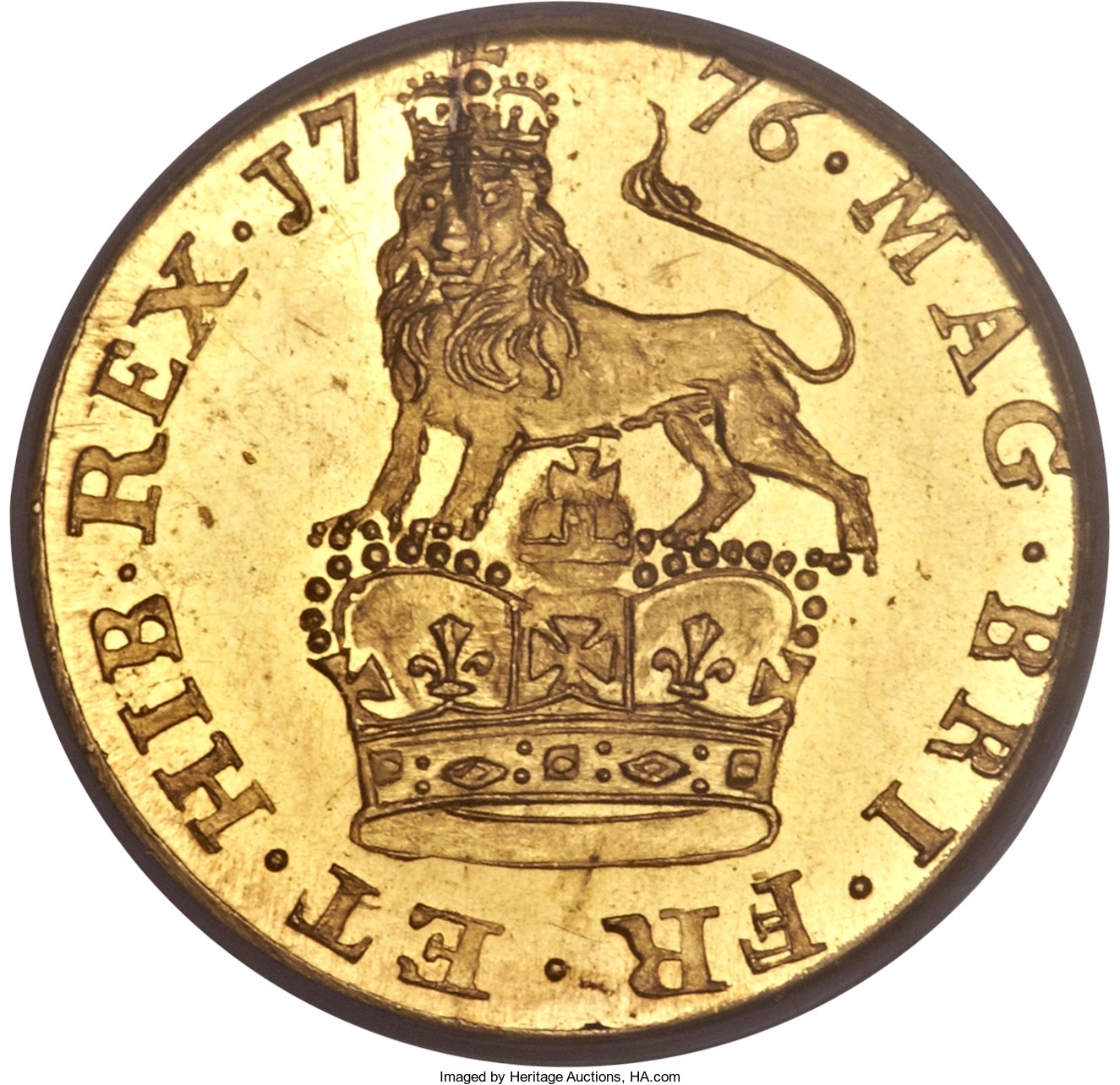
Crowned lion passant atop crown, divided date above, legend around.
Find this on eBay
Affiliate1 Guinea - George III Pattern price history
Daily limit reachedAbout the 1776 1 Guinea - George III Pattern
The 1776 1 Guinea - George III Pattern is a collector 1 guinea coin, struck in gold. Reverse design: Crowned lion passant atop crown, divided date above, legend around.
It is no longer legal tender, so its value is to collectors only.
Common questions
How much is the 1776 1 Guinea - George III Pattern worth?
No verified sale of the 1776 1 Guinea - George III Pattern has been logged on MyCoinage yet.
Is there a 1776 pattern guinea with a lion on a crown?
Not as a full guinea in any reference that could be checked. The crowned lion standing on a crown, dated 1776, is Richard Yeo's pattern third guinea (seven shillings), catalogued as KM Pn55 and Wilson and Rasmussen 137 and weighing under 3 g.
Who designed the 1776 crowned lion pattern?
Richard Yeo, according to the Ponterio catalogue quoted by CoinVarieties and Sovereign Rarities. Yeo was Assistant Engraver at the Mint from 1749, did the portrait work because Chief Engraver John Sigismund Tanner's eyesight was failing, and died in office in 1779.
Did the 1776 lion pattern ever circulate?
No. It is a pattern with a plain edge. CoinVarieties notes that the third guinea denomination did not go into production until 1797, and a different bust was used then. The Royal Mint Museum records its example among its patterns.
How heavy is the 1776 lion pattern?
About 2.6 to 2.8 g. The Royal Mint Museum's example weighs 2.65 g, Sovereign Rarities recorded 2.83 g and CoinVarieties gives 2.78 g, all consistent with a third of a guinea rather than the roughly 8.4 g of a full guinea.
History and design
This entry is catalogued as a pattern guinea of 1776, but its design, a crowned lion standing on a crown, belongs to a different denomination. CoinVarieties lists the same Krause number, KM Pn55, for the 1776 pattern third guinea (Wilson and Rasmussen 137), and the Royal Mint Museum, Hocking's 1906 catalogue and Sovereign Rarities all describe the lion piece of 1776 as a third guinea, a gold coin of seven shillings. No reference that could be checked records a full guinea with this design, and the catalogue already has a separate entry for the third guinea pattern.
The third guinea was not yet a currency coin in 1776. CoinVarieties notes that the denomination did not go into production until 1797, with a different bust, and the Royal Mint Museum says it was introduced then to supplement the half guinea and make up for the shortage of silver. The 1776 piece was an early design proposal. No number struck is recorded.
The obverse has a laureate bust of George III facing right with GEORGIVS III DEI GRATIA. The reverse departs from the guinea's shield of arms: a crowned lion stands on a large crown, with the date at the top and MAG BRI FR ET HIB REX, short for King of Great Britain, France and Ireland, in place of the long titles of the guinea. The Ponterio catalogue quoted by CoinVarieties credits the piece to Richard Yeo, and gives a plain edge. The Royal Mint Museum's example (RMM 969) weighs 2.65 g, has a plain edge and is struck with the sides the same way up.
Collecting notes
Anyone looking for this piece should treat it as the [1776 pattern third guinea](/coin/⅓-guinea-george-iii-pattern-1776). Its weight, between about 2.65 and 2.83 g in the examples recorded, rules out a full guinea at a glance. Sovereign Rarities graded its example NGC PF63 Cameo, the second finest graded, and Ponterio's at NGC PF62, and both record a plain edge; Ponterio's cataloguer noted that some proof diagnostics fit and some do not.
Sources
The history, design, varieties and collecting notes on this page are drawn from these sources. Prices come from recorded sales, not from them.
- George III pattern third-guinea, 1776 (RMM 969), The Royal Mint Museum, via Museum Data Service (read 12 Oct 2026)
- Catalogue of the Coins, Tokens, Medals, Dies and Seals in the Museum of the Royal Mint, Vol. I Part I (Hocking, 1906), page 173, proofs and patterns of George III, Royal Mint Museum library (read 12 Oct 2026)
- Great Britain 1776 1/3 guinea, CoinVarieties (read 12 Oct 2026)
- George III 1776 pattern Third-Guinea by Yeo, PF63 CAMEO, 2nd finest, ex Augustana, Sovereign Rarities (read 12 Oct 2026)
- George III, Royal Mint Museum (read 12 Oct 2026)
- Guinea (coin), Wikipedia (read 12 Oct 2026)
More 1 Guinea coins from nearby years