1 Guinea - George III Pattern (1765)
| Country | United Kingdom |
| Year | 1765 |
| Denomination | 1 Guinea |
| Face value | £1.05 |
| Mint | Royal Mint · Llantrisant |
| Circulation | Non-circulating |
| Demonetised | Yes |
| Composition | Gold (.9167) (917/1000 fine) |
| Weight | 6.530g · 0.1925 t oz |
| Shape | Round |
| Orientation | Coin alignment ↑↓ |
| Grade scale | UK (EF/UNC) |
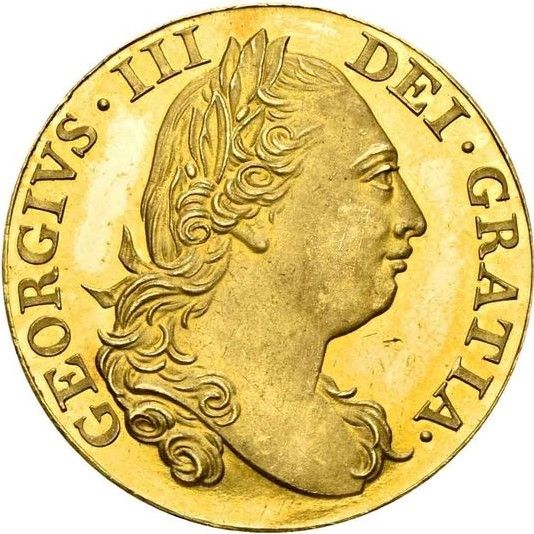
Laureate bust right, legend around.
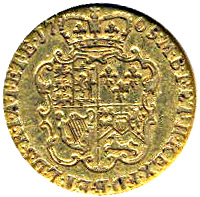
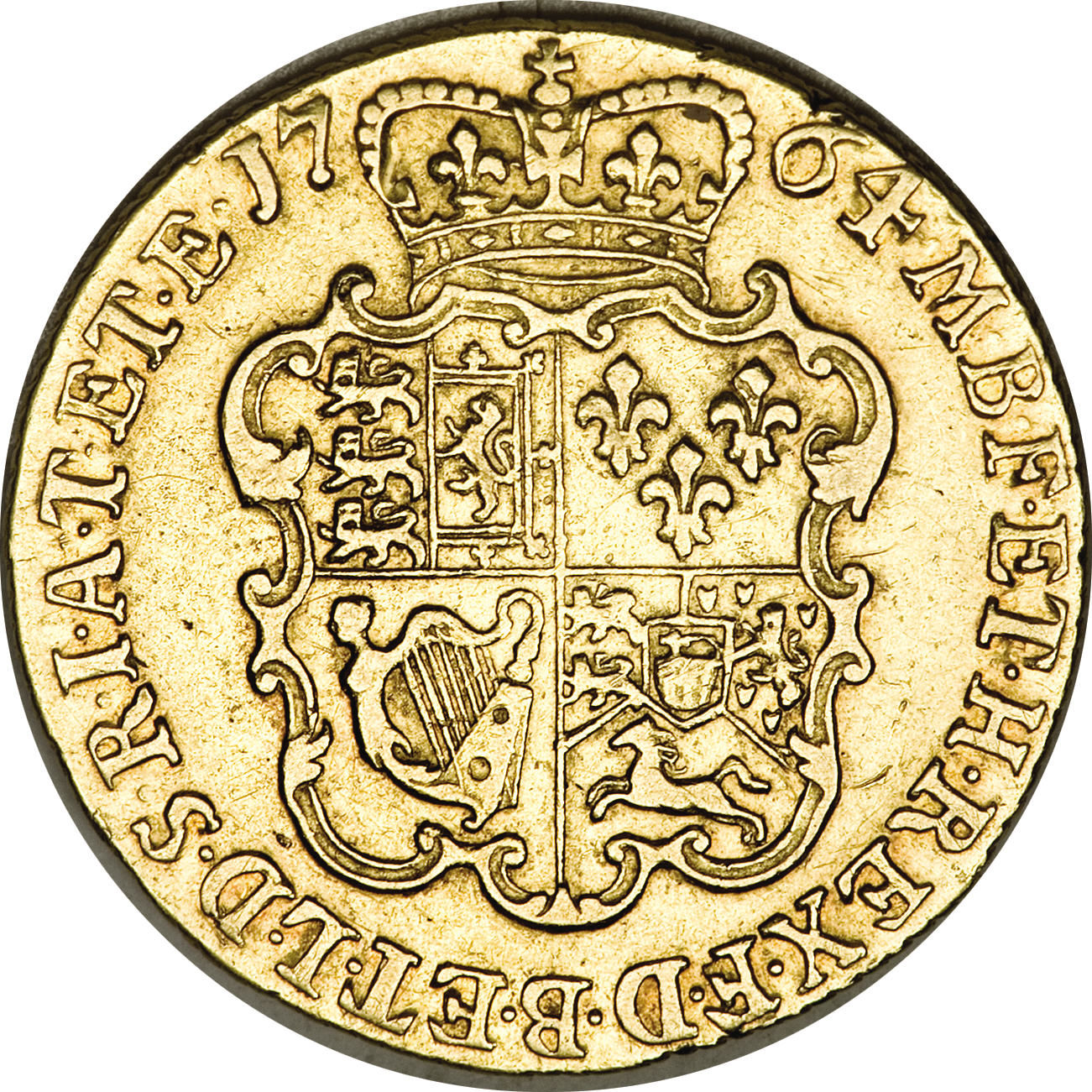
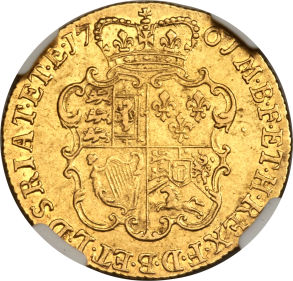
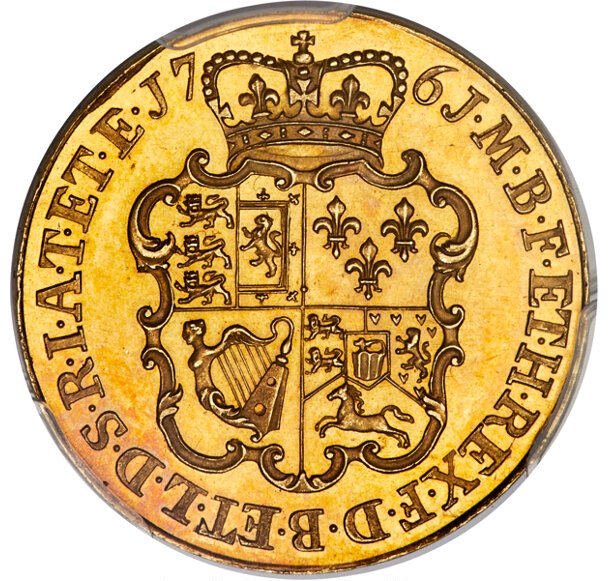
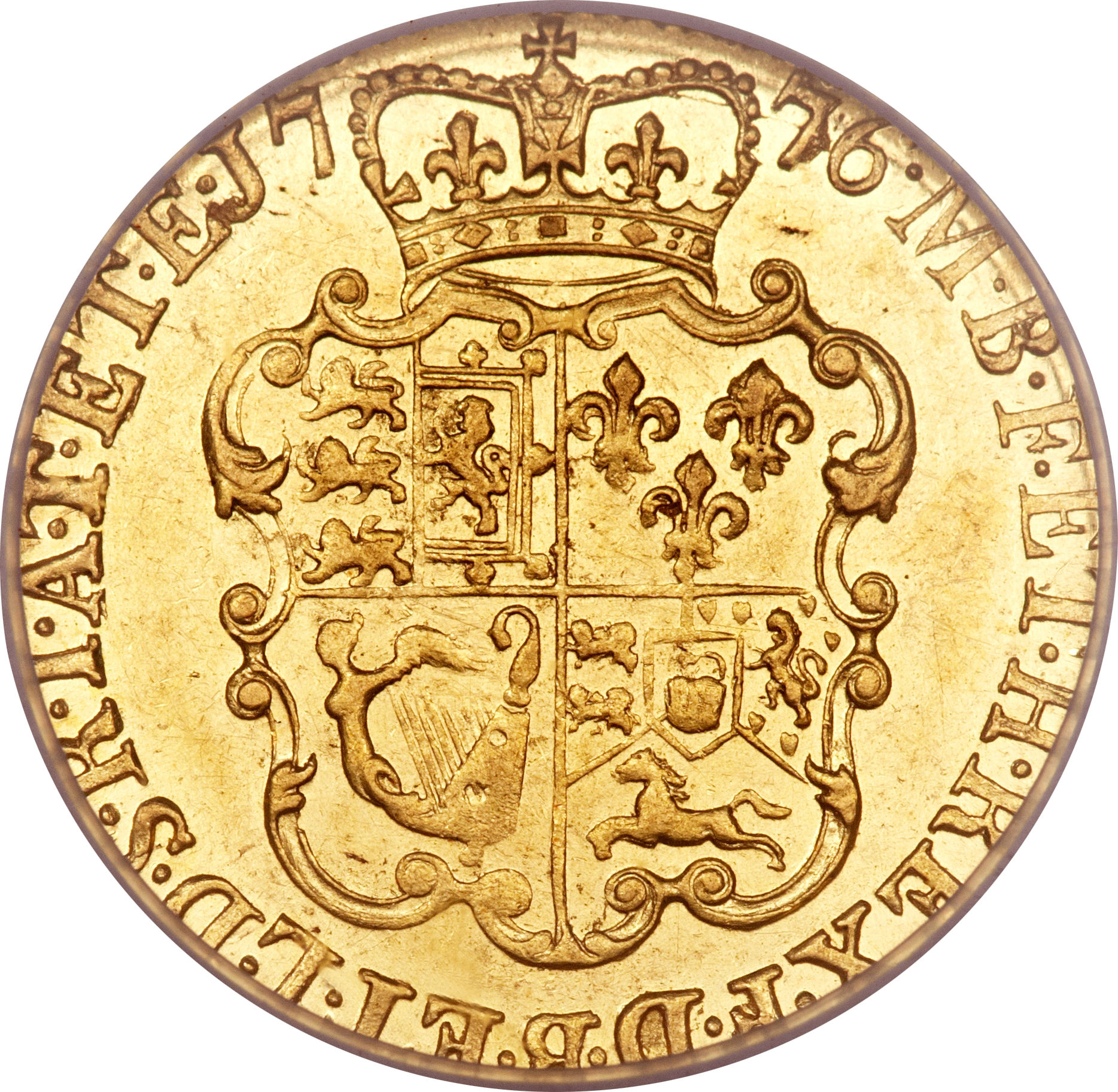
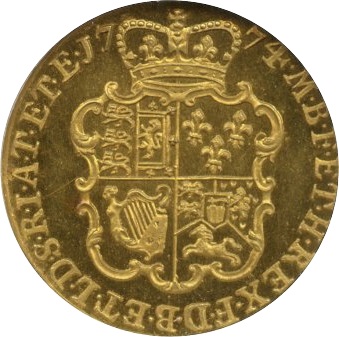
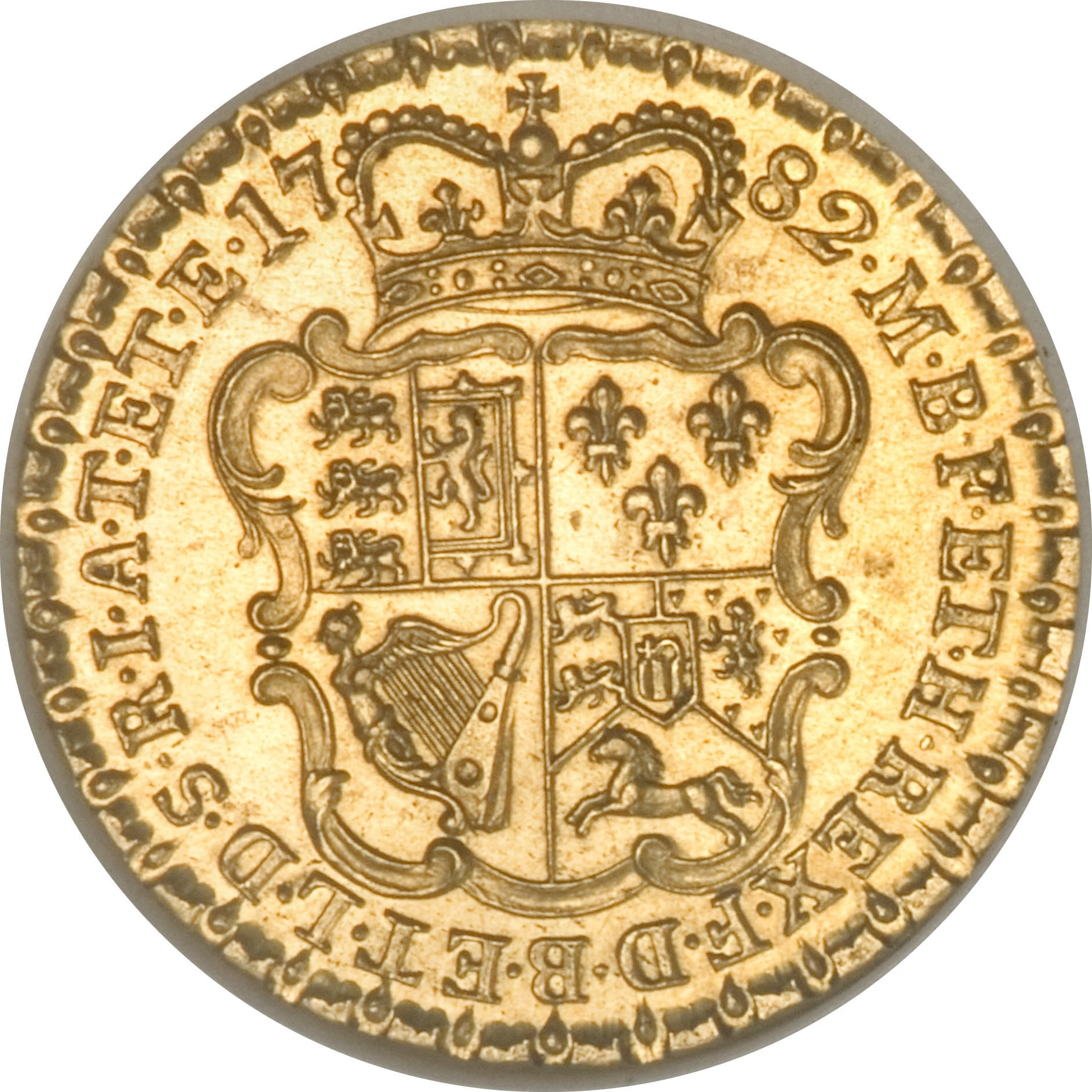
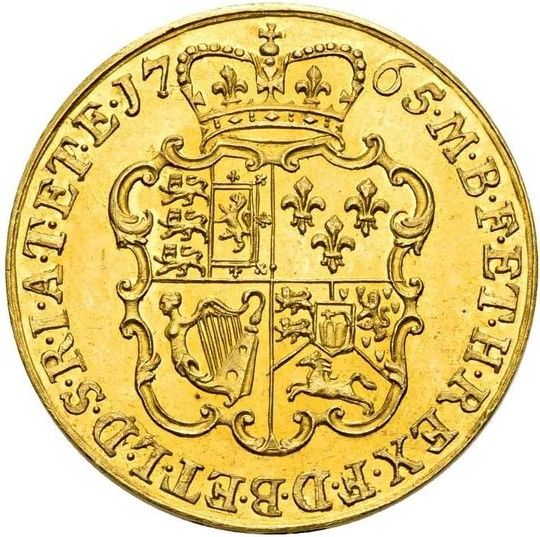
Ornate crowned quartered shield of arms dividing date, legend around.
Find this on eBay
Affiliate1 Guinea - George III Pattern price history
Daily limit reachedAbout the 1765 1 Guinea - George III Pattern
The 1765 1 Guinea - George III Pattern is a collector 1 guinea coin, struck in 91.67% gold. It weighs 6.53g. Reverse design: Ornate crowned quartered shield of arms dividing date, legend around.
It is no longer legal tender, so its value is to collectors only.
Common questions
How much is the 1765 1 Guinea - George III Pattern worth?
No verified sale of the 1765 1 Guinea - George III Pattern has been logged on MyCoinage yet. Its gold content is worth about £577 at today's spot price, which puts a floor under its value.
What is the 1765 pattern guinea?
A trial striking of a guinea dated 1765, made while the Mint was preparing the third portrait of George III, which went into use on the currency guinea that year. Patterns were made to test or show a design and were not issued as money.
Who engraved the 1765 pattern guinea?
This is not settled in published sources. Spink notes that the Rev. Crowther's 1886 guide credited the 1761, 1763 and 1765 patterns to John Sigismund Tanner and that sale catalogues repeated this for 60 years; the Royal Mint Museum credits the early youthful busts to Richard Yeo.
Is the 1765 pattern guinea in the Royal Mint Museum?
Not as far as its catalogues show. Hocking's 1906 catalogue of the Mint's collection lists George III guinea patterns and proofs dated 1761 and 1774, and later ones of 1813, but none dated 1765.
How many 1765 pattern guineas exist?
No number struck is recorded, and no census of survivors has been published in a source that could be checked. Treat any example as a specialist piece that needs authentication against the Wilson and Rasmussen pattern references.
How do I identify the 1765 1 Guinea - George III Pattern?
Check the weight 6.53g and the metal (91.67% gold) against the specification table on this page. The reverse design is described above.
History and design
The guinea changed portrait three times in George III's first five years: a first head in 1761, a second in 1763 and 1764, and a third from 1765, which CoinVarieties records on the currency guinea from 1765 to 1773. A pattern dated 1765 belongs to that third change, when a new head was being tried out before or alongside its use on coins struck for circulation.
Patterns of this period are hard to pin down. Spink notes that the Rev. Crowther's 1886 guide credited the 1761, 1763 and 1765 patterns to John Sigismund Tanner, and that sale catalogues repeated the attribution for about 60 years before it was questioned. The Royal Mint Museum says the early youthful busts were actually cut by Richard Yeo, Assistant Engraver, because Tanner's eyesight was failing; Wikipedia's article on Yeo also says he supplied patterns for the guinea. Hocking's 1906 catalogue of the Mint's own collection lists George III guinea patterns or proofs dated 1761 and 1774 and a group of 1813, but none of 1765. No number struck is recorded.
George III's early guineas pair a laureate bust facing right, with GEORGIVS III DEI GRATIA, with an ornate crowned shield of arms quartering England and Scotland, France, Ireland and Hanover, the date split by the crown and M B F ET H REX F D B ET L D S R I A T ET E around it. The 1765 pattern is described as following this scheme. Its exact bust, legends and edge are not set out in any published description that could be checked, so they are not given here.
Collecting notes
A piece offered as a 1765 pattern guinea should come with a firm attribution to a published pattern reference, since the ordinary third portrait guinea of 1765 shares the date and broadly the same design. Patterns of this reign are usually told from currency coins by a plain edge and proof surfaces, as on the museum's 1761 and 1774 pieces, so check both. The weight should also be confirmed, as the catalogue's recorded weight is well below the 8.4 g of a currency guinea.
Sources
The history, design, varieties and collecting notes on this page are drawn from these sources. Prices come from recorded sales, not from them.
- George III, Royal Mint Museum (read 12 Oct 2026)
- Catalogue of the Coins, Tokens, Medals, Dies and Seals in the Museum of the Royal Mint, Vol. I Part I (Hocking, 1906), page 172, proofs of George III, Royal Mint Museum library (read 12 Oct 2026)
- George III (1760-1820), pattern Half-Guinea, 1764, by Richard Yeo, lot 409, Spink (read 12 Oct 2026)
- Richard Yeo, Wikipedia (read 12 Oct 2026)
- Great Britain 1765 guinea, CoinVarieties (read 12 Oct 2026)
- Guinea (coin), Wikipedia (read 12 Oct 2026)
- Catalogue of the Coins, Tokens, Medals, Dies and Seals in the Museum of the Royal Mint, Vol. I Part I (Hocking, 1906), page 173, proofs and patterns of George III, Royal Mint Museum library (read 12 Oct 2026)
More 1 Guinea coins from nearby years