1 Guinea - George III 3rd portrait (1765–1773)
| Country | United Kingdom |
| Year | 1765–1773 |
| Denomination | 1 Guinea |
| Face value | £1.05 |
| Mint | Royal Mint · Llantrisant |
| Circulation | Circulating |
| Demonetised | 1891 |
| Composition | Gold (.9167) (917/1000 fine) |
| Weight | 8.400g · 0.2476 t oz |
| Diameter | 24.0mm |
| Shape | Round |
| Grade scale | UK (EF/UNC) |
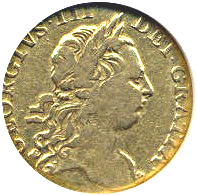
Third laureate portrait of King George III right, legend around.
GEORGIVS III DEI GRATIA
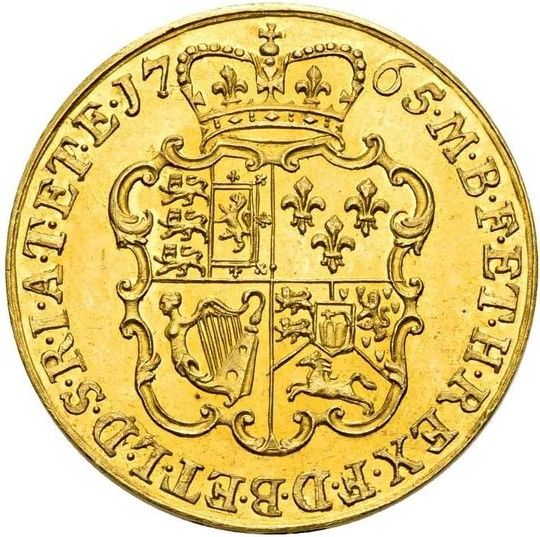
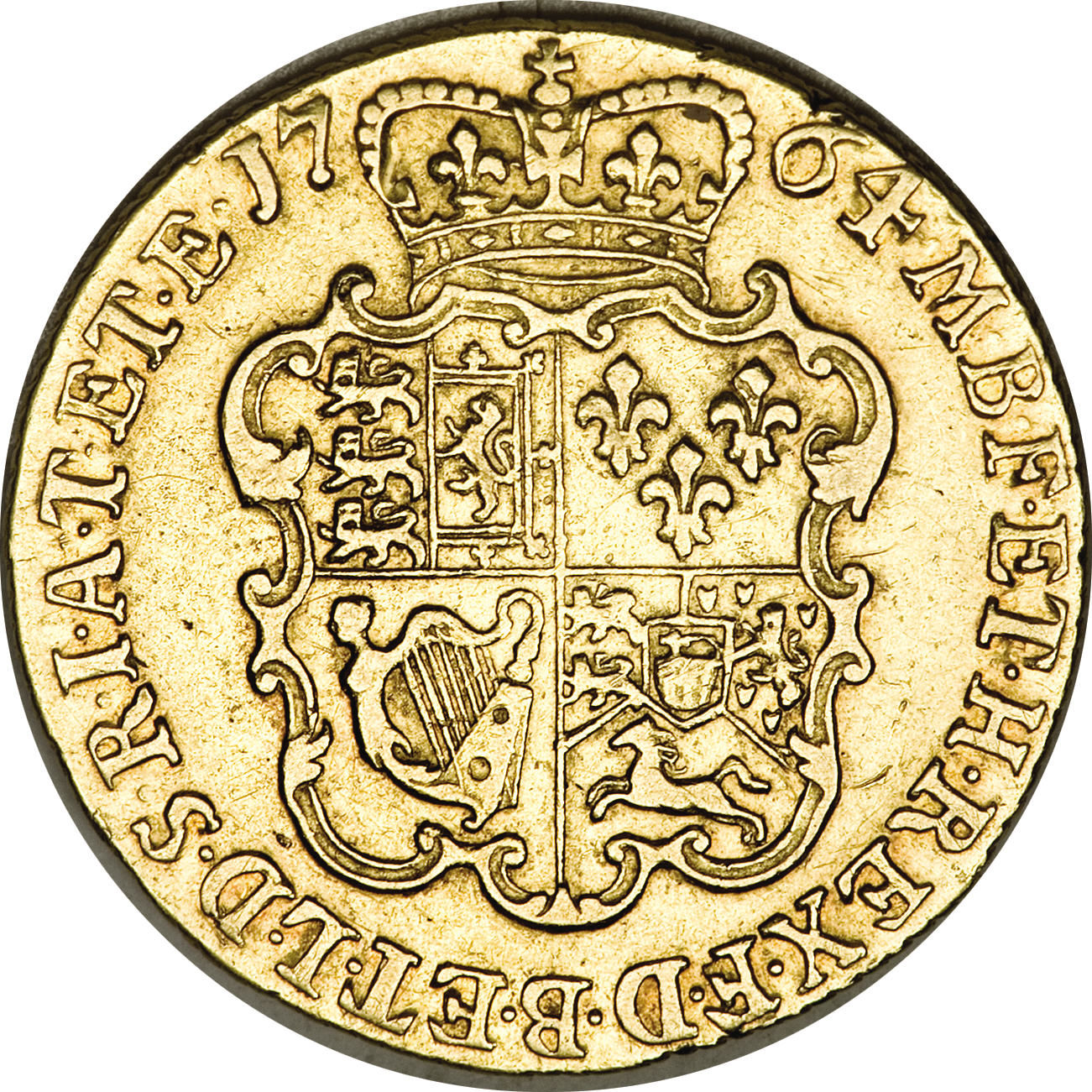
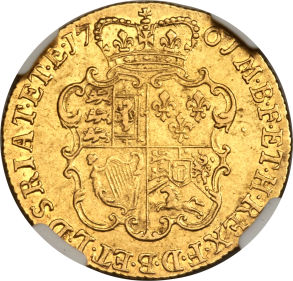
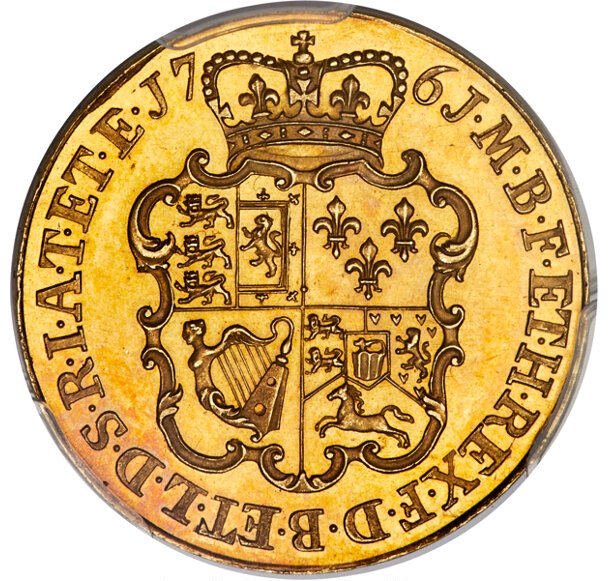
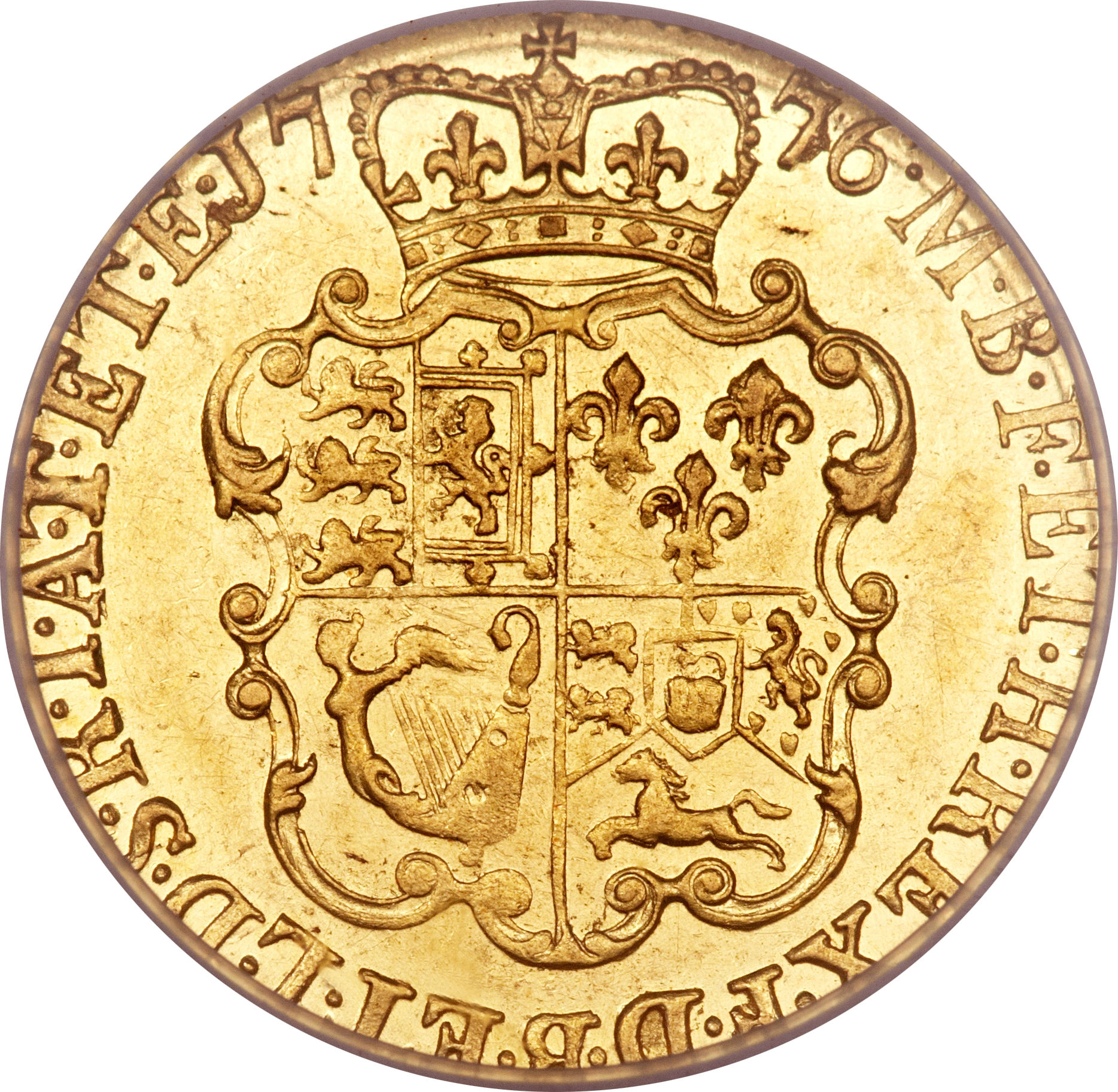
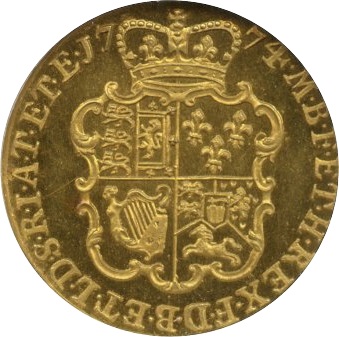
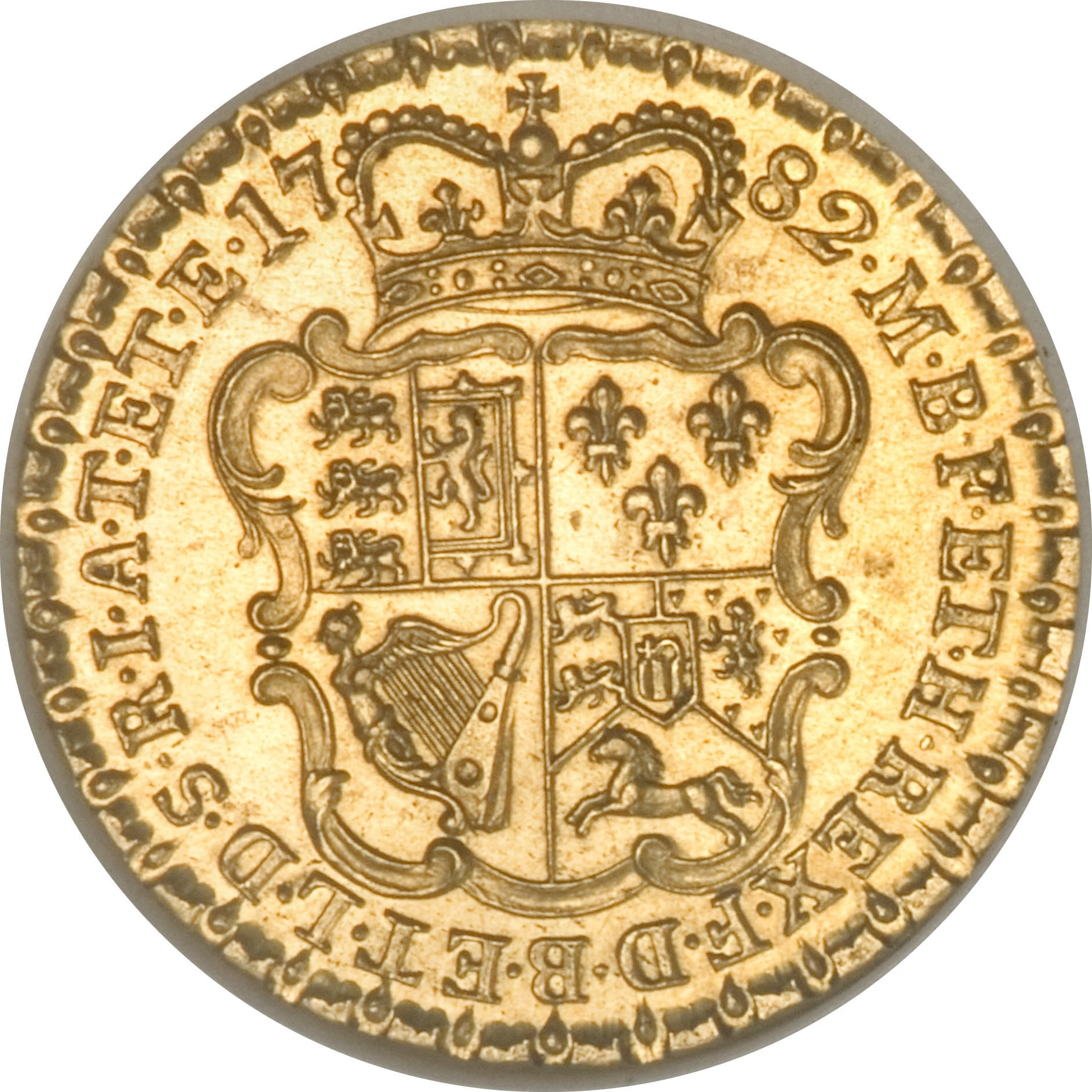
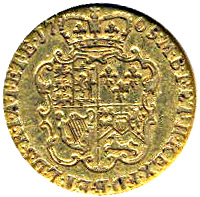
Crowned quartered shield showing the arms of England & Scotland, France, Ireland and Hanover, divided date above, legend around.
M B F ET H REX F D B ET L D S R I A T ET E
1 Guinea - George III market value
Find this on eBay
Affiliate1 Guinea - George III value by grade
Realised auction prices · ⭐ Pro Expand rows for individual sale records| Grade | Latest | Median | 30d Δ | All-time range | Sales (1yr) | Total sales | Last sale | |
|---|---|---|---|---|---|---|---|---|
| EF | £1,400.00 🔒 | £1,300.00 (2) | – | £1,200.00 – £1,400.00 | 0 | 2 | 06-06-2021 | |
|
Loading…
|
||||||||
| VF | £1,400.00 🔒 | £1,400.00 (1) | – | £1,400.00 – £1,400.00 | 0 | 1 | 03-09-2023 | |
|
Loading…
|
||||||||
About the 1765 1 Guinea - George III
The 1765 1 Guinea - George III is a circulating 1 guinea coin issued from 1765 to 1773, struck in 91.67% gold. It weighs 8.4g and measures 24mm across. Reverse design: Crowned quartered shield showing the arms of England & Scotland, France, Ireland and Hanover, divided date above, legend around.
It is no longer legal tender (withdrawn 1891), so its value is to collectors only.
Common questions
How much is the 1765 1 Guinea - George III worth?
Verified sold prices for the 1765 1 Guinea - George III run from £1,300 to £1,400 across 2 grades, taking the median for each grade. Condition makes the difference, so check the grade table above before pricing one. Its gold content is worth about £744 at today's spot price, which puts a floor under its value.
How many George III third portrait guineas were made?
No mintage is published for any year from 1765 to 1773. CoinVarieties records the figure as unknown for every date, while noting that 1770 is the scarcest and 1773 scarce. It calls this the first guinea type of George III that is not extremely hard to find.
Which years were third portrait guineas struck?
Every year from 1765 to 1773, nine dates in all, according to Clayton's date list and CoinVarieties. The second portrait was last used in 1764 and the fourth portrait replaced this one in 1774.
Which date of the third portrait guinea is scarcest?
1770. CoinVarieties says no mintage is recorded but that it is the scarcest date of the type, and Clayton's value table also sets 1770 apart from the other dates. CoinVarieties describes 1773 as scarce as well.
Is a third portrait guinea still legal tender?
No. Wikipedia records that all gold coins from before Victoria's reign were called in by Royal Proclamation on 22 November 1890 and demonetised from 28 February 1891. The guinea itself had been replaced by the sovereign in the recoinage of 1816 to 1817.
How do I identify the 1765 1 Guinea - George III?
Check the weight 8.4g and diameter 24mm and the metal (91.67% gold) against the specification table on this page. The reverse design is described above.
History and design
The third portrait arrived in 1765, the third new head on the guinea in five years, and stayed in use until 1773. It was struck in every one of those nine years. CoinVarieties describes it as the first guinea type of George III that is not extremely hard to find, though no mintage survives for any date.
The scarce year is 1770, which CoinVarieties calls the scarcest date of the type; it describes 1773 as scarce too, and Clayton's value table sets 1770 well apart from the rest. The Royal Mint Museum notes that silver coinage had almost stopped in these years while gold was struck regularly. Wear and filing took their toll, and in 1774 an Act of Parliament set legal lower weight limits for guineas, which the Royal Mint Museum says brought large numbers of light coins back to be melted and restruck.
The obverse is a laureate head of George III facing right with GEORGIVS III DEI GRATIA, the stops placed slightly differently on some dies. The Royal Mint Museum credits the early youthful busts of the reign to Richard Yeo, who did the work as Assistant Engraver because Chief Engraver John Sigismund Tanner's sight was failing; Yeo was formally appointed Chief Engraver when Tanner retired in 1768. The museum does not name the engraver of this particular head.
The reverse is the ornate crowned shield with the arms of England and Scotland, France, Ireland and Hanover, the date split by the crown, and M B F ET H REX F D B ET L D S R I A T ET E. Wikipedia gives the purity at the 1773 assay as 0.9146.
Collecting notes
This is the most practical way to own an early George III guinea, but condition varies. Heritage catalogued a 1766 graded XF Details for rim filing, a reminder to check the edge all the way round for filing or traces of mounting. Weigh the coin and compare the bust with the second and fourth heads to be sure of the type. It follows the second portrait guinea and was succeeded by the fourth portrait guinea.
Sources
The history, design, varieties and collecting notes on this page are drawn from these sources. Prices come from recorded sales, not from them.
- George III, Royal Mint Museum (read 12 Oct 2026)
- George III (1760-1820), pattern Half-Guinea, 1764, by Richard Yeo, lot 409, Spink (read 12 Oct 2026)
- Richard Yeo, Wikipedia (read 12 Oct 2026)
- Guinea (coin), Wikipedia (read 12 Oct 2026)
- One Pound (The Sovereign or Guinea), Tony Clayton, Coins of the UK (read 12 Oct 2026)
- Values of One Pound coins and Guineas, Tony Clayton, Coins of the UK (read 12 Oct 2026)
- Great Britain 1765 guinea, CoinVarieties (read 12 Oct 2026)
- Great Britain 1773 guinea, CoinVarieties (read 12 Oct 2026)
- Sovereign (British coin), Wikipedia (read 12 Oct 2026)
- Great Britain 1770 guinea, CoinVarieties (read 12 Oct 2026)
- Great Britain 1766 guinea, CoinVarieties (read 12 Oct 2026)
More 1 Guinea coins from nearby years